How to Choose a Montana Hunting District
Choosing a hunting district in Montana can feel like trying to find a needle in a haystack, especially when that haystack is roughly the size of Germany and filled with incredible, yet sometimes elusive, opportunities. The sheer volume of land, diverse game, and complex regulations can be downright overwhelming, leaving many hunters staring at maps with a mixture of excitement and utter confusion. This guide is designed to cut through that noise, helping you methodically break down the decision-making process so you can confidently select the perfect Montana hunting district for your next adventure.
Understanding Montana's Vast Hunting Landscape
Montana truly is the Last Best Place for hunters, but that vastness comes with its own set of challenges. It's not just a big state; it's a state with incredible diversity in its terrain, climate, and game populations. Knowing this upfront is crucial because what works for hunting elk in the rugged western mountains isn't going to translate to chasing antelope on the eastern plains. The first step in choosing a Montana hunting district is to grasp the sheer scale and variety of what Big Sky Country offers.
The Sheer Scale of Opportunity and Overwhelm
Imagine opening up a map of Montana – it's a sea of green, brown, and white, crisscrossed by roads and rivers, dotted with mountain ranges and sprawling plains. This immense landscape, encompassing over 147,000 square miles, presents an almost limitless array of hunting possibilities, from chasing trophy bull elk in dense timber to spot-and-stalk adventures for mule deer across sagebrush flats. For many hunters, especially those coming from out of state, this overwhelming scale is the first major hurdle. Where do you even begin? It’s easy to get lost in the endless options, paralyzed by the fear of picking the "wrong" place.
The opportunities are indeed vast, but they demand a methodical approach. You could spend a lifetime exploring different corners of Montana, and many seasoned residents do just that. Each mountain range, each river bottom, each prairie expanse holds its own secrets and challenges. This isn't like hunting a small, managed parcel back east; you're dealing with truly wild animals in their natural, often unforgiving, environment. The scale means you can find solitude if you're willing to work for it, but it also means game can be widely dispersed, making thorough research and preparation absolutely essential before you even set foot in the field.
Key Geographical Regions and Their Game
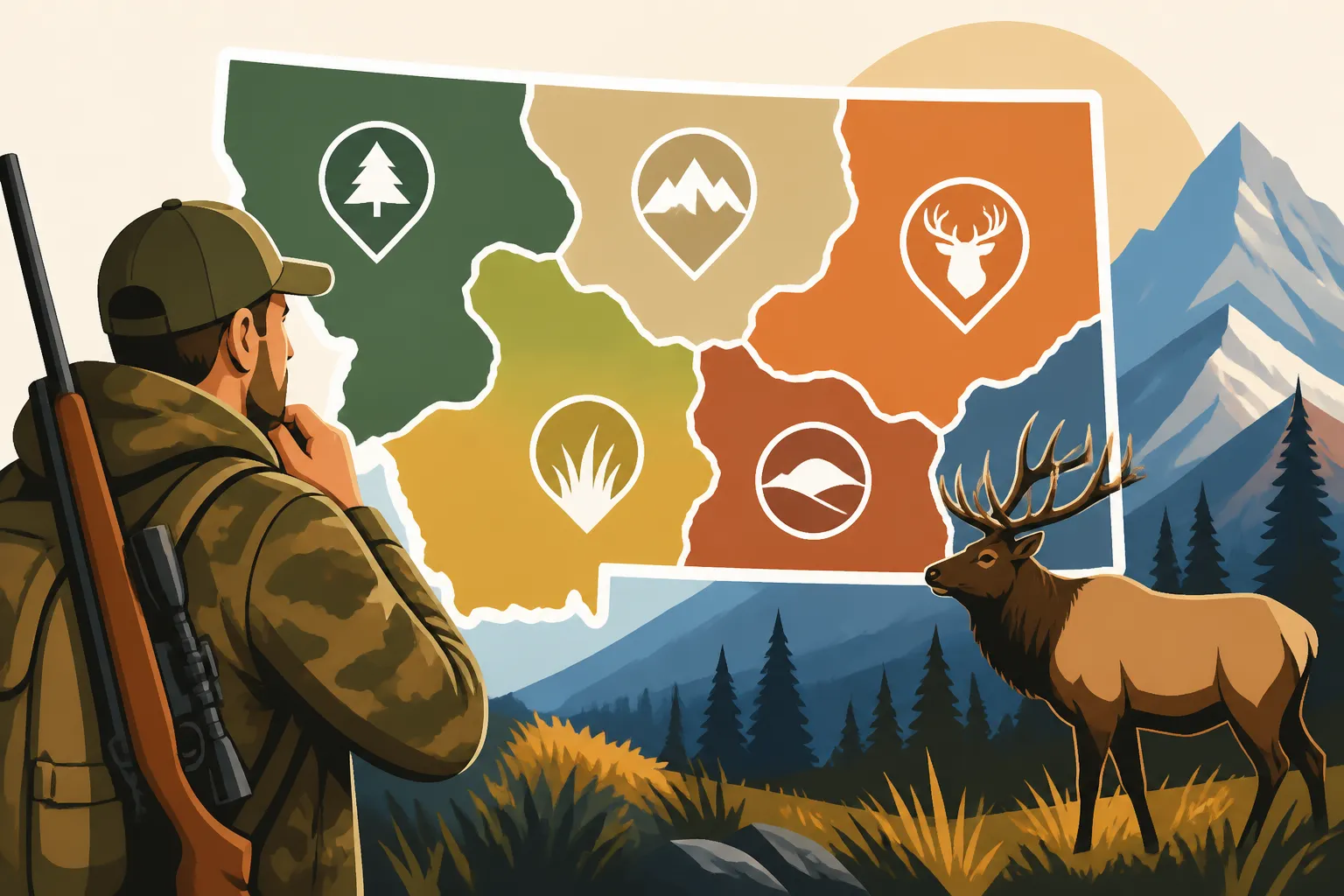
Montana can broadly be divided into several distinct geographical regions, each with its characteristic terrain, climate, and primary big game species. Understanding these foundational differences is paramount to narrowing down your search.
The Western Mountains, including ranges like the Bitterroot, Sapphire, and Flathead, are synonymous with classic elk and mule deer hunting in rugged, timbered terrain. Think steep climbs, dense forests, and high-elevation basins. This is prime habitat for elk, but also home to good numbers of mule deer, whitetail in the river bottoms, and even moose in specific areas. Access often involves hiking into roadless areas or utilizing horseback outfitters.
Moving eastward, you encounter the Central Mountain Ranges, such as the Elkhorns, Bridgers, and Crazy Mountains. These offer a blend of timbered mountains and more open, rolling foothills. Elk and mule deer are prevalent here, often at slightly lower elevations than in the far west, and these areas can sometimes hold higher densities of game. Whitetail deer are also found in the river corridors and agricultural fringes.
Finally, the vast Eastern Plains and Missouri Breaks region present a completely different landscape. Here, rolling grasslands, badlands, and coulees dominate, interspersed with river drainages like the Yellowstone and Missouri. This is prime country for antelope, often boasting incredible numbers and good trophy potential. Mule deer thrive in the breaks and rougher terrain, while whitetail are abundant in the river bottoms and agricultural areas. Elk can also be found in isolated pockets, particularly within the breaks and some timbered island ranges like the Little Belts or Snowy Mountains.
Each region demands a different hunting style, different gear, and a different set of expectations. For instance, if you're dreaming of a Montana Elk Hunting Guide in the high country, you're likely looking at the western or central mountains. If a Montana Antelope Hunting Guide is your goal, the eastern plains will be your focus.
Public vs. Private Land Dynamics
One of the most critical considerations when choosing a Montana hunting district is the mix of public and private land. Montana is a vast state, and roughly 30% of its land base is public, consisting of National Forests, Bureau of Land Management (BLM) lands, and State Trust Lands. This access is a huge draw for hunters, particularly non-residents who might not have private land connections.
Public Lands offer incredible opportunities for DIY hunters. National Forests typically found in the mountainous west, provide vast expanses of timber, steep terrain, and designated wilderness areas. BLM lands, more common in central and eastern Montana, often feature rolling hills, badlands, and sagebrush country. State Trust Lands are scattered throughout the state and are generally open to public recreation unless otherwise marked. However, public lands can also come with higher hunter pressure, especially in easily accessible areas. Navigating these spaces requires a good understanding of land ownership boundaries, which is where tools like onX Hunt become indispensable. You can read more about it in our comprehensive Montana Public Land Hunting Guide.
Private Lands make up the majority of Montana's landscape, particularly in the fertile valleys and plains. Access to private land usually requires explicit permission from the landowner, and many outfitters operate exclusively on private leases. While private land often holds higher densities of game due to less pressure and better habitat management, gaining access can be a significant challenge for self-guided hunters. Some private lands are enrolled in programs like Block Management, which we'll discuss later, offering public access under specific conditions. Understanding the Public vs Private Land Hunting in Montana dynamic is key to setting realistic expectations for your hunt.
The choice between public and private isn't just about access; it's about the entire hunting experience. Public land often means more effort, tougher terrain, and fewer guarantees, but it also offers a deeper sense of accomplishment and wilderness immersion. Private land can offer higher success rates and more comfortable accommodations, but often at a higher cost and with less emphasis on the true DIY spirit.
Navigating Montana Fish, Wildlife & Parks Regulations and Resources
Once you have a general understanding of Montana's geography and land ownership, the next monumental task is diving into the regulations set forth by Montana Fish, Wildlife & Parks (FWP). This is where many hunters, especially those new to the state, get bogged down. The regulations can be complex, and a single mistake in interpretation can lead to a ruined hunt or, worse, legal trouble. But don't despair; with a systematic approach, these regulations become manageable, guiding your district selection rather than hindering it.
Deciphering Hunt Codes and Regulations
Every hunting district in Montana has specific regulations attached to it, often differentiated by species, weapon type (archery, rifle, muzzleloader), and even time of year. These are communicated through "hunt codes," which are combinations of numbers and letters that dictate what tag is required and what can be harvested. For example, a hunt code might specify "290-20," meaning Hunting District (HD) 290, either-sex elk, valid with a specific permit. It's not uncommon for a single district to have multiple hunt codes, each with different seasons and bag limits.
The FWP Hunting Regulations website and printed booklets are your absolute bible. They detail season dates, weapon restrictions, legal game descriptions, and the all-important hunt codes for every species in every district. Ignoring these details is a recipe for disaster. You need to identify the exact regulations for the specific species you want to hunt in the particular district you're eyeing. Pay close attention to whether a general tag is sufficient or if a limited-entry permit is required. Our guide on Montana Hunt Codes Explained provides a deeper dive into this system.
Essential Tools for Research: FWP Website and Apps
Beyond the printed regulations, the FWP website (fwp.mt.gov) is an invaluable, constantly updated resource. It's where you'll find drawing odds, season summaries, quota information, and often-crucial public meeting notes about potential regulation changes.
Key features of the FWP website include:
- Hunt Planner Maps: These interactive maps show hunting district boundaries, land ownership, and even specific closures or special regulations. They are crucial for visualizing the districts you're researching. You can explore these further in Montana Hunt Planner Maps Explained.
- Drawing Odds and Statistics: For permit-only hunts, the website provides historical drawing odds, allowing you to gauge your chances of success based on preference or bonus points. This is critical for non-residents applying for highly sought-after tags.
- Block Management Program Information: Detailed maps and rules for Block Management Areas (BMAs) are posted here, often closer to the hunting season. These provide vital access to private lands.
- News and Alerts: Stay informed about current conditions, fire closures, or emergency hunting regulations.
While FWP doesn't have its own dedicated hunting app, third-party apps like onX Hunt integrate FWP data, providing a user-friendly interface to overlay land ownership, hunt districts, and other critical information directly onto your phone. This seamless access to information in the field is a game-changer.
Understanding Drawing Odds and Permit Areas
Many of Montana's most coveted hunting opportunities, particularly for species like elk in certain districts, bighorn sheep, mountain goats, and moose, require drawing a limited-entry permit. This is where preference points and bonus points come into play, adding another layer of complexity to the application process.
- General Tags: These are available to anyone who purchases the relevant base license (e.g., a General Elk Tag or General Deer Tag). Most of Montana is open to general tags, but specific districts might have restrictions on weapon type, sex of animal, or season dates.
- Permit-Only Tags: These are allocated through a draw system and are specific to particular hunting districts and sometimes even specific species (like an antlerless elk B-license). Demand often far outstrips supply, making these tags highly competitive.
For non-residents, understanding the Montana Nonresident License Draw Explained is paramount. Montana uses a preference point system for its Combination licenses (Elk Combo, Deer Combo), which essentially gives applicants with more points a better chance in the draw. For species-specific permits (like a bull elk permit in a trophy unit), a bonus point system is used, which acts more like a lottery but gives you an extra chance for each point you've accumulated.
Researching drawing odds is not about finding a guaranteed tag (those rarely exist in Montana), but about making an informed decision about where to apply. Some districts might have 100% draw odds with zero points, while others might require 10-20 points to have a realistic chance. The FWP website provides detailed statistics on previous year's draws. You can learn more about how to interpret these in our How to Read Montana Draw Odds article. This knowledge will guide whether you aim for a general tag in an easily accessible district or commit to building points for a dream hunt years down the road.
Self-Assessment: Knowing Your Hunting Style and Goals
Before you even start looking at maps or regulations, take a good, honest look in the mirror. Choosing the "right" hunting district isn't just about finding where the animals are; it's about finding where you can successfully and enjoyably hunt them. Your personal hunting style, physical capabilities, and expectations play an enormous role in determining which districts will be a good fit. Ignoring these factors is a common mistake that leads to frustration and disappointment in the field.
Defining Your Target Species and Trophy Expectations
What animal do you truly want to hunt, and what does success look like to you? This seems obvious, but it’s a question many hunters don't thoroughly answer. Are you dreaming of a monster bull elk, or would you be thrilled with any legal elk meat? Is a big mule deer buck your goal, or are you just looking for a challenging Montana Mule Deer Hunting Guide experience?
- Species Focus: If your heart is set on elk, your district choices will naturally gravitate towards areas known for healthy elk populations, typically in the mountains. If antelope is the target, you'll be looking at the eastern plains. While some districts offer multi-species opportunities (e.g., elk and deer), trying to chase too many different species in one hunt can spread you too thin and decrease your overall success rate.
- Trophy vs. Meat Hunt: Be realistic about your trophy expectations. Montana has trophy animals, but they are generally found in limited-entry units that require years of point accumulation, or in extremely rugged, hard-to-access public land areas that demand peak physical conditioning and extensive scouting. If your primary goal is to fill the freezer, many general units offer excellent opportunities for cow elk or antlerless deer, often with much higher success rates and less competition. There are plenty of fantastic general units that offer a realistic chance at a respectable bull or buck without needing to draw a coveted permit.
This self-reflection helps narrow down the vast number of districts into a manageable pool that aligns with your specific goals.
Assessing Your Physical Fitness and Backcountry Experience
Montana hunting, particularly for elk and mule deer in the mountains, is physically demanding. There's no sugarcoating it. Are you prepared to hike miles uphill at high elevation, often with a heavy pack? Can you navigate dense timber, cross rivers, and endure unpredictable weather?
- Mountain Terrain: If you're targeting elk in the western mountains, expect elevations from 5,000 to 10,000 feet, steep grades, and potentially snow. A physically demanding hunt requires months of preparation. Our Montana Elk Hunt Fitness Plan guide can help you get ready. If you're not in prime shape, or if you have physical limitations, consider districts with more road access, gentler terrain, or those on the plains where the hiking is generally less strenuous.
- Backcountry Experience: Do you have experience with navigation, wilderness first aid, survival skills, and packing out an animal in challenging conditions? If you're new to backcountry hunting, it might be wise to start with districts that offer easier access or stick closer to roads. A Montana Backcountry Hunting Guide is an incredible experience, but it's not for the unprepared. If you're going solo, understanding How to Pack Out Elk Meat Solo in Montana is critical.
- Accessibility: Some districts offer extensive road systems, allowing for truck camping and day hunts. Others are vast wilderness areas that require backpacking in, using horses, or flying into remote strips. Be honest about your comfort level with remoteness and self-sufficiency. Don't plan a multi-day wilderness pack trip if your idea of "roughing it" is a hotel without room service.
Time and Budget Considerations for Your Hunt
Hunting in Montana isn't just about the tags; it's about the entire experience, and that comes with time and financial commitments.
- Time Commitment: How many days can you realistically allocate to your hunt? A multi-species hunt or a deep backcountry elk hunt might require 7-10 days or more just for the hunt itself, not including travel. If you only have a long weekend, focus on districts that are closer to population centers or offer higher concentrations of game for shorter, more intense efforts. Remember that success often correlates with time spent in the field.
- Financial Budget: Licenses and tags for non-residents in Montana are a significant investment. Add to that travel costs (fuel, flights), gear (good boots, optics, clothing), food, lodging, and potentially meat processing and taxidermy. Outfitters and guided hunts add another substantial layer of expense, though they often provide amenities and expertise that simplify the hunt. A guided elk hunt, for instance, can cost several thousand dollars. Consider exploring Montana Hunting License Costs to get a clear picture of what you'll be spending. If you're on a tighter budget, a DIY public land hunt in a general unit is usually the most cost-effective option, but it requires more personal effort and research.
By thoughtfully evaluating these personal factors, you can effectively filter districts and avoid setting yourself up for an experience that doesn't align with your capabilities or desires.
Leveraging E-Scouting Tools for Initial District Selection
With your self-assessment complete and a clearer idea of what you're looking for, it's time to dive into the digital realm. E-scouting, or electronic scouting, has revolutionized how hunters prepare for their trips, especially in vast states like Montana. Using satellite imagery, topographic maps, and other digital resources, you can effectively scout hundreds of square miles from the comfort of your home, saving valuable time and effort in the field. This initial phase of district selection is where technology truly shines.
The Power of Satellite Imagery and Topographic Maps
The core of effective e-scouting lies in powerful mapping applications. Brands like onX Hunt have become industry standards for a reason, providing an incredible suite of features specifically tailored for hunters.
- Satellite Imagery: This is your window into the terrain. High-resolution satellite views allow you to identify timbered areas (dark timber often holds elk), open parks, bedding areas, feeding grounds, water sources, and natural travel corridors like ridges and saddles. Look for changes in vegetation, clearings within dense forests, and south-facing slopes that might melt out earlier in the season, providing feed. For example, in the mountains, look for benches or flat spots on steep slopes where elk might bed. In the plains, identify coulees and draws that offer cover for mule deer and antelope.
- Topographic Maps: Overlaying topo lines onto satellite imagery helps you understand the elevation changes and steepness of the terrain. This is crucial for planning access routes, identifying potential glassing knobs, and gauging the physical demand of a particular area. Steep, rugged terrain often deters other hunters, making it a prime target if you're physically capable. Look for areas with a good mix of steep slopes for bedding and gentler terrain for feeding.
- Land Ownership Layers: This is arguably the most important feature. onX Hunt clearly delineates public lands (National Forest, BLM, State Trust) from private parcels. This prevents accidental trespassing and helps you identify landlocked public chunks that might see less pressure. You can identify potential access points to public land and plan your routes accordingly. Understanding these boundaries is critical, especially when hunting close to private land fences.
By meticulously studying these layers, you can eliminate unsuitable areas quickly and zoom in on promising ones. You can virtually walk ridgelines, trace creek bottoms, and mark potential hunting spots, all without leaving your desk. Our guide on How to E-Scout Montana Districts offers a more detailed walkthrough of these techniques.
Analyzing Access Points and Road Systems
Once you've identified promising habitat, the next step in e-scouting is to figure out how to get there. Access is everything in Montana, and it can vary wildly from one district to another, and even within the same district.
- Road Density: Districts with a high density of roads typically see more hunter pressure, as access is easier. Conversely, districts with vast roadless areas or wilderness often hold more mature animals and offer more solitude, but they demand more physical effort to access. Use your mapping app to identify forest service roads, logging roads, and even faint two-tracks. Consider the condition of these roads – some might require a high-clearance 4×4, while others might be easily accessible by any vehicle.
- Trail Systems: For backcountry hunts, identifying established hiking trails or old game trails is essential. These can provide a starting point for deeper penetration into prime areas. However, don't rely solely on trails; sometimes the best hunting is found off-trail, away from the easiest routes.
- Trailheads and Parking: Locate official trailheads and potential parking spots. Consider the distance from your vehicle to where you intend to hunt. A longer hike from the truck often means fewer people in your desired hunting grounds. Pay attention to private land surrounding trailheads; some public land access points might require crossing private property, which necessitates permission.
- Water Crossings: Rivers and large creeks can be significant barriers. Identify potential crossing points, especially if you're planning an early-season hunt when water levels might be higher.
By carefully evaluating access, you can strategically select districts that match your comfort level with remoteness and your vehicle's capabilities. Remember, easy access often means more competition.
Identifying Potential Habitat and Game Concentrations
E-scouting isn't just about identifying pretty spots on a map; it's about connecting those spots to what animals need to survive and thrive. This requires understanding the habits and habitat preferences of your target species.
- Elk Habitat: Look for north-facing slopes with dark timber for bedding cover, especially during warmer weather or after early-season snow. South-facing slopes with open parks or clearcuts provide crucial feeding areas. Water sources like springs and wallows are magnets for elk, particularly during the rut. Identifying the transition zones between bedding and feeding areas, or natural travel corridors, can reveal prime ambush points. In our How to Find Elk in Montana Dark Timber guide, we delve deeper into this.
- Mule Deer Habitat: Mule deer prefer more open, broken country with pockets of timber or dense brush for cover. Think sagebrush flats, coulees, rimrocks, and the "breaks" country. Look for south-facing slopes with good forage, especially in winter range (though you won't be hunting these in winter for most seasons). Water sources are also critical.
- Antelope Habitat: Antelope thrive in open grasslands and sagebrush prairies. They prefer flat to gently rolling terrain where they can use their incredible eyesight. Look for water holes, small depressions, and low rises that offer a vantage point. The edges of agricultural fields can also be productive.
- Transition Zones: Animals frequently use transition zones—the edges where one type of habitat meets another (e.g., timber edge meeting a meadow, a coulee meeting open prairie). These areas offer both food and cover, making them excellent places to focus your efforts.
GoHunt is another excellent platform that complements onX Hunt by providing detailed state-specific data, including historical harvest statistics, public land percentages, and crucial insights into unit potential for specific species, especially for those considering applying for limited entry permits. It aggregates information that helps you connect the dots between potential habitat and actual game concentrations reported by FWP. By combining the visual power of onX Hunt with the analytical data from platforms like GoHunt, you get a powerful understanding of potential hunting districts.
| E-Scouting Tool Feature | Purpose for Hunter | Key Benefit |
|---|---|---|
| Satellite Imagery | Visualize terrain, vegetation, water sources, roads, clearings, and potential bedding/feeding areas. | Identify prime habitat, plan routes, and eliminate unsuitable ground without leaving home. |
| Topographic Maps | Understand elevation changes, steepness, and contours of the land. | Assess physical difficulty, locate glassing points, and predict animal travel patterns. |
| Land Ownership Layer | Delineate public vs. private land boundaries. | Prevent trespassing, identify public access points, and find landlocked public parcels. |
| Road & Trail Layer | Locate vehicle access, trailheads, and backcountry routes. | Plan ingress/egress, assess hunter pressure, and choose routes suitable for your fitness/vehicle. |
| Hunt Unit Boundaries | Clearly see official FWP hunting district lines. | Ensure you're hunting within the correct unit for your tag and specific regulations. |
| Historical Data (GoHunt) | Analyze past harvest data, success rates, and draw odds for specific units and species. | Make informed decisions on permit applications, manage expectations, and prioritize units. |
By diligently using these tools, you can pre-scout numerous districts, create a list of promising areas, and even mark potential hotspots before you ever hit the road.
Beyond the Map: In-Depth Research and Scouting
While e-scouting is undeniably powerful, it's just one piece of the puzzle. To truly understand a Montana hunting district and maximize your chances of success, you need to go beyond the digital map. This involves tapping into human knowledge, staying updated on local conditions, and if at all possible, getting boots on the ground. This phase transforms theoretical knowledge into practical understanding.
Tapping into Online Forums and Community Knowledge
The internet is a treasure trove of information, especially when it comes to hunting. Online forums, dedicated hunting social media groups, and community platforms are places where hunters share experiences, ask questions, and sometimes, if you're lucky, drop hints about specific areas or general conditions.
- Forum Etiquette: When engaging in forums, always be respectful and avoid asking for "honey holes." Most experienced hunters are reluctant to give out specific locations. Instead, ask general questions about unit characteristics, typical elk behavior in a certain type of terrain, or challenges specific to a region. For example, instead of "Where's the best spot in HD 310?" try "What are the typical challenges for archery elk hunters in the Bridger Mountains?"
- Learning from Others' Experiences: Reading through past hunt reports or general discussions about specific areas can provide invaluable insights into hunter pressure, game patterns, weather impacts, and general success rates. You might learn that a particular district is notorious for tough access, or that another always holds elk later in the season.
- Networking: Building connections with other hunters, even online, can be beneficial in the long run. They might offer insights, recommend resources, or even become future hunting partners. Websites like Rokslide, HuntTalk, and specific Montana hunting groups on Facebook can be good places to start.
Remember, take everything you read online with a grain of salt. Some information might be outdated, exaggerated, or simply someone's opinion. Cross-reference what you learn with your own e-scouting and FWP data.
Understanding Local Game Management and Population Trends
Game populations are dynamic. What was true for a district five years ago might not be true today. Understanding local game management strategies and current population trends is crucial for informed district selection.
- FWP Biologist Reports: Montana FWP biologists regularly conduct surveys and compile reports on game populations, harvest success, and winter survival rates for specific hunting districts. These reports, often found on the FWP website, are goldmines of information. They can tell you if a district's elk population is increasing or decreasing, how mule deer fared after a tough winter, or if specific management actions (like antlerless quotas) are in effect. GoHunt often compiles and summarizes these types of FWP reports, making it easier for hunters to digest complex data.
- Winter Range Conditions: Harsh winters can decimate game populations, especially mule deer. Pay attention to news from FWP about winter severity and its impact on your target districts. A severe winter might mean lower animal numbers and tougher hunting the following fall.
- Disease Outbreaks: Wildlife diseases, like Chronic Wasting Disease (CWD) or Epizootic Hemorrhagic Disease (EHD), can affect local populations. FWP will usually publish alerts and testing requirements for affected areas. Understanding these factors will help you make a more informed decision and understand why a district's numbers might be down.
- Hunting Pressure Changes: Regulation changes, public land access initiatives, or even popular YouTube videos can significantly shift hunter pressure from one district to another. Staying updated on current events can help you anticipate where the crowds might be.
The Value of Boots-on-the-Ground Scouting (if possible)
While e-scouting saves time, nothing beats actually putting your boots on the ground. If you live in Montana or can make a dedicated scouting trip, it's an investment that pays dividends.
- Verifying E-Scouting Findings: What looks like a perfect bedding bench on satellite imagery might be a sheer cliff in reality, or a promising trail might be overgrown and impassable. On-the-ground scouting allows you to verify your e-scouting assumptions and make crucial adjustments to your plans.
- Finding Fresh Sign: Nothing builds confidence like finding fresh tracks, droppings, rubs, and sheds. You can locate active wallows, well-used game trails, and preferred feeding areas. This tells you that animals are actively using the area.
- Understanding Animal Movement: During a scouting trip, you might observe actual animal movement patterns, learn how they use the terrain, and identify escape routes or security cover. This firsthand knowledge is invaluable during the actual hunt.
- Checking Water Sources: Are the springs and creeks you identified on the map actually flowing? Are there hidden seeps that animals are using? Water can be a critical factor, especially during early archery seasons.
- Practice Navigation: Scouting provides an excellent opportunity to practice your navigation skills with your map and GPS/onX Hunt, becoming intimately familiar with the terrain before the pressure of the hunt is on.
- Evaluate Campsites: For backcountry or DIY trips, scouting allows you to identify suitable camping locations, assess water availability, and determine logistics for your base camp. Our article How to Set Up a Montana Elk Camp provides great tips for this.
Even a short, one-day scouting trip to a potential district can provide more insight than weeks of e-scouting alone. It brings a sense of realism and confidence that no digital map can fully replicate.
Weighing Hunter Pressure and Solitude
One of the biggest frustrations for many hunters, especially those traveling long distances to hunt Montana's public lands, is encountering other hunters. Finding solitude can feel like a hunt in itself. When choosing a district, it's vital to consider the likely hunter pressure and develop strategies to either avoid it or embrace it as part of the experience.
Identifying High-Pressure vs. Low-Pressure Districts
Hunter pressure isn't uniform across Montana; it varies dramatically by region, district, and even within a single drainage.
- Accessibility and Proximity to Towns: Districts with easy road access or those close to major population centers (like Bozeman, Missoula, or Helena) tend to receive significantly more pressure. Hunters can drive in, make a short hike, and be in their hunting spot quickly. These areas are popular for weekend warriors or those with limited time.
- Trophy Potential: Districts renowned for producing large bulls or bucks, particularly those that require permits, will inevitably draw more attention, even if the general public can't hunt them. However, sometimes general units surrounding these trophy units can also see increased pressure due to their proximity.
- Season Dates and Weather: Opening weekend of general rifle season often sees the highest pressure across the state. Early archery season, especially before the rut fully kicks in, can be less crowded. Bad weather (snow, extreme cold) can drive many hunters out of the woods, creating opportunities for those willing to brave the elements.
- Historical Data: FWP sometimes publishes hunter-use statistics, though these can be general. However, through online forums and local knowledge, you can often discern which districts have a reputation for being crowded and which offer more solitude.
Understanding these factors allows you to make an informed choice. Are you willing to deal with more hunters for easier access or potentially higher game densities? Or is solitude your primary goal, even if it means more work and potentially fewer animals?
Strategies for Finding Solitude on Public Land
Even in high-pressure districts, there are often ways to find solitude and escape the crowds, though it requires effort and intentional planning.
- Go Deeper: The oldest and most reliable strategy for finding solitude on public land is simply to walk further than most other hunters are willing to go. Most hunters operate within a mile or two of a road or trailhead. Push three, four, or even five miles deep, and you'll often find yourself in untouched territory. This requires physical fitness and confidence in your navigation skills. This is a core tenant of How to Avoid Crowds on Montana Public Land.
- Hunt Rugged Terrain: Steep canyons, dense timber, and challenging mountainsides deter many. If you're willing to tackle the vertical, you'll often find less competition. Animals also use this rugged terrain for security cover, so it can be productive.
- Access Challenging Areas: Look for public land parcels that are landlocked by private property or require difficult river crossings to access. While these might present logistical hurdles, they often receive very little pressure. onX Hunt is invaluable for identifying these access challenges.
- Hunt Mid-Week or Off-Peak Times: Weekends are always the busiest. If your schedule allows, hunting during the week can dramatically reduce the number of other hunters you encounter. Likewise, hunting during less popular times of the season (e.g., early archery before the peak rut, or late rifle season) can offer more peace and quiet.
- Use Wilderness Areas: Montana has designated wilderness areas, such as the Bob Marshall Wilderness or the Scapegoat Wilderness. These areas prohibit motorized vehicles and mechanized transport, meaning access is restricted to foot or horseback. This naturally filters out many hunters, offering unparalleled solitude for those willing to pack in. Our guide on How to Hunt Elk in Montana's Wilderness provides more details.
Utilizing Block Management Areas (BMAs)
Montana's Block Management Program is a unique and invaluable resource for public land hunters, especially for accessing private land in central and eastern Montana. BMAs are private land parcels that landowners enroll in a voluntary program with FWP, allowing public hunting access under specific conditions.
- How They Work: FWP provides incentives to landowners to open their property for hunting. Access rules vary widely by BMA. Some are "Type 1" areas where you can walk-in any time during open hours, while others are "Type 2" areas requiring sign-in boxes, mandatory check-ins with the landowner, or even special permission.
- Species and Opportunities: BMAs offer excellent opportunities for deer (both mule and whitetail) and antelope, particularly on the plains. Some mountainous BMAs might offer elk hunting. They can be a fantastic way to access quality private land hunting without paying an outfitter fee. Learn more in our Montana Block Management Areas Explained guide.
- Researching BMAs: The FWP website publishes a Block Management Program Guide annually, usually in August. This guide lists all participating BMAs, their general location, allowed species, and specific access rules. It's crucial to obtain the most current guide and study the rules carefully for each BMA you plan to hunt. Some popular BMAs fill up quickly, or require advance sign-up.
While BMAs can be busy, the controlled access often means that hunter numbers are managed, which can lead to a more enjoyable experience than heavily pressured public lands. They require planning, but the rewards can be significant.
Factors That Can Make or Break Your Hunt
Beyond maps and regulations, there are environmental and logistical factors that significantly impact the success and enjoyment of any Montana hunting trip. These are the elements that often separate a great hunt from a miserable one, and they need to be considered carefully when choosing your district. Ignoring them is a common pitfall, especially for those new to hunting in the Rockies.
Weather Patterns and Their Impact on Game Movement
Montana's weather is notoriously unpredictable and can change dramatically in a matter of hours, especially in the mountains. This isn't just an inconvenience; it directly affects game behavior and hunter safety.
- Early Season (Archery): In August and early September, temperatures can range from hot (80s-90s Fahrenheit) during the day to cool at night. Elk and deer tend to be in higher elevations, seeking shade and cooler temperatures. They often move at dawn and dusk, bedding down in dark timber during the heat of the day. A sudden cold front or rain shower can trigger increased activity. Keeping How to Keep Elk Meat Cool in Montana's Early Season in mind is vital for meat care.
- Rut (Late September/Early October): This is often the most active time for elk and deer. Cooler temperatures, and often the first snows in the high country, get animals moving. Bulls are bugling, and bucks are chasing does. While exciting, this period can also bring blustery conditions.
- General Rifle Season (Late October/November): Expect anything from mild, sunny days to blizzard conditions. Snow is common at higher elevations and can push animals down to lower winter ranges. Cold fronts can trigger significant migrations. Hunters need to be prepared for extreme cold, wind, and deep snow. Our guide on How to Hunt Elk in Montana Snow provides specific tactics for these conditions. Mule deer are also entering their rut in late November, making them more active.
- Impact on Game: Animals adapt their behavior to the weather. Heavy snow pushes them to lower elevations. High winds can make them skittish and harder to pinpoint. Extreme cold means they need to feed more to maintain body temperature. Understanding these patterns is key to predicting where and when animals will be active.
- Impact on Hunters: Unprepared hunters can quickly find themselves in dangerous situations. Hypothermia, frostbite, and getting lost in whiteout conditions are real risks. Your gear, clothing, and mental preparedness must match the potential for severe weather.
When choosing a district, consider its typical weather patterns during your planned hunt dates. Higher elevation districts will get snow earlier and have colder temperatures. Eastern plains can experience extreme winds and blizzards.
Terrain Difficulty and Navigational Challenges
Montana's diverse landscape means a huge range in terrain difficulty, from easy walking to extreme mountaineering. Be realistic about what you can handle.
- Elevation and Steepness: Mountainous districts can have thousands of feet of elevation gain in a single day. This is physically demanding and can exacerbate altitude sickness for those not acclimated. Steep, rocky slopes can be dangerous, especially when wet or snowy. If you're not comfortable with sustained climbs and descents, choose districts with gentler topography.
- Vegetation: Dense timber, thick brush, and fallen logs can make travel slow, noisy, and exhausting. Moving quietly through How to Move Quietly Through Montana Timber is a skill developed over time. Open country, while offering better visibility, can leave you exposed.
- Navigational Hazards: In the mountains, fog, heavy timber, and complex drainages can make navigation challenging, even with GPS. In the plains, the vast, undulating landscape can make it easy to lose your bearings if you're not constantly checking your map and compass. Always carry redundant navigation tools (GPS, paper map, compass) and know how to use them.
- Stream and River Crossings: Many districts are crisscrossed by rivers and streams. During early season, or after heavy rain, these can be high and fast, posing significant hazards. Identify potential crossing points during e-scouting and assess their safety on the ground.
Choosing a district with terrain that matches your skill level and comfort zone is crucial for a safe and successful hunt. There's no shame in starting with easier terrain and working your way up to more challenging areas.
Logistics: Lodging, Services, and Meat Care
The practicalities of living in the field and handling your harvest are often overlooked until it's too late. When selecting a district, think about the logistics.
- Lodging: Will you be camping, staying in a wall tent, utilizing a small cabin, or driving to a hotel each night? Some districts are remote, requiring a full backcountry camp or robust base camp setup. Others are close enough to small towns to allow for daily drives from more comfortable lodging. If you plan to set up a base camp, our guide on How to Set Up a Wall Tent Elk Camp in Montana offers valuable advice.
- Fuel and Supplies: How far is the nearest gas station, grocery store, or sporting goods shop? In remote districts, these services might be hours away. Plan to bring all necessary supplies with you.
- Meat Processing: What's your plan for processing and packing out your animal? If you're hunting in a remote area, you'll need to know How to Quarter an Elk in the Montana Backcountry and get it cooled quickly. Identify local meat processors near your chosen district. Many small towns in Montana have excellent, seasoned processors, but their availability can be limited during peak hunting season. If you're taking meat home, especially across state lines, understand transportation regulations and have appropriate coolers ready.
- Emergency Services: Know the nearest hospital, sheriff's office, and forest service ranger station. Cell service can be spotty or nonexistent in many hunting areas, so consider a satellite communication device (e.g., Garmin inReach) for emergencies. Our Montana Backcountry Hunting Safety Tips emphasizes the importance of these precautions.
A well-thought-out logistical plan minimizes stress and ensures you can focus on the hunt itself, knowing that you're prepared for the challenges that Montana can throw your way.
Finalizing Your Decision and Application Strategy
After all this research, self-assessment, and e-scouting, you should have a much clearer picture of suitable Montana hunting districts. Now comes the moment of truth: making your final selection and executing your application strategy. This isn't just about picking one spot; it's about making a series of informed choices that maximize your chances of a successful and enjoyable hunt.
Creating a Backup Plan and Alternative Districts
Montana hunting, especially for big game, involves a lot of variables. What if your primary district doesn't pan out? What if you don't draw your desired permit? Having backup plans is not a sign of weakness; it's a sign of a smart, experienced hunter.
- "Plan B" Districts: Always identify at least one or two alternative districts that meet your criteria. These might be general units if your first choice was a permit unit, or slightly less-pressured general units if your primary was a popular one. Perhaps it's a district with slightly easier access or a different game species if your initial target is proving too difficult. For instance, if you don't draw an elk permit, is there a general unit where you can pursue a Montana Whitetail Deer Hunting Guide experience instead?
- Considering Leftover Tags: After the main draw periods, Montana FWP often has leftover or surplus tags available, particularly for antlerless deer or certain bear tags. While these are usually for less desirable areas or specific types of hunts, they can provide a valuable backup opportunity if your primary plans fall through. Keep an eye on the FWP website for announcements on these.
- Flexibility is Key: Be prepared to adapt. Weather can force you to change areas, hunter pressure might be higher than anticipated, or game might simply not be where you expected. A flexible mindset, coupled with well-researched backup districts, ensures your hunt isn't derailed by unforeseen circumstances.
The Application Process: Deadlines and Pitfalls
Montana's application deadlines are strict, and missing them means missing out on drawing a coveted tag for the entire year. Pay meticulous attention to dates and ensure your application is submitted correctly.
- Key Deadlines: The biggest deadlines are typically around March 15th for most nonresident big game combination licenses and April 1st for species-specific permits like moose, sheep, goat, and certain elk or deer permits. Black bear and antelope have later deadlines, often in early June. Mark these dates on your calendar and set multiple reminders.
- Online Application System: Montana FWP uses an online application system. Ensure you have an FWP account set up well in advance of the deadline. Navigate the system to understand where to apply for licenses, permits, and preference/bonus points.
- Preference vs. Bonus Points: Understand which system applies to which tag. Combo licenses use preference points (higher points = better chance). Species-specific permits use bonus points (more points = more chances in a random draw). You can purchase preference points without applying for a license, which is a common strategy for non-residents building points for future hunts. Our Montana Preference Points vs Bonus Points guide explains this in detail.
- Common Pitfalls:
- Missing a deadline: This is the most common and devastating error.
- Incorrect hunt code: Double-check that you're applying for the correct district and species.
- Expired credit card: Ensure your payment method is current and has sufficient funds.
- Not applying for points: If you intend to build points, make sure you explicitly apply for them, even if you don't apply for a tag.
- Misunderstanding group applications: If applying with a group, ensure everyone understands the process and limitations.
- Not purchasing base license: For most permits, you need to purchase a base conservation license and often a hunting license before you can apply for a permit.
Submitting your application correctly and on time is the final, crucial step in securing your Montana hunting opportunity.
Seeking Expert Advice and Local Knowledge
Even after all your research, sometimes the best insights come from those who live and breathe Montana hunting.
- FWP Biologists: While they can't give you specific hunting spots, FWP biologists are excellent resources for general information about game populations, habitat conditions, and management strategies in a given district. A brief, polite phone call can yield valuable general insights.
- Outfitters and Guides: Even if you plan a DIY hunt, reputable outfitters can be a source of information. They often have an intimate knowledge of specific regions and can offer advice on general areas, terrain, and game behavior, even if you're not booking a hunt with them. Just be respectful of their time and knowledge. Our How to Choose a Montana Hunting Outfitter guide can help you navigate this.
- Local Businesses: Small-town sporting goods stores, diners, or general stores near your chosen district can often provide current conditions, local tips (again, no "honey holes"), and a general feel for the area. Support these local businesses; they are often the backbone of hunting communities.
By combining your diligent research with these external sources, you can refine your district choice and feel confident in your decision, ready to embrace the adventure that awaits you in Montana.
Disclaimer
Please remember that hunting regulations, seasons, and access rules in Montana are subject to change. Always consult the official Montana Fish, Wildlife & Parks (FWP) website and current year's hunting regulations for the most up-to-date and accurate information before planning and executing any hunt. This guide is intended for informational purposes only and should not replace official FWP documentation.