Montana Backcountry Hunting Guide
You finally drew the tag, or you finally decided to stop hunting the same roadside ridge everyone else hunts. But the wilderness map looks enormous, the gear list keeps growing, and nobody on the forums agrees on anything. This guide breaks Montana backcountry hunting into the decisions that matter: where to go, how to get in, how to hunt once you are there, and how to get meat home safely.
What Backcountry Hunting in Montana Really Means
Defining the Backcountry Without the Marketing
The word “backcountry” gets slapped on everything from a two-mile walk past a locked gate to a ten-day horse trip into the heart of the Bob Marshall Wilderness Complex. For practical purposes, a Montana backcountry hunt is any hunt where you cannot get an animal to a vehicle in a few hours, where you camp away from the truck, and where your decisions about water, weather and meat care carry real consequences.
That definition matters because it changes how you plan. A hunter who walks three miles off a Forest Service road in the Garnet Range and sleeps in the truck each night is hunting hard country, but they are not managing the same risks as someone spiked out on a high bench in the Scapegoat with a grizzly track in the mud below camp. Be honest with yourself about which hunt you are actually planning, because the gear, the fitness requirements and the bailout plan are completely different.
Many first-timers underestimate how quickly the backcountry arrives in Montana. In places like the Absaroka-Beartooth, the Selway-Bitterroot or the Anaconda-Pintler, you can leave a trailhead and be inside designated wilderness within an hour. Once you cross that boundary, motorized and mechanized travel is off the table, so everything moves on your back or on a horse.
Why Hunters Keep Coming Back to It
The honest reason most people go deep is pressure. Montana’s general elk and deer seasons put a lot of hunters into the woods, and the animals respond fast. By the second week of the general rifle season, elk near roads have usually vanished into dark timber, steep north faces, or private ground. Distance and difficulty are the filters that thin out the competition.
The other reason is the experience itself. Sitting on a ridge in the Bob Marshall at first light, listening to a bull bugle across a basin with no road anywhere in sight, is the kind of morning people talk about for decades. The trade is that you will work harder for that morning than for almost anything else in hunting.
The Species That Draw People In
Elk are the headline backcountry animal in Montana, and for good reason: large herds summer in high basins and get pushed around by weather and pressure all fall. Mule deer bucks are the other major draw, especially in high country before snow pushes them down. Some hunters chase black bear in spring or fall, and a lucky few hold moose, bighorn sheep or mountain goat licenses that send them into rugged terrain.
If elk are your main focus, read How to Hunt Montana Elk in Wilderness Areas for species-specific tactics after you finish this overview. Whatever you hunt, the backcountry rewards the same core skills: reading terrain, managing your energy, and making smart calls when you are tired and far from help.
Choosing Where to Go
Wilderness Areas and Big Roadless Country
Montana’s best-known backcountry hunting areas include the Bob Marshall, Great Bear and Scapegoat wildernesses along the Continental Divide, the Selway-Bitterroot along the Idaho line, the Absaroka-Beartooth north of Yellowstone, the Lee Metcalf in the Madison Range, and the Anaconda-Pintler southwest of Anaconda. Outside designated wilderness there are large roadless blocks in national forests across the western half of the state.
Each of these areas has its own personality. The Bob Marshall complex is famous for long trail miles, big burns, and a strong grizzly population. The Absaroka-Beartooth is high, rocky, and quick to turn wintry. The Selway-Bitterroot is steep, brushy and humbling. Pick based on your tag, your fitness, how you plan to travel, and how much time you have, not on which name sounds most impressive.
A few hunting districts have historically opened an early backcountry rifle season in mid-September for some wilderness country. Those dates and districts can change, so always verify them in the current Montana Fish, Wildlife and Parks regulations before you build a trip around them. The Hunting the Bob Marshall for Elk article goes deeper on that specific country.
Matching the Area to Your Tag
Before you fall in love with a basin, confirm your license is valid there. Montana’s general deer and elk licenses cover many districts, but some districts require a permit for certain animals, and antler-point or antlerless rules vary. A wonderful wilderness drainage does you no good if your elk license only covers brow-tined bulls and you planned for a spike-only area, or the reverse.
Read the district descriptions line by line. Boundaries often follow ridgelines, creeks or trails that are easy to misread on the ground. If you are unclear on the system itself, Montana Hunting Districts Explained is a good primer.
E-Scouting Before You Ever Lace Your Boots
Most good backcountry hunts start at a desk. Digital mapping tools let you study slope, aspect, burn history, water, and trail access before you spend a dollar on gas. Many hunters layer land ownership, wilderness boundaries and trails in a mapping app, then save waypoints for camps and glassing knobs. Research platforms such as GoHunt are popular for comparing districts, draw information and terrain profiles when you are deciding where to apply, and the GoHunt maps let you study slope and aspect for a basin you have never seen in person.
When you e-scout, look for a few things. First, north-facing timber pockets near water and feed, because that is where pressured elk hide. Second, benches and saddles that connect bedding cover to open parks. Third, glassing points with a wide view of multiple slopes. Fourth, realistic camp spots that are flat, near water, and away from obvious game trails. How to E-Scout Montana Hunting Units walks through this process in more detail.
Planning Access and Travel
Backpack, Horse, or Drop Camp
There are three common ways into the Montana backcountry, and each comes with tradeoffs.
| Access Method | Typical Range From Trailhead | Main Strengths | Main Drawbacks |
|---|---|---|---|
| Backpack hunt | Usually 3 to 10 miles | Low cost, total flexibility, quiet movement | Heavy loads, limited comfort, hard meat pack-out |
| Your own stock | Often 8 to 20 miles or more | Carries camp and meat, reaches deep country | Requires stock experience, feed rules, extra gear |
| Outfitter drop camp | Varies by outfitter and area | Camp hauled in, meat packed out for you | Higher cost, fixed dates, limited ability to move |
Backpacking is the most common choice for DIY hunters. You can move camp when the elk move, and the cost barrier is mostly gear and fitness. The downside shows up the moment you kill something: one elk can mean several loads of meat over many miles.
Stock opens up deeper country and turns the meat problem into a logistics problem rather than a body problem. But horses and mules are not a shortcut for people who do not already know how to handle them. Weed-free feed requirements, high-lines, shoeing, and trail etiquette all matter. If you are considering it, start with How to Hunt Montana with Horses.
Building a Realistic Trip Plan
A solid trip plan answers simple questions before you leave. Where are you parking? What is your route in, and what is your backup route out if a creek crossing rises or snow closes a pass? Where are your planned camps? Who knows your plan, and when should they call for help if you do not check in?
Leave a written plan with someone you trust that includes your trailhead, vehicle description, planned camps, and a firm “overdue” time. Carry a satellite messenger so you can send check-ins and request help when there is no cell service, which is the normal situation in most of these areas.
Timing Your Hunt Around Weather and Seasons
Montana’s archery season generally opens in early September and runs into mid-October, followed by a general rifle season that runs from late October through late November. Early archery offers bugling bulls and stable weather, but warm afternoons make meat care urgent. Late rifle season brings snow that concentrates animals and makes tracking easier, but trails get dangerous and passes can close.
A hunter planning a ten-day backpack trip in late October needs to plan for single-digit nights, a foot of fresh snow, and short daylight. Someone hunting early September may face smoke from wildfires and temperatures warm enough to spoil meat within hours. Neither is wrong, but the gear and pace change completely. Check Best Time to Hunt Elk in Montana if you are still deciding which window suits you.
Gear That Earns Its Weight
The Core Systems
Backcountry gear falls into a few systems: shelter, sleep, water, food, clothing, optics, weapon, navigation, and meat care. Every item should belong to one of those systems and justify its weight. Hunters who struggle tend to carry a dozen “just in case” items and skimp on the core.
Your shelter needs to handle wind and wet snow. Your sleep system should be rated for the coldest night you realistically expect, not the average one. Water treatment should be simple and dependable, with a backup. Your boots should already be broken in on steep ground with a loaded pack. For a full checklist, see Montana Backcountry Hunting Gear List.
Clothing for Fast-Changing Conditions
Montana mountain weather can swing from sunny and warm at noon to sleet by dusk. A layering system handles this: a moisture-wicking base layer, an insulating mid layer, a puffy jacket for glassing and camp, and a waterproof shell. Merino or synthetic fabrics work far better than cotton, which stays wet and steals body heat.
Bring gloves for glassing and a warm hat even in September. If you are hunting during a rifle season, remember that Montana requires hunter orange above the waist, visible from all sides, for hunters during the general firearm season, including archers hunting during that season. Pack it so it is easy to put on and keep visible.
Meat Care Gear
The meat care kit is where many first-time backcountry hunters cut corners. You need a sharp knife with spare blades or a sharpener, several breathable game bags, paracord to hang meat, and a small tarp to keep quarters off the dirt while you work. A lightweight saw helps if you plan to remove antlers or split bone.
Game bags should be breathable so the surface of the meat can form a dry crust. In warm weather, get meat into shade and off the ground immediately, and hang it where air moves. How to Quarter an Elk in the Montana Backcountry covers the gutless method step by step.
Hunting Tactics Once You Are In
Glassing First, Walking Second
New backcountry hunters often walk too much. Elk and deer see, hear and smell you long before you see them if you are crashing around in timber. Successful hunters spend the first and last hours of light behind optics, picking apart slopes and parks from a good vantage point.
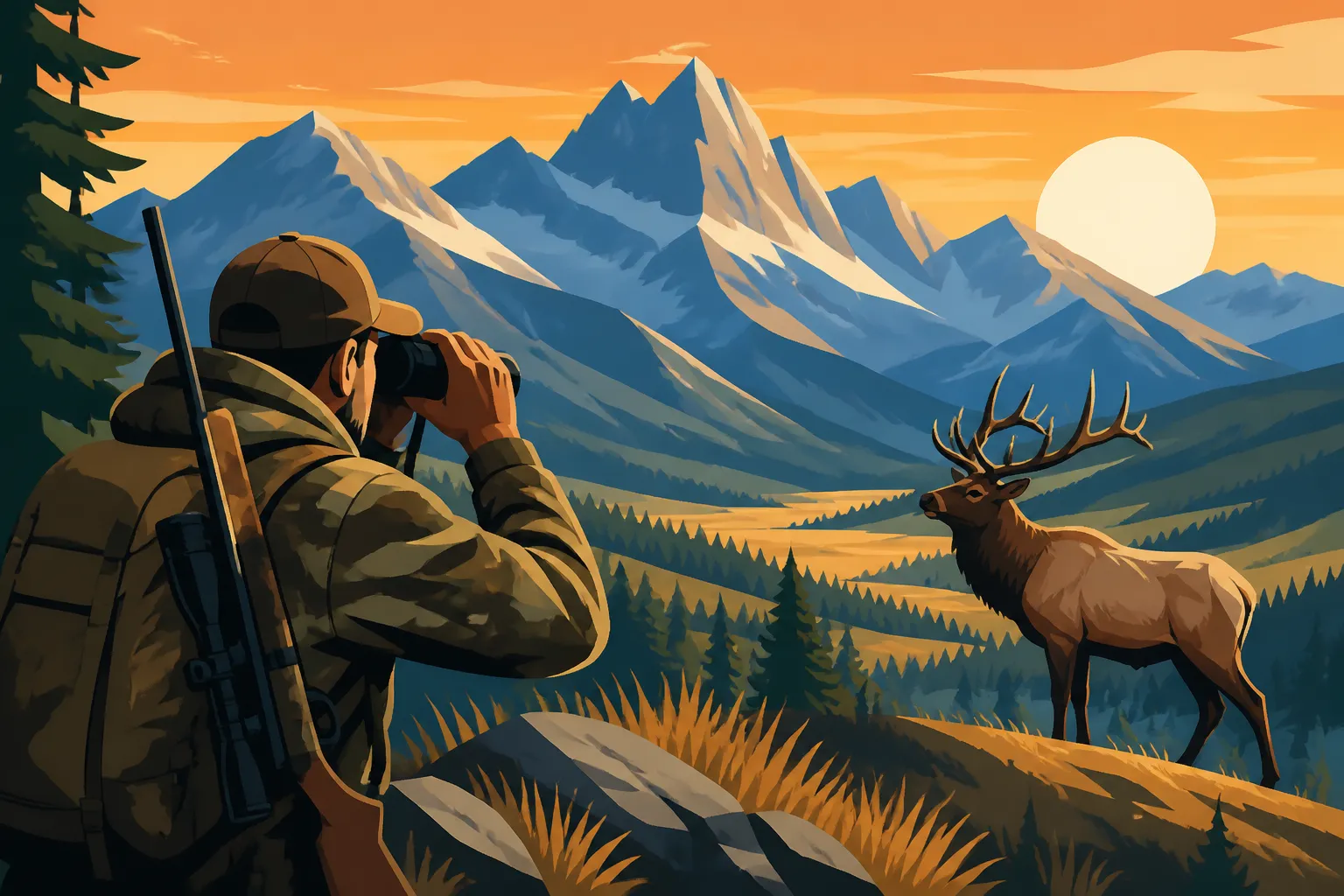
Set up on a knob or rim where you can see several faces. Use a tripod for your binoculars so you can scan steadily for long stretches. Grid the slope in small sections, then look again, because animals that were bedded in shade often stand and feed as light changes. Our article How to Glass and Grid Montana Mule Deer Country applies just as well to elk basins.
Using Wind and Thermals
In mountain country, air generally drifts uphill as the slope warms during the day and slides downhill as it cools in the evening. Those thermals can be stronger than the prevailing wind. If you approach a bedded bull from above in the morning when thermals are still falling, he will smell you before you are within range.
Plan approaches so the wind and thermals carry your scent away from where the animals are. Carry a wind indicator and check it often. Sometimes the right answer is to wait an hour for thermals to switch rather than to push a stalk that cannot work.
Calling, Still-Hunting and Ambush Strategies
During the September rut, calling can bring a bull into bow range. A few cow calls or a location bugle can reveal where elk are. But pressured wilderness bulls often go quiet after a few weeks of hunters calling at them. Many hunters do better by locating a bull, closing distance quietly, and calling only when they are close.
Still-hunting through timber works best after a fresh snow or a rain that softens the ground. Ambushing wallows, water seeps or travel corridors between feed and bedding works in hot weather when elk visit water during the day. Mix your methods based on conditions instead of committing to one style.
Safety in Grizzly and Big-Weather Country
Living and Hunting Among Bears
Much of western Montana’s backcountry, including the Bob Marshall complex and the Greater Yellowstone country, is grizzly habitat. That changes how you hunt, camp, and handle meat. Carry bear spray on your body where you can reach it in a second, not in your pack. Practice drawing it. Hunt with a partner when you can, and talk or make noise when visibility is short.
Many national forests in grizzly country have food storage orders that require you to store food, attractants and game meat in a bear-resistant manner, hung at a set height and distance from camp, or in approved containers. Learn the specific rules for your forest before you go, and save the order text offline next to your maps, whether in GoHunt or another app, so you can reread it in camp. Hang meat well away from camp and approach it carefully when you return, glassing from a distance first.
Weather, Water and Navigation
Hypothermia is a bigger threat than any animal in the Montana backcountry. Wet clothes and wind can turn a cool afternoon into a real emergency. Keep a dry layer in a waterproof bag, and set up camp before you are exhausted.
Navigation matters just as much. Download maps for offline use, carry a backup battery, and know how to use a paper map and compass in case electronics fail. Creek crossings can rise quickly after rain or snowmelt, so know your alternatives. Read Montana Backcountry Hunting Safety Tips for a deeper list of precautions.
When to Call It
Every backcountry hunter should agree ahead of time on turnaround rules. If someone is injured, sick, or out of water, if a major storm is forecast, or if the group falls behind schedule, it is time to adjust or head out. Pride has gotten more hunters in trouble than bad luck.
Getting Meat Out and Home
Planning the Pack-Out Before the Shot
A mature bull elk can produce a few hundred pounds of boned-out meat. Over several miles of steep trail, that means multiple trips even for a strong pair of hunters. Before you shoot, ask yourself whether you can realistically get that animal out of where it is standing. An elk in the bottom of a cliffy drainage can turn into a multi-day ordeal.
Montana law requires that you remove the edible meat of big game animals and prohibits wasting it. Understand exactly what that means in the regulations before your hunt, including which parts must be packed out and any requirements tied to evidence of sex.
Keeping Meat Cool Over Long Distances
Heat, moisture and dirt are the enemies. Bone out the meat or quarter it quickly, get it into breathable bags, and hang it in the shade where air moves. In early season, consider moving meat to a cold creek bottom or a shaded north slope. Avoid sealing meat in plastic while it still holds body heat.
If you have a long pack-out, prioritize getting the meat to the truck and into coolers with ice over anything else. Some hunters arrange with an outfitter or packer in advance for a meat haul. If you plan to do it yourself, How to Pack Out Elk Meat Solo in Montana shares practical load and route strategies.
Legal Steps After the Kill
Before you move an animal, validate your license exactly as the regulations require, usually by detaching or notching it and attaching it to the animal. Keep evidence of sex where required. Some districts have mandatory reporting, check stations, or chronic wasting disease sampling programs that you should be ready to follow.
Building Fitness and Skills for Next Season
Training for Steep Country
Backcountry hunts are won or lost months before opening day. Train with a loaded pack on steep terrain, building up both the weight and distance. Leg strength, cardiovascular endurance, and foot toughness matter more than gym numbers. How to Physically Prepare for a Montana Elk Hunt lays out a progression you can follow.
Practicing Your Shooting Like You Will Hunt
Shoot from field positions, not just a bench. Practice off your pack, kneeling, sitting and with a trekking pole rest. For archers, practice after a short hike to simulate an elevated heart rate. Know your effective range honestly, and stay within it.
Learning from Every Trip
Keep a hunt journal with notes on where you saw animals, weather, wind, and what worked. Many successful backcountry hunters have spent years learning a single drainage. Patience and repetition build the local knowledge that no map can provide.
Disclaimer
This article is for general informational purposes only and does not constitute professional advice. Laws, prices and regulations vary by location and change over time. Consult a qualified professional for guidance on your specific situation.