Montana Antelope Hunting Guide
Hunting Montana antelope can be one of the most exhilarating and frustrating experiences you'll ever have. These incredible animals, often called "speed goats," present a unique challenge with their unparalleled eyesight and ability to seemingly vanish into thin air. Many hunters feel overwhelmed by the vastness of the Montana plains and the sheer speed of these animals, unsure where to even begin their planning or how to approach such a keen-sighted quarry. This comprehensive guide is designed to demystify Montana antelope hunting, providing you with detailed insights into their biology, the best hunting strategies, and the logistical planning necessary to tag your own prairie speedster.
Understanding Montana Antelope: Biology and Behavior
Before you even think about packing your bags, it's absolutely crucial to understand the creature you're pursuing. Antelope, or pronghorn as they're correctly called, are fascinating animals perfectly adapted to the wide-open spaces of Montana. Their biology and behavior dictate nearly every aspect of a successful hunt.
Pronghorn Characteristics and Adaptations
Pronghorn are not true antelope, but rather a unique species native only to North America. Their adaptations for survival on the open plains are truly remarkable. Their most famous trait is their incredible speed, capable of reaching bursts of up to 60 miles per hour, making them the fastest land animal in the Western Hemisphere. This speed is a primary defense mechanism against predators in their exposed habitat.
Beyond speed, their eyesight is legendary. It's often said a pronghorn possesses vision equivalent to 8x binoculars, allowing them to detect movement and danger over vast distances. Their large eyes are set far back on their head, providing a wide field of view without much head movement. This makes getting close to them a supreme challenge, demanding meticulous planning and execution in any approach. Their unique horns are another defining characteristic; unlike deer or elk antlers, pronghorn horns have a bony core covered by a keratinous sheath that is shed annually. This makes them distinct and adds to their allure for many hunters.
Antelope Rut and Seasonal Movements
The pronghorn rut typically kicks into high gear in late September and early October, often coinciding with Montana's archery antelope season and leading directly into the general rifle season. During this time, dominant bucks establish territories and gather harems of does, becoming more aggressive and less cautious than usual. This territorial behavior can be a boon for hunters, as bucks are more likely to respond to decoys or exhibit predictable movements as they herd their does.
While some large-scale migrations can occur, many Montana pronghorn populations exhibit more localized seasonal movements. These movements are primarily driven by food availability, water sources, and weather conditions. In the heat of summer, they might stick closer to perennial water sources, moving to broader feeding grounds as temperatures cool and precipitation allows for more widespread forage. Understanding these localized patterns, often gained through e-scouting and on-the-ground reconnaissance, is vital. You can learn more about specific behaviors in our guide on Montana Pronghorn Behavior and Biology.
Diet and Habitat Preferences
Montana antelope thrive in vast, open grassland and sagebrush ecosystems, particularly across the eastern two-thirds of the state. These landscapes provide the necessary forage and the expansive sightlines that play into their defensive strengths. Their diet is incredibly varied, consisting primarily of forbs, shrubs like sagebrush, and various grasses. They are remarkably efficient at extracting moisture from their food, meaning they can survive for extended periods without direct water sources if vegetation is lush.
However, during dry spells or late in the season, water sources become critical focal points. Coulees, draws, and breaks within the plains offer crucial cover from the elements and predators, as well as providing sheltered bedding areas. When scouting, look for areas where these habitat components converge: expansive grasslands interspersed with sagebrush, leading to some form of terrain relief and potential water. These are the places where antelope are most likely to spend their time, offering you better odds of locating them.
Montana Antelope Hunting Seasons and Tags Explained
Navigating the regulations, season dates, and tag structures is a critical first step to a successful Montana antelope hunt. It can feel a bit like cracking a code, but once you understand the system, it becomes much clearer.
General Antelope Season Dates and Regulations
Montana typically offers a general antelope archery season that runs from mid-August into early October, followed by a general rifle season that generally spans from early October through mid-November. These dates can shift slightly each year, so always check the current Montana Fish, Wildlife & Parks (FWP) regulations for the most up-to-date information. During the general season, hunters with appropriate tags can hunt specific districts that are designated as "general."
Regulations also cover specific weapon types, shooting hours (typically 30 minutes before sunrise to 30 minutes after sunset), and safety requirements. For instance, some units might have archery-only provisions, while others might restrict certain types of firearms. It's not just about getting a tag; it's about understanding the specific rules for the district you plan to hunt. Ignoring these details could lead to a ruined hunt or worse. For a detailed breakdown, consult our article on Montana Antelope Season Dates and Tags.
Understanding Antelope Tag Types
Montana has a few different types of antelope tags, and knowing the difference is key to your application strategy.
- General Antelope Tags: These are typically part of the statewide draw for specific hunting districts (HFs). If you draw a general tag, you're usually authorized to hunt an either-sex antelope in the specified district. The odds for these tags vary widely by district, with some being much easier to draw than others.
- 900 Series Antelope Tags: These are limited-entry permits often designated for specific areas, sometimes with archery-only or antlerless-only restrictions. The "900 series" refers to the hunt codes used by FWP. These tags are often harder to draw due to limited quotas and high demand, but they can offer access to areas with less pressure or higher trophy potential. Some 900 series tags are even designated as Montana Archery-Only Antelope 900 Tags, catering specifically to bowhunters.
- Antelope B Licenses: These are antlerless-only tags designed to help manage populations. They are typically easier to draw, or sometimes available as leftover tags, and are an excellent option for meat hunters or those looking to gain hunting experience without the pressure of a trophy hunt. You can often hold more than one B license, allowing for multiple antelope harvests.
Understanding these tag types is crucial when you sit down to apply. Your hunting goals—whether it's a trophy buck, meat for the freezer, or an archery challenge—will guide which tags you prioritize in the draw.
The Montana Antelope Draw: Preference Points and Odds
Drawing a Montana antelope tag, especially for non-residents or for sought-after limited-entry districts, often requires navigating the state's bonus point system. Montana uses a bonus point system where each point you accumulate increases your odds in subsequent draws, but does not guarantee a tag. You gain one bonus point for each year you apply unsuccessfully for a specific permit, or you can purchase a bonus point without applying for a tag.
The application period for most big game tags, including antelope, typically runs from late winter to early spring. For non-residents, drawing an antelope tag can be challenging without a few bonus points, especially for the more desirable districts. Many hunters wonder How Many Points for a Montana Antelope Tag might be needed. The number of points required can vary annually based on application numbers and quota changes. Tools like GoHunt's Insider platform are invaluable for researching historical draw odds, understanding point creep, and strategizing your application. They provide detailed data on success rates for various hunt codes, helping you make informed decisions. Seriously, if you're committed to hunting Montana, a service like GoHunt is worth its weight in gold for deciphering the draw. You can dive deeper into the statistics and strategies in our guide on Montana Antelope Draw Odds Explained.
Key Antelope Hunting Areas in Montana
Montana is a massive state, and not all areas are created equal when it comes to antelope hunting. Knowing where to focus your efforts can save you countless hours of scouting and frustration.
Eastern Montana Plains: Public Land Hotspots
The vast, sweeping plains of Eastern Montana are generally considered the epicenter of antelope hunting in the state. Regions 6 and 7, which encompass counties like Phillips, Garfield, McCone, Dawson, and Prairie, boast extensive tracts of public land managed by the Bureau of Land Management (BLM) and State Trust Lands. These areas are characterized by rolling grasslands, sagebrush coulees, and badlands, providing ideal habitat for large numbers of pronghorn.
Accessing these public lands is often straightforward, though road conditions can deteriorate quickly in wet weather. A significant advantage in Eastern Montana is the Montana Block Management Program (BMP), often referred to as Block Management Areas. These are private lands enrolled by landowners with FWP to provide public hunting access. They are absolutely critical for hunters, especially non-residents, looking to augment their public land options. Always ensure you check the current year's Block Management guides, which are typically released just before hunting season, for maps and rules specific to each area. Utilizing a GPS mapping app like onX Hunt, combined with FWP's interactive hunt planner, is indispensable for identifying these public land parcels and BMA boundaries. For more specific guidance, check out How to Hunt Antelope on Montana's Plains and our detailed Montana Block Management Areas Explained article.
Central Montana: Underrated Opportunities
While Eastern Montana gets much of the fame, Central Montana also offers fantastic antelope hunting, often with less hunter pressure in certain areas. Districts around Lewistown, Fergus County, and parts of the Judith Basin can hold robust antelope populations. The terrain here is often a mix of plains, rolling hills, and sometimes intermingled with timbered coulees and breaks as you approach the mountains.
The access situation in Central Montana tends to be a bit more nuanced. There's less contiguous BLM land than in the far east, meaning private land makes up a larger percentage of the landscape. However, there are still significant Block Management opportunities, and a diligent hunter who does their homework can find excellent public access. These areas might require a bit more legwork in terms of knocking on doors for private land permission or thoroughly researching smaller pockets of public land, but the reward can be a quieter, more personal hunting experience.
Accessing Public and Private Lands
Effective hunting in Montana, especially for antelope, hinges on understanding land ownership and access.
- Public Land: This includes BLM land, National Grasslands, and State Trust Lands. Always confirm land boundaries using reliable mapping tools like onX Hunt or FWP's interactive maps. State Trust Lands often require a State Lands Use License, which is typically included with your base hunting license. Respecting access points and not crossing private land without permission is paramount.
- Block Management Areas (BMAs): These are a gift to public land hunters. Each BMA has specific rules set by the landowner and FWP, which can include sign-in requirements, vehicle restrictions, or hunter quotas. Always obtain and review the specific BMA rules and maps before hunting. This program allows hunters to legally access large tracts of private land that would otherwise be off-limits. You can find out How to Use Block Management for DIY Hunts through FWP resources.
- Private Land Permission: While BMAs cover a lot of ground, directly asking landowners for permission is still a viable and often rewarding strategy, particularly in regions where BMAs are less prevalent or where you're seeking a specific experience. Be polite, offer to share meat, and respect their property. Remember, a "no" is just a no, but a "yes" can open up incredible hunting opportunities. Many hunters don't put in the effort, but a friendly conversation can go a long way. This is particularly relevant in areas like Eastern Montana Plains Hunting Access.
Effective Antelope Hunting Methods and Tactics
Antelope hunting is a game of patience, stealth, and optics. You won't find yourself sitting in a tree stand in a dense forest, but rather covering miles of open country.
Spot and Stalk Mastery
The spot-and-stalk is the quintessential method for hunting Montana antelope. Given their incredible eyesight and speed, this tactic demands precision and often a bit of grit.
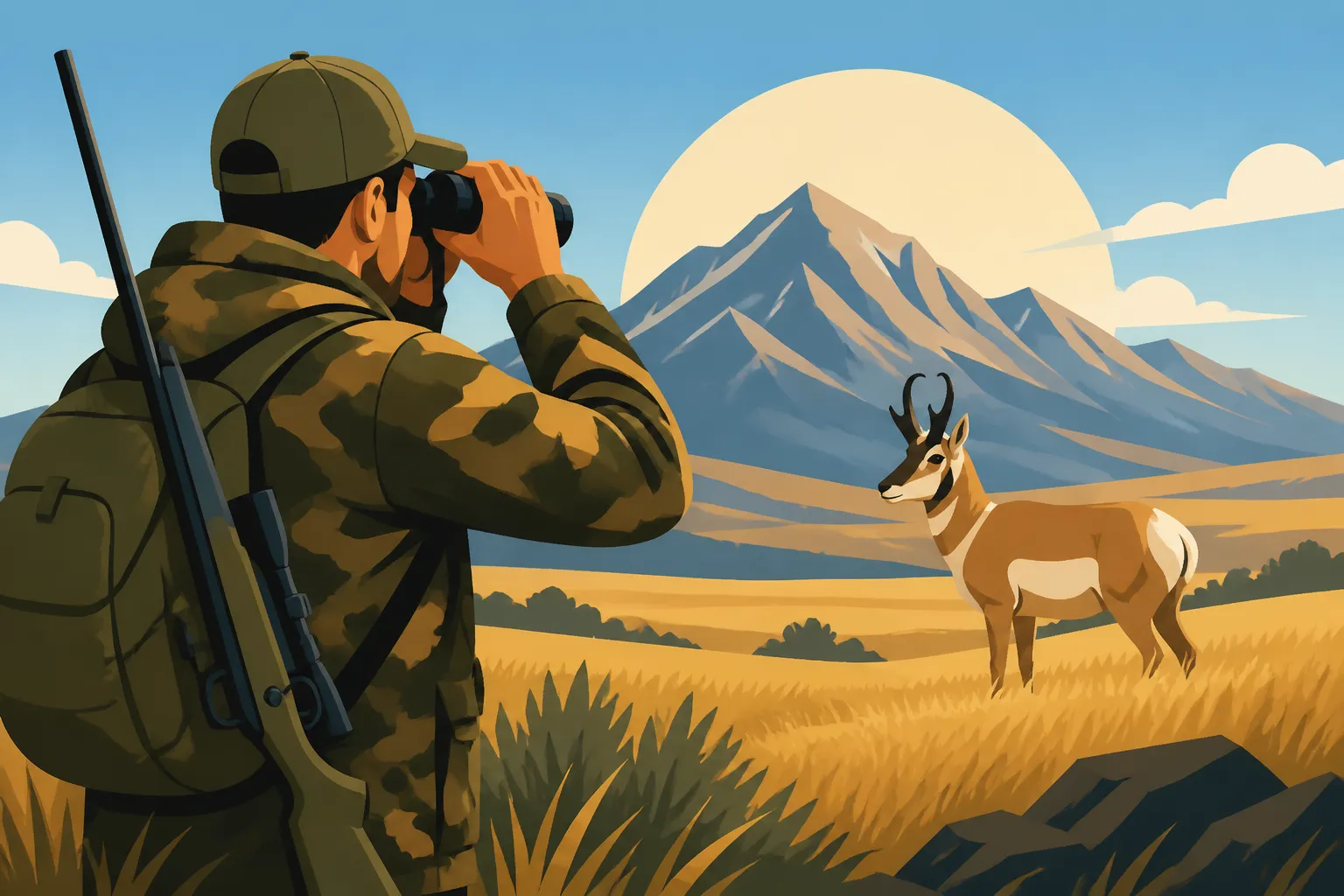
- Glassing: This is where your high-quality optics truly shine. Spend hours behind your binoculars (10x or 12x) and spotting scope (20-60x or higher), systematically glassing vast expanses of country. A good tripod for your binoculars is non-negotiable for stable, fatigue-free glassing. Don't just look for an entire animal; often you'll pick up a white patch, a horn tip, or a subtle movement. Grid search areas methodically. Look for animals feeding in draws, bedding down on subtle rises, or moving between feed and water.
- The Approach: Once you spot an antelope you want to pursue, the real challenge begins. This is where terrain features become your best friends. Use every ripple in the landscape – coulees, ditches, rock formations, even subtle changes in elevation – to stay out of sight. Plan your route carefully, often adding significant mileage to avoid exposing yourself. This might involve long crawls on your belly, sometimes for hundreds of yards, to get into shooting position.
- Wind Management: The wind is crucial. While antelope don't rely on their nose as heavily as deer or elk, they still possess a keen sense of smell. Always try to approach with the wind in your face or quartering. A swirling wind can blow your cover in an instant. This specific tactic is highlighted in our guide on How to Spot-and-Stalk Antelope in Montana.
Decoying Antelope: When and How
Decoying antelope can be one of the most exciting and effective tactics, especially during the rut. Pronghorn bucks are highly territorial and curious, often investigating anything that looks like another antelope entering their domain.
- The Right Scenario: Decoying works best when you spot a buck with a harem, or a lone buck, in relatively open country, and a traditional spot-and-stalk approach is proving difficult due to lack of cover. The best time is during the rut when bucks are aggressive and territorial.
- Decoy Types: Silhouette decoys that attach to your bow or stalking stick are popular, allowing you to move with them. Full-body decoys can also be effective but are less mobile. The key is for the decoy to be realistic enough to pique their curiosity.
- Execution: One hunter holds the decoy, mimicking an antelope, while another hunter (or the same hunter if using a bow-mounted decoy) stalks behind, concealed. The goal is to draw the buck close enough for a shot. Often, the buck will circle downwind to scent-check the "intruder," so anticipating this movement and positioning yourself accordingly is crucial. This is particularly useful for bowhunters, as detailed in How to Decoy Antelope in Montana. Remember, safety first – always be aware of other hunters in the area if using a decoy.
Hunting Water Holes and Feeds
While spot-and-stalk is primary, hunting water holes and key feeding areas can be a highly effective, albeit more patient, method, especially during dry conditions or warmer early season hunts.
- Scouting Water Sources: Use satellite imagery and FWP maps to identify known water sources in your chosen district – stock tanks, ponds, rivers, or even natural springs. Look for tracks and fresh droppings around these areas to confirm antelope activity.
- Blind Placement: If hunting from a blind, ensure it's set up well in advance to allow animals to get accustomed to its presence. Place it downwind, concealed by natural vegetation if possible, and with a good view of the approach to the water. Pop-up blinds work well, but even natural ground blinds can be effective.
- Timing: Antelope typically visit water during the hottest parts of the day, particularly mid-morning to mid-afternoon. They will also hit key feeding areas during dawn and dusk. This passive strategy can be a great way to harvest a buck if the terrain isn't conducive to stalking or if you prefer a more stationary hunt. Learn more about this method in How to Hunt Montana Antelope Water Holes.
Archery vs. Rifle Considerations
Montana offers fantastic opportunities for both archery and rifle antelope hunting, each presenting its own unique set of challenges and rewards.
- Archery Hunting: This is arguably the most challenging way to hunt pronghorn. Their incredible eyesight makes getting within bow range (typically 20-60 yards) a true test of stealth and patience. Decoying can be particularly effective for bowhunters during the rut. Another common tactic is setting up blinds on known water holes or travel corridors. Archery hunters often find great success targeting areas with more broken terrain or around water sources. Our article How to Hunt Montana Antelope with a Bow offers more specific advice.
- Rifle Hunting: Rifle hunting for antelope often involves longer shots due to the open terrain. This means precision marksmanship, understanding bullet ballistics, and accurately judging distance are paramount. A flat-shooting caliber (like a .25-06, 6.5 Creedmoor, .270 Win, or .30-06) is ideal. Practice shooting from prone and kneeling positions, as these are common on the plains. Knowing your rifle's capabilities and your own limits for ethical shot placement is far more important than reaching out to extreme distances. Regardless of weapon, responsible hunting means making a clean kill.
Essential Gear for Montana Antelope Hunting
A successful antelope hunt isn't just about strategy; it's also about having the right gear to withstand the elements and maximize your effectiveness in the field.
Optics: Your Most Important Tool
If there's one area not to skimp on for antelope hunting, it's optics. Your binoculars and spotting scope are not just helpful tools; they are arguably the most crucial pieces of gear you'll carry.
- Binoculars: A high-quality pair of 10×42 or 12×50 binoculars on a sturdy tripod is your primary scouting instrument. Look for clarity, light gathering, and ergonomic design. You'll spend hours behind them, so comfort matters. Brands like Zeiss, Swarovski, and Leica are top-tier, but excellent value can be found with Vortex, Maven, and Leupold. A tripod adapter for your binoculars is non-negotiable for stable glassing.
- Spotting Scope: A good spotting scope (20-60x or 25-75x magnification) is essential for evaluating bucks from long distances without spooking them. This allows you to judge horn length, mass, and overall trophy potential before committing to a stalk. Again, a solid tripod is vital for stability.
- Rangefinder: With the vast, open country, judging distance to an antelope can be incredibly deceptive. A reliable laser rangefinder is an absolute must-have for both rifle and bow hunters to ensure ethical shot distances. Accuracy out to 800-1000 yards is ideal for general hunting purposes. Many hunters rely on brands like Sig Sauer for their reliability.
Investing in quality optics will not only increase your success rate but also significantly enhance your enjoyment of the hunt, allowing you to appreciate the subtle details of the landscape and the animals. Many online platforms, like GoHunt, offer reviews and comparisons of various optics, helping you make an informed decision based on your budget and needs.
Footwear and Clothing for the Plains
The attire you choose for an antelope hunt needs to cater to the diverse and often extreme conditions of the Montana plains. You'll be covering miles on foot, often in warm, sunny weather, but sudden cold fronts or rain are always a possibility.
- Footwear: Lightweight, breathable hiking boots with good ankle support are ideal. You'll be walking many miles over varied terrain, from hard-packed dirt to loose rocks and sometimes muddy conditions. Comfort is king; broken-in boots are a must to avoid blisters. Brands like Kenetrek or Salomon are popular choices among Western hunters for their durability and comfort.
- Clothing Layers: The key is layering. Mornings can be chilly, mid-day can be scorching, and evenings can cool off dramatically. Start with a moisture-wicking base layer. Add a light, breathable shirt and pants in camouflage or earth tones. A light jacket or fleece for cooler mornings and evenings, and a packable rain shell, are essential. Sun protection is critical: a wide-brimmed hat, sunglasses, and sunscreen will save you from a nasty sunburn. Lightweight, durable materials that can withstand brush and thorns are a good idea.
Field Care and Meat Preservation
Montana's early antelope seasons can be hot, and proper field care is paramount to preserving your hard-earned meat. Antelope meat is delicious, but it can spoil quickly if not handled correctly.
- Gutting and Skinning: As soon as an animal is down, begin field dressing immediately. Remove the entrails to allow the carcass to cool. If temperatures are warm, skin the animal as quickly as possible. This allows maximum heat dissipation. Many hunters will quarter the animal in the field to make it easier to pack out and cool faster.
- Game Bags: Bring good quality, breathable game bags (like those from Argali or Caribou Gear) to protect the meat from flies, dirt, and debris while allowing it to cool. Avoid plastic bags, which trap heat.
- Cooling: Get the meat out of the sun and into the shade as fast as possible. If you're driving, having coolers filled with ice (or dry ice for longer trips) ready in your vehicle is essential. Place the bagged meat on the ice, not directly in melted ice water. Airflow is crucial, so don't pack coolers too tightly. A warm antelope in the early season can quickly turn into a wasted opportunity if you don't prioritize cooling. Our guide on Montana Antelope Meat Explained provides more specific tips.
Planning Your Montana Antelope Hunt: Logistics and Preparation
A successful hunt is often won or lost long before you ever set foot in the field. Meticulous planning and preparation are non-negotiable for a fulfilling Montana antelope hunt.
E-Scouting and Map Research
The advent of digital mapping and hunting platforms has revolutionized how hunters plan their trips. E-scouting is your first step to understanding your chosen hunting district.
- Digital Mapping Tools: Platforms like onX Hunt, BaseMap, and Google Earth are invaluable. Use them to identify public land boundaries (BLM, State Trust, National Grasslands), topographical features like coulees, draws, and subtle rises that provide cover. Look for potential water sources, existing two-track roads, and natural funnels or pinch points that antelope might use.
- FWP Resources: The Montana FWP website is a treasure trove of information. Utilize their interactive hunt planner maps, which show hunting district boundaries, Block Management Area details, and often historical harvest data. Pay attention to specific hunt codes and regulations for your chosen district.
- Data Analysis Platforms: Services like GoHunt Insider provide incredibly detailed draw odds, unit breakdowns, historical success rates, and even species distribution maps. These platforms help you choose units where you have a realistic chance of drawing a tag and where the hunting opportunities align with your goals. Combining these digital resources allows you to virtually "walk" the landscape and pinpoint promising areas from your couch. This is a critical step, similar to How to E-Scout Montana Hunting Units for elk.
Physical Conditioning for the Chase
While antelope hunting might not involve the steep climbs of an elk hunt, it still demands a good level of physical fitness. You'll be doing a lot of walking, often covering many miles in a day, and potentially crawling long distances.
- Endurance: Focus on cardiovascular endurance. Long walks, jogging, or cycling will build the stamina needed to cover vast distances on the plains.
- Leg Strength: Hiking with a loaded pack, even a light day pack, will strengthen your legs and core. Practice walking on uneven terrain.
- Shooting Practice: Practice shooting from various field positions, especially prone and kneeling. These are common stances you'll find yourself in when stalking antelope. Simulate hunting conditions by practicing after a brisk walk to get your heart rate up. Making a stable, ethical shot after a long stalk or crawl is a skill that needs to be honed.
Navigating Regulations and Ethical Considerations
Beyond season dates and tag types, there are broader regulations and ethical considerations every hunter must respect.
- Know the Rules: Thoroughly read and understand the Montana FWP hunting regulations. This includes general rules, but also specific regulations for your chosen district, such as antler restrictions (if any), weapon restrictions, and private land rules. Ignorance is not an excuse.
- Fair Chase: Uphold the principles of fair chase. This means not pursuing animals with vehicles, avoiding inhumane shots, and respecting the animal and the landscape.
- Respect Property: If hunting near private land, respect all fences and boundaries. If you retrieve an animal on private land without prior permission, you are trespassing. Always attempt to gain permission before the hunt. This is especially true when hunting Block Management Areas; follow their specific rules to the letter to ensure these vital programs continue.
- Leaving No Trace: Pack out everything you pack in, including spent shell casings. Leave the landscape as you found it, or better.
Field Judging and Trophy Potential
For many, judging an animal in the field adds an exciting layer to the hunting experience. For others, it's simply about harvesting a healthy animal for the freezer. Either way, being able to distinguish bucks from does and estimate horn size is a useful skill.
Distinguishing Bucks from Does
In many units, general tags are for either-sex antelope, but knowing the difference between a buck and a doe is still important for targeted hunting or specific antlerless tags.
- Horns: The most obvious difference. Bucks will have significant horns, often with a visible prong or cutter. Does can have horns, but they are typically much smaller, often just spikes or buttons, rarely exceeding ear length, and usually lack a distinct prong.
- Black Patches: Mature bucks typically have distinct black patches on their jawline, just below the ear, and on their neck. Does usually lack these prominent black markings, or they are very faint.
- Body Size and Build: Bucks are generally larger and more muscular than does, especially during the rut. Their neck will appear thicker.
- Behavior: During the rut, bucks will be actively herding does, chasing off other bucks, and generally exhibiting more dominant, aggressive behavior. Does will often be in groups, sometimes accompanied by fawns. Learning How to Field Judge a Montana Pronghorn effectively takes practice and experience.
Estimating Horn Length and Mass
Judging horn size on a moving or distant antelope can be tricky. Here are some guidelines for estimating trophy potential:
- Ear Length: A pronghorn's ear is roughly 5-6 inches long. Use this as a reference point. A buck with horns significantly taller than its ears is a good starting point for a trophy.
- Mass: Look for mass at the base of the horn and how far it carries up. A truly exceptional buck will have thick bases that carry mass well up the horn.
- Prong/Cutter: The prong or "cutter" is the forward projection on the horn. Look for a well-defined, long prong. The higher up the horn it is, and the longer it is, often indicates an older, more mature buck.
- Symmetry: While not a guarantee of size, symmetrical horns with good length and mass on both sides are generally more appealing to trophy hunters.
- Overall Shape: Some bucks have a "clubby" appearance, with thick, stout horns. Others might be taller and more slender. Identify what kind of horn characteristics you prefer. Understanding these elements can help you identify a Montana Antelope Trophy Potential by District and inform your hunt choices.
Ethical Shot Placement
Regardless of whether you're hunting for meat or trophy, making a quick, clean kill is paramount.
- Vitals: Aim for the "kill zone" – the lung and heart area, just behind the shoulder. A shot through both lungs or the heart will result in a rapid, humane harvest. Avoid "Texas heart shots" or shots aimed solely at the head, as these are low-percentage and unethical.
- Stability: Ensure you have a stable shooting platform. This means going prone, using shooting sticks, or leaning against a sturdy object. In the open plains, shooting sticks are almost a necessity for rifle hunters.
- Wind and Distance: Account for wind drift and bullet drop, especially at longer ranges. Practice shooting in windy conditions and know your rifle's trajectory. A laser rangefinder is crucial for confirming distance and making necessary adjustments.
- Follow-up: Always be prepared for a follow-up shot. Even a well-placed shot might not drop an antelope immediately, and they can cover ground incredibly fast. Stay focused and be ready to shoot again if necessary.
Common Challenges and How to Overcome Them
Antelope hunting in Montana, while incredibly rewarding, comes with its own unique set of challenges. Being prepared for these can make or break your hunt.
Dealing with Hunting Pressure
Montana public lands, especially in the more accessible eastern districts, can experience significant hunting pressure, particularly during the opening days of general rifle season. This can make finding undisturbed animals a real challenge.
- Hunt Mid-Week: If your schedule allows, hunting on weekdays rather than weekends can drastically reduce the number of other hunters you encounter.
- Go Deeper: Most hunters don't venture far from their vehicles. Identify areas on your maps that are a mile or more from roads or easily accessible trails. These "walk-in" areas often hold more undisturbed antelope. This is a tactic often discussed in How to Beat the Crowds on Montana Public Land.
- Use Topography: Even in flat country, subtle coulees, draws, and breaks can hide animals from view. These areas also offer cover for you to stalk. Focus your efforts on these less-obvious spots that other hunters might overlook.
- Hunt Smarter, Not Harder: Instead of blindly driving roads, spend your time glassing from high vantage points. Let your optics do the walking, and then plan a precise stalk.
Managing Weather Extremes
Montana weather is famously unpredictable. You can experience all four seasons in a single day, and antelope hunting seasons often fall during periods of significant temperature swings and potential storms.
- Heat: Early archery season and even early rifle season can be incredibly hot. This poses a risk of heatstroke for hunters and spoilage for meat. Stay hydrated, hunt during cooler parts of the day (dawn and dusk), and always prioritize immediate field care and cooling of your harvest.
- Wind: Wind is a constant companion on the plains. It makes glassing difficult, affects bullet trajectory significantly, and can make stalking a noisy affair. Use the wind to your advantage when stalking, but be prepared for its challenges. Practice shooting in windy conditions.
- Cold Fronts and Snow: Later in the season, sudden cold fronts and even early snow are common. Dress in layers, carry extra insulation, and be prepared for roads to become impassable mud pits. A 4×4 vehicle with good tires is often a necessity. Always check the forecast leading up to and during your hunt. Our guide on How to Handle Cold-Weather Gear for Montana can provide insights.
The "Antelope Fever" and Missed Opportunities
It's a common affliction among hunters: "antelope fever." The sheer speed and elusive nature of these animals, combined with the excitement of a successful stalk, can lead to hurried shots and missed opportunities.
- Stay Calm: When an antelope stops or presents a shot, take a deep breath. Control your excitement. Focus on your fundamentals: sight picture, trigger squeeze, and follow-through.
- Practice Under Pressure: Practice shooting in scenarios that mimic hunting, like after a brisk walk or an elevated heart rate. This helps desensitize you to the physical effects of excitement.
- Know Your Limits: Only take shots you are confident in making ethically. A clean miss is always better than a wounded animal. If the antelope is quartering away or angled poorly, wait for a better shot opportunity or pass on the shot. Patience is a virtue in antelope hunting, and sometimes the best shot is the one you don't take.
Disclaimer
Please note that hunting regulations, season dates, and access programs in Montana can change annually. It is your sole responsibility to review the most current Montana Fish, Wildlife & Parks (FWP) regulations and obtain all necessary licenses, permits, and permissions before engaging in any hunting activities. This guide is for informational purposes only and should not be considered a substitute for official FWP documentation or professional outfitter advice. Hunt safely and ethically.