Montana Elk Hunting Guide
The dream of chasing elk in Montana is one that grips many a hunter, but the reality can often feel like an impenetrable puzzle. From understanding the complex tag draw system to figuring out where the elk even are in such a vast state, it’s easy to feel overwhelmed. This comprehensive guide is designed to cut through the confusion, offering practical, in-depth insights to help you plan and execute a successful Montana elk hunt, turning that dream into a tangible adventure.
Understanding the Allure of Montana Elk Hunting
Montana, often called the "Last Best Place," truly lives up to its name when it comes to elk hunting. The sheer scale of the landscape, the robust elk populations, and the incredible amount of accessible public land draw hunters from across the globe. But beyond the postcard-perfect images, there's a challenging, rewarding experience waiting for those who are prepared.
The Dream vs. Reality: Why Montana?
For many, Montana represents the pinnacle of Western big game hunting, particularly for elk. The vision is often one of bugling bulls echoing through vast mountainsides, crisp autumn air, and the ultimate test of a hunter's skill and endurance. This dream is absolutely attainable here, but it’s crucial to understand that it comes with its own set of trials. The state boasts a healthy elk population, estimated to be over 150,000 animals, spread across a diverse range of habitats from timbered mountains to rolling plains. This abundance, combined with millions of acres of national forests, BLM lands, and state lands, means opportunities are plentiful, but so are the challenges.
The reality, however, is that Montana elk hunting isn't a walk in the park. Success rates, especially for non-residents on general tags, can be tough, hovering around 10-20% depending on the year and method. This isn't to discourage, but to prepare. You'll face unpredictable weather, rugged terrain, and competition from other hunters, especially in easily accessible areas. The allure is strong because when it all comes together – the scouting, the physical effort, the shot – the reward is immense, creating a memory that lasts a lifetime. It's a hunt that demands respect, preparation, and a healthy dose of grit, but the potential for an unforgettable experience is what keeps hunters coming back year after year.
Elk Species and Their Habits in Big Sky Country
While you'll primarily be hunting the Rocky Mountain Elk ( Cervus canadensis nelsoni ) in Montana, understanding their specific behaviors and habitat preferences across the state's varied regions is crucial. These majestic animals are creatures of habit, yet incredibly adaptable, constantly seeking food, water, and security. In the mountainous western and central parts of the state, elk often inhabit dense timber, high alpine meadows in summer, and move to lower elevations and south-facing slopes as snow accumulates. Their diet primarily consists of grasses, forbs, and browse from shrubs and trees, dictating their movements throughout the seasons.
Further east, where the mountains give way to rolling hills and breaks, elk can be found in more open, sometimes surprisingly arid, country. Here, they might utilize coulees, river bottoms, and CRP fields for cover, often traveling vast distances between bedding and feeding areas. Understanding these regional distinctions is vital for successful scouting. During the rut (late September to mid-October), bulls become highly vocal and active, making them more visible and callable, but also more pressured. Post-rut, they often retreat to recover, while cows and calves remain in larger, more cohesive herds. Recognizing these patterns and adapting your strategy to the specific area and time of year is key to encountering these magnificent creatures.
Public Land Opportunities and Challenges
Montana is a public land hunter's paradise, offering millions of acres of accessible terrain. This includes vast expanses of National Forests like the Custer Gallatin and Beaverhead-Deerlodge, Bureau of Land Management (BLM) lands, and State Trust Lands. These lands provide incredible opportunities for DIY hunters to pursue elk without needing private land access. However, public land also comes with unique challenges, primarily related to hunter pressure and access. Easily accessible areas, especially those near major roads or trailheads, can see significant competition, making it harder to find undisturbed elk.
The real gems on public land often lie deeper in the wilderness, requiring significant physical effort and backcountry knowledge to reach. Learning about specific public land programs like Block Management Areas (BMAs) can also unlock incredible opportunities. These are private lands that landowners open to public hunting through an agreement with Montana Fish, Wildlife & Parks (FWP), often providing excellent access to prime habitat. Utilizing tools like onX Hunt or GoHunt maps is essential for identifying public/private boundaries, roadless areas, and potential elk strongholds. While the sheer amount of public land is a blessing, success often hinges on your ability to go further, hunt smarter, and adapt to varying levels of pressure. For more on navigating these vast areas, check out our Montana Public Land Hunting Guide.
Navigating Montana's Elk Hunting Regulations and Tags
One of the biggest hurdles for non-resident elk hunters looking at Montana is undoubtedly the complex licensing and tag system. It's not as simple as showing up and buying a tag over the counter; there's a draw system, preference points, and different tag types to understand. Getting this wrong can mean missing out on your hunt entirely, so paying close attention to the details and deadlines is absolutely critical.
Deciphering the Montana Nonresident License Draw Explained
As a non-resident, your primary entry into Montana's elk hunting world is through the annual big game draw. The most common and sought-after option is the Non-resident Big Game Combination license, often simply called the "Elk Combo" or "Big Game Combo." This license, if drawn, includes your general elk tag, a general deer tag, an upland bird license, and a fishing license. It's a significant investment, both in application fees and the full license cost if successful, but it unlocks a wide range of hunting opportunities across the state.
The application period typically runs from late January to mid-March each year, with results usually announced in April. The draw is competitive, with a cap on the number of non-resident combination licenses issued. Your odds of drawing depend on several factors, including the total number of applicants, the number of licenses available, and whether you've accumulated preference points. It's not uncommon for non-residents to apply for several years before successfully drawing a combo license, especially for the coveted general elk tag. Understanding the mechanics of this draw, which heavily favors those with points, is your first step toward planning a successful hunt. For a deeper dive, read our article on the Montana Nonresident License Draw Explained.
Montana Preference Points vs Bonus Points: Building Your Odds
Montana employs two distinct point systems – preference points and bonus points – which can be a source of confusion for new applicants. Understanding how each works is paramount to improving your draw odds, especially for limited-entry permits and the highly sought-after non-resident combination licenses.
Preference Points are specifically for the general non-resident big game combination licenses (elk combo, deer combo, or deer/elk combo). Each year you apply for one of these licenses and are unsuccessful, you automatically earn a preference point. You can also purchase a preference point without applying for a license, which many non-residents do to build points for future hunts. These points are strictly linear: the applicant with the most preference points gets priority. So, if there are 17,000 combo licenses available, the first 17,000 applicants with the highest preference point totals will draw. If there's a tie in points, the system uses a random drawing among those tied. This system rewards persistence, making it easier to predict when you might draw a general combo tag after accumulating enough points.
Bonus Points, on the other hand, are for limited-entry special permits for specific hunting districts (e.g., specific elk, deer, moose, sheep, or goat permits). Every year you apply for a limited-entry permit and are unsuccessful, you earn a bonus point. You can also purchase a bonus point for a specific species without applying for a permit. The key difference with bonus points is that they are squared before being entered into the draw. So, if you have 3 bonus points, you get 3×3=9 entries into the draw. If you have 5 points, you get 5×5=25 entries. This means the more points you have, your odds increase exponentially, not just linearly. This system offers a chance for lower-point holders to draw, as even someone with 1 point gets 1 entry. However, those with many points have a significantly higher chance. This distinction is critical for targeting specific, high-demand areas. You can delve into the nuances of these systems with our guide on Montana Preference Points vs Bonus Points.
| Point Type | Used For | How it Works | Impact on Odds |
|---|---|---|---|
| Preference Point | Non-resident Combination Licenses (Elk, Deer) | Linear; highest points get first priority. | Rewards persistence; more predictable draw success. |
| Bonus Point | Limited-Entry Special Permits (Elk, Deer, etc.) | Squared; points are multiplied by themselves for entries. | Exponentially increases odds with more points. |
General vs Permit Tags Explained for Elk
Understanding the difference between general tags and permit tags is crucial for strategizing your Montana elk hunt. This distinction impacts where and how you can hunt, and significantly influences your draw strategy as a non-resident.
A general tag is what you receive if you successfully draw a non-resident Big Game Combination license. This tag allows you to hunt in any of the vast number of "general units" or "general districts" across Montana. These units don't require an additional special permit, and they make up the majority of the state's elk hunting opportunities. While some general units might have antler point restrictions or specific season dates, the general tag is your passport to most of Montana's public land elk hunting. The beauty of a general tag is its flexibility; it allows you to adapt to changing conditions, move between areas, and cover a lot of ground in search of elk. For many non-residents, drawing a general elk combo license is the primary goal, offering a true western big game experience.
Permit tags, also known as "limited-entry permits" or "special permits," are issued for specific hunting districts that have tighter management regulations, often to control harvest or protect specific age classes of animals. These districts usually offer higher quality hunting, either in terms of trophy potential or consistent elk numbers, but they are much harder to draw. Even if you have a general elk tag, you cannot hunt in a permit-only district unless you also draw the specific limited-entry permit for that district. Applications for these permits are separate from the general combo license draw and utilize the bonus point system. You'll apply for a specific permit (e.g., "Elk 390-20" for a certain district and hunt type), and the draw odds are often very low, sometimes requiring many years of accumulated bonus points. While challenging, drawing a permit tag can open the door to a truly exceptional hunting experience in a less pressured, high-quality area. Our guide on Montana General vs Permit Tags Explained offers more specific examples.
Key Elk Hunting Methods and Tactics for Montana
Montana's diverse landscape demands a versatile approach to elk hunting. What works in the dense timber of western Montana might be entirely ineffective on the sprawling plains of the east. Adapting your methods to the terrain, weather, and elk behavior is paramount for consistent success. It’s not just about walking and looking; it's about understanding the subtle cues of the environment and the animals.
Spot-and-Stalk Elk Hunting in Montana's Vast Landscapes
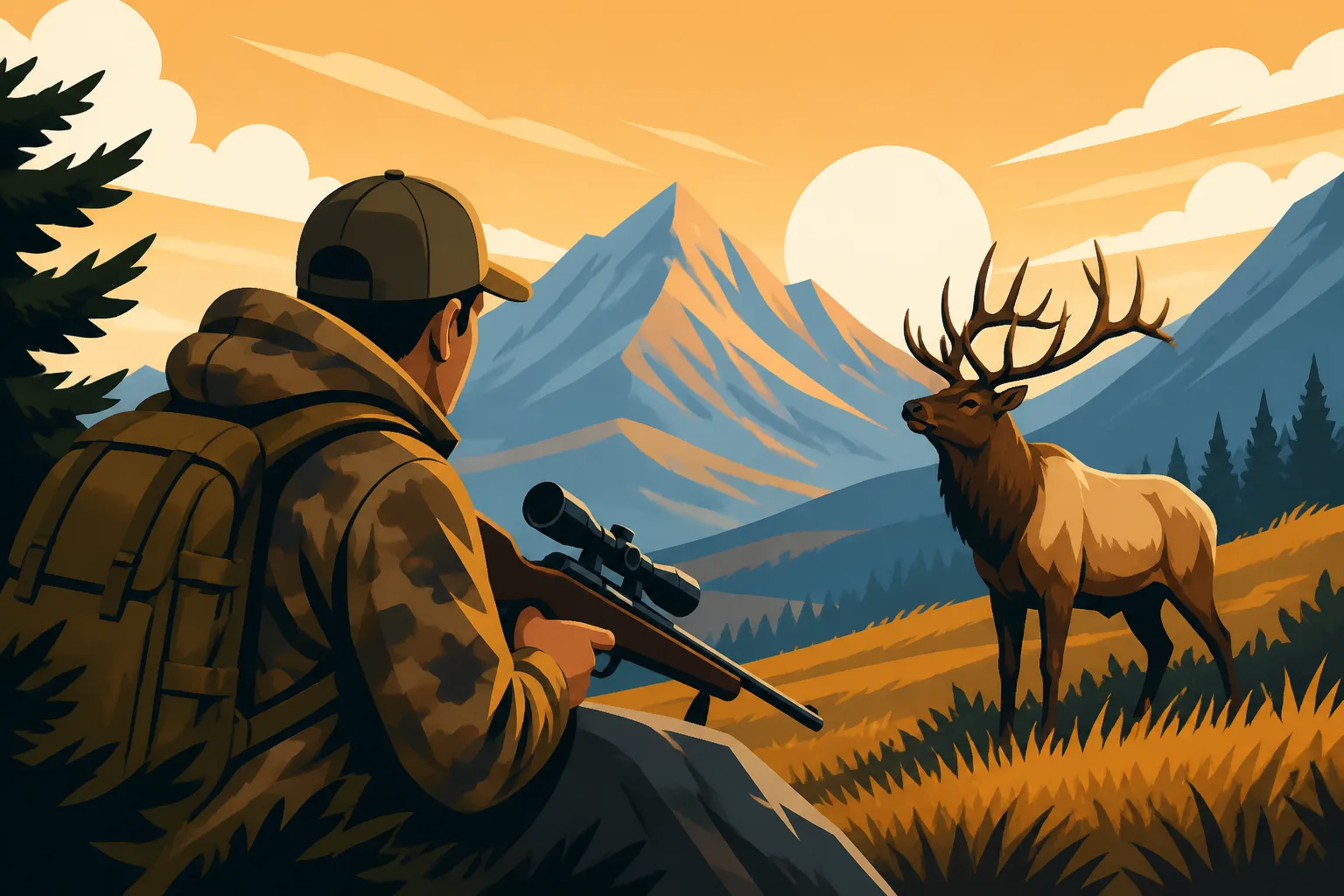
Spot-and-stalk is arguably the most iconic and often the most effective method for hunting elk in Montana's wide-open, mountainous, or broken country. This method relies heavily on high-quality optics and patience, often covering vast amounts of ground with your eyes before you ever take a step with your feet toward an animal. It's particularly effective in areas with good visibility, such as open ridges, burn areas, alpine basins, or the rolling sagebrush hills of central and eastern Montana.
The core principle is simple: use your binoculars or spotting scope to locate elk from a distance, then meticulously plan and execute a stalk to get within shooting range. This is far from easy. Montana's terrain is notoriously deceptive, and what looks like a short, easy approach from afar can quickly turn into a vertical climb through deadfall and thick brush. The wind is your absolute master during a stalk; a single puff in the wrong direction can send elk scattering. You need to identify thermal currents, predict wind shifts, and constantly monitor the elk's behavior. A successful spot-and-stalk often involves hours of patient glassing, careful route planning, and a slow, quiet approach that might take several hours, culminating in a few heart-pounding minutes or seconds when the shot opportunity arises. It's physically demanding, mentally taxing, but incredibly rewarding when you finally close the distance.
How to Call Elk in Montana: Understanding Their Language
Calling elk is a thrilling and highly effective method, especially during the archery season when the rut is in full swing. It involves mimicking elk vocalizations – bugles, cow calls, chirps, and mews – to attract bulls, locate herds, or stop a moving animal for a shot. Mastering elk calling takes practice, but understanding the nuances of their communication can turn a quiet hunt into an adrenaline-fueled encounter.
The most common calls are the cow call, which sounds like a plaintive "mew" or "moan," used to attract bulls looking for a mate or to reassure other elk in the herd. Bugles, the loud, resonant cries of a bull, are used to announce their presence, challenge other bulls, or gather cows. When learning How to Call Elk in Montana, it's important to differentiate between aggressive "challenge" bugles and more subdued "locator" bugles. The key to effective calling is not just making the right sound, but knowing when and where to use it, and how to read the elk's response. Sometimes, less is more; a subtle cow call can be far more effective than an aggressive bugle that might spook a wary bull. Understanding thermals and wind direction is also critical when calling, as elk will often try to circle downwind to scent-check the source of a call before committing.
Montana Backcountry Hunting Guide: Getting Away from the Crowds
For many, the ultimate Montana elk hunting experience involves venturing deep into the backcountry, far from roads and other hunters. This is where truly wild elk can be found, often in less pressured and more predictable patterns. Backcountry hunting isn't just a method; it's a commitment to self-sufficiency, physical endurance, and a deep respect for the wilderness. It means packing everything you need to survive for several days or even weeks, from shelter and food to water purification and first-aid supplies.
The advantages are clear: solitude, untouched landscapes, and the chance to encounter elk that haven't been pushed or educated by human presence. The challenges are equally profound: extreme physical exertion, navigational difficulties, unpredictable weather, and the logistical nightmare of packing out hundreds of pounds of meat from miles deep. Success in the backcountry often means meticulously planning your route, understanding topographical maps, and having a solid grasp of survival skills. You'll need to know How to Pack Into the Montana Backcountry efficiently and set up a reliable camp. This style of hunting rewards the prepared and the persistent, offering an unparalleled sense of accomplishment and connection to the wild. For an extensive resource, consider our full Montana Backcountry Hunting Guide.
Essential Gear and Preparation for a Montana Elk Hunt
A successful elk hunt in Montana isn't just about finding the animals; it's about being prepared for everything the Big Sky Country can throw at you. This means having the right equipment, tuned to perfection, and your body conditioned to withstand the rigors of the hunt. Skimping on gear or fitness can turn a dream hunt into a miserable, even dangerous, experience.
Optics, Rifles, and Archery Setups for Success
Your choice of weapon and optics will profoundly impact your hunting experience and success. For rifle hunters, reliability and accuracy are paramount. Popular calibers for elk include .30-06 Springfield, .300 Winchester Magnum, 7mm Remington Magnum, and .308 Winchester, all capable of delivering the knockdown power needed for such a large animal. A quality scope with good light-gathering capabilities is also essential, especially during dawn and dusk. Ensure your rifle is sighted in perfectly at various distances, as shots can range from close timber encounters to long-range across open draws.
Archery hunting for elk demands even greater precision and practice. A compound bow with a draw weight you can comfortably and accurately manage is key, typically in the 60-70 lb range. Broadheads must be sharp and matched to your setup for maximum penetration. Rangefinders are critical for accurate shot placement in variable terrain, and a steady rest (like shooting sticks) can make all the difference. Regardless of your weapon, high-quality optics are non-negotiable. A good pair of 10×42 or 10×50 binoculars, and a spotting scope (15-45x or 20-60x) for long-range glassing, will be your best friends for locating elk and planning stalks. Brands like Vortex, Leupold, and Swarovski are popular among serious hunters for their durability and clarity.
Montana Backcountry Hunting Gear List: What to Pack
Packing for a Montana elk hunt, especially if you're venturing into the backcountry, is a careful balance between being prepared for anything and keeping your pack weight manageable. You'll face everything from warm, sunny days to freezing rain and snow, sometimes all in the same day. Your gear needs to be rugged, reliable, and functional.
Start with a solid layering system for clothing: a moisture-wicking base layer, insulating mid-layers (fleece or puffy jacket), and a waterproof/breathable outer shell are critical. Good quality hiking boots, preferably waterproof and well broken-in, are non-negotiable. A comfortable, properly fitted backpack (60-80 liters for multi-day trips) is essential to carry your gear and, hopefully, meat. Don't forget navigation tools like a GPS device, paper maps, and a compass (and know how to use them). Water filtration, a reliable headlamp with spare batteries, a first-aid kit, fire-starting materials, and emergency shelter are also vital. Food should be lightweight, high-calorie, and easy to prepare. For a truly exhaustive checklist, consult our Montana Backcountry Hunting Gear List. Remember, every item in your pack should serve a purpose, and redundancy for critical items (like fire starters) is wise.
How to Physically Prepare for a Montana Elk Hunt
A Montana elk hunt is a marathon, not a sprint. The mountains are unforgiving, and the sheer effort of climbing steep grades, traversing uneven terrain, and potentially packing out hundreds of pounds of meat can break even seasoned athletes. Neglecting physical preparation is one of the biggest mistakes a hunter can make. You don't need to be an Olympic athlete, but you do need to be in solid cardiovascular and muscular shape.
Your training regimen should focus on endurance, strength, and stamina. Incorporate activities like hiking with a weighted pack (gradually increasing weight), stair climbing, and running into your weekly routine. Mimic the demands of the hunt: train on uneven terrain, go for longer durations, and simulate pack-outs with heavy loads. Strong legs, core, and back muscles are crucial. Don't forget flexibility and balance exercises to help navigate tricky terrain and prevent injuries. Start your preparation months, not weeks, before your hunt. This sustained effort will not only increase your chances of success but also make the entire experience more enjoyable and safer. If you're serious about getting in shape, check out our dedicated guide: How to Physically Prepare for a Montana Elk Hunt.
Scouting and Locating Elk in Diverse Montana Terrain
Finding elk in Montana's vastness can feel like looking for a needle in a haystack. They are masters of their environment, utilizing terrain, cover, and feed to their advantage. Effective scouting, both from your couch and boots-on-the-ground, is the foundation of any successful elk hunt. It’s about understanding their patterns, anticipating their movements, and identifying high-percentage areas before you ever step foot in the field with a weapon.
How to E-Scout Montana Hunting Units from Home
Thanks to modern technology, a significant portion of your scouting can now be done from the comfort of your home. E-scouting involves using digital mapping tools, aerial imagery, and public land databases to identify potential elk habitat, travel corridors, bedding areas, and water sources. Platforms like onX Hunt, BaseMap, and particularly GoHunt's Insider service offer invaluable resources. GoHunt's unit profiles, draw odds, and filtering tools can help you narrow down potential hunting districts even before you apply.
When e-scouting, look for key features: north-facing slopes with dark timber (for bedding and thermal regulation), south-facing slopes (for early season forage and winter range), saddles, benches, and ridges (for travel routes), and areas with good water sources. Identify areas away from roads and trails to find less pressured animals. Pay attention to changes in vegetation, old burns, and clear-cuts, which can provide excellent forage. Use the topography tools to visualize elevation changes and potential escape routes for elk. While e-scouting can't replace on-the-ground reconnaissance, it allows you to eliminate low-probability areas and focus your efforts on high-potential zones, saving you precious time and energy during your actual hunt. Learn more about this powerful strategy in our guide on How to E-Scout Montana Hunting Units.
Understanding Elk Movement and Migration Patterns
Elk are constantly on the move, driven by instinct, forage, water, and pressure. Understanding their typical movement and migration patterns is critical for predicting where they might be at different times of the year and during various weather conditions. Their movements are often seasonal, with elk moving from high-elevation summer ranges to lower winter ranges as snow accumulates and temperatures drop. This "migration" can involve traveling tens of miles.
During the archery season, in late summer and early fall, elk are often in higher elevation basins and timbered areas, feeding heavily to build up reserves for the rut and winter. As the rut intensifies (late September to mid-October), bulls become more active and vocal, often moving into more open areas to display and challenge rivals. Post-rut, elk tend to band together in larger herds, moving to areas with accessible forage and cover, often at lower elevations. Weather plays a significant role; a fresh snowfall can push elk down from higher elevations, and extreme cold can drive them into dense thermal cover. Learning to recognize these patterns, whether through historical data, local knowledge, or simply observing sign in the field, will dramatically improve your chances of intercepting elk.
Finding Elk in Montana Dark Timber and High Country
Montana's dense "dark timber" and vast high-country basins are classic elk strongholds, offering critical bedding cover and thermal protection. While challenging to hunt due to limited visibility and rugged terrain, these areas often hold mature bulls and less pressured herds. In the dark timber – dense stands of fir, spruce, and lodgepole pine – elk seek refuge from sun, wind, and hunters. They often bed on benches or saddles within these timber blocks, usually with good vantage points to detect danger. Hunting these areas often requires slow, quiet still-hunting tactics, moving into the wind and paying close attention to every sound and scent.
The high country, above treeline or in vast alpine meadows, offers a different challenge. Here, elk might feed in open basins during cooler parts of the day or at night, retreating to timbered fringes or steep, broken terrain for bedding during daylight hours. Glassing these basins from afar, especially at first light and last light, is often the most effective way to locate animals before planning a stalk. During the heat of the day, focus your efforts on the timbered edges and north-facing slopes adjacent to these open areas. Learning to identify fresh tracks, droppings, rubs, and wallows in these environments will tell you if elk are in the area and give clues about their recent activity. Patience and persistence are absolutely key when hunting these formidable, yet highly rewarding, types of terrain.
Timing Your Montana Elk Hunt: Seasons and Strategies
The timing of your elk hunt in Montana can dramatically impact your experience, from the weather you'll encounter to the behavior of the elk themselves. Montana offers diverse seasons, each with its own advantages and challenges, and understanding them is key to maximizing your odds.
Montana Archery Season Dates: The Rut's Embrace
Montana's archery season typically opens in early September and runs through mid-October, encompassing the most exciting period of the elk year: the rut. This is when bulls are most active, vocal, and often less cautious, making it a prime time for bowhunters. The early part of the season in September often sees bulls beginning to stage, shedding velvet, and starting to spar, with minimal bugling. As the month progresses and into early October, the rut intensifies. This is when you'll hear the iconic bugles echoing through the mountains, as bulls gather their harems and challenge rivals.
Hunting the rut during archery season offers an incredible opportunity for close-range encounters, as bulls can often be called into bow range. However, it also comes with its challenges. Weather can be highly variable, ranging from hot, dry conditions in early September to cold rain or even early snowstorms in October. Hunter pressure can also be significant in popular areas, especially on weekends. Success often hinges on knowing Montana Archery Season Dates, understanding elk vocalizations, being proficient at calling, and having the patience to wait for the perfect shot opportunity. The experience of calling in a bull and having him respond is an unparalleled thrill for any hunter.
Montana General Rifle Season Dates: Pressure and Opportunity
The general rifle season in Montana typically runs for five weeks, starting in late October and extending through late November. This is by far the most popular time to hunt elk, drawing significant numbers of resident and non-resident hunters alike. The sheer volume of hunters creates a dynamic hunting environment where elk are constantly pressured and on the move.
Early in the rifle season, especially the first week, elk are often still recovering from the rut and can be found in larger herds. However, the immediate increase in hunter activity means they quickly become wary, retreating to dense timber, roadless areas, or private land. Mid-season can be tough, as elk have learned to adapt to pressure. The best opportunities often come with fresh snowfall, which can push elk to lower elevations and make tracking easier, or during the last week of the season when hunters might thin out and elk become more active again. Rifle season demands a different strategy than archery; it's often more about covering ground, finding fresh sign, and intercepting moving animals, rather than calling them in. Understanding Montana General Rifle Season Dates and planning to hunt weekdays or in remote areas can help you avoid the heaviest pressure.
Late-Season Elk Hunting in Montana: Winter Challenges
Beyond the general rifle season, some specific districts in Montana offer late-season or "shoulder season" elk hunts, often extending into December or even January. These hunts target specific populations or allow for increased harvest, particularly of antlerless elk, and usually require special permits. Late-season hunting presents a unique set of challenges and opportunities.
By late season, the elk have typically moved to their winter ranges at lower elevations, often near agricultural fields or in specific drainages that offer accessible forage and thermal cover. Snowfall is usually significant, making travel difficult but also concentrating elk and making tracks easier to follow. The cold weather means keeping meat cool is less of an issue, but staying warm and mobile yourself becomes a major challenge. Hunting success often relies on finding these winter concentration areas, which can be limited. While the weather is harsh and conditions can be brutal, the reward can be excellent opportunities for filling the freezer, especially if you're targeting cows. Access might be restricted due to snow, requiring snowmobiles, skis, or snowshoes. For those willing to brave the elements, Late-Season Elk Hunting in Montana can be incredibly productive and offer a truly rugged adventure.
Practical Considerations and Field Skills
Hunting Montana elk isn't just about pulling a trigger; it's about a whole suite of practical skills that begin long before the shot and extend well beyond it. These skills are essential for safety, ethics, and ensuring you make the most of your hard-earned success.
How to Pack Out an Elk in Montana: The Real Work Begins
Successfully harvesting an elk is an incredible achievement, but the real work often begins after the shot: getting the meat from the field to the freezer. An adult bull elk can weigh 700-1000 pounds or more, yielding several hundred pounds of boned-out meat. Attempting to drag an entire elk, especially in rugged terrain, is usually impossible and incredibly inefficient. This is why knowing How to Pack Out an Elk in Montana is a critical skill for any aspiring elk hunter.
The most common method is to quarter the animal and bone out the meat in the field, then pack it out in sturdy game bags. This involves a clean, efficient gutting process, skinning, and then carefully separating the four quarters, backstraps, tenderloins, neck meat, and any other salvageable meat. A good quality sharp knife, game bags, and a sturdy frame backpack are indispensable. If hunting with partners, you can distribute the load, but even with help, it will likely take multiple trips and immense physical effort. Consider the distance to your vehicle, the terrain, and the weather. In some remote backcountry scenarios, hunters may opt for a spike camp and relay meat out over several days. Planning your pack-out strategy before you even start hunting is crucial for ethical harvest and meat preservation.
Keeping Elk Meat Cool in Montana's Early Season
Montana's early archery season can often be surprisingly warm, with daytime temperatures sometimes reaching into the 70s or even 80s Fahrenheit. These conditions pose a significant challenge for meat care, as warm temperatures can quickly spoil valuable elk meat, rendering your hard work useless. Knowing How to Keep Elk Meat Cool in Montana's Early Season is vital for preserving your harvest.
The absolute first priority is to get the animal field dressed and skinned as quickly as possible. This allows the carcass to cool down internally. Break the animal down into quarters and smaller pieces, removing all bone to maximize cooling surface area and reduce weight. Place the meat in breathable game bags, never plastic, which traps heat. Hang the game bags in the shade, preferably in a breezy area, to promote air circulation. If you're in the mountains, cooler north-facing slopes or creek bottoms can provide natural refrigeration. Many hunters carry a few small, reusable ice packs or frozen water bottles to place inside game bags, especially during the pack out. It's often worth the extra effort to make an immediate trip out to get the first load of meat to a cooler with ice, even if it means returning for subsequent loads. Speed and air circulation are your best friends in warm weather.
Montana Backcountry Hunting Safety Tips
Venturing into Montana's vast wilderness, especially for elk, is an incredible experience, but it comes with inherent risks. Being prepared for emergencies and prioritizing safety is not just good practice; it's essential for survival. Neglecting safety can turn a dream hunt into a nightmare, so ensure you have a solid grasp of Montana Backcountry Hunting Safety Tips.
Always let someone know your exact hunting plan, including your route, where you'll be parking, and when you expect to return. Carry reliable communication devices, such as a satellite messenger (Garmin inReach or Zoleo are popular choices) or a satellite phone, as cell service is often non-existent in the backcountry. A comprehensive first-aid kit, and the knowledge of how to use it for common injuries, is non-negotiable. Be bear aware: carry bear spray, know how to use it, and store food properly to avoid attracting animals. Familiarize yourself with local weather patterns and be prepared for sudden changes, carrying appropriate gear for all conditions. Proper navigation tools (GPS, map, compass) and the skills to use them are vital to prevent getting lost. Hunt with a partner whenever possible, and if hunting solo, take extra precautions and notify emergency contacts. Respect the terrain, your physical limits, and the power of Mother Nature.
Disclaimer
The information provided in this guide is for general informational purposes only and does not constitute legal advice. Hunting regulations, season dates, and license requirements in Montana are subject to change. Always consult the official Montana Fish, Wildlife & & Parks (FWP) regulations and website for the most current and accurate information before planning any hunting trip. It is the responsibility of each hunter to know and comply with all applicable laws and regulations.