How to Find Elk in Montana Dark Timber
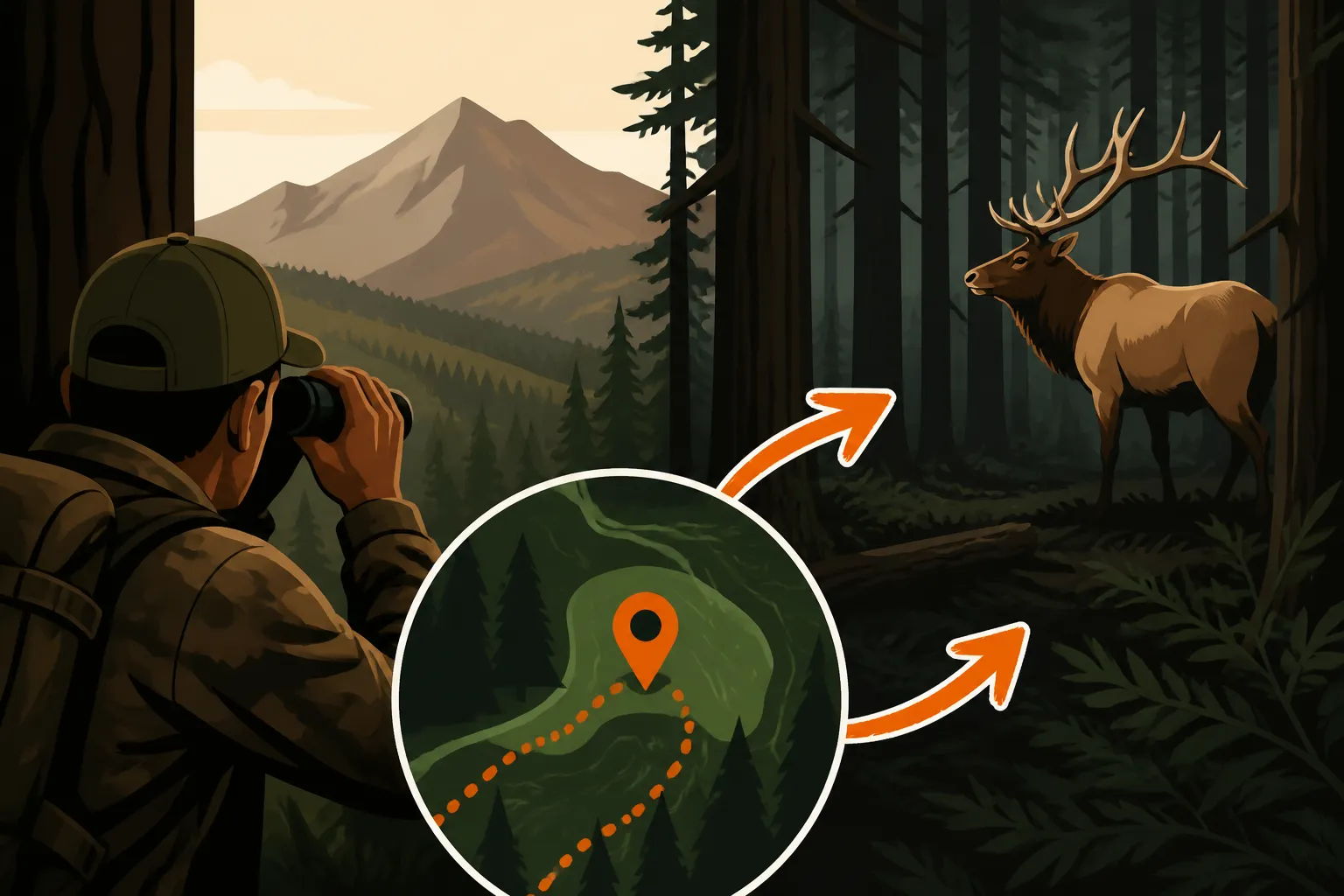
It's a familiar scenario for any elk hunter in Montana: you've been grinding hard, maybe glassing open slopes or working a ridge, only to have the elk you're pursuing vanish into that dense, dark timber like ghosts. It's frustrating, disheartening even, when you know they're in there, but finding them feels like trying to navigate a maze blindfolded. This isn't just a place they hide; it's their sanctuary, their fortress. This guide is dedicated to pulling back the curtain on those shadowy sanctuaries, offering practical, boots-on-the-ground strategies and e-scouting tips to help you consistently locate and hunt elk in the thickest timber Montana has to offer.
Understanding Dark Timber Habitat and Elk Behavior
Montana's landscape is incredibly diverse, from vast plains to towering peaks. But in the mid-elevations and higher, you'll inevitably encounter vast expanses of dark timber. This isn't just random trees; it's a critical part of an elk's survival strategy, and understanding why they use it is the first step to figuring out how to find them there.
Why Elk Seek Dark Timber
Elk are constantly balancing their needs for food, water, and most importantly, security. Dark timber provides a perfect trifecta of these elements, often in ways that open country simply cannot.
First and foremost, dark timber offers incredible thermal regulation. On sweltering early-season days, those dense stands of spruce, fir, and lodgepole pine act like natural air conditioners, providing deep shade and cooler temperatures. Conversely, during bitter late-season hunts when blizzards rage, that same dense canopy and intertwined branches offer a crucial thermal blanket, protecting them from the biting wind and heavy snow. Imagine being an animal that needs to conserve energy to survive the winter; finding a place where you can stay relatively warm without expending much effort is paramount. This deep, dense cover minimizes heat loss in cold weather and keeps them cool when the sun beats down.
Beyond temperature control, dark timber is a fortress of security. When hunting pressure mounts, whether from archery hunters during the rut or rifle hunters during the general season, elk quickly learn to dive into the thickest, nastiest timber they can find. The sheer density of the trees, often combined with steep slopes, downed timber, and thick underbrush, makes it incredibly difficult for predators—both two-legged and four-legged—to move through silently or spot them from a distance. They feel safe in there, knowing that they can hear you coming long before you ever see them, giving them ample time to slip away deeper into the gloom. For an animal as large as an elk, disappearing into thin air is a common tactic, and dark timber provides the perfect stage for that disappearing act.
Lastly, dark timber areas, especially those near openings or with scattered pockets of browse, often provide a surprising amount of forage and water. While they may not offer the expansive fields of grass found in open meadows, the timbered slopes can hold succulent forbs, young shoots, and lichen during different seasons. Crucially, springs, seeps, and small drainages often originate or flow through these timbered areas, providing reliable water sources that are also protected by the canopy. This means elk can eat, drink, and bed down all within a relatively small, secure zone, minimizing their exposure to potential threats.
Key Characteristics of Productive Dark Timber
Not all dark timber is created equal when it comes to holding elk. While any patch of dense trees might offer temporary refuge, consistently productive dark timber areas share certain key characteristics that make them prime elk habitat. Understanding these will help you focus your efforts.
Elevation and aspect play a huge role. Elk often favor north-facing slopes, particularly in the early season or during warmer weather, because these slopes receive less direct sunlight and thus retain more moisture, leading to cooler temperatures and often lusher forage. As the season progresses and temperatures drop, or during particularly brutal cold snaps, south-facing timber pockets might become more attractive for their warmth, especially if they are dense enough to block wind. Look for timber at various elevations, knowing that elk will move up and down based on pressure, forage availability, and weather conditions. High-elevation timber, often interspersed with pockets of alpine meadows, can be a goldmine during the early archery season, while mid-elevation timber near agricultural fields might hold animals in the late season.
Cover density is paramount. We're talking about timber so thick you can barely see 20 yards, where visibility is measured in feet, not acres. This density provides the security elk crave. It makes it hard for hunters to move quietly, and even harder to get a clear shot. However, within this dense cover, look for slight variations: small openings, old logging roads that have grown in, or pockets of less dense timber that still offer security but allow for easier movement or better views for the elk. These subtle features can funnel elk movement and create ambush opportunities.
Proximity to water and feeding areas is another critical component. A vast expanse of dark timber that lacks any water source or is miles from a decent feeding ground might be used for temporary bedding but won't consistently hold elk. The most productive dark timber zones will be adjacent to, or contain, reliable water sources like seeps, springs, or small creeks. They'll also be within reasonable travel distance of quality feeding areas, whether that's an open meadow, a clear-cut, or a private agricultural field. Elk don't want to travel far to satisfy their basic needs, especially when they're feeling pressured. So, look for that combination of thick security cover with food and water nearby.
E-Scouting and Pre-Season Reconnaissance for Dark Timber
Before you even set foot in the field, you can gain a massive advantage by diligently e-scouting and conducting pre-season reconnaissance. This homework is crucial for narrowing down the seemingly endless timbered landscapes of Montana.
Utilizing Digital Tools for Timber Analysis
In today's hunting world, digital mapping tools are indispensable, especially when trying to decipher vast timbered regions. Platforms like GoHunt's Insider, onX Hunt, or BaseMap offer satellite imagery, topographical maps, and public/private land ownership layers that can save you countless hours of unproductive hiking.
Start by looking at satellite imagery during different seasons if available (some tools offer historical imagery). You want to identify areas of extremely dense, dark timber that stand out from lighter, more open forest. Pay close attention to north-facing slopes, as these are often preferred by elk for bedding and security, particularly in warmer months or during the rifle season when pressure is high. Use the contour lines on topo maps to identify benches, saddles, and subtle draws within these timbered areas. Benches provide flat spots for elk to bed down, often with good visibility of downwind approaches. Saddles are natural travel corridors, and draws can act as highways for elk moving between bedding and feeding areas, or simply seeking water.
Next, overlay public land boundaries. Elk often gravitate to timbered public land that borders private land with good feed, using the public timber for security and slipping onto private fields under the cover of darkness. Identify water sources like perennial streams or springs within or immediately adjacent to the dense timber. Elk need water daily, and these spots can be excellent ambush points or indicators of consistent elk presence. Use the slope angle tool if your mapping app has one; extremely steep, rugged timber will be less appealing for bedding than areas with a moderate slope or benches. However, do not discount the nastiest, steepest stuff for travel or escape routes when pressure is extreme. GoHunt's advanced filtering tools can also help you hone in on specific hunt units and understand draw odds, helping you decide which units might hold elk in the timber. Knowing How to E-Scout Montana Hunting Units effectively is a game-changer.
Ground Truthing and Pre-Season Scouting
While e-scouting is powerful, there's absolutely no substitute for boots on the ground. Pre-season scouting, even in the summer months, can confirm your digital findings and reveal critical details that maps simply cannot.
Walk the timbered areas you've identified digitally. Look for fresh elk sign: tracks, scat, rubs on trees, and most importantly, well-used game trails. In dense timber, elk trails can be subtle, almost tunnels through the brush, but they'll be there if elk are regularly using the area. Pay close attention to the direction these trails lead – do they connect to water, open feeding areas, or other patches of timber? Look for old wallows, especially in damp, muddy areas within the timber. Even if they're not currently active, they indicate historical elk use and that the location is favorable.
Try to find bedding areas. These are often small, somewhat flattened spots in dense cover, usually on a bench or a slight rise, often offering a good view downwind while being protected from above. During your scouting, make mental notes or drop pins on your GPS for potential ambush points along trails, near water, or overlooking bedding areas. Understand how the wind and thermals typically behave in these specific pockets of timber. Are there specific saddles that always seem to have swirling winds? Are there draws where the thermals predictably rise in the morning and fall in the evening? The more you understand these nuances of the terrain before the season, the better prepared you'll be when it's time to hunt.
Hunting Strategies for Dark Timber Elk
Once you've done your homework and understand where the elk might be, it's time to get into the woods. Hunting dark timber is a unique challenge, demanding patience, stealth, and a different approach than hunting open country.
Still-Hunting the Shadows
Still-hunting is perhaps the most effective method for consistently finding elk in dark timber. It's a slow, deliberate, and often agonizing process, but it maximizes your chances of surprising an elk in its sanctuary. The core principle is to move incredibly slowly, taking one or two steps, then stopping for minutes at a time to observe, listen, and scan.
When still-hunting, your senses are your most important tools. Use your eyes to pick apart every shadow, every tree trunk, looking for the tell-tale horizontal line of an elk's back, a flick of an ear, or the dark patch of an eye. Don't just look for an elk; look at every single tree, every branch, as if you're trying to find something out of place. This detailed scanning can often reveal a sliver of an animal that would otherwise be missed. Listen intently for subtle sounds: a twig snap that isn't your own, the rustle of leaves, or the soft blowing of an elk. Pay attention to the wind at all times; a consistent wind in your face or quartering away is non-negotiable. Elk rely heavily on their nose for security, and if they smell you, the hunt is over before it begins.
Focus your still-hunting efforts on key terrain features within the timber. Benches, as mentioned before, are prime bedding areas. Move along them slowly, always keeping the wind in your favor. Hunt the edges of dense pockets where timber transitions to slightly more open areas, as elk often stage there before moving out to feed. Drainages and draws can funnel elk movement, creating natural travel corridors. When moving through these, consider How to Move Quietly Through Montana Timber, paying attention to every foot placement to avoid snapping branches or rustling leaves.
Calling Tactics in Dense Cover
Calling for elk in dark timber requires a different touch than in open country or during the peak rut in more accessible areas. It's often about subtle communication rather than aggressive challenges, especially when you suspect elk are bedded.
Soft cow calls are your best friend here. A few soft mews or chirps can often elicit a response from bedded cows or even curious bulls without spooking them. Think of it as a conversational tone, not a declaration. If you get a response, maintain patience. The elk might move towards you, or they might just stay put and listen. Your next move should be to try and pinpoint their exact location and then use the wind and terrain to close the distance slowly and quietly. You can also try a very soft bugle, especially if you're trying to locate a bull. Don't blast it; just a quiet, questioning grunt or chuckle, barely audible. This can sometimes get a bull to reply, giving away his position without feeling directly challenged.
Acoustics are tricky in dense timber. Sound doesn't carry as far, and it can be heavily muffled or seem to come from different directions due to echoes and the way sound waves bounce off trees. This means you need to be closer to elk for your calls to be effective, and you need to pay extra attention to discerning the true direction of their responses. Don't be afraid to move short distances, call again, and try to triangulate their position. When an elk responds, resist the urge to immediately charge in. Give them time, let them wonder, and try to get them to take a few steps your way while you maintain your stealthy approach. For more specific insights, consider exploring How to Cow Call Montana Elk or How to Bugle for Montana Elk for advanced tactics.
Setting Up for Success in Dark Timber
Getting an elk to respond or finding fresh sign is only half the battle; setting up for a shot in dense timber requires strategic thinking and a keen awareness of your surroundings.
When you suspect elk are nearby or you've heard a response, your next move should be to find a strategic ambush point. This means identifying a spot where you have a clear shooting lane, however small, and where you can remain concealed. Often, this might be behind a large tree, a cluster of brush, or on a slight rise that gives you a clearer view. You want to be able to see enough to identify your target and make an ethical shot without being seen yourself. Remember, elk have incredible eyesight, especially for movement.
Understanding potential escape routes is vital. Elk, particularly pressured ones, always have a plan B. When they feel threatened, they'll often flee along a well-worn game trail or drop into the steepest, thickest part of a drainage. Position yourself so that if an elk attempts to escape, you might have a brief window for a shot. Also, pay close attention to thermals – the rising and falling air currents that dictate scent dispersal. In the morning, thermals typically rise, carrying your scent uphill. In the evening, they fall, carrying your scent downhill. Position yourself so that your scent is carried away from where you expect the elk to be. This is a critical skill for any Montana hunter and diving deeper into How to Use Thermals in Montana Elk Country can drastically improve your success.
Overcoming Challenges and Maximizing Your Odds
Hunting elk in Montana's dark timber is inherently challenging, testing both your physical and mental fortitude. But with the right mindset, gear, and adaptive strategies, these challenges become opportunities.
Dealing with Difficult Terrain and Visibility
The very qualities that make dark timber attractive to elk also make it incredibly tough on hunters. The terrain is often steep, uneven, and littered with deadfall, making silent movement a Herculean task. Visibility can be severely limited, especially in low light conditions common in the early morning and late evening, or on overcast days.
Physical conditioning is non-negotiable. Navigating steep, timbered slopes with a pack, day after day, requires significant strength and endurance. Before your hunt, dedicate time to hiking with weight, climbing hills, and strengthening your core and legs. This isn't just about comfort; it's about safety and your ability to remain effective throughout a long day. You can learn more about How to Physically Prepare for a Montana Elk Hunt to ensure you're ready.
Gear choices also play a crucial role. Good quality optics, especially binoculars with excellent low-light performance, are vital for picking apart the shadows. While spotting scopes aren't typically used within dark timber, having a compact, powerful pair of binoculars on hand is essential. A lightweight, comfortable backpack that allows for fluid movement is also critical, and a comprehensive Montana Backcountry Hunting Gear List should always be consulted. Furthermore, a quiet clothing system that won't snag on branches is a must. Patience is arguably your most important "tool" here. You will not move fast, you will not see far, and you will get frustrated. Embrace the slowness, celebrate the small victories of quiet steps, and trust your process.
Adapting to Hunting Pressure
Elk are incredibly smart, and they quickly learn to associate human presence with danger. As hunting pressure builds, whether it's during the opening weekend of archery season or deeper into the general rifle season, elk will inevitably gravitate towards the thickest, most impenetrable dark timber they can find. This is their safe haven, and understanding this behavior is key to your success.
When the hills are crawling with hunters, don't waste your time in the more accessible, open areas. Assume the elk have already been pushed. Focus your efforts on those remote, hard-to-reach pockets of dark timber that you identified during your e-scouting. These areas are less likely to see consistent human traffic simply because they're so difficult to access. This might mean hiking further, climbing steeper, or pushing through nastier blowdowns than you initially planned, but that's precisely why the elk are there – they're looking for solitude.
To find unpressured pockets, think about areas that are naturally difficult to reach. This could be a timbered ridge that requires an arduous climb, a basin surrounded by cliffs, or a remote section of a wilderness area. While most hunters will stick to trails or easier terrain, the elk will be in the places where no one else wants to go. This doesn't mean you have to go into extreme danger, but it means embracing the grind. Be prepared to go off-trail, navigate through heavy cover, and invest the physical effort. Sometimes, the most pressured public lands can still hold elk if you're willing to access the overlooked, timbered canyons and north-facing slopes that other hunters bypass. Learning How to Hunt Montana Public Land Pressure is a critical skill for any serious elk hunter.
| Characteristic | Open Country Elk Hunting | Dark Timber Elk Hunting |
|---|---|---|
| Visibility | Excellent, long distances | Extremely limited, short distances |
| Movement | Can be faster, more direct | Slow, deliberate, meticulous |
| Wind/Thermals | Critical, often more predictable | Critical, can be swirling, complex |
| Optics Use | Primary tool for locating | Secondary for close-range detail |
| Calling Strategy | Can be aggressive, loud bugles | Subtle, soft mews, quiet bugles |
| Primary Sense Used | Sight (glassing) | Hearing, smell, then sight |
| Hunter Pressure | High in accessible areas | Elk use for refuge from pressure |
| Physical Demands | Often long hikes, less extreme terrain | Extremely high, rugged, steep, thick |
| Footwear Needs | Sturdy, good for varied terrain | Aggressive tread, ankle support, waterproof |
| Success Factor | Spotting, long-range shooting | Stealth, patience, close-range stalking |
Disclaimer
Hunting is an inherently dangerous activity. Always prioritize safety, understand and follow all Montana Fish, Wildlife & Parks regulations, and hunt ethically. This guide provides general information and should not replace proper hunter education, local knowledge, or professional guidance. Conditions in the field can change rapidly, and personal safety should always be your top concern.