Montana Big Game Species Guide
For many hunters, the very name "Montana" conjures images of vast, wild landscapes teeming with big game. But if you've started looking into a hunt here, you quickly realize the sheer diversity of species, terrain, and regulations can feel like trying to untangle a Gordian knot. It’s not just about what you can hunt, but understanding each animal’s unique quirks, where they live, and what it truly takes to pursue them. This guide is designed to demystify Montana's incredible big game, giving you a deep dive into each species so you can plan your adventure with confidence and realistic expectations.
The Majestic Elk: Montana's Ultimate Big Game Challenge
No animal captures the imagination quite like the elk. Their bugles echoing through timbered mountains, the sheer size of a mature bull, and the challenge of pursuing them in rugged country make them the quintessential Montana big game animal. While their populations are generally healthy, often exceeding management objectives in many districts, successfully punching an elk tag here is a hard-earned achievement.
Understanding Elk Biology and Behavior
Elk are large members of the deer family, characterized by their impressive antlers (on bulls), tawny bodies, and darker manes. They are highly social animals, often found in herds, though bulls will frequently separate into smaller bachelor groups outside of the rut. Their diet is primarily grasses and forbs, shifting to browse in winter when snow covers the ground. During the summer, you'll find them at higher elevations, enjoying lush meadows and cool timber. As fall approaches, especially with the first snows, they begin to move towards their winter ranges, which are typically lower in elevation and offer more accessible forage.
The rut, usually peaking in late September and early October, transforms their behavior entirely. Bulls become vocal, bugling to attract cows and challenge rivals. This period offers some of the most thrilling hunting opportunities, as elk are more active and responsive to calling. However, it also means more hunters in the woods, adding another layer of complexity. After the rut, elk become much harder to locate, often retreating into dense, dark timber to escape hunting pressure. Understanding these seasonal shifts in behavior is paramount for success, whether you're planning for the Montana Elk Rut Explained or looking for a Late-Season Elk Hunting in Montana opportunity.
Prime Elk Habitat and Movement Patterns
Montana's elk inhabit an incredible variety of landscapes, from the steep, forested mountains of the western part of the state to the broken, timbered draws of central Montana, and even some areas of the eastern plains. However, the classic image of Montana elk hunting often involves vast stretches of public land in the national forests. Here, elk rely on a mosaic of open parks, dense stands of conifer, and aspen groves. They seek thermal cover for bedding during the day, often on north-facing slopes or in thick timber, and feed in more open areas during dawn and dusk.
Water sources, especially in drier regions, are absolute magnets for elk. Wallering areas, small springs, and even snow patches can concentrate animals. Weather plays a monumental role in elk movement. Early season warmth might keep them higher and scattered, while a sudden cold front or significant snowfall can trigger mass migrations to lower elevations, drastically changing where you'll find them. Learning to read the landscape, identifying benches, saddles, and escape routes, is crucial for predicting where elk will travel, bed, and feed. Tools like GoHunt's mapping features can be invaluable for e-scouting these complex landscapes, helping you identify potential bedding areas, travel corridors, and feeding grounds long before you set foot in the field.
Strategies and Seasons for Elk Hunting
Montana offers diverse seasons for elk hunting, primarily split between archery and general rifle seasons. Archery season typically runs from early September through mid-October, encompassing the peak of the rut. This is a time when hunters can capitalize on aggressive bull behavior, using calls to lure in an unsuspecting animal. Whether you're trying to How to Bugle for Montana Elk or perfect your cow calls, the archery season is intensely engaging. Rifle season usually kicks off in late October and extends through Thanksgiving weekend. This period can be colder, with more snow, and elk are often more wary due to increased hunter pressure.
Hunting strategies vary greatly depending on the season, terrain, and personal preference. Spot-and-stalk is a highly effective method in open country or during early archery season when elk are visible. In dense timber, still-hunting slowly and quietly through bedding areas can pay dividends. Calling is invaluable during the rut. Understanding whether you're hunting a general unit, where an over-the-counter license might suffice (for residents, or with a combo license for non-residents), or a limited-entry permit area, which requires drawing a coveted tag, is fundamental. Non-residents usually apply for the big game combo or elk combo license, which includes a general elk tag, but drawing a specific limited-entry permit is a whole different ballgame and can take many years of building Montana Preference Points vs Bonus Points.
Mule Deer: The Ghost of the Mountains and Prairies
Mule deer are another iconic species in Montana, known for their large ears (like a mule), their distinctive bounding gait (often called "pronking" or "stotting"), and their preference for more open, broken country compared to their whitetail cousins. They offer a challenging and rewarding hunt, particularly for those who love glassing vast landscapes.
Mule Deer Characteristics and Life Cycle
Mule deer are generally larger and stockier than whitetail deer, with a rope-like tail tipped in black, and antlers that typically "fork" or "dichotomously branch" rather than growing off a main beam. They often exhibit a more curious nature than whitetails, sometimes pausing to look back, which can provide an extra second for a shot. They are highly adaptable, found from high alpine basins down to sagebrush flats. Their rut typically occurs in mid-to-late November, often overlapping with the later part of Montana's general rifle season. During this time, bucks become less cautious as they pursue does, making them more vulnerable.
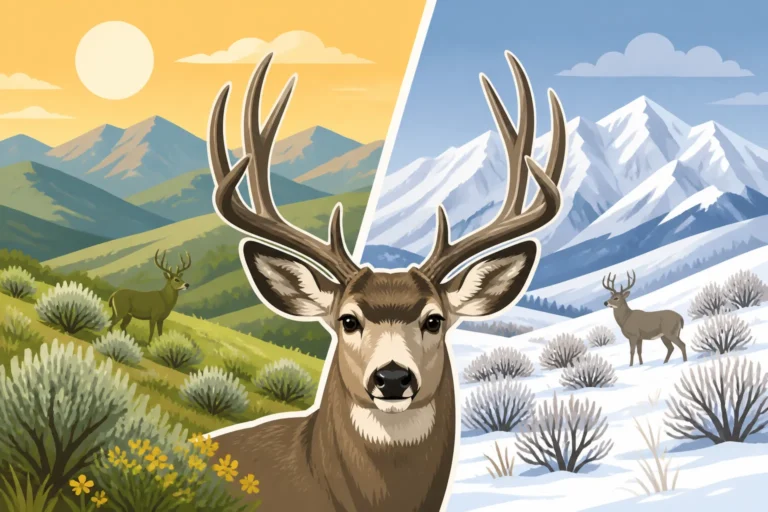
One of the most defining characteristics of mule deer is their migratory nature in many mountainous areas. They'll spend summers high in the mountains, but winter snows push them down to lower, often more open and arid, winter ranges. Understanding these migration routes and transition zones is key to intercepting them. Unfortunately, mule deer populations have faced challenges in various western states, including Montana, due to habitat loss, harsh winters, and disease. While FWP manages for stable to increasing populations, hunters often find that good mule deer hunting requires dedicated scouting and a willingness to cover a lot of ground.
Diverse Habitats Across Montana
Montana's mule deer occupy a wide range of habitats. In the western and central mountains, they can be found at very high elevations during summer, often above timberline, feeding on lush alpine forbs. As winter approaches, they descend to foothills and river breaks. In eastern Montana, they thrive in the rugged badlands, river breaks like the Missouri Breaks, and extensive sagebrush-steppe environments. These areas provide excellent cover in the form of coulees, draws, and scattered timber, while offering abundant browse.
The adaptability of mule deer is truly remarkable. You might find them in a dense pine forest one day and then glassing them across a wide-open prairie the next. However, regardless of the specific terrain, they consistently seek out areas that provide a combination of adequate cover for bedding, nutritious forage, and reliable water sources. Finding these three elements together, especially in vast public land settings, is the essence of Montana Mule Deer Hunting Guide. They are truly ghosts of the landscape, capable of disappearing into seemingly sparse cover, demanding a hunter's patience and keen eye.
Effective Tactics for Mule Deer Hunting
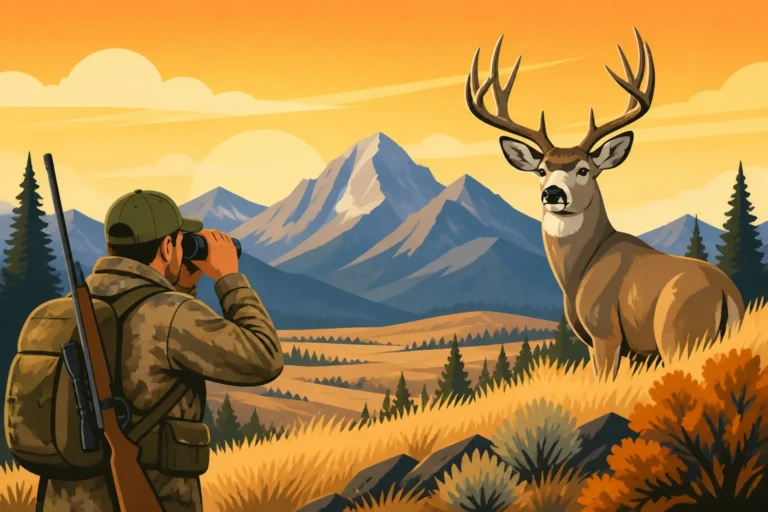
Hunting mule deer often revolves around glassing and spot-and-stalk tactics. Good optics – binoculars, spotting scopes, and tripods – are absolutely essential for efficiently covering the immense landscapes mule deer inhabit. Hunters will spend hours perched on vantage points, meticulously sweeping hillsides, coulees, and timber edges for any sign of deer. Once a buck is spotted, the real challenge begins: planning a successful stalk in often open, unforgiving terrain. This might involve using topography to your advantage, crawling through sagebrush, or waiting for wind conditions to be just right.
In more timbered areas, still-hunting can be effective, moving slowly and deliberately, stopping frequently to glass and listen. The deep draws and breaks of eastern Montana often require a mix of glassing the larger landscape and then carefully working into promising drainages. Understanding wind direction and thermals is critical, especially when deer are bedded. For those planning a Montana DIY Elk Hunting Guide that also includes deer, remember that mule deer require a different mindset than elk. They're often less vocal and more visually oriented. Utilizing mapping apps like OnX can help identify potential bedding areas, escape routes, and stalk approaches, which is a huge advantage when trying to How to Glass for Montana Mule Deer.
Whitetail Deer: The Elusive River Bottom Dweller
While mule deer often hog the spotlight in discussions of western hunting, Montana boasts a robust and healthy population of whitetail deer, particularly in the lower elevations, river bottoms, and agricultural regions. These intelligent, cagey animals offer a completely different hunting experience, favoring stealth and patience.
Whitetail Biology and Distinctive Traits
Montana whitetail deer are genetically similar to their eastern cousins, sporting the characteristic white underside of their tail that flags intensely when alarmed. Their antlers grow off a main beam, with tines rising upwards, distinguishing them from the forking antlers of mule deer. Whitetails are masters of their environment, preferring dense cover and often becoming nocturnal under hunting pressure. They rely heavily on their sense of smell and hearing, making them incredibly difficult to approach.
Their diet is broader than mule deer, including agricultural crops like alfalfa and corn, alongside natural browse, forbs, and acorns. The whitetail rut in Montana generally peaks in mid-November, similar to mule deer, providing an exciting window when bucks are less cautious and more susceptible to calls and decoys. However, whitetails can be particularly susceptible to diseases like Epizootic Hemorrhagic Disease (EHD), which can cause localized population dips, though Montana's herds generally show strong resilience and quick recovery. Understanding Montana Whitetail and EHD Explained can help manage expectations in certain regions.
Preferred Whitetail Environments
The prime habitat for Montana whitetails is unequivocally the dense riparian zones along rivers and streams, interspersed with agricultural fields. Rivers like the Yellowstone, Missouri, and Milk, with their cottonwood groves, thick willows, and surrounding farmlands, create ideal environments. These areas provide everything a whitetail needs: abundant food sources from agricultural crops and natural vegetation, dense thermal cover for bedding, and easy access to water.
Whitetails are homebodies compared to migratory mule deer, often living their entire lives within a relatively small area. This makes them highly patterned animals if you can figure out their daily movements from bedding to feeding. Hunters looking for How to Hunt Whitetail in Montana River Bottoms will quickly learn the importance of identifying pinch points, natural funnels, and transition areas between heavy cover and food sources. They thrive in areas that might seem marginal to an elk hunter, often right on the fringes of human habitation, adding another layer to the challenge of gaining access and hunting discreetly.
Whitetail Hunting Methods and Seasons
Whitetail hunting in Montana primarily occurs during the general rifle season, though archery opportunities exist. The strategies employed are often similar to those used in the Midwest and East: stand hunting (tree stands or ground blinds) over food sources or travel corridors, and still-hunting through thick timber. Since whitetails are so sensitive to pressure, setting up undetected and managing your scent are paramount.
Scouting is vital for patterning whitetails. Identifying bedding areas, primary trails, rub lines, and scrapes can pinpoint productive ambush locations. During the rut, rattling antlers and grunting can be highly effective for bringing in an aggressive buck. Many hunters use trail cameras extensively to monitor activity and movement patterns. While public land river bottoms exist, securing permission on private agricultural lands can significantly increase your odds, as these areas often hold higher concentrations of deer and less hunting pressure. Montana also offers antlerless B-licenses in many districts, allowing hunters to fill their freezers after securing a buck, or simply to manage populations.
Pronghorn Antelope: The Speed Demons of the Prairie
If you’re looking for a unique Western hunting experience that doesn't involve climbing mountains, then pursuing pronghorn antelope on Montana's vast eastern plains is an adventure you won't soon forget. These incredible animals are America’s fastest land mammals, and their keen eyesight makes them one of the most challenging animals to approach.
Antelope Biology and Incredible Senses
Pronghorn are truly unique, not technically antelopes but rather the sole surviving member of their own family, Antilocapridae. They are easily recognized by their distinctive tan and white coats, striking black patches, and the male's backward-curving horns with a forward-pointing prong. Unlike deer, pronghorn shed the outer sheath of their horns annually. Their speed is legendary, capable of reaching speeds up to 60 miles per hour, and they possess vision comparable to an 8x binocular, able to detect movement miles away.
Pronghorn are herd animals, often seen in large groups grazing on the open plains. Their diet consists primarily of forbs, grasses, and sagebrush. The rut typically occurs from mid-September through early October, with bucks establishing territories and gathering harems of does. This period can present opportunistic hunting, as bucks are more focused on breeding than on constantly scanning for threats. However, their incredible eyesight means any misstep in the wide-open country is almost certainly detected.
Open Country Habitat and Movement
Montana’s best pronghorn country is found throughout the eastern half of the state, stretching across vast, sparsely populated grasslands, sagebrush steppes, and rolling hills. These environments provide the wide-open spaces that pronghorn thrive in, allowing them to utilize their incredible speed to escape predators. They are constantly on the move, grazing across expansive territories, and often following historical routes to water sources, which become critical focal points in dry conditions.
Unlike elk and deer, pronghorn generally don't seek dense cover; their primary defense is their vision and speed. They might use subtle dips in the terrain, dry creek beds, or low-lying brush for bedding or concealment, but they are rarely found in thick timber. The scale of their habitat means that scouting for antelope requires immense patience and keen observation. Using platforms like GoHunt can help identify vast tracts of public land and potential water sources on the Eastern Montana Plains Hunting Access, making your scouting efforts more efficient.
Archery and Rifle Antelope Hunting Approaches
Antelope hunting, especially for archery hunters, is an exercise in extreme patience and tactical stalking. Archery hunters often employ decoys, waterhole ambushes, or spot-and-stalk techniques that require exceptional stealth and a bit of luck. A popular method is to use a "stalking shield" or "antelope decoy" that allows the hunter to slowly approach within bow range, mimicking a curious antelope. Hunting waterholes can be highly effective during dry periods, setting up a ground blind and waiting for animals to come in.
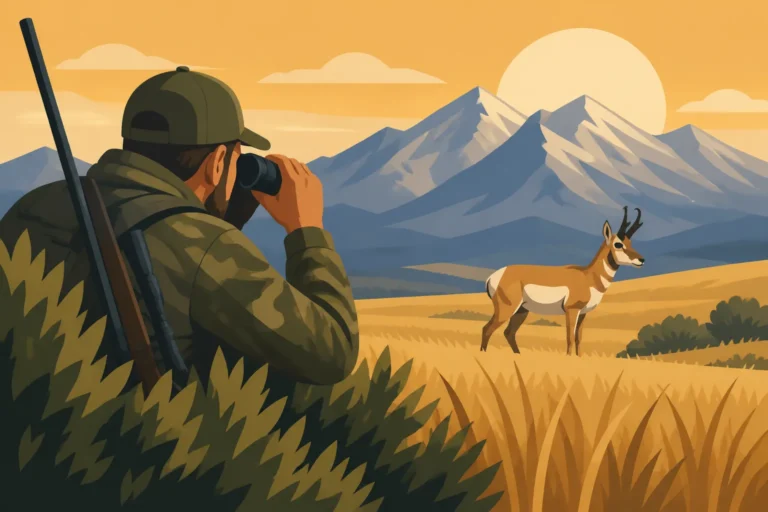
Rifle hunting for antelope is typically more successful, but still challenging. Spot-and-stalk remains the dominant strategy. Hunters glass for herds, plan long stalks using terrain features for concealment, and often make shots at extended ranges given the open nature of the landscape. While general antelope tags are available, many of the most productive areas, particularly the "900 series" units, are limited-entry draws with tight quotas, making them highly coveted and requiring careful planning through the Montana Antelope Season Dates and draw system. Success often hinges on having both excellent optics and the ability to make a precise shot after a long, arduous stalk.
Black Bear: The Opportunistic Forager
Montana offers fantastic opportunities for black bear hunting, both in the spring and fall. These intelligent and adaptable animals are widely distributed across the state's timbered mountains, providing an exciting and often physically demanding hunt.
Black Bear Behavior and Diet
Black bears in Montana are true omnivores, their diet shifting dramatically with the seasons. In spring, as they emerge from hibernation, they are ravenous, primarily seeking out tender green grasses, forbs, and carrion in avalanche chutes and south-facing slopes. As summer progresses, their diet shifts to berries, particularly huckleberries in late summer, and insects. In the fall, they are frantically feeding to put on weight for winter hibernation, consuming high-calorie foods like acorns, berries, and any available protein. This seasonal dietary shift dictates where you'll find them and the best times to hunt them.
Montana black bears come in a surprising array of color phases, from classic black to various shades of brown, cinnamon, and even blonde. They are generally solitary creatures, though sows will travel with their cubs. They possess an incredibly acute sense of smell, excellent hearing, and decent eyesight. Understanding their preferred food sources and bedding habits is key to locating them. Their behavior in spring is different from fall, with spring bears often more visible as they forage actively to replenish lost weight. Learn more about Montana Black Bear Behavior to better understand these fascinating animals.
Forested Habitats and Food Sources
Black bears are primarily creatures of the forest, thriving in the extensive timbered mountain ranges of western and central Montana. They prefer areas with dense cover for security and bedding, often using thick conifer stands, brushy drainages, and remote wilderness areas. However, they will venture into more open areas like clear-cuts, old burns, and avalanche chutes, especially when foraging for food.
In spring, you’ll often find bears grazing on green-ups in open areas that receive early sunlight, like south-facing slopes or low-elevation meadows near the timber line. Later in the summer, they gravitate towards berry patches, making areas rich in huckleberries prime locations. In the fall, they focus on mast crops like acorns (where available) and late-season berries, or even agricultural fields if close to forested areas. Understanding how food sources change throughout the year is crucial for pinpointing bear activity.
Spring and Fall Bear Hunting Tactics
Montana's black bear seasons run both in the spring (typically April-May) and fall (usually September-November), offering distinct hunting experiences. Spring bear hunting often involves glassing vast slopes for emerging bears, particularly in clear-cuts, logging roads, and avalanche chutes where new vegetation is sprouting. Hunters will spend hours with spotting scopes, patiently searching for a black (or brown, or cinnamon) speck moving against the green. This often means long hikes into remote basins or careful road hunting with frequent stops to glass.
Fall bear hunting overlaps with many deer and elk seasons, making it a popular add-on for many hunters. Bears are often concentrated around berry patches, especially huckleberries, and areas with oak brush or other mast crops. Hunters can still-hunt through these areas or set up ambushes along trails leading to food sources. Baiting is permitted in some regions of Montana, which can be an effective method, but requires significant preparation, consistent maintenance, and adherence to strict regulations. Always verify the specific regulations for the hunting district you plan to hunt, especially regarding baiting and identifying sows with cubs, as harvesting a sow with cubs is illegal. A Montana Black Bear Hunting Guide will provide more in-depth tactical advice for both seasons.
The Coveted Few: Moose, Bighorn Sheep, and Mountain Goat
While elk, deer, and antelope are the most commonly pursued big game animals in Montana, the state also offers incredibly rare, once-in-a-lifetime opportunities for a handful of other species: moose, bighorn sheep, and mountain goats. Drawing a tag for these animals is the holy grail for many hunters, often requiring years—or even decades—of applying for How to Build Bonus Points in Montana.
Moose: The Forest Giants
Montana's Shiras moose are majestic animals, easily distinguished by their dark brown to black coats, large dewlap (bell), and broad, palmate antlers. They are primarily solitary creatures, preferring dense willow thickets, riparian areas, and coniferous forests, often near water bodies. Their diet consists almost exclusively of browse, particularly willows, aspen, and aquatic vegetation. Moose are not as common or widespread as elk or deer, and their populations are carefully managed, leading to extremely limited hunting opportunities.
Drawing a moose tag in Montana is an exceptionally difficult endeavor. Permits are issued through a highly competitive draw, with only a handful of tags available each year for residents, and even fewer for non-residents. Successful applicants often have accumulated many bonus points over numerous years. When a tag is drawn, the hunt itself is typically in dense, often swampy or heavily timbered terrain, requiring immense patience and physical stamina to navigate and extract an animal. It's a true wilderness experience, often involving navigating areas that are challenging to access, making it a fitting pursuit for those interested in a Montana Backcountry Hunting Guide.
Bighorn Sheep: Kings of the Crags
Bighorn sheep are the undisputed kings of Montana’s rugged mountain ranges. Their impressive curling horns, incredible agility, and preferred habitat in the steepest, most remote alpine terrain make them a bucket-list animal for hunters worldwide. They inhabit a few specific mountain ranges, often at very high elevations, where they feed on grasses and forbs found on exposed slopes. Their ability to navigate sheer cliffs and rocky outcrops is legendary, making their pursuit one of the most physically demanding hunts imaginable.
Like moose, bighorn sheep tags are incredibly difficult to draw. There are very few permits issued annually, and competition is fierce. Many hunters spend their entire lives applying without success. For those fortunate enough to draw, the hunt involves extreme physical fitness, extensive scouting, and a willingness to operate in incredibly challenging, high-altitude environments. Hunters often spend days glassing distant peaks, looking for the tell-tale white rump and distinctive horn curl of a mature ram. Success often requires precise long-range shooting and the ability to pack out an animal from unforgiving terrain, as detailed in the Montana Bighorn Sheep Hunting Guide.
Mountain Goat: White Ghosts of the Peaks
Mountain goats, with their pristine white coats, distinctive short black horns, and shaggy beards, are the ultimate high-country dwellers. They inhabit the most extreme alpine and subalpine environments in Montana, often clinging to cliffs and ledges where few other large mammals can survive. Their diet consists of alpine grasses, forbs, and lichens. Finding them often involves climbing to dizzying heights, well above timberline, in areas known for their treacherous terrain and unpredictable weather.
Similar to bighorn sheep, mountain goat tags are exceptionally rare and highly sought after. Drawing a permit is a once-in-a-lifetime opportunity for most. The hunt itself is a test of endurance, mental fortitude, and mountain climbing skills. Hunters must be prepared for rapidly changing weather, steep ascents, and potentially dangerous rockfalls. Extensive glassing from distant vantage points is crucial, followed by careful, often multi-day, stalks across incredibly difficult terrain. Successfully harvesting a mountain goat is not just about the shot; it's about the entire arduous journey into their remote domain, an experience truly detailed in the Montana Mountain Goat Hunting Guide.
Other Big Game Opportunities: Lion, Bison, and Wolf
Beyond the traditional big game species, Montana offers a range of other unique hunting opportunities for predators and historically significant animals, each with its own set of challenges, regulations, and rewards.
Mountain Lion: The Apex Predator
Mountain lions, also known as cougars, are Montana’s elusive apex predators. They are notoriously secretive and primarily nocturnal, making them incredibly difficult to hunt. Montana offers regulated seasons for mountain lions, typically during the fall and winter, with specific quotas for each hunting district. Once the quota for a district is met, the season closes immediately.
The most common and effective method for hunting mountain lions is with trained hounds. Hunters with dogs will track fresh lion sign, then release their hounds to pursue and tree or bay the lion. This is a highly specialized hunt, often requiring significant physical exertion to follow the dogs through rough terrain, sometimes in deep snow. Still-hunting or calling for lions is possible but far less successful. Given their elusive nature, a mountain lion hunt is as much about tracking and dog handling as it is about the hunt itself, making it a unique and challenging pursuit covered in more detail in Montana Mountain Lion Hunting.
Bison: A True Wilderness Hunt
Hunting wild bison in Montana is one of the most unique and historically significant opportunities available. These hunts are extremely rare and highly regulated, typically occurring in specific areas near Yellowstone National Park where bison have free-ranging populations. Permits are issued through a very limited and competitive draw, often with extremely low odds.
For those fortunate enough to draw a tag, a bison hunt is an unforgettable experience. It's often physically demanding, requiring hunters to locate and stalk massive animals in challenging terrain, sometimes in very cold and snowy conditions. The sheer size and power of a bison mean that ethical shot placement and proper recovery logistics are paramount. This is truly a once-in-a-lifetime hunt, connecting hunters to a primal experience that echoes the wildness of historical North America, as further explained in Montana Bison Hunting Explained.
Wolves: The Controversial Predator
Montana's wolf population is managed through regulated hunting and trapping seasons, often with general licenses available. While controversial for some, wolf hunting is a legal and sometimes necessary management tool to help balance ungulate populations like elk and deer. Wolves are incredibly intelligent, elusive, and resilient, making them a very challenging animal to hunt.
Hunting methods often involve opportunistic encounters while pursuing other big game, or dedicated efforts using calling, still-hunting, or tracking. Snow can aid in tracking wolves, as their large tracks are distinctive. Calling, especially howling, can sometimes draw in a curious wolf, but they are incredibly wary. Due to their wide-ranging nature and intelligence, success rates for wolf hunting are generally low, demanding a high level of persistence and woodsmanship. Understanding Montana Wolf Hunting goes into further detail about strategies and challenges.
Montana Big Game Species Overview
To help visualize the diversity and season structures, here's a general overview of Montana's main big game species. Keep in mind that specific dates and regulations can vary greatly by hunting district and change annually, so always consult the latest Montana Fish, Wildlife & Parks regulations.
| Species | Primary Season Dates (General) | Typical Habitat | Common Hunting Methods | Tag Type (Non-Resident) |
|---|---|---|---|---|
| Elk | Archery (Sept-Oct), Rifle (Oct-Nov) | Mountains, Forests, Foothills, Timber | Spot-and-stalk, Calling, Still-hunt | Combo License (General) or Limited Permit |
| Mule Deer | Archery (Sept-Oct), Rifle (Oct-Nov) | Mountains, Badlands, River Breaks, Prairies | Spot-and-stalk, Glassing, Still-hunt | Combo License (General) or Limited Permit |
| Whitetail Deer | Archery (Sept-Oct), Rifle (Oct-Nov) | River Bottoms, Agricultural Fields, Forests | Stand Hunting, Still-hunt, Drives | Combo License (General) or Limited Permit |
| Pronghorn | Archery (Sept-Oct), Rifle (Oct-Nov) | Open Prairies, Sagebrush Steppe | Spot-and-stalk, Decoying, Waterhole | Limited Permit (Draw Required) |
| Black Bear | Spring (Apr-May), Fall (Sept-Nov) | Timbered Mountains, Forests | Spot-and-stalk, Baiting (some areas) | General Tag |
| Moose | Sept-Nov (specific dates vary) | Dense Willows, Bogs, Conifer Forests | Spot-and-stalk, Still-hunt | Limited Permit (Draw Required) |
| Bighorn Sheep | Sept-Nov (specific dates vary) | Steep Alpine Peaks, Rocky Outcrops | Spot-and-stalk, Extreme Glassing | Limited Permit (Draw Required) |
| Mountain Goat | Sept-Nov (specific dates vary) | High Alpine Cliffs, Above Timberline | Spot-and-stalk, Extreme Glassing | Limited Permit (Draw Required) |
| Mountain Lion | Sept-Apr (quota dependent) | Forests, Rocky Areas | Hounds, Still-hunt, Opportunistic | General Tag (Quota Dependent) |
| Bison | Nov-Feb (specific dates vary) | Yellowstone Boundary Areas | Spot-and-stalk, Challenging Terrain | Limited Permit (Draw Required) |
| Wolf | Sept-Mar (specific dates vary) | Forests, Mountains, Prairies | Calling, Tracking, Opportunistic | General Tag |
Disclaimer
Hunting involves inherent risks and requires careful adherence to all local, state, and federal regulations. This guide provides general information and should not be considered a substitute for consulting the official Montana Fish, Wildlife & Parks regulations and seeking professional advice when necessary. Always prioritize safety, ethical hunting practices, and responsible land stewardship.