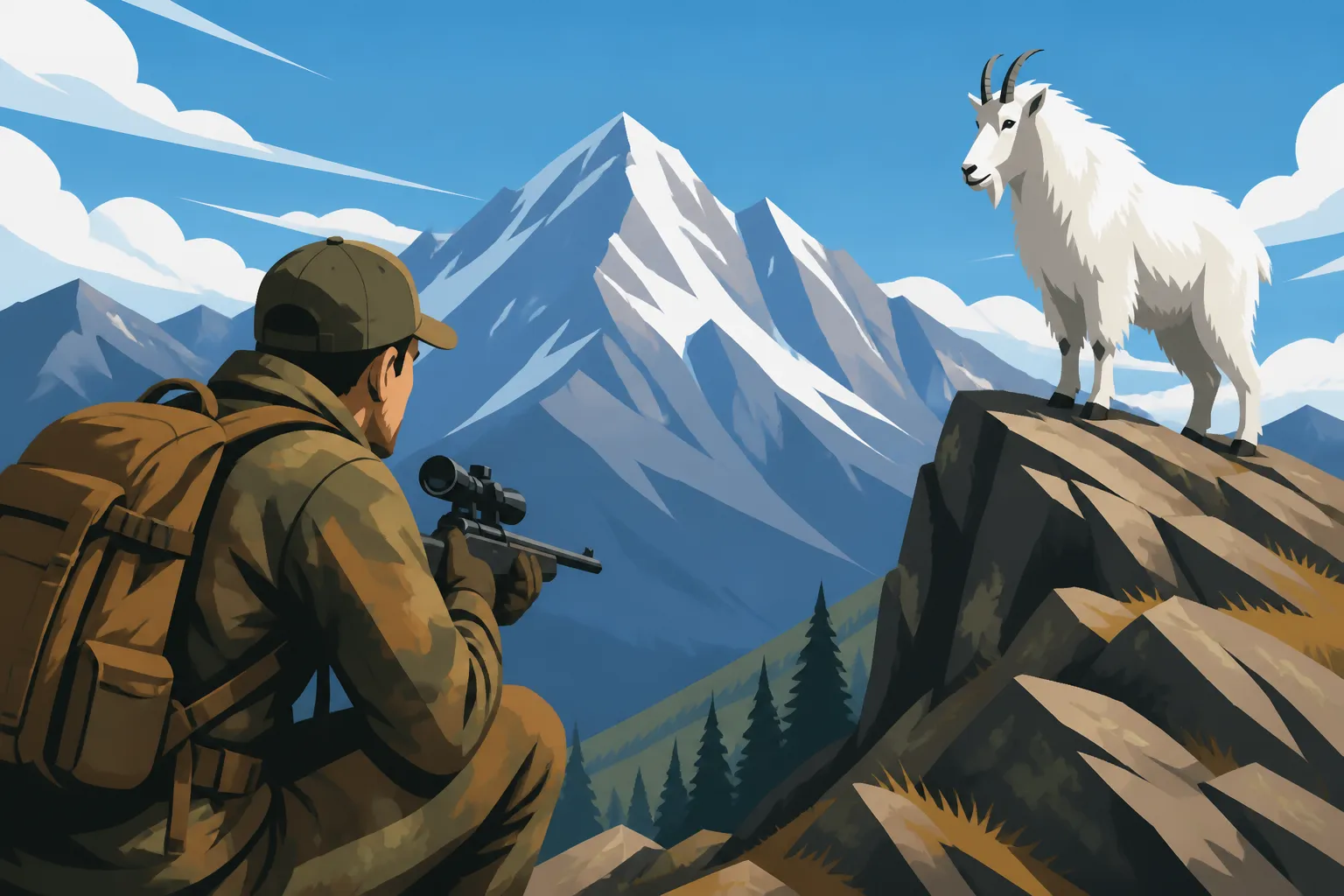
Montana Mountain Goat Hunting Guide
Staring up at those craggy peaks, you might think spotting a white speck is impossible, let alone pursuing it. Montana mountain goat hunting isn't just a hunt; it's an extreme endurance test, a relentless climb, and often, a lifelong dream fraught with incredibly low odds. This guide dives deep into everything you need to know about pursuing these majestic monarchs of the high country, from navigating the brutal tag draw to the grueling physical and mental challenges that await.
The Elusive Dream: Why Montana Mountain Goat Hunting is Unique
Montana's mountain goats are unlike any other big game animal you might pursue. They inhabit some of the most unforgiving, vertical terrain on the continent, making any successful hunt an immense accomplishment. The allure of the "King of the Peaks" isn't just about the trophy; it's about the journey, the challenge, and the profound experience of testing your limits in truly wild places. Many hunters spend years, even decades, dreaming of and applying for one of these coveted tags.
A Quest for the "King of the Peaks"
There’s something truly primal about the desire to chase an animal that lives where few others dare to tread. Montana’s mountain goats are creatures of rock and ice, perfectly adapted to environments that would quickly defeat most humans. Their pure white coats against the stark granite and sapphire skies create an image of unmatched wilderness beauty. For many, a mountain goat hunt represents the pinnacle of big game hunting, a true test of physical and mental fortitude against nature's most extreme landscapes. It’s not just about filling a freezer or hanging a trophy; it's about earning your place in their world, even if only for a few days. The sheer difficulty of the terrain, combined with the animal's incredible senses and agility, means that every step, every stalk, and every decision is amplified in its importance.
Understanding the Limited Opportunity
Let's be brutally honest: drawing a Montana mountain goat tag is like winning the lottery, only harder. These are highly restricted tags, managed by Montana Fish, Wildlife & Parks (FWP) through a complex lottery system designed to maintain healthy populations in fragile alpine environments. Unlike general elk or deer tags, mountain goat opportunities are incredibly limited, with only a handful of permits issued each year across specific hunting districts. This scarcity is a major part of the challenge and why successful applicants often have years, sometimes decades, of accumulated bonus points. You're not just competing against a few hundred or a few thousand; you're often up against tens of thousands of other passionate hunters for a mere handful of permits. This reality can be disheartening, but understanding it upfront is crucial to managing expectations and formulating a long-term application strategy for a Montana Moose Sheep Goat Season Dates tag.
Unraveling Montana's Mountain Goat Ecology and Behavior
To even dream of success, you need to deeply understand the animal itself. Mountain goats are not just white, woolly targets; they are masters of their high-alpine domain, possessing incredible adaptations that allow them to thrive where other ungulates would perish. Learning their habits, habitat preferences, and seasonal movements is paramount.
High-Altitude Habitat and Forage
Mountain goats are quintessential alpine dwellers, rarely venturing below timberline during the hunting season. Their preferred habitat consists of steep, rugged, rocky terrain, often above 8,000 feet, characterized by cliffs, chutes, and rockslides that offer both refuge from predators and access to their specialized forage. You'll find them in areas with abundant lichens, mosses, forbs, and grasses that grow in these harsh environments. They are incredibly efficient grazers, capable of extracting nutrients from sparse vegetation. When scouting or hunting, look for pockets of green vegetation on high benches, along cirque basins, or within small meadows nestled amongst the granite. Water sources, even small seeps, are also critical, especially in the late summer and early fall. The type of rock formations can also play a role; goats often prefer limestone or other mineral-rich rocks where they can find essential nutrients by licking salts. This intimate knowledge of their habitat is a critical component of any successful Montana Backcountry Hunting Guide.
Seasonal Movements and Rut Dynamics
While generally confined to high altitudes, mountain goats do exhibit seasonal movements, albeit subtle ones compared to elk or deer. In spring and early summer, nannies and kids often stay in slightly more accessible areas with richer new growth, while billies (males) might range more widely, sometimes in bachelor groups. As fall approaches and hunting season opens, they remain in the high country, often seeking out south-facing slopes for warmth. The rut typically occurs in late October through November, meaning that early season hunts will find billies more dispersed, while late season hunts during the rut might see them more concentrated or actively seeking nannies. Understanding these subtle shifts can help you anticipate where goats might be at different times of the season. For example, during the rut, billies can become more preoccupied and potentially less wary, though they are still incredibly challenging to approach.
Survival Strategies and Herd Health
Mountain goats have an impressive array of survival strategies. Their specialized hooves, with rough, pliable pads and sharp, cloven edges, provide unparalleled traction on vertical rock faces. They are surprisingly agile and can navigate treacherous terrain with ease, making them incredibly difficult to pursue. When threatened, their first instinct is to ascend, seeking the safety of cliffs where predators like bears and mountain lions cannot follow. Their thick, double-layered coats provide exceptional insulation against the brutal cold and winds of the alpine environment. Population health is closely monitored by FWP, with tags carefully allocated to ensure sustainable hunting and prevent overharvest. This conservation-first approach is why tag numbers remain so low, reflecting a deep commitment to preserving these iconic animals and their delicate ecosystems. Knowing their escape routes and how they utilize terrain for protection is key to planning a successful stalk.
Navigating Montana's Mountain Goat Tag Application Process
Let’s be honest, for many, the actual hunt begins long before you set foot on the mountain; it starts with the dreaded application process. Drawing a Montana mountain goat tag is arguably the biggest hurdle, demanding patience, strategy, and a bit of luck.
Deciphering Draw Odds and Point Systems
Montana utilizes a bonus point system for its limited-entry permits, including mountain goats. For every year you apply and are unsuccessful, you accrue a bonus point. These points essentially give you additional "chances" in the draw. So, if you have 10 bonus points, your name theoretically goes into the hat 11 times (your current application plus your 10 points). This system heavily favors those who have been applying for many years. New applicants start at zero, meaning their odds are minuscule. For example, in some highly sought-after districts, drawing a tag might require 20+ bonus points, and even then, it's not guaranteed. The FWP publishes draw odds each year, which you can use to inform your application strategy. Tools like GoHunt's Insider service can be incredibly valuable here, providing detailed draw odds, application statistics, and unit breakdowns that are far more granular than what FWP offers on its own. This kind of research is essential for understanding your chances in the Montana Limited Entry Permits Explained draw.
To give you a rough idea of the challenge, here's a simplified look at the draw odds for a fictional "premier" unit versus a "secondary" unit in a recent year, demonstrating the impact of bonus points:
| Hunting District (Example) | Average Bonus Points Drawn (Recent Year) | Odds with 0 Points | Odds with 5 Points | Odds with 10 Points | Odds with 15+ Points |
|---|---|---|---|---|---|
| HD-300 (Premier, 2 Tags) | 22 | <0.1% | <0.5% | <1% | ~5% |
| HD-305 (Secondary, 5 Tags) | 15 | <0.2% | ~1% | ~3% | ~10% |
Note: These are illustrative examples only. Actual draw odds vary significantly year to year and by hunting district. Always consult current FWP regulations and draw statistics for precise information.
It’s a long game, and the frustration of applying year after year with no success is real. Many seasoned hunters will tell you they’ve accumulated well over a decade's worth of points before finally drawing a goat tag.
Strategic Unit Selection and Application Tips
Given the abysmal odds, strategic unit selection is absolutely vital. Do you apply for the unit with the best trophy potential but the lowest odds, knowing it might take 30 years to draw? Or do you apply for a unit with slightly "lower" quality but marginally better odds, hoping to draw sooner? This is a personal decision that weighs your patience against your aspirations. You need to thoroughly research each potential hunting district. Look at past harvest success rates, terrain features (is it horse-friendly, or strictly walk-in?), population trends, and hunter pressure. Some units might be incredibly rugged and remote, requiring a full backcountry pack-in, while others might offer more accessible terrain, though "accessible" for mountain goats is still relative. Utilize online mapping tools, consult FWP biologists, and pore over previous year's draw reports. GoHunt’s research platform, for instance, allows you to filter districts by specific criteria and analyze historical draw data, helping you make an informed choice rather than just picking a number out of a hat. Remember, you can only apply for one mountain goat permit per year, so make it count.
The Financial Investment and Long-Term Strategy
Beyond the initial application fees and the cost of buying bonus points, preparing for a Montana mountain goat hunt represents a significant financial investment. You're looking at top-tier gear, travel expenses, and potentially hiring a packer or guide if you're lucky enough to draw a tag. Even if you plan a DIY hunt, the cost of specialized equipment—lightweight backcountry gear, durable clothing, high-quality optics, and emergency communication devices—can easily run into thousands of dollars.
A long-term strategy involves more than just applying annually; it involves continued physical conditioning, skill development (e.g., long-range shooting, wilderness navigation), and saving up for the monumental trip itself. Don't wait until you draw the tag to start thinking about these things. Start hiking, researching gear, and practicing your marksmanship now. This sustained commitment is part of what makes drawing and successfully hunting a mountain goat so incredibly rewarding. Even if you don't draw for years, the consistent pursuit of knowledge and fitness prepares you for that eventual phone call or email announcing your success. If you're a nonresident, be aware of the Montana Nonresident Combination License Guide which can simplify the base license purchase if you're also applying for other species.
Mastering the Art of Mountain Goat Scouting and Preparation
Drawing the tag is just the beginning. Now, the real work starts. Scouting for mountain goats demands a unique blend of technological prowess, physical endurance, and a deep understanding of the alpine environment.
Advanced E-Scouting and Topographical Analysis
Before you ever set foot in the field, you should be spending countless hours in front of a computer, pouring over maps. This is where advanced e-scouting tools truly shine. Utilize programs like OnX Hunt, Gaia GPS, or CalTopo to meticulously analyze your hunting district. Look for north-facing slopes where snow lingers, often indicating water sources or cooler bedding areas in late summer. Identify south-facing slopes that might hold goats seeking warmth in the fall. Focus on terrain features like saddles, rock outcrops, high alpine basins, and dense timber pockets that offer cover. Pay close attention to elevation changes; a 1,000-foot climb on a map is a monumental effort in real life, especially with a pack.
Satellite imagery can reveal travel corridors, historical bedding sites, and potential escape routes. Look for any subtle benches or strips of vegetation on seemingly vertical faces that goats might use. Identify potential access points, trailheads, and areas that might hold other hunters. Consider historical fire burns, as new growth can attract goats. Understanding prevailing winds and thermals in different drainages is also crucial, as mountain goats have an incredible sense of smell. Cross-reference topographical maps with aerial photos to gain a three-dimensional understanding of the landscape. For many, e-scouting is an addiction, a never-ending quest to uncover every secret of a unit. This initial work is a critical part of How to E-Scout Montana Hunting Units effectively.
Physical Reconnaissance in the High Country
While e-scouting provides a solid foundation, nothing replaces boots on the ground. If possible, make multiple scouting trips to your unit well before the season. This allows you to confirm e-scouted locations, identify actual goat sign (tracks, droppings, hair rubs), and assess goat numbers and distribution. Most importantly, it allows you to learn the terrain in person. Climb the ridges, descend into the drainages, and get a feel for the scale and difficulty of travel. Pay attention to water sources and potential camping spots. Understand how thermals shift throughout the day, as a morning downdraft can become an afternoon updraft, potentially ruining a stalk.
Physical scouting also helps you acclimatize to the altitude and demands of the terrain. The air is thinner, and every step is more strenuous. Learning the nuances of movement in steep, unstable scree fields or loose rock is invaluable. This is also an excellent time to test your gear and fine-tune your pack weight. Being able to glass effectively for hours on end is a skill, and practicing it in the actual hunting environment is key. Often, scouting trips are mini-hunts in themselves, pushing your limits and building confidence. This is especially true for Montana Backcountry Hunting Guide scenarios where familiarizing yourself with the landscape is paramount.
Developing Peak Physical and Mental Toughness
Mountain goat hunting is not for the faint of heart, or the out-of-shape. This hunt will push you to your absolute physical and mental limits. You'll be climbing thousands of vertical feet, often with heavy packs, across unstable terrain, day after day. A dedicated fitness plan is non-negotiable. Start months, even a year, in advance. Focus on cardiovascular endurance, leg strength, and core stability. Incorporate weighted hikes, stair climbing, and exercises that mimic mountain movements. Don't forget flexibility and balance; a fall in goat country can be disastrous.
Equally important is mental toughness. You will face discomfort, exhaustion, frustration, and doubt. The weather can turn instantly, forcing you to endure cold, rain, or snow. Goats will often be in seemingly impossible locations, testing your resolve. You'll likely experience moments where you question why you ever put yourself through this. Cultivating resilience, patience, and a positive mindset is just as important as physical strength. Practice discomfort, push through those mental walls, and remind yourself of the dream. This relentless mental game is what truly separates a successful goat hunter from someone who gives up. Consider following a Montana Elk Hunt Fitness Plan to get yourself in shape, as the demands are quite similar.
Essential Gear and Equipment for Montana Goat Hunting
Your gear is your lifeline in mountain goat country. Weight, durability, and functionality are paramount. Skimping on quality here can literally be a matter of life and death, or at the very least, a miserable and unsuccessful hunt.
Specialized Optics and Ranging Equipment
This is not the hunt to compromise on optics. You will spend countless hours glassing, meticulously dissecting distant cliffs and basins for a tiny white speck. High-quality binoculars (10×42 or 12×50 are common) paired with a robust spotting scope (20-60x or 25-75x) are absolutely essential. Look for optics from reputable brands like Swarovski, Zeiss, Leica, or Maven, known for their clarity, light transmission, and durability in harsh conditions. A stable tripod is non-negotiable for comfortable, long-duration glassing and for steadying your spotting scope.
A reliable rangefinder capable of reading out to 1,000+ yards, with angle compensation, is also critical. Shots at mountain goats are often at extreme angles and distances, and knowing the true ballistic distance is vital for ethical shooting. Consider a rangefinding binocular to reduce the amount of gear you're fumbling with. Your optics are your eyes in this vast landscape, allowing you to locate goats, assess their size, and plan your approach from afar, saving you countless miles of wasted climbing. This focus on long-range glassing is a key part of How to Glass Montana's Big Country.
High-Altitude Clothing and Footwear Systems
Layering is the name of the game. You'll experience extreme temperature swings, from freezing mornings to warm afternoons, often within the same hour as clouds roll in or out. Your clothing system needs to be versatile, moisture-wicking, insulating, and highly durable. Start with a synthetic or merino wool base layer. Add a mid-layer for warmth (fleece or lightweight puffy), and then a robust outer shell that is both waterproof and windproof. A heavy puffy jacket for static glassing or camp use is also crucial.
Footwear is arguably the most critical piece of gear. You need mountaineering-grade boots that offer ankle support, stiffness for side-hilling, exceptional grip on rock, and complete waterproofness. Brands like Kenetrek, Schnee's, or Lowa are popular among serious mountain hunters. Break them in well before your hunt! Pair them with high-quality merino wool socks to prevent blisters and manage moisture. Don’t forget gaiters to keep scree and snow out of your boots. Your feet will take a beating, so protecting them is paramount for sustained effort. You can find excellent advice on Best Boots for Montana Elk Hunting which often applies to goat hunting as well.
Backcountry Safety and Emergency Preparedness
Venturing into remote mountain goat country demands a serious approach to safety. Always carry a wilderness first-aid kit, and know how to use it. A satellite communication device (like a Garmin inReach or a Zoleo) is non-negotiable for emergency communication, as cell service will be non-existent. Inform someone of your detailed hunt plan and check-in schedule. Carry a reliable headlamp with extra batteries. A small, lightweight bivy sack or emergency blanket can be a lifesaver if you get caught out overnight.
Navigation tools are essential: a physical map, compass, and a GPS-enabled device (your phone with hunting apps, or a dedicated GPS unit). Know how to use them all, even in adverse weather. Carry enough food and water, or the means to purify water. Bear spray is also highly recommended in many Montana mountain ranges where grizzly bears are present. The inherent dangers of steep, unstable terrain, coupled with unpredictable weather, mean that preparedness is not just a suggestion, it's a requirement. This kind of planning aligns closely with the advice found in Montana Backcountry Hunting Safety Tips.
Effective Hunting Strategies and Tactics in Extreme Terrain
Once you've drawn the tag, scouted, and geared up, it's time to actually hunt. Mountain goat hunting is often a game of extreme patience, precision, and strategic maneuvering in landscapes that constantly challenge you.
Precision Spot-and-Stalk Approaches
The spot-and-stalk method is almost exclusively how mountain goats are hunted. Unlike elk, which you might call in, or deer, which you might ambush from a treestand, goats demand a different approach. You'll spend hours, sometimes days, glassing from a distant vantage point, meticulously searching every rock, every snowfield, every patch of vegetation. Once a goat is located and identified (paying close attention to sex and age, as sometimes nannies and young billies look similar), the arduous process of planning a stalk begins. This involves analyzing wind direction, identifying cover, and charting a route that minimizes exposure while minimizing elevation gain and loss.
The approach itself is incredibly slow and deliberate. Goats have exceptional eyesight, often detecting movement from surprising distances. Use terrain features, shadows, and vegetation to your advantage. Be prepared for multiple failed stalks; the goats will often move, or the wind will shift, forcing you to regroup and start over. Every step must be intentional, quiet, and stable, especially on loose rock or scree. The goal is to get within comfortable shooting range, ideally within 200-300 yards, to ensure an ethical shot. This methodical approach is the core of How to Spot-and-Stalk Montana Bighorn Sheep, which shares many similarities with goat hunting due to their shared habitat.
Shot Placement and Ethical Harvest Considerations
Due to their thick hide, dense bones, and incredible tenacity, mountain goats can be surprisingly tough animals. Shot placement is absolutely critical. Aim for the vitals, typically a broadside shot targeting the lungs and heart, just behind the shoulder. Avoid head-on or quartering-to shots, which can be difficult to place effectively and risk only wounding the animal. Given the often extreme distances and angles, practice shooting from various positions, including prone, kneeling, and from a pack, using your actual hunting rifle. Understand how angle affects your bullet's trajectory, and use a ballistic calculator with your rangefinder's angle compensation feature.
Beyond just killing the animal, consider the recovery. Goats often expire on steep, unforgiving terrain. An animal that tumbles down a cliff can be lost or become incredibly dangerous to retrieve. If possible, wait for a goat to move to a more accessible spot before taking the shot. A well-placed shot on a goat standing on a relatively flat bench, even a small one, is always preferable to one on the edge of a precipice. Ethical harvest means not just making a clean kill, but also having a realistic plan for recovery.
Meat Care and Packing Out Your Trophy
This is where the real work begins after the shot. Quartering a mountain goat on a steep, unstable slope, often in rapidly changing weather, is physically demanding and potentially dangerous. Work efficiently and safely. Remove the hide and quarter the animal, getting the meat off the bone if possible to reduce weight. Keep the meat as clean as possible, separating it from hair and dirt. Rapid cooling is essential, especially in early season hunts. Hang the quarters in game bags in a shady, airy spot if you have a base camp, or prepare them for immediate packing.
Packing out a mountain goat is one of the most physically brutal aspects of the hunt. Even a medium-sized goat can yield 50-70 pounds of bone-in meat, plus the hide and skull. This will often require multiple trips or a single, extremely heavy load over treacherous terrain. Having a robust internal frame backpack, like those from Stone Glacier or Kifaru, is essential. Take your time, focus on stable footing, and don't take unnecessary risks. A small hatchet or saw can be useful for separating joints or removing the skull. Remember, the journey isn't over until the meat is safely in your cooler or freezer, and the cape and skull are properly cared for. This often involves a significant descent, which can be even harder on your body than the ascent. Knowing How to Pack Out an Elk in Montana provides transferable skills here, though a goat's environment is usually more severe.
After the Hunt: Regulations, Preservation, and Reflection
The moment of harvest is just one part of the mountain goat hunting experience. There are vital steps to take afterward, from adhering to regulations to properly caring for your hard-earned meat and hide.
Reporting and Tagging Requirements
Montana has strict regulations regarding tagging and reporting harvested animals, and mountain goats are no exception. Immediately after harvesting your goat, you must validate and attach your tag to the animal, following the specific instructions provided by FWP. This typically means punching out the date and unit and attaching it to the carcass. Failure to properly tag your animal can result in severe penalties.
Additionally, you are required to report your harvest to FWP within a specified timeframe, often within 48 hours of harvest or upon leaving the hunting district. This can usually be done online or by phone. Some districts may also require specific biological samples or skull submittal for data collection purposes. These reporting requirements are crucial for FWP to monitor population health, harvest success rates, and inform future management decisions. Always double-check the current year's regulations booklet for the most up-to-date information, as rules can change annually.
Meat and Hide Care for the Journey Home
Proper care of your goat meat and hide is paramount. For the meat, continued cooling is key. If you are packing out in multiple trips, ensure the meat left in the field is well-protected from scavengers and kept cool. Once back at your vehicle, immediately transfer the meat to coolers packed with ice, ensuring proper drainage to prevent waterlogging. Plan your travel home to minimize the time the meat is not properly refrigerated. For longer trips, consider having a local butcher process and freeze your meat before shipping.
The hide and skull are your trophy. If you plan to have a shoulder mount or full life-size mount, it's critical to properly cape the animal in the field. This usually means a long cape cut, ensuring plenty of hide for the taxidermist. Immediately after skinning, get the hide cooled down and salted heavily to prevent hair slippage. For the skull, clean off as much tissue as possible. If a taxidermist is not immediately available, you can freeze the hide and skull. Researching local taxidermists and butchers in Montana before your hunt is a smart move, so you have a plan in place immediately after your successful hunt.
The Unforgettable Experience and Future Hunts
Whether you punch your tag or not, a mountain goat hunt in Montana is an experience that will stay with you forever. The sheer beauty of the high-alpine environment, the physical and mental challenge, and the raw wilderness experience are unparalleled. You'll gain a profound respect for these animals and their incredible ability to survive in such extreme conditions.
For most, it's a once-in-a-lifetime tag, making it an incredibly special accomplishment. Even if you don't succeed in harvesting a goat, the memories of the mountains, the solitude, and the personal growth you experience are trophies in themselves. For those lucky enough to draw a tag again in the distant future, the knowledge and experience gained from this hunt will be invaluable. Cherish the photos, share the stories, and reflect on the privilege of venturing into the realm of the King of the Peaks.
Disclaimer
Please be aware that hunting regulations, season dates, and drawing odds for Montana mountain goats can change annually. Always consult the most current Montana Fish, Wildlife & Parks (FWP) regulations and official resources before planning any hunt. This guide is for informational purposes only and does not constitute legal advice or guarantee success. It is the hunter's responsibility to know and follow all applicable laws and regulations.