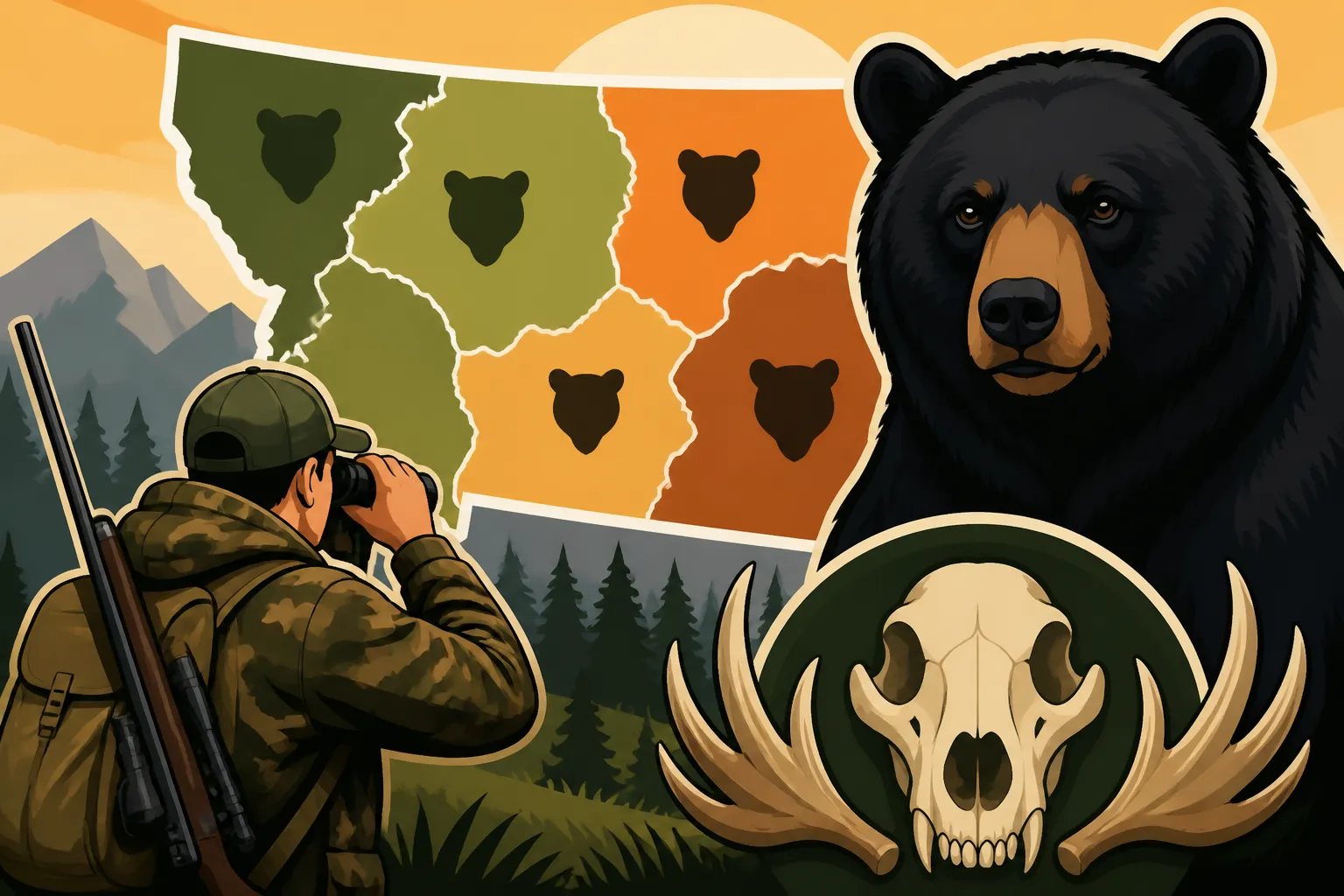
Montana Black Bear Trophy Potential by District
The dream of spotting a massive black bear, its coat shimmering under the Montana sun, is a powerful draw for many hunters. But let's be real: not every district is created equal when it comes to consistently producing truly trophy-class animals. It can be incredibly frustrating to put in the time and effort, only to find smaller bears or sparse sign. This guide is dedicated to dissecting Montana's black bear landscape, helping you understand where the best trophy potential lies by district and how to strategically approach your hunt for a memorable bruin.
Understanding Montana's Black Bear Trophy Landscape
Hunting black bears in Montana isn't just about finding a bear; for many, it's about finding a big bear. The state offers diverse habitats, and understanding what makes a bear grow to a substantial size is key to increasing your odds of tagging a trophy. It's a combination of genetics, environment, and sheer age that transforms an ordinary bear into a true behemoth.
What Defines a Trophy Black Bear
When we talk about a "trophy" black bear, most hunters immediately think of skull size. While body weight can be impressive, the Boone & Crockett Club and Pope & Young Club, the primary record-keeping organizations for North American big game, use skull measurements to determine a bear's official score. A combination of the length and width of the skull, taken after a 60-day drying period, defines its place in the record books. For Boone & Crockett, a black bear typically needs a minimum skull score of 20 inches to qualify, while Pope & Young (for archery kills) sets the bar at 18 inches. These aren't just arbitrary numbers; they represent bears that have lived long enough, eaten well enough, and avoided enough trouble to reach a significant size.
Beyond the raw numbers, a trophy bear often embodies other qualities too. Many hunters prize a magnificent coat, whether it's the classic jet black or one of Montana's famous color phases like cinnamon, chocolate, or blonde. A bear's age is also a huge factor; older bears are typically wiser, more solitary, and have developed the mass and character that makes them truly special. The thrill of outsmarting an old, wise bear in its rugged mountain domain is often as rewarding as the inches on its skull. It's a testament to the animal's resilience and your skill as a hunter.
Factors Influencing Bear Size and Trophy Quality
A black bear's potential for trophy size is deeply rooted in several critical factors. First and foremost are genetics. Just like humans, some bears are simply predisposed to growing larger than others. However, genetics only provide the blueprint; the environment fills in the details. Food availability is perhaps the single most crucial factor. Bears are opportunistic omnivores, and areas rich in diverse food sources—from spring grasses and dandelions to summer huckleberries and serviceberries, and especially a strong fall mast crop of acorns or chokecherries—will support healthier, larger bears. Access to protein, often in the form of elk or deer fawns/calves in the spring, also plays a significant role in rapid growth.
Habitat quality and low hunting pressure also contribute immensely. Bears thrive in dense, undisturbed timber, especially north-facing slopes with thick cover that offers security and bedding areas. These secluded spots allow bears to age without constant human disturbance. Districts with vast wilderness areas, challenging terrain, or limited access tend to harbor older, larger bears because fewer hunters venture into these remote havens. Finally, an older age structure within the bear population is essential for trophy production. It takes many years for a black bear to reach its full size, often 7-10 years or more. Districts where bears are allowed to live longer, either due to management strategies or naturally lower hunting pressure, will consistently produce bigger animals.
Key Montana Districts for Trophy Black Bears
Montana's black bear population is thriving, particularly in the western mountainous regions. While bears are found throughout the state where suitable habitat exists, certain districts and geographic areas stand out for their consistent ability to produce trophy-class animals. This isn't just hearsay; it's often backed by harvest data and the types of habitat these areas provide.
Western Montana's Mountainous Havens
When you think of trophy black bears in Montana, your mind should immediately drift to the rugged, timbered mountains of the western part of the state. Regions 1, 2, and 3, encompassing areas like the Kootenai, Flathead, Lolo, Bitterroot, and Beaverhead-Deerlodge National Forests, are widely recognized as prime black bear country. These expansive national forests offer a combination of dense conifer forests, diverse riparian areas, and open clear-cuts that provide both cover and food. Districts within these regions, such as those near Eureka, Libby, Thompson Falls, or further south in the Bitterroots, consistently yield good numbers of bears, including a higher proportion of older, larger animals.
What makes these areas so exceptional? It's the sheer abundance of high-quality bear habitat. These mountains are rich in huckleberries, a critical food source that helps bears put on significant weight in late summer and fall. The timber provides excellent bedding and escape cover, allowing bears to feel secure and grow old. Furthermore, these regions are often home to healthy populations of other big game, providing a natural source of protein for bears, especially in the spring when they emerge from hibernation and seek out winter-killed carcasses or vulnerable newborn fawns and calves. Hunters willing to put in the effort to access more remote portions of these forests often find less pressured bears and better opportunities for a mature animal. Tools like How to E-Scout Montana Hunting Units can be incredibly useful to identify these promising, out-of-the-way basins and drainages within these high-potential districts.
Beyond the Core: Finding Bears in Less Pressured Areas
While the western mountains are the traditional stronghold for trophy black bears, savvy hunters know that less obvious areas can also hold surprises, especially for those looking to avoid crowds. These "beyond the core" areas often represent the fringes of prime habitat or pockets of exceptional forage within more general hunting units. Consider districts that might be slightly less rugged but still offer significant timbered draws, river bottoms with dense cover, and excellent food sources like chokecherry thickets or aspen groves. These areas might not have the overall bear density of the deep mountains, but the bears that do inhabit them can sometimes grow to impressive sizes due to less hunting pressure and ample food.
For instance, certain river breaks or isolated mountain ranges scattered across parts of central or even southwestern Montana can occasionally produce large bears. These bears often have smaller home ranges and become highly patterned to specific food sources. The key is thorough scouting and using resources like GoHunt to pore over satellite imagery, identifying remote timber pockets, north-facing slopes, and perennial water sources that might be overlooked by others. These areas might require a different approach than typical mountain hunts, perhaps focusing more on still-hunting or glassing small, hidden basins rather than vast alpine slopes. It's about finding those isolated pockets of ideal habitat where a bear can grow old and undisturbed. Don't be afraid to study less popular districts if they contain these critical elements; sometimes, the best trophies come from unexpected places because the animals haven't been pressured out of their routines. For a deeper dive into scouting techniques, check out Montana Black Bear: Where to Find Them.
Strategies for Targeting Trophy Black Bears
Successfully hunting a trophy black bear in Montana requires more than just knowing where to go; it demands strategic planning and an understanding of bear behavior. Bears are intelligent and adaptable, and your approach needs to be equally sophisticated.
Timing Your Hunt for Maximum Potential
The timing of your black bear hunt in Montana can dramatically influence your success, especially if you're after a trophy. Montana offers both spring and fall black bear seasons, each with its distinct advantages and challenges.
Spring Bear Season (April 15 – June 15): This is often considered the prime time for trophy black bear hunting. When bears emerge from their dens, they are incredibly hungry after months of hibernation. Their primary focus is finding food, and they often seek out the first green-up on south-facing slopes, avalanche chutes, and logging clear-cuts. This makes them more visible and predictable, especially when they're feeding on grasses, dandelions, and emerging clover. The thin hair from winter also makes their heads appear larger in proportion to their bodies, a common mistake for judging size. However, the biggest advantage is that mature boars are actively seeking sows during the breeding season (late May to early July). This means larger males are often on the move, covering significant ground and making themselves more vulnerable. You might spot a large boar cruising for a sow, or following a hot trail. For more detailed insights into the seasons, refer to Montana Black Bear Season Dates.
Fall Bear Season (September 1 – November 30): While less popular for "trophy" specific hunts compared to spring, the fall season offers its own unique appeal. Bears are in a hyperphagic state, meaning they're eating almost constantly to put on fat reserves for the upcoming winter. This drives them to concentrated food sources, primarily berries (huckleberries, serviceberries, chokecherries) and, if available, acorns. Finding these abundant food sources is key to finding bears. The downside is that they can be incredibly reclusive, spending most of their time in dense cover gorging themselves. However, their coats are at their thickest and most luxurious in the fall, making for stunning hide trophies. The biggest challenge is that hunting pressure from elk and deer seasons can push bears into even thicker cover. Still, if you can locate a prime, unpressured huckleberry patch or an area with a strong mast crop, you can find some very large, fat bears. Comparing the two seasons is crucial, as highlighted in Montana Spring vs Fall Bear Hunting.
Scouting and E-Scouting for Big Bears
Effective scouting, both on the ground and digitally, is non-negotiable for targeting trophy black bears. You can't just show up and expect a big bear to be waiting. Ground scouting involves physically exploring your chosen district, looking for critical bear sign. This includes fresh tracks (especially large ones indicating a mature boar), scat (check for berry content in fall), rubs on trees (bears rub to scent mark or scratch), and claw marks on trees where they climb for food or to escape. Pay close attention to travel corridors between bedding areas and food sources. Areas with consistent, fresh sign are your best bet.
However, in vast Montana, you can't walk every mile. This is where e-scouting becomes your secret weapon. Using advanced mapping tools like GoHunt, you can virtually explore hundreds of square miles from your computer. Look for areas with specific characteristics:
- South-facing slopes: These are often the first to green up in spring, drawing bears out of hibernation.
- Avalanche chutes and clear-cuts: Prime feeding areas in spring.
- Dense timber pockets: Identify dark timber patches, especially on north-facing slopes, which provide crucial bedding and security cover.
- Riparian areas: Water sources are vital, and bears often travel along creeks and rivers.
- Berry patches: Use satellite imagery to identify areas that look like ideal huckleberry or serviceberry habitat (often old burns, clear-cuts, or natural openings at certain elevations).
- Remote access: Look for areas that require a long hike or difficult access, as these often hold less pressured, older bears.
- Topographic features: Identify saddles, benches, and ridge lines that bears might use as travel routes.
By combining detailed e-scouting with boots-on-the-ground confirmation, you can narrow down vast areas into highly productive hunting grounds. For an in-depth look at how to leverage these tools, exploring How to E-Scout Montana Hunting Units can give you a significant advantage.
Hunting Methods for Trophy Black Bears
Once you've done your research and identified potential trophy bear country, the next step is deciding on the most effective hunting method. In Montana, for non-residents, this primarily boils down to spot-and-stalk and calling techniques.
Spot-and-Stalk in Big Country
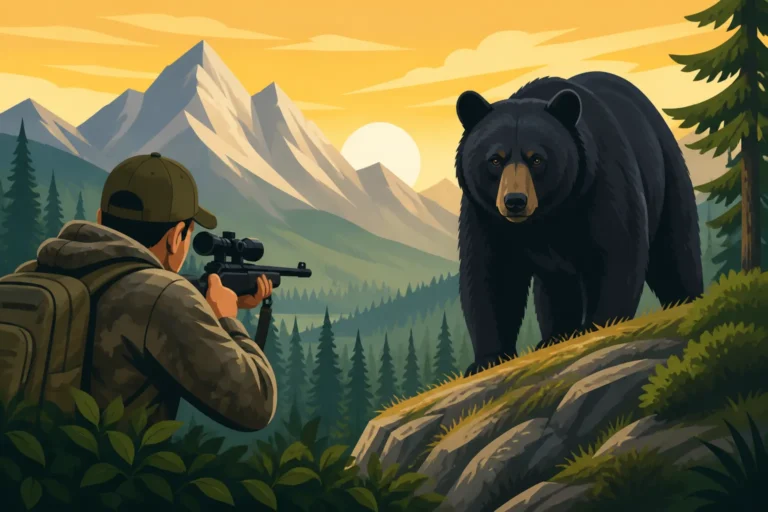
Spot-and-stalk hunting is arguably the most challenging and rewarding method for targeting black bears, especially trophy animals, and it's the primary legal method for non-residents in Montana. This technique involves finding a high vantage point, often early in the morning or late in the evening when bears are most active, and systematically glassing slopes, clear-cuts, and open timber. You'll use high-quality binoculars and a spotting scope to pick apart the landscape, looking for any movement or a patch of black (or cinnamon, chocolate, blonde!) that doesn't quite look right. Once a bear is spotted, the real work begins: a calculated stalk to get within shooting range, often requiring miles of hiking over difficult terrain, careful wind management, and an acute awareness of the bear's movements.
The advantages of spot-and-stalk are numerous for trophy hunters. It allows you to thoroughly assess a bear's size, sex, and color phase before committing to a shot. You can spend time watching its behavior, estimating its skull size, and making a confident decision. This is crucial because judging a black bear's size in the field can be incredibly difficult; a lone bear can appear much larger than it truly is. Look for indicators like small ears in proportion to the head, a blocky head shape, a saggy belly, and thick, heavy body mass. The challenges are equally significant: physical demands, unpredictable wind, and bears that can disappear into cover in an instant. This method truly epitomizes Montana Black Bear Hunting Guide for those seeking a pure hunting experience. For specific tactics, consider reviewing How to Spot-and-Stalk Montana Black Bear.
Calling and Still-Hunting Tactics
While spot-and-stalk might be the king for covering vast ground and evaluating bears, calling and still-hunting offer potent alternatives, especially in denser timber or during specific times of the year. Still-hunting involves moving slowly and deliberately through bear habitat, pausing frequently to scan and listen. This is particularly effective in areas with thick cover, such as north-facing timbered slopes or dense huckleberry patches, where bears might be bedded or feeding but not easily visible from a distance. The key is extreme stealth, using the wind to your advantage, and being acutely aware of every sound and shadow. It's a game of patience and observation, blending into the environment.
Calling for black bears typically involves using predator distress calls or cub distress calls. These calls can pique a bear's curiosity or, in the case of a sow protecting cubs, trigger a defensive charge (so be ready!). In spring, during the breeding season, a boar might investigate what it perceives as an easy meal or another bear. In the fall, a hungry bear might respond to a distress call hoping for a scavenged meal. This method works best in areas with good visibility for a short distance, allowing you to react quickly if a bear comes in fast. Setting up with your back to thick cover and an open shooting lane in front is often advised. While not as universally effective as spot-and-stalk, calling can be a thrilling and sometimes surprisingly successful tactic for bringing a curious or aggressive bear into range. For a comprehensive overview of how to hunt specific species, including tactical applications, consider exploring resources like How to Hunt Black Bear in Montana.
Here's a quick overview of some potential districts and factors influencing trophy bear opportunities:
| Montana Hunting Region/Area | Typical Black Bear Size/Trophy Potential | Common Color Phases | Prime Hunting Season(s) | Key Habitat Characteristics |
|---|---|---|---|---|
| Region 1 (NW Montana) | High – Excellent potential for 18-20"+ skulls and large body weights | Black, Cinnamon, Chocolate, Blonde | Spring (breeding, food), Fall (berries) | Dense conifer forests, heavy huckleberry patches, steep drainages, remote wilderness access (e.g., Kootenai, Flathead National Forests) |
| Region 2 (West-Central MT) | High – Consistent trophy production, especially in more remote areas | Black, Cinnamon, Chocolate | Spring (breeding, food), Fall (berries) | Rugged mountains, mixed timber, extensive roadless areas, diverse food sources (e.g., Lolo, Bitterroot National Forests) |
| Region 3 (SW Montana) | Medium to High – Good potential, particularly in less pressured high country | Primarily Black, some Cinnamon | Spring (food), Fall (berries) | Mountain ranges, high elevation basins, mixed conifer and aspen, good fawning/calving grounds (e.g., Beaverhead-Deerlodge National Forest) |
| Fringe Timber/River Breaks (Scattered) | Medium – Can surprise with large, less pressured bears | Primarily Black, occasional Cinnamon | Spring (early green-up), Fall (chokecherries) | Isolated timbered draws, dense river bottom thickets, agricultural edges, limited hunting pressure due to sparse bear population |
Disclaimer
Hunting in Montana, especially for big game like black bears, involves inherent risks and is subject to complex regulations. Always consult the most current Montana Fish, Wildlife & Parks (FWP) regulations before planning any hunt. This guide is for informational purposes only and does not substitute for official FWP rules, ethical hunting practices, or proper safety precautions. Be aware of private land boundaries, understand bear identification, and prioritize safety in the field.