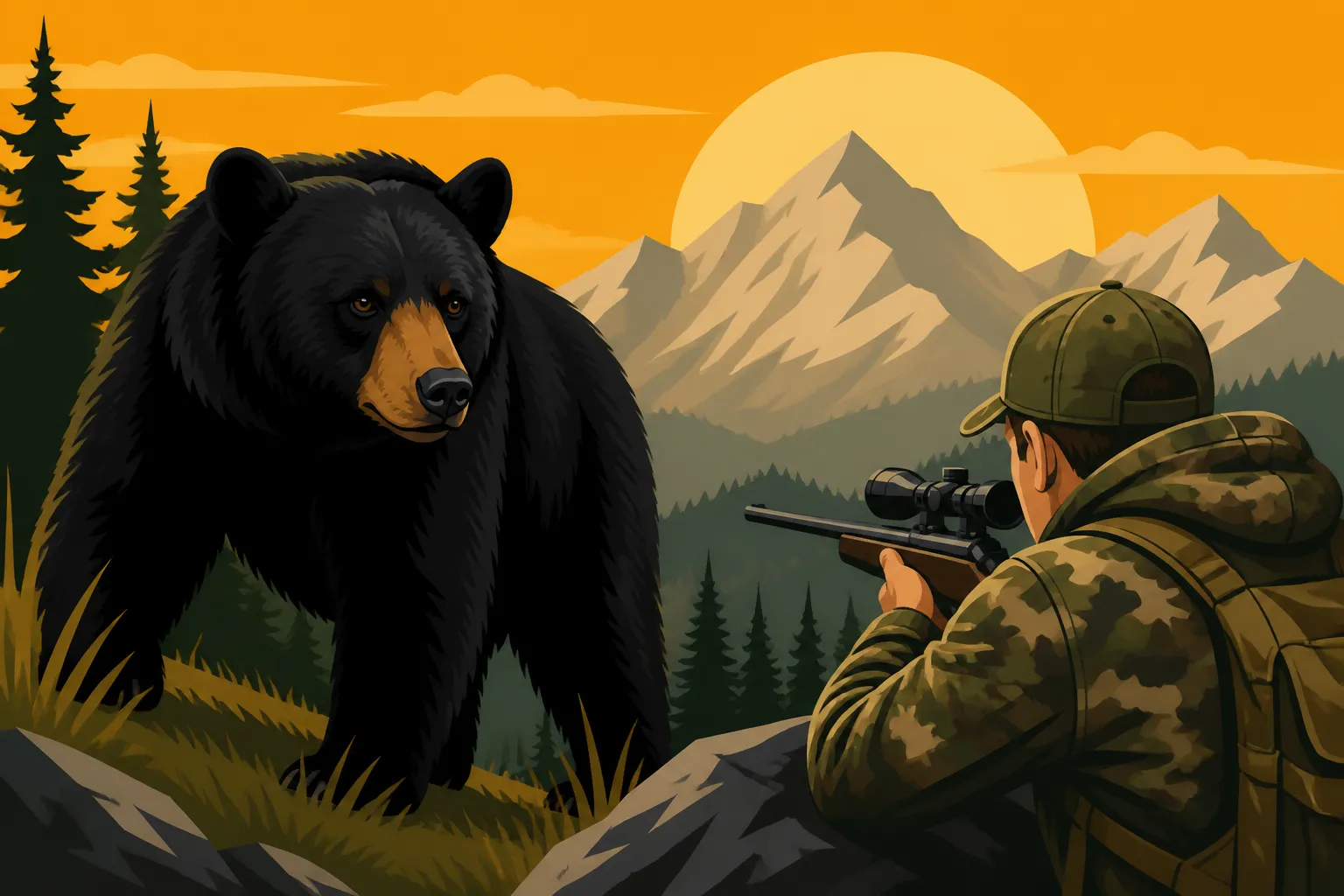
Montana Black Bear Behavior
Understanding black bear behavior is often the missing piece of the puzzle for many hunters in Montana, leading to frustrating days in the field where bears seem to vanish into thin air. It’s easy to feel like you’re chasing ghosts when you don’t grasp the seasonal shifts in their diet, habitat, and daily routines. This comprehensive guide aims to demystify Montana black bear behavior, giving you the insights needed to predict their movements and improve your chances of success.
Understanding Montana Black Bear Biology and Distribution
Black bears are incredibly adaptable creatures, and truly understanding them begins with a solid grasp of their basic biology and where they call home in Big Sky Country. They’re not just fuzzy, dark animals; there's a lot of nuance to their presence and characteristics that can inform your hunting strategy.
Physical Characteristics and Identification
When we talk about black bears, many people immediately picture a uniform black coat, but the reality in Montana is much more diverse. These bears can range significantly in size, typically weighing between 150 to 350 pounds for males and 90 to 250 pounds for females, though individuals exceeding 600 pounds have been recorded. Their physical characteristics, beyond just size, are crucial for identification, especially when distinguishing them from grizzlies in areas where both species coexist. Black bears generally have a straight facial profile, a smaller shoulder hump (or none at all), and longer, more pointed ears relative to their head size. Their claws are shorter and more curved, designed for climbing trees, which is a classic black bear trait. Always be certain of your target before taking a shot, as mistaken identity can have serious consequences.
Montana Black Bear Population and Range
Montana boasts a healthy and widespread black bear population, making them one of the state's most accessible big game species. While they are found throughout much of the state, their distribution is heavily concentrated in the forested mountain ranges of western and central Montana, extending into parts of the Little Belt and Big Belt mountains. The vast timbered expanses, abundant food sources, and rugged terrain provide ideal conditions for them to thrive. You’ll find fewer black bears, or none at all, in the wide-open plains of Eastern Montana, though they can occasionally wander into river bottoms or isolated coulees in that region. Knowing the Montana Black Bear Population and Range is essential for narrowing down your hunting areas, even before you start thinking about specific districts.
Black Bear Subspecies and Color Phases in Montana
While there's only one species of black bear in North America, Ursus americanus, they exhibit a fascinating array of color phases, especially here in Montana. It’s a common misconception that all black bears are, well, black. In Montana, you’ll encounter black bears that are jet black, but also various shades of brown, cinnamon, and even blond. These color variations are not indicative of a different species or subspecies; they're simply genetic expressions. The cinnamon phase is particularly common and can sometimes lead to confusion with grizzly bears, making careful identification even more important. Hunters often refer to "blonde bears" or "cinnamon bears," but they are genetically identical to their black counterparts. This diverse coloration adds a unique element to hunting them, as each bear can be strikingly different from the next.
Seasonal Behavior Patterns
Black bear behavior is incredibly dynamic, shifting dramatically with the changing seasons. What drives a bear in spring is often completely different from what motivates it in the fall. Understanding these seasonal rhythms is paramount for anyone hoping to successfully hunt these elusive animals.
Spring Emergence and Post-Hibernation Activity
As the snow begins to melt and the days lengthen, typically from late March through May in Montana, black bears emerge from their dens. This period is critical for hunters seeking to pursue How to Hunt Montana Spring Black Bear. They wake up hungry, having lost a significant amount of weight during hibernation, and their primary focus immediately turns to finding food. At this time, their digestive systems are still sluggish, so they often seek out easily digestible, succulent greens. Think fresh grass, clover, dandelions, and emerging forbs in avalanche chutes, south-facing slopes, and riparian areas where snow melts first. These early season food sources are often found at lower elevations or on south-facing aspects that warm up faster. Bears are often seen grazing like cattle during this period. They are driven by a need to replenish lost calories and regain strength, making these predictable feeding areas prime hunting spots. Remember, cub-rearing sows will also emerge, and it's vital to identify your bear carefully to avoid taking a sow with cubs, which is illegal and unethical.
Summer Patterns and Breeding Season
As spring transitions into summer, typically from June through August, black bear behavior shifts again. Food sources become more abundant and diverse, and the breeding season, or rut, kicks into full swing, usually from late May through July. During this time, bears become less concentrated on specific green-up areas and spread out to take advantage of ripening berries, insects, and other food. Males, or boars, will actively roam larger areas in search of receptive sows, often covering significant distances. This can make them more vulnerable and less predictable than in spring, but also creates opportunities for hunters willing to put in the time to scout broader areas. Sows, especially those with cubs, will often retreat to denser cover to avoid aggressive boars and to protect their young. This is a time when bears might be found at higher elevations as well, following the progression of vegetation growth and berry crops.
Fall Foraging and Pre-Hibernation Preparations
The fall, from late August through November, represents the most intense feeding period for black bears, known as hyperphagia. Their sole focus is to consume as many calories as possible to build up fat reserves for the upcoming hibernation. This insatiable drive makes them incredibly active and predictable if you can locate their preferred food sources. This is when hunters often have great success with Montana Fall Bear Season and Tags. Acorns, huckleberries, serviceberries, chokecherries, and mountain ash berries become primary targets. If hard mast crops (like acorns) are abundant, bears will key in on those areas. If not, they will rely heavily on berry patches. Bears will also take advantage of any available carrion or late-season agricultural crops if accessible. They're often found at higher elevations where berry crops ripen, moving lower as the season progresses and food sources deplete. Their urgency to feed means they'll spend long hours foraging, making daylight encounters more common. This is a prime time to use mapping tools like GoHunt to identify potential food sources and habitat types in a given district.
Diet and Foraging Habits
Black bears are quintessential omnivores, and their diet plays a monumental role in their behavior and where you’ll find them. They are opportunistic eaters, constantly adapting their foraging strategies to what’s available in their environment.
Omnivorous Diet Explained
The term "omnivorous" truly defines a black bear's palate. They eat nearly everything. While they are physically powerful predators, their diet is overwhelmingly vegetarian, consisting of around 80-90% plant matter. This includes a huge variety of grasses, forbs, roots, berries, nuts, and seeds. However, they are not strictly vegetarian and will readily consume insects (especially ants and their larvae), grubs, small mammals, fish, carrion, and even deer or elk fawns if given the opportunity. This flexible diet is a key to their survival and explains why their foraging behavior changes so much throughout the year. For hunters, this means you need to think like a bear, identifying what is ripe, abundant, and calorie-rich at any given time.
Food Sources by Season
The specific foods a black bear seeks out change dramatically with the seasons in Montana.
- Spring: As mentioned, bears emerge from hibernation craving fresh, green vegetation. They'll gorge on succulent grasses, clover, aspen buds, and the tender shoots of various forbs. These are critical for getting their digestive systems back in gear. Hunters should look for south-facing slopes and damp meadows that green up first.
- Summer: Once spring greens mature and become less palatable, bears transition to berries. Huckleberries are a huge draw in western Montana's higher elevations, but they also consume serviceberries, chokecherries, raspberries, and saskatoons. Insects, particularly ants from rotten logs or ground nests, also become a significant protein source.
- Fall: This is the season of "fattening up." Bears become obsessive about consuming high-calorie foods. Hard mast, such as acorns and pine nuts, if present in a given area, will be heavily utilized. But berries, especially huckleberries and mountain ash, remain crucial. They will spend hours, even days, in dense berry patches. It’s important to understand Montana Black Bear Spring Feeding Patterns versus what they are keying on in the fall. During the fall, any available carrion or late-season fruit in old orchards or near human habitation might also attract them.
Impact of Food Availability on Behavior
The abundance and distribution of food sources are the single biggest drivers of black bear behavior. When food is plentiful and widely distributed, bears will spread out and can be harder to locate. However, if a specific food source is localized and highly attractive – like a bumper crop of huckleberries in a particular basin or a stand of oak trees heavy with acorns – bears will congregate there, making them much more predictable. A poor berry crop in one year might push bears to lower elevations or different habitats in search of alternatives, potentially bringing them into areas where they are less commonly seen. This directly impacts hunter success, as understanding these localized food patterns is often the difference between seeing bears and striking out. Using tools like GoHunt’s overlay maps can help in identifying historical burn areas that produce good berry crops or timber types that might support specific mast trees.
Habitat Preferences and Movement
While black bears are adaptable, they do have distinct preferences when it comes to where they live and how they move through the landscape. Recognizing these patterns can significantly aid in locating them.
Preferred Terrain and Cover
In Montana, black bears are strongly associated with forested and mountainous terrain. They thrive in areas with dense timber for cover, thick brush for bedding and security, and rugged topography that offers escape routes and diverse food sources. Ideal habitat often includes a mosaic of mature forests, younger regenerating clearcuts, riparian corridors, and rocky outcrops. These areas provide everything a bear needs: shelter from the elements, hiding places from predators (including humans), and access to a variety of foods. South-facing slopes are especially attractive in spring for early greens, while dense, north-facing timber offers cool bedding in summer. They are masters of using cover to their advantage, often traveling through the thickest parts of the woods, even when a more open path might seem easier for us.
Daily and Seasonal Movement Patterns
Black bears typically move most actively during dawn and dusk, much like deer and elk. However, their intense drive to feed, particularly in spring and fall, often leads to increased daytime activity. In spring, they might graze in open avalanche chutes for hours during the midday sun. In fall, they can spend the entire day gorging in a dense berry patch. Their daily movements are largely dictated by accessing food, water, and bedding areas. They often follow established game trails or create their own through thick brush, connecting these vital resources.
Seasonal movements are broader. Bears might move up and down in elevation throughout the year, following the progression of green-up in spring or the ripening of berry crops in summer and fall. They'll also move towards suitable denning sites as winter approaches. These movements can be substantial, sometimes covering many miles. Understanding these larger-scale shifts is crucial for knowing Montana Elk Hunting Methods Explained and how bear movements overlap with other species. A significant part of Montana DIY Elk Hunting Guide is about recognizing how various animals use the same landscape.
Factors Influencing Travel Corridors
Black bears utilize predictable travel corridors, especially between prime feeding areas, water sources, and bedding thickets. These corridors are often found along ridgelines, creek bottoms, dense timber edges, and benches on mountainsides. Factors influencing these choices include:
- Cover: Bears prioritize security. They will almost always choose a path that offers ample cover, even if it means a longer or more difficult route.
- Topography: They use natural features like saddles, drainages, and benches to navigate efficiently and often use these as travel routes.
- Food & Water Access: Corridors often connect directly to key feeding grounds or water sources. If a huckleberry patch is on one side of a ridge and a stream on the other, expect a well-used trail connecting them.
- Wind & Thermals: Bears are highly sensitive to scent and will often travel in a way that uses the wind to their advantage, either to detect danger or locate food. Understanding How to Use Thermals in Montana Elk Country is equally applicable to bear hunting. When glassing, pay attention to the prevailing wind and look for areas that funnel bears into a predictable path.
Bear Sign and Interpreting Their Presence
Finding bear sign is one thing; understanding what it tells you is another. Interpreting tracks, scat, and feeding marks can paint a vivid picture of a bear's recent activity and help you predict its next move.
Tracks, Scat, and Rubs
These are the bread and butter of bear sign interpretation.
- Tracks: Black bear tracks are distinctive. The front paw print often shows five toes, with the claw marks visible in front of the toe pads. The heel pad is typically wider and less rounded than a grizzly's. Rear tracks are longer and more human-like, often showing all five toes and a prominent heel. Fresh tracks in mud or snow can tell you how recently a bear passed through. Larger tracks generally indicate a larger bear, though it can be hard to differentiate between a large sow and a medium boar. Pay attention to the direction of travel and whether the tracks seem purposeful or meandering.
- Scat: Bear scat varies wildly depending on their diet. In spring, it might be loose and greenish, full of grass. In summer and fall, it will be dense with berry seeds, fruit skins, or nut casings. Scat consistency, size, and contents can tell you what a bear has been eating, and its freshness can indicate how recently it was there. Fresh, moist scat means a bear is very close.
- Rubs: Bears will rub against trees, often pines, firs, or cedars, for various reasons: to mark territory, to scratch an itch, or to remove loose hair. These rub trees can show hair caught in the bark, claw marks, and sometimes mud. They are essentially signposts that a bear uses the area regularly. The height of the rub can give you an idea of the bear's size. Keep an eye out for these along ridgelines or near dense bedding cover.
Feeding Sign and Bedding Areas
Beyond tracks and scat, specific feeding and bedding signs offer critical clues.
- Feeding Sign: Look for torn-up logs or stumps (evidence of digging for grubs and ants), overturned rocks, broken branches in berry bushes, or claw marks on trees where bears have climbed to access fruit or nuts. In areas with huckleberries, you might find entire bushes stripped bare or areas where bears have "swum" through the berries, leaving a flattened, disturbed path. Old apple orchards or cherry trees can also show heavy feeding sign. The type of feeding sign, coupled with the season, will tell you precisely what a bear is targeting.
- Bedding Areas: Bears create bedding sites for rest and security. These are often shallow depressions in dense cover, under thick conifer trees, in brush piles, or on benches overlooking feeding areas. A fresh bed will show matted vegetation and potentially some shed hair. They usually choose spots with good visibility downwind and thick cover for concealment, allowing them to rest while remaining alert. Finding a fresh bed indicates a bear has been recently active in that immediate vicinity, suggesting a nearby food source or travel route.
Understanding Bear Vocalizations and Body Language
While less common to encounter directly, understanding bear vocalizations and body language is important for both hunting and safety. Bears are generally quiet animals, but they do communicate.
- Vocalizations: A huffing sound often indicates alarm or annoyance. A growl or roar is a clear sign of aggression. Cubs will whimper or bawl if distressed. While you're unlikely to hear these sounds often in the backcountry, recognizing them can help you interpret a situation.
- Body Language: A bear standing on its hind legs is usually trying to get a better look or smell, not necessarily being aggressive. Flattened ears, jaw popping, or a direct stare can indicate irritation. A bluff charge, where a bear rushes forward and then stops, is a warning. Understanding these cues is paramount for safety, especially if you inadvertently stumble upon a sow with cubs. Always give bears plenty of space and avoid startling them.
Best Practices for Observing and Locating Black Bears
Successfully hunting black bears in Montana often comes down to strategic observation and a deep understanding of their habits. It's less about luck and more about putting yourself in the right place at the right time, with the right knowledge.
Effective Glassing Techniques
Glassing is arguably the most effective technique for locating black bears in Montana's vast landscapes, especially during daylight hours when they are often out feeding. This is particularly true for Montana Spot-and-Stalk Tactics when applied to bears. Instead of constantly walking, find a vantage point that overlooks a large area of prime habitat – think south-facing slopes, avalanche chutes, large berry patches, or timbered draws.
- Quality Optics: Invest in good binoculars (10x or 12x) and a spotting scope (20-60x or 25-75x) on a sturdy tripod. This isn't a luxury; it's a necessity for picking apart distant terrain. Brands like Maven, Vortex, and Swarovski are popular choices among Montana hunters.
- Slow and Methodical: Don't just scan; grid. Break down the landscape into smaller sections and meticulously examine each one. Look for movement, a splash of color against the trees, or a distinct shape that doesn't belong. Bears can be surprisingly camouflaged, even if they aren't black.
- Timing is Key: Focus your glassing efforts during the peak feeding times – early mornings, late evenings, and often midday in the spring or fall when bears are trying to maximize their calorie intake. Overcast or slightly rainy days can also bring bears out to feed more openly, as the cooler temperatures are more comfortable for them.
- Elevation and Aspect: Prioritize areas that offer the seasonal food sources described earlier. In spring, focus on south-facing slopes at lower to mid-elevations. In fall, shift to areas with prominent berry bushes or mast-producing trees, often at higher elevations.
E-Scouting and Map Analysis with GoHunt
In today's hunting world, effective e-scouting is non-negotiable, and platforms like GoHunt are invaluable for Montana bear hunters. Before you even set foot in the woods, you can gain a massive advantage by studying maps.
- Habitat Identification: Use satellite imagery and topographic maps to identify potential bear habitat. Look for timbered areas with varied terrain, steep slopes, north and south aspects, and proximity to water. Identify historical burns, which often create prime berry-producing areas a few years after the fire.
- Food Source Pinpointing: Overlay public land boundaries with vegetation maps to find areas likely to hold specific food sources. In western Montana, identify areas with extensive huckleberry growth, often found in subalpine fir or lodgepole pine forests at certain elevations. In central or eastern areas, look for creek bottoms with chokecherry or serviceberry thickets.
- Access and Pressure: Use map layers to identify public land access points and understand potential hunter pressure. GoHunt also provides data that can help you understand the draw odds and general success rates for Montana Black Bear Draw for 2026, allowing you to strategize not just the hunt, but the tag acquisition itself. Look for roadless areas or places that require a longer hike to escape the crowds. Remember, bears, like other game, will often seek refuge in areas with less human disturbance.
- Travel Corridors: Identify natural funnels, saddles, and benches that bears might use to travel between feeding and bedding areas. These "pinch points" can be excellent spots for ambushing a bear, especially if you’re still-hunting or using a ground blind.
Understanding the Influence of Weather
Weather, often underestimated, plays a significant role in black bear activity levels and distribution.
- Temperature: Cooler temperatures, especially in spring and fall, often lead to increased daytime activity. Bears might be less active during the hottest parts of summer days, opting for cooler, denser cover. A sudden cold snap can trigger intense feeding in the fall as bears race against the clock to put on weight.
- Precipitation: Light rain or overcast conditions can also increase daytime bear activity, as it reduces heat stress and improves scenting conditions. Heavy rain, high winds, or snow can temporarily put bears in hiding, making them harder to locate. However, after a storm clears, bears often emerge hungry and active, making those periods excellent for hunting.
- Snowpack: In spring, residual snowpack dictates where green-up first occurs. Bears will follow the melting snowline to access fresh vegetation. In the late fall, a heavy, early snow can sometimes push bears to den earlier or consolidate them in areas where food remains accessible before full hibernation. Being aware of these weather patterns is a key component of Montana Elk Hunting Methods Explained, and it's just as true for bears.
Hunting Strategies Informed by Behavior
Knowing how black bears behave is just the first step; the real art is translating that knowledge into effective hunting strategies. Whether you're a seasoned bear hunter or planning your first trip, aligning your tactics with bear behavior will significantly increase your success.
Spot-and-Stalk Hunting
The spot-and-stalk method is highly effective for black bears in Montana, leveraging their predictable feeding patterns. This is often the preferred method for How to Hunt Black Bear in Montana.
- Locate First: As discussed, finding a good vantage point and meticulously glassing is paramount. Focus on areas rich in seasonal food sources like berry patches, avalanche chutes, or clearcuts. Once you spot a bear, take your time to observe its behavior. Is it feeding steadily? Is it alone or with cubs? Where is it headed?
- Plan Your Stalk: Before moving, map out your route. Consider the wind direction above all else; bears have an incredible sense of smell. Identify natural cover that will shield your approach. Plan for potential escape routes for the bear and for yourself. Note landmarks that will help you stay oriented, especially in dense timber. Using a tool like GoHunt to mark the bear’s location and plan your stalk on the map can save crucial time and minimize error.
- Stealth and Patience: Move slowly and deliberately. Use thermals to your advantage, remembering that they typically flow uphill in the morning and downhill in the evening. Be prepared for the bear to move out of sight; sometimes you have to predict where it will reappear. Be patient; a successful stalk can take hours and cover significant ground, especially in the rugged Montana landscape.
Still-Hunting and Ambushing
While spot-and-stalk is popular, still-hunting and ambushing techniques are also highly effective, particularly in areas with dense cover or predictable travel corridors.
- Still-Hunting: This involves moving very slowly and deliberately through prime bear habitat, stopping frequently to glass and listen. It's often effective in timbered draws, along ridgelines, or through areas with heavy berry production. Focus on moving into the wind and using natural terrain features for concealment. The goal is to surprise the bear or intercept it as it moves. This tactic works well for How to Still-Hunt Montana Timber.
- Ambushing: This strategy relies on identifying predictable travel routes or feeding areas and waiting for a bear to appear. It's particularly useful in areas with limited visibility where glassing isn't as effective. Set up downwind from a choke point or a heavily used game trail that connects a bedding area to a food source. This could be a natural saddle, a creek crossing, or the edge of a dense thicket. Patience is key here, as you might wait for hours without seeing anything, but when a bear does come through, you’ll be in a prime position.
Considerations for Spring vs. Fall Hunting
The behavioral differences between spring and fall black bears lead to different hunting considerations.
- Spring: Bears are often drawn to green-up on south-facing slopes, making them easier to spot in more open country. However, the risk of encountering sows with cubs is higher. Emphasis should be on positive identification to ensure you are harvesting a lone bear or a boar. The weather can also be highly variable, from warm sun to late-season snowstorms, so be prepared for anything.
- Fall: Bears are typically focused on calorie loading, leading to intense feeding in specific, high-calorie food sources like berry patches or mast crops. This can make them incredibly predictable if you locate these areas. Fall bears are also often larger and carry more fat, yielding better meat and hides. The challenge can be denser vegetation hiding them, but their relentless feeding often keeps them out for longer periods. Comparing Montana Spring vs Fall Bear Hunting makes it clear that your tactics need to adapt significantly.
Ethical Hunting and Bear Management
Regardless of the season or method, ethical hunting practices and respect for bear management guidelines are paramount.
- Identification: Always be 100% certain of your target. Misidentifying a grizzly or a sow with cubs can lead to serious legal and ethical repercussions. Study bear identification resources thoroughly.
- Regulations: Understand Montana’s specific regulations for black bear hunting, including season dates, legal weapons, and reporting requirements. These can change annually, so consulting the current Montana Fish, Wildlife & Parks regulations is essential.
- Meat Care: Bears provide excellent table fare, but proper field care is crucial. Get the hide and meat cooled quickly, especially in warmer spring conditions. Know How to Keep Elk Meat Cool in Montana's Early Season, and apply similar principles to bear meat.
By understanding the intricate behaviors of Montana black bears throughout the seasons, from their diverse diets to their preferred habitats and movement patterns, you empower yourself with the knowledge to be a more effective and ethical hunter. These magnificent animals offer a challenging and rewarding pursuit, and a deep appreciation for their wild ways will make every moment in the field more meaningful.
Disclaimer
Hunting is an inherently dangerous activity. This guide provides general information and should not replace official safety training, legal counsel, or Montana Fish, Wildlife & Parks regulations. Always prioritize safety, understand and follow all local, state, and federal laws, and respect wildlife. Conditions in the backcountry can change rapidly. Always go prepared and never hunt alone.