Montana Black Bear Hunting Guide
The rugged mountains and vast forests of Montana hold a wild secret, one that beckons hunters seeking a challenging and rewarding experience: black bears. Many aspiring bear hunters feel overwhelmed by the sheer scale of the landscape and the nuanced regulations, unsure where to even begin their pursuit of these elusive omnivores. This comprehensive guide is designed to cut through the confusion, offering a realistic, detailed roadmap for planning, executing, and successfully enjoying a black bear hunt in the Treasure State, helping you understand their behavior, master effective tactics, and navigate the unique demands of this incredible hunt.
Understanding Montana Black Bear Behavior and Biology
Hunting black bears in Montana isn't just about knowing where to go; it's about understanding the animal itself. These intelligent, adaptable creatures have specific behaviors and biological traits that directly influence how and when they can be hunted successfully. Ignoring these fundamental aspects is like trying to solve a puzzle without looking at the picture – you might get lucky, but consistent success will elude you.
Black Bear Biology and Characteristics
Montana's black bears are truly fascinating animals, far more diverse than many people realize. While their species name suggests a singular color, black bears exhibit a remarkable range of color phases, especially here in the West. You might encounter bears that are jet black, chocolate brown, a reddish cinnamon, or even a beautiful blonde. This color variation is simply a genetic trait and doesn't indicate a different species. An adult black bear in Montana can weigh anywhere from 150 to over 400 pounds, with some mature boars pushing well past that, especially in areas with abundant food. They possess incredible strength, a keen sense of smell, and surprising agility, making them formidable inhabitants of their varied habitats.
These omnivores have an incredibly varied diet, adapting to whatever food sources are available seasonally. In the spring, after emerging from hibernation, they're often found gorging on tender, new grasses, forbs, and carrion left over from winter kills. As summer progresses, their diet shifts dramatically to berries—huckleberries, serviceberries, and chokecherries being particular favorites—alongside insects, grubs, and even small mammals. This constant search for calories is what drives much of their daily movement and, consequently, your hunting strategy. Understanding this dietary shift is paramount because a bear's location is almost always dictated by its stomach.
Their annual cycle is intrinsically linked to Montana's seasons. Bears typically enter their dens for hibernation sometime in late fall or early winter, depending on food availability and weather severity. They emerge in early spring, often in April or May, eager to replenish lost weight. This post-hibernation period, coinciding with the "green-up" of vegetation on lower elevation, south-facing slopes, is precisely why spring bear hunting is such a popular and effective pursuit. Knowing these patterns helps you anticipate where bears will be and what they'll be doing.
Preferred Habitats and Range in Montana
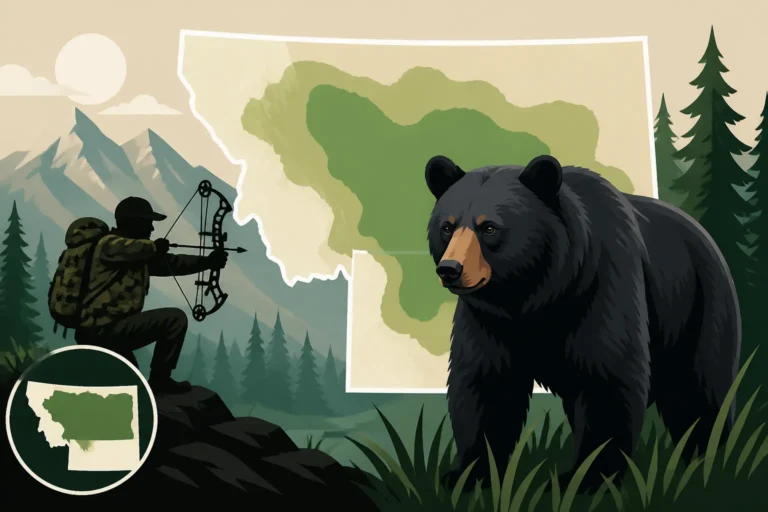
Montana offers a vast tapestry of landscapes, and black bears have made themselves at home in many of them. Generally, you'll find them predominantly in the state's forested, mountainous regions, particularly in Western and Central Montana. Areas like the Bob Marshall Wilderness, the Bitterroot Valley, the Rocky Mountain Front, and parts of the Beaverhead-Deerlodge National Forest are prime black bear country. These areas provide the dense cover, diverse food sources, and rugged terrain they need to thrive. While less common, they can also be found in timbered river bottoms and isolated coulees in eastern parts of the state.
Within these broader regions, bears show a distinct preference for certain micro-habitats based on the time of year. In spring, as snow recedes, they are often drawn to lower elevation, south-facing slopes. These slopes warm up and "green up" first, offering vital early-season forage like grasses and dandelions. Look for areas with a mix of timber and open clear-cuts, or avalanche chutes where new growth flourishes. As summer progresses and berries ripen, they'll ascend to higher elevations, following the ripening huckleberry patches. Understanding these elevational and aspect preferences is key to narrowing down your search in such a vast state.
The availability of food, water, and secure cover dictates a bear's movements. They are constantly searching for calories, which means their presence is highly seasonal and dependent on local conditions. A clear-cut that was barren in May might be teeming with berries in August, drawing bears in. A remote basin with a constant water source and dense timber might serve as a bedding area. Successful black bear hunting often boils down to becoming a student of their habitat, learning to read the landscape for the subtle cues that indicate where a bear might be feeding, bedding, or traveling. This localized understanding is infinitely more valuable than generic advice.
Black Bear Behavior and Activity Patterns
Observing black bear activity patterns is crucial for timing your hunts and positioning yourself effectively. While generally considered crepuscular—most active during dawn and dusk—their activity can extend throughout the day, especially in less disturbed areas or during cooler weather. During the heat of midday, particularly in warmer months, bears will often bed down in dense cover, only to emerge again in the late afternoon to feed. Knowing this means your prime hunting hours are usually early morning and late evening, but don't discount midday opportunities if you're still-hunting or checking active areas.
Unlike elk or deer, black bears are typically solitary animals, though you will sometimes see sows with their cubs. Spotting a sow with cubs means identifying them correctly and passing on the shot, as taking a sow with young is illegal and unethical. Male bears, or boars, have much larger home ranges and will often travel significant distances in search of food or mates. This solitary nature means you might only encounter one or two bears in a given day, so making the most of each sighting is critical.
Understanding their movements is also key. Bears often follow established game trails through dense timber, move along the edges of clear-cuts, or traverse ridgelines to get from feeding areas to bedding sites or water. They are incredibly adept at using terrain to their advantage, often disappearing into thick brush with surprising speed. Their keen sense of smell is their primary tool for locating food and detecting danger, which means scent control and playing the wind are paramount for any black bear hunter. By studying their habits – when they move, why they move, and how they move – you drastically increase your chances of being in the right place at the right time.
Montana Black Bear Hunting Seasons and Regulations
Navigating Montana's black bear hunting seasons and regulations can feel like deciphering a complex puzzle, but it's absolutely critical to get it right. The state offers both spring and fall hunting opportunities, each with its unique characteristics, and understanding the specific rules for licenses and permits is non-negotiable for a legal and ethical hunt.
Spring Black Bear Season Overview
The spring black bear season in Montana is arguably the most popular time to pursue these animals. It typically runs from mid-April through early June, though exact dates vary by hunting district (HD). What makes spring so appealing is that bears are just emerging from hibernation, often lean and hungry, and are drawn to the first green-up on lower elevation, south-facing slopes. This makes them more visible and somewhat predictable as they gorge on fresh grasses, forbs, and carrion. The weather can be wildly unpredictable during this time, swinging from warm, sunny days to late-season snowstorms, adding to the challenge.
Spring bear hunting in Montana often focuses on glassing these sunny slopes, clear-cuts, and avalanche chutes where new vegetation is abundant. Hunters spend hours patiently scanning the terrain with high-powered optics, looking for a tell-tale black (or brown, or cinnamon, or blonde!) spot moving against the green. The density of black bears can vary significantly across the state, with populations generally higher in the western mountain ranges. It’s vital to consult the Montana Fish, Wildlife & Parks (FWP) regulations for specific season dates and hunt codes for your chosen district, as these can differ even within regions. You'll also want to look into the general requirements and specific rules for a Montana Black Bear Draw for 2026 if there are special permits for certain areas.
Non-residents, in particular, need to plan well in advance. While Montana does offer over-the-counter black bear licenses for non-residents in many units, obtaining your base hunting license, conservation license, and the specific black bear license requires careful attention to deadlines. Always confirm the current year's regulations, as FWP sometimes adjusts dates or bag limits. Remember, taking a sow with cubs is strictly prohibited, so positive identification before the shot is not just a legal requirement but an ethical imperative.
Fall Black Bear Season Overview
Montana's fall black bear season typically runs from early September through late November, overlapping significantly with the state's popular deer and elk seasons. This offers a different hunting experience and set of challenges. In the fall, bears are in a hyperphagic state, meaning they're eating almost constantly to build up fat reserves for the upcoming hibernation. Their diet shifts dramatically, focusing heavily on berries, nuts (like acorns or pine nuts where available), and other calorie-rich foods. This can make them harder to locate, as they might be deep in dense timber where food sources are abundant, or higher on the mountain following ripening berry patches.
Fall hunting often involves more tracking and still-hunting through timbered areas, searching for fresh sign like scat, torn-up logs, or claw marks on trees near berry bushes. While glassing is still a valuable tactic, particularly in open clear-cuts or fire scars, the dense foliage and scattered food sources mean bears can be much more elusive. The weather can also be a factor, with crisp autumn days giving way to bitter cold and snow, which can drive bears into their dens prematurely if severe enough. One significant advantage of fall bear hunting is the opportunity to combine it with other big game hunts. Many elk and deer hunters carry a bear tag, offering a bonus opportunity if a black bear presents itself. You can find comprehensive details on all the seasons in the FWP’s annual guide, helping you plan your broader Montana Hunting Seasons Explained.
Just like in spring, you must be meticulously aware of the specific regulations for your hunting district, as seasons, weapon restrictions, and bag limits can vary. Positive identification of the bear is still critical; while sows typically separate from their cubs by fall, it’s not unheard of for yearlings to still be with their mother. Always ensure you are targeting a solo bear. Being prepared for varying weather, understanding the bear's shift in diet, and embracing the multi-species hunt potential are all hallmarks of a successful fall black bear hunter in Montana.
Licensing and Permit Requirements
Securing the correct licenses and permits is the absolute first step for any Montana black bear hunt, and it’s an area where mistakes can be costly. For both residents and non-residents, the process starts with purchasing a Montana Conservation License and a Base Hunting License. These are foundational and required for nearly all hunting activities in the state. Once those are in place, you’ll need to purchase a specific Black Bear License. For many hunting districts, particularly for non-residents, the black bear license is available over-the-counter. However, certain limited-entry districts or specific bear management units may require applying for a special permit through a draw system. It's imperative to check the FWP website for the most current information regarding draws and application timelines, especially for non-residents.
The non-resident process can be a bit more involved, often requiring applications months in advance of the season. Make sure to account for processing times and potential draw deadlines. The cost of these licenses can also vary significantly between resident and non-resident status, so budget accordingly. A nonresident combination license for deer and elk, for example, is a substantial investment, but it doesn't automatically include a bear tag. That's an additional purchase. You can find a step-by-step guide to applying for your licenses and tags in articles like How to Apply for a Montana Hunting License.
Crucially, always double-check the FWP regulations handbook for the current year, as rules, fees, and application periods can change annually. The handbook will also detail important aspects like the requirement to leave evidence of sex attached to the hide until the bear is checked by FWP, as well as specific harvest reporting procedures. Failure to comply with these regulations can result in hefty fines or even loss of hunting privileges. It's not just about drawing a tag; it's about understanding and respecting every facet of the law to ensure a responsible and legal hunting experience.
Black Bear Hunting Methods and Tactics
Montana's diverse terrain and regulations mean that black bear hunting isn't a one-size-fits-all endeavor. Successful hunters adapt their methods to the specific conditions, leveraging the bear's natural behaviors to their advantage. From patient glassing to silent stalking, each tactic requires a keen understanding of the environment and the animal.
Spot-and-Stalk Hunting
Spot-and-stalk is arguably the most common and effective method for hunting black bears in Montana, especially during the spring and early fall. This tactic relies heavily on keen observation and patience, followed by a strategic approach. Hunters spend hours, often entire mornings and evenings, glassing expansive terrain from a vantage point. Ideal terrain for this method includes open hillsides, recent clear-cuts, old logging roads, vast avalanche chutes, or recent burn areas where new vegetation is sprouting. These areas offer both the food sources bears crave and the visibility hunters need to spot them.
When glassing, don't just sweep your binoculars across the landscape quickly. Instead, pick apart sections methodically, looking for anything that seems out of place – a patch of black that moves, a change in texture, or even just the shine of a bear's coat in the sun. Bears, especially when feeding, can blend surprisingly well into the shadows or brush. Once a bear is spotted, the true challenge begins: planning an approach. This involves analyzing the wind direction, identifying cover, and determining the bear's likely travel path. A successful stalk might take hours, covering significant distances, and often requires navigating steep, rugged terrain while remaining undetected. For more general tactics on this method, you can reference guides like How to Spot-and-Stalk Antelope in Montana and apply the principles to bear hunting.
The key to a successful spot-and-stalk is patience and precision. Never rush the stalk. Take your time, use the terrain to your advantage, and constantly monitor the bear's behavior. Be prepared for the bear to disappear into cover at any moment, so having a plan B (and C) for your approach is essential. This method is incredibly rewarding, demanding a hunter's full skillset, from physical endurance to mental fortitude and woodsmanship.
Hunting Natural Food Sources
While baiting is a common black bear hunting method in some states, it is generally not legal in Montana. Montana FWP regulations prioritize fair chase, meaning hunters must locate bears through scouting, glassing, or still-hunting, rather than luring them with attractants. This critical distinction means that Montana bear hunters must become experts at identifying and hunting natural food sources.
In the spring, this means focusing on the first green-up. Bears, lean from hibernation, are drawn to south-facing slopes, lower elevation drainages, and areas with new growth like clover, dandelions, and emerging grasses. Look for areas where the snow has recently melted and the sun hits directly. As the spring progresses into early summer, bears will transition to budding plants and more substantial forage. For insights into finding animals in timber, which often holds these spring food sources, consider learning How to Find Elk in Montana Dark Timber as the same principles apply.
By late spring and into the fall, the focus shifts dramatically to berries. Huckleberries are a huge attractant, but serviceberries, chokecherries, and even buffalo berries can draw bears from miles around. Learning to identify these plants and their typical ripening times in your chosen hunting district is invaluable. Bears will often spend hours, if not days, in a concentrated berry patch, creating ideal ambush or still-hunting opportunities. Always be on the lookout for fresh bear sign – scat filled with berry seeds, torn-up logs from grub hunting, or claw marks on trees – which indicates active feeding areas. Understanding these seasonal food transitions is the cornerstone of effective black bear hunting in Montana.
Still-Hunting and Ambush Tactics
For those who enjoy a more intimate, stealthy approach, still-hunting and ambush tactics can be highly effective for black bears, especially in timbered areas where long-range glassing is difficult. Still-hunting involves moving through the woods at an incredibly slow, deliberate pace, taking a few steps, then pausing for several minutes to observe and listen. The goal is to detect a bear before it detects you. This requires immense patience, keen observation skills, and an acute awareness of wind direction and thermal currents, which are crucial for any hunter moving through Montana's mountainous terrain. If you're looking for advanced techniques in silent movement, consider our guide on How to Move Quietly Through Montana Timber.
When still-hunting, focus on areas that offer both food and cover. This could be dense stands of pine, cedar thickets, or areas with a lot of downed timber. Bears often utilize these areas for bedding, especially during the middle of the day, or as travel corridors between feeding and watering sites. Look for subtle signs: a faint track, a broken branch, or disturbed leaves. Pay close attention to any movement, sound, or unusual shape in the shadows. The key is to blend into the environment and become part of it, rather than an intruder.
Ambush tactics involve finding a high-traffic area, such as a well-used game trail leading to a known feeding ground, a water source, or a natural pinch point, and then waiting quietly. This is often done from the ground, tucked into dense cover, or occasionally from a tree stand if the terrain and regulations permit. The challenge is choosing the right spot, one that offers a good shooting lane and puts the wind consistently in your favor. This method works best in areas where you've observed consistent bear activity through scouting. Both still-hunting and ambushing demand serious commitment to stealth and scent control, but they can yield incredibly close encounters with wary black bears.
Gear Essentials for Montana Black Bear Hunting
Successfully hunting black bears in Montana demands more than just skill; it requires the right gear. The rugged landscape, variable weather, and the nature of the quarry itself necessitate specific equipment choices that will enhance your effectiveness and ensure your safety. Don't skimp on essentials; investing in quality gear is investing in your success and enjoyment.
Optics and Navigation
When it comes to black bear hunting, especially in the vastness of Montana, high-quality optics are not a luxury; they are an absolute necessity. Your primary tool will be a pair of powerful binoculars, ideally 10×42 or 12×50, to thoroughly pick apart distant hillsides and clear-cuts. Many experienced hunters also carry a spotting scope (20-60x or 15-45x) on a sturdy tripod. This allows you to scrutinize distant black spots, distinguishing between a bear, a burned stump, or a patch of shadow. Remember, patience with your glassing is key; bears can materialize seemingly out of nowhere. For a deeper dive into choosing the right visual aids, check out our guide on Best Optics for Montana Big Game.
Equally important is reliable navigation. The mountains and forests of Montana can be disorienting, even for seasoned outdoorsmen. A dedicated GPS unit or a robust GPS app on your smartphone, like onX Hunt, is essential. These tools allow you to mark potential bear activity, track your movements, and navigate safely, especially when stalking an animal in unfamiliar terrain or packing out meat in low light. The onX Hunt app, for instance, provides detailed topographical maps, property boundaries (critical for distinguishing public from private land), and satellite imagery, helping you understand the terrain better before and during your hunt. Platforms like GoHunt also integrate advanced mapping features, providing invaluable satellite and topographical data for detailed e-scouting before you even hit the field.
Finally, a good rangefinder is non-negotiable. Bears can appear deceptively close or far in the mountains, and accurately judging distance is vital for an ethical shot. Modern rangefinders often include angle compensation, which is incredibly useful for shots on steep terrain. Having these optical and navigational tools will not only increase your chances of finding and getting to a bear but will also ensure you can do so safely and efficiently.
Weapon Choice and Ammunition
Selecting the right weapon for your Montana black bear hunt is a critical decision, balancing accuracy, power, and your personal proficiency. For rifle hunters, medium to large calibers are generally recommended. Popular choices include the .270 Winchester, .30-06 Springfield, and the various .300 magnums (like .300 Win Mag). While a .30-30 might be fine for short-range timber hunts, the open country often demands a flatter-shooting cartridge. The key is to use a bullet with good construction, designed for deep penetration and controlled expansion, such as Barnes TSX, Nosler Partition, or Federal Trophy Bonded Tip. Bears are tough animals, and they can cover ground quickly, so shot placement and bullet performance are paramount. We have a great resource on Best Rifle Calibers for Montana Elk that shares similar considerations for shot placement and bullet performance that translate well to bear hunting.
Archery hunters seeking to pursue black bears will also need a reliable setup. Most bowhunters opt for a compound bow with at least a 60-pound draw weight, shooting heavy, well-tuned arrows tipped with fixed-blade broadheads. Mechanical broadheads can work, but many prefer the reliability of a strong fixed blade for bears, given their heavy bone structure and thick hide. Muzzleloader hunters, while less common for bears, will need to ensure their chosen setup meets Montana's specific regulations for bore size and projectile type. Regardless of your weapon choice, familiarity and practice are key. Knowing your ethical range and being proficient with your chosen setup under hunting conditions will make all the difference when the moment of truth arrives.
Remember to bring enough ammunition for practice and the hunt, and always ensure your rifle is sighted in and your bow is tuned before you head into the field. Montana's terrain can present awkward shooting angles, so practicing from various positions, including offhand and kneeling, is highly beneficial. Your weapon is only as effective as the person wielding it, so prioritize proficiency above all else.
Clothing, Footwear, and Safety Gear
Montana's mountain weather is famously unpredictable, making a thoughtful clothing system crucial for black bear hunting. The cornerstone of your apparel should be a layered approach. Start with a moisture-wicking base layer to manage sweat, add an insulating mid-layer for warmth (fleece or down are good options), and top it with a durable, waterproof, and windproof outer shell. Even in spring, temperatures can swing wildly from warm sun to chilling rain or even snow within hours. Camouflage patterns are popular, but earthy tones that blend into the environment are just as effective.
Your footwear choice will make or break your hunt, given the rugged and often steep terrain bears inhabit. Invest in high-quality, waterproof, ankle-supporting hunting boots that are well broken in. Brands like Kenetrek, Schnee's, and Crispi are popular among Montana hunters for their durability and performance in challenging conditions. Pair them with good quality wool or synthetic socks to prevent blisters and manage moisture. Proper footwear is essential for covering miles of uneven ground comfortably and safely. You might find useful insights in our guide on Best Boots for Montana Elk Hunting which offers similar criteria for durability and comfort in mountain environments.
Beyond your primary hunting gear, carrying essential safety equipment is non-negotiable. In bear country, this includes bear spray—and knowing how to quickly deploy it. A well-stocked first-aid kit, a reliable headlamp with extra batteries, fire-starting supplies, and a means of communication (satellite messenger like a Garmin InReach or a satellite phone) are all vital. Always let someone know your hunting plans, including your general area and expected return time. The vastness of Montana means self-sufficiency and preparedness are not just good ideas, they are lifelines.
E-Scouting and Locating Black Bears in Montana
In the vastness of Montana, simply heading into the woods and hoping to stumble upon a black bear is a recipe for frustration. Modern hunting success often begins long before you even set foot in the field, with meticulous e-scouting. This involves leveraging technology and understanding bear habitat to pinpoint high-potential areas, saving you countless hours of unproductive walking.
Utilizing Topographical Maps and Satellite Imagery
E-scouting is your first line of attack in locating black bears. Start with detailed topographical maps and high-resolution satellite imagery, readily available through platforms like onX Hunt or through services like GoHunt which offer specialized mapping features and historical harvest data. Your goal is to identify key features that are attractive to bears, especially in the spring. Look for south-facing slopes, as these areas catch the most sun and will be the first to green up after winter. Identify avalanche chutes, clear-cuts, and recent burn areas that will quickly produce new, tender vegetation – a primary food source for bears emerging from hibernation.
Focus on areas with a good mix of dense cover (for bedding and escape) and open feeding areas. Creek bottoms and riparian zones can also be productive, offering water and lush vegetation. Use contour lines to identify benches, saddles, and subtle terrain features that bears might use as travel corridors or feeding shelves. Mark these potential hot spots on your digital map. For more general e-scouting principles, consult a guide such as How to E-Scout Montana Hunting Units; many of the same concepts apply to bear hunting.
As the season progresses into summer and fall, your e-scouting efforts will shift. Now you'll be looking for areas with known berry patches. Satellite imagery, especially recent images, can sometimes reveal distinct areas of berry bushes or other fall food sources. Remember that these features can be hundreds or even thousands of feet apart in elevation. By systematically analyzing these digital maps, you can create a hit list of areas to physically scout or hunt, significantly narrowing down the immense landscape and focusing your efforts on higher-probability locations.
Interpreting Bear Sign and Habitat Cues
Once you've identified potential bear habitat through e-scouting, the next step is to get boots on the ground and learn to interpret the physical cues bears leave behind. Bear sign is everywhere if you know what to look for, and it tells a story about recent activity. Fresh scat is one of the most reliable indicators of a bear's presence and what it's been eating. In spring, scat will often be green and soft from new grasses. Later in the season, it will be full of berry seeds or insect remains. Location of scat can also indicate travel routes or feeding areas.
Tracks are another obvious sign, and learning to differentiate black bear tracks from other animals (and crucially, from grizzly tracks in overlapping ranges) is paramount. Look for the five distinct toes and the size of the pad. Beyond scat and tracks, keep an eye out for rub trees – trees that bears have repeatedly rubbed against, often leaving behind hair. Torn-up logs and overturned rocks are signs a bear has been foraging for grubs and insects. Claw marks on trees, especially near berry patches, can indicate a bear has climbed to reach fruit.
Connecting these various signs to the overall habitat is where the real skill lies. If you find fresh tracks leading into a dense thicket, it might be a bedding area. Scat with berry seeds in an open clear-cut suggests a feeding area. Understanding these seasonal food transitions is key: bears will move up and down in elevation and across drainages as different food sources become available. Early spring might mean lower, sunny slopes, while late spring/early summer could mean higher elevation huckleberry patches. By becoming a detective of the forest floor, you'll gain invaluable insights into bear movements and concentrations.
Field Care and Packing Out Your Bear
Harvesting a black bear in Montana is a significant accomplishment, but the hunt isn't over until the meat and hide are properly cared for and packed out. Bears are large, heavy animals, and proper field dressing is crucial for preserving the meat and hide, especially in variable mountain temperatures. Neglecting this step can quickly ruin your hard-earned trophy.
Proper Field Dressing Techniques
The moment you harvest a black bear, prompt and thorough field dressing is paramount, particularly if temperatures are warm. Bears have a thick layer of fat that acts as an insulator, holding heat and causing meat to spoil rapidly. Your first priority should be to eviscerate the bear immediately to allow the carcass to cool down. Make an incision from the sternum to the pelvis, carefully cutting around the anus. Roll the bear onto its side to help spill out the entrails. Removing the windpipe and esophagus is also important to ensure full cooling.
Next comes the decision regarding skinning: whether you plan for a rug, a skull mount, or simply to preserve the meat. If you want a rug, you'll need to skin the bear entirely, making specific cuts for taxidermy purposes. If you are only interested in the meat, you can quarter the bear with the hide on and then skin the quarters later, though it's often easier to skin the entire animal in the field. Crucially, Montana regulations require you to leave evidence of sex naturally attached to the hide until the bear has been officially inspected by FWP personnel or checked through a designated check station. This typically means leaving the penis attached to a male hide or the vulva to a female hide. Take your time, work carefully, and keep the meat as clean as possible, separating it from dirt, hair, and gut contents. We have a detailed guide on How to Quarter an Elk in the Montana Backcountry that offers similar principles for handling large game in the field.
Once field-dressed, ensure air circulates around the carcass or quarters. If you're not immediately packing out, hang the meat in the shade, off the ground, to continue cooling and keep it away from scavengers. Every minute counts when it comes to cooling a bear, especially in warmer weather, to guarantee high-quality meat.
Packing Out Bear Meat and Hide
Packing out a black bear can be one of the most physically demanding parts of the hunt. Bears are dense animals, and even a modest-sized bear can yield a significant amount of meat and a heavy hide. You should always be prepared to make multiple trips or have a robust pack frame. Your pack frame should be sturdy, capable of carrying heavy, awkward loads, and comfortable enough for long hauls over rugged terrain. High-quality game bags are essential to protect the meat from dirt, insects, and drying out. These bags should be breathable, allowing air to circulate while keeping contaminants away.
When quartering your bear, consider how you will distribute the weight. The hindquarters are often the heaviest, followed by the front shoulders and backstraps. If you're taking the hide, especially for a rug, it will add substantial weight. You'll want to bone out as much meat as possible to reduce weight, carefully separating the meat from the bone. Remember to collect all edible portions, including the neck meat, ribs, and any fat you wish to render. For more insights on packing out large game, you can refer to How to Pack Out an Elk in Montana, which offers similar challenges and solutions that apply to bears.
Plan your exit route carefully. If hunting in a group, distribute the load evenly. If hunting solo, be prepared for multiple strenuous trips. Always think about keeping the meat cool during the pack-out, especially if the weather is warm. This might involve packing snow around the meat in game bags or planning to get it to a cooler or processor as quickly as possible. The effort of packing out a bear is immense, but the reward of healthy, organic meat makes it all worthwhile.
Evidence of Sex Requirements
Montana Fish, Wildlife & Parks (FWP) has specific legal requirements regarding evidence of sex for harvested black bears, and it is absolutely critical that hunters comply. The regulation states that evidence of sex must remain naturally attached to the hide until the hide has been officially inspected or checked by FWP personnel, or until the hide is presented at a designated check station. This is not a suggestion; it's a legal mandate designed to help FWP manage bear populations and ensure ethical harvesting.
For male bears, this means leaving the penis sheath attached to the hide. For female bears, the vulva must remain attached. This might require some careful skinning and butchering to ensure the evidence remains intact with the hide, especially if you are quartering the bear in the field. Hunters should familiarize themselves with these specific requirements before their hunt begins. You can find detailed diagrams and instructions in the annual FWP hunting regulations.
Failing to leave evidence of sex attached to the hide can lead to significant penalties, including fines and potential loss of hunting privileges. It's an easily avoidable mistake that can turn a successful hunt into a legal headache. Therefore, plan your field dressing and skinning process with this requirement in mind. When in doubt, err on the side of caution and leave more attached than less, ensuring you meet the legal standard. This small but important detail is part of being a responsible and law-abiding hunter in Montana.
Safety and Ethical Considerations
Hunting black bears in Montana, while incredibly rewarding, also comes with significant responsibilities regarding safety and ethical conduct. You're not just pursuing an animal; you're venturing into their wild home, and acting responsibly ensures a positive experience for everyone, including the bears themselves.
Bear Safety in the Field
When hunting black bears, you are quite literally in bear country, and that means being prepared for encounters, especially with grizzlies in areas of overlapping range. Your absolute top priority, beyond your hunting weapon, should be carrying bear spray. It's a non-lethal deterrent that has been proven highly effective in deterring aggressive bears. But it's not enough to just carry it; you need to know how to access it quickly and deploy it effectively. Practice drawing it from your holster (chest holster is ideal for quick access).
Beyond bear spray, situational awareness is key. Make noise as you move through dense timber to avoid surprising a bear, especially in areas with poor visibility. Yell "Hey bear!" every so often. Scan your surroundings constantly, not just for your target animal, but for any signs of bear activity, including fresh tracks, scat, or territorial rubs. Avoid hunting solo in extremely dense bear country if you're not experienced. If you do encounter a bear at close range, know the difference between defensive and predatory behavior, and react accordingly. Generally, if a bear is bluff charging or popping its jaws, stand your ground, make yourself look big, and be prepared to use your spray. If a bear approaches silently, with its head low, that could be predatory behavior, and you might need to defend yourself with your firearm.
Always be vigilant when approaching a downed animal or a kill site. Bears are opportunistic scavengers, and you could inadvertently walk into a fresh kill or a bear's bed. Make your presence known, scan the area thoroughly, and take extra precautions. The goal is a safe and successful hunt, and that starts with respecting these powerful animals and being prepared for any encounter.
Ethical Hunting Practices
Ethical conduct is the bedrock of responsible hunting, and it's especially critical when pursuing black bears. The first and foremost ethical consideration is positive identification of your target. It is strictly illegal and deeply unethical to harvest a sow with cubs. While mature boars are often solitary, sows with cubs may still be together, especially in the spring. You must be 100% certain of your target before taking a shot. This means observing the bear for an extended period, looking for the presence of cubs, and confirming it's not a sow. If there's any doubt, pass on the shot.
Another critical aspect of ethical hunting is ensuring a clean, humane kill. Only take shots within your effective range and at a clear, vital target area. Avoid risky shots that could wound an animal, leading to a long and potentially unrecoverable chase. This requires disciplined shooting practice and a thorough understanding of bear anatomy. If a shot is taken, and the animal is hit, make every reasonable effort to recover it, no matter how difficult the track. This commitment reflects respect for the animal and the resource.
Finally, ethical hunting extends to how you interact with the land and other users. Leave no trace, pack out all your garbage, and respect private property boundaries. Educate yourself on FWP regulations and adhere to them without exception. Responsible hunting helps ensure that black bear populations remain healthy and that hunting opportunities continue for future generations. It’s about being a steward of the land and its wildlife, embodying the spirit of fair chase and reverence for the wild.
Understanding Black Bear vs. Grizzly Bear Identification
In many parts of Montana, especially west of the Continental Divide and in some central areas, black bears and grizzly bears share the same habitat. Distinguishing between these two species is not just important for safety; it's a legal imperative, as grizzly bears are federally protected and cannot be hunted. Mistakenly shooting a grizzly can lead to severe federal penalties, including significant fines and jail time. Therefore, every black bear hunter must be an expert in bear identification.
While color is often a distinguishing feature, it's not reliable. Black bears can be brown, cinnamon, or blonde, just like grizzlies. Instead, focus on anatomical differences:
- Shoulder Hump: Grizzly bears have a prominent muscle hump between their shoulders. Black bears typically do not have this hump, and their back forms a relatively straight line.
- Facial Profile: Grizzlies have a dished-in or concave facial profile from their forehead to their nose. Black bears usually have a straighter, more Roman-nosed profile.
- Ear Size: Black bears tend to have larger, more prominent ears relative to their head size, often appearing rounder. Grizzly ears appear smaller and more rounded in comparison.
- Claw Length: Grizzly claws are much longer (2-4 inches), less curved, and better suited for digging. Black bear claws are shorter, more curved, and better for climbing trees. You won't often see this from a distance, but it's a key identifier if you can observe tracks.
- Size: While grizzlies are generally larger, size can be misleading as a large black bear can be bigger than a small grizzly, especially a sub-adult.
Always take your time to glass and observe the bear thoroughly from multiple angles before even considering a shot. If there is any doubt whatsoever, do not shoot. It's far better to pass on a potential black bear than to mistakenly take a grizzly. Learning these distinctions thoroughly and practicing observation with your optics is a critical safety and ethical component of Montana Black Bear Hunting.
Here’s a helpful table summarizing the key differences:
| Feature | Black Bear | Grizzly Bear |
|---|---|---|
| Shoulder Hump | None or very slight | Distinct, prominent muscle hump |
| Facial Profile | Straighter, "Roman nose" | Dished-in, concave profile from forehead |
| Ear Size | Relatively larger, more pointed | Relatively smaller, rounder |
| Claw Length | Shorter, more curved (good for climbing) | Longer, straighter (good for digging) |
| Rump Profile | Rump typically higher than shoulders | Shoulders typically higher than rump (due to hump) |
| Color | Highly variable (black, brown, cinnamon, blonde) | Highly variable (brown, blonde, silver-tipped) |
Planning Your Montana Black Bear Hunt
A successful black bear hunt in Montana hinges on meticulous planning, from selecting the right hunting district to ensuring you're physically prepared for the demands of the terrain. Don't leave these crucial elements to chance; thoughtful preparation is your greatest asset.
Choosing a Hunting District
Deciding where to hunt black bears in Montana is perhaps the most critical planning step. Montana is vast, and black bear populations and hunting opportunities vary significantly by region. Your choice of hunting district (HD) should be based on a combination of factors, including bear densities, public land access, historical harvest statistics, and your preferred hunting style. The Montana Fish, Wildlife & Parks (FWP) website is an invaluable resource, providing harvest reports, population estimates, and specific regulations for each HD. Look for districts that consistently show higher harvest numbers and good success rates.
When researching districts, also consider the type of terrain. Are you comfortable hunting steep, timbered mountains, or do you prefer more open country with extensive clear-cuts? Some districts will offer more road access, while others are deep in wilderness areas requiring multi-day pack-in hunts. Tools like the FWP hunt planner maps and online platforms such as GoHunt can help you visualize the terrain, identify public land boundaries, and even show you historical burn scars or clear-cuts that might hold high bear concentrations. For a broader perspective on selecting your hunting grounds, consider our guide on How to Choose a Montana Hunting District.
Don't be afraid to call FWP biologists or game wardens in your target districts. They can provide current insights into bear activity, local conditions, and areas that might be producing bears. While they won't give you "the spot," they can confirm if your research aligns with current trends. Consider logistics as well: proximity to amenities, ease of access to the trailhead, and options for meat processing or taxidermy. A well-researched district choice sets the stage for a promising hunt.
Physical Preparation
Black bear hunting in Montana is not for the faint of heart, or the out of shape. Bears, particularly in mountainous regions, inhabit rugged, steep, and often dense terrain. You'll be doing a lot of hiking, often at elevation, and potentially carrying heavy loads of meat and hide out of difficult country. Physical fitness is not just about comfort; it's a matter of safety and increasing your chances of success. A bear spotted two miles away up a steep incline means you need to be capable of making that stalk quickly and quietly, and then still have the energy to pack it out.
Your fitness plan should focus on endurance, strength, and stamina. Incorporate activities like hiking with a loaded pack, stair climbing, and strength training for your legs, back, and core. Simulating hunt conditions as closely as possible is ideal. If you're planning to hunt at higher elevations, try to do some training at altitude or focus on cardiovascular conditioning to prepare your body for less oxygen. Being able to move silently and efficiently through difficult terrain without becoming winded is a huge advantage. We have a detailed guide on How to Physically Prepare for a Montana Elk Hunt that lays out principles universally applicable to hunting big game in Montana's challenging landscapes.
Remember, a successful stalk often demands a burst of energy followed by steady composure for the shot. Being physically prepared allows you to focus on the hunt itself rather than struggling with the exertion. It also reduces the risk of injury in the backcountry and ensures you can safely pack out your harvest, fulfilling your ethical obligation to the animal. Don't underestimate the physical demands; start your training well in advance of the season.
Working with an Outfitter
For many hunters, especially those new to Montana or to bear hunting, working with a reputable outfitter can be an invaluable investment. A guided hunt provides expert knowledge of the local terrain, bear behavior, and effective tactics, drastically increasing your chances of success. Outfitters often have access to prime hunting areas, whether on private land or through special use permits on public land, and they take care of many logistical headaches, from camp setup to field dressing and packing out. If you're considering a guided experience, check out our Montana Black Bear Hunting Outfitters Guide for more detailed information.
When choosing an outfitter, do your homework. Look for licensed outfitters with a proven track record of ethical hunting practices and satisfied clients. Ask for references and speak to past hunters about their experiences. Inquire about success rates, what's included in the hunt package (lodging, food, transportation, guide services), and what their policy is if you don't harvest a bear. A good outfitter will be transparent about these details. They'll also be able to advise you on necessary gear and physical preparation for their specific hunting area.
While a guided hunt is a significant financial investment, it can provide an incredible learning experience and an immersive introduction to Montana black bear hunting. It's particularly beneficial for hunters with limited time, those seeking a specific type of bear, or anyone who wants to maximize their opportunity without the steep learning curve of a do-it-yourself hunt in unfamiliar territory.
Disclaimer
Please note that hunting regulations in Montana, including season dates, license requirements, and specific rules for certain hunting districts, are subject to change annually. Always consult the most current Montana Fish, Wildlife & Parks (FWP) regulations handbook before planning or embarking on any hunting trip. This guide provides general information and recommendations, but it is the hunter's responsibility to know and adhere to all applicable laws and regulations.