Montana Elk Rut Explained
The Montana elk rut is a wild, unpredictable dance, and for many hunters, it represents the absolute pinnacle of the elk season. Yet, it’s also one of the most misunderstood times to be in the woods. Hunters often struggle to decode the complex behaviors, the shifting timing, and the specific tactics required, leading to frustration and missed opportunities. This comprehensive guide will pull back the curtain on the Montana elk rut, breaking down its phases, the powerful factors that influence it, and effective hunting strategies so you can navigate this exciting time with deeper understanding and increase your chances of success.
The Core Biology of the Montana Elk Rut
Before we dive into the nitty-gritty of hunting the rut, it’s crucial to understand what the rut actually is from a biological standpoint. It's more than just a free-for-all bugling contest; it’s a finely tuned natural event driven by ancient instincts and environmental cues. Appreciating these foundational elements will give you a significant edge in predicting elk behavior and adjusting your tactics accordingly.
What Drives the Annual Elk Rut?
At its heart, the elk rut is the annual breeding season, a critical period ensuring the survival of the species. This incredible natural spectacle is primarily triggered by what's called photoperiodism, which is simply the changing length of daylight. As the days grow shorter in late summer and early fall, it signals to elk that winter is approaching, and it's time to reproduce.
For bulls, this means a surge in testosterone. Their necks swell, they become increasingly aggressive, and their primary focus shifts from feeding to finding and breeding cows. You'll notice bachelor groups, once tight-knit, start to disband as individual bulls feel the urge to establish dominance and gather a harem. Their bugles, once perhaps sporadic and less intense, become guttural, powerful declarations meant to challenge rivals and attract mates. Cows, on the other hand, experience an increase in estrogen, making them receptive to breeding. This hormonal dance between bulls and cows dictates the entire rhythm of the rut, influencing their movements, vocalizations, and susceptibility to hunter pressure. Understanding this underlying biological imperative helps explain why elk will do seemingly reckless things during the rut that they'd never consider at other times of the year.
General Timing and Regional Variations Across Montana
The general window for the Montana elk rut typically spans from late August through early November, but the peak of intense breeding activity most commonly falls from mid-September to early October. However, calling it a single, uniform event across the vast expanse of Montana would be a disservice to the nuances of elk country.
Regional variations are significant. In the high-elevation wilderness areas of the western part of the state, such as the Flathead National Forest or parts of the Beaverhead-Deerlodge National Forest, the rut might start a little later or be more drawn out due to colder temperatures or slower vegetation changes. Conversely, in the lower elevation foothills or the eastern plains, the rut could potentially kick off a bit earlier. Herd dynamics, bull-to-cow ratios, and even genetics within specific districts can also influence when the most intense action occurs. When planning your hunt, diving into resources like GoHunt's unit profiles can provide insight into specific district success rates and historical rut timing information, helping you narrow down your optimal hunting window. It’s also crucial to remember that the early archery season often catches the tail end of the build-up to the rut, while the general rifle season can either hit the peak or the waning stages, especially in higher elevations where winter weather can roll in early. Always consult the most current Montana Fish, Wildlife & Parks regulations for specific Montana Elk Season Dates Guide in your chosen hunting district.
Navigating the Distinct Phases of the Rut
The elk rut isn't a single, monolithic event; it's a dynamic process with distinct phases, each demanding a slightly different approach from the savvy hunter. Understanding these stages is like reading a playbook for elk behavior, helping you anticipate their moves and deploy the right tactics at the right time.
The Early Rut: Anticipation and Build-Up
Think of the early rut, typically from late August into the first week or two of September, as the pre-game warm-up. This is when the anticipation builds, but the main event hasn't quite kicked off yet. During this phase, you’ll observe bachelor groups of bulls, which have spent the summer together, beginning to break up. Individual bulls start to assert their dominance through sparring matches, pushing and shoving with their antlers, though these encounters are often more about testing strength than outright fighting. They're feeling the hormonal surge, but the cows aren't typically receptive yet.
Vocalizations are definitely present, but they're often less intense and consistent than during the peak. You might hear locator bugles at dawn and dusk, bulls challenging each other from a distance, or occasional grunts. Cows are still generally grouped and focused on feeding, not yet seeking out bulls. For the hunter, this phase requires patience and keen observation. Your best bet is often to locate unpressured bulls in their summer range, focusing on their feeding and bedding areas. Subtle calling, like soft cow chirps or quiet glunking, can sometimes coax a bull into revealing himself without alarming him. This is often a great time for a stealthy spot-and-stalk approach before the woods become too chaotic.
The Peak Rut: Chaos and Opportunity
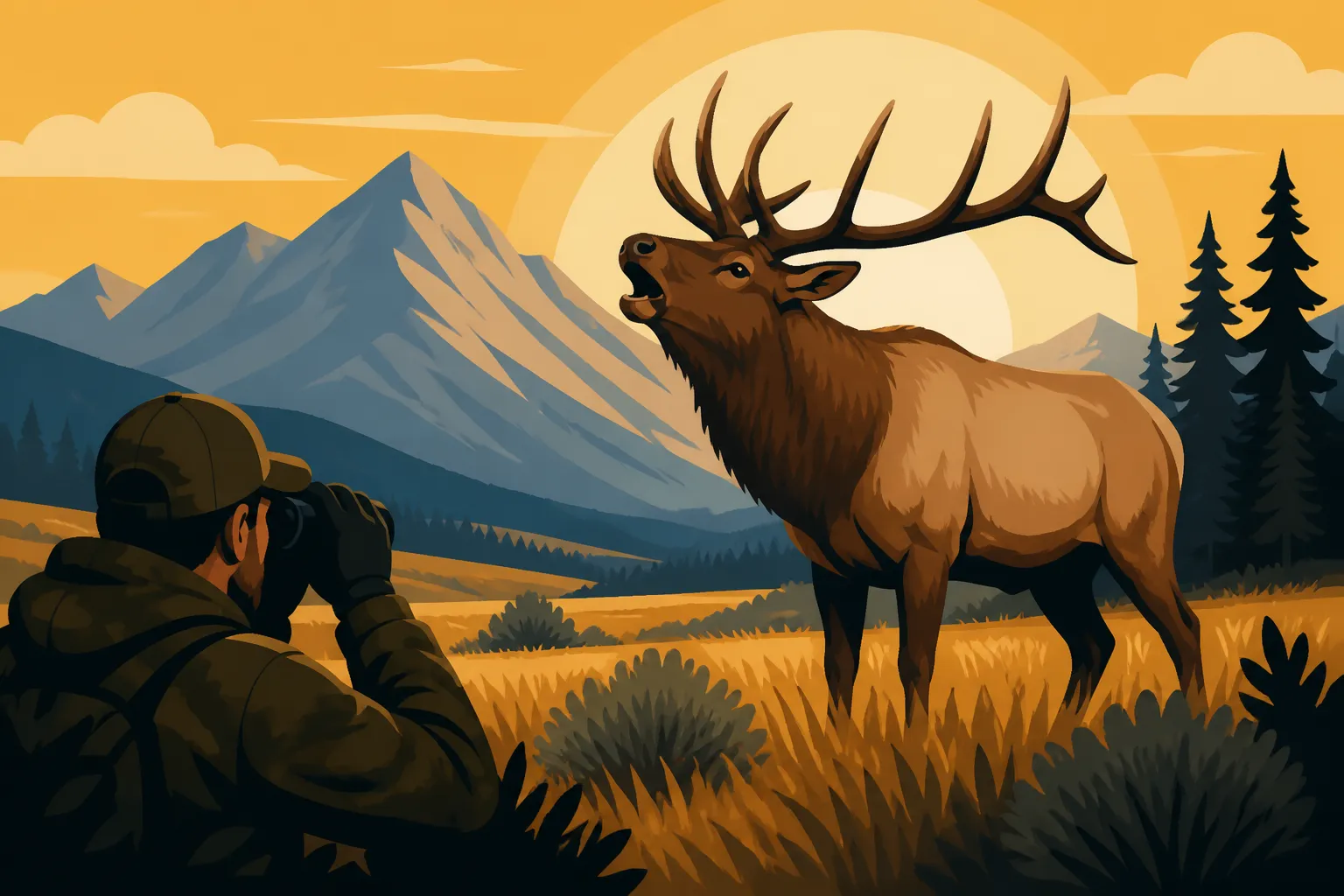
This is it: the main event. From mid-September through early October, Montana’s elk country erupts into a symphony of bugles, grunts, and the clash of antlers. The peak rut is characterized by full-blown breeding activity, with dominant bulls aggressively gathering and defending harems of cows. These dominant herd bulls will bugle relentlessly, issuing guttural challenges to any perceived rival and herding their cows with an almost frantic energy. Satellite bulls, often younger or less dominant, will circle the fringes of these harems, constantly trying to sneak in and breed a receptive cow.
Cow behavior during this time changes dramatically. They become receptive, often vocalizing with estrus calls that drive bulls into a frenzy. This heightened activity, combined with the bulls' single-minded focus on breeding, can make them less cautious than at any other time of year. For hunters, this is the prime window for aggressive calling. Challenge bugles, cow calls, and even herd sounds can draw a bull in close, as their territorial and breeding instincts override their natural wariness. You might find yourself in intense, adrenaline-pumping situations where bulls charge into your calls. The sheer chaos and sound can be disorienting, but it’s also when opportunities are most frequent. This is when you can really put into practice what you’ve learned from a comprehensive Montana Archery Elk Hunting Guide, as close encounters are common.
The Post-Rut: Waning Interest and Dispersal
As October progresses, typically towards the middle and end of the month, the peak breeding subsides, and elk transition into the post-rut phase. The cows have been bred, and the bulls, exhausted from weeks of constant activity, fighting, and minimal feeding, begin to lose interest in breeding. They are often significantly lighter, having burned through massive amounts of energy and body fat. Their bugling becomes much less frequent and less intense, and their primary focus shifts back to survival: feeding heavily to recover lost weight and preparing for winter.
During this phase, herds often begin to break up, and bulls, especially the older, more dominant ones, will seek solitude to recuperate. They become incredibly wary, having survived the gauntlet of the rut and the early hunting pressure. For hunters, this means a significant shift in tactics. Aggressive calling that worked so well during the peak rut often becomes counterproductive, potentially scaring off tired and cautious bulls. Instead, you'll need to transition to more silent, methodical approaches. This often means returning to glassing vast areas, tracking fresh sign, and focusing on bedding and feeding patterns. Tactics outlined in a Montana Rifle Elk Hunting Guide for later seasons, which prioritize quiet movement and thorough scouting, become much more relevant here.
Critical Factors Shaping the Rut's Intensity and Success
While the biological clock is the primary driver of the rut, it's not the only factor at play. External conditions can significantly amp up or dial down the intensity of elk activity, directly impacting your hunting success. Paying attention to these elements is key to adapting your strategy on the fly.
Weather's Impact: From Indian Summer to Early Snow
Weather, as any seasoned Montana hunter knows, is a game-changer. During the rut, its influence can be profound. Unseasonably warm weather, often referred to as an "Indian Summer," can suppress elk movement and bugling activity. When temperatures are high, elk become more nocturnal, moving and feeding primarily under the cover of darkness to avoid overheating. This makes locating and calling them during daylight hours exceptionally challenging. If you’re caught in warm weather, focus on cooler north-facing slopes, dense timber, and water sources where elk might seek refuge.
Conversely, a cold front, especially one that brings the first dusting of snow, can instantly ignite elk activity. The sudden drop in temperature and the refreshing moisture seem to invigorate them, often triggering a renewed burst of bugling and movement. Elk become more comfortable moving during the day, making them more visible and responsive to calls. Heavy snow, however, can push elk to lower elevations, altering their distribution and requiring hunters to adjust their scouting and travel plans. Always keep a close eye on the forecast, and be prepared to adapt to whatever Mother Nature throws your way.
Herd Health, Structure, and Hunter Pressure
The health and structure of a local elk herd also play a critical role in the vigor of the rut. A healthy, balanced herd with a good bull-to-cow ratio often results in a more vigorous and prolonged rut. When there are ample mature bulls competing for receptive cows, the vocalizations and interactions are more intense and consistent. Conversely, in areas with a low bull-to-cow ratio or a lack of older, dominant bulls, the rut might be less dramatic, with fewer challenging bugles and more silent breeding.
Perhaps the most significant external factor influencing rut activity, especially on public land, is hunter pressure. When numerous hunters are crashing through the woods, bugling aggressively, and driving vehicles on every open road, elk quickly become wary. They will retreat into the thickest, darkest timber, often becoming silent and nocturnal to avoid detection. This is why understanding How to Hunt Montana Public Land Pressure is so vital. Before you even step foot in the woods, using resources like GoHunt's detailed maps can help you identify areas with good public land access and potentially less pressure, allowing you to formulate a plan that avoids the crowds. Hunting remote, roadless areas or venturing deep into the backcountry can often yield more natural, undisturbed rut activity, even during peak season.
Strategic Approaches for Rut Hunting in Montana
Hunting the rut is a high-stakes game, and it demands a combination of skill, patience, and adaptability. Relying on a single tactic will only lead to frustration. Instead, successful rut hunters weave together multiple strategies, always ready to pivot based on what the elk are telling them.
Effective Calling Strategies for Each Rut Phase
Calling is undoubtedly the hallmark of rut hunting, but it's not a one-size-fits-all approach. The key is to understand what kind of call to use and when to use it during each phase of the rut. In the early rut, when bulls are still testing the waters, soft, subtle cow calls or quiet glunking can be very effective. You're trying to pique their curiosity without spooking them. Locator bugles can also work to find bulls, but avoid over-calling.
During the peak rut, the game changes entirely. This is when aggressive bugles, challenge screams, and even raking a tree to mimic a bull rubbing his antlers can be incredibly effective. Dominant bulls are already in a heightened state of aggression and will often charge into what they perceive as a rival. Cow calls, especially estrus-sounding ones, can also draw in bulls looking for a mate. It's an exciting dance, but remember to read the elk's response. If a bull is coming in hot, be ready. If he hangs up, try a different call or a subtle maneuver. Dive deeper into the nuances of How to Call Elk in Montana and specific techniques like How to Bugle for Montana Elk to truly master this art.
Combining Calling with Spot-and-Stalk or Ambush
While calling is powerful, it's rarely effective on its own in Montana's vast country. Often, calling serves as a locator or a finishing move rather than the entire hunt. Combining calling with spot-and-stalk tactics is incredibly potent. Use your optics to glass expansive areas at dawn and dusk, listening for bugles. Once you've located a bugling bull or a herd, plan your approach carefully. Use terrain features, wind direction, and thermals to get as close as possible before initiating your calling sequence. This often involves techniques detailed in How to Spot-and-Stalk Elk in Montana.
Ambush tactics can also be highly successful, especially if elk are pressured and less vocal. Identify key travel corridors between bedding and feeding areas, wallows, or water sources. Set up downwind, hidden, and patiently wait. A well-timed cow call or a soft bugle as elk move through can sometimes divert them into shooting range. This requires meticulous scouting and understanding elk movement patterns in your chosen district.
Leveraging E-Scouting and Physical Prowess
Modern technology has revolutionized elk hunting, and e-scouting is an indispensable tool for rut hunting. Tools like GoHunt provide invaluable aerial imagery, land ownership maps, and historical harvest data that can pinpoint potential rutting grounds, identify key travel corridors, and even reveal hidden water sources – all from the comfort of your home. You can mark potential ambush points, bedding areas, and glassing knobs. This pre-hunt preparation can save you days of unproductive hiking and allow you to focus your efforts in high-probability areas.
However, e-scouting is only one piece of the puzzle. Montana elk country is rugged, and rut hunting often involves covering vast, steep terrain, sometimes at a brisk pace to get to a bugling bull. There's no substitute for physical fitness. Being in peak condition means you can climb that extra ridge, keep up with a moving herd, and pack out heavy meat when you’re successful. Referencing a guide like How to Physically Prepare for a Montana Elk Hunt is crucial for ensuring your body is ready for the demands of a backcountry rut hunt. The more physically prepared you are, the more opportunities you'll create and the more enjoyable your hunt will be.
Equipping Yourself for a Montana Rut Hunt
A successful rut hunt in Montana demands more than just strategy; it requires the right gear. The unpredictable mountain weather, the rugged terrain, and the sheer effort involved mean that your equipment can be the difference between a memorable experience and a miserable one.
Optics, Clothing, and Footwear Essentials
First and foremost, quality optics are non-negotiable. You need excellent binoculars (10×42 or 10×50 are common choices) for scanning hillsides, spotting elk movements, and judging animals from a distance. A good spotting scope, especially a high-power one (20-60x or higher), can be invaluable for confirming details and planning your stalk from afar. Investing in reliable glass, as highlighted in Best Optics for Montana Big Game, will pay dividends every day you're in the field.
Montana weather during the rut can swing wildly, from warm Indian summer days to bitter cold, driving rain, or even snow. A proper layering system is critical. Start with moisture-wicking base layers, add insulating mid-layers like fleece or down, and top it with a waterproof, breathable outer shell. This allows you to adjust to changing conditions, staying warm when inactive and shedding layers to prevent sweating when you're on the move. Don't forget a warm hat and gloves, as heat loss from the head and extremities is significant.
Finally, your feet are your most important asset. The rugged, often steep and rocky terrain demands comfortable, supportive, and durable hiking boots. Look for boots with good ankle support, a stiff sole for side-hilling, and waterproofing. Break them in well before your hunt to avoid blisters, which can quickly derail your efforts. Choosing the Best Boots for Montana Elk Hunting is a decision that can make or break your hunt, so invest wisely.
Backcountry Considerations and Meat Care
Many of the best rut hunting opportunities lie deep within Montana's vast wilderness areas or remote public lands. If you're venturing into the backcountry, a comprehensive packing list becomes paramount. This includes navigation tools (GPS, map, compass, and a reliable app like OnX Hunt), a robust first-aid kit, a water filter or purification tablets, fire-starting supplies, and emergency shelter. Consider carrying a satellite communication device like a Garmin inReach or Zoleo for peace of mind, as cell service is often nonexistent. A detailed Montana Backcountry Hunting Guide will provide an exhaustive list of essentials.
Furthermore, if you are fortunate enough to harvest an elk, meat care becomes your top priority, especially during the early rut when temperatures can still be warm. You need to be prepared to field dress and quarter your animal quickly to allow the meat to cool. Carrying game bags, a sharp knife, and a saw is essential. Understanding How to Pack Out an Elk in Montana efficiently and safely, whether solo or with a partner, is not just about convenience – it's about respecting the animal and ensuring you bring home quality meat. Have a plan for getting the meat to a cooler or processor as quickly as possible, particularly if warm weather persists.
Dispelling Myths and Refining Your Rut Hunting Approach
The allure of the elk rut often leads to romanticized notions, some of which can actually hinder your success. Let's clear up a couple of common misconceptions and focus on the practical realities that will help refine your approach.
The Reality of "Constant Bugling" and Elk Silence
One of the biggest myths surrounding the rut is that elk bugle constantly, making them easy to locate. While it's true that the rut is the most vocal time of year for elk, they certainly don't bugle nonstop. There are significant periods of silence, especially during the mid-day hours when elk are often bedded down, conserving energy. Furthermore, highly pressured elk, even during the peak rut, can go completely silent, moving stealthily through dark timber to avoid hunters.
Learning to interpret subtle signs of elk presence, even without vocalizations, is crucial. Look for fresh tracks, rub lines on trees (where bulls scrape their antlers), fresh droppings, and wallows. Listen for antler clashes, the snapping of branches, or the distinct smell of a rutting bull. Don't rely solely on bugles to tell you where the elk are. Sometimes, the quietest hunter who moves through the timber patiently will uncover elk that louder, more aggressive callers miss. Being adaptable to the elk's mood is far more effective than sticking rigidly to the idea that they should be bugling.
Adapting to Conditions: The Key to Consistent Success
Finally, and perhaps most importantly, understand that no two ruts are identical. The conditions change from year to year, from week to week, and even day to day. A strategy that worked perfectly last year, or even last week, might be entirely ineffective today. This means that adaptability and persistence are your greatest assets.
Be willing to adjust your tactics based on daily weather patterns. If it's warm, hunt tighter cover, focus on water sources, and be prepared for less vocal activity. If a cold front rolls in, get ready for increased bugling and movement. Pay close attention to hunter pressure; if your chosen spot is getting pounded, be willing to move to a more remote area or try a different approach. Continually consulting mapping applications like GoHunt can help you find alternative routes or overlooked pockets of habitat when your initial plan isn't working. The elk will tell you what they're willing to do; it's your job to listen and respond. Persistence, even when things are tough, is what ultimately separates successful hunters from those who give up. Keep pushing, keep learning, and keep adapting.
| Rut Phase | Typical Dates (Montana) | Bull Behavior | Cow Behavior | Hunter Strategy | Calling Strategy |
|---|---|---|---|---|---|
| Early Rut | Late August – Early September | Bachelor groups break up, sparring, increasing locator bugles, increased movement. | Not yet receptive, generally grouped. | Locate unpressured elk, focus on feeding/bedding. | Subtle cow calls, soft bugles, quiet glunking. |
| Peak Rut | Mid-September – Early October | Dominant bulls gather harems, aggressive and frequent bugling, intense fighting, chasing cows. | Receptive, actively attracting bulls, active. | Aggressive calling, ambush points, challenging dominant bulls. | Challenge bugles, aggressive cow calls, herd sounds. |
| Post-Rut | Mid-October – Early November | Exhausted, less vocal, seeking recovery, disperse, may still respond to calls but wary. | Bred, disperse from bulls, focus on feeding. | Spot-and-stalk, silent approaches, targeting solitary bulls. | Locator bugles (infrequent), very subtle cow calls. |
Disclaimer
Hunting carries inherent risks, and conditions in Montana can be extreme and unpredictable. The information provided in this guide is for informational purposes only and should not replace your own thorough research, planning, and judgment. Always prioritize safety, adhere to all Montana Fish, Wildlife & Parks regulations, and consider consulting with local experts or licensed guides before embarking on any hunting trip.