How to Hunt Antelope in Montana
Hunting antelope in Montana is an experience unlike any other, a true test of patience, glassing prowess, and strategic movement across vast, open landscapes. Many hunters feel overwhelmed by the sheer scale of the eastern Montana plains, staring out at what seems like an endless expanse with nowhere to hide, wondering how on earth they're going to get within shooting range of an animal renowned for its incredible eyesight and blistering speed. This guide will walk you through the nuances of successfully pursuing Montana's pronghorn, from understanding their unique characteristics to mastering the tactics that will put you in position for a shot.
Understanding Montana Antelope: The Need for Speed and Sight
Montana's pronghorn, often mistakenly called antelope (they're actually not a true antelope but belong to their own unique family), are marvels of evolution. They are built for speed and survival in wide-open country, possessing attributes that make them one of North America's most challenging and rewarding game animals to hunt. If you want to consistently fill your tags, you really need to get inside their heads and understand what makes them tick.
Antelope Behavior and Biology
The first thing you'll notice about a pronghorn, besides their striking black and white markings, is their eyes. They are disproportionately large for their heads, offering a nearly 360-degree field of vision. This isn't just a fun fact; it's the most critical factor in how you approach them. They can spot movement from miles away, making stealth an absolute priority. Their vision is often compared to a hunter using 8x binoculars, and they process movement much faster than deer. Beyond their sight, their speed is legendary. Pronghorns are the fastest land mammals in North America, capable of sustaining speeds of 35-40 mph for miles, and bursting up to 60 mph. This means a quick dash across an open field is usually futile. They rely on these two primary defenses—seeing you coming from a mile away and outrunning you if you get too close. Understanding Montana Pronghorn Behavior and Biology is foundational to developing effective hunting strategies.
Pronghorn typically live in herds, which provides an extra layer of defense with multiple sets of eyes and ears. These herds can range from a handful of animals to dozens, especially outside of the rut. During the breeding season, bucks will actively try to gather and defend harems of does, leading to intense competition and often, aggressive displays between rival bucks. This social structure influences their movement patterns and can create opportunities for hunters who observe their interactions.
Preferred Habitat and Range
In Montana, antelope are synonymous with the vast, open landscapes of the eastern plains and sagebrush steppe. While you might find them in some mountain foothill regions, their primary domain is characterized by short-grass prairies, rolling hills, and expansive views. Think areas around Miles City, Baker, Malta, or parts of the Missouri Breaks. This habitat provides them with their favored forage—sagebrush, forbs, and grasses—and the wide-open spaces they need to utilize their speed and eyesight.
You won't typically find pronghorn in dense timber or rugged mountain ranges like you would elk or mule deer. They prefer areas where they can see for miles, which is both their strength and, potentially, their weakness from a hunter's perspective. Identifying these prime habitats on a map through tools like GoHunt, and then verifying them with on-the-ground scouting, is crucial. Their preference for open country also means cover for a hunter is scarce, making terrain features like coulees, draws, and small rises incredibly valuable for concealment. Knowing Where Montana Antelope Live will significantly narrow down your scouting efforts.
Essential Strategies for Montana Antelope Hunting
Successfully hunting antelope in Montana requires a blend of patience, careful planning, and often, a bit of physical exertion. Forget the tree stands and ground blinds of whitetail hunting in the timber; pronghorn demand different tactics.
The Spot-and-Stalk Method
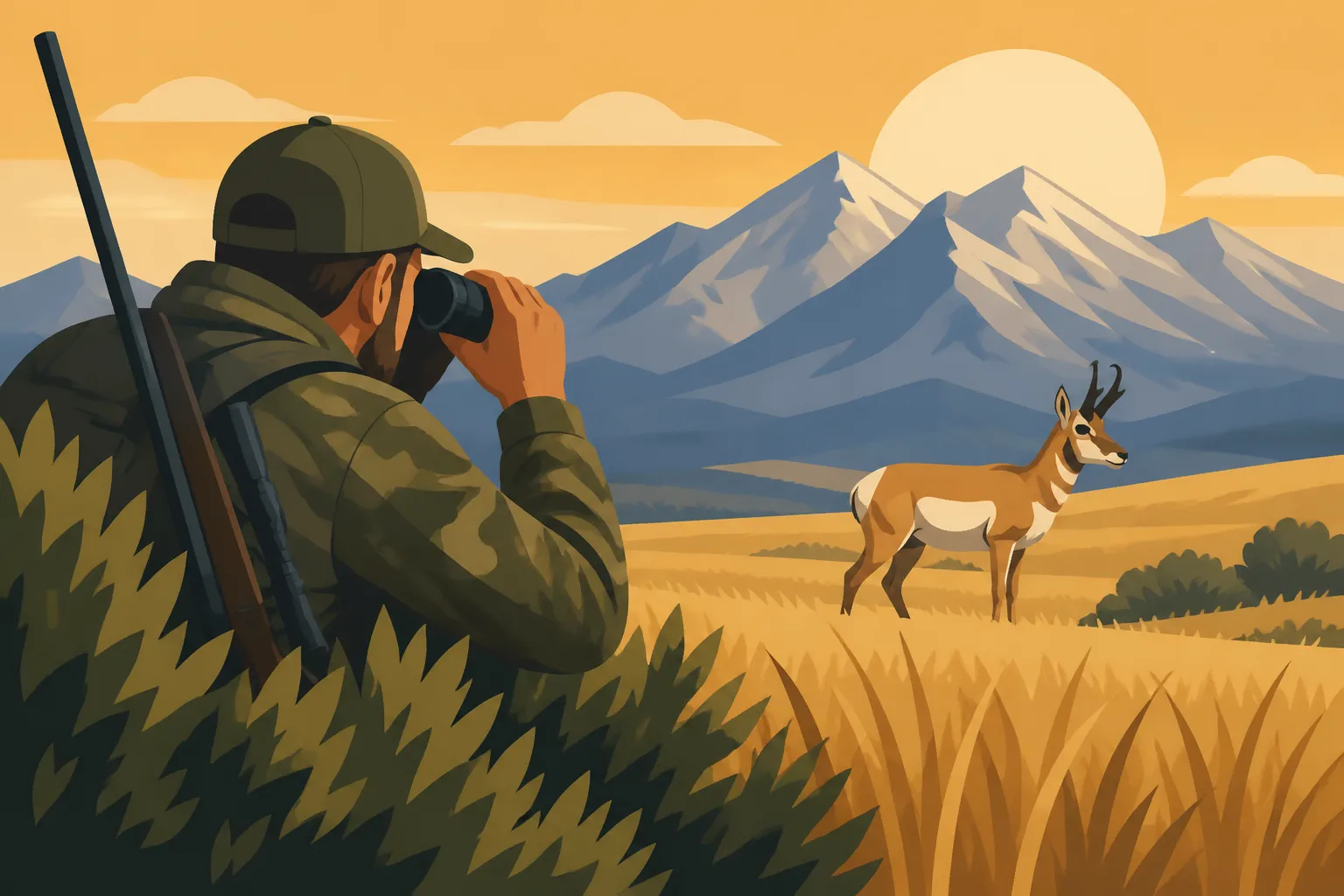
This is, without a doubt, the quintessential method for hunting antelope in Montana. Given their unparalleled eyesight, directly walking up on a herd in open country is usually a recipe for failure. The spot-and-stalk involves extensive glassing to locate animals, then using the terrain to close the distance undetected. This is where high-quality optics become your best friend. A good pair of 10x binoculars, mounted on a tripod for stability, and a reliable spotting scope are indispensable. Spend hours behind the glass, scanning distant hillsides and sage flats. Once you spot a buck you'd like to pursue, the real chess match begins.
- Mapping the Approach: Before you move an inch, study the terrain between you and the antelope. Look for coulees, dry washes, fence lines, rock formations, or even tall clumps of sagebrush that can provide cover. Use a mapping app like onX Hunt to identify contour lines and potential concealment routes. You'll often have to walk considerable distances, sometimes crawling the last few hundred yards on your hands and knees. This is exactly what we detail in How to Spot-and-Stalk Antelope in Montana.
- Reading the Wind: While antelope don't rely on their sense of smell as heavily as deer, the wind is still important. It can carry your scent, but more critically, it can carry sound, and can sometimes give away your position through dust or rustling clothes. Try to keep the wind in your favor, especially during that final approach.
- Patience is Key: Antelope are often on the move, grazing or bedding down. Don't rush your stalk. Wait for them to bed, or move over a rise, to make your move. Sometimes, the best strategy is to observe their movement patterns and intercept them. This might mean setting up where you anticipate they'll cross a fence line or move into a particular draw.
Hunting from Ground Blinds or Over Water
While spot-and-stalk is king, another highly effective method, especially during the warmer early archery or early rifle seasons, is hunting from a ground blind, particularly over water sources. Antelope need water, and in arid eastern Montana, natural waterholes, cattle tanks, or even small seeps can be magnets.
- Locating Water Sources: Use satellite imagery to identify potential water sources. Pay attention to cattle infrastructure, as ranchers often provide water. Then, scout these locations to look for tracks, droppings, and worn trails leading to the water. A game camera can be invaluable here to confirm activity and identify peak usage times. This is especially useful for How to Hunt Antelope Water Holes.
- Blind Placement: Your blind needs to be set up well in advance, ideally several weeks before the hunt, to allow the antelope to get accustomed to its presence. Place it downwind, if possible, and ensure it offers good concealment and shooting lanes. Consider the sun's position throughout the day to avoid being silhouetted or having direct sun in your eyes.
- The Wait: Hunting waterholes demands immense patience. You might sit for hours, or even days, before an opportunity arises. This is why comfort in your blind, a good book, and plenty of water are essential. A good strategy is to hunt during the hottest parts of the day when antelope are most likely to seek water.
Decoying Antelope
Decoying can be one of the most exciting, heart-pounding ways to hunt antelope, but it's not without its challenges. It taps into the pronghorn buck's territorial nature and curiosity, particularly during the rut. This tactic is especially effective for How to Decoy Antelope in Montana.
- Understanding the Rut: The antelope rut in Montana typically peaks in late September into early October. This is when bucks are most aggressive and responsive to decoys. They are trying to gather and defend does, and any perceived intruder, especially another buck, will pique their interest.
- Types of Decoys: A popular decoy setup is a "fan" or "stalker" decoy, which you hold in front of you as you stalk. This allows you to advance while appearing to be another antelope. Full-body decoys can also be effective, particularly when set up near a waterhole or known travel route, attracting bucks to come investigate.
- Executing the Decoy: When you spot a buck with a harem, or a lone buck cruising for does, try to get his attention by flashing your decoy. If he sees it and starts coming, be ready. He'll often come in quickly and directly. This is where having a hunting partner is incredibly helpful; one person operates the decoy, while the other prepares for the shot. Remember, a buck might circle downwind to scent-check the decoy, so be prepared for a shot from any direction. Always be aware of your backdrop and safety when decoying, especially on public land.
Planning Your Montana Antelope Hunt
A successful Montana antelope hunt starts long before you ever set foot in the field. Careful planning, understanding the regulations, and acquiring the right gear can make all the difference.
Licensing and Application Process
For nonresidents, securing a Montana antelope tag is primarily done through a lottery draw system. You'll need to apply for a "Nonresident Antelope License" (often referred to as a 900 series tag, or specific hunt codes like the Region 3 Archery Antelope 399 Tag). The application process involves purchasing a base hunting license and then applying for the antelope tag itself. The draw typically happens in June, with application deadlines usually in early June. It's crucial to understand the Montana Antelope Season Dates and Tags and stay on top of the deadlines.
- Bonus Points: Montana uses a bonus point system for most limited-entry permits, including antelope. For every year you apply and are unsuccessful, you accrue a bonus point, which statistically improves your odds in subsequent draws. Many hunters use services like GoHunt to track their bonus points and analyze draw odds.
- Draw Odds: Antelope draw odds can vary significantly by hunting district. Some units are relatively easy to draw, especially if you have a few bonus points, while others are highly competitive. Researching Montana Antelope Draw Odds Explained by district is vital. Websites like GoHunt provide comprehensive draw odds data, helping you strategically choose which districts to apply for based on your point level and desired success rate.
- Applying: The application process is done online through the Montana Fish, Wildlife & Parks (FWP) website. Make sure to carefully read the regulations, double-check hunt codes, and submit your application well before the deadline. Missing a deadline means missing out on the hunt for the year. This comprehensive guide on How to Apply for a Montana Hunting License can walk you through the specifics.
Key Gear for Success
Antelope hunting, with its emphasis on glassing and long stalks, demands specific gear to maximize your chances and ensure comfort.
- Optics: As mentioned, high-quality binoculars (10x-15x) are paramount, ideally used with a tripod. A spotting scope (20-60x) is equally important for evaluating distant animals and determining trophy potential without spooking them. Brands like Vortex, Swarovski, and Kowa are popular choices among serious hunters for their clarity and durability. You can learn more about Best Optics for Montana Big Game to make informed decisions.
- Rifle and Ammunition: Given the open country, shots on antelope can range from close encounters to several hundred yards. A flat-shooting rifle in a caliber like .25-06, .270 Win, 6.5 Creedmoor, or .300 Win Mag, sighted in accurately, is ideal. Practice shooting from various positions, including prone with a bipod or shooting sticks, as you'll often be shooting from these positions in the field.
- Clothing: Dress in layers to adapt to Montana's often-variable weather, which can swing from chilly mornings to hot afternoons. Lightweight, breathable, and quiet camouflage is essential. Don't forget a wide-brimmed hat, sunglasses, and sunscreen to protect against the relentless sun.
- Backpack: A comfortable daypack to carry water, snacks, extra layers, a rangefinder, GPS, and first-aid supplies is a must.
- Mapping & Navigation: A reliable GPS device or a smartphone with a mapping app like onX Hunt is non-negotiable for navigating vast public lands and avoiding trespassing. You can find detailed information about How to E-Scout Montana Hunting Units to prepare.
Choosing a Hunting District and Scouting
Montana has a plethora of hunting districts, and not all are created equal for antelope. When choosing where to hunt, consider draw odds, public land access, and herd populations.
- E-Scouting: Before you even leave home, spend countless hours on your computer using tools like Google Earth, GoHunt's Insider platform, and the Montana FWP hunt planner. Look for public land boundaries (BLM, State Land, National Grasslands), water sources, potential bedding areas, and terrain features that could offer cover for stalks. Pay attention to fence lines and roads that might impact animal movement or access. This is a crucial step for Montana Public Land Hunting Strategy.
- Pre-Season Scouting: If possible, make a scouting trip a few weeks before the season. This allows you to confirm your e-scouting findings, identify current water sources, observe animal patterns, and get a feel for the terrain. Even a drive-through can be incredibly insightful.
- Focusing on Public Land: Montana offers abundant public lands, particularly in the eastern regions. Block Management Areas (BMAs) are also fantastic opportunities, providing public access to private land. Always check the FWP Block Management website for specific access rules and dates, as these can change annually. Districts with large expanses of BLM and State Land, especially those managed for grazing, often hold good antelope numbers. Focusing on How to Hunt Antelope on Montana's Plains on these lands offers a classic experience. Looking for Best Montana Districts for Antelope Bucks can also guide your search.
Field Considerations and Ethical Hunting
Once you've drawn your tag, prepared your gear, and arrived in your chosen district, the actual hunt begins. But it's not just about taking a shot; it's about ethical hunting and responsible meat care.
Shot Placement and Recovery
Antelope are relatively small-bodied animals, and a precise shot is critical for a quick, humane harvest. Aim for the crease behind the shoulder, targeting the lungs and heart. Because they often stand in open areas, wind can be a significant factor in bullet trajectory over long distances. Always range your target, account for wind and bullet drop, and only take a shot you are confident in making.
After the shot, watch the animal's reaction carefully. Antelope often bolt and may appear to run unharmed for a distance, even with a lethal hit. If possible, mark the location where you last saw the animal and the direction of travel. Give it time, especially if the shot wasn't perfect, before beginning your recovery. Follow the blood trail carefully and systematically. Their small size and speed mean they can cover a lot of ground quickly, even when mortally wounded.
Meat Care in Warm Weather
One of the biggest challenges of antelope hunting is often the warm weather. Montana's archery and early rifle antelope seasons frequently occur when temperatures can still be quite high, sometimes in the 80s or 90s. Proper meat care is absolutely paramount to ensure your hard-earned venison doesn't spoil.
- Field Dressing Immediately: As soon as the animal is down and safe to approach, field dress it immediately. Remove all internal organs to allow the carcass to cool as quickly as possible.
- Skinning and Quartering: If temperatures are high, don't just hang it whole. Skin the antelope as soon as possible. This removes a significant layer of insulation. Then, quarter the animal, separating the muscle groups. This further exposes the meat to air and allows for faster cooling.
- Cooling and Transport: Get the meat into game bags (synthetic game bags that breathe are best) and then into coolers with ice. Never put bare meat directly on ice, as this can lead to waterlogging. Use either block ice wrapped in towels or ice in sealed bags. Get the meat to a processor or into a walk-in cooler as quickly as you can. If you're on a multi-day hunt, having sufficient cooler space and a plan for ice resupply is crucial. Neglecting these steps can ruin an entire hunt, making all your hard work for nothing.
Disclaimer
Always consult the most current Montana Fish, Wildlife & Parks regulations before planning any hunt. Seasons, unit boundaries, and application processes can change annually. This guide is for informational purposes only and is not a substitute for official regulations or professional guiding advice.