Montana Black Bear Spring Feeding Patterns
Spring black bear hunting in Montana can be incredibly rewarding, but figuring out where those bears are and, more importantly, what they're actually eating after months of hibernation can feel like trying to solve a cryptic puzzle. It's a common struggle for many hunters, trying to decipher their post-winter movements and feeding habits. This comprehensive guide will help you understand the crucial spring feeding patterns of Montana black bears, giving you the insights you need to increase your success in the field.
Understanding the Spring Awakening: Why Food is Everything
After spending the long, cold winter months in a state of torpor, a Montana black bear emerging from its den in spring has one primary directive: find food. Their bodies have been running on stored fat reserves, and those reserves are dwindling. The initial weeks out of the den are all about replenishing those calories and regaining lost muscle mass. It's a critical period, and their survival instincts are solely focused on efficient foraging.
The Post-Hibernation Hunger Games
Imagine waking up from a six-month nap, utterly parched and with a rumbling stomach that feels like a cavern. That's essentially what a black bear experiences. They've lost a significant portion of their body weight during hibernation – sometimes up to 30%. Their metabolism slowly kicks back into high gear, but their digestive system needs to ease back into action. This means their initial diet might be softer, more easily digestible foods before they move on to more substantial fare. It’s not just about eating; it's about eating smart to get their systems running optimally again. For a good overview of their general behavior, check out our guide on Montana Black Bear Behavior.
Right out of the den, bears are often lethargic and slow-moving. They're not looking to expend excessive energy on a strenuous chase. Instead, they'll seek out the most readily available, nutrient-rich sources close to their dens or south-facing slopes that warm up quickly. This often means scavenging for carrion left over from winter, or perhaps finding the first green shoots peeking through the snow. Their sense of smell, always incredible, is put to maximum use as they sniff out any potential meal, near or far.
Early Season Foraging Strategies
In the earliest days of spring, when snow still blankets much of the high country, black bears are often restricted to lower elevations and south-facing slopes. These areas receive more direct sunlight, melting snow faster and allowing vegetation to emerge sooner. They are essentially following the "green-up" as it slowly creeps up the mountainsides. This also means that if winter was particularly harsh, or spring is unusually late, bears might be more desperate and less particular about their food choices.
Their strategy is one of efficiency. They'll travel slowly, methodically, often following drainage bottoms or game trails that offer the easiest path and the highest likelihood of encountering food. They're not ranging far and wide initially. Instead, they're concentrating their efforts where they know the first signs of life, both plant and animal, will appear. Think of it like a meticulous gardener checking their beds daily for the first sprouts – bears are doing the same across the landscape. Understanding these initial movements is key to hunting them in the early season.
Key Forage Sources: What's on the Menu?
As spring progresses in Montana, the black bear's diet diversifies significantly. It's a dynamic period where their menu changes with the availability of different food sources. From the very first green shoots to the emergence of insects and the unfortunate fate of some winter-killed animals, bears are opportunistic feeders who will capitalize on whatever nature provides.
Green-Up: The Allure of Fresh Vegetation
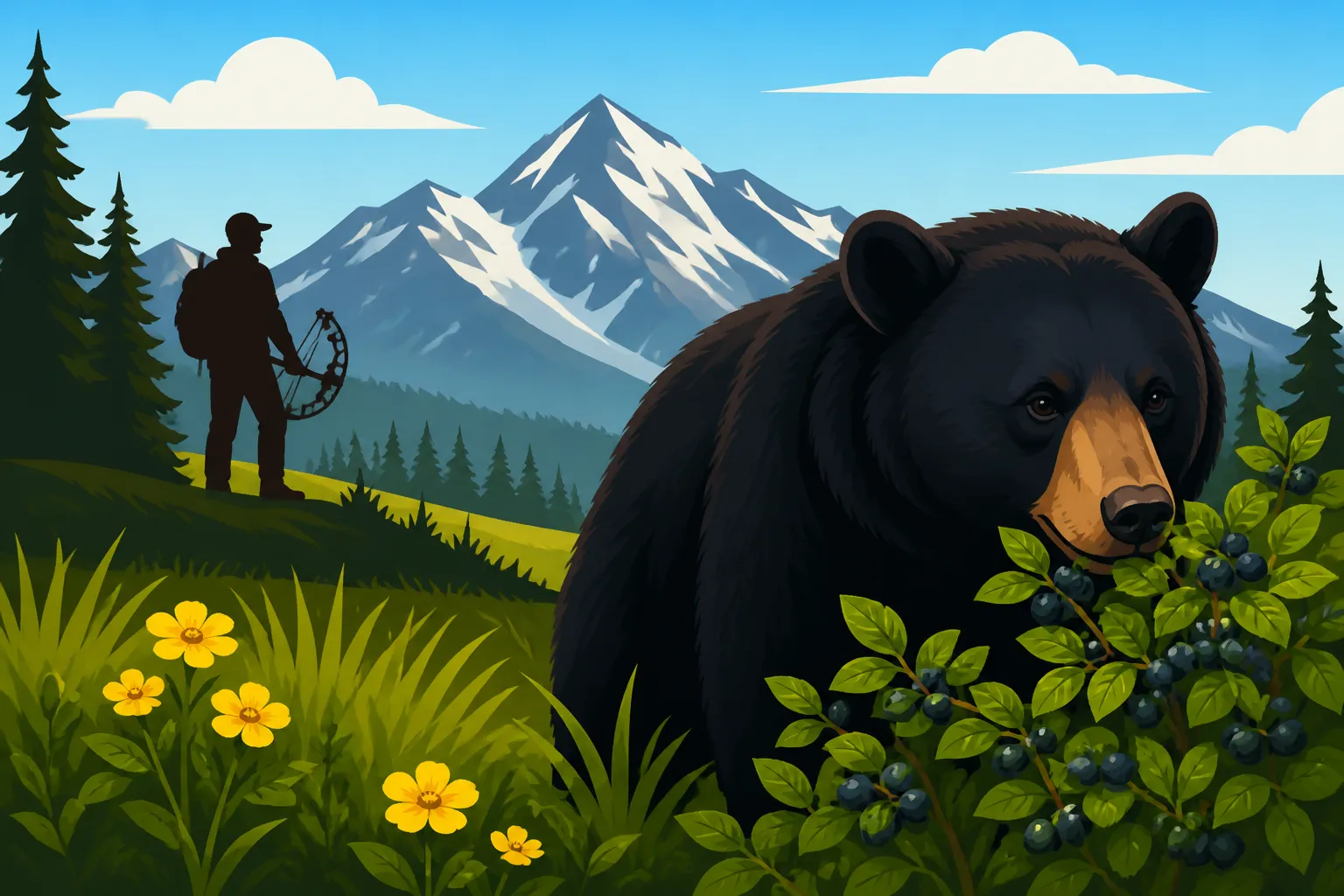
Hands down, one of the most critical spring food sources for black bears is the explosion of fresh, green vegetation. After months of dry, fibrous winter browse, the tender, succulent new growth is packed with moisture, vitamins, and easily digestible carbohydrates. Bears are particularly drawn to south-facing slopes, old burns, clear-cuts, and avalanche chutes where the snow melts fastest and the sun encourages rapid plant growth.
They'll often graze like cattle, spending hours meticulously picking through clover, dandelions, sedges, horsetails, and various grasses. These areas become natural "salad bars" for bears, and they will return to them repeatedly as long as the forage remains fresh and appealing. As the season progresses, they'll also seek out emerging forbs and berries, though the latter are more of a late-spring, early-summer staple. Keep an eye on these greening areas, as they are magnets for hungry bears.
Protein Power: Scavenging and Opportunistic Feasting
While fresh greens are vital for hydration and quick energy, bears also crave protein, especially after the catabolic state of hibernation. This is where carrion comes into play. Many deer, elk, and other ungulates succumb to the harsh Montana winter, leaving behind carcasses that become a crucial, high-protein meal for emerging bears. Bears' incredible sense of smell allows them to locate these often-hidden food sources from great distances.
Beyond carrion, bears are also opportunistic predators and insectivores. They'll flip rocks and logs looking for grubs, ants, and other invertebrates. They might raid a ground squirrel or marmot den, or even prey on newborn fawns and elk calves, though this is less common than scavenging or vegetation grazing in early spring. The presence of ravens and magpies circling in the sky can often be a tell-tale sign of a carcass, which means a bear might not be far behind. Knowing their preferences helps you identify potential hotspots, especially in areas with good ungulate populations, as outlined in our Montana Big Game Species Guide.
Navigating Different Habitats for Food
Montana's diverse landscape means black bears adapt their feeding patterns to their specific habitat. In the mountainous western regions, they'll follow the melting snowline, grazing on tender shoots in avalanche paths and open hillsides. In the more forested areas, they might focus on sun-drenched clear-cuts or old logging roads where light penetrates the canopy and encourages undergrowth.
On the fringes of agricultural land or in river bottoms, they might key into early crops, or feast on browse along riparian corridors. Understanding the micro-climates and specific forage available in your chosen hunting district is paramount. A bear in the Bitterroot National Forest will have a different menu than one near the Missouri Breaks, even if the general principles of "green-up" and protein needs remain the same. Using mapping tools like those from GoHunt can be incredibly helpful here, allowing you to identify south-facing slopes, recent burns, and even historical bear activity reported by other users. This level of detail can significantly inform your How to E-Scout Montana Hunting Units strategy.
Timing and Location: Where and When to Find Bears Feeding
Finding black bears in spring isn't just about knowing what they eat, but where and when they eat it. Their movements are dictated by a delicate dance with the changing landscape, snowmelt, and the emergence of their preferred food sources. This means a bear's location can shift dramatically from early spring to late spring.
Following the Snow Line and Green Wave
Think of a hungry bear as a living snow gauge. As the snow recedes up the mountainsides, a "green wave" of new vegetation follows closely behind. Bears will be right there, feasting on these fresh shoots. This means that in early spring, when the snow is still deep at higher elevations, bears will concentrate in lower-elevation areas that have shed their snowy blanket. As the season progresses, and the snow continues to melt, bears will gradually move higher, following that green wave up into the subalpine country.
This seasonal migration also means that a prime feeding area one week might be largely devoid of bears the next, simply because the forage has matured and bears have moved on to fresher pastures higher up. This constant movement is why scouting is so critical for spring bear hunting. You're not just looking for bears; you're looking for where the food is fresh and abundant at that particular moment in time. Our article Montana Black Bear Population and Range can help you understand general areas, but specific locations will change with the seasons.
Aspect and Elevation Preferences
South-facing slopes are gold in the spring. They absorb more solar radiation, melting snow faster and warming the soil, which in turn encourages earlier and more robust plant growth. Bears will instinctively gravitate towards these sun-drenched slopes, often spending hours grazing in the open. East-facing slopes are also good in the morning sun, while west-facing slopes catch the afternoon warmth. North-facing slopes, which hold snow longer, typically aren't prime feeding areas until much later in the spring, if at all.
Elevation is directly tied to this. In late April or early May, you might find bears feeding at 4,000-5,000 feet. By late May or early June, they could easily be at 6,000-8,000 feet, depending on the year's snowpack and temperature. This is where detailed topographic maps and tools like GoHunt become invaluable. You can analyze slopes, aspects, and historical snow data to predict where that "green wave" will be rolling through. Pay attention to how a particular hunting district's topography influences these patterns, a concept explored in How to Choose a Montana Hunting District.
Daily Routines and Feeding Windows
Black bears, especially in spring, are often most active during the cooler parts of the day. This typically means early mornings, from dawn until mid-morning, and then again in the late afternoon and evening, from mid-afternoon until dark. During the midday heat, especially on sunny slopes, they might bed down in shaded timber or under thick cover to conserve energy and avoid overheating.
However, it's important to remember that these are general patterns, and individual bears can vary. A particularly hungry bear, or one with cubs, might be out foraging at any time of day if the food source is rich enough and disturbance is minimal. Overcast or cooler days can also encourage more prolonged daytime activity. Observing these daily routines helps hunters time their movements and glassing efforts effectively, as discussed in How to Glass Montana's Big Country.
Here's a simple table summarizing these dynamic patterns:
| Aspect of Spring | Typical Elevation | Primary Food Sources | Key Behavior | Hunter Strategy |
|---|---|---|---|---|
| Early Spring | Lower (3,000-5,000 ft) | Carrion, early green shoots (clover, grass), grubs | Close to dens, south-facing slopes, drainages; slow, methodical grazing; seeking warmth. | Focus on low, sunny slopes, recent burn areas, and game trails. Use optics early and late. |
| Mid-Spring | Mid (5,000-7,000 ft) | Abundant green vegetation, berries starting, some carrion | Following snowline up; wider foraging range; more active in cooler parts of day. | Hike into areas with melting snow, focus on avalanche chutes and clear-cuts. Scout for fresh sign. |
| Late Spring | Higher (6,000-8,000+ ft) | Rich forbs, berries, roots, insects, occasional fawns | High mountain basins, open timber edges; preparing for summer abundance; more consistent activity. | Glass high country, saddles, and timber edges. Be prepared for longer stalks and varied terrain. |
Impact on Hunting Strategy: Using Feeding Patterns to Your Advantage
Knowing what Montana black bears eat and where they prefer to eat it in the spring is more than just interesting trivia; it's the foundation of a successful hunting strategy. You can leverage this knowledge to predict their movements, identify high-probability areas, and ultimately, put yourself in a position for a shot.
Scouting for Spring Bear Sign
Before you even think about setting up a glassing spot or making a stalk, you need to scout. Spring feeding patterns leave obvious clues if you know what to look for. Fresh tracks in the mud or melting snow along south-facing slopes are a dead giveaway. Look for overturned rocks and logs where bears have rooted around for grubs. Torn-up patches of ground indicate they've been digging for roots or tubers. Bear scat is another invaluable sign; its contents will tell you exactly what they've been eating, confirming your suspicions about local food sources. A scat full of green grass means they're grazing, while one with hair means they've found carrion.
Old stumps or dead trees that have been clawed apart can indicate they're searching for insects or larvae. Pay attention to "rub trees" – trees with bark rubbed off, usually at shoulder height, which bears use to mark territory. These signs, especially when fresh, confirm that bears are in the area and actively feeding. Websites like GoHunt often have features for community-contributed scouting reports, which can give you a head start on where recent activity has been spotted. This type of reconnaissance is vital for any serious hunter, and definitely for those looking for Best Time to Hunt Black Bear in Montana.
Effective Stand and Stalk Tactics
Once you've identified potential feeding areas based on forage availability and fresh sign, you can implement effective hunting tactics. Most spring black bear hunting in Montana involves a combination of glassing from a distance and then executing a spot-and-stalk approach.
Glassing: This is your primary tool. Find a vantage point that overlooks multiple south-facing slopes, avalanche chutes, or clear-cuts where the "green-up" is occurring. Use high-quality optics, like a good spotting scope and binoculars, and systematically grid the area, paying close attention to any movement or dark shapes. Bears often blend surprisingly well into the timber and shadows. Spend significant time behind your glass during those prime morning and evening feeding windows. For tips on maximizing your optics, check out Best Optics for Montana Big Game.
Stalking: Once you've spotted a feeding bear, the real work begins. Plan your approach carefully, considering the wind direction, terrain, and any obstacles that might give you away. Bears have an incredible sense of smell, so staying downwind is non-negotiable. Use natural cover to conceal your movement, and take your time. Remember, feeding bears are often focused on their meal, but they are still highly alert. Their hearing is also excellent. Moving quietly through timber, as detailed in How to Move Quietly Through Montana Timber, is a skill that will pay dividends.
What to Look For and How to Adapt
When you're out there, look for inconsistencies in the landscape. A black blob that doesn't quite look like a shadow, a movement against the static backdrop of the forest, or the distinct shape of a bear's head as it grazes. Pay attention to how the bear is acting. Is it moving slowly, grazing? Or is it moving purposefully, perhaps towards timber to bed down? This can inform your stalk.
Be prepared to adapt. If the wind shifts, you might need to abort a stalk and re-evaluate. If the bear moves into dense cover, you might need to reposition for another opportunity later. The spring environment is constantly changing, from weather fronts to snowmelt, and successful hunters are those who can read these changes and adjust their strategies accordingly. A bear's feeding pattern is not static; it's a fluid response to the environment. Being flexible and patient will be your biggest assets in the spring Montana bear woods.
Disclaimer
Always consult the most current Montana Fish, Wildlife & Parks regulations before planning any hunting trip. Season dates, regulations, and license requirements can change annually. This guide is for informational purposes only and should not replace official FWP documentation.