Montana Elk Hunting Methods Explained
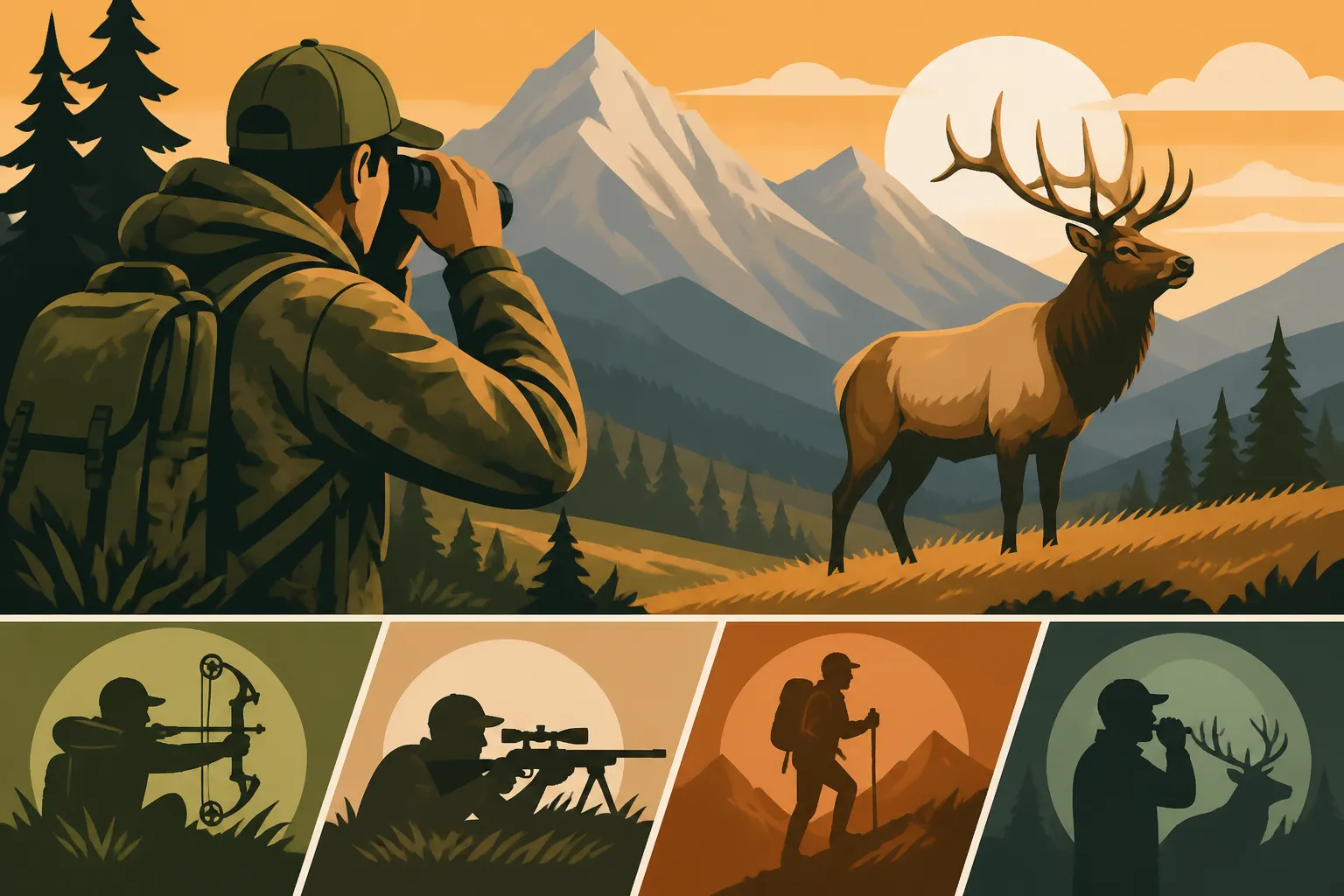
Figuring out how to consistently find and harvest elk in Montana can feel like trying to solve a puzzle where the pieces keep moving. The sheer vastness of the landscape, coupled with the unpredictable nature of these majestic animals and the pressures of other hunters, often leaves even experienced hunters scratching their heads. This comprehensive guide will break down the most effective Montana elk hunting methods, giving you the practical strategies and deep understanding you need to increase your odds and make your hunt a success.
Understanding Montana Elk Behavior and Habitat
Before you even think about loading your pack or nocking an arrow, truly understanding elk is the first, most crucial step in Montana. These aren't just big deer; they're intelligent, social animals with ingrained behaviors that dictate where they are, when they move, and what they're doing. Many hunters get frustrated because they focus solely on tactics without first grasping the "why" behind elk actions. Without this foundational knowledge, even the best calling sequence or spot-and-stalk maneuver can fall flat.
Elk Movement Patterns and Seasonal Changes
Elk in Montana are constantly on the move, driven by a combination of factors: food availability, water sources, security cover, and, of course, hunter pressure. Their patterns shift dramatically throughout the year. In the early archery season, often coinciding with late summer, elk are usually in their summer ranges, frequently higher in elevation, feeding heavily to build up reserves before the rut. They might be found in large bachelor herds of bulls or in cow/calf groups. As the rut approaches in September and early October, bulls become more vocal and aggressive, moving into areas where they can gather cows. This is when their focus shifts from feeding to breeding, making them more predictable in terms of sound, but less so in terms of physical location as they chase cows.
Come general rifle season, which typically begins in late October, the rut is often winding down or completely over. Bulls are exhausted and cows are dispersed. This period can be incredibly challenging as elk scatter to seek security and recover from the breeding season. They will gravitate towards thick timber, north-facing slopes, or remote areas where they feel safe from human activity. Winter snows further dictate their movement, pushing them to lower elevations where forage is more accessible and snow depth is less prohibitive. Understanding these broad seasonal patterns is vital for planning your hunt and knowing what type of terrain to scout and what signs to look for. Recognizing these shifts is a cornerstone of any effective Montana Elk Hunting Methods Explained strategy.
Key Habitat Features and Food Sources
Montana's diverse landscape offers an incredible array of habitats for elk, from dense timbered mountains to rolling foothills and even some prairie environments. The key is identifying what features provide them with their critical needs: food, water, and cover. Elk are grazers and browsers, meaning they eat a wide variety of vegetation. In summer and early fall, they'll seek out lush mountain meadows, clearcuts with new growth, or south-facing slopes that warm up quickly and produce forage. As winter approaches, their diet might shift to browse on woody shrubs or dig through snow for grasses. Knowing what plants elk prefer in your specific hunting area and time of year can guide you to prime feeding grounds.
Water is another non-negotiable requirement. While elk can go a few days without direct access if there's succulent forage or dew, they generally prefer to be near reliable water sources like streams, springs, wallows, or even small ponds. These areas often double as bedding and travel corridors. Security cover is perhaps the most important factor in heavily hunted areas. This means dense timber, steep and rugged terrain, or remote areas far from roads and trails. Elk will retreat to these sanctuaries during hunting pressure, often only moving at first and last light, or during significant weather events. When you're e-scouting, pay close attention to areas that combine these elements: good forage, water, and dense cover, especially those hard-to-reach spots.
Archery Elk Hunting Tactics in Montana
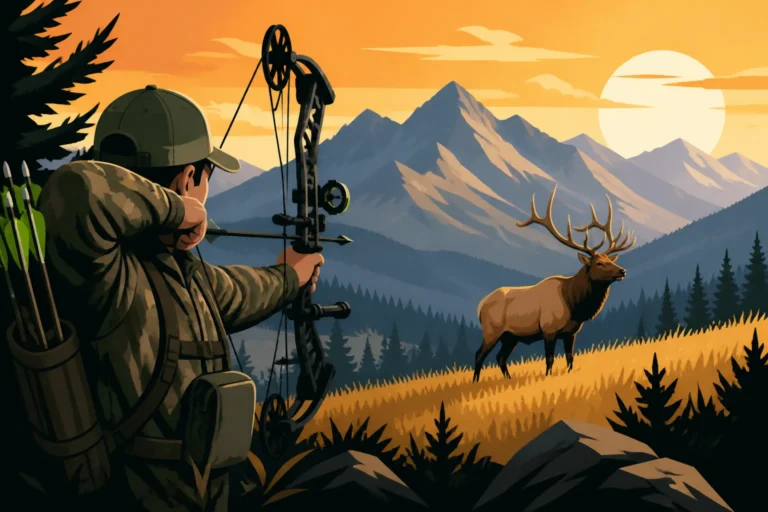
Archery elk hunting in Montana is a true test of grit, patience, and skill. It requires hunters to get incredibly close to animals with keen senses, often in steep, rugged terrain. While the thought of bugling in a bull during the rut is romantic, successful archery hunting involves a much broader array of tactics beyond just calling. Many bowhunters come to Montana with visions of screaming bulls, only to find themselves struggling in the vastness. It's a humbling experience, but with the right approach, it's also incredibly rewarding. If you're serious about taking an elk with a bow, our Montana Archery Elk Hunting Guide offers even more in-depth strategies.
Calling Strategies for Archery Season
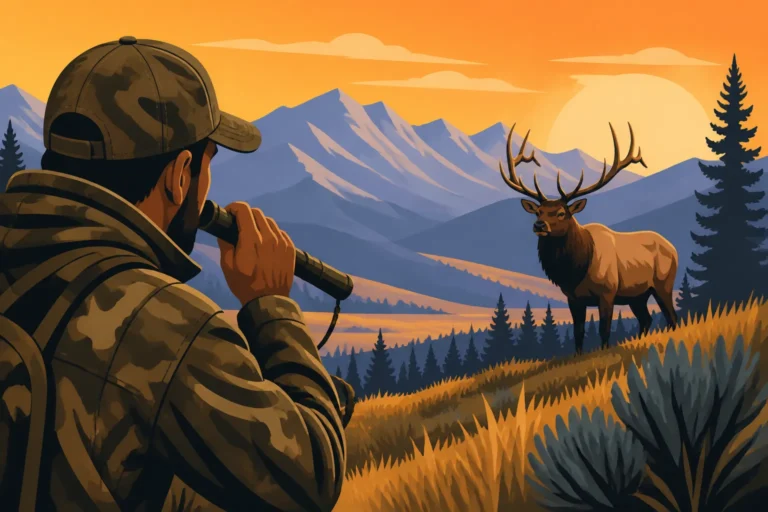
Calling elk is undoubtedly one of the most exciting aspects of archery hunting, especially during the peak of the rut. The goal isn't just to make noise; it's to communicate, to mimic the language of elk and entice them into bow range. During the early and mid-archery season (typically September), bulls are often vocal, especially at dawn and dusk. Bugles can be used for location, to challenge a bull, or to simulate a herd bull with cows. Cow calls are versatile and can be used throughout the season to locate, comfort, or even stop an elk for a shot. The key is to listen to the elk and respond in kind. If bulls are bugling aggressively, a challenge bugle might pull one in. If they're silent, soft cow calls or chirps might pique their curiosity without spooking them.
However, calling too much or at the wrong time can backfire, particularly with pressured animals. Sometimes, the most effective calling strategy is no calling at all, or very minimal. If you're in an area where elk have heard every call in the book, being subtle with cow mews and chuckles, or even just setting up silently downwind of a bedding area, can be more productive. When a bull does respond, resist the urge to keep screaming at him. Work the wind, move stealthily, and try to get into a position where he has to come looking for you. Remember, a visual encounter often seals the deal once you've engaged him with calls. For a deep dive into vocalizations, check out our guide on How to Call Elk in Montana.
Spot-and-Stalk Approaches for Bowhunters
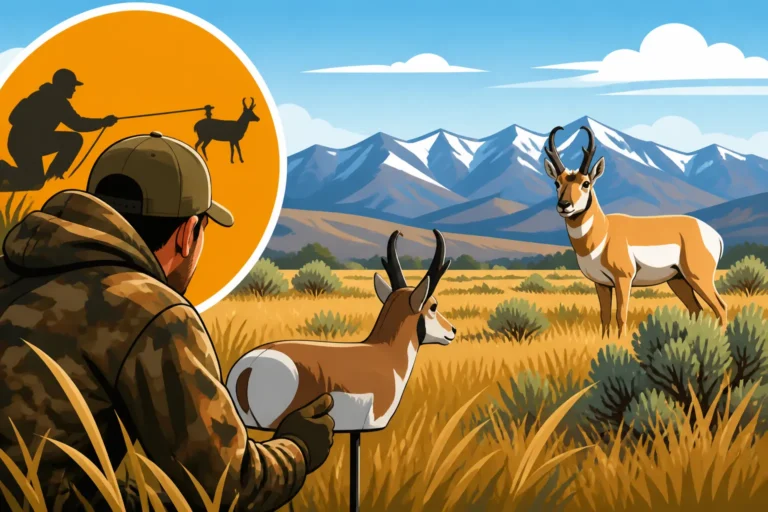
While calling is powerful, spot-and-stalk is arguably the most consistent method for archery elk hunting, especially when elk are silent or pressured. This technique involves locating elk from a distance—often using high-quality optics—and then planning a meticulous approach to get within bow range. This is where patience, understanding terrain, and reading the wind become paramount. Imagine spotting a bull bedded on a distant ridge. Your task then becomes figuring out a route that keeps you out of sight, maintains a favorable wind direction, and ideally leads you to a position where you can intercept him if he moves, or get a shot while he's still bedded.
Successful spot-and-stalk often means moving slowly, using every piece of cover, and being prepared to freeze for long periods if an elk looks your way. Wind direction is critical; elk have an incredible sense of smell, and one whiff of human scent will send them packing. You might need to make a long loop, using topography to your advantage, just to get the wind right. This method shines in open or semi-open country, common in parts of eastern Montana or high alpine basins, where you can actually see elk from afar. It requires incredible physical and mental discipline, but the reward of outsmarting an elk on its terms is unmatched.
Ambush and Stand Hunting in Archery Season
Though less common than calling or spot-and-stalk for elk, ambush and stand hunting can be effective in specific scenarios, particularly during the archery season when elk are more patternable before widespread hunter pressure. This method involves identifying key travel corridors, feeding areas, water sources, or wallows that elk frequent, and setting up an ambush point or ground blind. For example, if you've scouted a remote water source that elk are hitting daily, or a well-used trail leading from a bedding area to a feeding meadow, positioning yourself downwind and out of sight can yield results.
Success with ambush hunting hinges entirely on detailed scouting and understanding precise elk movements. This means spending time in the woods before the season, identifying fresh tracks, rub lines, and droppings to confirm activity. Unlike deer, elk cover vast amounts of ground, so finding a consistent choke point or predictable pattern is harder. However, during hot, dry spells, focusing on water holes can be incredibly effective. Similarly, during the rut, if you locate an active wallow, setting up a ground blind nearby might just get you a shot at a bull looking to cool off or leave his scent. It’s a game of patience, but when it works, it’s a strategic win.
Rifle Elk Hunting Strategies for Montana
Rifle season in Montana, often referred to as "general season," presents a different set of challenges and opportunities compared to archery. The rut is usually winding down, and hunter numbers typically increase dramatically, especially on public lands. This means elk behavior shifts; they become much warier and often retreat to the thickest, nastiest cover they can find. If you're heading out during the general season, especially in late October or November, you need a strategy that accounts for these factors. Our guide to Montana Rifle Elk Hunting Guide goes into greater detail on this popular method.
Locating Elk During General Rifle Season
Finding elk during Montana's general rifle season often feels like looking for a needle in a haystack, especially after the initial weekend of pressure. Gone are the days of screaming bugles; bulls are silent, regrouping, and focused on recovery. They'll typically move to dense timber patches, north-facing slopes, or steep, rugged drainages that offer excellent security. Roads and easily accessible areas become virtually devoid of elk, as they quickly learn to associate human activity with danger. Your best bet is to get off the beaten path, away from the roads and popular trails.
This means putting in the miles. Glassing clearcuts, open slopes, and transition zones at first and last light can still be effective, but during the day, you'll need to go to them. Focus on finding "dark timber" – dense stands of conifers where visibility is limited and elk feel safe. They might bed down in these areas for days, only emerging briefly to feed. Look for fresh tracks in the snow (if present), droppings, and fresh rubs. Pay particular attention to areas with a mosaic of thick cover and small openings or benches, as these are ideal bedding and feeding spots. Utilize mapping tools like those offered by GoHunt to identify roadless areas and steep terrain that acts as a natural barrier to other hunters, increasing your chances of finding unpressured elk.
Still-Hunting and Driving Timber
Once you've identified potential elk bedding areas or security cover, two common rifle tactics come into play: still-hunting and driving timber. Still-hunting is a slow, methodical process where the hunter moves through the woods at an excruciatingly slow pace, taking a few steps, then pausing for several minutes to scan, listen, and observe. The goal is to move as quietly as possible, mimicking a predator, and catch an elk before it sees or hears you. This requires immense patience, sharp eyes, and the ability to interpret subtle signs like a flick of an ear or a patch of hide through the trees.
Driving timber, often done with a small group of hunters, is another effective method, especially in areas with thick stands of trees. One or two "drivers" push through a patch of timber, attempting to move elk towards "standers" positioned strategically on the downwind side or at escape routes. Communication is key, and safety is paramount when attempting a drive. You need to know exactly where every hunter is located and adhere strictly to safe shooting lanes. This method can be incredibly effective at pushing reluctant elk out of their sanctuaries, but it requires careful planning, knowledge of elk escape routes, and a well-coordinated team.
Long-Range Shooting Considerations
Montana's vast, open landscapes sometimes present opportunities for long-range shots, especially when elk are spotted across deep canyons or open slopes. While the thrill of making a precise long-range shot is undeniable, it's a topic that demands significant ethical consideration and preparation. It's not about how far you can hit a target on the range, but how far you can ethically harvest an animal in a real-world hunting scenario. Factors like wind, animal movement, and bullet drop are magnified at longer distances, increasing the risk of a non-lethal hit.
If you plan to incorporate long-range shooting into your rifle elk hunting, commit to extensive practice under various conditions. This means practicing from field positions, in the wind, and at distances you intend to shoot. Invest in quality long-range optics, rangefinders, and a rifle/cartridge combination designed for accuracy at distance. Understand your ballistic data implicitly. Most importantly, set a personal ethical limit and stick to it, even if it means letting an animal walk. A clean kill is always the priority. Ethical long-range hunting is a skill developed over years, not learned overnight, and it starts with knowing your rifle and your personal limitations intimately. Consider reading up on Montana Long-Range Shooting Considerations for more detailed information.
Backcountry and Wilderness Elk Hunting
For those seeking a truly immersive and challenging experience, Montana offers some of the best backcountry and wilderness elk hunting opportunities in the Lower 48. This isn't for the faint of heart; it's physically demanding, requires extensive planning, and pushes you to your limits. But the reward of finding elk far from roads and crowds, in some of the most stunning landscapes imaginable, is unparalleled. This is where you escape the noise and truly connect with the wild. Learn more about these epic adventures in our Montana Backcountry Hunting Guide.
Planning Your Backcountry Expedition
A successful backcountry elk hunt starts long before you ever set foot on the trail. This level of hunting demands meticulous planning, from route selection and logistics to gear and emergency preparedness. First, choose your hunting district and identify areas with roadless access that are known to hold elk. Online mapping tools, coupled with resources like the GoHunt app, are invaluable for this pre-season scouting, allowing you to identify potential camp spots, water sources, and escape routes. You'll need to decide on your mode of transportation: hiking in with a backpack, using horses or mules, or even a pre-arranged fly-in service for truly remote wilderness areas like the Bob Marshall Wilderness.
Your gear list will be extensive and precisely chosen for weight, durability, and functionality. Think lightweight shelter, a robust sleep system, a reliable water filtration system, and adequate food for the duration of your trip. Beyond the basics, consider satellite communication devices (like a Garmin inReach) for emergencies, a detailed first-aid kit, and knowledge of how to use it. Physical conditioning is non-negotiable; you need to be able to carry a heavy pack over rugged terrain for multiple days. Finally, have a contingency plan for everything: what if the weather turns? What if someone gets injured? What if you harvest an elk far from camp? Thinking through these scenarios beforehand can mean the difference between an epic adventure and a dangerous ordeal.
Tactics for Remote, Pressured-Free Areas
The beauty of backcountry and wilderness elk hunting is the reduced hunter pressure. This often means elk behave more naturally, are less skittish, and may even be found in more open areas during daylight hours. However, "pressured-free" doesn't mean "easy." Elk still require food, water, and cover, and they can still be incredibly difficult to locate in vast wilderness. Your tactics here will focus on covering ground efficiently, thorough glassing, and patient observation. Instead of constantly pushing, take time to sit on a high point and thoroughly glass entire drainages, especially at dawn and dusk.
In these remote environments, elk may not be as concentrated as in smaller, more fragmented habitats. Be prepared to cover significant distances daily, either on foot or horseback. Focus on finding historical elk sign, such as old trails, bedding areas, and wallows, as these areas are often used year after year. Don't be afraid to hunt during the middle of the day; unpressured elk are more likely to be up and feeding or moving through timber during those hours. If you locate a herd, consider a more deliberate approach, often a spot-and-stalk, as they may be less alert than their front-country counterparts. Remember, getting an elk down is only half the battle; packing out an animal from a remote location is a monumental task, so plan your shot placement and retrieval strategy carefully. Our guide on How to Hunt Elk in Montana's Wilderness offers specific insights.
Adapting to Different Seasons and Situations
Montana's elk seasons span several months, and the tactics that work in early September might be entirely ineffective by late November. A truly successful elk hunter is one who can read the conditions and adapt their strategy to what the elk are doing, rather than stubbornly sticking to a single method. This flexibility is what separates the consistently successful from those who just get lucky once in a while. Understanding the nuances of each phase of the season is critical.
Early Season and Muzzleloader Tactics
The early archery season, typically opening in early September, offers unique opportunities. Elk are still in their summer patterns, often at higher elevations, and have not yet experienced significant hunter pressure. This can be a great time for spot-and-stalk tactics in open basins or for calling in less wary bulls. For those who enjoy the challenge of a primitive weapon, Montana's muzzleloader season often runs concurrently with a portion of the archery season, providing another exciting option. Muzzleloader hunting combines the challenge of a single shot with a longer effective range than a bow, making it a distinct method.
Muzzleloader hunters benefit from the same early season elk behavior as bowhunters but must also contend with the limitations of their weapon. This means getting within a shorter range than a modern rifle, making calling and spot-and-stalk techniques very applicable. However, the smoke from a muzzleloader can obscure your view for follow-up shots and alert nearby animals, so careful shot placement and a clear understanding of your rifle's capabilities are paramount. Many muzzleloader hunters choose to hunt near water sources or feeding areas, aiming for those close-range encounters.
Hunting the Peak Rut: Calling and Patience
The peak of the elk rut, usually from mid-September to early October, is arguably the most exciting time to hunt elk in Montana. Bulls are highly vocal, aggressive, and focused on breeding, making them more susceptible to calling. This is when the classic bugle battles and herd interactions are at their peak. A well-executed calling sequence can often draw an interested bull right into your lap. However, it's also a time when many hunters are in the woods, so pressured bulls can become call-shy quickly.
During the peak rut, patience is a virtue. While you might want to constantly bugle, sometimes the best strategy is to locate a herd, set up downwind, and let the natural sounds of the herd work for you. Use subtle cow calls and soft chuckles to entice a bull to come looking. If a bull is hung up, a raking sound or a satellite bull bugle might be enough to push him over the edge. It's a dynamic game of cat and mouse, and knowing when to be aggressive and when to be silent is crucial. Remember to always work the wind and have your shot opportunity prepared when a bull approaches.
Post-Rut and Late-Season Strategies
As the rut winds down in late October and moves into the general rifle season, elk behavior changes dramatically. Bulls are exhausted, cows are dispersed, and the focus shifts back to survival and feeding. This is often when elk retreat to the security of thick timber, steep slopes, and remote areas to avoid hunters. Hunting during the general Montana Elk Season Dates Guide or even late-season involves more of a grind. Hunters need to adapt by changing their focus from calling to still-hunting, glassing, and tracking.
Late-season hunting, particularly as snow begins to accumulate in November and December, can be incredibly productive but also extremely challenging. Elk are often pushed to lower elevations by deep snow, concentrating them in specific winter ranges. This can make them easier to locate, but also more vulnerable to pressure. Look for elk in south-facing pockets where the sun melts snow, making forage accessible, or in dense timber that offers thermal cover. Tracking fresh snow can be a highly effective method, but be prepared for cold weather and physically demanding conditions. A keen understanding of How to Hunt Elk After the Rut and Late-Season Elk Hunting in Montana is essential for success during these challenging periods.
Essential Preparation for Success
Successful elk hunting in Montana isn't just about what you do in the field; it's heavily influenced by the preparation you undertake beforehand. Many hunters underestimate the physical and mental demands of chasing elk in this rugged landscape. Skipping these crucial steps often leads to frustration, missed opportunities, or even dangerous situations. Taking the time to properly prepare will dramatically increase your enjoyment and chances of success.
Physical and Mental Fitness
Montana elk hunting is not a passive activity. You will climb mountains, traverse rugged terrain, and potentially carry hundreds of pounds of meat out of the backcountry. Physical fitness is paramount. Start your training months in advance, focusing on cardiovascular endurance (hiking with a weighted pack, running, stair climbing), strength (especially legs and core), and flexibility. Simulating hunting conditions during your workouts, such as hiking steep trails with your loaded pack, will prepare your body for the real deal. Don't forget about altitude training if you're coming from a lower elevation, as the mountains can take a toll.
Equally important is mental toughness. Elk hunting often involves long days, harsh weather, no elk sightings, and moments of doubt. The ability to push through discomfort, stay positive, and maintain focus when tired or discouraged is a huge asset. Visualize success, but also mentally prepare for challenges. Be realistic about what you can achieve in a day and maintain a positive attitude, even when things don't go as planned. A strong mind can often overcome physical limitations.
Optics, Mapping, and Essential Gear
Your gear is your lifeline and your toolset in the Montana wilderness. Invest in quality optics: binoculars, a spotting scope, and a rangefinder are indispensable for glassing vast landscapes and making ethical shot decisions. Many hunters find products from brands like Vortex or Swarovski to be excellent for clarity and durability in rugged conditions. A reliable GPS device or a smartphone with a robust mapping app (like GoHunt's integrated mapping system or onX Hunt) is critical for navigation, especially on public lands or in roadless areas. These tools allow you to understand terrain, identify public/private boundaries, and mark waypoints efficiently. Learning How to E-Scout Montana Hunting Units effectively is a game-changer.
Beyond optics and navigation, select the right clothing system for Montana's unpredictable weather, layering is key. Good quality boots, broken in and waterproof, are perhaps the most important piece of gear. Consider our recommendations for Best Boots for Montana Elk Hunting. A comfortable, well-fitting backpack designed to carry heavy loads is also non-negotiable, particularly if you're planning a multi-day trip or anticipate packing out meat. Don't skimp on essentials like a headlamp, knife, fire starter, and emergency shelter. Every item in your pack should have a purpose, and you should know how to use it proficiently. Check out a detailed Montana Backcountry Hunting Gear List for comprehensive recommendations.
Navigating Public Land and Hunter Pressure
Hunting elk on Montana's public lands is an incredible opportunity, but it comes with a significant caveat: other hunters. Montana is a popular destination, and while the state boasts millions of acres of public ground, the accessible areas can see heavy pressure, especially during the general rifle season. Successfully navigating this pressure and finding pockets of unmolested elk is a key skill.
Utilizing E-Scouting and Mapping Tools
Before you even leave your living room, you should be deep into e-scouting. This involves using online resources and mapping software to identify potential hunting areas, analyze terrain, understand land ownership, and pinpoint access points. Tools like Google Earth, GoHunt's mapping platform, and the onX Hunt app allow you to virtually explore vast tracts of land, identifying features like dense timber, north-facing slopes, water sources, and hidden benches that might hold elk. Look for areas away from roads and trails, particularly those with difficult access or rugged terrain that deters other hunters.
When e-scouting, pay attention to contour lines to understand elevation changes and steepness. Look for natural funnels, saddles, and pinch points that elk might use to travel between feeding and bedding areas. Identify clearcuts or burns that might offer new forage growth. Use the satellite imagery to spot pockets of dark timber. This pre-season homework allows you to arrive in Montana with a solid game plan, focusing your on-the-ground efforts on promising areas rather than wasting valuable hunting time blindly wandering. Many successful hunters attribute their success to diligent How to E-Scout Montana Elk Before the Season practices.
Strategies for Avoiding Crowds
Once you've identified promising public land areas, the next challenge is to avoid the crowds. On opening weekend, popular trailheads and easily accessible timber will be swarming with hunters. To find success, you often need to go where others aren't willing or able to go. This typically means putting in the miles. Hike deeper into wilderness areas, explore roadless national forest lands, or target remote Block Management Areas that require a bit more effort to access. The further you are from a road or trailhead, the less hunter pressure you'll generally encounter.
Another strategy is to hunt during weekdays, if possible, when many weekend warriors have returned home. Hunting during adverse weather conditions, like a snowstorm or heavy rain, can also deter fair-weather hunters and get elk moving. Consider hunting overlooked areas, perhaps smaller pockets of public land or terrain that looks less "elk-y" but still holds the essential food, water, and cover. Sometimes, finding success on public land is simply about finding a small patch of forgotten ground that an elk has decided is its safe haven. Understanding Montana Public Land Hunting Strategy is crucial for these efforts.
Ethical Hunting and Game Care
Harvesting an elk is a profound experience, and it comes with immense responsibility. Ethical hunting practices and proper game care are not just about compliance with regulations; they're about respect for the animal, the land, and the hunting tradition. Neglecting these aspects not only tarnishes the experience but can also lead to wasted meat or a lost animal.
Responsible Shot Placement and Tracking
When the moment of truth arrives, making an ethical shot is paramount. For elk, the ideal shot placement is typically a broadside or slightly quartering-away shot, aiming for the "boiler room" to hit the lungs and heart. This ensures a quick, humane kill. Practice your shooting diligently, know your weapon's capabilities, and only take shots within your effective range. Resist the urge to take a risky shot, even if it's your only opportunity. A wounded animal that escapes often means wasted meat and a suffering creature.
After the shot, observe the elk's reaction closely. Did it kick, stumble, or run off with its tail tucked? Note the exact spot where the elk was standing and the direction it ran. Wait a conservative amount of time—at least 30 minutes for a good lung shot, and several hours for a gut shot—before beginning to track. Give the animal time to lie down and expire. When tracking, move slowly and methodically, looking for blood, broken branches, disturbed earth, and hair. If you lose the trail, expand your search pattern in circles. Never give up on tracking a wounded animal; it's your ethical obligation to recover it.
Field Care and Meat Preservation
Once an elk is down, rapid and thorough field care is essential, especially in Montana's often-warm early season. The goal is to cool the meat as quickly as possible to prevent spoilage. Immediately begin the process of field dressing, removing the entrails to allow the body cavity to cool. If the weather is warm, quartering the animal is highly recommended. This involves removing the four quarters, backstraps, tenderloins, neck meat, and any other edible portions. Get the hide off the meat as quickly as you can, as it traps heat.
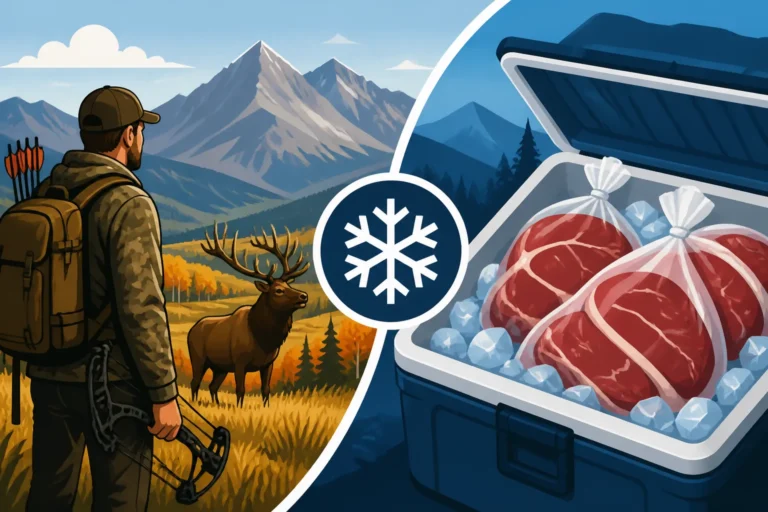
Hang the meat in game bags, away from direct sunlight, ideally in a cool, shaded, well-ventilated area. If you're in the backcountry, hanging meat at night and letting it cool, then covering it with tarps during the day, can help. In warmer conditions, having a plan for ice or cold storage is critical. Consider a pre-arranged drop-off at a local meat processor in towns like Bozeman, Missoula, or Billings. Proper field care is not just about taste; it's about honoring the animal and ensuring none of its valuable meat goes to waste. Understanding How to Pack Out an Elk in Montana and How to Keep Elk Meat Cool in Montana's Early Season will equip you with vital skills.
Disclaimer
Please be aware that hunting regulations, season dates, and access rules in Montana can change annually. Always consult the most current Montana Fish, Wildlife & Parks (FWP) regulations before planning or undertaking any hunting activity. This guide provides general information and should not be considered a substitute for official FWP resources or professional guidance.