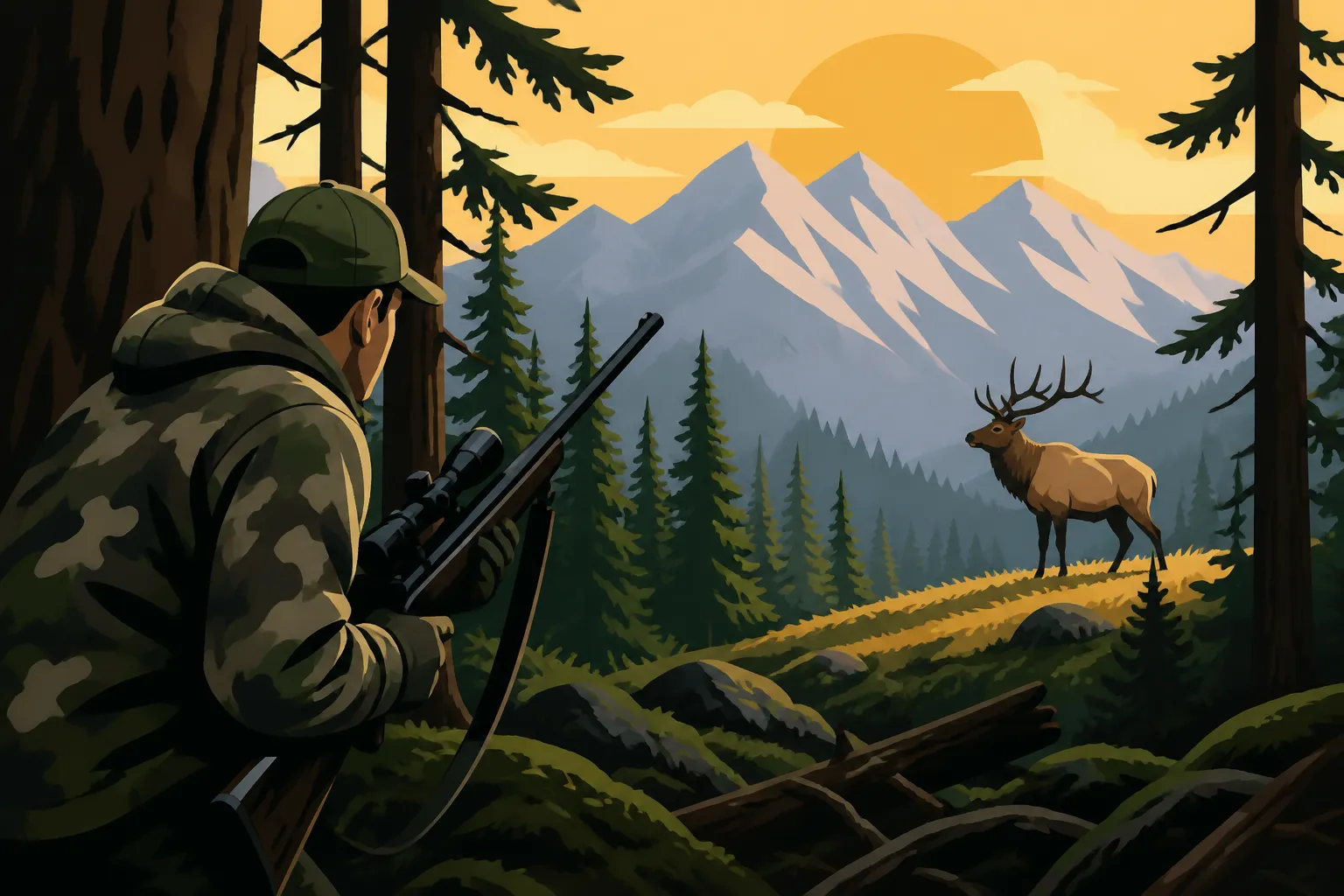
How to Still-Hunt Montana Timber
The challenge of still-hunting the dense, often unforgiving timber of Montana can feel like trying to sneak through a field of dry cornflakes without making a sound, all while trying to locate an animal that hears and smells you long before you ever see it. It's a deeply frustrating experience for many hunters, especially those new to the region's unique terrain. This comprehensive guide is here to break down the tactics, mindset, and practical knowledge you need to transform that frustration into successful, silent movement and more consistent encounters in Montana's incredible timber.
Understanding Montana's Timber Ecosystem
Montana's timber isn't just a collection of trees; it's a dynamic, often rugged ecosystem that demands respect and a specific approach from hunters. The sheer density, elevation changes, and varied tree species create a complex environment where still-hunting becomes an art form.
The Nature of Montana's Dark Timber
When we talk about "dark timber" in Montana, we're usually referring to dense stands of conifers—lodgepole pine, spruce, fir, and sometimes Douglas fir—that often grow on north-facing slopes or in high-elevation basins. This timber can be incredibly thick, with deadfall littering the forest floor, creating a minefield of potential noise. The canopy is often so thick that very little light penetrates, leading to a sparse understory in some areas, but in others, a tangled mess of brush and young trees. Hunting here isn't just about walking slowly; it's about navigating a three-dimensional puzzle where every step needs to be calculated. The cold, damp air often found in these shaded areas can also carry scent for long distances, making wind direction and thermals critical factors.
It's a stark contrast to open country hunting, where long-range glassing is king. In dark timber, your world shrinks to mere yards. Your vision is limited, and your ears become your most important tool. Elk and deer seek out these dense areas for security, thermal cover in winter, and escape from summer heat and insects. They know this terrain intimately, and they use its cover to their advantage, often moving silently through tangles that sound like an explosion when a human tries to navigate them. Understanding these natural dynamics is the first step in learning how to still-hunt Montana timber effectively. It’s not about fighting the timber, but understanding its rhythms and using them to your benefit.
Elk and Deer Behavior in Timber
Animals, especially mature elk and deer, are masters of the timber. They are incredibly adept at moving through dense cover without making a sound, often appearing and disappearing like ghosts. Their survival depends on it. During hunting season, particularly with increased hunter pressure, they will retreat deeper into the thickest, nastiest timber they can find. This isn't just about finding cover; it's about finding sanctuary where they feel safe from predators, including humans. They'll bed in areas with excellent visibility downwind, allowing them to detect anything approaching from their back trail, while relying on their nose to cover the opposite direction.
Their movement patterns within the timber are also important. They tend to follow faint game trails that are often imperceptible to the untrained eye, or they will pick the path of least resistance through dense blowdowns, stepping over or around obstacles with uncanny silence. During the day, they might be bedded down tight, chewing their cud, but in the early mornings and late evenings, they'll be moving between bedding and feeding areas, often just inside the timber edge or in secluded openings. Understanding these patterns is crucial for successful still-hunting. You're not just looking for an animal; you're looking for signs of recent presence and trying to anticipate where they'll be next. This requires a keen eye for details and an intimate knowledge of how these animals use the terrain. When you're trying to figure out how to locate elk on Montana public land, especially when they're pressured, timber becomes your focus.
Essential Gear for Still-Hunting Timber
Still-hunting timber successfully isn't just about stealth; it's also about being properly equipped for the unique demands of the environment. The right gear can make the difference between a frustrating, noisy experience and a silent, effective one.
Footwear and Clothing for Stealth
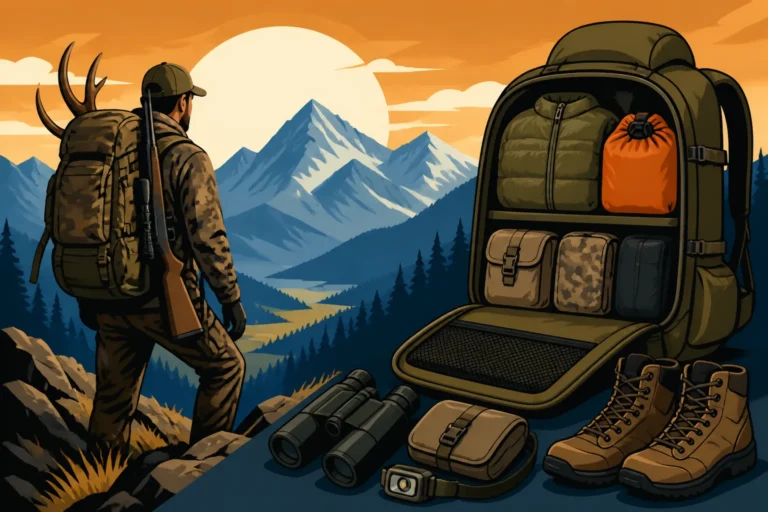
Your footwear is arguably the most critical component for silent movement in timber. You need boots that provide excellent ankle support for uneven terrain and traction on slippery surfaces (wet leaves, mossy rocks, deadfall), but most importantly, they need to allow you to feel the ground. A stiff-soled, heavy mountaineering boot, while great for general backcountry travel, can make it harder to detect and avoid snapping twigs or shuffling leaves. Lighter, more flexible hiking boots or even dedicated stalking boots with soft, grippy outsoles are often preferred. Consider boots with a slightly softer rubber compound that molds to the forest floor without squeaking on wet rocks. Brands like Kenetrek or Crispi make excellent options that balance support and flexibility.
As for clothing, layers are paramount. You'll be moving slowly, then stopping for long periods, so managing your body temperature is key. Avoid noisy fabrics like stiff nylons or crinkly rain gear. Soft, brushed fleece, wool, or quiet synthetic blends are ideal. Think about items that won't rustle against each other or brush against branches with a loud swish. Camouflage patterns that blend with the dappled light and shadows of the timber, like those offered by Sitka or First Lite, can also be beneficial, breaking up your outline. Remember, while you want to be warm, you don't want to overheat and sweat, as scent control is vital. Having an outer layer that can be easily shed or added without making excessive noise is a huge advantage when you're focusing on how to move quietly through Montana timber.
Optics and Navigational Tools
In the dark timber, large, powerful binoculars are often overkill. Your typical viewing distances will be much shorter, often within 50-100 yards. A compact pair of 8x or 10x binoculars with good low-light performance will be sufficient. You'll be using them to pick apart shadows, identify subtle movements, or confirm details on an animal once you've spotted it, not to scan vast distances. A rangefinder is also essential, especially as dense timber can play tricks on your perception of distance. Knowing the exact yardage to potential shooting lanes or landmarks can save you critical seconds when a shot opportunity arises.
For navigation, a GPS device or a smartphone with a reliable hunting app like onX Hunt is non-negotiable. The timber can be disorienting, and it's incredibly easy to get turned around, especially when you're focused on moving slowly and quietly. Mark your starting point, your vehicle, and any key features like water sources or ridge lines. Having your precise location on a detailed topographic map showing public/private land boundaries is critical for staying legal and safe. You can also use it to mark fresh sign, rub lines, or bedding areas you discover. GoHunt also offers robust mapping features that can be incredibly helpful for planning and executing a timber hunt, allowing you to scout potential areas from home and then verify them on the ground. Always carry a compass and a physical map as a backup, just in case technology fails.
Mastering the Art of Silent Movement
Still-hunting timber is less about speed and more about meticulous, deliberate progress. It’s a dance between patience and observation, where every footfall and every pause is calculated.
Pacing and Observation Techniques
The absolute cornerstone of still-hunting timber is your pace. Forget about covering ground quickly; your goal is to move so slowly and deliberately that you can process every detail around you. Imagine you're moving at a snail's pace, taking one or two steps, then pausing for several minutes. During these pauses, don't just stand there idly. Systematically scan your surroundings, picking apart every shadow, every cluster of trees, every piece of deadfall. Use your binoculars to investigate anything that looks out of place – a horizontal line in a vertical world, a patch of different color, or a subtle movement. Pay particular attention to pockets of open timber, game trails, and bedding areas.
Your foot placement is crucial. Before taking a step, visually clear your path for anything that might snap or rustle. Shift your weight slowly onto the ball of your foot, feeling the ground beneath you. If it feels solid and quiet, gently transfer your weight. If you encounter a noisy patch of leaves or twigs, try to step over it, or if you must step on it, do so softly, minimizing disturbance. Often, stepping on mossy rocks or fallen logs can be quieter than crunching through dry leaves. When ascending or descending, use the natural contours of the land to your advantage, hugging the base of trees or moving along game trails when possible. This deliberate, stop-and-go pace allows you to maximize your senses, giving you time for animals to move, or for you to detect them before they detect you. It also allows time for the woods to settle down after your slight disturbance, making it easier to hear subtle sounds.
Using the Wind and Thermals to Your Advantage
In timber, where visibility is limited, your nose—or rather, the animal’s nose—is your biggest opponent. Mastering the wind and understanding thermals is paramount for successful still-hunting. Always, and I mean always, try to hunt into the wind or with a quartering wind. This ensures your scent is carried away from where you expect animals to be. Constantly check the wind direction using a small bottle of powder, a wind checker, or even just feeling the breeze on your face.
Thermals are another critical factor, especially in mountainous Montana terrain. As the sun rises and warms the earth, air begins to flow uphill. In the evenings, as the air cools, it flows downhill. This means that in the morning, your scent will be carried up the mountain, and in the evening, it will be carried down. If you're hunting uphill in the morning, your scent will be carried above you, potentially alerting animals higher up. Conversely, if you're hunting downhill in the evening, your scent will be carried below you. Planning your approach to utilize these thermals, often hunting uphill in the evening or downhill in the morning, can dramatically increase your chances of getting close. Knowing how to use thermals in Montana elk country isn't just a suggestion; it's a survival tactic for both you and the elk. Combine wind and thermal awareness with a slow pace, and you're dramatically stacking the odds in your favor.
Reading the Timber: Sign, Trails, and Pressure
The timber tells a story if you know how to read it. Learning to interpret the subtle clues left behind by elk and deer is essential for identifying productive still-hunting routes.
Identifying Fresh Sign
When still-hunting, you're constantly looking for fresh sign that indicates animals are currently using the area or have been there very recently. This isn't about old rubs from last year; it's about the shiny, still-moist droppings, tracks with sharp edges that haven't dried or been washed away, and fresh browse on vegetation. Pay close attention to the age of the tracks: do they look rounded and worn, or are the edges crisp? Are there dew drops or frost still clinging to the disturbance?
Look for fresh rubs on small trees or saplings, where the bark is recently scraped or peeled, indicating a bull has been scent-marking or relieving an itch. Scratches on the ground from antlers, or shallow depressions in soft earth where an animal has bedded, can also be good indicators. The more concentrated and fresher the sign, the warmer you are on their trail. If you find a patch of particularly fresh droppings and tracks, it's time to slow down even more, perhaps even stopping for an extended period to listen and observe. Remember, finding old sign is just finding where they were; finding fresh sign means you're closer to where they are. This meticulous attention to detail is part of the joy and challenge of still-hunting.
Navigating Terrain and Cover
Montana's timber isn't uniform. It shifts from dense, dark conifer stands to more open aspens, brushy clearcuts, or pockets of mature ponderosa pine. Effective still-hunting involves understanding how animals use these different types of cover and terrain features. Ridge lines, for example, offer natural travel corridors and often have subtle benches or saddles where animals will pause or bed. Knowing how to navigate these is key for a successful hunt. Drainages provide water and often have thicker cover along their bottoms, acting as highways for animals moving between feeding and bedding areas.
North-facing slopes, often laden with the thickest timber, provide crucial thermal cover during warmer days and escape from hunter pressure. Learning how to hunt north-facing slopes for Montana elk can be a game-changer. Conversely, south-facing slopes might offer better forage earlier in the season as snow recedes, but less cover. When you encounter areas with dense downed timber, called blowdowns or dog-hair thickets, don't shy away from them. These are often precisely where pressured elk and deer will seek refuge. They can navigate these obstacles far more gracefully than a human, creating a natural barrier to most hunters. If you can slip silently through these areas, you increase your chances of finding undisturbed animals. Use topographical maps, like those available through services like GoHunt, to identify these varied terrain features before you even step foot in the woods, helping you plan your route strategically.
Strategic Still-Hunting Approaches
Still-hunting is not a one-size-fits-all strategy. Different timber types and topographical features call for different approaches to maximize your stealth and detection capabilities.
Hunting Ridge Lines and Saddles
Ridge lines are natural highways for animals, offering efficient travel and often better visibility or scenting conditions compared to lower elevations. When still-hunting a ridge line, approach it with the wind in your favor, ideally with a quartering wind that carries your scent off to one side, allowing you to cover both sides of the ridge. Move slowly along the top, constantly scanning both the lee and windward slopes. Animals will often bed just off the crest of a ridge, on the lee side, where they are sheltered from the wind but can still watch their back trail.
Saddles – those dips in a ridge line – are particularly productive. They act as natural funnels, concentrating animal movement from one side of the ridge to the other. Elk and deer will often pause in saddles, using them as staging areas before continuing their journey. These are prime ambush points. When approaching a saddle, be extra cautious. Take your time, approach from downwind, and spend a significant amount of time glassing and listening before moving through. You might even want to set up an extended observation period on a commanding knoll overlooking a saddle, especially during periods of active animal movement like early morning or late evening. This methodical approach to hunting such key terrain features is a core aspect of any Montana public land hunting strategy.
Working Drainages and North-Facing Slopes
Drainages, with their often-dense riparian vegetation and natural draws, also serve as critical travel corridors and bedding areas. Animals will use the cover and water found in drainages to move through the landscape undetected. When still-hunting a drainage, try to stay on the benches just above the main creek bottom. This allows you to look down into the drainage while minimizing your noise and keeping your scent from pooling directly in the bottom. Move slowly, zig-zagging your way down or up the drainage, always paying attention to the wind and thermals which can be tricky in these topographical depressions.
North-facing slopes are renowned for holding elk and deer, especially during warmer weather or when hunter pressure is high. These slopes retain snow longer, offer dense timber for cover, and stay cooler throughout the day. This is where you find your "dark timber," offering security that animals crave. When still-hunting these areas, you're essentially looking for bedded animals. Move incredibly slowly, pausing for long periods to listen for the snap of a twig, the rustle of leaves, or even the distinct odor of elk. Be prepared for short-range encounters; shots here are often quick and close. Focus on areas of transition – where the timber changes density, where a small bench cuts across the slope, or where water might seep out of the ground creating a small wallow. These are the places animals feel most secure, and with the right approach, you might just find them there.
Overcoming Common Still-Hunting Challenges
Still-hunting is inherently challenging, and Montana's rugged landscape only amplifies these difficulties. Learning to anticipate and mitigate common problems is key to consistent success.
Dealing with Noise and Obstacles
The greatest adversary of the still-hunter is noise. Dry leaves, brittle deadfall, and rocky terrain conspire to reveal your presence with every careless step. One of the biggest mistakes is trying to walk too quickly. You need to become hyper-aware of your footsteps. Before you even lift a foot, visually scan the ground where you intend to place it. Look for mossy spots, bare earth, solid rocks, or sturdy logs you can step on. Avoid dry twigs, crunchy leaves, and loose scree at all costs. Sometimes, stepping on a large, solid log is quieter than trying to navigate through the brush around it.
When you do make noise, don't panic. Freeze instantly. Often, an animal will hear an unfamiliar sound, but if it doesn't hear a follow-up, it might dismiss it as another forest noise. Take a moment, scan intently, and listen. Sometimes a single snap is all it takes to make an animal stand up, giving you a chance for a shot before it bolts. When faced with dense obstacles like blowdowns, instead of crashing through, consider carefully detouring. Sometimes the long way around a particularly noisy thicket is the quietest and most effective path. Remember, your goal isn't necessarily to be completely silent, but to be silent enough that any noise you do make sounds like a natural part of the forest, or at least doesn't scream "human hunter." This takes immense patience and discipline.
Handling Hunter Pressure
Montana's general seasons can see significant hunter pressure, especially on public lands. This pressure pushes elk and deer deeper into the nastiest, thickest cover available—exactly the kind of timber you're trying to still-hunt. Instead of seeing other hunters as a nuisance, learn to use them to your advantage. Other hunters, particularly those moving quickly and loudly, can inadvertently push animals towards you. If you know how to beat the crowds on Montana public land, you'll be ahead of the game.
When you anticipate pressure, consider hunting the pockets of timber that most people avoid: the steepest, most rugged, or densest areas. These are often the sanctuary zones. Hunt just ahead of or behind other hunters, letting them move animals for you. Another strategy is to hunt midday. Many hunters come out of the woods mid-morning and head back in late afternoon. The quiet period between 10 AM and 2 PM can be incredibly productive for still-hunting bedded animals that have settled back down after morning activity and before the evening push. E-scouting tools, like those found on GoHunt, can help you identify areas with good cover and difficult access, potentially indicating lower hunter pressure even in popular units. Learning how to hunt elk in Montana rifle season pressure requires a flexible mindset and a willingness to tackle terrain others avoid.
Still-Hunting Timber Considerations
| Aspect | Key Considerations | Why It Matters |
|---|---|---|
| Pace | 1-2 steps, then pause for 1-5 minutes | Allows for observation, listening, and for animals to settle. Minimizes noise. |
| Foot Placement | Prioritize moss, bare earth, solid rocks, sturdy logs. Avoid dry leaves, twigs. | Crucial for silent movement. Avoids alerting animals. |
| Wind & Thermals | Always hunt into or quartering to the wind. Understand daily thermal shifts. | Animals rely heavily on scent. Proper wind usage prevents early detection. |
| Optics | Compact 8x-10x binoculars, rangefinder | Useful for picking apart shadows at short distances; confirms range in dense cover. |
| Clothing | Soft, quiet layers (fleece, wool), neutral colors/camo | Minimizes sound against brush; breaks up human outline. Allows for temp regulation. |
| Sign Reading | Look for fresh tracks, droppings, rubs, beds. | Indicates recent or current animal presence, guiding your route. |
| Terrain Focus | Ridge lines, saddles, drainages, north-facing slopes, blowdowns | Animals use these features for travel, cover, and bedding. |
| Hunter Pressure | Hunt dense, overlooked areas. Utilize midday lulls. Anticipate animal movement. | Pressured animals seek sanctuary. Understanding this can lead to encounters. |
| Mental Game | Patience, discipline, focus, positive attitude | Still-hunting is mentally demanding; perseverance is key. |
Still-hunting Montana's timber is a rewarding, albeit challenging, endeavor. It forces you to slow down, engage all your senses, and become a more patient and observant hunter. There's an immense satisfaction in slipping silently through the dense forest, outsmarting an animal on its home turf. While it demands practice and perseverance, mastering these techniques will unlock new opportunities and deepen your appreciation for the wild places and incredible animals Montana has to offer. So, gear up, slow down, and immerse yourself in the silent art of timber hunting.
Disclaimer
Hunting is an inherently dangerous activity. The information provided in this guide is for informational purposes only and should not be taken as professional advice. Always prioritize safety, adhere to all local, state, and federal hunting regulations, and be aware of your surroundings. It is crucial to obtain proper training, possess the necessary permits, and use appropriate equipment. The author and publisher are not responsible for any accidents, injuries, or legal issues that may arise from using this information. Hunt responsibly and ethically.