Montana Bighorn Sheep Habitat
If you've ever dreamed of drawing a bighorn sheep tag in Montana, you know it's often considered the ultimate achievement for any Western hunter. But the reality is, getting one of these coveted tags is incredibly difficult, and once you have it, the real work begins: finding where these elusive creatures actually live. This guide is all about peeling back the layers of Montana's vast landscapes to help you understand the specific habitats where bighorn sheep thrive, giving you a better chance to locate them if you're ever lucky enough to pursue one.
Understanding Montana's Bighorn Sheep Populations
Montana is home to two distinct subspecies of bighorn sheep: the Rocky Mountain Bighorn and the California Bighorn. While both share a preference for rugged, vertical terrain, their exact distribution and population dynamics differ, making a clear understanding of their historic and current ranges absolutely critical for any aspiring sheep hunter. It’s not just about where mountains exist; it’s about which mountains hold viable, huntable populations.
Historical Range and Current Distribution
Historically, bighorn sheep roamed a much wider swath of Western Montana, extending into many mountain ranges that are now either devoid of sheep or hold only tiny, remnant herds. Over the past century, disease, habitat fragmentation, and human encroachment severely impacted these populations. The introduction of domestic sheep, in particular, brought diseases like pneumonia that devastated wild herds, as bighorns lack natural immunity. This legacy means that while some areas look like prime bighorn country, they simply don't have sheep anymore, or the populations are too small to sustain hunting.
Today, Montana's bighorn sheep populations are carefully managed and generally stable, but they are concentrated in specific areas. The Montana Fish, Wildlife & Parks (FWP) works tirelessly to monitor these herds, often through helicopter surveys and disease testing, to ensure their long-term viability. For a hunter, this means focusing your research and scouting efforts on the districts known to hold current, healthy populations rather than relying on outdated maps or generalized habitat descriptions. Understanding this history helps you appreciate the preciousness of these animals and the challenge of drawing a tag.
Key Mountain Ranges and Subspecies
When we talk about bighorn sheep habitat in Montana, we're primarily looking at specific mountain ranges. The Rocky Mountain Bighorn is the more widespread of the two subspecies, found predominantly in the rugged, high-elevation wilderness areas of western Montana. Think of iconic ranges like the Mission Mountains, the Bob Marshall Wilderness Complex, the Flathead Range, parts of the Absaroka-Beartooth Wilderness, the Spanish Peaks, and sections of the Rocky Mountain Front. These areas are characterized by vast, unbroken stretches of high-alpine peaks, steep chutes, and extensive rock formations, providing the ideal escape terrain and year-round forage these sheep demand. If you're looking into Montana Backcountry Hunting Guide, these areas will often feature prominently.
The California Bighorn sheep, on the other hand, have a more restricted range in Montana, typically found in the more arid, eastern-facing slopes and breaks, often at slightly lower elevations compared to their Rocky Mountain cousins. The most notable populations are found in the remote and rugged badlands and breaks of the Missouri River system, particularly the famed Missouri Breaks. This habitat, though still steep and unforgiving, features more grassland and juniper pockets interspersed with the rocky cliffs. It's a completely different kind of hunt, requiring unique scouting strategies compared to the towering peaks of the Rockies. Knowing which subspecies you are pursuing can significantly narrow down your geographic focus and help you understand the specific nuances of their preferred habitat.
Characteristics of Prime Bighorn Sheep Habitat
Bighorn sheep aren't just looking for any old mountain; they require a very specific set of environmental conditions that cater to their survival instincts and dietary needs. Think of their habitat as a fortress: it needs to provide security from predators, access to food, and reliable water, all within a challenging landscape that keeps them safe.
Rugged Terrain and Escape Cover
The most defining characteristic of prime bighorn sheep habitat is rugged, precipitous terrain. We're talking about sheer rock cliffs, steep ledges, broken scree slopes, and deep, inaccessible canyons. This isn't just a preference; it's a fundamental survival strategy. Bighorns are incredibly agile climbers, capable of navigating terrain that would be impassable for most predators, including mountain lions, bears, and even wolves. When threatened, their first instinct is to scale vertical rock faces to gain a vantage point and escape.
This escape cover isn't uniform; it often includes a complex network of ledges, cracks, and small pockets of timber or brush where they can disappear from sight in an instant. A bighorn ram will often bed down on a small ledge with a commanding view of the surrounding landscape, allowing it to spot danger from a distance. Knowing this, hunters must learn to "think like a sheep," identifying these security zones on topographical maps and then confirming them through intense glassing in the field. This also means you'll spend a lot of time on steep, uneven ground, so having the Best Boots for Montana Elk Hunting (which are also great for sheep) is critical.
Forage and Water Sources
While escape terrain offers security, bighorn sheep still need to eat and drink. Their diet consists primarily of grasses, forbs (flowering plants), and some browse (shrubs and twigs), which varies depending on the season and elevation. In the high alpine regions, they feast on hardy mountain grasses and wildflowers that thrive in rocky soils. In the more arid Missouri Breaks, they adapt to sparse grasslands, sagebrush, and juniper, often seeking out succulent forbs.
Water is another non-negotiable component. While some moisture can be obtained from snowmelt or plants, reliable water sources are crucial, especially during hot summer months and in drier regions. Look for springs, seeps, and small mountain streams tucked away in canyons or at the base of rock formations. These water sources often become natural congregating points for sheep, particularly in late summer. When scouting, you'll want to mark potential water sources on your map, as these areas often concentrate sheep activity. This kind of detailed scouting is similar to what you'd do when trying to How to Find Elk in Montana Dark Timber – looking for essentials in remote areas.
Seasonal Movements and Elevations
Bighorn sheep are not static; they exhibit significant seasonal movements driven by food availability, snow depth, and breeding cycles. In the summer months, they often ascend to higher elevations, sometimes above timberline, to feed on lush alpine meadows that emerge after the snow melts. These high basins provide abundant forage and cooler temperatures. This is when rams often form bachelor groups, seeking out the richest pastures.
As winter approaches and snow depths increase, sheep typically move down to lower elevations, often favoring south-facing slopes. These slopes receive more sunlight, melting snow faster and exposing critical forage. Winter ranges are often characterized by a mosaic of open grassy areas, broken cliffs, and scattered timber, offering both food and shelter from harsh winds and snow. The rut, typically occurring in late fall or early winter, can see rams moving between these higher and lower ranges as they seek out ewes. Understanding these predictable seasonal shifts is vital for knowing where to focus your efforts during a specific hunting season. This movement is similar to how you would How to Hunt Montana's Late-Season Migration for other big game.
Identifying and Scouting Bighorn Sheep Habitat
Finding bighorn sheep in Montana is less about luck and more about meticulous research and persistent, smart scouting. You can't just drive up a mountain road and expect to stumble upon them. It requires a strategic approach, blending modern technology with time-tested field methods.
Utilizing Maps and E-Scouting Tools
Before you even tie your boots, you should be deep into e-scouting. This is where tools like onX Hunt and the detailed data provided by platforms like GoHunt become invaluable. Start by identifying mountain ranges and specific districts known to hold bighorn sheep populations. On your digital maps, look for areas with:
- Steep Contour Lines: These indicate rugged, vertical terrain—the sheep's preferred escape cover. Focus on areas with numerous cliffs and rocky outcrops.
- South-Facing Slopes: Especially critical for winter range, these slopes hold less snow and green up earlier in spring, providing accessible forage.
- Isolated Basins and Canyons: Look for areas that are difficult to access, as these often hold undisturbed sheep.
- Historical Burn Areas: Sometimes, old burns can create new forage growth that attracts sheep, especially years after a fire.
GoHunt provides harvest data, draw odds, and often unit-specific information that can highlight areas with known sheep activity or successful harvests. Use satellite imagery to identify actual rock bands, scree fields, and potential water sources that might not be obvious on contour maps alone. Map out access points, potential glassing knobs, and escape routes. This intense digital reconnaissance is your first step in building a strong hunt plan, much like you would when learning How to E-Scout Montana Hunting Units for elk or deer.
On-the-Ground Scouting Techniques
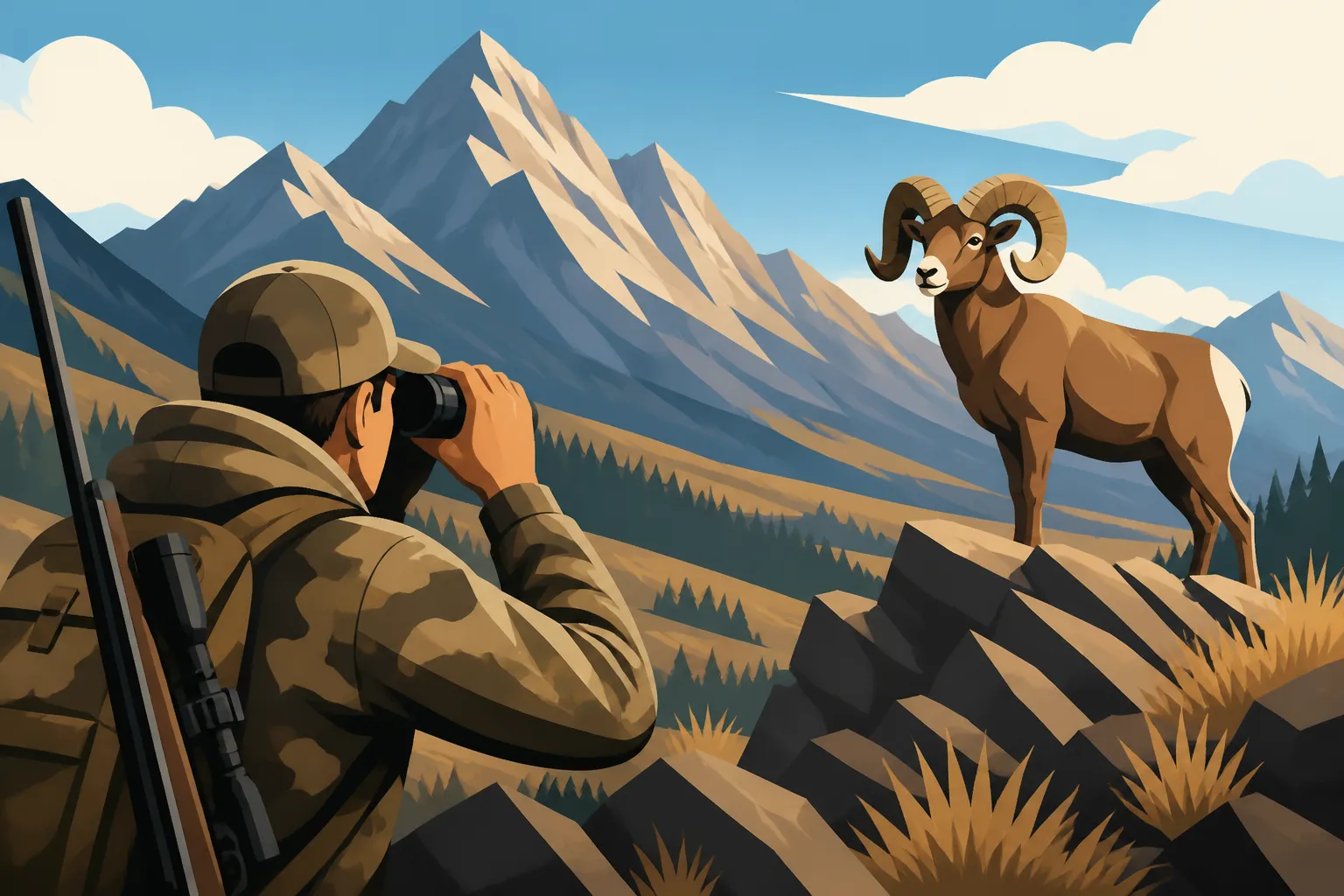
Once you've narrowed down your areas with e-scouting, it's time to hit the field. On-the-ground scouting for bighorn sheep is primarily a game of patience, powerful optics, and elevation. You'll spend most of your time glassing from a distance, systematically dissecting every rock face, ridge, and canyon with binoculars and a spotting scope.
- High Vantage Points: Seek out high points that offer panoramic views of vast sheep country. Position yourself so the sun is not directly in your eyes, preferably with the sun at your back in the morning and facing west in the evening.
- Systematic Grid Search: Don't just scan randomly. Break the landscape into small grids and thoroughly examine each one. Look for anything out of place: a white rump patch, a distinct horn curve, or movement against the rocks.
- Look for Sign: While sheep sign can be hard to spot in vast, rocky terrain, look for droppings (small, dark pellets), rubs on low shrubs or trees, and distinct sheep tracks, especially near water sources or game trails leading into difficult terrain.
- Observe Behavior: If you locate sheep, spend time observing their patterns. Where do they feed? Where do they water? What are their escape routes? Understanding their daily routines can be immensely helpful when it comes time to hunt.
Remember, bighorns blend incredibly well into their surroundings. What looks like a rock might be a ram, so practice with your optics. Good glass is arguably the most critical piece of gear you'll carry, even more so than your rifle for initial location. You might find yourself hiking for miles just to get to a good glassing spot, so physical preparation, as outlined in a Montana Elk Hunt Fitness Plan, is just as important for sheep.
Conservation and Habitat Challenges
The very existence of bighorn sheep in Montana is a testament to their resilience and ongoing conservation efforts. However, these magnificent animals face significant threats that directly impact their habitat and population health, making their management a complex and crucial task.
Disease and Inter-Species Contact
One of the most devastating threats to bighorn sheep populations is disease, particularly pneumonia caused by pathogens carried by domestic sheep. Wild bighorns have little to no immunity to these diseases, and even brief contact with domestic sheep can lead to massive die-offs in wild herds. This is why managing overlap between domestic and wild sheep ranges is a paramount concern for wildlife agencies like Montana FWP. Efforts often include maintaining separation through fencing, grazing allotments, and, in some cases, relocating domestic sheep or wild bighorns.
The impact of disease can be long-lasting, even in areas where the initial die-off occurred years ago. A herd may struggle to recover, and future disease outbreaks remain a constant threat. This factor heavily influences where new bighorn populations can be established or where existing herds can expand, directly limiting their available habitat. This struggle highlights the delicate balance of ecosystem management in Montana, where human activity constantly interfaces with wildlife needs.
Habitat Fragmentation and Development
While bighorns thrive in rugged, remote landscapes, even these areas are not immune to human impact. Habitat fragmentation from roads, energy development, mining, and human settlements can isolate sheep populations, limiting genetic exchange and reducing their ability to move between seasonal ranges. A new road might cut off a crucial migration corridor to winter feed, or a housing development could push sheep out of historically used lambing grounds.
The wilderness areas and national forests where bighorns predominantly live, such as sections of the Custer Gallatin Hunting Guide or the Beaverhead-Deerlodge National Forest, are generally well-protected, but peripheral development can still impact critical lower-elevation winter ranges. Climate change also plays a role, altering vegetation patterns and snowpack, potentially forcing sheep into less ideal habitats or making certain resources scarce. Understanding these pressures helps us appreciate why bighorn sheep tags are so limited and why every effort to conserve their unique habitats is so vital. This careful management also affects how you might view the overall Montana Big Game Species Guide and which animals are most sensitive to human presence.
Montana Bighorn Sheep Habitat Characteristics Summary
To help visualize the key elements we've discussed, here's a quick summary of what constitutes prime bighorn sheep habitat in Montana:
| Characteristic | Description | Importance |
|---|---|---|
| Terrain | Steep, rugged, rocky cliffs, ledges, broken scree slopes, deep canyons. | Provides critical escape cover from predators (mountain lions, bears, wolves). |
| Elevation | Highly variable by season; typically high alpine in summer, moving to mid-to-lower slopes in winter. | Allows access to diverse forage; winter ranges are often south-facing to reduce snow depth. |
| Vegetation | Mix of hardy mountain grasses, forbs (flowering plants), and some browse (shrubs like sagebrush or juniper) depending on subspecies/region. | Primary food source; specific plant communities support their diet, especially in arid areas or high alpine. |
| Water Sources | Reliable springs, seeps, and small mountain streams, sometimes snowmelt. | Essential for hydration, especially in dry periods and regions like the Missouri Breaks. Often concentrates sheep activity. |
| Isolation/Remoteness | Generally found in areas with limited human disturbance, difficult access. | Minimizes stress from human activity, provides security and uninterrupted access to resources. |
| Sun Exposure | Often utilize south-facing slopes, particularly in winter. | Aids in melting snow, exposing forage, and providing warmth in colder months. |
Disclaimer
Please remember that hunting regulations, season dates, and tag allocations for bighorn sheep in Montana are subject to change by Montana Fish, Wildlife & Parks (FWP). Always consult the most current official FWP regulations before planning any hunt. This guide is for informational purposes only and should not be considered a substitute for official sources or professional advice.