How to Use Block Management for DIY Hunts
As independent hunters, we often face the frustrating challenge of finding ample, accessible land to pursue our passion without breaking the bank or dealing with overcrowded spots. It’s a common lament: too much private land, too many "No Trespassing" signs, and public land that feels like a freeway during hunting season. Thankfully, Montana offers a truly unique and invaluable solution for do-it-yourself hunters: the Block Management Program. This comprehensive guide will show you exactly how to utilize Block Management for your next hunt, opening up incredible opportunities across the Treasure State.
Understanding Montana's Block Management Program
The Block Management Program (BMP) is a cornerstone of public land access in Montana, acting as a crucial bridge between private landowners and the hunting community. It’s not just a collection of rules; it's a partnership that unlocks vast stretches of often prime hunting ground that would otherwise be completely off-limits to the public. For any hunter looking to understand Montana's public land hunting guide, the BMP is an absolute must-know.
What is Block Management?
At its heart, Block Management is a voluntary program where private landowners agree to allow public hunting access on portions of their property. In return, Montana Fish, Wildlife & Parks (FWP) assists these landowners with things like weed control, fence repairs, and managing hunter access. The program was established to address the ever-growing concern of declining hunter access to private lands, recognizing that much of Montana’s diverse wildlife habitat lies outside of traditional public lands. It's a testament to Montana's commitment to its hunting heritage and a truly collaborative effort. These lands can range from expansive agricultural fields and sagebrush flats to timbered draws and river bottoms, offering a truly diverse hunting experience that might surprise those who only associate Montana with its vast mountain ranges.
This isn't a simple handshake deal. FWP works diligently with landowners to develop specific agreements that outline where, when, and how hunters can access their property. This structured approach helps prevent conflicts, ensures safety, and protects the landowner's interests while simultaneously providing unparalleled opportunity. For many who dream of a successful Montana DIY Elk Hunting Guide, understanding BMP is the first real step in turning that dream into a reality.
The Benefits for DIY Hunters
For the self-reliant hunter, the Block Management Program is nothing short of a godsend. It provides access to millions of acres of private land across Montana, dramatically expanding your hunting territory beyond National Forests and BLM land. This translates into several key advantages:
Firstly, expanded access means more ground to scout and hunt. Many BMP areas are contiguous with or near public lands, creating massive tracts of huntable habitat. This allows for diverse hunting opportunities, from chasing whitetail deer in river bottoms to spot-and-stalk antelope on the plains. This diversity also helps reduce pressure, as hunters are spread out across more land, making it easier to implement strategies like How to Beat the Crowds on Montana Public Land.
Secondly, BMP areas often hold populations of game that are less pressured than those found on easily accessible public lands. Wildlife, especially mature animals, tend to learn quickly where hunting pressure is high. Access to private land through BMP often means you're hunting animals that haven't been pushed as hard, increasing your chances of success. Imagine finding a quiet corner on a Block Management parcel that consistently holds a good herd of elk; it’s a real possibility and one of the true joys of this program.
Finally, for non-residents or those new to the state, BMP offers a fantastic way to experience a wider array of Montana's landscapes and hunting scenarios without the commitment or cost of hiring an outfitter. It truly embodies the spirit of DIY hunting, empowering individuals to take control of their hunting experience and forge their own adventures.
Navigating the Block Management System
The thought of figuring out where to go and how to access these lands can feel overwhelming, but Montana FWP has made it increasingly user-friendly. With a little pre-season research and the right tools, you can easily unlock the potential of Block Management.
Finding Available Block Management Areas
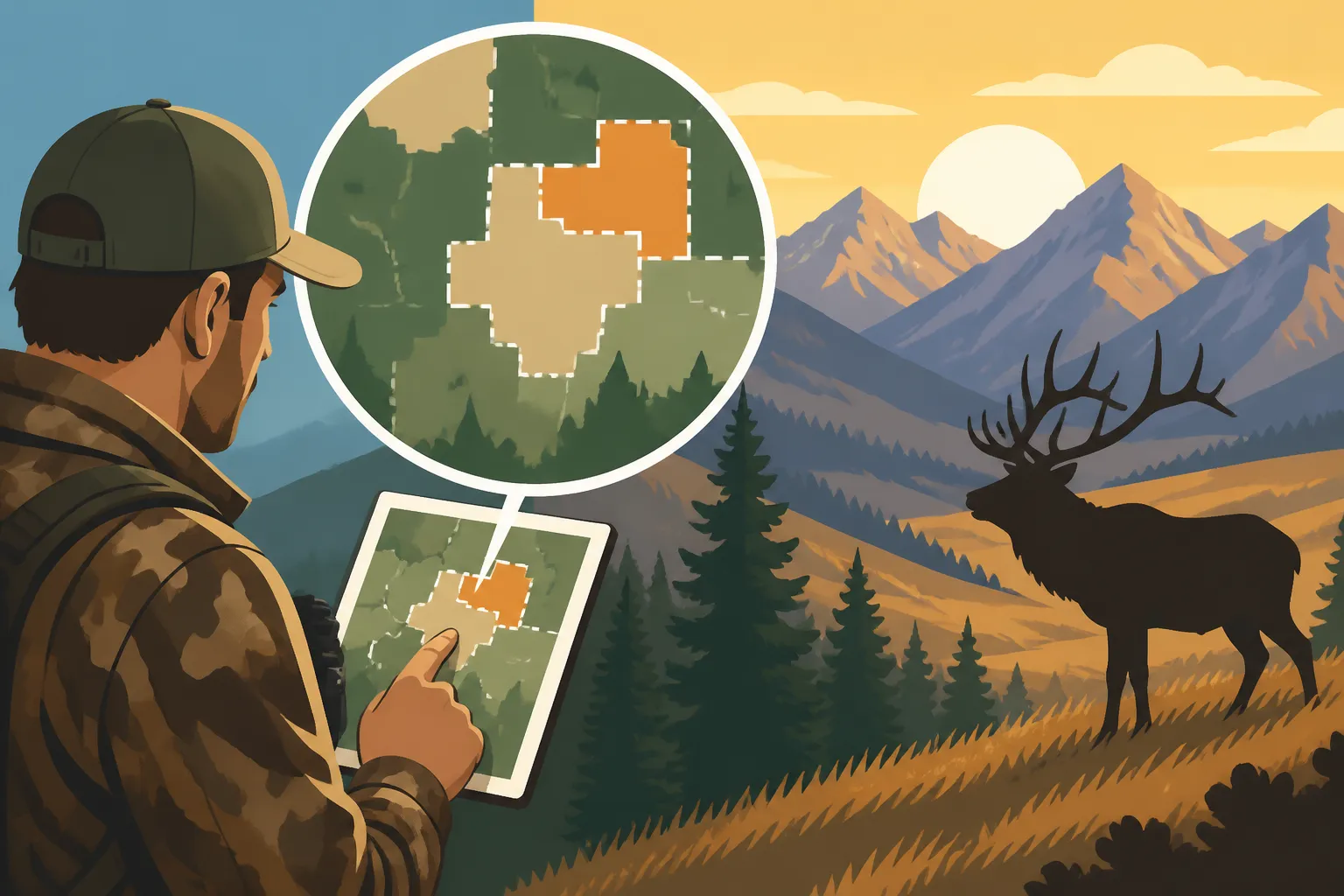
The single most important tool for finding Block Management Areas (BMAs) is the Montana FWP Block Management website. This online portal is updated annually, usually in late summer or early fall, with current information for the upcoming hunting season. You can search by region, hunting district, or even by specific game species. Each BMA will have a detailed "Hunt Plan" that outlines the specific rules, access dates, species available, and contact information.
Beyond the FWP website, dedicated hunting research platforms can significantly streamline your planning. Tools like GoHunt offer detailed mapping layers that integrate FWP Block Management data, allowing you to visually scout areas and overlay them with topography, public/private land ownership, and other crucial information. Using GoHunt's advanced filtering, you can pinpoint areas known for holding specific species like mule deer or antelope, and assess the terrain before you even leave your couch. This level of How to E-Scout Montana Hunting Units is invaluable.
When looking at BMAs, pay close attention to the specific hunt plan. It will detail:
- Allowed Species: Is it for elk, deer, antelope, or a combination?
- Access Dates: When is the area open for hunting? These dates can vary significantly.
- Access Type: This is critical, as it determines how you gain permission.
- Special Restrictions: Are there vehicle restrictions? Is walk-in only? Are specific weapon types allowed?
- Maps: Detailed maps showing boundaries and access points are usually included.
Don't just skim these hunt plans; read every word. Misunderstanding a rule can lead to a ruined hunt or, worse, a citation.
Understanding Different Access Types
Not all Block Management Areas are created equal when it comes to how you gain entry. Montana categorizes them primarily into two types, with varying methods of access:
Type I Block Management Areas
These are typically larger blocks where hunters check themselves in and out at a designated sign-in box. You'll find a kiosk with a binder containing self-registration slips and detailed maps. The process is straightforward: fill out a slip, detach one copy for yourself, and deposit the other in the box. When you leave, you sign out. It’s an honor system, but one that is absolutely vital to maintain the integrity of the program.
- Pros: Generally offers more flexibility, no need for advance contact, often less restrictive on hunter numbers at any given time. These can be fantastic for impromptu hunts or for exploring new ground.
- Cons: Can still experience higher hunter numbers, especially on opening weekend or in easily accessible areas. Hunter density information isn't always real-time.
Type II Block Management Areas
These areas typically require hunters to obtain permission directly from the landowner or a designated FWP contact before hunting. This can involve making a phone call, sending an email, or even visiting the landowner in person. Some Type II areas have a limited number of daily permits or even require reservations, often through an online system or by phone.
- Pros: Often offers a more exclusive hunting experience with potentially fewer hunters. This can be great for specific strategies like How to Still-Hunt Montana Timber where solitude is key. You might also gain valuable insights into game movement from the landowner.
- Cons: Requires more proactive planning and coordination. You might not always get access on your preferred dates, or the area could already be booked. Response times from landowners can vary.
Understanding the difference between Montana Block Management Type 1 vs Type 2 is crucial before you plan your trip. Always double-check the specific hunt plan for the BMA you intend to visit.
| Access Type | Description | Pros | Cons | Ideal For |
|---|---|---|---|---|
| Type I | Self-registration at an on-site sign-in box with provided maps. | Flexible, immediate access, often larger areas. | Higher hunter density possible, less direct landowner intel. | Spontaneous trips, exploring new country, covering large areas. |
| Type II | Requires direct contact with landowner/FWP, reservations, or limited daily permits. | Lower hunter density, potentially better intel, more exclusive experience. | Requires advance planning, limited availability, less spontaneity. | Focused hunts, seeking solitude, specific dates/species. |
Planning Your Hunt on Block Management Lands
Effective planning is the backbone of any successful DIY hunt, and Block Management Areas are no exception. With good preparation, you can turn these opportunities into filled tags and memorable experiences.
E-Scouting and Pre-Season Research
Before you even think about packing your bags, dedicate significant time to e-scouting and research. This is where tools like GoHunt truly shine. Start by identifying potential BMAs that align with your target species—whether it's Montana Elk Hunting Guide, Montana Mule Deer Hunting Guide, or Montana Antelope Hunting Guide. Zoom in on these areas using satellite imagery to identify key terrain features: water sources, timbered draws, agricultural fields, elevation changes, and potential bedding or feeding areas. Look for natural funnels or pinch points that might concentrate animal movement.
Cross-reference your e-scouting with information from FWP's website regarding game populations in that particular hunting district. Look at success rates, winter range, and any recent reports that might give you an edge. Many experienced hunters will also delve into historical weather patterns for the area, understanding how factors like snow depth or early season heat might impact game distribution. Remember, Montana's hunting seasons explained often highlight varying conditions across different regions, so local knowledge is key.
Also, pay close attention to the boundaries of the BMA. Often, these parcels are surrounded by other private land, sometimes with different access rules, or by public land. Understanding these transitions is critical for planning your approach and avoiding accidental trespass. Utilizing GPS apps like onX Hunt, which clearly delineate public and private land boundaries, along with FWP's detailed Montana Hunt Planner Maps Explained, is non-negotiable for responsible hunting in these areas.
Essential Gear and Preparation
Hunting Block Management Areas often means covering a lot of ground, sometimes in challenging terrain. Your gear needs to be up to the task. Beyond your weapon, ammunition, and a reliable backpack, consider the specific demands of the area.
If you’re hunting in agricultural areas or open plains, good optics are paramount. A quality pair of binoculars (10×42 or 12×50) and a spotting scope can help you glass vast landscapes for antelope or distant mule deer. For those targeting elk in more timbered or broken country, a good rangefinder is essential, especially when combined with a thorough understanding of How to Judge Distance in Montana's Mountains.
Your clothing system should be adaptable to Montana’s often unpredictable weather. Layers are key, allowing you to adjust to temperature swings from frosty mornings to warm afternoons. Reliable rain gear is a must, as is durable, comfortable footwear suitable for varied terrain. Consider a satellite communication device like a Garmin inReach, especially if you plan to hunt remote BMAs that might be adjacent to true backcountry areas.
Physical preparation is also non-negotiable. Many Block Management areas, while not always deep wilderness, still require significant walking, sometimes over uneven ground or through thick cover. Being in good shape will not only enhance your enjoyment but also increase your chances of success and safety. A dedicated Montana Elk Hunt Fitness Plan is beneficial even for deer and antelope hunts if you plan to cover serious mileage.
On-the-Ground Tactics and Etiquette
Once you've done your homework and arrived at a Block Management Area, successful hunting hinges on smart tactics and, perhaps even more importantly, impeccable etiquette. These lands are a privilege, not a right, and treating them with respect ensures the program continues for future generations.
Hunting Smart in Block Management
When hunting BMAs, it's wise to be flexible with your strategy. While e-scouting helps immensely, conditions on the ground can always be different. Observe other hunter activity, if any. If an area seems heavily pressured, be prepared to adjust your plan. Sometimes, simply walking a bit further than others, or exploring a less obvious corner of the BMA, can put you into unpressured game. This is where a true Montana Public Land Hunting Strategy pays off, applying backcountry principles to front-country access.
Think about the time of day. Early mornings and late evenings are generally most productive, as game animals are often moving to and from bedding and feeding areas. During the middle of the day, focus on known bedding cover or water sources, especially during warmer periods. If you're hunting during the rut, understanding Montana Elk Behavior During the Rut or Montana Mule Deer Behavior in the Rut can guide your calling and stalking strategies.
Always hunt with the wind in your favor. Even with the best camouflage, a deer or elk's nose is its primary defense. Use thermals to your advantage in hilly terrain—rising air in the morning and sinking air in the evening can carry your scent for miles. If the BMA is near a road or a busy area, consider how game might move in response to human activity. Often, animals will retreat to the densest cover or cross into adjacent private land if they feel too much pressure. Your ability to adapt and think like the animal will be your biggest asset.
Respecting the Landowners and the Rules
This cannot be stressed enough: the future of Block Management depends entirely on hunter conduct. Landowners volunteer their property, and if they have negative experiences, they can withdraw from the program. Always adhere strictly to the rules outlined in the hunt plan.
- Sign In and Out: This is non-negotiable for Type I areas. It provides FWP and the landowner with vital information about hunter numbers and success rates, which helps them manage the program.
- Stay Within Boundaries: Use your GPS and maps to ensure you are always on the designated BMA or adjacent public land. Trespassing, even accidentally, is a serious offense and can jeopardize the entire program.
- Leave No Trace: Pack out everything you pack in, including spent shell casings, trash, and any gut piles should be out of sight from roads or trails. Leave gates as you found them – if it was closed, close it behind you; if it was open, leave it open.
- Respect Livestock and Property: This is a working landscape. Do not harass livestock, damage fences, or drive on unauthorized roads. Stick to designated travel routes.
- Communicate: If you're on a Type II area, maintain good communication with the landowner or FWP contact. A simple "thank you" goes a long way. If you notice an issue, report it respectfully.
By being a responsible and ethical hunter, you’re not just enjoying a privilege; you’re actively contributing to the continuation of one of Montana’s best hunting opportunities. Let’s make sure these vital access programs thrive for generations to come.
Disclaimer
Please note that hunting regulations, season dates, and Block Management Program details can change annually. Always consult the official Montana Fish, Wildlife & Parks (FWP) website and current hunting regulations before planning and executing any hunt. This guide is for informational purposes only and does not supersede official FWP regulations.