How to Hunt Montana Antelope Water Holes
Hunting antelope in Montana can often feel like a game of cat and mouse in the vast, open plains, leaving many hunters frustrated as these speedy animals vanish over the horizon. But there's a specific, highly effective tactic that many overlook, especially during the warmer months: hunting antelope over water holes. This guide will walk you through everything you need to know to leverage these vital water sources for a successful hunt, turning a seemingly impossible chase into a strategic ambush.
Understanding Antelope and Their Thirst for Water
Antelope are truly remarkable creatures, built for speed and survival in some of Montana's most challenging arid environments. However, even these desert athletes have a critical Achilles' heel: their constant need for water. Understanding this fundamental aspect of their biology and how it changes with seasons and conditions is your first step toward success.
Antelope Biology and Water Dependency
Montana's pronghorn, often mistakenly called "antelope," are the fastest land animals in North America, perfectly adapted to the wide-open spaces of the prairie. Their incredible eyesight – equivalent to an 8x binocular – allows them to spot danger from miles away. They can go for extended periods without drinking free water, especially if they're feeding on lush, moisture-rich vegetation. However, in the vast, often dry landscapes of eastern Montana, reliable water sources are few and far between, turning them into undeniable magnets, particularly during the hot early season.
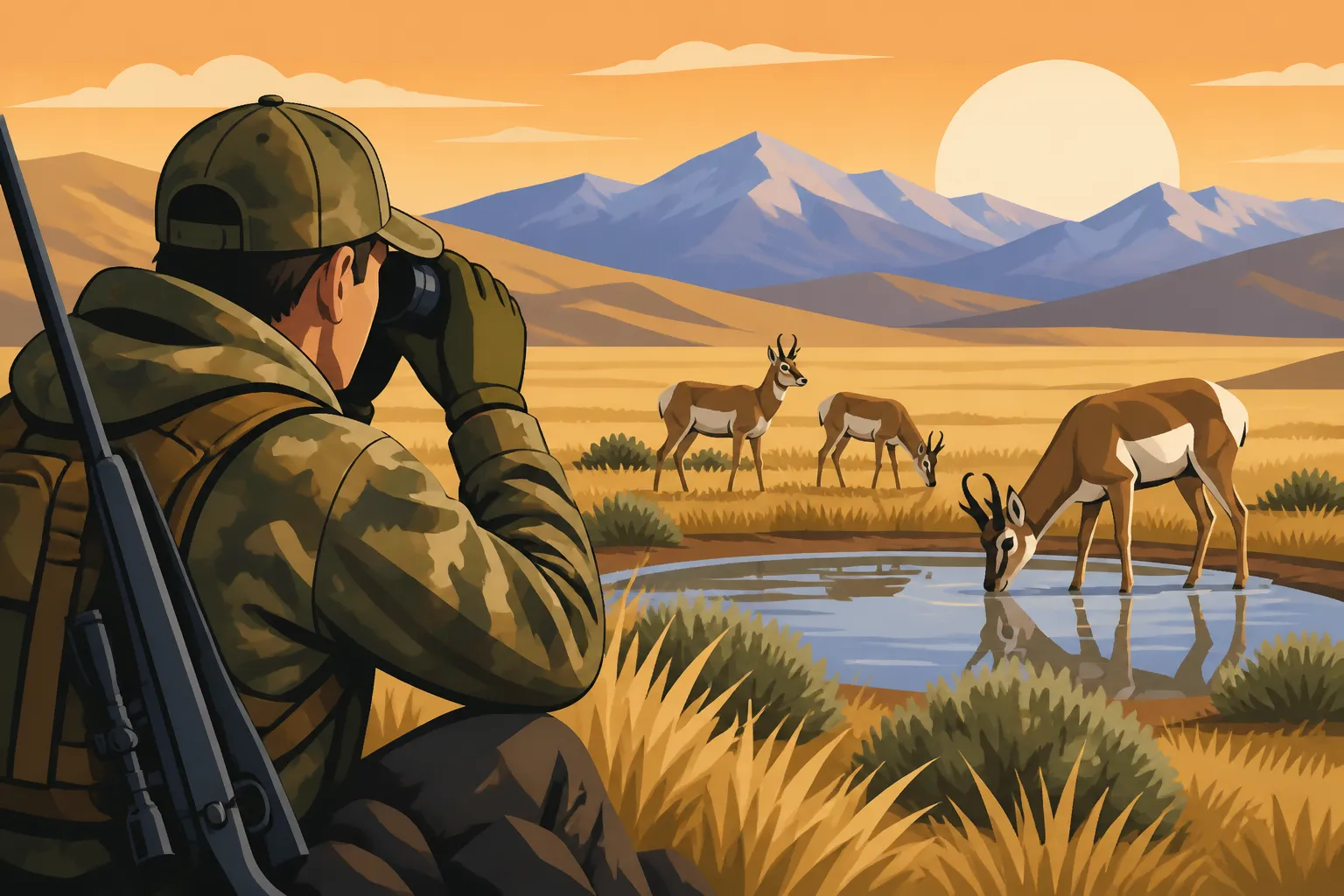
Imagine the high plains during a scorching August archery season. The sun bakes the earth, and the sparse vegetation offers little shade or moisture. In these conditions, a stock pond, a small reservoir, or even a natural seep becomes an oasis. Antelope will often travel significant distances, sometimes several miles, from their feeding and bedding grounds just to get a drink. While they might get some moisture from plants, nothing truly quenches their thirst like actual water. These predictable movements create a bottleneck, a chokepoint where a hunter can intercept them. Understanding their daily routine—feeding in the cooler parts of the morning and evening, then often heading to water mid-day or in the late afternoon heat—is crucial.
Seasonal and Environmental Influences on Water Hole Activity
The effectiveness of hunting antelope over water holes isn't static; it shifts dramatically with the seasons and prevailing environmental conditions. Ignoring these factors can lead to long, fruitless waits in a blind.
During the early archery season, typically August and early September, Montana can experience sweltering temperatures. This is prime time for water hole hunting. The heat drives antelope to water with a predictable urgency. As the rut approaches in late September and October, bucks become highly active, chasing does, fighting rivals, and generally expending a tremendous amount of energy. This increased activity, combined with the often still-warm early fall days, makes them even more reliant on water. In fact, many hunters find success by keying into the rut behavior around these water sources.
However, as the general rifle season progresses into cooler late October and November, the dynamic changes. Cooler temperatures mean less dehydration, and often, more readily available temporary water sources from rainfall or early snowmelt. If there's standing water in every low spot or ditch, the antelope's need to visit specific, well-known water holes decreases, making them less predictable. Conversely, if Montana experiences a severe drought year, the importance of perennial water sources skyrockets, making them hotbeds of activity regardless of the temperature. Always check the long-term weather forecasts and recent precipitation levels for your chosen hunting unit; it will directly impact how productive a water hole hunt might be.
Scouting and Selecting the Best Water Holes
You can't just pick any puddle and expect antelope to show up. Successful water hole hunting starts long before you ever set foot in your blind. It requires meticulous scouting, both from the comfort of your home and boots on the ground. This deliberate approach allows you to identify not just any water source, but the most productive ones.
E-Scouting for Productive Water Sources
In today's hunting world, digital tools are an absolute game-changer, especially for species like antelope that inhabit vast, open landscapes. Your first step should always be a thorough e-scouting mission. Fire up your computer and dive into mapping applications like onX Hunt or Google Earth. These platforms allow you to survey enormous tracts of land from an aerial perspective, highlighting potential water sources that might be invisible from the road. Look for stock tanks, small ponds (often marked as "tanks" or "reservoirs"), river bends, and even green patches that could indicate a natural seep or spring. Remember, antelope in Montana often frequent both public and private lands, so identifying land ownership boundaries is crucial. Tools like GoHunt can provide valuable insights into tag draw odds and unit breakdowns, which, while not directly about water, can help you identify high-density antelope areas where water sources will naturally see more traffic. Knowing which units have higher antelope populations will certainly increase your chances.
Once you've identified potential water sources, start analyzing the surrounding terrain. Are there visible trails leading directly to the water? These well-worn paths are like highways for game and indicate frequent use. Look for proximity to open feeding grounds (grasslands, agricultural fields) and potential bedding areas (small rises, sparse sagebrush hills, even slight depressions). Antelope prefer to bed in areas where they can see for miles, so don't expect them to be tucked away in thick timber. Consider the cover around the water source itself – are there any small clumps of brush, old corrals, or slight depressions that could offer concealment for a blind? Pay attention to prevailing wind directions too, thinking about how you might approach and set up without getting busted. Cross-referencing these visual cues with historical weather data or anecdotal reports about specific units can refine your search even further. For instance, if you're looking at a unit where the Montana Antelope Draw Odds Explained are favorable, that's a good place to start your water hole research.
On-the-Ground Reconnaissance
E-scouting is fantastic for narrowing down options, but nothing beats boots-on-the-ground reconnaissance. This is where you confirm your theories and gather vital, real-time intelligence. Once you're in the field, visit each promising water hole you identified. What you're looking for are tangible signs of recent antelope activity. Fresh tracks in the mud around the edge of a pond are a dead giveaway. Look for varying sizes, indicating a mix of bucks, does, and fawns. Examine droppings – fresh pellets are dark and moist, while older ones are dry and faded. Well-defined game trails leading into and out of the water source confirm it's a regular stop, not just an occasional drink.
While you're checking for signs, also pay close attention to the wind. Spend time observing the area, ideally from a distance with good optics. How do antelope approach the water? Where do they typically drink from? Are there any natural features like a slight rise, a patch of tall sagebrush, or a lone cottonwood tree that could provide enough cover for a ground blind? Remember that How to Glass Montana's Big Country effectively involves patience and understanding animal behavior. Note potential blind locations that offer concealment while providing a clear shooting lane at a reasonable distance. You need to consider entry and exit routes to your blind that minimize your disturbance. A common mistake is not considering how you'll get in and out of your blind without spooking animals. Look for ways to approach and depart under the cover of darkness or topography.
Here's a quick checklist for your water hole scouting:
| Scouting Aspect | What to Look For | Why It Matters |
|---|---|---|
| Antelope Activity | Fresh tracks, droppings, well-worn trails, rub marks on fences/small shrubs, bedding areas. | Confirms active use; indicates population density. |
| Water Source Type | Stock tanks, natural ponds, river bends, seeps, windmills. | Predictability and reliability. Man-made sources are often more consistent. |
| Surrounding Cover | Natural depressions, dense sagebrush clumps, old corrals, rock formations, slight rises. | Offers concealment for blinds and hunter approach/departure. |
| Wind Patterns | Observe daily thermal shifts, general prevailing winds. | Crucial for blind placement to prevent scent detection. |
| Approach/Exit | Hidden routes to and from potential blind sites, using terrain features, dry creek beds. | Minimizes disturbance, keeps animals unaware of your presence. |
| Evidence of Other Hunters | Old blinds, spent casings, excessive tracks. | Indicates pressure; might need to find a less-used spot or adapt tactics. |
Setting Up for a Successful Water Hole Ambush
Once you've identified your prime water hole, the real strategy begins: setting up your ambush. This isn't about rushing in; it's about meticulous planning, stealth, and incredible patience. Your goal is to become an invisible part of the landscape, waiting for the antelope to make their move.
Blind Selection and Placement
The cornerstone of water hole hunting is proper concealment. You'll likely be hunting from a blind, whether man-made or natural. For archery hunting, a commercial ground blind like those from Ameristep or Rhino Blinds is often the most reliable option. They offer complete concealment, block your scent (to a degree), and allow for slight movements without being detected. When placing your ground blind, think about the angle of the sun at different times of day to avoid casting a silhouette or having direct sunlight on you. Crucially, position your blind downwind of the most likely approach routes to the water. Antelope have an incredible sense of smell, and even a slight shift in wind can give you away. It's often beneficial to set up your blind a few days or even a week before your hunt, allowing the animals to get accustomed to its presence.
Natural blinds, using existing topography, dense sagebrush clumps, or even a small stand of cedars, can also be highly effective, especially if you prioritize a minimalist approach or when Montana Backcountry Hunting Guide principles apply. The key here is to blend in seamlessly. Digging a small pit or tucking yourself into a natural depression can provide excellent low-profile concealment. The distance from the water is critical for both bow and rifle hunters. For archery, a shot between 20-40 yards is ideal, offering a high-percentage, ethical shot. For rifle hunters, you might be able to stretch that distance, but remember that antelope are small targets, and longer shots increase the risk of a wounded animal. Always practice at these distances and consider how to Shoot Long Range at Montana Elk principles might apply to smaller game. The wind, however, remains your absolute master. No matter how good your blind is, if the wind carries your scent to an approaching antelope, your hunt is over.
The Waiting Game: Tactics and Patience
Now that your blind is set, it's time for the ultimate test of patience. Antelope water hole hunting is a waiting game, pure and simple. You need to be in your blind well before daylight, and often, you'll stay there until after dark, especially during the peak heat of the day. This commitment is why water hole hunting is often lauded as one of the best ways for someone to truly Montana Antelope Hunting for Beginners – it minimizes movement and relies on the animal's predictable habits.
Scent control is absolutely critical here. Shower with unscented soap, use scent-eliminating sprays, and store your hunting clothes in airtight containers. Every little bit helps. Once in your blind, become a statue. Any fidgeting, rustling, or peeking out can be picked up by an antelope's keen eyes. Use a small stool or comfortable chair to minimize movement. Bring plenty of water, snacks, and a good book or podcast (with headphones, of course!) to keep your mind occupied. Resist the urge to check your phone constantly. Focus on scanning the horizon, using your binoculars to pick apart distant shapes. You'll often see antelope approaching from a long way off.
Understanding antelope approach patterns can give you an edge. They often circle downwind before committing to water, testing the air. If they suddenly stop and stare intently, they might have caught a whiff of something or spotted a subtle movement. This is where impeccable stillness is rewarded. Consider how you might use other tactics like How to Decoy Antelope in Montana in conjunction with a water hole setup. A decoy positioned downwind from your blind, a little distance away, might draw their attention and scent away from your actual location, giving you a few precious extra seconds. The most successful hunters often describe it as a meditative experience, demanding immense focus and the ability to embrace stillness.
Executing the Shot and Post-Shot Strategy
All the scouting and patient waiting culminate in a single, critical moment: the shot. Whether you're an archer or a rifle hunter, executing a clean, ethical shot and then having a solid post-shot recovery plan are paramount for a successful antelope hunt over water.
Shot Placement and Archery/Rifle Considerations
Antelope are relatively small animals, and their vitals are compact. This means precision is key. For archery hunters, a broadside shot at a relaxed animal is ideal. Aim for the crease behind the shoulder, slightly low, to hit both lungs and potentially the heart. Because antelope are often nervous at water, they might "jump the string," dropping down slightly at the sound of the bow. Account for this by aiming a touch lower than you normally would on a stationary target. Practice at varying distances from your blind setup, specifically to simulate the conditions you'll encounter. Broadhead choice is also important; mechanical broadheads can be effective but ensure they are reliable and practice with them.
For rifle hunters, the shot can often be stretched out a bit more, but ethical ranges should always be observed. Know your rifle's capabilities and your own limitations. A solid rest is essential, whether from shooting sticks, a bipod, or the window of your blind. Aim for the same vital area: behind the shoulder. Avoid head-on or quartering-to shots, as these offer less forgiving target areas. Factors like wind drift, especially on the open plains, can significantly impact bullet trajectory, so account for it. Smaller, faster cartridges like the .243 Win, .25-06 Rem, or even a .270 Win are excellent choices for antelope, offering flat trajectories and sufficient energy. Regardless of your weapon, ethical shot placement is your responsibility. There’s no greater satisfaction than making a clean, quick kill.
Tracking and Recovery in Open Country
Even with a perfectly placed shot, antelope can run an astonishing distance. Their speed and natural instinct to flee mean that a dead run can cover hundreds of yards in seconds. This is why a meticulous post-shot strategy is vital, especially on the vast Montana plains where every sagebrush clump looks the same. The very first thing to do after the shot is to mark the exact spot where the antelope was standing when you shot it. Pick out a prominent landmark like a unique rock, a specific sagebrush, or a small tree. Then, watch the animal's reaction and direction of travel. Try to pinpoint where it falls or where you last saw it disappear. Take mental notes of other landmarks along its escape route.
For archery shots, patience is often your best friend. Unless you saw the animal drop within sight, it's wise to wait 30 minutes to an hour, allowing the animal time to expire. If you push it too soon, a wounded antelope might get up and run even further, making recovery much harder. When you begin tracking, go directly to the shot site. Look for blood, hair, bone, or any other sign. Even small specks of blood are important. Then, slowly and methodically follow the blood trail. In sparse vegetation, this can be incredibly challenging. Recruit a friend if possible; an extra set of eyes can make a huge difference. Using quality optics, like a good pair of binoculars, can also aid in scanning ahead for the animal once you're on the trail. Remember, a downed antelope blends in remarkably well with its surroundings. Learning How to Pack Out an Elk in Montana is a critical skill, and while antelope are smaller, the principles of efficient field dressing and meat care apply equally to ensure your hard-earned harvest doesn't spoil.
| Water Hole Hunting Phase | Key Action | Critical Considerations |
|---|---|---|
| Pre-Scouting | Identify water sources via onX Hunt/Google Earth; check land ownership. | Look for high antelope density areas (GoHunt insights); assess accessibility. |
| Field Scouting | Check for fresh tracks, droppings, game trails; note wind direction. | Confirm active use; identify natural blind locations; plan entry/exit routes. |
| Blind Setup | Place ground blind downwind; consider sun angle; set up days in advance. | Concealment is key; avoid silhouetting; ensure clear shooting lanes; distance for weapon type. |
| Waiting | Scent control; remain still and quiet; use optics; manage boredom. | Wind is paramount; minimize movement; avoid spooking animals on approach. |
| Shot Execution | Aim for vitals (behind shoulder); account for "jump the string" if archery. | Practice at relevant distances; use a solid rest; choose ethical shot angles. |
| Recovery | Mark shot location; observe direction of travel; wait if necessary. | Follow blood trail methodically; use landmarks; recruit help; ensure meat care. |
Ultimately, hunting Montana antelope over water holes is a fantastic, often overlooked method, offering a unique blend of strategic patience and precise execution. It's a chance to truly understand the rhythm of these incredible animals and experience the Big Sky Country in a whole new way. Happy hunting!
Disclaimer
Hunting is an inherently dangerous activity. This guide provides general information and recommendations for hunting in Montana. It is your responsibility to understand and comply with all current Montana Fish, Wildlife & Parks regulations, obtain necessary licenses and tags, and practice safe hunting methods. Always prioritize safety, ethical hunting practices, and responsible outdoor stewardship. Conditions can change rapidly, and personal preparation and judgment are paramount for a safe and successful hunt.