Montana Mule Deer Behavior in the Rut
Trying to predict where a big Montana mule deer buck will be during the rut can feel like chasing a ghost. One day they're nowhere to be found, the next they're chasing does across open country, seemingly oblivious to the world. It’s this erratic, yet patterned, behavior that makes the rut both the most exciting and often the most frustrating time to hunt these incredible animals. This guide will deep dive into the fascinating world of Montana mule deer behavior during the rut, helping you understand their seasonal shifts and how to use that knowledge to your advantage.
Understanding the Mule Deer Rut in Montana
The mule deer rut is a captivating period, transforming the usually reclusive bucks into highly active, vulnerable creatures driven by a singular purpose: breeding. For hunters, understanding this cycle is paramount to success, as their behavior changes dramatically from their typical patterns.
When Does the Rut Occur in Montana?
The timing of the mule deer rut in Montana is generally consistent, though local conditions like severe weather, snow depth, or even the general health of the herd can influence its exact onset and intensity. Typically, the primary breeding period, often called the "peak rut," falls within mid-November to early December. This aligns perfectly with Montana's general rifle season, making it a prime time for many hunters. However, this isn't a hard and fast rule, and there are distinct phases leading up to and following this peak.
Before the peak, in late October through early November, you’ll observe the “pre-rut” phase. This is when bucks start to become more aggressive, break up from their summer bachelor groups, and begin searching for does. Post-rut, typically in mid-December, bucks are exhausted, focusing on recovery and finding quality forage. The exact window can vary slightly from the fertile river bottoms of Eastern Montana to the rugged high country. Some studies even suggest that older, more dominant bucks might begin seeking does a little earlier, while younger bucks might linger on the fringes, waiting for their turn.
Pre-Rut Activity and Behavior
The pre-rut is a crucial time when mule deer bucks transition from their summer patterns to their breeding season mindset. It’s a period of increasing testosterone, heightened aggression, and the initial breakup of those familiar bachelor groups. While they might still tolerate other bucks on the periphery, the days of tight-knit companionship are rapidly fading.
During the pre-rut, bucks spend a significant amount of time making scrapes and rubs. You'll see them pawing at the ground, depositing scent from interdigital glands, and rubbing their antlers on saplings and bushes. These aren't just random acts; they're vital forms of communication. Fresh rubs indicate a buck has recently passed through and is actively claiming territory or advertising his presence. Similarly, scrapes, especially those under an overhanging branch, serve as a "signpost" where deer communicate through scent. This increased visibility and activity make the pre-rut an exciting time to be in the field, as bucks become less nocturnal and more willing to move during daylight hours. Early success during this period often comes from glassing key feeding areas and travel corridors between bedding and feeding. For a comprehensive look at tactics, check out our guide on Best Method to Hunt Montana Mule Deer.
Key Mule Deer Rut Behaviors
Once the rut truly kicks in, the entire demeanor of a mule deer buck changes. Their focus shifts almost entirely to locating and breeding does, often at the expense of caution and even basic survival instincts.
Seeking and Chasing Does
This is the quintessential image of the rut: a buck with his nose to the ground, trailing a hot doe, or aggressively pushing a group of does across a field. Dominant bucks will be constantly on the move, covering significant ground in search of estrous females. They don't just find one and settle; they’ll often check multiple groups of does, testing them to see if any are ready to breed. Younger, less dominant bucks will follow these larger deer, often getting a chance to breed if the dominant buck is distracted or worn out.
This relentless pursuit means bucks are less focused on potential threats, making them more visible and, in some ways, more approachable. You'll observe them pushing does, herding them, and engaging in short, intense chases. These chases can sometimes lead bucks right out into the open or into areas they might typically avoid during other times of the year. Understanding Montana Mule Deer Migration can provide insights into where these doe groups might concentrate, making it easier to predict buck movements.
Courtship and Breeding
When a buck locates a doe nearing estrus, a fascinating courtship ritual begins. The buck will "tend" the doe, often following her closely, head low, with an outstretched neck. He might perform a "lip curl" or flehmen response, using a specialized organ to detect pheromones that signal the doe's readiness. This tending behavior can last for hours, sometimes even a day or two, before the doe is receptive.
During this period, the buck is incredibly protective of his chosen doe, often fending off rival bucks with aggressive posturing, parallel walks, and sometimes even sparring matches. The breeding itself is quick, but the tending process means a buck might be locked down with a single doe or a small group for an extended period. This is when hunters can capitalize on their lack of attention. Knowing how to effectively How to Glass for Montana Mule Deer becomes crucial here, as you might spot a buck bedded down with a doe, or slowly moving with her through cover.
Scrapes and Rubs: More Than Just Marking Territory
While scrapes and rubs are created during the pre-rut, their significance intensifies during the peak rut. For mule deer, scrapes aren't as religiously visited as they might be for whitetails, but they still serve a purpose. They are social hubs, providing a scent communication network. Bucks will refresh them, and does will visit them, leaving their own scent.
Rubs, on the other hand, are often more indicative of a buck's presence and travel patterns. During the rut, bucks will make fresh rubs frequently, sometimes even just out of sheer aggression or as a display of dominance. Finding a string of fresh rubs can help you identify a buck's preferred travel corridor between bedding and feeding areas, or between different groups of does. Pay close attention to the size of the rubs; larger, older rubs from previous years or massive new rubs indicate a mature buck in the area. Tools like GoHunt's mapping features can help you identify potential buck movement corridors based on terrain and cover, making it easier to pinpoint where these signposts might be.
How Rut Behavior Impacts Hunting Strategy
Understanding what mule deer do during the rut is one thing, but knowing how to translate that into a successful hunting strategy is where the rubber meets the road. The rut offers unique opportunities that aren't available at other times of the year.
Locating Bucks During the Rut
Forget about hunting food sources in the traditional sense; during the peak rut, bucks are primarily focused on finding does. This means your best bet for locating bucks is to locate doe groups. Does will still be feeding, often in more open areas, but their travel patterns will be influenced by the bucks pursuing them. Focus on areas where does congregate, such as agricultural fields, south-facing slopes, or pockets of good forage. Bucks will be circulating through these areas, scent-checking for estrous females.
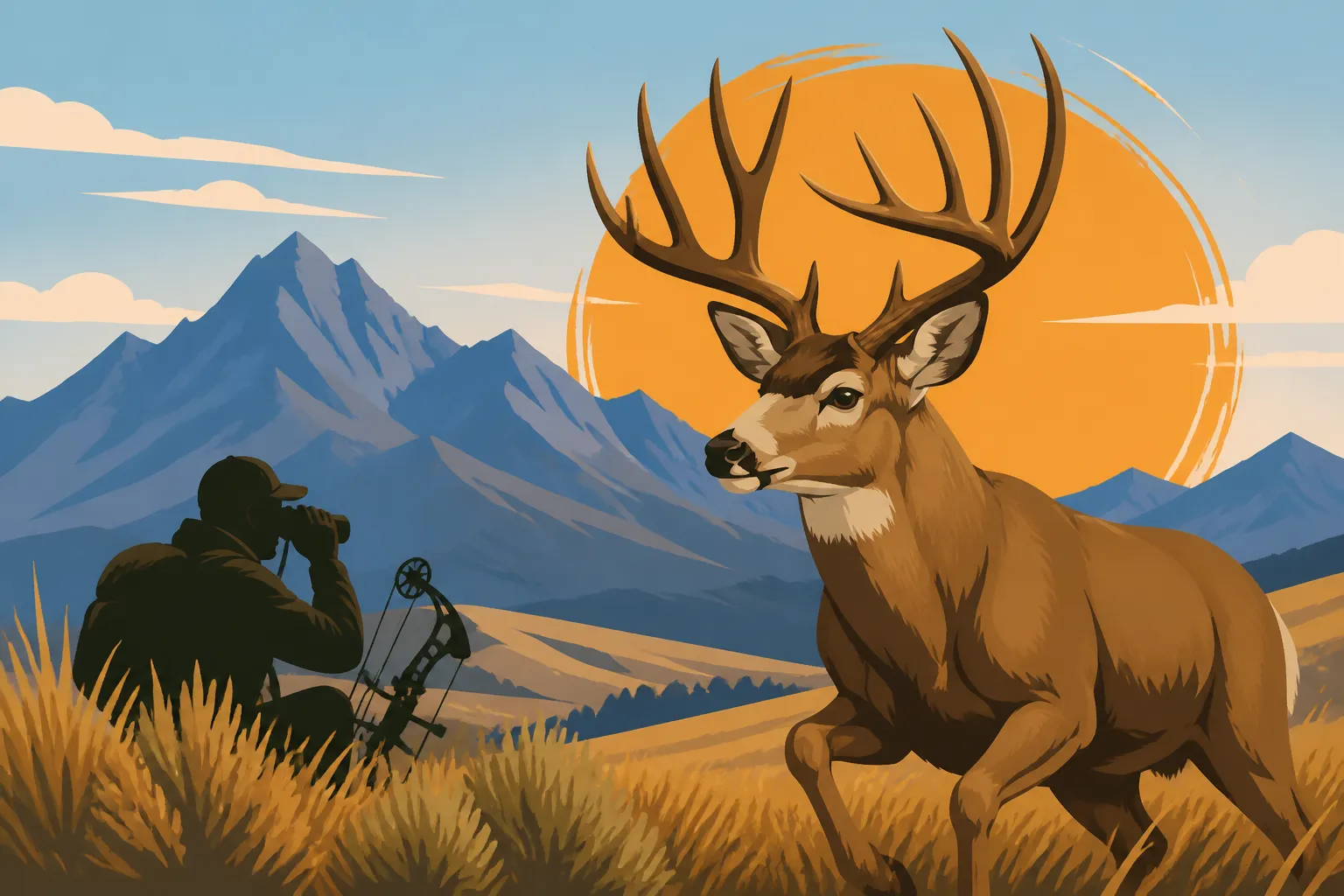
Transition areas between dense bedding cover and open feeding grounds are also hotspots. Bucks will cruise these edges, always keeping an eye out. Don't be afraid to put on miles and cover ground, but do so strategically. Use high vantage points to glass vast areas. A good pair of binoculars and a spotting scope are indispensable during this time. Remember, bucks will often be with the does, so if you find does, keep glassing the periphery and even within the group for a buck lurking nearby. Our Montana Mule Deer Hunting Guide has more tips on where to focus your efforts.
Calling and Decoying Strategies
Unlike some other species, calling for mule deer during the rut isn't always about aggressive bugling or grunting. While a subtle grunt might pique a buck's interest, rattling antlers can be incredibly effective, especially during the pre-rut and early peak rut. When bucks are still establishing dominance and fighting for breeding rights, the sound of a sparring match can draw them in, eager to assert themselves or see if a receptive doe is involved.
Decoying can also be highly successful. A buck decoy, especially a subordinate one, can draw in a dominant buck looking for a fight or to run off a competitor. A doe decoy can also work, especially if paired with rattling or grunting, as a buck might come in to investigate a "hot" doe. The key is to set up your decoy in an open area where it can be seen from a distance, and ensure you have clear shooting lanes. Always be mindful of wind direction when using decoys and calls, as mule deer have an incredible sense of smell. For those interested in advanced calling, tactics for other species, such as How to Call Elk in Montana, can even offer transferable insights on sound principles.
Patience and Persistence
The rut can be a rollercoaster. One day you might see multiple bucks chasing does, and the next, the entire landscape seems empty. This is where patience truly pays off. Bucks can lock down with a doe for a day or two, disappearing into thick cover, only to re-emerge when she's bred or moves on. Don't get discouraged if you don't see immediate results. Stick with areas that have good doe numbers and quality cover.
Persistence means being willing to sit longer, glass harder, and move quietly through potential buck hideouts. When a buck is with an estrous doe, he might not move far, preferring to stay close to her. This means you might need to employ still-hunting or spot-and-stalk tactics to slowly work your way into position. If you spot a buck tending a doe, sometimes waiting them out is the best strategy. They will eventually move, and often their attention is so fixed on the doe that they become less aware of their surroundings. Utilize digital scouting tools like those offered by GoHunt to identify potential bedding and staging areas where a buck might "lock down" with a doe, allowing you to focus your persistent efforts more effectively.
Post-Rut Behavior and What Comes Next
Just as quickly as the rut begins, it ends. The physical toll on bucks is immense, and their behavior shifts dramatically once the breeding season concludes.
Exhaustion and Recovery
By mid-December, after weeks of relentless pursuit, fighting, and minimal eating, mule deer bucks are physically drained. They can lose a significant portion of their body weight, sometimes as much as 20-30%. Their fat reserves are depleted, and they are often injured from sparring matches. This post-rut period is all about recovery.
Bucks will seek out quiet, sheltered areas where they can rest and feed, attempting to regain lost condition before the harsh Montana winter sets in. They become much more reclusive and less visible during daylight hours. Food sources become their primary focus, so hunting during this time means reverting to tactics more common in the early season, concentrating on known feeding areas. Their energy levels are low, so they prioritize easy access to nutritious forage and secure bedding.
Wintering Habits
As winter tightens its grip on Montana, mule deer will often migrate from their higher summer ranges to lower elevations where snow depth is less severe and food is more accessible. These winter ranges are critical for their survival, providing thermal cover and browse. Understanding these migratory patterns is vital for late-season hunters and for anyone interested in the overall health of the herd. Our article on Montana Mule Deer Migration dives deeper into these movements.
During this time, bucks will once again congregate, often forming smaller bachelor groups for companionship and safety. They’re no longer interested in fighting, but rather in conserving energy and finding enough food to survive until spring. Their antlers will typically drop in late winter, usually between January and March, though individual timing can vary. This concludes the annual cycle, and the deer begin preparing for the next year's growth and eventual rut.
Rut Phases and Associated Behaviors
To give you a clearer picture, here's a table summarizing the different phases of the Montana mule deer rut and the typical behaviors you can expect:
| Rut Phase | Typical Timing (Montana) | Buck Behavior | Doe Behavior | Hunting Strategy Focus |
|---|---|---|---|---|
| Pre-Rut | Late Oct – Early Nov | Increased sign making (rubs, scrapes), sparring, bachelor groups break up, searching for does. | Normal feeding/bedding, may tolerate bucks nearby. | Focus on travel corridors, signposts; rattling can be effective. |
| Early Peak Rut | Mid-Nov – Late Nov | Actively seeking and chasing does, tending does, less cautious, aggressive displays. | Begin coming into estrus, attracting bucks. | Locate doe groups, glass open areas; calling, decoying. |
| Peak Rut | Late Nov – Early Dec | Relentless pursuit of estrus does, breeding, highly distracted, covering lots of ground. | Actively receptive to breeding, leading bucks on chases. | Focus entirely on doe concentrations; high visibility. |
| Post-Rut | Mid-Dec – Late Dec | Exhausted, seeking food and cover, recovering body condition, less active. | Resume normal feeding, less harassment from bucks. | Hunt food sources, sheltered bedding areas; patience needed. |
Disclaimer
Hunting is an inherently risky activity. Always prioritize safety, adhere to all Montana Fish, Wildlife & Parks regulations, and respect private land. The information provided here is for educational purposes and general guidance only. Conditions in the field can change rapidly, and success is never guaranteed.