How to Locate Elk on Montana Public Land
Finding elk on Montana's vast public lands can feel like searching for a needle in a haystack, especially when you're up against seasoned hunters and the elk's natural ability to disappear into the landscape. It's a common frustration, but with the right knowledge and tactics, you absolutely can unlock those secret elk hideouts. This guide will walk you through the proven strategies for locating elk, whether you're e-scouting from home or have boots on the ground in the Big Sky Country.
Understanding Elk Behavior on Public Land
To find elk, you first have to think like an elk. These magnificent animals are creatures of habit and survival, constantly balancing their needs for food, water, cover, and security. Public land presents unique challenges for elk, primarily due to human pressure, which heavily influences where and when they move.
Seasonal Movements and Habitat Needs
Elk aren't static; their movements are dictated by the calendar, weather, and the availability of resources. Understanding these seasonal shifts is paramount to narrowing down your search.
During the late spring and summer months, before hunting seasons truly kick off, elk often disperse into higher elevations and lush alpine meadows. Cows will seek out secluded areas for calving, often near timbered edges with good forage and escape routes. This is when they pack on the pounds and bulls start growing their impressive antlers. They might seem more visible, but these high-country haunts become critical later. If you're doing some early scouting, look for those high basins and north-facing slopes that hold moisture and green feed longer.
As early archery season approaches, typically in September, and the rut begins, things change dramatically. Bulls become vocal, bugling to challenge rivals and attract cows. Elk will concentrate in areas with good cover – think dark timber stands, thick draws, and north-facing slopes where they can stay cool during the day. Water sources, like springs, wallows, and small creeks, become magnets, especially as the rut makes them thirsty. They might be more tolerant of open areas during cooler parts of the day, but they'll quickly retreat to security cover. This is a prime time to use calling tactics to locate and draw them in. You can learn more about how to call elk in Montana in our detailed guide.
When Montana's general rifle season arrives, usually in late October, hunter pressure skyrockets, forcing elk to adapt. They become incredibly wary, often going nocturnal or seeking refuge in the nastiest, most inaccessible terrain. Deep, dark timber on steep slopes, often with thick undergrowth, becomes their sanctuary. They'll use migration corridors to move from summer to winter ranges, and these routes can be hotspots if you catch them during a push, often triggered by early snow or severe cold. South-facing slopes, which catch more sun, become important for warmth as winter approaches, but they'll still be looking for adjacent cover.
Impact of Hunter Pressure
Public land in Montana means shared access, and that usually means hunter pressure. Elk are smart; they learn quickly where humans are and how to avoid them. This isn't just a frustration; it's a critical factor in your scouting and hunting strategy.
When pressure builds, especially during rifle season, elk often abandon accessible areas and retreat. They'll move into designated wilderness areas or roadless blocks that require significant effort to access. This means they're less likely to be found close to roads, trails, or easily glassed open areas. They might become almost entirely nocturnal, feeding in openings under the cover of darkness and retreating to thick timber well before sunrise. They also develop specific escape routes – ridgelines, deep canyons, or saddles – that they use repeatedly when disturbed. Finding these overlooked pockets, where the average hunter doesn't venture, is key. Our article on how to hunt Montana public land pressure delves deeper into overcoming this challenge.
A common scenario is finding fresh sign near a trailhead, only to have the elk vanish when you enter. This isn't bad luck; it's the elk telling you they've been pushed. Instead of following their tracks blindly into impossible terrain, consider where they would go to feel safe and secure. That might mean climbing higher, dropping into a nastier canyon, or simply walking further than most are willing.
E-Scouting Strategies for Montana Elk
The advent of digital mapping tools has revolutionized elk hunting, allowing us to scout vast tracts of public land from the comfort of our homes. This isn't just about saving boot leather; it's about making informed decisions that significantly increase your odds.
Utilizing Digital Mapping Tools
Modern mapping platforms are indispensable for breaking down large landscapes into manageable, intel-rich zones. These tools allow you to analyze topography, land ownership, and historical data like never before.
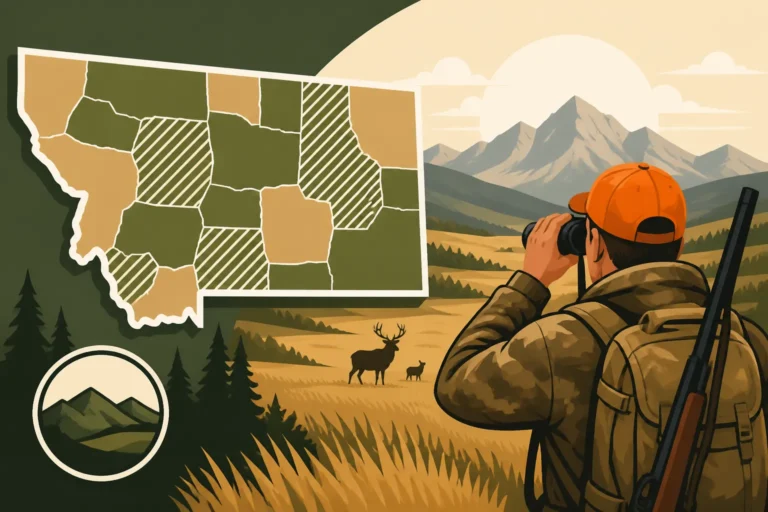
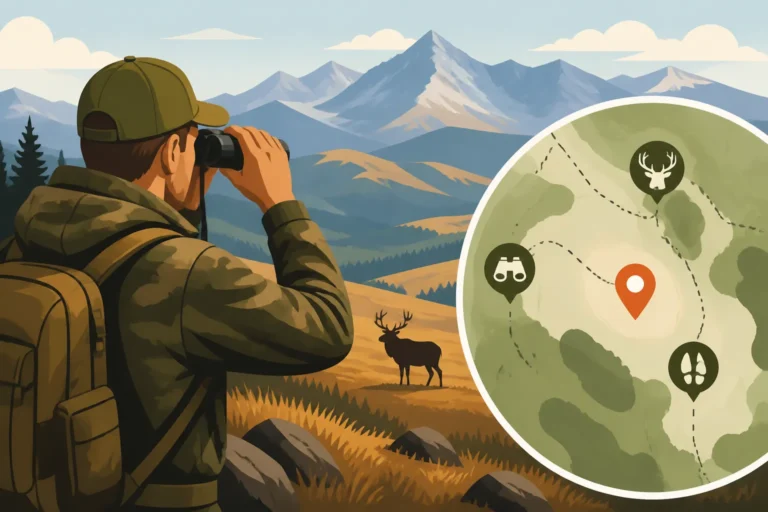
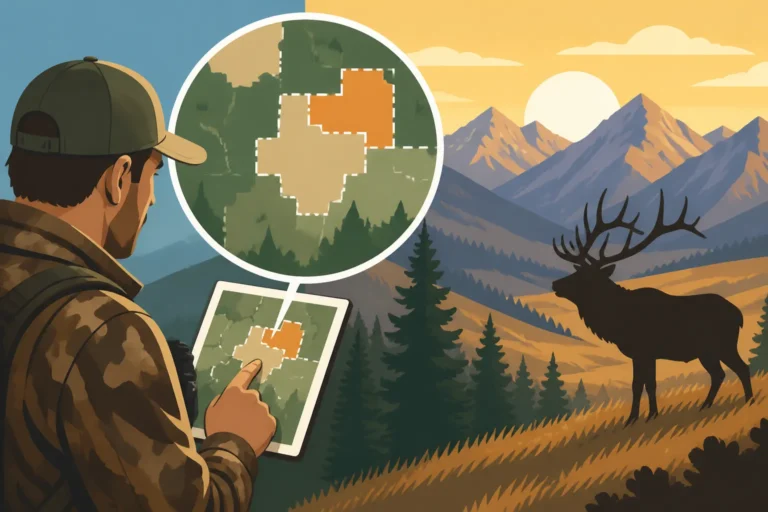
Platforms like onX Hunt, BaseMaps, and GoHunt are essential. They provide detailed topographic maps, satellite imagery, and critical land ownership overlays that clearly delineate public from private land. Start by identifying the large blocks of public land in your chosen hunting district. Then, layer on additional information. Wilderness boundaries, roadless areas, and Motorized Vehicle Use Maps (MVUMs) are crucial for identifying areas with less human disturbance. Historical satellite imagery can even show past timber cuts or wildfire burns, which often create new forage and security cover, attracting elk years later.
For example, using GoHunt's mapping features, you can analyze different aspects of slopes. North-facing slopes often hold snow longer, providing water and cooler temperatures during early season, while south-facing slopes offer warmth in late season. Look for saddles, benches, and ridges that connect these different aspects. These are natural travel corridors for elk moving between feeding and bedding areas. Don't forget to mark potential water sources like springs or small streams, especially in drier regions. This virtual reconnaissance is your first step in how to E-Scout Montana hunting units effectively.
Identifying Key Terrain Features
Once you have your digital maps open, it's time to become a detective. You're looking for specific geographic features that provide the trinity of elk needs: food, water, and cover.
Elk need places to eat, drink, and sleep, and they often travel between these areas.
- Feeding Areas: These are typically open parks, meadows, old burns, or clear-cuts with abundant grasses, forbs, and shrubs. On the map, look for areas of lighter green on satellite imagery that suggest open vegetation.
- Bedding Areas: Elk need security and protection from the elements. This means thick, dark timber, often on north-facing slopes or steep, inaccessible terrain. Look for dense clusters of trees on satellite imagery, especially those adjacent to feeding areas or water.
- Water Sources: Identify every stream, spring, pond, or wallow visible. Elk need water daily, and these spots are natural gathering points. During dry periods, isolated water sources can be goldmines.
Connect the dots between these features. An ideal elk hideout might involve a north-facing timbered slope (bedding) adjacent to a south-facing meadow (feeding), with a spring or small creek nestled in a draw nearby. Look for saddles or benches that serve as natural travel routes between these zones. These "transition zones" are excellent ambush points. Also, pay attention to potential escape routes – steep, brushy draws or dense timber patches that offer quick concealment. This systematic approach, identifying these elements, is a core component of any Montana Public Land Hunting Strategy.
Boots-on-the-Ground Scouting and Hunting Tactics
E-scouting gets you in the ballpark, but nothing beats getting out there and seeing the country for yourself. This is where you confirm your theories, discover new sign, and adapt your plan to the reality of the landscape.
Pre-Season Reconnaissance
If possible, scouting before the season opens is invaluable. It allows you to verify your e-scouting findings without the pressure of an active hunt.
Take binoculars and a spotting scope and spend time glassing suspected elk haunts from a distance. Look for any movement, even just a flick of an ear or the sheen of an antler. Early morning and late evening are prime times for elk to be active in more open areas. Our guide on how to glass Montana's big country offers specific tips for effective glassing. Pay close attention to south-facing slopes in the morning as elk move off their nocturnal feeding grounds, and north-facing timber where they might bed down for the day.
Look for fresh elk sign:
- Tracks: Size, freshness, and direction of travel tell a story. If you find multiple fresh tracks, you know elk are in the vicinity.
- Droppings (scat): Fresh, soft, shiny droppings indicate recent presence. Pay attention to the quantity; a lot of scat means a lot of elk.
- Rubs: Trees with bark rubbed off by antlers indicate bull activity, especially as the rut approaches.
- Wallows: Muddy depressions where elk have rolled to cool off or deter insects. These are often used repeatedly.
- Beds: Flattened areas in grass or snow where elk have rested.
- Trails: Well-used game trails leading to water, feed, or bedding areas are obvious signs.
Setting up trail cameras on established game trails, around water sources, or in suspected bedding areas can provide intelligence on elk presence, movement patterns, and even bull quality without you being there. Remember to check local regulations regarding trail camera use.
In-Season Hunting Approaches
Once the season starts, your tactics need to be dynamic, responding to what the elk are actually doing. Combining your e-scouting knowledge with fresh sign and an understanding of elk behavior will be crucial.
- Still-Hunting: This is a slow, methodical approach where you move through timber, stopping frequently to look and listen. It's incredibly effective in dense cover where elk seek refuge from pressure. Move into the wind or crosswind, taking only a few steps at a time, scrutinizing every shadow and sound. Think about how to move quietly through Montana timber.
- Calling: During the rut, calling can be a game-changer. Bugles, cow calls, and calf calls can attract curious elk or locate bulls. Even outside the rut, soft cow calls can sometimes elicit a response or bring a curious animal closer. Our guide on How to Bugle-Locate a Montana Bull Elk provides detailed instructions.
- Spot-and-Stalk: In more open country or when you can effectively glass large areas, spotting elk from a distance and then planning a careful stalk is a classic Western method. This requires patience, good optics, and a keen understanding of wind direction and topography.
- Ambushing: Identify pinch points, saddles, water holes, or heavily used game trails that elk frequently travel between bedding and feeding areas. Set up quietly before dawn or late in the afternoon and wait for elk to move. Our article on How to Ambush Elk on Montana Public Land offers more insights.
Always remember the wind and thermals. Elk rely heavily on their sense of smell. Always approach from downwind. In mountainous terrain, thermals typically rise in the morning and fall in the evening, carrying your scent accordingly. Factor this into your approach and departure routes. Understanding how to use the wind hunting Montana elk and how to use thermals in Montana elk country are vital skills.
Here's a quick comparison of tactics based on seasonal behavior:
| Hunting Season/Condition | Likely Elk Location | Recommended Tactics | Key Considerations |
|---|---|---|---|
| Early Archery/Rut | North-facing timber, dense cover, near water, wallows | Calling, still-hunting, ambushing travel corridors | Wind direction, thermal drafts, vocalization intensity |
| General Rifle Season | Dark timber, roadless areas, steep slopes, migration routes | Still-hunting, glassing from afar, ambushing travel routes | Hunter pressure, stealth, patience |
| Late Season/Heavy Snow | South-facing slopes, lower elevations, sheltered draws | Spot-and-stalk, still-hunting migration corridors | Snow depth, cold weather gear, tracking conditions |
| High Pressure/Nocturnal Elk | Deepest timber, inaccessible terrain, feeding at night | Dawn/dusk ambushes on travel routes, aggressive still-hunting | Early starts, late finishes, pushing further |
Advanced Tips for Challenging Public Land
Montana's public lands are vast and often demanding. To consistently locate elk, you'll need to develop advanced strategies and cultivate resilience.
Hunting Roadless and Wilderness Areas
The best way to escape hunter pressure and find unmolested elk is to go where others won't. This often means delving into roadless areas or designated wilderness. These areas offer incredible solitude and higher chances of encountering less-pressured animals, but they demand more from the hunter.
Planning a hunt in a wilderness area, such as sections of the Bob Marshall Wilderness, requires significant preparation. Physical fitness is paramount; you'll be covering miles of rugged terrain, often with elevation gains, potentially carrying heavy gear. Our Montana Elk Hunt Fitness Plan can help you prepare. Your gear needs to be reliable, lightweight, and capable of handling diverse mountain weather. Learn about the best boots for Montana elk hunting and how to pack for a Montana backcountry hunt. Navigation skills are non-negotiable, as GPS can fail, and maps and compass are critical backups.
Consider a multi-day backpack hunt where you set up a spike camp deep in the backcountry. This allows you to hunt further from trailheads and spend more time in core elk habitat. How to pack into the Montana backcountry and How to Hunt Elk in Montana's Wilderness are excellent resources for this kind of adventure. Look for basins or drainages that are miles from the nearest road and difficult to access. These are the natural sanctuaries where elk will flee when the bullets start flying closer to civilization. They might still be wary, but they often exhibit more natural behavior than their road-accessible counterparts.
Adapting to Changing Conditions
Montana weather is famously unpredictable, and elk are highly sensitive to environmental shifts. Being able to adapt your strategy on the fly is a hallmark of a successful public land hunter.
- Weather Changes: A sudden snowstorm can push elk down from high country to lower, more sheltered areas, potentially activating migration routes. A warm spell can make them lethargic and send them into the thickest timber. Pay attention to forecasts and be ready to shift your focus. For example, learning how to hunt a cold-front elk push in Montana can turn a slow hunt into a productive one.
- Unexpected Pressure: Even in remote areas, you might encounter other hunters. If you find an area crawling with orange, don't force it. Have a backup plan. This might mean pushing deeper, moving to a different drainage, or even switching to a different hunting district entirely if possible.
- Elk Movement: If you're not seeing elk where your e-scouting suggested, don't be afraid to change tactics. Perhaps they've been pushed out, or the feed has changed. Be flexible enough to still-hunt through a bedding area you thought was clear, or try calling in an area where you only expected to glass. Sometimes, finding elk is less about pinpointing their exact location and more about having the tenacity to cover ground and react to their movements.
The key to locating elk on Montana public land isn't a single trick, but a combination of meticulous preparation, smart technology use, hard work, and the flexibility to adapt. It's a journey, and every hunt, successful or not, teaches you something new about these incredible animals and the vast, beautiful landscape they call home.
Disclaimer
The information provided in this guide is for general informational purposes only and does not constitute professional advice. Hunting regulations and conditions in Montana can change frequently. Always consult the most current Montana Fish, Wildlife & Parks regulations and local authorities before planning any hunting trip. Hunting involves inherent risks, and safety should always be your top priority.