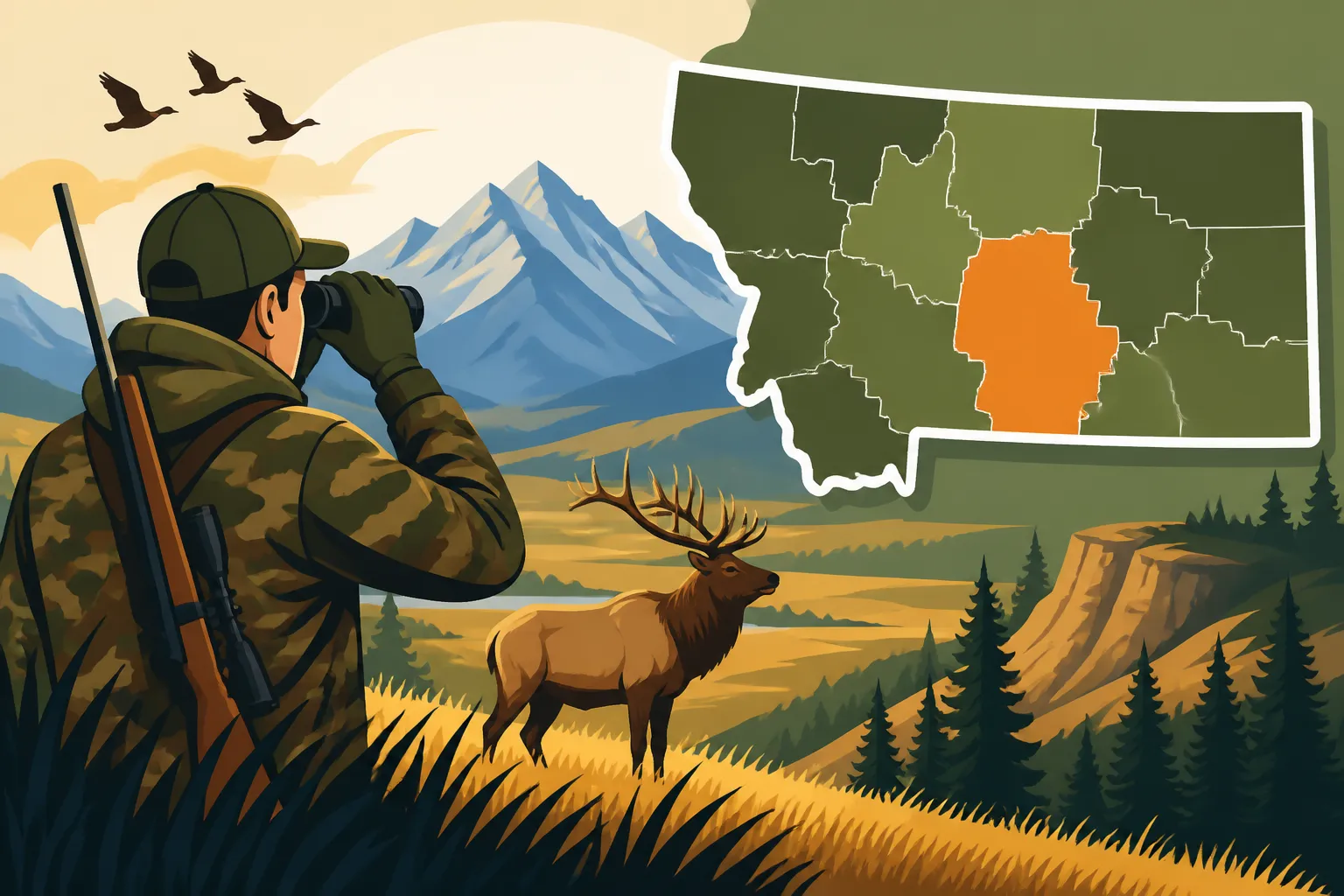
Best Montana Districts Near Great Falls
Finding prime hunting territory near a bustling city like Great Falls can feel like searching for a needle in a haystack. Many hunters, especially those new to Big Sky Country or visiting from out of state, get overwhelmed trying to pinpoint accessible, productive public lands without having to drive half a day. This guide will cut through the confusion, highlighting specific Montana hunting districts close to Great Falls and offering practical advice to maximize your success in these diverse and often challenging landscapes.
Understanding the Diverse Landscape Around Great Falls
Great Falls sits at a fascinating geographical crossroads, where the vast, rolling plains of central Montana begin to give way to the dramatic peaks of the Rocky Mountain Front. This unique transition zone means that hunters within a reasonable drive of the city have access to an incredibly diverse range of habitats and, consequently, a variety of big game species. You're not just looking at one type of hunting experience here; you're looking at a spectrum from high-mountain elk haunts to prairie antelope stomping grounds, and everything in between.
Geographic and Ecological Features
To the west and southwest, you have the awe-inspiring Rocky Mountain Front, characterized by rugged, timbered mountains, deep river drainages, and vast expanses of designated wilderness. This is classic big-country elk and mule deer territory, demanding physical endurance and keen glassing skills. Moving east and southeast, the landscape transitions into the "island mountain ranges" like the Little Belt Mountains and the Highwood Mountains, which rise abruptly from the surrounding plains. These ranges often feature a mix of dense conifer forests, aspen groves, and open meadows, providing excellent habitat for elk, mule deer, and even whitetail deer in the lower riparian zones. Further east, the true plains take hold, offering prime opportunities for antelope and mule deer, often in combination with whitetail found along the river bottoms and coulees that dissect the prairie. The Missouri River itself, running through the region, creates crucial wildlife corridors and attracts deer and waterfowl.
Public Land Access Near Great Falls
One of the biggest advantages of hunting in Montana is the sheer amount of public land available, and the areas around Great Falls are no exception. You'll find extensive tracts of National Forest land in the mountainous and island ranges, along with Bureau of Land Management (BLM) holdings on the plains and breaks. Additionally, Montana's robust Block Management Program provides access to private land for public hunting, often opening up pockets of excellent habitat that would otherwise be inaccessible. This mix of federal, state, and private (via Block Management) lands means that with proper research and a good mapping system like onX Hunt, you can uncover plenty of huntable ground without solely relying on expensive outfitters or drawing a coveted permit in a limited-entry unit. Understanding the nuances of Montana Public Land Hunting Guide is crucial here.
Key Hunting Districts to Consider Near Great Falls
When you're looking for prime hunting opportunities close to Great Falls, several districts consistently stand out. These areas offer a solid blend of diverse terrain, public access, and good populations of various big game species. It's important to remember that "best" is subjective and often depends on what species you're targeting and your preferred hunting style.
Little Belt Mountains: Districts 410 and 417
These districts, primarily within the Helena-Lewis and Clark National Forest, are quintessential general hunting units and a fantastic option for those seeking a true Montana mountain hunt without venturing too far from Great Falls.
- District 410: This district offers excellent opportunities for both elk and mule deer. The terrain is characterized by a mix of thick timber, open slopes, and numerous drainages. You'll find a good network of forest roads, but the real challenge and reward come from getting off the beaten path and into the roadless areas. Elk here can be found in the darker timber during the general season, often moving between feeding and bedding areas. Mule deer tend to favor the more open, brushy hillsides and timber edges. Pressure can be moderate, especially on opening weekend, but those willing to hike a few miles will often find solitude. This district provides a great opportunity for learning Montana Elk Hunting Methods Explained or practicing still-hunting tactics.
- District 417: Similar in character to 410, District 417 also provides solid general season hunting for elk and mule deer within the Little Belt Mountains. It shares many of the same challenges and rewards. The key to success in both 410 and 417 is effective How to E-Scout Montana Hunting Units before you even step foot in the woods. Identify potential bedding areas, south-facing slopes for early season feeding, and escape routes. Pay close attention to water sources and natural funnels where game might travel. Hunters often find success glassing open parks at dawn and dusk, then moving into timbered areas mid-day to locate bedded animals.
Rocky Mountain Front: Districts 421 and 442/443
For those who dream of hunting iconic mountain ranges with breathtaking views and challenging terrain, the districts along the Rocky Mountain Front offer unparalleled experiences. While these districts are known for their ruggedness, they are also legendary for their wildlife populations.
- District 421 (Sun River/Bob Marshall Area): While a bit further west, this district offers incredible backcountry hunting opportunities and is often considered part of the Rocky Mountain Front experience. It borders the vast Bob Marshall Wilderness Complex, which can influence animal movement. Elk and mule deer thrive in this wild landscape. Access points can be limited, and hunting here demands serious physical conditioning and navigational skills. Hunters often utilize pack strings or embrace true backpacking methods to get deep into this country. This area is a prime example of where understanding Montana Backcountry Hunting Guide is non-negotiable. Success often means being prepared to spend multiple days away from roads, glassing vast basins, and covering significant ground.
- Districts 442 and 443 (Rocky Mountain Front General): These districts are often considered general elk units along the Front. They are incredibly scenic but equally demanding. The terrain is steep, rocky, and often heavily timbered, interspersed with open alpine basins. Elk here are tough, smart, and accustomed to hunter pressure. Mule deer also inhabit these mountains, often found on high, windswept ridges or in the pockets of timber just below timberline. Public access is excellent, with numerous trailheads leading into National Forest and wilderness study areas. However, "access" doesn't mean "easy hunting." Expect to earn every glimpse of an animal. Using scouting tools like GoHunt or onX Hunt to identify potential glassing knobs and understand the topography is vital. These districts are also where you might learn How to Use Thermals in Montana Elk Country as the winds and air currents play a huge role in animal movement and scent control.
Eastern Foothills and Plains: Districts 454 and 622
If you're looking for a different kind of hunt, perhaps targeting antelope or a mix of deer species with less extreme elevation, the districts to the east of Great Falls provide excellent choices.
- District 454 (Highwood Mountains and Surrounding Plains): This district offers a fascinating blend of hunting environments. The Highwood Mountains themselves are an "island range" with dense timber and some good elk and mule deer populations. Around the base of the mountains and extending into the plains, you'll find classic mule deer and antelope habitat. Whitetail deer are also prevalent in the coulees and riparian areas along Cottonwood Creek and other drainages. Public land here can be a mix of National Forest in the Highwoods and BLM land, state land, and Block Management Areas on the surrounding plains. It's a great district for those who want diverse opportunities. For antelope, sitting water holes can be effective, especially during early archery season, or utilizing spot-and-stalk tactics across the vast grasslands.
- District 622 (Missouri Breaks Edge): While a bit further drive, District 622 borders the renowned Missouri Breaks and offers exceptional hunting. This district is primarily known for its excellent mule deer hunting, with strong populations of whitetail deer along the river bottoms and coulees leading to the Missouri River. Elk are also present, often in the more remote breaks country. Antelope roam the open plains sections. This region is characterized by rugged, broken badlands, coulees, and river bottoms—a true "breaks" experience. Public land access here is a mix of BLM, state land, and Block Management. Given its reputation, hunter pressure can be significant, but the vastness of the landscape means opportunities exist for those who are prepared to hike and glass extensively. This is where How to Hunt the Missouri Breaks for Mule Deer becomes a highly relevant skill set.
Strategic Planning for Your Montana Hunt
No matter which district you choose near Great Falls, a well-thought-out plan is essential for a successful hunt. Montana is not a place where you can just show up and expect animals to be waiting. The landscape is vast, and the animals are wild.
E-Scouting and Ground Truthing
Before you ever leave your home, dedicate significant time to e-scouting. Tools like onX Hunt are invaluable for identifying public land boundaries, potential access points, topography, water sources, and areas with favorable vegetation cover. Look for north-facing slopes with timber (often preferred bedding areas) and south-facing slopes (winter range or early season feeding). Pay attention to saddles, funnels, and benches that might serve as travel corridors. Use historical satellite imagery to identify changes in vegetation or timber cuts that might not be visible on current maps.
Once you have a few promising areas identified, if possible, consider a pre-season scouting trip. "Ground truthing" your e-scouting efforts is crucial. What looks like an impenetrable jungle on a topo map might be more open than anticipated, or vice versa. Find fresh sign, learn the local roads and trail systems, and get a feel for the lay of the land. Even a simple weekend drive can give you an edge.
Physical Preparation and Gear
Montana hunting, especially in the mountainous districts, is physically demanding. You'll be covering steep, uneven terrain, often at elevations where you might feel the effects of thinner air. A rigorous Montana Elk Hunt Fitness Plan starting months before your trip can significantly increase your comfort and effectiveness in the field. Focus on cardio, leg strength, and carrying a weighted pack.
Your gear choice is equally important. Investing in quality layering systems for unpredictable mountain weather, durable Best Boots for Montana Elk Hunting, and reliable Best Optics for Montana Big Game (binoculars, spotting scope, rangefinder) will pay dividends. A comfortable, well-fitting backpack is essential for carrying your daily essentials and, hopefully, packing out meat. Don't skimp on navigation tools, either – a reliable GPS unit in conjunction with your phone app is a must.
Understanding Regulations and Drawing
Always, always thoroughly review the current year's Montana Fish, Wildlife & Parks regulations. Seasons, specific unit restrictions, and antler point requirements can change annually. Understand the difference between Montana General vs Permit Tags Explained and ensure you have the correct licenses and tags for the district and species you intend to hunt. Even in general units, certain areas might have specific limitations. For non-residents, the draw process for combo licenses is a major hurdle; ensure you understand the deadlines and how to apply for preference points if you plan on hunting Montana long-term.
Species-Specific Opportunities and Tactics
The districts around Great Falls offer a wealth of opportunities for various big game species. Tailoring your approach to the specific animal you're after will increase your chances of success.
Elk Hunting
In the mountainous and island ranges (like Districts 410, 417, 421, 442, 443), elk hunting is typically a blend of glassing, calling, and still-hunting. During the archery season, focusing on wallows, water sources, and timbered bedding areas where elk might be vocal during the rut can be productive. As the general rifle season progresses, elk will often retreat to thick timber and north-facing slopes, becoming incredibly adept at avoiding hunters. Being patient, moving slowly, and paying attention to wind direction and thermals is crucial. Hunting during the later parts of the season, especially with fresh snow, can make tracking and locating animals easier. Remember that in these general units, you are often pursuing wary, pressured animals, so stealth and persistence are paramount. Learning How to Find Elk in Montana Dark Timber is a skill worth cultivating.
Mule Deer Hunting
Mule deer are found throughout many of these districts, from the high mountain basins to the breaks and plains. In the mountains, they often inhabit steep, rugged terrain, feeding on brush and forbs. Glassing is the most effective tactic here, patiently picking apart distant slopes and timber edges at dawn and dusk. In the eastern breaks and plains (Districts 454, 622), mule deer frequent the broken country, coulees, and river bottoms. Montana Mule Deer Hunting Guide emphasizes the importance of using optics to cover vast amounts of ground and then executing careful spot-and-stalk maneuvers. During the rut (late October into November), bucks become more active and less cautious, offering prime hunting opportunities.
Whitetail Deer Hunting
Whitetail deer, while often overshadowed by elk and mule deer in Montana, offer fantastic hunting in the river bottoms and agricultural fringes, particularly in Districts 454 and 622, and along the Missouri River itself. These deer are typically found in denser cover along riparian zones, brushy draws, and farm fields. Montana Whitetail Deer Hunting Guide tactics often involve stand hunting (tree stands or ground blinds) over travel corridors, food sources, or pinch points. Driving coulees with a small group can also be effective in certain areas. Understanding their reliance on cover and patterning their movements between bedding and feeding areas is key.
Antelope Hunting
For a fast-paced hunt on the open plains, antelope are an exciting option, predominantly found in the eastern parts of districts like 454 and 622. This is a game of optics and open-country stalking. Long-range glassing is critical to locate herds and identify bucks. Once a target is spotted, the challenge lies in closing the distance across wide-open terrain, often using terrain features, dry washes, or even decoys to hide your approach. Montana Antelope Hunting Guide highlights the importance of wind direction and patience, as these animals have incredible eyesight and can detect movement from astonishing distances.
Comparing Hunting Districts Near Great Falls
Here’s a quick overview of some of the districts discussed, providing a snapshot of what you might expect. This table is a simplified guide; always consult the current FWP regulations and detailed maps for specific boundaries and rules.
| District | Primary Game Species | Dominant Terrain | Public Land Access | Key Considerations |
|---|---|---|---|---|
| 410 | Elk, Mule Deer, Whitetail | Mountains (Timber, Open Slopes) | High (National Forest) | General unit, moderate pressure, good for classic mountain hunt. |
| 417 | Elk, Mule Deer, Whitetail | Mountains (Timber, Open Slopes) | High (National Forest) | Similar to 410, good general opportunities. |
| 421 | Elk, Mule Deer | Rugged Mountains, Wilderness | High (National Forest, Wilderness) | Demanding backcountry hunt, lower pressure deep in. |
| 442/443 | Elk, Mule Deer | Steep Rocky Mountains | High (National Forest) | Challenging terrain, iconic Front Range, high physical demands. |
| 454 | Mule Deer, Whitetail, Antelope, Elk | Island Mountains, Plains, Breaks | Moderate (NF, BLM, BMAs) | Diverse landscape, mix of mountain and prairie opportunities. |
| 622 | Mule Deer, Whitetail, Elk, Antelope | Missouri Breaks (Badlands, River Bottoms) | Moderate (BLM, State Land, BMAs) | Excellent Breaks hunting, can be remote, good for diverse species. |
Remember, this is just a starting point. Every district has its unique quirks and challenges. Utilizing resources like the FWP website, onX Hunt maps, and even hunter forums or services like GoHunt can provide deeper insights into specific hunt codes and draw odds for permits if you decide to pursue limited-entry opportunities.
The areas surrounding Great Falls offer a fantastic array of hunting adventures for elk, deer, and antelope. Whether you prefer the solitude of the high mountains or the vastness of the prairie, careful planning, physical preparation, and a deep understanding of the local regulations will put you on the path to a successful Montana hunting experience.
Disclaimer
Hunting is an inherently dangerous activity. This guide provides general information and recommendations only. Always consult the official Montana Fish, Wildlife & Parks regulations for the current hunting season, district boundaries, and specific rules. Be aware of your physical limitations, practice proper firearm and archery safety, and prioritize ethical hunting practices. Conditions in the field can change rapidly, so always be prepared for the unexpected.