Best Montana Elk Hunting Areas for Beginners
Starting your journey into Montana elk hunting can feel like trying to drink from a firehose – exhilarating, yet completely overwhelming. The sheer size of the state, the complexity of regulations, and the seemingly endless public land can make it tough to even know where to begin, especially if you're new to elk hunting or Western hunting in general. This comprehensive guide is designed specifically for first-time or beginner elk hunters, breaking down the best areas and strategies to help you find success and build confidence in Big Sky Country.
The Steep Learning Curve of Montana Elk Hunting for Newcomers
Let's be real, Montana is a legendary hunting state, and that reputation often comes with a level of perceived difficulty that can intimidate anyone new to the game. When you're dreaming of bugling bulls and towering mountains, it's easy to get caught up in the romance of it all, but the practicalities of a successful hunt require a solid foundation. For many, the biggest hurdle isn't just finding an elk, but understanding the landscape, the animal, and the complex system of accessing public land.
Overcoming Initial Intimidation
The first emotion many new elk hunters feel is simply being overwhelmed. You might have friends who've hunted Montana for years, telling tales of remote wilderness hunts and grueling pack-outs. While those experiences are certainly part of the Montana fabric, they aren't the only way to hunt, especially for beginners. The thought of venturing deep into unknown territory, navigating vast public lands, and facing unpredictable weather can be a mental block. It's crucial to acknowledge these feelings and understand that starting small, with accessible goals, is a perfectly valid and often more successful approach. Your first elk hunt doesn't have to be a multi-day backcountry odyssey; it can be about learning the ropes, building skills, and enjoying the process.
It's also easy to get lost in the sea of online advice, YouTube videos, and forum discussions, many of which cater to highly experienced hunters. This can lead to imposter syndrome, making you feel like you're not "good enough" or don't have the right gear. Forget that noise. Every expert hunter started as a beginner, and Montana offers a range of opportunities for all skill levels. The key is to manage expectations, focus on learning, and prioritize safety and ethical hunting practices above all else. Success isn't just about punching a tag; it's about the knowledge gained, the challenges overcome, and the memories made.
Understanding Montana's Vastness and Regulations
Montana is the fourth-largest state by area, and a significant portion of that is public land. This immense scale is both a blessing and a curse. While it offers incredible hunting opportunities, it can make scouting and choosing an area incredibly daunting. You might look at a map and see millions of acres of national forest, but how do you know which parts hold elk, and which are simply empty timber? Furthermore, the regulations around Montana Hunting Seasons Explained and specific hunting districts (HDs) can be intricate. Understanding hunt codes, general versus permit tags, and species-specific rules is absolutely vital.
For example, many hunting districts are "general" for elk, meaning if you draw a general elk license (like the nonresident big game combo or resident general elk license), you can hunt there. However, other districts require special permits that are much harder to draw. As a beginner, focusing on general units, especially those with good public access, will simplify your planning immensely. Learning Montana General Elk License Explained is a fundamental step. The Montana Fish, Wildlife & Parks (FWP) website is your official source for regulations, and it's essential to read the most current year's hunting regulations thoroughly, several times, before you even think about hitting the woods. Don't rely solely on word-of-mouth; verify everything with the official FWP guides.
What Makes an Elk Hunting Area "Beginner-Friendly"?
When you're just starting out, not all elk country is created equal. While every corner of Montana holds the potential for adventure, certain characteristics make some areas much more approachable for new hunters. It's about minimizing risk, maximizing learning opportunities, and setting yourself up for a positive first experience, rather than a brutal, soul-crushing one.
Prioritizing Accessible Terrain and Road Systems
For a beginner, the thought of deep wilderness and packing an elk out for miles on your back can be incredibly intimidating – and frankly, physically unrealistic for many. Beginner-friendly areas often feature more moderate terrain, meaning fewer extreme elevation changes, dense, tangled timber, or sheer cliff faces. This doesn't mean it will be flat; you'll still be working hard, but you won't need advanced mountaineering skills. Look for areas with established road systems, even if you plan to get away from them a bit.
Roads provide crucial access and egress points. They allow you to get into the general vicinity of elk without a multi-day pack-in, and critically, they provide a much easier way to pack out an elk if you're successful. Many national forest lands, for instance, have extensive networks of forest service roads. While you'll want to get off the beaten path to find elk, having a road within a reasonable distance (say, a mile or two) can be a game-changer for a new hunter. These areas might see more pressure, but they also offer a safer, more manageable environment to learn navigation, tracking, and calling techniques.
Balancing Elk Numbers with Hunter Pressure
This is often the trickiest balance to strike. Areas with high elk numbers often attract more hunters, leading to increased pressure. Conversely, areas with lower hunter pressure might have fewer elk or harder-to-access terrain. For beginners, it's often better to accept a bit more hunter pressure in exchange for higher elk densities and more manageable territory. The goal is to see elk, learn their patterns, and gain confidence. You're not necessarily looking for a record-book bull on your first outing.
Focusing on areas known for consistent elk populations, even if they're not "trophy" units, provides more opportunities to encounter animals. These encounters, even if they don't result in a shot, are invaluable learning experiences. You'll learn to read sign, understand elk behavior, and practice your still-hunting or calling skills. While it might mean encountering other hunters, don't let that deter you. Often, other hunters can inadvertently push elk into new areas, or you can use their presence to learn about access points and general elk movement. Remember, there's always country to explore, and even in pressured areas, elk will seek refuge in thicker cover or steeper terrain, often just a short distance from popular trails or roads.
The Importance of Reliable Public Access
Montana boasts an incredible amount of public land, but knowing how to access it legally and efficiently is paramount. Beginner-friendly areas should have clear, unambiguous public access. This means large swaths of national forests, BLM land, or state lands that aren't checker-boarded with private property in ways that create access issues. Nothing is more frustrating than meticulously scouting an area, only to find that the only way in is through private land you don't have permission to cross.
Programs like Montana Block Management Areas Explained are absolute gold for beginners. Block Management Areas (BMAs) are private lands enrolled with Montana FWP that provide free public hunting access. These areas are managed by landowners in cooperation with FWP, often providing maps, sign-in boxes, and specific rules. Many BMAs offer excellent hunting for various species, including elk, in more accessible, often rolling prairie or timbered foothill settings that are perfect for learning. Utilizing mapping applications like onX Hunt is critical here; they clearly delineate public and private boundaries, show road networks, and highlight access easements, making it much easier to plan your hunt without trespassing.
Regions in Montana That Welcome First-Time Elk Hunters
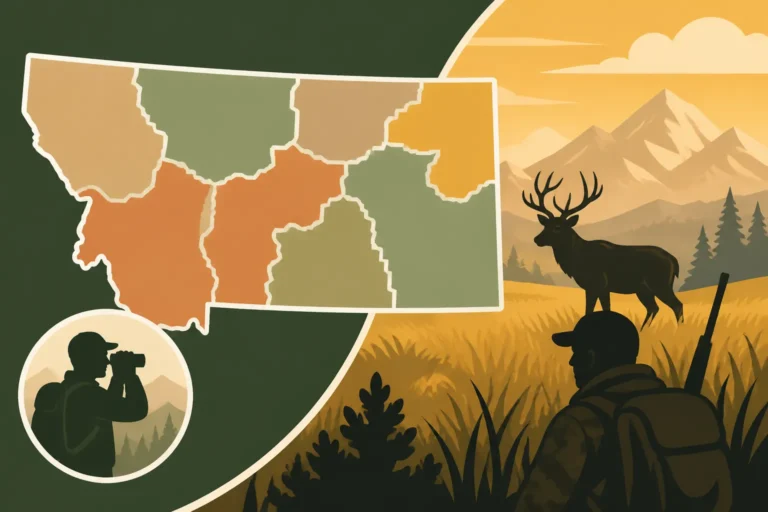
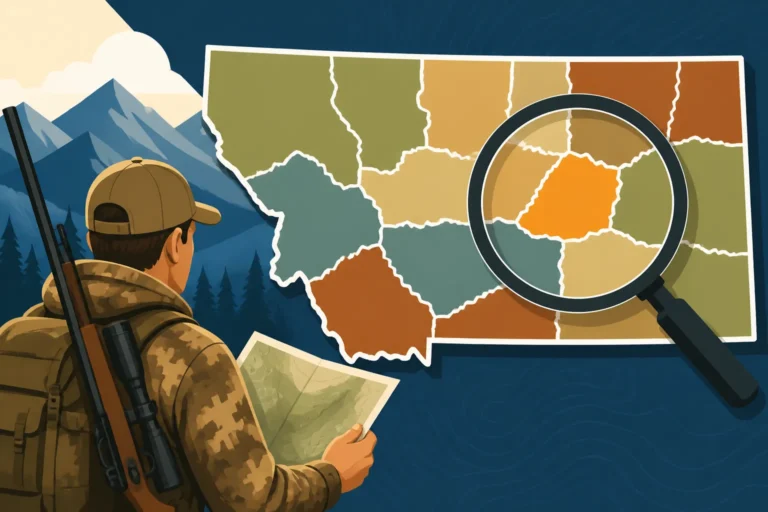
Montana is broadly divided into seven FWP administrative regions, and within these, there are distinct geographical and ecological zones. While elk can be found across much of the state, some regions inherently offer more beginner-friendly characteristics due to terrain, land ownership patterns, and herd dynamics.
Western Montana's National Forests
Regions 1 and 2, encompassing much of Western Montana, are dominated by vast national forests like the Lolo, Flathead, Bitterroot, and Kootenai. These areas are classic elk country, characterized by dense timber, steep mountains, and rugged terrain. However, within these expansive forests, there are also numerous valleys, drainages, and extensive road systems that offer more accessible hunting opportunities. For example, some of the lower-elevation fringes of these forests, particularly where they transition into private agricultural lands or timber company holdings, can hold elk that are easier to access.
While the true wilderness areas like the Bob Marshall Wilderness within these regions are often geared towards experienced Montana Backcountry Hunting Guide or those utilizing horses, there are plenty of front-country options. Look for areas adjacent to smaller towns like Lincoln, Ovando, or parts of the Bitterroot Valley. These spots often have forest service roads that allow you to drive in and then hike a reasonable distance to find elk. The timber can be thick, making visibility challenging, but it also offers good cover for elk and hunters alike. Be prepared for varied weather conditions and understand that even "accessible" mountain terrain still requires good physical conditioning.
Central Montana's Transition Zones
Regions 3 and 4, covering Central Montana, offer a fantastic mix of mountainous terrain, foothills, and rolling plains. This is where you find iconic ranges like the Missouri Breaks and the Rocky Mountain Front, but also numerous smaller, isolated mountain ranges known as "island ranges." These island ranges, such as the Elkhorns, Big Belts, Little Belts, and Crazy Mountains, can be excellent for beginners. They often have solid elk populations, a good mix of public land (often national forest) surrounded by private ranchland, and more moderate elevations than the truly high peaks.
The hunting pressure in these areas can vary, but because they are often self-contained units, elk don't move as far, making them a bit more predictable. They also tend to have a better mix of open parks and timber, which can be more forgiving for spot-and-stalk tactics, or help you locate elk by glassing. Many of these ranges also feature Block Management opportunities on the surrounding private lands, creating a mosaic of accessible areas. For instance, the Helena-Lewis and Clark National Forest, spanning parts of Region 4, has districts that offer a good balance of access and elk numbers.
Eastern Montana's Island Ranges
Regions 5, 6, and 7 represent Eastern Montana, often characterized by vast plains, rolling hills, and dry river breaks. While predominantly known for Montana Antelope Hunting Guide and Montana Mule Deer Hunting Guide, several "island ranges" dot this landscape and hold surprisingly robust elk populations. Ranges like the Little Belt Mountains (also overlapping with Region 4), Snowy Mountains, Judith Mountains, and the Pryor Mountains in the south, offer unique beginner opportunities.
These island ranges often have a smaller footprint, making them easier to learn and navigate. The elk herds tend to be more concentrated, and while they might be harder to find in the dense timber pockets, the overall landscape can be more open for glassing. Access typically involves a combination of national forest lands, BLM holdings, and extensive Block Management opportunities on surrounding private ranches. The hunting experience here can be quite different from Western Montana, often involving more glassing, longer shots, and less extreme elevation gain. These areas can be fantastic for hunters looking to combine an elk hunt with opportunities for deer or antelope, offering a diverse Western hunting experience.
Spotlight on Specific Beginner-Friendly Hunting Districts
While recommending specific districts without knowing your exact license type or desired experience is tough, some areas consistently offer better opportunities for beginner elk hunters due to their combination of public land access, terrain, and elk numbers. Keep in mind that "beginner-friendly" doesn't mean "easy," but rather "manageable" and "learnable."
Exploring Accessible Forested Districts
Many districts within the national forests of Western and Central Montana fit this bill. Think about areas that aren't strictly wilderness-designated but still offer plenty of public land. For instance, parts of HD 270 near Missoula, or sections of HD 380 around Ennis, which have extensive road systems leading into national forest land. These districts might experience more hunting pressure early in the season, but elk often retreat into thicker timber or slightly steeper terrain, even a half-mile from a road, offering opportunities for those willing to walk.
These areas are excellent for learning How to Still-Hunt Montana Timber. Focus on north-facing slopes, dense stands of dark timber, and areas with good thermal cover where elk feel secure. You'll want to practice moving slowly and quietly, paying attention to wind direction and thermals, especially during early morning and late afternoon. Using a GPS with a mapping application like onX Hunt is indispensable here to track your movements, mark sign, and navigate back to your vehicle. Remember, even in these more accessible areas, getting a mile or two off the road can dramatically increase your chances of finding undisturbed elk.
Discovering Front-Country Opportunities
Front-country areas are those accessible by vehicle, often bordering private land or close to population centers. While they may not offer the solitude of true backcountry, they often hold elk and are ideal for day hunts or short overnight trips. Many districts in the Sapphire Mountains (Region 2) or the Tobacco Root Mountains (Region 3), while mountainous, have good access points and lower-elevation winter range that elk utilize during the season.
These areas are great for honing your spot-and-stalk skills, especially if there's a mix of open hillsides and timber. Glassing from a high point in the early morning or late evening can reveal elk moving between feeding and bedding areas. Knowing How to Glass Montana's Big Country is a crucial skill here. These areas can sometimes offer late-season opportunities as elk move down to lower elevations with increasing snow depth. Be aware of private land boundaries, and always carry your FWP regulations to confirm the specific rules for the district you're hunting.
Utilizing Block Management Areas for Entry
As mentioned, Block Management Areas (BMAs) are tailor-made for beginners looking for accessible elk hunting without the complexity of deep wilderness navigation or the cost of a guide. These areas are often found in Regions 3, 4, 5, 6, and 7, primarily where private agricultural lands border national forest or BLM tracts. While some BMAs might be walk-in only, many allow vehicle access to designated parking areas.
Each BMA has specific rules (sign-in requirements, vehicle access, hunting dates, species allowed), so it’s crucial to research them via the FWP website and obtain the specific BMA map before you go. The FWP website's BMA atlas is an invaluable resource. You can often filter by species and region. For instance, there are numerous BMAs in the Judith Basin (Region 4) and Powder River Country (Region 7) that offer great opportunities for elk, alongside deer and antelope. They provide a structured, manageable way to hunt private land that is otherwise inaccessible, allowing you to focus on elk behavior rather than stressing about land ownership. Remember to always respect the landowners and follow all BMA rules meticulously; these programs rely on positive hunter-landowner relationships.
| Hunting District Type | Key Features for Beginners | Example Characteristics | Potential Challenges |
|---|---|---|---|
| Accessible Forested | Extensive road systems, moderate terrain, consistent elk numbers. | Lower-elevation national forest fringes, drainages. | Higher hunter pressure, dense timber visibility. |
| Front-Country | Close to roads/towns, good for day hunts, mix of open and timber. | Foothills, transition zones near private lands. | Managing private land boundaries, occasional high pressure. |
| Block Management (BMA) | Managed private land access, often good elk numbers, defined rules. | Agricultural lands bordering public or island ranges. | Specific access rules, potential for limited hunter numbers. |
| Island Ranges | Self-contained units, predictable elk movement, varied terrain. | Little Belts, Snowys, Elkhorns (National Forest). | Can be steep in parts, elk might be concentrated. |
Essential Tools and Strategies for Navigating New Territory
Heading into Montana's vast landscapes requires more than just a rifle or bow; it demands preparation, knowledge, and the right tools. For a beginner, mastering these foundational elements can make the difference between a frustrating search and a rewarding hunt.
Mastering E-Scouting and Mapping Applications
Before you even set foot in Montana, your hunt begins at home with e-scouting. This involves using digital tools to research potential hunting areas, identify terrain features, and understand access points. This is where onX Hunt truly shines. With onX Hunt, you can:
- Identify Public/Private Land: See exact land ownership boundaries, preventing accidental trespassing.
- Locate Roads and Trails: Find forest service roads, two-tracks, and hiking trails that provide access.
- Analyze Topography: Understand elevation changes, identify saddles, ridges, and basins where elk might travel or bed.
- Mark Waypoints: Save potential water sources, bedding areas, feeding zones, and escape routes.
- Download Offline Maps: Essential for areas without cell service, which is common in much of Montana's elk country.
Another invaluable resource is the FWP Hunt Planner map, accessible online, which shows hunting district boundaries, land ownership, and even BMA locations. How to E-Scout Montana Hunting Units is a skill you absolutely must develop. Spend hours pouring over these maps, identifying key features like north-facing timbered slopes (often good bedding areas), saddles and benches (travel corridors), and water sources. Look for areas with a mosaic of different habitat types, indicating potential food, water, and cover.
Basic Field Skills and On-The-Ground Scouting
E-scouting is the first step, but it doesn't replace boots on the ground. Once you arrive in your chosen area, dedicate at least a day, if not more, to actual pre-season scouting. This means hiking into areas you've identified on your map, looking for fresh elk sign: tracks, droppings, rubs, and wallows. This confirms your e-scouting observations and helps you understand current elk behavior.
Learning to read sign is a fundamental skill. Fresh tracks in mud or snow, dark, moist droppings, and recently rubbed trees indicate elk are (or were very recently) in the area. Pay attention to the age of the sign; older sign means the elk have moved on. Practice moving quietly through the woods, identifying game trails, and understanding how the wind and thermals affect elk movement. If hunting during the archery season, learning How to Bugle-Locate a Montana Bull Elk or using cow calls can help you pinpoint animals without seeing them. Even if you're not planning a Montana Archery Elk Hunting Guide, understanding elk vocalizations is highly beneficial.
Planning Your Logistics and Back-Up Plans
A successful beginner hunt is often more about logistics than luck. Plan your trip meticulously. Consider where you'll camp or stay, how you'll get to your hunting areas each day, and how you'll pack out an elk if successful. For beginners, car camping or staying in an accessible cabin can be a good starting point, avoiding the complexities of a Montana Backcountry Hunting Guide right away.
Always have a backup plan. What if your primary hunting area is overrun with other hunters? What if the elk aren't where you expected them to be? Having a secondary and even tertiary area scouted and ready to go can save your hunt. This is where researching multiple districts or BMAs comes in handy. Think about contingencies for weather changes, potential gear failures, and, most importantly, how you'll handle a successful harvest. Knowing How to Quarter an Elk in the Montana Backcountry and having the right game bags and cooling strategy is vital, especially during early season hunts when temperatures can be warm.
Physical and Mental Preparation for Your First Elk Hunt
Montana elk hunting, even in beginner-friendly areas, is physically demanding. The mountains don't care about your fitness level, and elk don't often hang out next to paved roads. Beyond the physical, the mental game of persistence and resilience is equally crucial for success.
Building Foundational Fitness
You don't need to be an ultra-marathoner, but you do need to be able to hike confidently, often uphill, with a pack on your back for several miles a day. Remember, if you get an elk, you'll be packing out hundreds of pounds of meat over that same terrain. Start an exercise regimen well in advance. Focus on:
- Cardiovascular endurance: Hiking, running, or cycling.
- Strength training: Especially legs, core, and back for carrying a pack and hauling meat.
- Rucking: Hike with a loaded backpack (start light and gradually increase weight) to simulate hunting conditions. This is a game-changer. Try to walk uneven terrain, up and down hills.
A good Montana Elk Hunt Fitness Plan should begin months before your trip. Don't underestimate the impact of elevation if you're coming from sea level. Even at moderate elevations (5,000-7,000 feet), you'll feel the difference. Hydration is also key, both in preparation and in the field.
Cultivating Resilience and Patience
Elk hunting is not like deer hunting where you might sit in a stand for hours hoping one walks by. It often involves covering significant ground, patiently glassing, and enduring long periods without seeing an animal. This can be mentally draining, especially when you're tired, cold, or wet. The ability to stay positive, keep pushing, and maintain focus is a huge asset.
Accept that your first hunt might not result in an elk. The learning experience itself is the trophy. Celebrate small victories: finding fresh sign, hearing a distant bugle, or successfully navigating a new area. Don't get discouraged by setbacks; they are part of the process. Stay adaptable; if one area isn't producing, be willing to move. The sheer beauty of Montana's landscape can often provide enough reward even without filling a tag. This mental fortitude, the willingness to embrace the challenge and learn from every moment, is what turns a beginner into a seasoned hunter.
Avoiding Common Pitfalls and Maximizing Your Chances
Even with the best preparation, there are always things that can go wrong or common mistakes that beginners fall into. Being aware of these can significantly improve your odds and overall experience.
Don't Chase Ghost Stories
It's easy to get caught up in the hype surrounding certain "trophy" districts or stories of monster bulls in legendary areas. For your first hunt, especially as a beginner, resist the urge to chase these ghost stories. Focusing on heavily-pressured trophy units often means dealing with extreme competition, difficult terrain, and lower success rates for new hunters. Your goal should be to find a harvestable elk, not necessarily a Boone & Crockett contender.
Instead, prioritize areas known for consistent general season success and good elk populations. Often, these are districts that fly under the radar or require a bit more effort to access beyond the main roads. Utilize resources like GoHunt to research draw odds and unit information, but take it with a grain of salt for general tags where the focus is more on basic access and elk presence. Concentrate on understanding elk behavior in a specific area, rather than trying to find the "secret" spot that everyone else is also trying to find.
Respecting the Land and Other Hunters
Montana's hunting opportunities are a privilege, not a right. As a beginner, it's crucial to embody ethical hunting practices and respect for both the land and your fellow hunters. This means:
- Leave No Trace: Pack out everything you pack in, and then some. Don't litter.
- Know Your Boundaries: Use
onX Huntreligiously to ensure you're on public land or authorized Block Management property. Avoid disputes with landowners at all costs. - Be Mindful of Others: If you encounter another hunter in your chosen spot, consider moving on. There's plenty of public land in Montana, and a little courtesy goes a long way. Avoid "sky-lining" yourself or making unnecessary noise that could impact other hunters' experiences.
- Prioritize Safety: Know your firearm or archery equipment intimately, practice shot placement, and adhere to all safety rules. Always be aware of your surroundings and what's beyond your target.
Remember, every hunter is an ambassador for the sport. Positive interactions and responsible behavior help preserve hunting access and opportunities for everyone. For those seeking true solitude, understanding How to Beat the Crowds on Montana Public Land involves getting farther from roads and popular trailheads.
The Value of Learning from Every Experience
Ultimately, your first Montana elk hunt is about the journey. Whether you fill your tag or not, the experience itself is a profound teacher. Reflect on what went well, what could have been done differently, and what you learned about elk, the terrain, and yourself. Did you enjoy the Montana Rifle Elk Hunting Guide or would you prefer a bow next time?
Keep a hunting journal. Document the areas you explored, the sign you found (or didn't find), the weather conditions, and any elk encounters. This information will be invaluable for planning future hunts and improving your skills. Each trip into Montana's elk country builds your knowledge base, sharpens your instincts, and makes you a more capable and confident hunter. Embrace the challenge, learn continuously, and soak in every moment of being in one of the most incredible wild places on Earth.
Disclaimer
Hunting is an inherently risky activity. This guide provides general information for educational purposes only. Always consult the official Montana Fish, Wildlife & Parks (FWP) regulations for the current hunting season, obtain all necessary licenses and permits, and prioritize safety above all else. Local conditions, regulations, and wildlife populations can change rapidly. Users assume all responsibility for their actions in the field.