Best Montana Districts for Meat Hunters
It’s a feeling many of us know all too well: the drive, the dedication, the sheer physical and mental effort that goes into a Montana hunt, all for the singular purpose of filling the freezer. You’re not chasing a Boone and Crockett entry; you’re chasing sustenance, wild organic protein for your family. But with Montana's vastness and complex regulations, figuring out which hunting districts consistently offer the best opportunities for a successful meat hunt can feel overwhelming. This guide is dedicated to helping you navigate the big sky state, identifying districts where populations are robust, access is manageable, and your chances of taking home some delicious elk or deer meat are genuinely high.
Understanding What Makes a District "Good for Meat"
When you’re purely focused on filling your freezer, your criteria for a "good" hunting district shift significantly from those seeking a trophy. It’s less about antler size and more about animal numbers, manageable terrain, and accessible opportunities. Let’s dive into what really matters.
High Elk and Deer Populations
For a meat hunter, population density is king. You want to be where the animals are, plain and simple. Districts with robust and stable elk and deer populations mean more opportunities to encounter game, which directly translates to a higher chance of success. Montana Fish, Wildlife & Parks (FWP) conducts extensive surveys, and while herd numbers fluctuate annually due to factors like winter severity, habitat changes, and hunting pressure, certain districts consistently hold strong numbers.
It’s not always about having the biggest animals, but rather a healthy, thriving population that can sustain harvest. FWP's management objectives in many districts actually encourage harvest of cow elk and antlerless deer to manage herd numbers within biological objectives and mitigate agricultural damage. This works perfectly for the meat hunter. You might find that districts near agricultural interfaces or those with significant block management opportunities often have strong populations because they offer a mix of feed and cover, and sometimes, less extreme terrain. Focusing on these areas, rather than remote wilderness districts solely known for massive bulls, can be a game-changer. Keeping an eye on FWP's annual herd reports can also give you a leg up, revealing areas where populations are trending upwards or holding strong.
Accessibility and Terrain Considerations
Let's be real: packing out an elk is a monumental task. When your primary goal is meat, reducing the difficulty of that pack-out can greatly influence your choice of hunting district. Rugged, roadless wilderness areas, while offering incredible experiences and often trophy potential, can turn a successful hunt into an epic ordeal when it comes to extraction. For meat hunting, more accessible districts, often those with a good network of Forest Service roads, ATV trails (where legal), or terrain that allows for easier egress, become highly desirable.
Think about areas that feature rolling foothills, open timber, or prairie breaks rather than vertical climbs and dense, impenetrable timber. While you still need to be willing to hike to get away from immediate road pressure, having the option for a shorter pack or terrain that lends itself to a game cart can save your back and preserve your meat quality. Public land within national forests, state trust lands, and especially Block Management Areas (BMAs) can offer this balance. Utilizing mapping tools like onX Hunt becomes invaluable here, allowing you to identify road networks, analyze topography for moderate slopes, and pinpoint potential access points that reduce the grunt work after a successful shot. It's about working smarter, not harder, to get that precious meat back to your vehicle.
General Tag Opportunities and Draw Odds
Perhaps the single biggest factor for most meat hunters, especially non-residents or those new to Montana, is the availability of general tags and favorable draw odds for antlerless or either-sex permits. Many prime "trophy" districts are permit-only, requiring years of preference points and often a dose of luck to draw. For meat hunting, you want to focus on districts where you can hunt with a general elk tag, a general deer tag, or where supplementary antlerless tags (like "B" tags) are readily available through the draw or over-the-counter.
Montana's system of "general" versus "permit" tags can be complex, but for meat hunters, the goal is often simple: find a district that falls under the general regulations for elk and/or deer. These districts allow you to hunt with your base statewide tag, often without needing to draw a specific permit. Even better are districts where antlerless elk (cow) tags or either-sex deer tags are commonly drawn, sometimes even with zero preference points, or are available as leftover tags. Websites like GoHunt provide excellent tools to research historical draw odds, helping you strategize where to apply for those coveted "B" tags. Understanding the nuances of Montana General vs Permit Tags Explained is crucial here. These tags specifically target herd reduction, aligning perfectly with the meat hunter's objective and often presenting higher success rates due to less selective hunting pressure.
Western Montana: Rugged Mountains and Timber Hunts
Western Montana is defined by its dramatic mountain ranges, dense conifer forests, and extensive public lands. While challenging, these areas are home to some of the state's most iconic elk and deer herds, offering fantastic meat hunting if you're willing to put in the effort.
Northern Bitterroot and Sapphire Mountains
The Bitterroot and Sapphire Mountains, straddling the Bitterroot Valley and extending west and east respectively, are classic western Montana hunting grounds. Districts like HD 201, 210 (Bitterroot) and HD 250, 260 (Sapphire) consistently hold good numbers of elk and mule deer, along with a healthy population of whitetails in the lower elevations and river bottoms. The terrain is often steep and heavily timbered, demanding physical fitness and good woodsmanship.
For the meat hunter, these areas offer plenty of public land within the Bitterroot National Forest and Sapphire Mountains. Access is generally good via a network of forest service roads, though you'll often need to hike in a mile or two to escape the immediate road pressure. Hunting in the timber can be tough, requiring patience and a methodical approach, often focusing on still-hunting or setting up on known travel corridors. The reward, however, is often a prime-condition animal that has spent its life feeding on varied mountain forage. Success in these districts often means understanding How to Still-Hunt Montana Timber effectively. While trophy animals are certainly present, the general abundance of game makes these areas excellent for filling the freezer. Keep an eye out for later season opportunities when snow pushes animals down to more accessible elevations, though this also brings increased pressure.
Flathead and Lolo National Forests
Further north in Western Montana, the vast expanses of the Flathead and Lolo National Forests present an enormous amount of public land for hunters. Districts such as HD 120, 130 (Lolo) and HD 101, 103 (Flathead) are renowned for their elk and deer populations, particularly general elk opportunities. These areas feature a mix of dense timber, open parks, and steep drainages, often with good road access that extends deep into the mountains.
Meat hunters will appreciate the sheer volume of public land and the opportunity to pursue both elk and mule deer. While hunter pressure can be high in easily accessible areas, especially during the rifle season, the expansive nature of these forests means that those willing to hike beyond a few miles can find pockets of unpressured game. These districts are also where a good portion of Montana's archery elk hunting takes place, offering earlier season opportunities for those looking to get out before rifle season begins. The Lolo National Forest, in particular, has had some great general elk hunting for those willing to learn the terrain. Early season brings elk higher, while late-season snow events can concentrate them at lower elevations. Learning how to effectively Glass for Montana Mule Deer in these more open slopes can also yield great results for meat hunters. These areas often benefit from active forest management, creating diverse habitats that benefit game.
Central Montana: Mountains, Foothills, and Transitional Zones
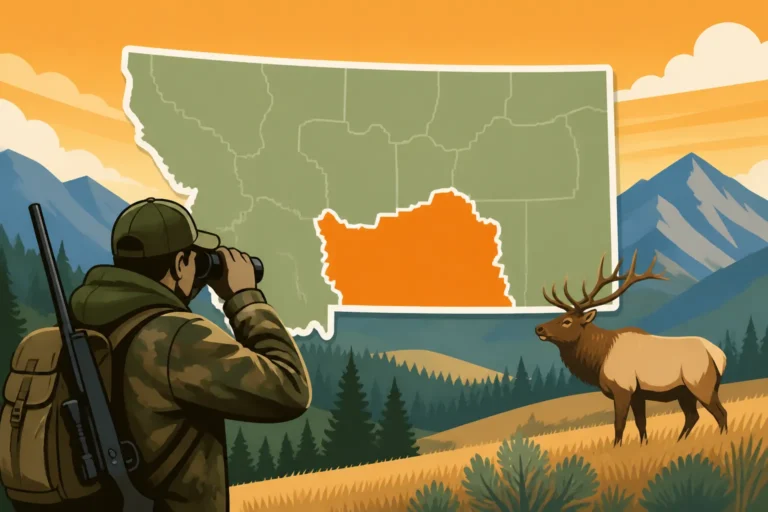
Central Montana offers a diverse landscape, bridging the rugged mountains of the west with the rolling plains of the east. This "middle ground" often provides a fantastic balance of good game populations, varying terrain, and more manageable access for the dedicated meat hunter.
Little Belt and Snowy Mountains
The Little Belt and Snowy Mountain Ranges, situated north and east of Helena and south of Great Falls, are excellent examples of central Montana's bounty. Districts like HD 410, 441 (Little Belts) and HD 420, 445 (Snowies) are often overlooked by trophy hunters but offer consistent opportunities for both elk and mule deer, as well as whitetails in the lower river corridors. The terrain here is a mix of timbered mountains, open sagebrush hillsides, and expansive meadows, providing diverse habitat for animals.
What makes these areas particularly appealing for meat hunters is the combination of solid general tag opportunities and terrain that, while mountainous, is often less extreme than the far western ranges. There's a good network of forest service roads, and many districts within these ranges have a history of healthy elk populations. These districts are also home to significant portions of the Helena-Lewis and Clark National Forest, providing ample public access. During the early archery season or the general rifle season, hunters can find success by targeting timbered slopes for elk or glassing the open hillsides for mule deer. The ability to hunt with a general tag for elk and often deer in these districts, coupled with sometimes lower overall pressure than more famous western units, makes them a prime choice for filling the freezer. Focus on drainages with good cover and north-facing slopes, which tend to hold elk longer into the day.
Elkhorn and Bridger Mountains
Closer to the population centers of Helena and Bozeman, the Elkhorn Mountains (HD 335, 332) and the Bridger Mountains (HD 390) are highly popular areas, but for good reason: they hold significant elk and deer populations. While hunting pressure can be substantial, particularly on weekends, these districts consistently produce meat for those who are willing to put in the effort and get away from the roads.
The Elkhorns are particularly known for their elk, with a mix of timbered slopes, open ridges, and dark timber pockets. The Bridgers, while smaller in area, also hold a good number of elk and deer, benefiting from close proximity to excellent habitat. For meat hunters, focusing on cow elk opportunities in these districts can be very productive. FWP often issues "B" tags or manages general season structures to encourage cow harvest in these areas to help manage herd numbers, especially on private land interfaces. This means that with a little research on current regulations and historical draw odds (which GoHunt can assist with), you might find readily available antlerless permits. How to Hunt Elk in Montana's General Rifle Season in these high-pressure areas often involves getting up before dawn, hiking deep into roadless areas, and knowing how to use thermals to your advantage. The accessibility to these ranges from major cities also makes logistics easier for shorter trips, allowing more frequent hunting opportunities throughout the season.
Eastern Montana: Plains and River Bottom Opportunities
Eastern Montana might conjure images of vast, flat prairies, but it's far more diverse than that. Here, you'll find incredible opportunities for mule deer, whitetail deer, and even pockets of plains elk, often with unique hunting challenges and rewarding outcomes for the meat hunter.
Missouri Breaks and Surrounding Areas
The legendary Missouri Breaks are a land of rugged badlands, deep coulees, and river drainages. While famous for trophy mule deer, districts within and surrounding the Breaks, such as HD 622, 631, and 690, also offer fantastic meat hunting opportunities for mule deer and scattered elk. The landscape here demands tough, dedicated hunters, but the rewards are often substantial.
Hunting the Breaks requires a different approach. Glassing vast distances is key, and once game is spotted, a rigorous spot-and-stalk approach is common. For the meat hunter, these areas are particularly strong for mule deer. How to Hunt the Missouri Breaks for Mule Deer often involves spending hours behind quality optics, dissecting the landscape for movement. While some elk are present, especially along river corridors like the Missouri River itself, mule deer are the primary draw for filling the freezer here. Access can be a mix of BLM land, state trust land, and private holdings, making tools like onX Hunt essential for navigating land ownership. Many Block Management Areas are available in this region, significantly increasing public access to private lands that hold excellent deer numbers. These areas are truly unique and offer a wild, unforgettable hunting experience, producing lean, delicious venison that's well worth the effort.
Custer National Forest and Southeast Montana
Southeast Montana, encompassing portions of the Custer Gallatin National Forest (often referred to as the Custer National Forest in this region) and the vast plains, offers a different flavor of meat hunting. Districts like HD 700, 702, and 704 are primarily known for their strong populations of whitetail and mule deer, with some opportunities for plains elk. The terrain varies from river bottoms and agricultural fields to rolling sagebrush hills and pockets of timbered breaks.
For the meat hunter, this region is a goldmine for deer. Whitetail deer thrive in the river bottom habitats, especially along the Yellowstone and Powder Rivers, making tactics like tree stand hunting or still-hunting through riparian zones highly effective. How to Hunt Whitetail in Montana River Bottoms requires stealth and patience, often with good success rates. Mule deer are found in the more open breaks and coulees, responding well to spot-and-stalk methods. Plains elk, while not as numerous as mountain elk, can offer unique hunting challenges and opportunities, often found in smaller, scattered herds that are highly nomadic. Block Management Areas are particularly prevalent and critical for accessing private land in this part of the state, providing invaluable opportunities for deer hunters. This region offers a distinct hunting experience, often with less vertical climbing and more emphasis on covering ground and understanding deer movement patterns in open country, making the pack-out generally less strenuous than in the high country.
Maximizing Your Meat Hunting Success
Successfully filling your freezer in Montana isn't just about picking the right district; it's also about effective strategy and meticulous preparation for post-harvest logistics.
Scouting and Strategy for High-Yield Districts
Effective scouting is the bedrock of any successful hunting trip, and it’s especially vital when your goal is meat. You need to understand where the animals are feeding, watering, bedding, and traveling within your chosen district. This goes beyond just looking at a map; it involves a combination of digital and boots-on-the-ground reconnaissance.
E-Scouting with Modern Tools: Before you even set foot in the field, use tools like onX Hunt to your advantage. Identify public land boundaries, analyze topography for moderate slopes and saddles that funnel animals, pinpoint water sources, and locate potential bedding areas (often north-facing timbered slopes or dense cover). Look for areas with a mix of cover and feed, especially south-facing slopes in late season that melt off first and provide critical forage. Pay attention to historical aerial imagery to identify clear cuts, burns, or other habitat changes that might concentrate game. You can use these maps to mark potential access points, glassing knobs, and escape routes. Understanding the general behavior of Montana Elk Movement and Montana Mule Deer Migration patterns, especially how they respond to pressure and weather, will help you narrow down your focus to specific basins or ridges that are more likely to hold game.
In-Season Adaptability: Once you’re in the field, be adaptable. Animals move. Weather changes. Hunting pressure shifts game. Don’t be afraid to adjust your plans if your initial spots aren't producing. Focus on fresh sign – tracks, scat, rubs, and active feeding areas. Use optics extensively, glassing for long periods during prime times (dawn and dusk). If you’re archery hunting, mastering Montana Elk Calling Tactics can bring the animals to you, saving you miles of walking. For rifle hunters, strategic vantage points and patience are key. Remember, for meat hunting, you're often looking for any legal animal, so don't pass on opportunities waiting for a "trophy" if your primary goal is the freezer.
Practical Logistics: Packing Out and Meat Care
The hunt doesn't end when the animal hits the ground; that's when the real work begins. Especially in Montana, with its often rugged and remote terrain, the logistics of packing out your animal and preserving the meat quality are paramount. Neglecting these steps can spoil your hard-won bounty.
Efficient Field Dressing and Quartering: As soon as an animal is down, especially elk, time is of the essence. Learn how to field dress quickly and efficiently to start the cooling process. For larger animals like elk, quartering in the field is almost always necessary, especially if you're more than a few hundred yards from your vehicle. Remove all four quarters, the backstraps, tenderloins, neck meat, and any other desirable cuts. Get the hide off as quickly as possible to allow heat to dissipate. Investing in a good set of game bags is non-negotiable – they protect the meat from dirt, flies, and debris while allowing it to breathe and cool.
The Pack Out: This is where preparation pays off. A sturdy internal or external frame backpack is crucial. Distribute weight evenly and be prepared for multiple trips. If you’re hunting solo, How to Pack Out an Elk in Montana will become a vital skill. Understand the elevation gain and distance back to your vehicle. Some hunters use game carts on relatively flat or ATV-friendly trails, but in most mountain districts, your back and legs are your primary transport. Having a hunting partner can significantly ease this burden.
Meat Preservation in the Field: Montana's early archery season can be surprisingly warm, making meat care challenging. Get the meat out of the sun, hang it in the shade (often by spreading quarters in trees), and maximize air circulation. If temperatures are consistently above freezing, you might need to use ice or take extra measures. During later seasons, cold temperatures work in your favor, but vigilance is still required to keep meat clean and cool. For detailed advice, check out How to Keep Elk Meat Cool in Montana's Early Season. Never stack quarters on top of each other in a pile, as this traps heat and can lead to spoilage. Quality meat bags (like those from T.A.G. Bags or Game Bag Kits) are a hunter's best friend.
Important Considerations for Montana Meat Hunters
Montana hunting is an incredibly rewarding pursuit, but it's also governed by a strict set of regulations and requires careful planning. For the dedicated meat hunter, understanding specific aspects of the tag system and access programs is critical.
Understanding Montana's General vs. Permit Tags
Montana’s hunting tag system can be a head-scratcher, especially for those new to the state. However, grasping the difference between general tags and permit tags is fundamental for anyone looking to reliably fill their freezer. As a meat hunter, you’re often looking for the path of least resistance to obtaining a legal harvest opportunity.
General Tags: A general tag (like the "General Elk License" or "General Deer License" that comes with a Montana Nonresident Combination License) allows you to hunt in any district that is designated as "general" for that species. These are your bread and butter for meat hunting. In general districts, you don't need to apply in a draw for the opportunity to hunt; your statewide tag covers it. The strategy then becomes identifying those districts with good general season populations and manageable access. These areas often have higher hunting pressure, but also offer the widest availability of hunting opportunities.
Permit Tags: Permit tags are specific to certain hunting districts and require an application and a draw. These are often for limited entry, trophy units, or for species like moose, bighorn sheep, and mountain goats. However, FWP also issues "B" licenses, which are antlerless-specific permits for deer (Deer B licenses) or elk (Elk B licenses). These are often key for meat hunters. Many districts have cow elk B-tags or antlerless deer B-tags that are much easier to draw than bull elk or buck deer permits, sometimes even requiring zero preference points. These tags are specifically designed to help manage herd numbers and provide additional harvest opportunities. Researching Montana Elk Draw Odds by District and Montana Mule Deer Draw Odds Explained for these "B" licenses is essential, as they can greatly increase your chances of taking home meat, particularly in areas where general tags are valid for either-sex but B-tags provide a guaranteed antlerless opportunity.
Utilizing Block Management Areas and Public Access Tools
Montana is famous for its vast public lands, but a significant portion of the state is private. For meat hunters, especially in the central and eastern regions, leveraging programs designed to bridge this gap can unlock incredible opportunities.
Block Management Areas (BMAs): The Block Management Program is a unique and invaluable partnership between Montana FWP and private landowners. Landowners open portions of their property to public hunting, and in return, FWP provides management assistance, signs, and often compensates them. For the meat hunter, BMAs can be an absolute game-changer. These areas often have excellent populations of deer and antelope, and sometimes elk, precisely because they're on private agricultural or grazing lands that provide prime forage.
BMAs vary widely in size, access rules (some require sign-in at a box, others require advance permission from the landowner), and species available. The key is to research them thoroughly. FWP releases Block Management Guides annually, usually in late summer, which include maps and contact information. Many hunters use How to Use Block Management for DIY Hunts as a cornerstone of their planning. Combining this information with mapping tools like onX Hunt, which shows BMA boundaries and details, allows you to pinpoint promising areas. Don't overlook the opportunity to contact landowners directly if a BMA requires it; a polite call well in advance can secure access to fantastic hunting.
Other Public Access Tools: Beyond BMAs, make sure you're fully utilizing all available public land. This includes National Forests, Bureau of Land Management (BLM) lands, and State Trust Lands. Montana has an excellent online Montana Hunt Planner Maps Explained system that allows you to overlay different land ownership types, hunting district boundaries, and even historical harvest data. These tools, combined with current regulations, form the foundation of successful meat hunting planning, ensuring you're in the right place, at the right time, with the right tag, and with legal access to pursue your wild protein.
Disclaimer
The information provided in this guide is for general informational purposes only and does not constitute legal or professional advice. Hunting regulations, season dates, and license requirements in Montana are subject to change annually. Always consult the most current Montana Fish, Wildlife & Parks (FWP) regulations and official sources before planning and embarking on any hunting trip. It is the hunter's responsibility to know and adhere to all applicable laws and regulations.