How to Hunt the Missouri Breaks for Mule Deer
Hunting mule deer in the Missouri Breaks can feel like trying to find a needle in a haystack, especially when you consider the vast, broken landscape and the secretive nature of these incredible animals. It’s a hunt that tests your patience, your physical limits, and your mental fortitude like few others. This guide is dedicated to breaking down the complexities of pursuing mule deer in this iconic Montana region, offering practical advice and strategies to help you turn those daunting challenges into rewarding opportunities.
Understanding the Missouri Breaks Landscape
The Missouri Breaks are legendary for a reason, but that same wild character that makes them so appealing also makes them incredibly challenging to hunt. This isn't your typical timber hunt or open plains stalk; it's a unique blend of ruggedness that demands a specific approach.
Topography and Habitat Challenges
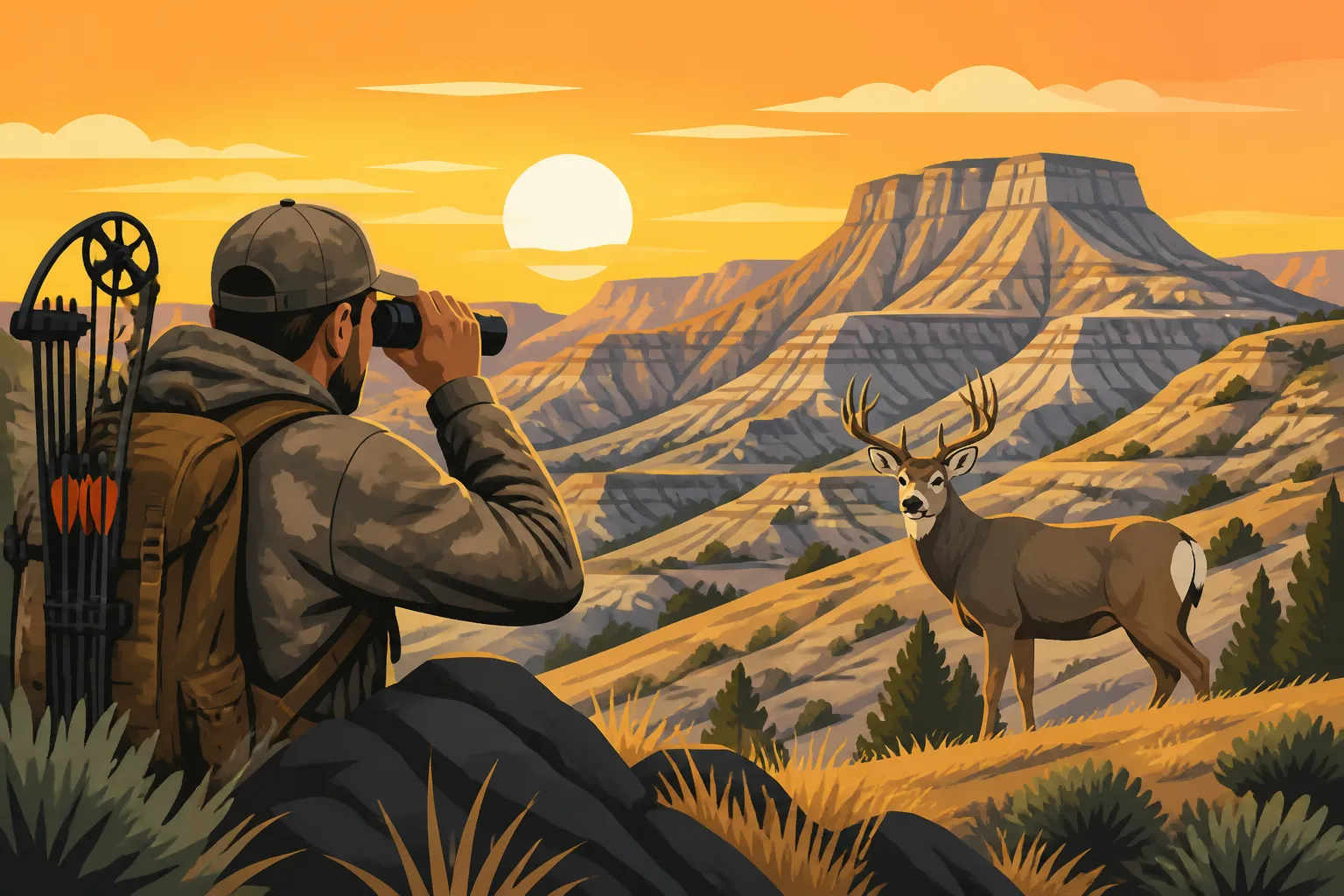
When you picture the Missouri Breaks, think deep coulees, stark badlands, towering bluffs overlooking the Missouri River, and endless expanses of sagebrush and prairie grass. The topography is brutally diverse, with sharp elevation changes, eroded draws, and dense pockets of timber like junipers and ponderosa pine clinging to slopes. It's a land sculpted by ancient rivers and wind, creating countless nooks and crannies where a mature mule deer buck can seemingly vanish into thin air.
The habitat offers excellent cover and feed, but it's incredibly difficult to navigate. You'll encounter areas where visibility is limited to a few yards in a deep wash, only to crest a ridge and find yourself staring out over miles of broken country. This ever-changing landscape means you can't rely on a single hunting method. You need to be adaptable, constantly switching between long-range glassing, careful still-hunting through draws, and aggressive spot-and-stalk tactics. The sheer scale of the Breaks also means that what looks like a small hill on a map can easily turn into a multi-hour hike through steep, shale-covered terrain. Understanding the subtle nuances of these hills, benches, and draws is critical, as mule deer will often use them to escape pressure or bed down.
Public Land Access and Regulations
The majority of the Missouri Breaks is public land, primarily managed by the Bureau of Land Management (BLM) and the Charles M. Russell (CMR) National Wildlife Refuge. This vast public access is a huge draw for DIY hunters, but it comes with its own set of considerations. Access points can be few and far between, often requiring long drives on unimproved gravel roads that can become impassable with rain or snow. It's not uncommon to drive for an hour or more from the nearest paved road just to reach a starting point.
Within the CMR, there are specific regulations that differ from general BLM land. For instance, some areas might have restrictions on motorized vehicle use or camping. Always check the latest Montana FWP regulations and the CMR National Wildlife Refuge-specific rules before your hunt. Mapping tools are indispensable here. Tools like those offered by GoHunt provide detailed overlays for public and private land, as well as specific refuge boundaries, which are crucial for staying legal and efficient. You might also encounter Block Management Areas (BMAs) in surrounding private lands, which offer additional hunting opportunities with landowner permission. Knowing how to use Block Management for DIY Hunts can significantly expand your hunting grounds in the region. Remember that while public land is plentiful, it doesn't mean it's easy to reach or hunt without encountering other people, especially during the general rifle season. Strategizing how to manage hunter pressure is a key component of success in popular areas.
Mule Deer Behavior and Movement in the Breaks
Mule deer in the Missouri Breaks are a product of their environment. They're tough, resilient, and incredibly savvy at using the terrain to their advantage. Understanding their seasonal movements, feeding habits, and reactions to pressure is paramount for a successful hunt.
Seasonal Patterns and Rut Timing
The best time to hunt mule deer in Montana often aligns with the rut, which typically occurs in late November into early December. During the archery season, usually in September, bucks are often in smaller bachelor groups, predictable around water sources and good feed. As the general rifle season progresses through October and November, bucks become more reclusive until the rut kicks in.
When the rut hits, those reclusive bucks start moving, often covering significant ground in search of does. This is when you'll find them out in the open more frequently, sometimes even venturing into areas they typically avoid. It's a high-stakes time because while bucks are more visible, they're also more susceptible to hunter pressure. The trick is knowing when they’ll move and where they’re likely to be found. Early season hunts might focus on higher elevation benches or timbered pockets where bucks seek refuge from heat and insects, while late season hunts will see them pushing into lower, more protected areas as winter approaches, often closer to agricultural fields if available. For a deeper dive into seasonal strategies, check out our guide on Montana Mule Deer Season Dates and Tags.
Food Sources and Water Dependency
Water is a precious commodity in the arid Missouri Breaks. Mule deer, like all wildlife, are highly dependent on reliable water sources, especially during the warmer months. Natural springs, seepages in coulees, and the occasional stock tank or reservoir become magnets for deer. Identifying these water sources on your maps is a critical first step in narrowing down potential deer habitat. During drought years, these spots become even more vital, concentrating deer in predictable areas.
In terms of food, mule deer are primarily browsers, and the Breaks provide a diverse menu. Sagebrush, serviceberry, chokecherry, and various forbs are staples. They'll also feed on grasses, especially new growth, and can occasionally be found browsing on agricultural crops on adjacent private lands. During late season, they might rely more heavily on browse from junipers and ponderosa pines. Bucks will often bed on north-facing slopes, catching the morning sun or seeking shade, and then move to feed on adjacent benches or valley floors in the evenings. Understanding these patterns, identifying key bedding and feeding areas, and linking them with water sources allows you to predict their movements with greater accuracy.
Essential Hunting Strategies for the Breaks
Hunting the Missouri Breaks is a game of patience, glassing, and strategic movement. It’s not a place for quick, impulsive decisions.
Spot-and-Stalk Tactics for Open Country
The vast, open nature of much of the Breaks lends itself perfectly to spot-and-stalk hunting, especially for mule deer. This is where your optics truly shine. You'll spend hours, often days, perched on high points, systematically glassing every fold and shadow of the landscape. Once a buck is spotted, the real chess match begins. The broken terrain provides both cover for the stalk and endless opportunities for the deer to disappear.
A successful spot-and-stalk requires meticulous planning. First, assess the wind. It's often swirling and unpredictable in the Breaks' varied topography, so moving slowly and constantly checking current conditions is vital. Second, plan your route to use every bit of cover – draw bottoms, ridge lines, lone junipers. Avoid skylining yourself. Third, manage your time. A stalk can take hours, even for a relatively short distance, due to the difficulty of the terrain. Don't rush it. Be prepared to back out and try again later if conditions aren't right. Often, the best approach is to identify where the buck is heading and try to intercept him rather than chasing directly. For more specialized techniques, consider reading up on How to Spot-and-Stalk Montana Mule Deer.
Glassing Techniques for Vast Landscapes
Effective glassing is perhaps the single most important skill for hunting mule deer in the Missouri Breaks. You simply cannot cover enough ground on foot to find deer consistently. You need to let your binoculars and spotting scope do the heavy lifting.
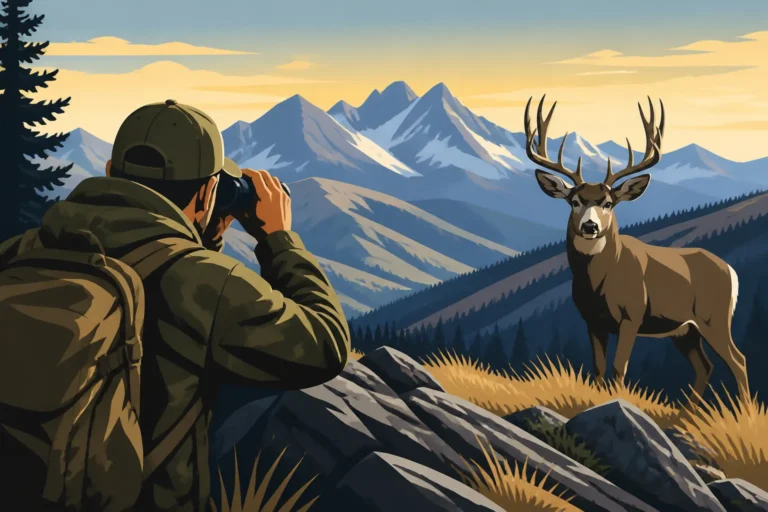
Find a good vantage point, ideally one that allows you to see into several drainages and across multiple ridges. Use a tripod for your binoculars (10x or 12x are common choices) and spotting scope (20-60x or 20-70x is ideal). Start by breaking the landscape into smaller, manageable grids. Systematically scan each grid, moving slowly, looking for subtle clues: a horizontal line in a vertical world, the flick of an ear, the shine of an antler, or a patch of slightly off-color hide that doesn't quite match the surrounding rock and brush. Don't just look for an entire deer; look for pieces. Take frequent breaks to rest your eyes, and don't be afraid to sit in one spot for an hour or more, letting the deer expose themselves as they move or shift positions. GoHunt's mapping features can also help you identify ideal glassing knobs and escape routes for deer, streamlining your efforts. For an even deeper dive, our article on How to Glass Montana's Big Country offers fantastic insights.
Dealing with Pressure and Solitude
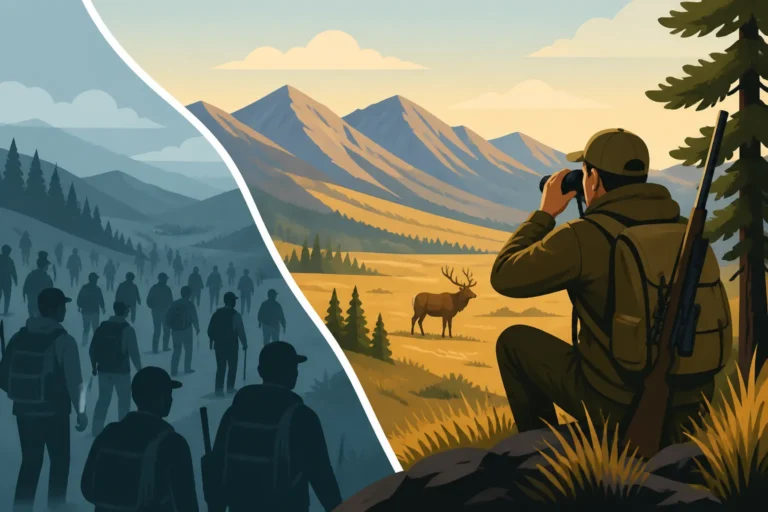
The Missouri Breaks, while vast, aren't entirely devoid of other hunters, especially during prime general season dates. High-traffic areas, particularly those easily accessible by road, can see significant pressure. Mule deer quickly learn to avoid these spots, becoming more nocturnal or seeking refuge in the nastiest, most remote terrain.
To escape pressure, you have to be willing to work harder and go farther. This often means packing in beyond day-trip range or focusing on areas that require more significant physical effort to access. This is where a DIY approach really pays off. Learning to identify and avoid hunter pressure is as crucial as finding the deer themselves. Mule deer often "hole up" in dense timbered coulees or steep, broken badlands when pressured, waiting for things to quiet down. Targeting these less accessible spots can often yield encounters with undisturbed bucks. While you might not see another soul for days, the solitude itself can be a mental challenge. Being prepared for extended periods alone, both mentally and logistically, is part of the Breaks experience.
Gear and Preparation for a Breaks Mule Deer Hunt
The ruggedness and remoteness of the Missouri Breaks demand specific gear choices and thorough physical preparation. Don't underestimate this country.
Optics and Navigational Tools
As mentioned, optics are king in the Breaks. Beyond your primary binoculars and spotting scope on a tripod, a good rangefinder is non-negotiable for judging distances in the wide-open spaces. You'll often be shooting across deep coulees or large draws, and misjudging range by even a small margin can mean a missed shot.
Navigational tools are equally critical. A reliable GPS unit or a smartphone with robust hunting apps like onX Hunt are essential. Download offline maps before you go, as cell service is spotty at best and nonexistent in most of the Breaks. Carry a compass and physical maps as a backup – batteries die, electronics fail, and a topographical map can often give you a better overall understanding of the terrain than a small screen. Knowing how to E-Scout Montana Hunting Units will give you a significant advantage, allowing you to identify potential bedding areas, water sources, and glassing points long before you ever set foot on the ground.
Here’s a quick overview of essential gear:
| Gear Category | Recommended Item / Feature | Why It's Crucial in the Breaks |
|---|---|---|
| Optics | 10x or 12x Binoculars (tripod adaptable) | Essential for long-range glassing; stable view crucial for spotting. |
| 20-60x or 20-70x Spotting Scope (tripod) | For detailed evaluation of deer at extreme distances. | |
| Laser Rangefinder | Accurately judges distances in vast, open, broken terrain. | |
| Navigation | GPS Unit or Hunting App (onX Hunt, Gaia) | Pinpoints location, identifies public/private land, marks waypoints. |
| Offline Maps (digital & paper) | Critical due to lack of cell service; physical backup for emergencies. | |
| Compass | Basic, reliable navigation backup. | |
| Shelter/Sleep | Lightweight tent or tarp | For spike camping or extended stays in remote areas. |
| Warm sleeping bag & pad | Night temperatures can drop significantly, even in early season. | |
| Clothing | Layered system (wicking, insulating, shell) | Adapt to rapid weather changes, from hot sun to cold wind/rain/snow. |
| Durable, comfortable hiking boots | Critical for steep, rocky, often unforgiving terrain. | |
| Water | Water filter/purifier | Accessing natural water sources is often necessary for longer hunts. |
| Multiple water bottles/reservoir | Carry more water than you think you'll need. | |
| Pack | Large capacity (60-80L) pack | For carrying gear, food, and packing out meat. |
| Safety | First-aid kit, emergency shelter, fire starter, headlamp | Remote hunting demands self-sufficiency. |
| Weapon | Rifle (appropriate caliber for mule deer) | Accuracy and ethical shot placement are paramount. |
Physical Fitness and Backcountry Gear
Hunting the Missouri Breaks is a physically demanding endeavor. You’ll be hiking steep grades, navigating loose shale, and traversing uneven terrain, often miles from any road. Good physical conditioning isn't just about comfort; it's about safety and increasing your chances of success. Start a rigorous fitness plan months before your hunt, focusing on cardiovascular endurance, leg strength, and carrying a weighted pack. Our guide on How to Physically Prepare for a Montana Elk Hunt, while focused on elk, offers excellent universal advice applicable to any strenuous backcountry hunt in Montana.
Beyond fitness, your gear needs to be up to the task. A high-quality backpack, like those from Stone Glacier or Kifaru, capable of comfortably carrying your hunting essentials for multiple days and packing out heavy meat quarters, is non-negotiable. Don't skimp on durable, waterproof hiking boots that are well broken in. Layers of clothing are crucial to adapt to Montana's notoriously unpredictable weather, which can range from warm sunshine to freezing rain or snow within a single day. Water purification systems, comprehensive first-aid kits, and emergency shelters are not luxuries but necessities for anyone venturing deep into the Breaks. Think about extending your hunt into a proper backcountry experience with our Montana Backcountry Hunting Guide, as many of these strategies apply directly to the Breaks.
Whether you're planning a short day hunt or an extended backcountry trip, approaching the Missouri Breaks with respect for its challenging environment and armed with thorough preparation will set you up for a truly unforgettable mule deer hunting experience.
Disclaimer
Hunting is an inherently risky activity. The information provided in this guide is for informational purposes only and should not be taken as a substitute for professional instruction, local knowledge, or official regulations. Always consult the most current Montana Fish, Wildlife & Parks regulations and local land management agency rules before planning any hunt. Be prepared for rapidly changing weather conditions, rugged terrain, and potential wildlife encounters. Your safety is your responsibility.