Hunting the Sapphire Mountains
If you've ever looked at a detailed map of Montana, you know how many mountain ranges carve up this magnificent state. The Sapphire Mountains, often overshadowed by their more famous neighbors like the Bitterroots or the Rockies, can feel a bit like a mystery to hunters. It's easy to get lost in the sheer volume of information out there, wondering if this particular range is worth the effort. But I'm here to tell you, the Sapphires hold incredible potential for those willing to learn their secrets, and this guide will give you a comprehensive look at what to expect when hunting in this beautiful, rugged country.
Understanding the Sapphire Mountains Terrain and Habitat
The Sapphire Mountains, running roughly north-south between the Bitterroot Valley to the west and the Clark Fork River Valley and Flint Creek Range to the east, are a fantastic example of classic Western Montana hunting grounds. They might not boast the super high, craggy peaks of some ranges, but don't let that fool you. This is big, steep, and often dense country that demands respect and solid preparation.
Geographical Overview and Access Points
Picture rolling, timbered slopes rising dramatically from river bottoms, cut by countless drainages that hold pockets of dark timber and hidden meadows. That's the Sapphires. They stretch for about 90 miles, primarily within the Bitterroot National Forest and Lolo National Forest boundaries. Access into the interior is often via logging roads or designated Forest Service roads that can vary wildly in condition – sometimes paved for a spell, then quickly turning into gravel, dirt, or even just two tracks. During hunting season, especially after some rain or snow, four-wheel drive is often more of a necessity than a luxury.
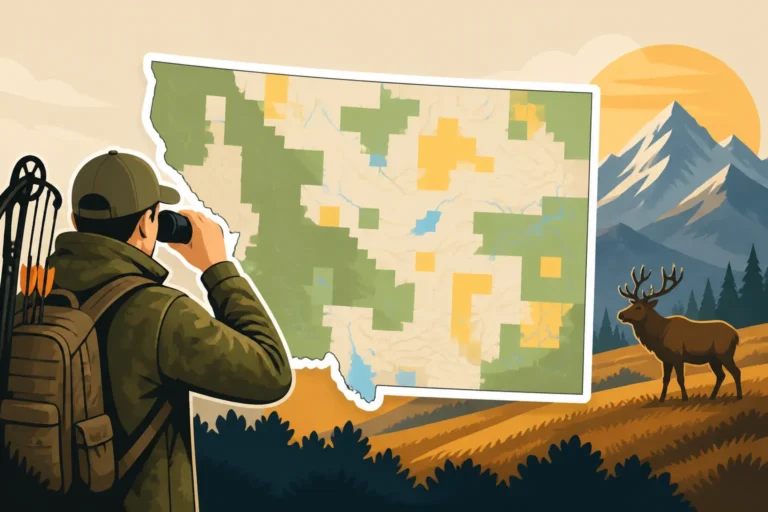
You'll find various access points along Highway 93 on the west side, particularly around areas like Darby, Sula, and Hamilton, leading into tributaries of the Bitterroot River. On the east, access is typically from Highway 10 or smaller county roads that branch off towards the mountain range, entering through drainages that feed into the Clark Fork. For anyone seriously considering a hunt here, having detailed maps, like those offered by onX Hunt, is absolutely essential. These maps not only show land ownership but also clearly mark roads, trails, and contour lines, which are paramount for navigating this complex terrain. Understanding these access points and the specific hunting districts they lead into is your first step in planning a successful trip.
Key Wildlife Habitat Zones
The habitat in the Sapphire Mountains is diverse, creating a mosaic of environments that different game species call home. You'll primarily encounter mixed conifer forests dominated by Douglas fir, ponderosa pine, lodgepole pine, and larch, especially at mid-elevations. As you climb higher, subalpine fir and Engelmann spruce become more common. Interspersed throughout are aspen groves, particularly in areas with good moisture, and open parks or meadows, often south-facing, that are critical for forage.
In the lower elevations and river bottoms, especially along the Bitterroot and Clark Fork, you'll find riparian zones with cottonwoods, willows, and thick brush, which are prime habitat for whitetail deer. As you move up into the mountains, elk and mule deer thrive in the timbered slopes and high country. The south-facing slopes, catching more sun, often provide crucial early-season forage and winter range, while north-facing slopes tend to hold cooler, denser timber and often snow later into the spring, serving as bedding areas. Understanding these transitions in vegetation and terrain is key to locating game. Elk, for instance, often bed in the dark timber on north slopes during the day and move to feed in the more open, grassy areas at dawn and dusk. Mule deer might prefer the sunnier, rockier slopes. This understanding of habitat is a crucial component of any successful hunt in Montana.
Game Species and Hunting Opportunities in the Sapphires
While the Sapphire Mountains aren't necessarily known for holding state record book animals on every ridge, they offer consistent opportunities for a variety of big game species, particularly elk and deer. It's a place where dedicated, persistent hunters can find success.
Elk and Deer Hunting Prospects
Elk are the primary draw for many hunters heading into the Sapphire Mountains. The range supports a healthy population, and while finding them often means getting away from roads and into the steeper, thicker stuff, the reward is there. During the archery season, particularly in September, the timbered basins and high-elevation meadows can be alive with bugling bulls. Understanding how to call elk in Montana can significantly increase your odds. As the general rifle season opens and hunter pressure increases, elk tend to retreat into the dense timber and deeper wilderness areas. This makes for challenging hunting, often requiring hunters to penetrate dark timber and practice still-hunting tactics.
Mule deer also inhabit the Sapphire Mountains, often sharing habitat with elk but preferring slightly different niches. You'll find them on the more open, brushy, and rocky slopes, especially those with good visibility. Their numbers can fluctuate more than elk, but solid bucks are certainly present. Whitetail deer, while not as prevalent in the higher elevations, are common in the river bottoms and lower forested areas surrounding the Sapphires. Hunting whitetail in Montana river bottoms offers a different experience, often involving tree stands or ground blinds near travel corridors. Both deer species offer excellent opportunities, and a successful hunt often involves adapting your strategy to the specific terrain you're in.
Other Game Species
Beyond elk and deer, the Sapphire Mountains also provide opportunities for other species. Black bears are common throughout the range, particularly in spring when they emerge from hibernation and feed on new growth, and again in the fall as they fatten up on berries and other mast crops before winter. Montana Black Bear Hunting Guide will provide more information on how and when to pursue these animals. Mountain lions also roam these mountains, though they are much more elusive and typically hunted with hounds. Taking a mountain lion is often a hunt of a lifetime, requiring specific permits and methods.
For those interested in upland birds, ruffled grouse, spruce grouse, and dusky grouse can be found in various timbered habitats, offering a fun diversion or an additional harvest opportunity. While not a primary big game focus, these birds add to the overall biodiversity and hunting appeal of the Sapphires. The versatility of the Sapphire Mountains means a hunter can pursue multiple species within a single trip, provided they have the correct licenses and tags.
Essential Hunting Strategies and Tips for the Sapphire Mountains
Hunting in the Sapphires, like much of Western Montana, is not for the faint of heart. It demands physical fitness, mental toughness, and a solid understanding of mountain hunting tactics. But with the right approach, it can be incredibly rewarding.
E-Scouting and On-the-Ground Reconnaissance
Before you even set foot in the Sapphires, comprehensive e-scouting is paramount. Tools like onX Hunt are indispensable for identifying public land, wilderness boundaries, potential access points, old logging roads, and critical terrain features like saddles, benches, and north-facing timbered slopes where elk might bed. You can mark potential glassing knobs and escape routes. Utilize satellite imagery to spot clearings, water sources, and changes in timber density. Cross-reference this with historical weather patterns and past fire data, as burns can create excellent new forage.
Once you’re boots on the ground, even if it's just for a pre-season scouting trip, focus on learning the lay of the land, finding fresh sign like tracks and droppings, and understanding thermal currents. Early mornings and late evenings are when thermals usually switch – cold air sinks in the morning, warm air rises in the evening – which dictates how game moves and how you should approach an area. I can't stress enough how important it is to How to E-Scout Montana Hunting Units before any mountain hunt.
Navigating Public Land and Wilderness Areas
The Sapphire Mountains are predominantly public land, falling mostly within the Bitterroot National Forest and Lolo National Forest. This offers vast expanses for hunting, but also requires careful navigation. Understanding land ownership boundaries is crucial, especially where public land might border private parcels. Again, onX Hunt is your best friend here.
Many parts of the Sapphires are roadless or fall within designated wilderness areas, offering a true backcountry experience. Hunting in these areas often means packing in on foot or horseback, establishing spike camps, and being entirely self-sufficient for several days. If you're considering a deep dive into these areas, you'll want to thoroughly research Montana Backcountry Hunting Guide to ensure you're prepared. Hunter pressure can be significant on easily accessible public lands, particularly during the general rifle season. To find success, you often need to be willing to hike further and deeper than most, or use less obvious access points. This will also require you to understand Montana Public Land Hunting Guide thoroughly.
Gear Considerations for Mountain Hunting
Your gear can make or break a hunt in the Sapphires. First and foremost, sturdy, comfortable boots are non-negotiable. You'll be covering miles of steep, uneven, often loose terrain. Investing in the Best Boots for Montana Elk Hunting is probably one of the smartest decisions you can make. Layering clothing is also critical due to the unpredictable mountain weather, which can range from warm sunshine to cold rain or snow in a single day. Think merino wool or synthetics for moisture-wicking properties.
A quality backpack, capable of hauling heavy loads and comfortable for long distances, is essential, especially if you anticipate packing out an animal. Consider models designed for western hunting like those from Mystery Ranch or Kifaru, which balance durability with ergonomic load distribution. Optics are another key component; good binoculars and a spotting scope will help you How to Glass Montana's Big Country from a distance, conserving energy. Don't forget a reliable GPS device, a headlamp, fire-starting materials, a first-aid kit, water purification, and emergency shelter. Packing for a Montana backcountry hunt is serious business, and every item counts. Additionally, when considering your hunting success and future planning, using resources like GoHunt for draw odds and unit breakdowns can be incredibly valuable for strategy.
Table: Key Hunting Details for the Sapphire Mountains
| Game Species | Primary Habitat in Sapphires | Typical Hunting Season (General) | General Strategy | Notes |
|---|---|---|---|---|
| Elk | Timbered slopes, high basins, north-facing timber | Archery (Sept), Rifle (Oct-Nov) | Spot-and-stalk, calling, still-hunting deep timber | Seek out solitude; thermals are key. |
| Mule Deer | Open, brushy slopes, rocky outcrops, south-facing | Archery (Sept), Rifle (Oct-Nov) | Glassing, spot-and-stalk | Can be more spread out; focus on transitions. |
| Whitetail Deer | River bottoms, lower elevation riparian zones | Archery (Sept), Rifle (Oct-Nov) | Tree stands, ground blinds, still-hunting thickets | More common in valley fringes. |
| Black Bear | Throughout timbered areas, berry patches, clearings | Spring (April-May), Fall (Sept-Nov) | Spot-and-stalk, still-hunting, glassing clearcuts | Requires specific bear tag; avoid sow with cubs. |
| Mountain Lion | Rugged, timbered terrain, rocky areas | Dec-April (or until quota met) | Hound hunting (most common), incidental encounters | Very challenging without hounds; specific permit. |
Remember that exact dates and regulations can vary year to year, so always consult the most current Montana Hunting Seasons Explained from Montana Fish, Wildlife & Parks.
The Sapphire Mountains are a truly incredible place to hunt, offering diverse terrain and a rewarding challenge for those willing to put in the effort. It's a range that embodies the spirit of Montana hunting – rugged, wild, and full of potential for a memorable experience. Whether you're chasing elk in the high timber or glassing for mule deer on open slopes, the Sapphires offer an adventure you won't soon forget.
Disclaimer
Please remember that hunting regulations, season dates, and access can change. Always consult the official Montana Fish, Wildlife & Parks (FWP) regulations for the current year before planning any hunting trip. This information is for general guidance and educational purposes only.