Best Montana Districts for Rifle Elk
Hunting rifle elk in Montana is an experience that calls to the soul, but let's be honest, finding that prime district can feel like searching for a needle in a haystack. With vast public lands, diverse terrain, and varying elk populations, it's easy to get overwhelmed trying to pinpoint the best spots for a successful rifle hunt. This guide is here to cut through the noise, breaking down what truly makes a Montana hunting district exceptional for rifle elk and steering you toward areas where your efforts are most likely to pay off.
Understanding What Makes a Premier Rifle Elk District
When you're eyeing a district for a rifle elk hunt in Montana, you're not just looking at a pretty map. You're trying to read between the lines, anticipating elk movement, hunter pressure, and the sheer logistical challenge. It's about weighing a lot of factors that contribute to a successful hunt, beyond just seeing a few elk tracks.
Key Factors for Success in Rifle Seasons
First and foremost, you need elk. And not just a few stragglers, but a healthy, robust population. Montana Fish, Wildlife & Parks (FWP) provides herd estimates and management objectives, which are crucial pieces of the puzzle. Beyond that, the accessibility of those elk during general rifle season is paramount. This means looking at areas with significant public land, be it National Forest, BLM, or state land. However, "access" also implies challenging terrain that might deter other hunters, allowing elk to find refuge. Think steep slopes, dense timber, and roadless areas that require more effort to reach.
The topography itself plays a massive role. In the early rifle season, elk are often still holding higher up, closer to their summer ranges. As the season progresses and pressure builds, they tend to drop to lower elevations, especially into thick cover or onto south-facing slopes to catch the sun. Areas with a mix of dark timber for bedding, open parks for feeding, and reliable water sources are always prime. Road systems are a double-edged sword; while they offer access, they also concentrate hunters. A district with good road access to start your hunt, but then leads into expansive roadless country, often offers the best balance for those willing to put in the work. Finally, considering districts that align with your hunting style – whether you prefer aggressive still-hunting through timber or long-range glassing across open country – is key.
General Season Dynamics and Hunter Pressure
The general rifle season in Montana is a significant event, drawing hunters from all corners. This means hunter pressure is a very real factor that impacts elk behavior. Early in the season, when the rut has just ended or is winding down, elk are often still relatively active but become increasingly wary. As more hunters hit the woods, elk will quickly shift their patterns, seeking out the thickest, nastiest cover they can find. They'll become nocturnal, moving primarily at dawn and dusk, and will often bed in places you'd swear a goat couldn't even climb.
Weather, too, is a huge influencer. An early season snowstorm can push elk down from high country, concentrating them in lower basins and making them easier to locate, especially on fresh snow. Conversely, mild weather can keep them spread out and high, making for a much tougher hunt. Districts that offer diverse terrain allow elk to adapt to these pressures and weather changes, providing consistent opportunities throughout the season. Understanding How to Hunt Montana's General Rifle Season effectively means anticipating these shifts and being prepared to adjust your strategy. It’s not just about knowing where the elk were, but where they're likely to go next under pressure.
Top Central and Southwestern Montana Districts for Rifle Elk
Central and Southwestern Montana are often the first places hunters think of when "elk" and "mountains" come to mind. And for good reason – these regions boast some of the state's most iconic mountain ranges and a strong tradition of elk hunting.
High-Success Mountain Ranges
When we talk about high-success districts in this part of the state, we're often looking at areas within the vast Beaverhead-Deerlodge National Forest, the Gallatin National Forest, or the Custer Gallatin. Districts like those found around the Gravelly Range, Tobacco Root Mountains, and portions of the Madison Range are consistently good bets. These areas feature extensive public lands with a mix of dark timber, aspen groves, and open sagebrush parks. Elevation here can range from 6,000 to over 10,000 feet, providing the vertical relief elk need to escape pressure and find thermal sanctuaries.
A district might be known for its large bull potential, while another offers more consistent opportunities for cows or spikes, which are often the target for general season hunters looking to fill a freezer. Many of these districts are general-tag friendly for residents, but non-residents typically need to draw a Montana General Elk License Explained through the combination license draw. The key here is not just finding the elk, but being able to get to them and, perhaps more importantly, get them out. These are often remote, rugged areas that demand physical stamina and solid backcountry skills. Knowing the difference between Montana General vs Permit Tags Explained is crucial for planning your application strategy.
Managing Pressure in Popular Areas
Even the best districts experience hunter pressure, especially during the general rifle season. Places like the Elkhorn Mountains or the Bridger Mountains, while offering excellent elk hunting, are also popular due to their proximity to population centers like Helena and Bozeman. The trick to hunting these areas successfully isn't to avoid pressure entirely (often impossible), but to understand how elk react to it.
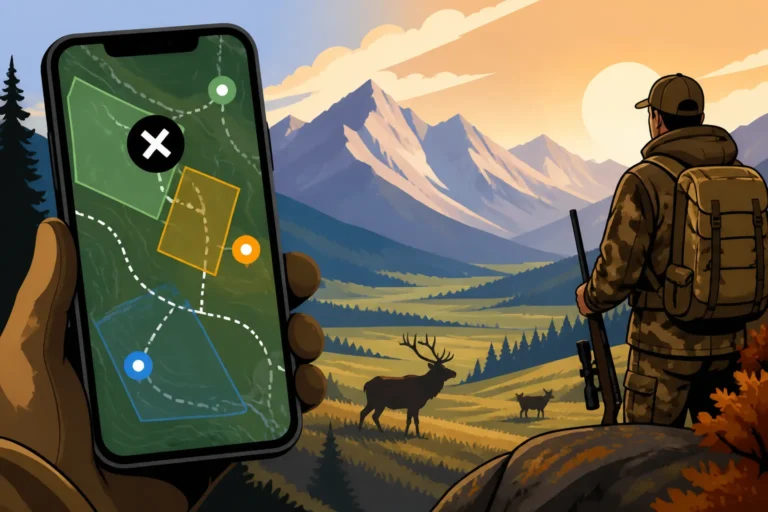
Elk, being intelligent creatures, quickly learn to use terrain to their advantage. They'll retreat into thick timber, particularly north-facing slopes, or move into roadless areas where few hunters venture. This is where tools like onX Hunt become invaluable. You can use their satellite imagery and public land overlays to identify un-roaded chunks of public land adjacent to popular access points. If you're willing to hike a few extra miles, climb that extra ridge, or drop into a deep canyon, you'll often leave 90% of the hunters behind. Timing also matters. Hunting mid-week can significantly reduce competition, and being out at first light and staying until last light will give you an edge over those who stick closer to roads. Learning How to Find Elk in Montana Dark Timber is a skill that will serve you well in these pressured environments.
Exploring Northwestern and Western Montana Opportunities
Northwestern and Western Montana, encompassing Regions 1 and 2, present a different kind of rifle elk hunting experience. Here, the landscape is often denser, wetter, and more timbered, with vast wilderness areas that challenge even the most seasoned hunters.
Dense Timber and Wilderness Hunts
In areas like the Flathead National Forest, Kootenai National Forest, and especially the vast Bob Marshall Wilderness Complex, elk hunting is often a game of patience, stealth, and navigating thick cover. Districts here are characterized by dense fir, spruce, and lodgepole pine forests, with steep drainages and fewer expansive open parks than their central and eastern counterparts. These are truly areas for hunters who embrace the deep woods. For many, a Montana Backcountry Hunting Guide is an essential read before venturing into these remote expanses.
Success in these districts often comes down to still-hunting through the timber, moving slowly, and listening for the subtle sounds of elk. Thermal hubs and clearcuts can be prime feeding areas, while dense stands of timber provide bedding. The sheer scale of these wilderness areas means elk have plenty of room to roam and escape pressure. Hunters willing to pack in several miles, or even consider a multi-day spike camp, significantly increase their odds. Outfitters that offer horse pack-in services are also popular here for those looking to access truly remote areas. You might not see as many elk as in other regions, but the bulls that live in these timbered sanctuaries are often mature and impressive.
Roadless Areas and Backcountry Access
The prevalence of roadless areas in Western Montana is both a blessing and a curse. It means untouched habitat and less human disturbance for elk, but it also means more sweat equity for hunters. Districts with significant acreage designated as Wilderness or Recommended Wilderness Areas will demand a serious commitment to physical fitness and preparation. Consider areas like the Sapphire Mountains or portions of the Bitterroot National Forest where vast roadless tracts offer true wilderness experiences.
For these hunts, your gear becomes incredibly important. A quality backpack, durable boots, and a reliable navigation system (like the aforementioned onX Hunt, or a dedicated GPS) are non-negotiable. Being able to read a topographical map and utilize tools for How to E-Scout Montana Hunting Units to identify potential routes and elk travel corridors before you even leave home is key. This type of hunting isn't for the faint of heart, but the rewards—a truly wild elk hunt and often less competition—can be immense. Hunters need to be self-sufficient and capable of handling emergencies in remote settings. Make sure your Montana Backcountry Hunting Gear List is meticulously prepared.
Southeastern and Eastern Montana: A Different Kind of Elk Hunt
When many hunters envision Montana elk, they picture towering peaks and dense forests. But the southeastern and eastern parts of the state offer a unique and increasingly popular alternative: hunting elk in the rolling breaks and vast plains. This is a vastly different ballgame, requiring different tactics and a keen understanding of the landscape.
Breaks and River Bottoms
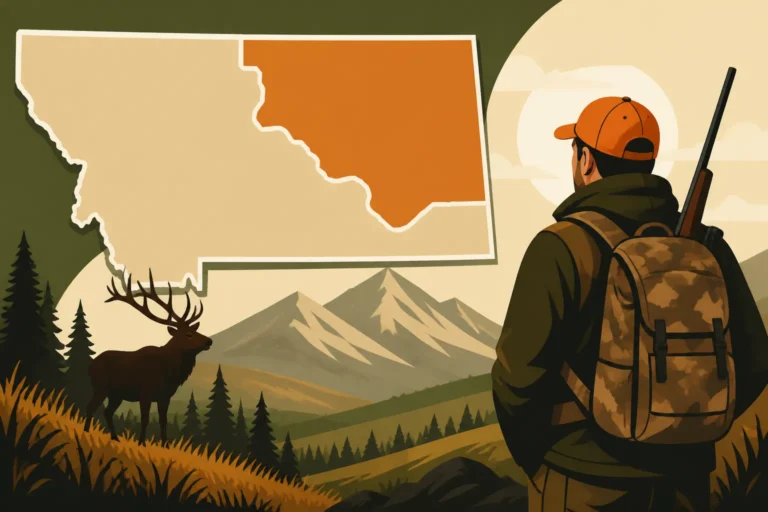
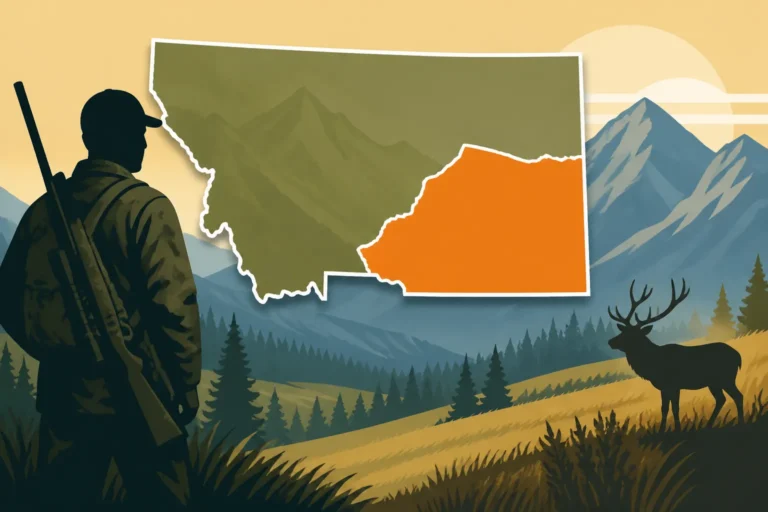
Regions 4, 5, and 7, particularly the Missouri Breaks, Judith Basin, and Powder River Country, present a stark contrast to the mountainous west. Here, elk can be found in the rugged, eroded badlands, along major river bottoms (like the Missouri or Yellowstone), and in isolated pockets of timber and riparian zones. The "breaks" terrain is characterized by steep, broken hills, deep coulees, and often sparse Ponderosa pine or juniper stands. Elk here are often visible from long distances, but getting close can be a monumental challenge due to the open country.
These areas are fantastic for glassing, often utilizing a vehicle to cover ground and spot herds from afar. Once spotted, a strategic spot-and-stalk approach becomes crucial. Elk in these habitats are exceptionally wary due to the lack of dense cover, and they'll vanish into a cut or over a ridge with incredible speed. It's a game of wind, shadows, and patience. River bottoms, especially, can hold surprising numbers of elk, using the cottonwood galleries and brush for cover, similar to How to Hunt Whitetail in Montana River Bottoms. The key to success here often lies in maximizing your observation time and executing flawless stalks.
Private Land and Block Management Access
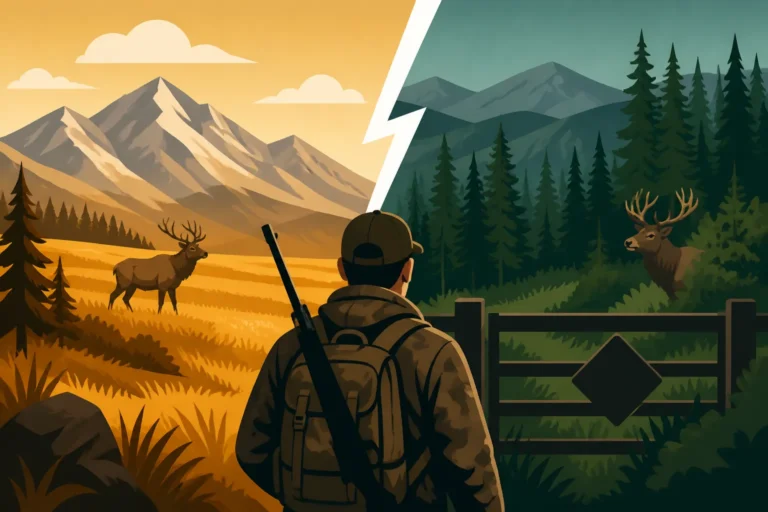
Unlike the vast national forests of Western Montana, much of Eastern and Southeastern Montana is private land. This means access can be a significant hurdle. However, the state's Block Management Program (BMP) is a saving grace for public land hunters. Montana Block Management Areas Explained are tracts of private land (and sometimes state land) that landowners enroll in a program with FWP to allow public hunting access. These areas are absolutely critical for hunting elk, deer, and antelope in the eastern part of the state.
Hunters must do their homework on Block Management. Access rules vary greatly from one BMA to another – some are sign-in, some require permission slips, and some have quotas. Checking the FWP Block Management website for maps and specific regulations before heading out is non-negotiable. Furthermore, success in these regions sometimes means securing private land permission directly from landowners, a process that requires courtesy, respect, and often knocking on many doors. While some districts here might have limited elk permits, many offer general opportunities, especially for cow elk, making them attractive for meat hunters willing to adapt to the unique landscape and access challenges.
Strategic Planning for Your Rifle Elk Hunt
A successful rifle elk hunt in Montana isn't just about showing up with a gun. It's about meticulous planning, from before you even apply for a tag to the moment you step into the field. This preparation is what separates a frustrating trip from a fulfilling one.
E-Scouting and Boots-on-the-Ground Preparation
The foundation of any successful elk hunt begins long before you pack your bags. E-scouting has revolutionized how hunters approach new areas. Using tools like onX Hunt and GoHunt, you can spend hours analyzing satellite imagery, topographic maps, and public/private land ownership layers right from your computer. Look for likely bedding areas (dark timber, north-facing slopes), feeding areas (open parks, clearcuts, south-facing slopes), water sources (springs, seeps, creeks), and especially the travel corridors and pinch points that connect them. Identify potential access routes, escape routes for elk, and areas of high hunter pressure.
While e-scouting is powerful, it's rarely a substitute for boots-on-the-ground scouting if you can manage it. Visiting your chosen district in the off-season allows you to verify what you saw on the map, learn the terrain, find sign, and identify areas you might have overlooked. If a pre-season trip isn't feasible, dedicate the first few days of your hunt to observation and reconnaissance. Setting up on a high vantage point and glassing for hours at dawn and dusk can reveal critical elk movement patterns and help you locate herds without disturbing them. For more details, check out our guide on How to E-Scout Montana Hunting Units.
Understanding Regulations and Draw Odds
Montana's hunting regulations are comprehensive and can be complex, especially for non-residents. You absolutely need to understand the current year's regulations booklet backward and forward. This includes knowing Montana Hunting Seasons Explained, specific district boundaries, antler restrictions, and any special permits required. Most non-residents need to apply for a combination license through a draw, which typically has an early application deadline (usually around March 15th for the big game combination licenses).
For specific districts, especially those known for trophy animals or high success rates, limited-entry permits may be required in addition to your general license. These permits are drawn separately and often have very low odds, sometimes requiring many years of building How Montana Preference Points Work or How Montana Bonus Points Work. You'll want to analyze Montana Elk Draw Odds by District if you're targeting a permit-only area. Even for general districts, understanding elk populations and harvest statistics from FWP can give you an edge. This research helps you formulate a realistic plan, setting expectations for what tags you might draw and what kind of hunt you can expect. Don't underestimate the importance of understanding the rules; ignorance is no excuse in the field.
Essential Gear and Tactics for Rifle Elk Success
Having the right gear and knowing how to use it, coupled with sound tactical approaches, are crucial for success when rifle hunting elk in Montana. The rugged landscapes and demanding conditions mean your equipment needs to be reliable, and your skills sharp.
Optics and Shooting Skills
In Montana's vast landscapes, good optics are your best friends. A quality pair of binoculars (10×42 or 10×50 are common choices) is essential for glassing distant ridges, timber edges, and open parks. If you're hunting more open country, a spotting scope (15-45x or 20-60x) will be invaluable for identifying elk at extreme ranges and assessing their size before committing to a stalk. A rangefinder is also non-negotiable for accurate shot placement in varied terrain. Brands like Vortex, Leupold, and Maven offer excellent quality optics that hold up to the rigors of mountain hunting.
Beyond having the gear, you need to be proficient with your rifle. Montana often presents long-range shooting opportunities, sometimes at angles you're not used to. Practice shooting from various field positions – prone, kneeling, and off a pack – not just from a bench. Know your rifle's ballistics inside and out, especially how bullet drop and wind drift affect your shot at different distances. Practice out to your maximum ethical shooting range. Being comfortable and accurate with your rifle out to 300-400 yards is a significant advantage in much of Montana's elk country. If you're serious about extending your ethical range, learning How to Shoot Long Range at Montana Elk is a must. Remember, ethical hunting means a clean kill, which requires precise shot placement.
Physical Conditioning and Backcountry Readiness
Elk hunting in Montana is physically demanding. Period. Whether you're navigating steep mountain trails, still-hunting through dense timber, or packing out an elk quarter by quarter, you'll be putting your body to the test. Ignoring physical preparation is a recipe for a miserable, and potentially unsuccessful, hunt. Start a rigorous fitness regimen months before your hunt. Focus on cardiovascular endurance (hiking with a weighted pack, trail running) and strength training (legs, core). Our guide on How to Physically Prepare for a Montana Elk Hunt offers a detailed plan to get you ready.
Beyond personal fitness, backcountry readiness means being prepared for anything the mountains throw at you. This includes understanding navigation, basic first aid, and survival skills. Weather can change in an instant, from sunny and warm to a blizzard. Carry appropriate layers of clothing, emergency shelter, fire-starting supplies, and enough food and water or a reliable filtration system. A fully stocked Montana Backcountry Hunting Gear List is paramount. Always tell someone your hunting plan, including your intended route and return date. Hunting solo, while rewarding, carries greater risks, so having a satellite communication device (like a Garmin InReach or Zoleo) is a wise investment for emergency contact.
Disclaimer
Always check the latest Montana Fish, Wildlife & Parks (FWP) regulations before planning any hunting trip, as rules, seasons, and drawing odds can change annually. This guide provides general information and recommendations, but it is your responsibility to understand and comply with all current hunting laws.