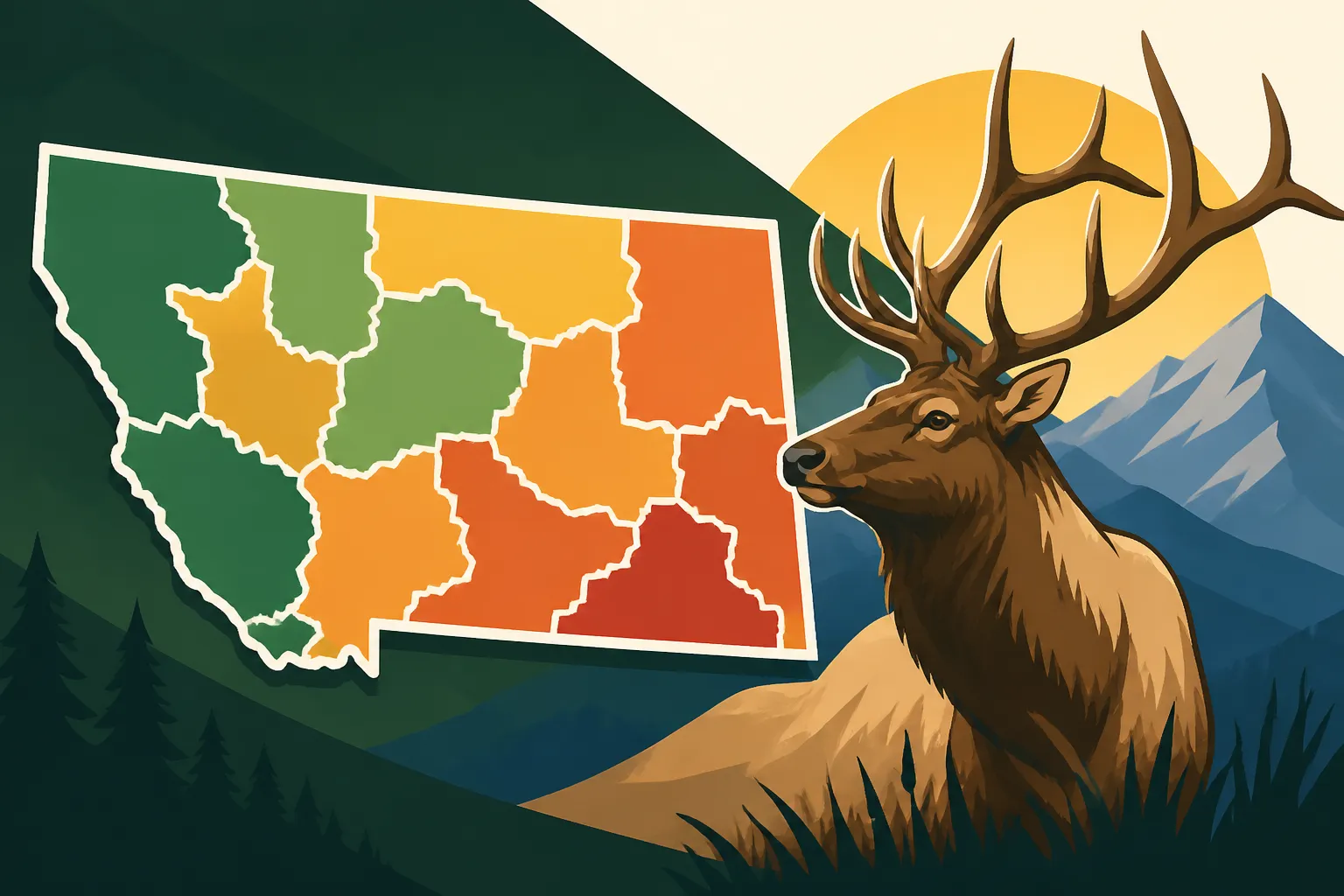
Montana Elk Draw Odds by District
It's no secret that getting an elk tag in Montana can feel like winning the lottery, especially for those dreaming of a bull in the vast public lands. The complex draw system, combined with immense popularity, often leaves hunters frustrated and bewildered. This comprehensive guide aims to demystify the Montana elk draw odds by breaking down the factors that influence your chances in various districts, helping you strategize your application for a successful hunt.
The Labyrinth of Montana Elk Tag Applications
Navigating the Montana elk draw system can be incredibly challenging, even for seasoned hunters. It’s not just about filling out a form; it's about understanding a nuanced process that combines different types of points, varying tag categories, and district-specific limitations. Many hopeful hunters find themselves coming up short year after year, not for lack of effort, but often due to a lack of precise understanding of how the system truly works behind the scenes. The key is to peel back the layers and understand the mechanics that govern who gets a tag and where.
Preference Points Versus Bonus Points
One of the most common points of confusion for hunters applying in Montana is the distinction between preference points and bonus points. While both are designed to reward loyalty and persistence, they function very differently in the draw. Preference points are primarily used for the general deer and elk combination licenses for nonresidents. Each year you apply for one of these licenses and are unsuccessful, or simply purchase a point, you accrue one preference point. These points are then used in a weighted draw for the general combination licenses, essentially giving you a "head start" in line. The more preference points you have, the higher your chances of drawing one of these highly sought-after licenses.
Bonus points, on the other hand, apply to the limited-entry permits for specific hunting districts and species, like those coveted bull elk permits. For every year you apply for a limited entry permit and are unsuccessful, you receive a bonus point. When it comes time for the draw, all your accumulated bonus points are squared. For example, if you have three bonus points, you actually have nine entries in the draw (3×3). This system dramatically increases your odds with each passing year, but it doesn't guarantee a tag. It simply gives you more chances in a random lottery among other applicants. Understanding this fundamental difference is crucial for any hunter hoping to maximize their draw success for either a general license or a special permit. You can delve deeper into these mechanics by reading our guide on Montana Preference Points vs Bonus Points.
General Licenses Versus Limited Entry Permits
Montana operates on a two-tiered system for big game licenses and permits: general licenses and limited entry permits. General licenses, such as the general deer or elk combination licenses, allow hunters to pursue deer or elk in most of the state's hunting districts during specified seasons. These are often the first step for many nonresident hunters coming to Montana, and their availability is influenced by preference points. While these offer vast opportunities, they don't always grant access to the most high-demand areas or specific hunting seasons (like specific archery-only dates for certain species in certain areas).
Limited entry permits, conversely, are for specific hunting districts and often target particular species, sex, or season types (e.g., antlered elk, archery only, or specific muzzleloader seasons). These permits are issued in much smaller numbers to control harvest and manage wildlife populations in specific areas, often those known for producing trophy animals or experiencing higher hunter pressure. Drawing one of these requires accumulating bonus points and competing in a much tougher lottery. The strategies for applying for and drawing a general tag versus a limited entry permit are distinctly different, and your overall hunting plan will largely hinge on which type of tag you're targeting. For a more detailed breakdown, consider reading about Montana General vs Permit Tags Explained.
Deconstructing Montana's Elk Draw Odds
Understanding the draw odds for Montana elk is like deciphering a complex puzzle, but it's essential for any hunter serious about punching an elk tag in the Treasure State. The odds are not static; they fluctuate annually based on a myriad of factors, making diligent research a continuous necessity. Simply put, draw odds reflect your statistical chance of success for a particular tag or permit in a given year, but they are deeply intertwined with the specific district you choose.
Factors Influencing District-Specific Odds
Many elements contribute to the varying draw odds across Montana's numerous hunting districts. First and foremost are the elk population dynamics within a district. Districts with robust, healthy elk populations and consistent recruitment rates tend to have higher quotas, potentially leading to slightly better draw odds, assuming hunter demand doesn't skyrocket. Conversely, districts with declining populations or specific management objectives might see reduced tag numbers, making them much harder to draw. FWP (Montana Fish, Wildlife & Parks) closely monitors these populations to set appropriate harvest quotas each year, directly impacting tag availability.
Hunter pressure and historical success rates also play a significant role. Everyone wants to hunt where the elk are plentiful and the bulls are big, leading to intense competition in renowned districts like those near Bozeman or in the Missouri Breaks. Districts that are remote, difficult to access, or have lower "trophy potential" might present more favorable odds simply because fewer hunters apply for them. The type of season (archery, general rifle, muzzleloader, shoulder seasons) can also influence demand, with prime rut archery or rifle seasons often being the hardest to draw. Therefore, simply looking at overall state odds isn't enough; you must dive deep into the specific district's historical data.
Navigating Draw Odds Resources
Fortunately, hunters aren't left entirely in the dark when it comes to understanding draw odds. The Montana FWP website is the official source for all draw statistics, usually releasing previous year's data after the draw concludes. This information typically includes the number of applicants, the number of tags allocated, and the success rates for both residents and nonresidents, often broken down by preference or bonus point levels. While it requires a bit of digging and interpretation, this data is invaluable for understanding trends.
Beyond the official FWP site, many reputable third-party hunting intelligence platforms have emerged that compile and analyze this data in user-friendly formats. Services like GoHunt are particularly popular among serious Western hunters, offering comprehensive draw odds calculators, filtering tools, and detailed unit profiles. These platforms often present the data in easy-to-read tables and graphs, allowing hunters to quickly compare districts, assess their chances based on their point totals, and even predict future point creep. Utilizing such tools can save countless hours and provide critical insights for making informed application decisions. Learning How to Read Montana Draw Odds effectively is a skill every applicant should cultivate.
The Impact of Nonresident Quotas
For nonresident hunters, the draw system in Montana has an additional layer of complexity: quotas. Specifically, for limited entry permits, nonresidents are generally capped at receiving no more than 10% of the total available permits in any given hunting district. This strict quota means that even if a nonresident has a significant number of bonus points, they are still competing within a much smaller pool of available tags, often against other nonresidents with equally high or higher point totals. This restriction significantly tightens the draw odds for nonresidents in highly coveted districts.
Furthermore, the overall Montana Nonresident License Draw Explained for the general combination licenses is also subject to caps. The number of nonresident combination licenses available can vary year to year, influencing preference point requirements. This cap often results in "point creep," where the minimum number of preference points required to draw a general license slowly increases over time as more and more applicants accumulate points. This dynamic makes long-term planning essential for nonresidents, often requiring several years of point building before a draw becomes realistic. Our guide on Montana Point Creep Explained offers more insights into this phenomenon.
Understanding District-Specific Challenges and Opportunities
Montana is a vast state with incredibly diverse landscapes, and what works in one hunting district might be completely irrelevant in another. This diversity extends to elk behavior, hunter access, and ultimately, your chances of drawing a tag and having a successful hunt. Choosing the right district isn't just about draw odds; it's about matching your hunting style, fitness level, and expectations with the realities of the terrain and elk population.
Public Land Access and Hunter Density
One of the biggest factors influencing a district's draw odds and overall hunting experience is the amount of accessible public land and the resulting hunter density. Districts dominated by extensive national forests or BLM lands, especially those with significant roadless or wilderness areas, often attract a huge number of applicants. These areas, like portions of the Beaverhead-Deerlodge National Forest or sections of the Bob Marshall Wilderness, are quintessential elk country, but they also come with heavy competition. While the draw odds might be lower, the opportunity for a true backcountry experience is high. Knowing How to E-Scout Montana Hunting Units can help you identify these areas and potential access points.
Conversely, some districts might have a mix of public and private lands, or even block management areas, that offer different access dynamics. While private land typically offers higher success rates due to controlled access, drawing tags for these areas often requires landowner sponsorship or going through an outfitter. Understanding the land ownership mosaic and available access points is paramount to selecting a district where you not only can draw a tag but also have a realistic chance of finding elk and enjoying your hunt without constant interference from other hunters. Exploring Montana Hunting Districts Explained can provide a solid foundation for this research.
Elk Behavior and Habitat in Different Regions
Elk behavior, herd size, and preferred habitats vary significantly across Montana's regions. The mountain ranges in western Montana, like the Bitterroot or Sapphire Mountains, hold elk that often inhabit dense timber, steep slopes, and high alpine basins, especially during the archery and early rifle seasons. Hunting these areas requires excellent physical conditioning and often involves packing into remote areas. Districts in these regions might have lower draw odds due to high demand for their classic mountain elk hunting experience.
In contrast, eastern Montana offers more plains and breaks country, like the Missouri Breaks, where elk might be found in more open, broken terrain interspersed with coulees and river bottoms. Elk in these areas might be more visible and allow for different hunting tactics, such as extensive glassing. However, these areas can also be challenging with limited cover and often a mix of public and private land. Some districts in the eastern plains, particularly those with Block Management access, might occasionally present slightly better draw odds for certain types of permits, or for Montana Elk B License Explained which are often antlerless opportunities. A comprehensive understanding of Best Districts for Elk Hunting in Montana covers these regional nuances in detail.
Smart Strategies to Navigate the Montana Elk Draw
Given the competitive nature of Montana elk hunting, a well-thought-out application strategy is not just helpful—it's essential. Simply throwing your hat in the ring for the most popular district year after year without a plan is a recipe for perpetual disappointment. A smart strategy involves understanding the draw, being realistic about your goals, and leveraging every available tool and piece of information.
Building and Utilizing Points Strategically
The most fundamental strategy for drawing a Montana elk tag, especially for nonresidents, revolves around judiciously building and utilizing your preference and bonus points. For general combination licenses, consistently purchasing a preference point each year, even if you don't apply for the full license, ensures you are moving up the queue. For limited entry permits, building bonus points by applying annually for the permit you truly desire, even if the odds are slim, is the only way to increase your squared bonus points over time. However, this strategy requires patience, as it can take many years to accumulate enough points to have a meaningful chance in highly sought-after districts. Our guide on How to Build Preference Points in Montana details the exact steps.
The critical decision then becomes: when do you "burn" your points? For preference points, this means deciding when to apply for the full combination license. For bonus points, it’s about weighing the trophy potential and hunting experience of a district against your accumulated points and the historical draw odds. Some hunters choose to apply for "long shot" units for many years, hoping to draw a true trophy tag. Others might opt for units with slightly higher odds once they've accumulated a moderate number of points, prioritizing a hunting opportunity over a specific trophy. GoHunt's point optimizer tools can be incredibly helpful in modeling these scenarios, allowing you to see which districts you have the best chance of drawing based on your current points.
Researching High-Odds or Undersubscribed Districts
While everyone dreams of a trophy bull from a legendary district, being pragmatic about draw odds can significantly increase your chances of hunting elk in Montana. A smart strategy often involves researching districts that might be less popular but still offer excellent hunting opportunities. These could be districts that are more physically demanding, have less prominent road access, or are simply off the radar of the mainstream hunting media. Using FWP's historical draw data and third-party platforms like GoHunt, you can filter for districts with higher draw odds for your point level.
Sometimes, focusing on general hunting districts for the combination license, rather than highly restricted permit areas, offers a higher probability of drawing a tag, especially for nonresidents. While these areas might require more intensive scouting and effort to locate elk, they provide access to vast expanses of public land. This strategy emphasizes a hunting opportunity over a specific "dream" tag. It's about being flexible and adaptable, recognizing that a successful hunt isn't solely defined by a specific district or antler score. For additional research, consider articles like Best Districts for Elk Hunting in Montana to broaden your perspective beyond the most competitive areas.
Group Applications and Other Considerations
Applying as a group can be an effective strategy in some western states, but in Montana, it carries specific nuances. For the general nonresident combination license draw, if one member of a group draws, all members draw, provided they have enough preference points to be successful as an individual at the group's lowest point total. This can be beneficial if one person has a high number of preference points. However, for limited entry permits in Montana, group applications are treated differently. The highest bonus point holder's points are essentially used for the entire group, and if the group is drawn, everyone receives a tag. The downside is that if the group fails to draw, no one in the group receives a bonus point for that year, effectively pausing point accumulation for everyone. This can be a significant drawback if you're trying to build points for highly sought-after permits.
Additionally, always pay close attention to the annual regulations released by Montana FWP. Season dates, tag quotas, and even the application process can change from year to year. Missing a deadline or misunderstanding a new regulation can easily derail your application. Plan your application well in advance of the Montana Big Game Draw Deadlines and double-check all your information. Understanding the full picture, from application timelines to potential changes in Montana Elk Season Dates Guide, is key to a successful application.
| Hunting District (Example) | General Type | Nonresident Archery Tags (Previous Year) | Nonresident Rifle Tags (Previous Year) | Nonresident Archery Draw Odds (0-3 Points) | Nonresident Rifle Draw Odds (0-3 Points) | Notes |
|---|---|---|---|---|---|---|
| HD 270 (Limited Entry) | Bull/Cow | 5 | 10 | < 1% | < 1% | High demand, consistent trophy potential. Requires many bonus points. |
| HD 380 (General) | Bull/Cow | Unlimited | Unlimited | ~25% (Combo License) | ~25% (Combo License) | Requires drawing a general combo license; lower demand for specific permit but overall competition for combo tag. |
| HD 417 (Limited Entry) | Bull | 3 | 6 | < 0.5% | < 0.5% | Extremely difficult draw, very high point requirement. |
| HD 510 (Limited Entry) | Bull/Cow | 10 | 20 | ~5% | ~5% | Moderate demand, potential for success with accumulated bonus points. |
| HD 680 (General) | Bull/Cow | Unlimited | Unlimited | ~25% (Combo License) | ~25% (Combo License) | Good public land access, but elk can be difficult to locate due to pressure. |
Note: The draw odds in this table are generalized hypothetical examples and do not reflect current or exact FWP statistics. Always consult official FWP regulations and current draw odds data from reliable sources like GoHunt for precise, up-to-date information.
Disclaimer
The information provided in this guide is for general informational purposes only and is subject to change. Hunting regulations, season dates, and draw odds in Montana are determined by Montana Fish, Wildlife & Parks (FWP) and can vary annually. While we strive to provide accurate and up-to-date information, it is the sole responsibility of the hunter to verify all regulations, deadlines, and requirements directly with Montana FWP before applying for any licenses or permits. We are not responsible for any errors or omissions.