Montana Region 1 Hunting Guide
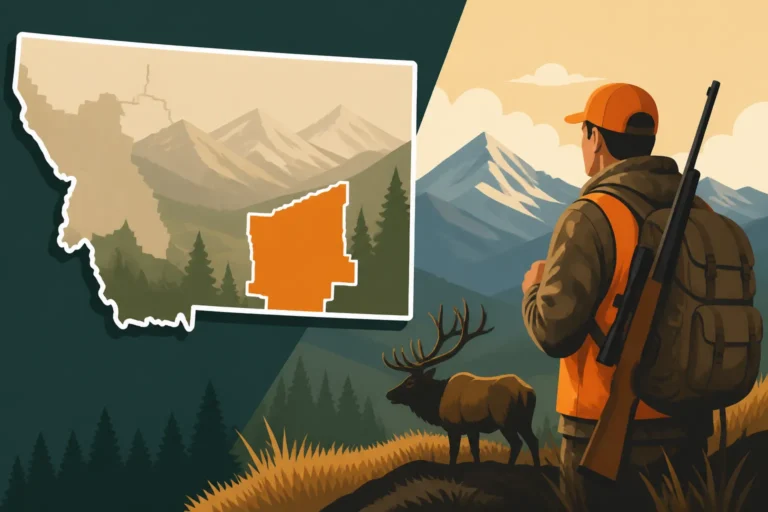
Oh, the infamous Region 1 of Montana! If you've been dreaming of a Montana hunting adventure, but the thought of navigating vast, dense timber and the potential for a grizzly encounter gives you a knot in your stomach, you're not alone. This part of the state presents some unique challenges, but also incredible rewards. This guide is here to walk you through everything you need to know to confidently plan and execute a successful hunt in Northwest Montana, from understanding the rugged terrain to mastering local tactics and staying safe.
Understanding Montana's Region 1 Hunting Landscape
When you hear "Montana," most folks picture wide-open plains and distant mountain ranges where you can glass for miles. Well, Region 1 is a bit different, and it's essential to understand its unique character before you even start packing your boots. This is the heart of Northwest Montana, a land defined by thick forests, steep mountains, and a wildness that demands respect.
Geographical Features and Terrain Challenges
Imagine towering mountains cloaked in dark, old-growth timber, deep valleys carved by rushing rivers, and an abundance of precipitation that keeps everything lush and green. That's Region 1, encompassing areas like the Flathead and Kootenai National Forests, and spilling into the northern reaches of the Lolo National Forest. This isn't country where you'll typically be spotting elk from five miles away across a sagebrush flat. Instead, expect to be in the trees, navigating challenging topography, and often relying on your ears and scent as much as your eyes. The heavy timber, especially species like lodgepole pine, Douglas fir, and grand fir, creates incredibly dense cover that can make visibility a frustratingly short 50 yards or less. This dense canopy also means slower travel, requiring exceptional physical conditioning and a willingness to put in the work, often far from roads. You can find out more about the effort required by looking into a guide on how to Physically Prepare for a Montana Elk Hunt.
The terrain here is steep, broken, and often wet. Elevations can range dramatically, leading to varied vegetation and animal movement patterns. Snowfall can be significant, particularly as hunting seasons progress into late fall, adding another layer of challenge to already difficult conditions. Hunters often find themselves working through thick underbrush, over fallen logs, and across steep side-hills, making every step a deliberate effort. While this kind of country can feel overwhelming to those accustomed to more open landscapes, it's precisely this wildness that makes Region 1 so appealing to hunters seeking a true wilderness experience.
Key Game Species and What to Expect
Region 1 boasts a diverse array of big game, though the dominant species and how you hunt them differ significantly from other parts of Montana.
Whitetail Deer: Without a doubt, whitetail deer are the kings of the lower elevations and river bottoms in Region 1. Their populations are generally healthy, thriving in the dense cover and agricultural interfaces along valleys. If you're looking for a solid deer hunt in Northwest Montana, targeting whitetails in the river bottoms or fringes of timber is your best bet. These hunts often involve still-hunting through thickets, finding natural funnels, or setting up on food sources. You can learn more about this in our guide on How to Hunt Whitetail in Montana River Bottoms.
Elk: Elk are present throughout the region, but they are often found in much smaller, more dispersed herds compared to the vast herds of Central or Southwest Montana. Hunting elk here is almost exclusively a timber game. You'll be focusing on breaking down basins, finding dark timber hideouts, and relying heavily on calling, especially during the archery season. The dense timber means close-quarters encounters are common, making it an exciting, albeit physically demanding, experience. You might also want to consult our comprehensive guide on Montana Elk Hunting Guide.
Mule Deer: While present, mule deer are less prevalent and typically found in higher elevations, more open pockets, or recent clear-cuts than their whitetail cousins. They are often spotty and require a lot of ground pounding to locate. This isn't generally considered a trophy mule deer destination, but a patient hunter might find a respectable buck.
Black Bear: Region 1 is prime black bear country, with healthy populations. Both spring and fall seasons offer opportunities. Spring bear hunting often involves glassing south-facing slopes as bears emerge from hibernation to feed on green-up, while fall hunting sees them gorging on berries and other mast crops in dense timber. Safety is paramount when hunting bears, as grizzly bears are also abundant. Consider our full Montana Black Bear Hunting Guide for more details.
Mountain Lion: These elusive predators thrive in the rugged, timbered landscape of Region 1. Hunting mountain lions typically involves using hounds, a specialized and often thrilling pursuit in the snowy winter months.
Moose, Bighorn Sheep, Mountain Goat: While these species exist in Region 1, they are incredibly limited-entry draw tags with exceptionally long odds, often requiring decades of preference points. They are not a realistic target for most general hunters.
Grizzly Bears: It's impossible to talk about hunting in Region 1 without discussing grizzly bears. This is core grizzly habitat, and encounters are a very real possibility. While grizzlies are not hunted in Region 1, understanding their behavior and carrying bear spray is an absolute necessity for any hunter venturing into this wild country.
Strategic Approaches for Hunting Success in Northwest Montana
Hunting in Region 1 demands a different mindset and skillset than hunting in many other parts of the West. Forget long-range glassing and open country tactics for the most part; here, it's about intimate knowledge of the timber, silent movement, and being constantly aware of your surroundings.
Navigating Dense Timber and Mountainous Terrain
The biggest challenge in Region 1 is the sheer density of the timber. Visibility is often severely limited, making traditional spot-and-stalk hunting incredibly difficult for elk and mule deer. This is where still-hunting and careful, methodical movement become your best friends.
Still-Hunting: This is a primary tactic in Region 1. It involves moving incredibly slowly, stopping often (every few steps), and meticulously scanning the woods ahead for any sign of movement, an antler tip, or a horizontal line that shouldn't be there. Use binoculars in the timber to pick apart cover, looking through gaps rather than just at the wall of trees. The key is to move at a pace that allows you to see the animal before it sees you. Our guide on How to Still-Hunt Montana Timber delves deeper into this effective method.
Understanding Thermals and Wind: In mountainous, timbered terrain, thermals are king. In the mornings, air warms and rises, carrying your scent uphill. In the evenings, air cools and falls, taking your scent downhill. Understanding these daily shifts is critical, especially when approaching bedding areas or calling. Always try to approach with the wind and thermals in your favor. This is especially true for elk, as highlighted in How to Use the Wind Hunting Montana Elk. Pay attention to localized swirls caused by topography. A simple puff bottle or milkweed seeds can be invaluable to check the subtle air currents.
Reading Sign in the Thick Stuff: With limited visibility, fresh sign becomes even more important. Look for fresh tracks, droppings, rubs, and active feeding areas. Pay close attention to subtle elk wallows in Montana or well-used game trails that animals are using to move between bedding and feeding areas. The more recent the sign, the closer you are to animals. Don't be afraid to follow fresh tracks slowly and patiently.
Safety First: Dealing with Montana's Predator Population
Northwest Montana is renowned for its robust populations of both black bears and grizzly bears. While black bears are a game species, grizzlies are protected, and encountering either requires proper preparation and a strong emphasis on safety. This isn't about fear-mongering, but realistic preparation for hunting in wild country.
Grizzly Bear Awareness: Every hunter in Region 1 needs to be grizzly bear aware. This means carrying bear spray (and knowing how to use it), making noise when moving through thick cover, especially near water sources or berry patches, and being vigilant at all times. Avoid hunting alone if possible, and if you do, be extra cautious. When packing out meat, do it efficiently and be prepared for potential encounters. Always keep your bear spray accessible and on your person, not in your pack. For more details on staying safe in the backcountry, consult our comprehensive Montana Backcountry Hunting Safety Tips.
Food Storage and Camp Hygiene: If you're setting up a base camp or spike camp, proper food storage is non-negotiable. Bear-resistant containers or hanging food well off the ground and away from your sleeping area are essential to avoid attracting bears. Never keep food in your tent. The same goes for any scented items. Cleanliness around camp is not just good practice; it's a critical safety measure in grizzly country.
Knowing the Difference: While both black bears and grizzlies inhabit Region 1, knowing how to differentiate them is vital. Grizzlies typically have a pronounced shoulder hump, a dish-shaped face, and smaller, rounder ears. Black bears lack the hump, have a straight facial profile, and larger, more pointed ears. Color is not a reliable indicator, as both species can range from black to blonde.
Essential Gear and Resources for Region 1 Hunters
The demanding environment of Montana's Region 1 necessitates specific gear choices that prioritize durability, reliability, and functionality. Cutting corners here can lead to a miserable, or even dangerous, experience.
Must-Have Equipment for Rugged Conditions
Your gear needs to stand up to moisture, cold, and relentless abrasion from dense timber. Think layers, durable outer shells, and footwear that can handle steep, wet, and rocky terrain.
Layering System: The weather in Region 1 can change rapidly, often delivering rain, snow, and sunshine all in a single day. A versatile layering system is paramount. Start with a moisture-wicking base layer, add insulating mid-layers (fleece or synthetic puffy jackets work well), and top it with a waterproof, breathable outer shell. This allows you to adapt to changing temperatures and exertion levels without getting chilled or soaked.
Durable, Waterproof Footwear: Your boots are arguably your most important piece of gear. Invest in high-quality, waterproof, and supportive hunting boots with stiff soles for side-hilling and good ankle support. Break them in thoroughly before your hunt! Wet feet can quickly lead to blisters and hypothermia, especially in the often-damp conditions of Northwest Montana. Brands like Kenetrek or Crispi are popular among serious mountain hunters for their durability and performance in rugged terrain.
Reliable Navigation Tools: A GPS device (such as a Garmin inReach or a handheld GPS unit) combined with a detailed topographic map and compass is essential. The dense timber can disorient you quickly, and cell service is spotty at best. Know how to use all your navigation tools, even in the dark or bad weather. Our guide on How to E-Scout Montana Hunting Units also emphasizes the importance of good mapping tools.
Quality Optics: While long-range glassing isn't the primary method, good binoculars (10×42 or 10×50) are still crucial for picking apart dense cover, confirming game, and identifying distant landmarks. A good rangefinder is also invaluable for precise shot placement in varying terrain. For more details, explore Best Optics for Montana Big Game.
Game Bags and Pack: If you're successful, you'll need to pack meat out, often over difficult terrain. High-quality, breathable game bags are a must to protect your meat from dirt and flies. A sturdy internal or external frame backpack with adequate capacity (65-80 liters) is essential for carrying your gear in and packing out an animal. Our comprehensive Montana Backcountry Hunting Gear List provides a detailed breakdown.
Utilizing Modern Technology for E-Scouting and Navigation
Modern technology has revolutionized how we approach hunting, even in the dense wilds of Region 1. Tools like onX Hunt and GoHunt provide invaluable information for planning and in-the-field navigation.
onX Hunt Maps: This is perhaps the most indispensable tool for public land hunters in Region 1. The onX Hunt app provides detailed land ownership maps, showing public (National Forest, BLM, State Trust Land) and private boundaries, often overlaid with topographic information, roads, trails, and even current fire boundaries. You can mark waypoints for potential camp spots, water sources, or game sightings. Crucially, you can download maps for offline use, ensuring you have navigation capabilities even without cell service. Using onX to understand public land access is critical, as detailed in our Montana Public Land Hunting Guide.
GoHunt Insider: While GoHunt offers extensive data for draw odds and unit breakdowns across multiple states, its utility for Region 1 specifically lies in understanding general season dynamics, overall elk and deer populations, and identifying specific hunting districts (HDs) within Region 1 that might align with your hunting style. It helps you grasp the bigger picture of Montana hunting opportunities, including nonresident license draw explained, and which districts are general versus permit-only.
Satellite Imagery and Topo Maps: Before your boots even hit the ground, spend hours poring over satellite imagery and topo maps. Look for subtle changes in vegetation, benches, saddles, and water sources that might attract game or provide travel corridors. Identify potential bedding areas (often north-facing slopes with dense cover) and feeding areas (south-facing slopes, clear-cuts, or areas with specific browse). This virtual scouting, or E-Scouting Montana Districts, can save you immense time and effort in the field.
Planning Your Hunt: Seasons, Tags, and Access
Navigating Montana's hunting regulations and access opportunities can feel like a labyrinth, especially for nonresidents. Region 1 has its own set of nuances that you need to be aware of to ensure a legal and productive hunt.
Navigating Draw Odds and General Seasons
Montana operates on a complex system of general licenses and limited-entry permits. For Region 1, most elk and deer opportunities fall under the general license structure, which simplifies things for many hunters.
General Elk and Deer Licenses: For the majority of Region 1, if you draw a general elk or deer license (often through the nonresident combination license), you can hunt in any open general hunting district. This is a huge benefit, offering flexibility. However, some specific hunting districts within Region 1 might have additional restrictions, such as antler-point requirements for bulls or either-sex/antlerless regulations, so always check the specific regulations for your chosen HD. Our guide on Montana General Elk License Explained can shed more light.
Permit-Only Districts: While less common than in other regions, some highly sought-after districts in Region 1 may require a limited-entry permit, which you apply for separately in the draw. These typically have much lower success odds and require several bonus points or preference points to draw. These are usually for specific species or management goals. Understanding how to build preference points in Montana is key for these limited draw hunts.
Season Dates: Montana's archery season typically runs through September, followed by the general rifle season from late October through November. Region 1 often sees early snowfall, which can influence animal movement and access. Pay close attention to the Montana Hunting Seasons Explained for the most up-to-date dates, as they can vary slightly year to year. Early archery season in Montana for elk can be particularly challenging due to dense cover but also rewarding if you catch the tail end of the bugling.
Accessing Public Land and Minimizing Pressure
Region 1 is dominated by vast tracts of public land, primarily National Forests. This offers incredible hunting opportunities but also means you'll likely encounter other hunters, especially in more accessible areas.
National Forest Lands: The bulk of Region 1 hunting takes place on the Flathead, Kootenai, and northern Lolo National Forests. These lands are open to hunting, and extensive road systems (though many are seasonal or gated) provide access points. However, to truly get away from the crowds and find undisturbed animals, you'll need to be willing to hike deep into roadless areas or wilderness boundaries. Consider exploring the specific Hunting the Flathead National Forest guide.
Wilderness Areas: Region 1 borders significant wilderness areas, including portions of the Bob Marshall Wilderness. Hunting in these areas is a true backcountry experience, often requiring pack animals or extended backpack trips. These areas offer solitude and potential for untouched animals but demand a higher level of fitness, planning, and self-sufficiency. Our guide on How to Hunt Elk in Montana's Wilderness can provide valuable insights.
Minimizing Hunter Pressure:
- Go Deeper: The further you get from a road or trailhead, the fewer hunters you'll typically encounter. Be willing to put in the miles.
- Hunt Smarter: Focus on areas with difficult access, steep terrain, or dense timber that deter less determined hunters. Animals often retreat to these sanctuaries when pressure increases.
- Hunt During the Week: Weekends, especially during rifle season, can see a significant influx of hunters. If your schedule allows, hunting during the weekdays can provide a more solitary experience.
- Utilize onX Hunt: Use your onX Hunt app to identify roadless areas, wilderness boundaries, and obscure access points that might be overlooked by others. Look for small pockets of public land that are difficult to reach but hold potential. Knowing How to Find Public Land in a Montana District is your first step.
The unique challenges and rewards of Region 1 make it an incredible destination for the prepared hunter. With the right strategies, gear, and mindset, you can have a truly unforgettable experience in Montana's wild northwest. Just remember, grizzly country demands respect and constant vigilance.
Disclaimer
Hunting is an inherently dangerous activity. This guide provides general information and recommendations. Always consult the most current Montana Fish, Wildlife & Parks regulations and local ordinances before planning any hunt. Hunter safety is paramount. Be aware of your surroundings, carry appropriate safety gear, and hunt ethically and responsibly.