How to Shoot Long Range at Montana Elk
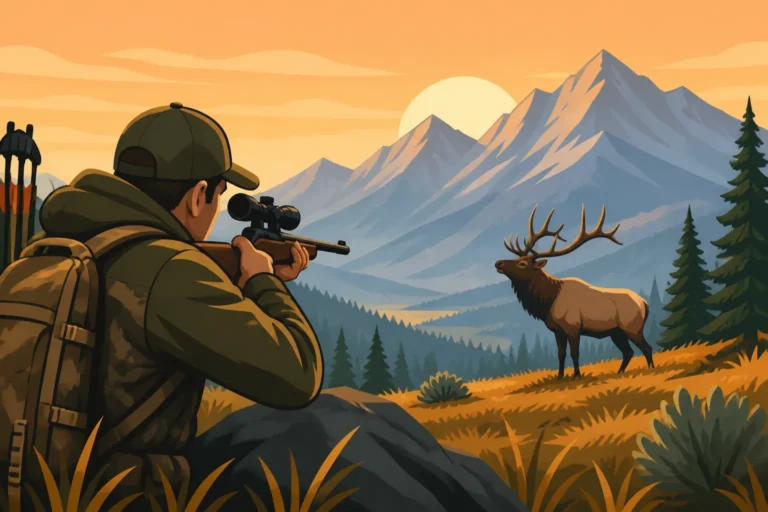
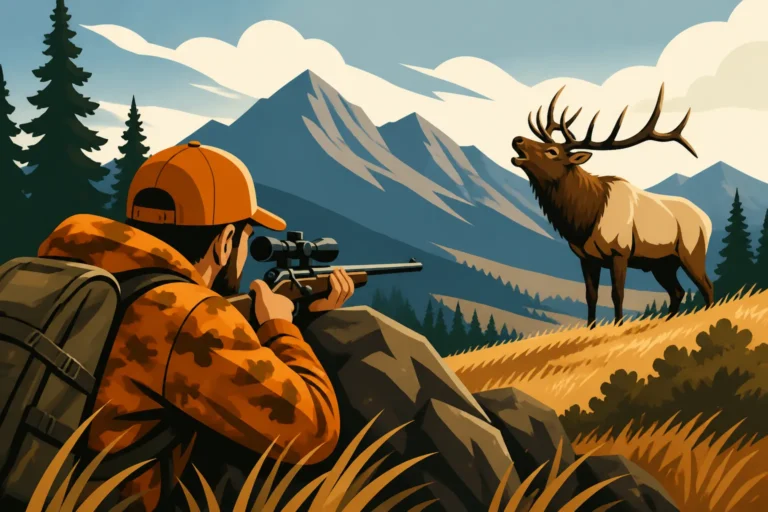
The expansive, breathtaking landscapes of Montana often mean that the elk you've been stalking for hours might finally present themselves across a wide-open draw, well beyond what many consider a "chip shot." This can be incredibly frustrating, but it's a reality of hunting the Big Sky Country. This guide will meticulously break down the considerations, equipment, and rigorous practice necessary to ethically and effectively make those longer-range shots on Montana elk, ensuring you're prepared when the moment comes.
Understanding Ethical Long-Range Shooting for Elk
Before we even talk about gear, it's crucial to address the ethics of long-range shooting. Montana elk are magnificent, resilient animals, and our responsibility as hunters is to ensure a swift, clean kill. There's a big difference between being able to hit a target at 600 yards on a calm range day and being able to ethically take an animal at that distance in real-world hunting conditions. Many hunters feel immense pressure to take a shot, especially after a long, difficult stalk, but your personal ethical boundary must always take precedence over the desire for success.
Defining Your Personal Ethical Range
Every hunter has a different skillset, and what's ethical for one might be irresponsible for another. Your personal ethical range isn't just about what you can hit, but what you can guarantee to hit every single time, under varying environmental stressors, with a vital shot. This means considering your physical condition, the conditions of the hunt, and your true capabilities, not just on a bench rest, but from various field positions. Have you practiced enough from kneeling, sitting, or even prone with your pack as a rest? These are the real-world scenarios you'll encounter when hunting elk, not just a perfectly flat range. Regularly assessing and honestly defining this maximum ethical range is a continuous process, evolving with your practice and experience.
Think about it: have you truly put in the work to confidently make a 400-yard shot when your heart is pounding, your lungs are burning from a steep climb, and a crosswind is whispering through the pines? If you haven't, then that 400-yard shot isn't ethical for you in that moment. It's vital to develop a personal minimum group size that you demand of yourself at various distances before considering a shot. For example, if you can consistently place five shots within a 6-inch circle at 400 yards from a field position, that might be your ethical limit. If you can't, you need more practice, or you need to get closer. For more tactical insights, consider diving into a guide like Montana Rifle Elk Hunting Guide to refine your overall approach to elk with a rifle.
The Kill Zone Versus Wounding Zone
An elk's vital zone—heart and lungs—is roughly the size of a dinner plate. While a 10-inch group at 500 yards might seem respectable on paper, that's already pushing the boundaries of what's acceptable for a clean kill shot on an animal. When you factor in potential hunter error, animal movement, and environmental variables, a shot that drifts even a few inches can turn a lethal hit into a gut shot or a limb wound. A wounded animal means unnecessary suffering and a high probability of never recovering it, wasting both a life and the meat.
Long-range shooting for big game like elk demands unwavering precision. We're talking about hitting a specific, relatively small area consistently. It's not enough to hit "the animal." You must hit the vitats of the animal. This is why every single factor, from bullet drop to wind drift, must be calculated and accounted for with extreme diligence. Understanding Montana Elk Hunting: Rifle Tactics will give you a broader context for ethical shot placement in the field.
Environmental Factors and Their Impact
Montana's weather is notoriously fickle. What starts as a calm, clear morning can quickly turn into a gusty, snowy afternoon. These rapidly changing environmental factors have a profound impact on bullet trajectory, and failing to account for them is a recipe for a missed or, worse, a wounded animal.
- Wind: Wind is arguably the most challenging variable. Even a slight crosswind can push your bullet off target by feet at longer ranges. You need to develop the skill to read the wind, not just at your position, but across the entire bullet's flight path. This often involves observing trees, grass, and even mirage through your spotting scope. Learning to make quick, accurate wind calls is a skill that comes only with extensive practice and a keen understanding of ballistics.
- Temperature and Altitude: Changes in air density, caused by temperature and altitude, affect how a bullet flies. Colder, denser air creates more drag, while hotter, thinner air results in less drag. Similarly, higher altitudes mean less air resistance. While modern ballistic calculators, like those integrated into the GoHunt app, can account for these variables, you need to know how to input the correct data and trust your tools. For a comprehensive look at how these factors influence your shot, researching Montana Long-Range Shooting Considerations is highly recommended.
- Angle: Shooting uphill or downhill at steep angles also changes your bullet's effective range. Gravity acts on the bullet perpendicular to the Earth, not perpendicular to your line of sight. Most ballistic apps will calculate the "shooter's equivalent horizontal distance" (SEHD) if you input the angle, giving you a truer holdover. Ignoring angle compensation, especially in Montana's steep, rugged terrain, will consistently result in high shots.
Essential Gear for Long-Range Elk Hunting
You might be the best shot in the world, but without the right tools, long-range elk hunting can quickly become an exercise in futility. The gear isn't a substitute for skill, but it's an absolute necessity to extend your ethical range. Investing in quality, reliable equipment is non-negotiable for consistent long-range performance.
Rifle and Caliber Selection
For long-range elk hunting, your rifle needs to be accurate, dependable, and chambered in a cartridge capable of delivering sufficient energy to the target. This isn't the place for your old deer rifle unless it's specifically tuned for precision. A good long-range setup will typically feature a heavy barrel for stability, a crisp trigger, and a stock that allows for a consistent cheek weld and comfortable shooting from various positions.
When it comes to caliber, the goal is a balance of bullet weight, ballistic coefficient (how aerodynamically efficient the bullet is), and muzzle velocity to maintain energy and resist wind drift. Common choices for long-range elk include:
- .300 Winchester Magnum: A classic, powerful round with a flat trajectory, though it comes with substantial recoil.
- 7mm Remington Magnum: Offers excellent ballistics with slightly less recoil than the .300 WM.
- .28 Nosler: A newer, high-velocity cartridge known for its flat trajectory and energy.
- 6.5 PRC/.300 PRC: Excellent modern choices with superb ballistic coefficients, making them very forgiving in the wind.
It's not just about the cartridge, but how well your specific rifle shoots that cartridge. Every rifle has its preferences. To dive deeper into what makes a cartridge suitable for elk, consult a guide on the Best Rifle Calibers for Montana Elk.
| Caliber | Common Bullet Weights (gr) | Approx. Muzzle Velocity (fps) | Energy @ 500 yards (ft-lbs) | Recoil (relative) | Best Use Case |
|---|---|---|---|---|---|
| .300 Winchester Magnum | 180-200 | 2950-3100 | 2000-2500 | Heavy | Max power, common, proven |
| 7mm Remington Magnum | 160-175 | 2900-3050 | 1800-2300 | Moderate-Heavy | Balanced power and trajectory |
| .28 Nosler | 160-180 | 3100-3300 | 2200-2700 | Heavy | High velocity, flat shooting, modern performance |
| 6.5 PRC | 140-156 | 2900-3050 | 1600-2000 | Moderate | Excellent BC, less recoil, wind resistant |
| .300 PRC | 212-225 | 2850-2950 | 2400-2900 | Heavy | Heavy for caliber bullets, excellent long-range BC |
Note: Velocities and energies are approximate and vary based on barrel length, specific load, and environmental conditions. Always verify with your actual setup.
Optics and Ranging Tools
Clear, reliable optics are paramount. You need a high-quality rifle scope with precise, repeatable adjustments (turrets) that you can dial for elevation and, ideally, windage. A first focal plane (FFP) reticle is often preferred for long-range, as the reticle subtensions remain accurate at all magnifications, allowing for consistent holdovers or wind holds without changing your zero. Brands like Leupold, Vortex, and Nightforce offer excellent long-range hunting scopes designed to withstand the rigors of Montana's backcountry.
Beyond the scope, a reliable laser rangefinder is absolutely critical. You cannot guess distance at extended ranges. A good rangefinder will quickly and accurately give you the distance to your target, and many modern models even include angle compensation. For glassing vast areas and spotting elk at distance, a high-quality spotting scope is also a must-have. This will not only help you locate animals but also read wind indicators at the target and analyze bullet impacts. For a deeper look into selecting the right glass, check out Best Optics for Montana Big Game.
Many long-range hunters use a separate ballistic calculator. Handheld units like Kestrel offer incredibly precise environmental data and ballistic solutions. Software like GoHunt's mapping and research platform often integrates ballistic calculators directly, allowing you to build profiles for your specific rifle and ammunition, ensuring accurate data at your fingertips.
Ammunition and Ballistics
Your choice of ammunition is just as important as your rifle. For long-range elk, you need a bullet designed to perform at extended distances and retain enough energy for a clean kill. Look for bullets with high ballistic coefficients (BCs), which means they are more aerodynamic and less affected by wind and gravity. Common examples include Hornady ELD-X, Berger VLD Hunting, or Nosler AccuBond Long Range.
Furthermore, it's crucial to understand your bullet's external ballistics:
- Bullet Drop (DOPE): How much the bullet falls over distance. You'll need a range card or a ballistic calculator to know exactly how many clicks (MOA or MRAD) to dial on your scope for a given range.
- Wind Drift: How much the bullet is pushed by the wind. This is the hardest to compensate for and requires extensive practice.
- Energy Retention: Ensure your chosen bullet still carries sufficient kinetic energy to humanely harvest an elk at your maximum ethical range. A general rule of thumb for elk is often cited as at least 1,500 ft-lbs of energy at the point of impact, though some prefer more.
This is where custom loading can truly shine, allowing you to tailor ammunition specifically to your rifle's preferences and maximize accuracy. However, factory ammunition has become incredibly good, with many manufacturers offering precision long-range hunting loads. Remember, consistency is key; once you find a load your rifle loves, stick with it.
Mastering the Fundamentals and Practice Regimen
Having the best gear is useless without the skills to back it up. Long-range shooting for Montana elk demands rigorous, consistent practice of fundamental marksmanship, combined with real-world scenario training. There are no shortcuts here; dedication to practice is the only way to build true proficiency and confidence.
Range Estimation and Wind Reading
These two skills are arguably more important than almost anything else for long-range success. While a laser rangefinder gives you exact distance, knowing how to quickly estimate range can be a lifesaver if your electronics fail or if an animal moves unexpectedly. This involves using known objects, observing topographical features, and understanding your reticle's subtensions.
Wind reading, as mentioned earlier, is a dark art that only comes with experience. You'll need to learn to "read" the wind by observing flags, trees, mirage through your scope, and even grass movements at various distances between you and the target. Start by practicing in varying conditions at the range, trying to predict impacts based on wind flags, and then verifying with your shot. Use apps like those offered by GoHunt to track wind data in real-time and cross-reference with your actual bullet impacts. This real-world feedback loop is invaluable for developing your intuitive wind calls. A good starting point for refining your observational skills is the article on How to Glass Montana's Big Country.
Shooting Positions and Stability
Rarely will an elk present itself when you have a perfectly flat bench rest. You'll likely be shooting from an improvised position, often on uneven terrain, after a strenuous hike. This means you need to practice shooting from realistic field positions:
- Prone with a Bipod: The most stable field position. Always carry a sturdy bipod and practice deploying it quickly on uneven ground. Use your backpack as a rear support.
- Sitting: With shooting sticks or your pack. This is often necessary in taller grass or brush.
- Kneeling: Another versatile position when prone or sitting isn't feasible. Use your elbow on your knee for stability.
- Improvised Rests: Learn to use rocks, downed logs, or even a tree trunk as a rest. The goal is to eliminate as much movement as possible.
The key is to achieve maximum stability. A shooting bag, like a rear rest or a heavy front bag, is crucial for bench work and can be adapted for field use with practice. Practice breathing control and trigger discipline relentlessly from these positions. A truly steady hold often comes from core strength and stability, so physical preparation, as outlined in How to Physically Prepare for a Montana Elk Hunt, plays a direct role in your shooting accuracy.
Practical Field Practice Scenarios
Don't just shoot paper at a static range. Set up scenarios that mimic real hunting conditions.
- Varying Distances: Practice at 100, 200, 300, 400, and up to your maximum ethical range.
- Timed Drills: Simulate the pressure of a quick shot by setting a timer.
- Physical Exertion: Hike a steep hill, then immediately set up and take a shot. Get your heart rate up and practice calming yourself for a steady shot.
- Angle Shooting: Find a hill and practice shooting uphill and downhill at various angles.
- Irregular Targets: Use steel targets that ring when hit, giving instant feedback. Set up elk-sized silhouettes.
- Data Validation: Bring your ballistic calculator and rangefinder. Practice ranging, dialing, and making wind calls, then verify the shot. This is how you confirm your data and build confidence.
- Group Practice: Don't just shoot once. Shoot groups of 3-5 shots to truly assess your consistency from a given position under pressure.
This comprehensive, challenging practice regimen is what separates those who can shoot long range from those who should shoot long range at live animals. Understanding How to Hunt Montana Elk in General Rifle Season will also provide context for the types of situations you might encounter where long-range shots are presented.
Making the Shot When it Counts
The moment of truth arrives after countless hours of preparation and relentless practice. All the planning, gear, and training culminate in a few critical seconds. Approaching this moment with a clear head and a methodical process is essential for success when hunting Montana elk.
Pre-Shot Checklist and Mental Preparation
Before you even think about putting your finger on the trigger, run through a quick mental checklist. This isn't about rushing, it's about ensuring every variable is accounted for, especially when the adrenaline is surging.
- Animal Identification: Is it legal? Is it the animal you're after? Is there a safe backdrop?
- Range Confirmation: Use your laser rangefinder. Double-check the distance.
- Wind Assessment: How strong is the wind? What direction is it coming from? Is it consistent, or gusting? What is your wind hold or dial?
- Angle Compensation: If shooting uphill or downhill, adjust for the angle or use your rangefinder's compensated distance.
- Dial or Holdover: Make the necessary elevation adjustment on your scope's turrets, or confidently apply your predetermined holdover.
- Stable Position: Get as stable as possible. Prone is best, but a solid rest is paramount.
- Breathing and Trigger Control: Take a deep breath, exhale slowly, and squeeze the trigger smoothly. Don't yank or flinch.
Mental preparation is huge. Visualize success. Trust your training and your gear. Calm your mind and focus on the fundamentals. The extensive preparation in your home range will be your biggest asset in this crucial moment. Knowing How to Judge Distance in Montana's Mountains is a skill that will serve you well in this pre-shot phase.
Post-Shot Analysis and Tracking
Your responsibility doesn't end when the bullet leaves the barrel. The post-shot routine is just as important as the pre-shot.
- Follow Through: Do not immediately pull your head off the scope. Maintain your shooting position and watch the impact. Where did the bullet hit? Did the animal react? This information is critical for tracking.
- Listen for Sound: A solid "thwack" often indicates a good hit, especially on the shoulder or chest.
- Mark the Spot: Mentally (or physically, if safe to do so quickly) mark the exact spot where the animal was standing when you shot. Look for a tree, rock, or other landmark. This is your "last seen" point.
- Wait and Observe: Resist the urge to immediately rush to the animal, especially after a long shot. Elk can travel surprising distances, even with a fatal hit. Give the animal time to expire. The amount of time depends on the hit (e.g., a few minutes for a good lung hit, an hour or more for a questionable shot).
- Start Tracking: Systematically approach the last seen spot. Look for blood, hair, bone fragments, and track marks. Even if you think you saw the animal drop, always track to confirm. Pay attention to the animal's reaction; a hump-back, slow walk often indicates a gut shot, while a kick or staggering often points to a chest hit. This is where your in-depth knowledge of How to Pack Out an Elk in Montana will become relevant, as your hunt truly isn't over until the meat is in the cooler.
Long-range hunting for Montana elk is a challenging, rewarding endeavor that demands the utmost respect for the animal and a commitment to ethical hunting practices. By investing in quality gear, mastering the fundamentals, and dedicating yourself to realistic practice, you can confidently and ethically make those longer shots when the opportunity arises in the vast, wild landscapes of Montana.
Disclaimer
Hunting is an inherently dangerous activity. This guide provides general information and recommendations for long-range shooting for elk in Montana. Hunters must always comply with all local, state, and federal hunting regulations and laws. The information provided herein is not a substitute for professional instruction, ethical judgment, or personal responsibility in the field. Always prioritize safety, ethical shot placement, and respect for wildlife.