Montana Mule Deer Migration
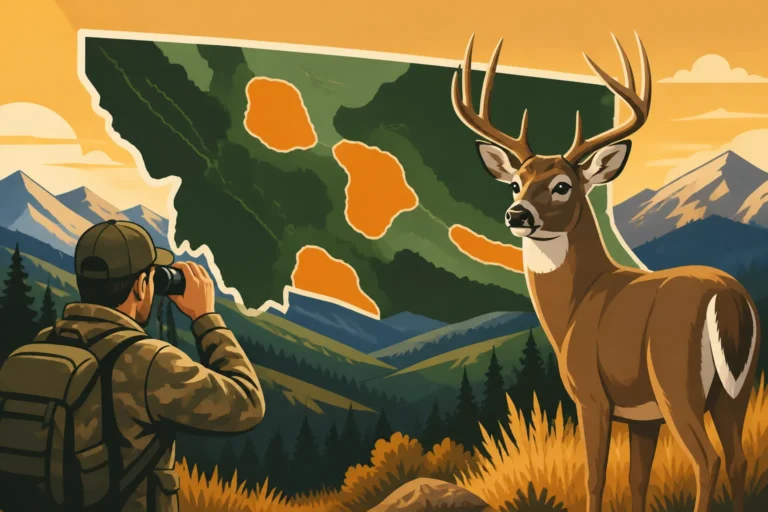
One of the most elusive challenges for any deer hunter in Montana is trying to pinpoint the often-unpredictable movements of mule deer, especially as seasons change. These magnificent animals don't just stay put; they're constantly on the move, following age-old patterns dictated by weather, food, and pressure. If you've ever felt like you're chasing ghosts, trying to figure out where they'll be next, you're not alone. This guide will walk you through the fascinating world of Montana mule deer migration, giving you the insights and strategies to be in the right place at the right time.
Understanding Montana's Mule Deer Migration Patterns
Montana's mule deer are creatures of habit, but their habits are deeply tied to the rhythms of the natural world. Unlike whitetails, which often have smaller, more localized home ranges, mule deer in the vast, rugged landscapes of Montana are renowned for their incredible migratory journeys. These aren't just random wanderings; they are crucial, seasonal shifts that ensure their survival, and understanding them is paramount for any hunter hoping to connect with a big buck.
The Why Behind the Wander
The fundamental reason mule deer migrate boils down to survival. As the seasons cycle, so do the availability of essential resources and the severity of environmental pressures. In the high country during summer, there's an abundance of lush, nutritious forage, water from snowmelt, and cooler temperatures. This is prime fawning and antler-growing habitat. However, as autumn deepens into winter, these resources dwindle, and the high country becomes inhospitable, buried under feet of snow.
This forces a downward movement to lower elevations where snow depths are less severe, and critical browse like sagebrush, bitterbrush, and serviceberry remains accessible. These winter ranges are vital, often characterized by south-facing slopes that melt out faster, exposing more forage. The journey isn't without peril, though, as migration corridors often concentrate deer, making them more susceptible to predation and hunter pressure. It's a delicate balance of risk and reward for the deer.
Beyond food and climate, the drive to reproduce, or the rut, also plays a significant role in deer distribution and movement, albeit temporarily. During the late fall, bucks become highly active, covering extensive ground in search of does. While not a true migration in the sense of a seasonal range shift, it certainly changes their predictable patterns and brings them into areas they might not frequent otherwise, making them more visible and vulnerable to hunters. This behavioral change often coincides with the general rifle season in Montana, creating unique hunting opportunities for those who understand it.
Timing is Everything: Seasonal Movements
Mule deer movements are highly synchronized with the calendar, though local conditions can always throw a curveball. In the spring, as the snow recedes and new growth emerges, deer begin their slow ascent from wintering grounds to higher elevation summer ranges. This "green-up" migration is a gradual process, as they follow the rising flush of vegetation. This typically occurs from April through June, leading them into higher mountain basins and plateaus.
Summer, from July through early September, sees bucks in their highest, often most secluded, haunts, feeding heavily to grow antlers and recover from the previous rut. Does with fawns also seek out these areas for security and ample forage. This is generally when they are dispersed across their summer range, often in smaller, bachelor groups for bucks, making them harder to locate consistently.
As fall approaches in September, the earliest hints of snow in the high country, combined with a dip in temperatures, signal the start of their return journey. Initially, this might be subtle, with deer staging in mid-elevation areas. By late October and into November, especially with significant snowfall, the full migration is often in swing. Bucks, energized by the approaching rut, are actively moving, and the main push to winter range happens. This period, often overlapping with Montana's general rifle season, is when many hunters target these moving animals. Understanding Montana Elk Season Dates Guide will help you align your mule deer hunt with other big game opportunities.
Geographic Influences on Migration Routes
Montana's diverse landscape means mule deer migration isn't a one-size-fits-all phenomenon. Different mountain ranges, river systems, and plains areas create unique migratory challenges and opportunities. For instance, deer migrating from the high peaks of the Gravelly Range Hunting Guide will utilize specific saddles, drainages, and lower elevation benches to reach their wintering areas in the valleys below. These corridors are often constricted, creating natural funnels that can be predictable year after year.
In contrast, mule deer in the more open, rolling country of the Missouri Breaks or the vast Eastern Plains might not have such dramatic elevation shifts but will still move significant distances to find adequate winter forage and thermal cover. Here, migration might be more about traversing large expanses of land to reach scattered pockets of good browse or sheltered coulees. Even in these seemingly boundless landscapes, deer will often follow established routes along specific creek bottoms or breaks that offer historical advantages.
The key takeaway is that every hunting district has its own unique topography and, consequently, its own specific migration patterns. A deer in the Rocky Mountain Front might have a very different journey than one in the Custer Gallatin National Forest. Hunters need to familiarize themselves not just with general mule deer biology, but with the specific nuances of their chosen hunting district. Learning How to E-Scout Montana Hunting Units is a critical first step in uncovering these localized patterns.
Key Factors Driving Mule Deer Movements
While the overarching goal of migration is survival, the precise timing and routes of mule deer movements are influenced by a complex interplay of environmental factors. These factors can vary significantly from year to year, which is why a deep understanding of them allows hunters to adapt and increase their chances of success. It's not just about knowing that they move, but what makes them move, and when.
The Role of Weather and Snowpack
Without a doubt, snow and temperature are the primary drivers of significant mule deer migrations in Montana. As early winter storms dump snow in the high country, especially accumulating to depths that make foraging difficult or movement energy-intensive, deer will begin their descent. A general rule of thumb is that if snow is deep enough to cover their primary forage or make traveling a chore, they'll seek lower ground. This can happen quite suddenly with a big early-season dump, or it can be a more gradual process.
Consider a year with an unusually warm, dry October. Deer might linger on their summer and transitional ranges much longer, delaying their migration to wintering grounds. Conversely, a severe cold front coupled with heavy snow in mid-November can send them scrambling down to lower elevations almost overnight. Hunters who pay close attention to local weather forecasts and understand historical snow accumulation patterns for their specific hunting unit can gain a significant advantage. This dynamic nature means that scouting reports from previous years are a good starting point, but real-time conditions are always the deciding factor.
Beyond just snow depth, extreme cold also plays a role. Even without deep snow, prolonged periods of sub-zero temperatures can prompt deer to move to more sheltered, lower-elevation areas where they can conserve energy. Thermal cover, such as thick stands of conifer trees or deep ravines, becomes incredibly important. They'll seek out south-facing slopes to bask in any available sunlight, melting out pockets of snow and exposing crucial forage.
Forage Availability and Quality
Mule deer are browsers, meaning they primarily feed on the leaves, shoots, and twigs of woody plants, as well as various forbs (broad-leafed plants). Their movements are fundamentally tied to finding the most nutritious and accessible food sources throughout the year. In spring and summer, they follow the "green-up" to higher elevations, seeking out succulent new growth rich in protein and moisture. This is crucial for fawn development and antler growth.
As fall progresses, the quality of high-elevation forage declines, and they shift to areas where browse remains palatable and available. Winter range selection is critical, focusing on areas with abundant sagebrush, bitterbrush, mountain mahogany, and other resilient woody plants that retain nutritional value through the cold months. The timing of their migration is often a delicate balance: staying high for as long as possible to capitalize on dwindling good forage, but moving down before heavy snows make it impossible or too energetically costly.
The presence of specific forage types along migration routes and on winter ranges can create bottlenecks or preferred staging areas. For instance, a ridge dotted with healthy bitterbrush patches in a mid-elevation zone might hold deer for a couple of weeks after the first high-country snows, before they commit to the final push to their lowest wintering grounds. Understanding these plant communities and their seasonal availability is like reading a deer's menu, telling you where they might be feeding.
Human and Predatory Pressure
While natural elements are huge drivers, human activity and predator pressure also significantly influence mule deer movements, especially during hunting season. As soon as archery season opens in September, and even more so when Montana General Rifle Season Dates arrive, the presence of hunters in the woods can push deer from their traditional daytime haunts. Deer that might otherwise linger in open, accessible areas will quickly become nocturnal or retreat into dense timber and remote areas.
Hunting pressure often concentrates deer into specific pockets of cover or moves them across property lines onto private land, if accessible, where they feel safer. This isn't necessarily a migration in the classic sense, but it’s a localized movement pattern that hunters must account for. Understanding How to Hunt Montana Public Land Pressure is vital for success. Deer learn quickly, and a heavily hunted ridge might become a no-go zone during daylight hours, while a thick, overlooked canyon nearby could be holding multiple bucks.
Beyond human hunters, natural predators like mountain lions and wolves can also exert pressure that influences deer movements. While deer are constantly aware of predators, an increase in wolf activity in a particular drainage, for example, might prompt deer to alter their routes or choose different bedding areas. Montana Fish, Wildlife & Parks (FWP) monitors predator populations, and understanding their distribution can add another layer to your mule deer hunting strategy. These pressures add another layer of complexity to predicting where mule deer will be.
Strategies for Hunting Migratory Mule Deer in Montana
Successfully hunting migratory mule deer in Montana requires a blend of diligent preparation, adaptability, and a deep understanding of the deer's seasonal habits. It's not just about showing up with a rifle; it's about becoming a student of the landscape and its inhabitants. The mule deer's journey provides unique windows of opportunity, but you have to know how to spot them and capitalize on them.
E-Scouting and Pre-Season Preparation
Before you ever set foot in the field, the most powerful tool in your arsenal is often a good e-scouting platform. Services like GoHunt, onX Hunt, and Google Earth allow you to pour over satellite imagery, topographical maps, and public land ownership data from the comfort of your home. This is where you can identify potential summer ranges, wintering grounds, and—most importantly—the corridors that connect them. Look for natural funnels like saddles between mountain peaks, narrow drainages, timbered benches, and transition zones where different habitat types meet.
Start by identifying high-elevation areas that would serve as prime summer range and lower-elevation, often south-facing slopes, that could be wintering areas. Then, trace the most logical paths between them. Think about how a deer would move efficiently and safely. Are there dense timber patches for cover? Water sources? Open areas for feeding? Pay close attention to aspects, as south-facing slopes clear of snow much faster. This pre-season work can help you narrow down vast amounts of territory to a few key areas that warrant on-the-ground investigation. Don't forget to review Montana Mule Deer Season Dates and Tags to ensure your timing aligns with open seasons.
Another crucial aspect of pre-season preparation is studying FWP harvest data and migration studies for your chosen hunting district. Many districts in Montana have ongoing research into mule deer movements, and these reports can offer invaluable insights into historical migration timing and routes. While deer don't always follow the same path every year, these studies provide a strong baseline and highlight areas that consistently see migratory traffic. Combining this biological data with your e-scouting efforts using tools like GoHunt can paint a very comprehensive picture.
On-the-Ground Scouting and Adaptability
E-scouting is fantastic, but it's only the first step. To truly understand a migration route, you need to put boots on the ground. Visit your targeted areas in the weeks leading up to the season, if possible. Look for fresh sign: tracks, droppings, rubs, and beds. Are deer actively using those funnels you identified from your satellite maps? Are there water sources available? What's the forage like? This real-world verification is critical because conditions on the ground can change dramatically.
Adaptability is key when hunting migratory deer. Weather patterns can shift quickly in Montana, and a sudden snowstorm can accelerate migration or hold deer up in staging areas. If your initial scouting suggests deer are still high, but a major weather system rolls in, be ready to shift your focus to lower elevations or transition zones. Talk to local sources—ranchers, other hunters, even FWP biologists—who might have recent observations on deer movements. The migration is a dynamic process, and staying rigid in your plan can lead to frustration.
Furthermore, recognize that not all mule deer migrate the same distances. Some deer in milder areas might have very short, local movements, while others undertake epic journeys. Your on-the-ground scouting should help you understand the specific movement patterns for the herd you're targeting. This also involves understanding local topography. For example, a hidden basin might hold deer longer than expected if it offers unique thermal protection or a late-season forage source. Learning How to Scout a Montana Hunting District is an ongoing process that makes you a better hunter every year.
Targeting Transition Areas and Bottlenecks
The real magic in hunting migratory mule deer often happens in the transition zones and bottlenecks. These are the areas where deer are forced to funnel through a limited space, making their movements more predictable. Think about the terrain: a narrow canyon between two mountains, a saddle connecting high-elevation summer range to a lower wintering basin, or a timbered ridge leading down to open sagebrush flats. These are the places where you can set up an ambush or intercept moving animals.
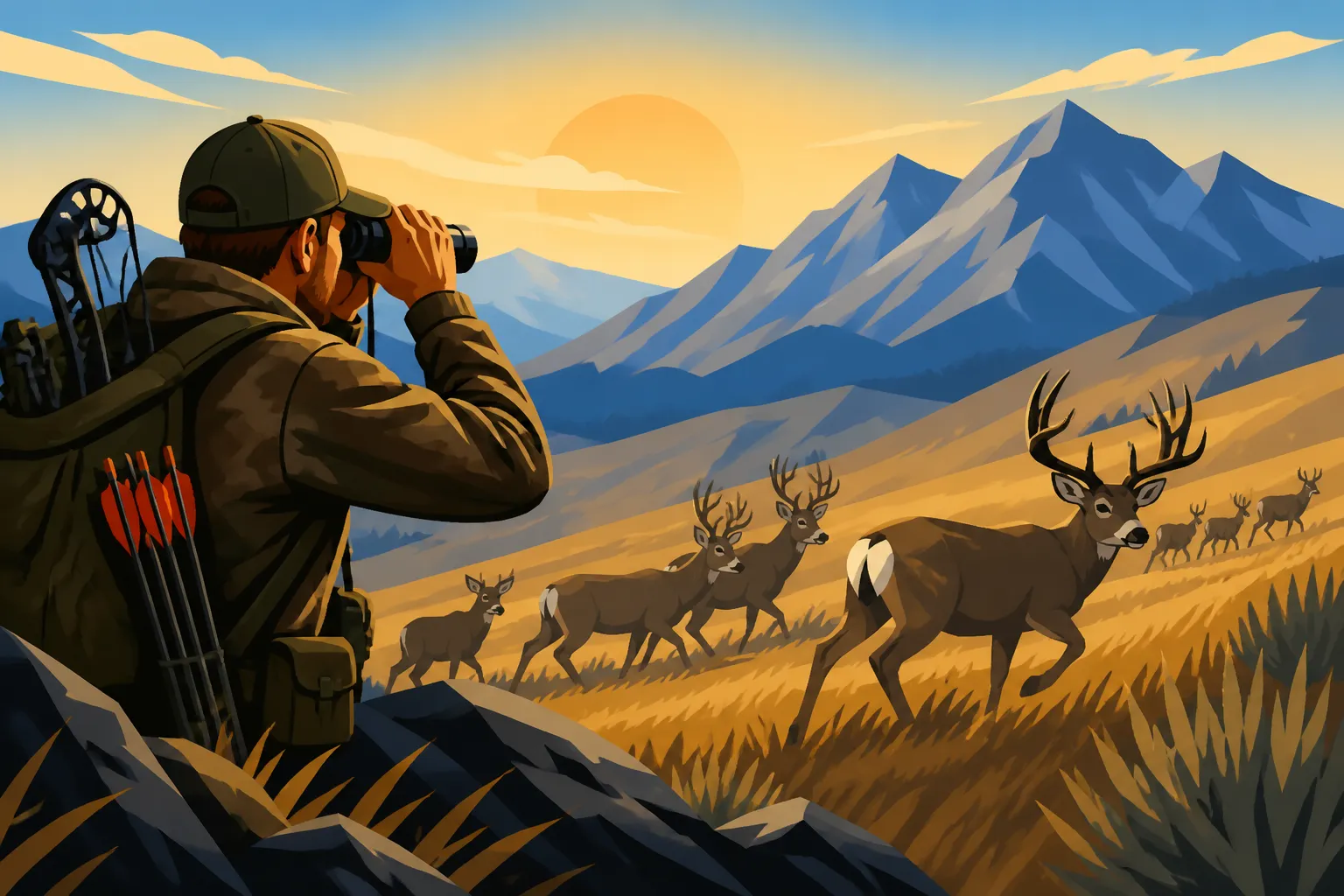
Hunting these areas often involves patience and strategic positioning. Instead of trying to find deer scattered across vast summer range, you're waiting for them to come to you along their predictable pathways. This is where a good vantage point for glassing can be invaluable. Find a spot that allows you to observe a migration corridor, looking for deer moving through, especially during early morning and late evening hours when they are most active. This is a core part of Montana Elk Hunting Methods Explained, but works equally well for mule deer.
| Season | Typical Deer Movement | Prime Hunting Areas | Key Factors to Watch For |
|---|---|---|---|
| Early Archery (Sept) | High country, scattered across summer range, bachelor groups. | High basins, timberline edges | Early season forage, water sources, security cover. |
| Late Archery (Oct) | Beginning descent from high country, staging in mid-elevations. | Mid-elevation timber, saddles | First snows, declining high country forage, buck activity picking up. |
| General Rifle (Late Oct-Nov) | Significant migration to winter range, rut activity peaks. | Migration corridors, pinch points, south-facing slopes, historical rutting grounds. | Heavy snow, cold fronts, increased buck movement, doe groups. |
| Late Season (Dec) | Settled into winter range, focus on survival. | Lower elevation winter range, heavy cover, south-facing slopes, bitterbrush flats. | Deep snowpack, extreme cold, forage availability. |
During the peak migration and rut, these transition areas can see a significant increase in deer traffic. Focus on spots that offer both cover for deer to travel unnoticed and adjacent feeding areas. A north-facing slope with heavy timber could be a bedding area, while the south-facing slope across the draw offers vital feeding opportunities. Deer will move between these areas, making the draw itself a potential hotspot. Consider hunting methods like still-hunting through timber adjacent to these routes or setting up a ground blind if you've identified a consistent travel path.
Utilizing GoHunt and Other Resources for Real-Time Intel
In today's hunting world, staying informed with real-time data can make all the difference. Platforms like GoHunt offer detailed draw odds, application strategies, and unit profiles, but they also provide access to crucial insights and community forums where hunters share observations. During migration periods, reports from other hunters, FWP updates, and even local news about weather and snowpack can provide invaluable intel on current deer movements.
Many subscription services and online mapping tools are constantly updated with current satellite imagery, snow depth maps, and even fire burn overlays which can drastically alter habitat and migration patterns. Utilizing these resources to track storm systems, monitor snow accumulation, and see how specific areas are opening up or getting buried can inform your hunting strategy almost daily. If GoHunt shows a particular drainage received heavy snow overnight, you might adjust your plan to hunt lower elevations the next day, anticipating that deer will be on the move.
Furthermore, don't underestimate the power of social media groups dedicated to Montana hunting. While you need to filter information carefully, these communities can provide localized insights into snow levels, deer sightings, and general conditions that might not be available elsewhere. Combine this digital reconnaissance with your boots-on-the-ground scouting, and you create a powerful, adaptive hunting strategy that significantly increases your chances of success during the dynamic mule deer migration in Montana.
Disclaimer
Hunting is an inherently risky activity. Always prioritize safety, adhere to all Montana Fish, Wildlife & Parks regulations, and ensure you have the proper licenses and permits. Conditions in the field can change rapidly, and this guide provides general information, not a guarantee of success or safety. Ethical hunting practices and respect for wildlife are paramount.