Montana Upland Bird Species Overview
If you've ever dreamt of heading into the vast, open landscapes of Montana with a shotgun and a good bird dog, you're not alone. But then the reality sets in: Montana is huge, and the sheer variety of upland birds can feel overwhelming. Where do you even begin? Are you looking for the explosive flush of a pheasant, the elusive challenge of a chukar, or the quiet wanderings for forest grouse? This guide is designed to cut through that confusion, giving you a detailed overview of the primary upland bird species found in Big Sky Country, their preferred habitats, and what it truly takes to pursue them.
The Feathered Gems of Montana's Uplands: A Species Guide
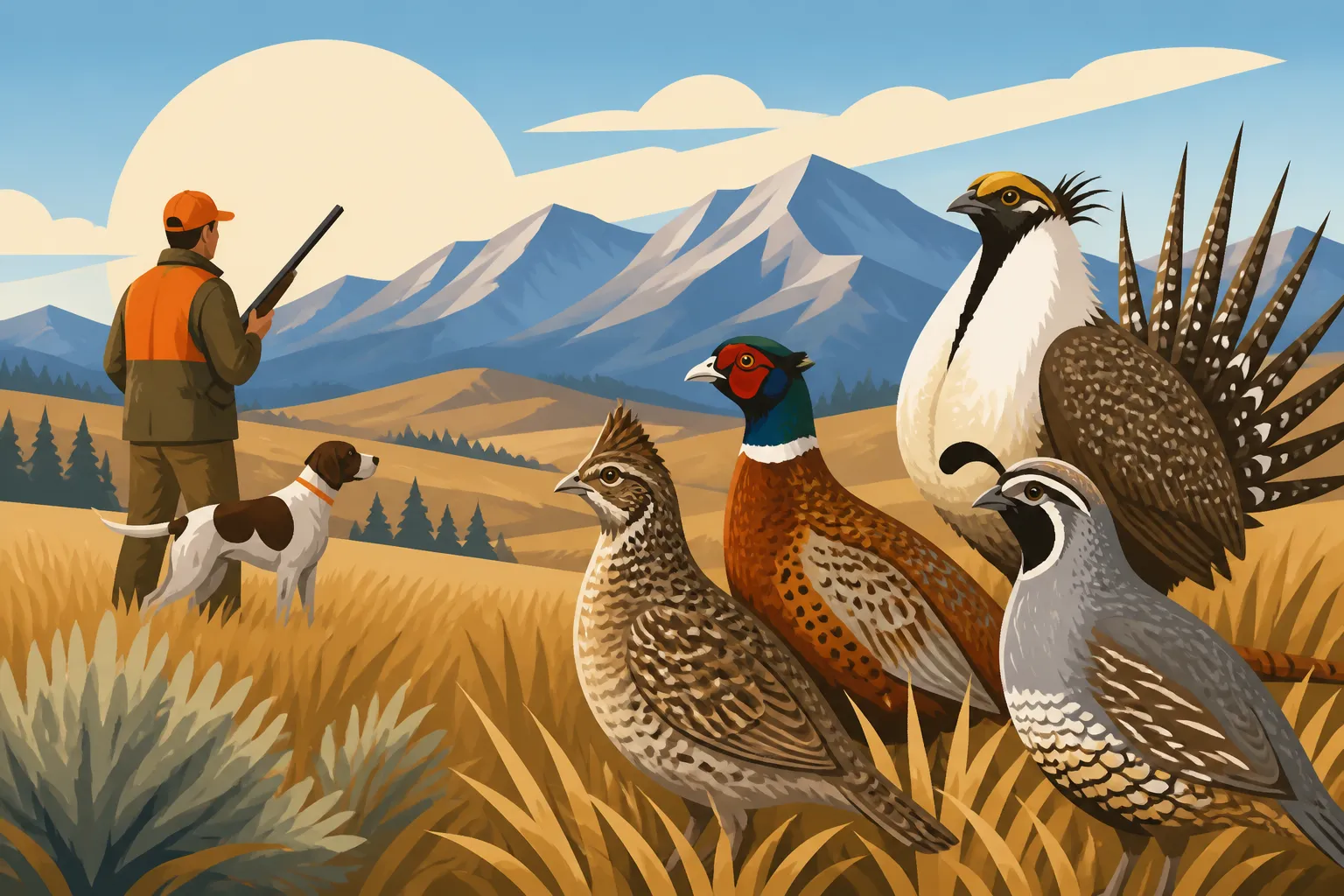
Montana is a bird hunter's paradise, offering a diverse array of upland species that reflect the state's varied ecosystems, from dense mountain forests to rolling sagebrush plains and agricultural river bottoms. Each bird presents its own unique challenge and reward, making every hunt a distinct adventure. Understanding these species is the first step toward a successful and enjoyable experience in the field.
Grouse Galore: Forest, Mountain, and Prairie Dwellers
Montana boasts an impressive lineup of grouse species, each perfectly adapted to its specific niche. These native birds are often the backbone of an upland hunter's season, offering opportunities across much of the state.
Ruffed Grouse
The Ruffed Grouse, often simply called "Ruffs," are woodland ghosts. They thrive in the thicker, brushy riparian areas and forest edges found predominantly in western Montana, particularly along stream bottoms and in patches of alder or aspen. These birds are renowned for their explosive flush, a heart-stopping whir of wings that erupts from seemingly nowhere, often leaving you more startled than the bird. Their iconic drumming, a low thrumming sound made by the male beating his wings, is a tell-tale sign of their presence, especially during the spring breeding season, but don't expect to hear it while hunting.
When you're pursuing Ruffed Grouse, think thick cover. They're masters of concealment, often holding tight until you're nearly on top of them. This makes a good pointing or flushing dog invaluable, as they can pinpoint these birds in dense vegetation. You'll often find them feeding on berries, buds, and insects, especially around old logging roads or clearings that offer a mix of dense cover and open spaces. Hunting these birds often involves slow, deliberate walks through their preferred habitats, keeping your senses sharp for that sudden explosion of feathers.
Dusky (Blue) Grouse
Moving up in elevation, you'll encounter the Dusky Grouse, often still referred to by many hunters as "Blue Grouse." These magnificent birds prefer the higher-elevation conifer forests of Montana's mountain ranges, from the Bitterroots to the Crazies. Unlike their ruffed cousins, Dusky Grouse are typically found among mature stands of Douglas fir, lodgepole pine, and spruce, often preferring south-facing slopes in the early season and moving to denser thermal cover as the weather cools. Their plumage blends seamlessly with the shadows of the timber, making them incredibly difficult to spot until they burst into flight.
Hunting Dusky Grouse can be a more physically demanding endeavor, requiring hikes into higher country. They're known for their distinctive hooting call, a deep, resonant series of hoots that can carry far through the timber. Sometimes, these birds will "tree," flying up into a conifer and perching motionless, making them incredibly hard to see. A sharp-eyed hunter, or a dog that looks up, can occasionally spot them. You might be interested in our guide on Montana Upland Bird Hunting for more localized tips on finding these mountain dwellers.
Spruce Grouse
Another denizen of Montana's conifer forests, the Spruce Grouse shares similar habitats with the Dusky, but often prefers even denser, sometimes boggy, stands of spruce and lodgepole pine. These birds have earned the moniker "fool hen" due to their notorious lack of wariness, often allowing hunters to approach incredibly close before flushing. While this can make for easier hunting, it also means they're not always the most thrilling quarry for those seeking a challenging flush.
Spruce Grouse are masters of camouflage, their dark, mottled plumage blending perfectly with the forest floor and undergrowth. You'll typically find them in the same high-elevation, thick timber areas as Dusky Grouse, sometimes overlapping. They feed heavily on conifer needles, especially spruce and pine, which can sometimes give their meat a slightly resinous flavor, though many hunters find them quite palatable, especially after proper field care.
Sharp-tailed Grouse
Leaving the timber and heading east into Montana's expansive grasslands and sagebrush-steppe country, you'll find the Sharp-tailed Grouse. These prairie birds are a favorite among many upland hunters, known for their large coveys and challenging flushes. They are easily identified by their pointed tail feathers, from which they get their name, and the distinctive dancing displays performed by males on traditional "leks" during the spring.
Sharp-tails prefer a mix of open grass for feeding and scattered brush or taller vegetation for cover. You'll often find them near agricultural fields, especially those growing grains like wheat or barley, which provide crucial food sources. Hunting them typically involves covering a lot of ground, often in vehicles or ATVs to access remote areas, then walking draws, coulees, and shelterbelts with dogs to flush coveys. The eastern half of Montana is prime Sharp-tailed Grouse habitat, offering vast opportunities for public land access. Exploring resources like Montana Public Land Hunting Guide can greatly assist in locating these areas.
Sage Grouse
The largest grouse species in North America, the Greater Sage-Grouse is an iconic bird of the vast sagebrush plains. Their existence is intrinsically tied to healthy sagebrush ecosystems, as they rely on sagebrush for food, cover, and nesting throughout their lives. Unlike other grouse, Sage Grouse are a species of concern, and hunting opportunities are typically very limited, often requiring a special permit or taking place only in specific hunting districts. The populations fluctuate, and regulations are carefully managed to ensure their conservation.
When hunting Sage Grouse, if a permit is available, you'll be spending your time in expansive sagebrush flats. They are large, powerful birds, and their flush is impressive, but often less explosive than a pheasant's. Because of their dependence on sagebrush, understanding habitat is key. Hunters often use mapping tools like the GoHunt app to identify large, healthy sagebrush expanses and plan their routes. Always check the current year's Montana regulations thoroughly for any Sage Grouse season information, as they can change annually. Our detailed guide on Montana Sage Grouse Hunting provides in-depth information.
The Fast-Flying Foreigners: Pheasants and Partridges
While native grouse species are plentiful, some of Montana's most popular upland bird hunting opportunities come from introduced species like pheasants and partridges, which have thrived in the state's agricultural and arid landscapes.
Ring-necked Pheasant
The Ring-necked Pheasant is arguably the most popular upland bird in Montana, especially in the eastern and central agricultural regions. These colorful birds are famous for their sudden, cackling flush, which can startle even the most seasoned hunter. Pheasants thrive in areas with diverse cover, including dense cattails in riparian zones, shelterbelts, standing corn or grain fields, and CRP (Conservation Reserve Program) lands.
Hunting pheasants often involves covering specific fields or strips of cover in a systematic manner, often with multiple hunters and dogs working together. Blocking off the end of a field while others walk through is a common and effective tactic. While often associated with private lands, Montana offers excellent public land pheasant hunting, particularly through its Block Management Areas (BMAs) and along river bottoms on public access sites. Make sure you understand the nuances of Montana Pheasant Hunting for best results.
Hungarian Partridge (Huns)
Known affectionately as "Huns," Hungarian Partridges are small, fast-flying birds that prefer open grasslands, farm country, and the edges of grain fields. They are incredibly wary and are famous for their explosive covey flushes, where an entire group of birds can burst into the air simultaneously, creating a thrilling and challenging target. You'll often find them scurrying along field edges or hiding in short stubble.
Huns are often found in the same habitats as Sharp-tailed Grouse and pheasants, especially in the central and eastern plains of Montana. Hunting them typically involves a lot of walking, often across rolling terrain. A good dog with a wide range is a huge asset, as Huns can run long distances before flushing. They hold a little better in light snow, which can make for some fantastic late-season hunting.
Chukar Partridge
For the hunter seeking a true challenge, the Chukar Partridge of Montana's arid, rocky breaks and steep, sparsely vegetated hillsides is the ultimate prize. These striking birds, with their black eyestripe and barred flanks, are not for the faint of heart. Their habitat is demanding, requiring hunters to navigate steep canyons and rocky slopes, often miles from any road. The reward, however, is a bird that flies fast and true, offering some of the most exhilarating shooting opportunities.
Chukar are typically found in the dry, rocky country of central and eastern Montana, especially along the Missouri River breaks and similar rugged terrain. They prefer areas with cheatgrass and sparse sagebrush, close to water sources in the draws. Hunting chukar is often a "climb high, shoot low" affair, as birds will flush downhill. A dog with good foot protection is essential, and hunters must be prepared for rigorous physical exertion. Using a detailed mapping app like GoHunt can help you scout the topography and identify potential chukar haunts before you even leave home.
Other Upland Opportunities: Turkeys
While often considered in their own category due to their unique hunting methods, wild turkeys are indeed upland birds and offer fantastic hunting in Montana. The state is primarily home to the Merriam's subspecies, found in ponderosa pine forests and riparian areas, particularly in south-central and eastern Montana.
Wild Turkeys
Montana offers both spring and fall turkey seasons, with differing regulations for each. Spring hunting focuses on toms (males) through calling tactics, while fall seasons often allow for either-sex harvest and can involve more opportunistic spot-and-stalk or ambush methods. These intelligent birds provide a challenging hunt that tests a hunter's patience and woodsmanship.
You'll find turkeys in areas with a mix of timber for roosting and open areas for feeding. River bottoms with mature cottonwoods are particularly attractive to them, as are the slopes of ponderosa pine forests. Hunters often focus on scouting for roosting sites, feeding areas, and travel corridors. For more in-depth advice on pursuing these majestic birds, you might want to check out our Montana Turkey Hunting Guide.
Understanding Montana's Diverse Upland Habitats and Behavior
Successful upland bird hunting in Montana isn't just about knowing what birds are out there; it's about understanding where they live and how they behave throughout the season. Montana's vastness means habitats vary wildly, directly influencing where you'll find different species and the tactics you'll employ.
Matching Birds to Their Landscapes
Each upland bird species has evolved to thrive in specific environments. By learning to "read the land," you can significantly increase your chances of finding birds, even without a prior scouting trip. This is where tools for How to E-Scout Montana Hunting Units become incredibly valuable.
Western Mountains and Forests
This is the domain of the forest grouse. The rugged terrain and dense timber of western Montana provide ideal cover and food sources for Ruffed, Dusky, and Spruce Grouse. Think of areas like the Flathead National Forest, Lolo National Forest, or the Bitterroot Valley. You'll often find Ruffed Grouse in the lower elevations along creek bottoms and in new growth clearings, while Dusky and Spruce Grouse prefer the higher, more mature conifer stands. Turkeys also inhabit these areas, particularly in the ponderosa pine belts. Focus on transitions, old logging roads, and south-facing slopes.
Eastern Plains and Foothills
Shift your focus to the vast eastern half of the state, and the landscape transforms into rolling grasslands, sagebrush-steppe, and agricultural fields. This is prime territory for Sharp-tailed Grouse, Sage Grouse (where permits allow), Ring-necked Pheasants, and Hungarian Partridges. Key areas include the Missouri Breaks, the vast tracts of BLM land, and the fertile river valleys. Here, birds utilize different types of cover: tall grasses and draws for sharp-tails, sagebrush for sage grouse, and agricultural fields and dense riparian zones for pheasants and Huns. Understanding Montana Hunting Districts Explained can help pinpoint specific regions.
Arid Breaks and River Bottoms
A unique blend of habitats exists in the arid breaks and along the major river systems, especially the Missouri and Yellowstone rivers. These areas can host a mix of species. Chukar Partridge are masters of the steep, rocky slopes of the breaks, particularly where cheatgrass is prevalent. River bottoms, with their dense willow and cottonwood stands, provide crucial thermal cover and food for pheasants and wild turkeys, especially during the colder months. These habitats often provide excellent opportunities for multi-species hunts, moving from the river bottom for pheasants to the adjacent breaks for chukar.
Seasonal Patterns and Bird Behavior
Upland birds, like all wildlife, adapt their behavior to the changing seasons, influencing where they can be found and how they interact with their environment. Being aware of these patterns can give you a significant advantage.
Early Season (September)
When the seasons open in September, most upland birds are relatively spread out, often found near plentiful food sources and still benefiting from the cover of lush summer growth. Young birds are abundant and often less wary. This is a fantastic time to train new bird dogs or enjoy high-volume flushes. Ruffed and Dusky Grouse might be higher on mountain slopes or in dense cover near water. Sharp-tails and Huns will be in the grasslands, potentially still in larger family groups. Pheasants might be found in standing grain or dense weed patches. Days are longer and generally milder, making for comfortable hunting conditions.
Mid-Season (October-November)
As fall progresses, cooler temperatures and changing vegetation begin to influence bird behavior. Crops are harvested, and deciduous leaves drop, reducing some forms of cover but consolidating birds into remaining thermal cover and food sources. Birds often start to congregate into larger coveys or groups, and they become warier, making for more challenging flushes. This is a prime time for pheasants in harvested fields adjacent to thick cover. Sharp-tails and Huns might be found near winter wheat fields or heavy draws. Grouse will still be in their respective habitats but might be seeking denser thermal protection. This period also overlaps with many big game seasons, so expect more hunters in the field. Our guide on Montana General Rifle Season Dates covers this overlap.
Late Season (December-January)
Late-season hunting in Montana is often characterized by cold weather and snow, which can dramatically change the landscape. While it's physically demanding, it can be incredibly rewarding. Snow helps to push birds into specific thermal covers, like dense conifer stands for grouse or thick cattail sloughs and shelterbelts for pheasants. Food sources become scarcer, making birds concentrate around remaining options. Their tracks in the snow can also provide valuable clues to their movements and preferred areas. Huns and sharp-tails might be found "budding" on willows or seeking shelter in deep coulees. This can be a tough but truly memorable time to hunt in Montana.
Reading the Land and Localized Concentrations
Finding upland birds is often about predicting where they should be based on the available resources. This requires a keen eye for details and an understanding of their basic needs: food, water, and cover.
Look for areas where these three elements intersect. For example, a river bottom with dense willow thickets (cover) next to a harvested grain field (food) and, of course, the river (water) is a classic pheasant hotspot. In sagebrush country, a deep draw with a spring (water) surrounded by dense sage (food and cover) is a good bet for sage grouse or sharp-tails. Topographic maps, aerial imagery, and tools like the GoHunt app are indispensable for identifying these key features before you even step foot in the field. Pay attention to changes in elevation, vegetation type, and proximity to water sources. Even small details, like a patch of chokecherry bushes or a thick stand of ponderosa pine on a south-facing slope, can concentrate birds.
Strategies, Gear, and Regulations for Upland Success
Once you have a handle on the species and their habitats, it's time to consider the practical aspects of hunting them. Montana's diverse terrain and species require adaptable strategies, the right gear, and a thorough understanding of the regulations.
Essential Gear for the Montana Upland Hunter
A successful upland hunt depends heavily on being properly equipped for the specific conditions and birds you're pursuing. Don't underestimate the physical demands of Montana's landscapes.
Shotguns and Loads
Most upland hunters opt for 12 or 20 gauge shotguns, with 20 gauge offering a lighter carry for long days in the field, while 12 gauge provides a bit more hitting power for tougher birds like pheasants or chukar. Depending on the species, you'll want to select appropriate shot sizes. For smaller birds like Huns or Ruffed Grouse, #7.5 or #6 shot is common. For pheasants, sharp-tails, or chukar, #5 or #6 lead shot is typically preferred. Always check current regulations regarding shot type, as some areas may require non-toxic shot, especially near water.
Clothing
Layers are your best friend in Montana. Weather can change rapidly, from crisp mornings to warm afternoons, and back to cold evenings. Invest in moisture-wicking base layers, insulating mid-layers, and a durable, briar-resistant outer shell. Blaze orange is often required for safety and visibility, especially during big game seasons, so make sure you have plenty of it. Good gloves, a warm hat, and eye protection are also crucial.
Boots
Your feet will take a beating in Montana. Quality, waterproof boots with excellent ankle support are non-negotiable. Whether you're slogging through muddy river bottoms or scrambling up rocky chukar hillsides, comfort and protection are paramount. Consider gaiters to keep burrs, snow, and debris out of your boots.
Dogs
While you can certainly hunt many upland birds without a dog, a well-trained bird dog elevates the experience to another level. Pointers (like German Shorthaired Pointers or English Pointers) are excellent for locating and holding birds, while flushers (like English Springers or Labrador Retrievers) are great for pushing birds out of thick cover and retrieving downed game. A dog's ability to locate downed birds in dense vegetation can be the difference between a successful retrieve and a lost bird.
Navigation and Optics
Montana is vast, and it's easy to get turned around. A reliable GPS device or a smartphone app like GoHunt with offline mapping capabilities is essential. Carry paper maps as a backup. Binoculars (8x or 10x) can be incredibly useful for spotting birds from a distance, especially in open country for sharp-tails or sage grouse, or for glassing potential habitat before you walk into it.
Hunting Tactics: Flushing, Pointing, and Decoying
The best hunting tactic often depends on the species you're pursuing, the terrain, and whether you're hunting with or without a dog.
Walking Up Birds vs. Using a Dog
For many forest grouse species, a slow, deliberate walk through prime habitat can be effective. Without a dog, you'll need to be extra vigilant, listening for flushes and looking for subtle signs of bird activity. When hunting with a dog, you can generally cover more ground and let the dog's superior nose do much of the work, following their lead to a point or a flush. For species like pheasants and Huns, a dog's ability to retrieve downed birds in thick cover is invaluable.
Hunting Coverts, Working Edges, Pushing Draws
Upland birds gravitate towards cover. Focus your efforts on the edges of fields, brush lines, thick draws, and areas where different types of vegetation meet. For pheasants, systematically walking through dense cattail sloughs or shelterbelts, particularly with a line of hunters, can be highly effective. For sharp-tails, focus on brushy coulees and the transition zones between grasslands and agricultural fields. When hunting chukar, think "up and over." Climb to the top of a ridge, and then hunt your way down, always expecting birds to flush downhill.
Specific Tactics
For pheasants, blocking can be a great strategy: station hunters at the end of a long field or cover strip while others walk through and push the birds towards them. For sharp-tails, especially in open country, you might see hunters using vehicles to drive slowly along roads bordering good habitat, stopping frequently to glass and then walking into promising areas. Chukar hunting is almost always a grueling walk-and-climb, often focusing on rocky outcroppings and draws with water. For turkey, understanding How to Call Elk in Montana (and applying similar sound principles) can inform your calling tactics, though turkeys are a distinct species with their own vocalizations.
Navigating Montana's Upland Bird Regulations and Access
Understanding Montana's hunting regulations and land access rules is paramount for a legal and successful hunt. The state's system can be complex, but resources are available to help.
General Seasons and District Regulations
Montana Fish, Wildlife & Parks (FWP) sets the seasons and bag limits for all upland birds. Most grouse, pheasants, and partridges generally open in September or October and run through December or January. However, specific districts may have different regulations, especially for sensitive species like Sage Grouse, which often require special permits drawn through a limited lottery and have very restricted seasons and bag limits. Always consult the current year's Montana FWP hunting regulations booklet, available online or at license vendors. Our guide to Montana Hunting Seasons Explained can help you get started.
Licenses and Stamps
To hunt upland birds in Montana, residents and nonresidents alike need a base hunting license, an upland game bird license, and sometimes a migratory bird stamp if pursuing species like snipe or doves (though these are not typically considered "upland" in the same way grouse and pheasants are). Nonresidents typically purchase a "Nonresident Small Game License" which covers all upland game birds. Make sure you understand Montana Base Hunting License Requirements before heading out.
Understanding Public Land Access
Montana is renowned for its vast public lands, including National Forests, BLM lands, and State Trust Lands. However, understanding access points and rules for each is crucial. For example, some State Trust Lands require an "Anticipated Use Permit" for recreational access. Additionally, Montana's Block Management Program (BMP) offers access to private lands for public hunting. These areas are voluntary agreements with landowners, and specific rules apply to each BMA, often requiring sign-in or check-in. The GoHunt app, combined with FWP's interactive hunt planner, is an excellent tool for identifying and navigating these public and private access opportunities. Learn more about Montana Block Management Areas Explained to make the most of your trip.
Montana offers an incredible array of upland bird hunting experiences, from the high country to the eastern plains. With proper preparation, a solid understanding of the species, their habitats, and the regulations, you're well on your way to enjoying the rich traditions of upland bird hunting in Big Sky Country.
Disclaimer
Please remember that hunting regulations, seasons, and access rules in Montana can change annually. Always consult the most current Montana Fish, Wildlife & Parks (FWP) regulations before planning or undertaking any hunting activity. This guide is for informational purposes only and does not supersede official FWP regulations.