Montana Upland Bird Hunting
If you've ever dreamt of walking vast open prairies with a pointer by your side or navigating timbered mountains in pursuit of flushing birds, but felt overwhelmed by the sheer scale and complexity of hunting in a state like Montana, you're not alone. The sheer variety of species, habitats, and regulations can make even starting your planning feel like a monumental task. This comprehensive guide is here to unravel the mysteries of Montana upland bird hunting, providing you with the knowledge and confidence to embark on your next adventure.
Understanding Montana's Upland Bird Landscape
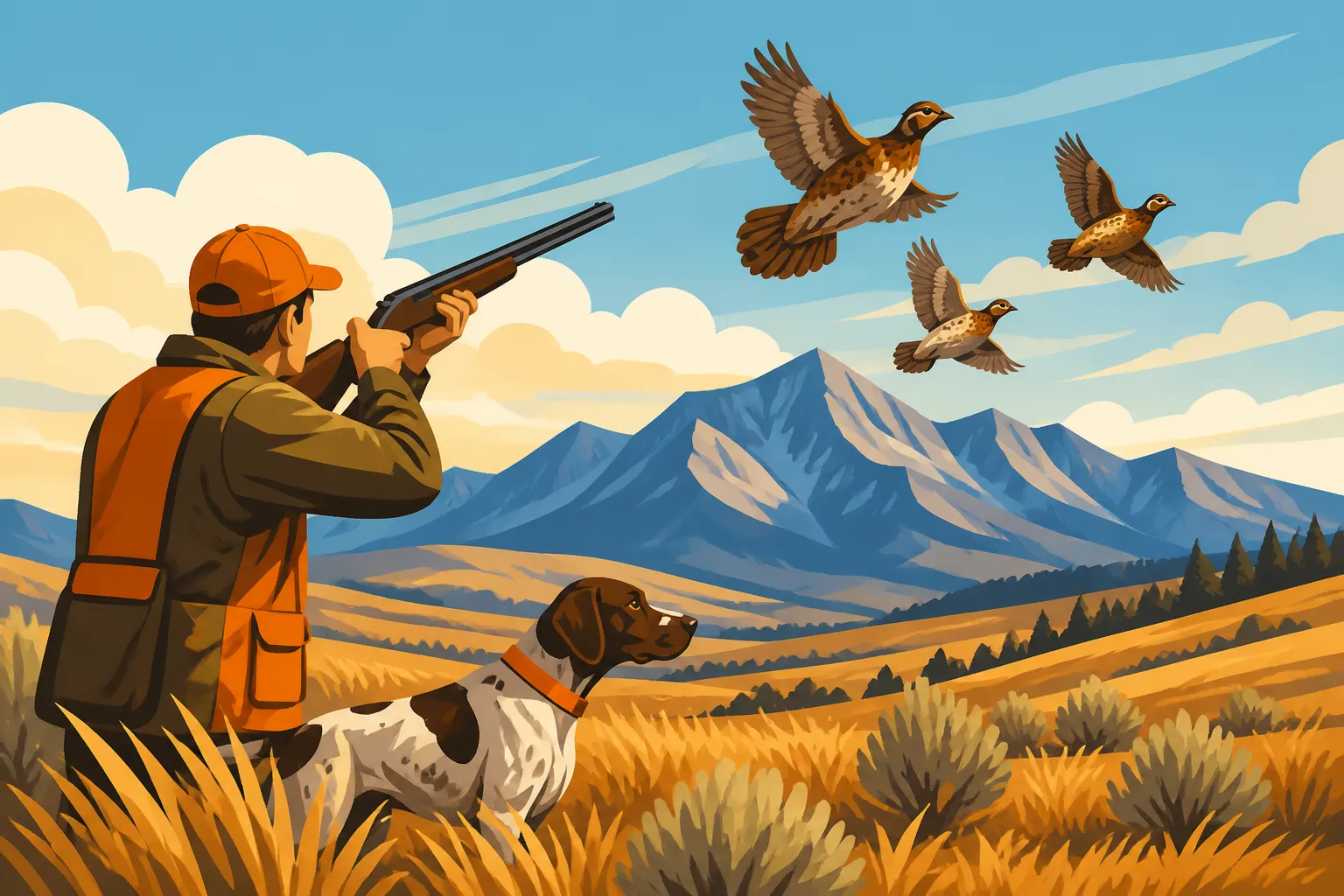
Montana truly is a bird hunter's paradise, offering an incredible diversity of upland game birds across its vast and varied landscapes. From the eastern plains to the western mountains, there's a unique pursuit for every type of hunter. It's a land where you might chase swift sharptails across rolling grasslands one day and stalk dusky grouse in dense conifer forests the next.
Diversity of Species and Habitats
Montana's sprawling geography contributes to an impressive array of upland bird species, each thriving in distinct habitats. Understanding where each species prefers to live is the first step in successful hunting. The state is broadly divided into different ecological zones, and each zone typically hosts certain bird populations.
For instance, the eastern and central plains of Montana are the quintessential strongholds for ring-necked pheasants, often found in agricultural fields, dense cattail sloughs, and brushy draws. These areas also hold abundant populations of sharp-tailed grouse, which prefer native grasslands and sagebrush country, offering exhilarating flushes and challenging shots. Similarly, Hungarian partridge, often called "Huns," are common throughout the agricultural lands of central and northern Montana, typically found in smaller coveys in stubble fields and along field edges. Sage grouse, Montana's largest native grouse, are exclusively found in vast sagebrush habitats, primarily in the central and eastern parts of the state. These birds are a true icon of the West and require a special approach, not just because of their size but also due to their sensitivity to habitat disruption.
Moving west into the mountains, the landscape shifts dramatically, and so do the birds. Here, you'll encounter the forest grouse species: ruffed grouse, spruce grouse, and dusky (blue) grouse. Ruffed grouse, known for their explosive flushes, inhabit dense deciduous and mixed forests, particularly along creek bottoms and aspen stands. Spruce grouse, often found in dark, thick conifer forests, are notoriously docile, sometimes allowing a close approach. Dusky grouse, on the other hand, prefer higher elevations in pine and fir forests, moving up the mountainsides as the season progresses. Montana also has pockets of chukar partridge, particularly in the rugged, rocky river breaks of the western and central regions, presenting a physically demanding hunt in challenging terrain. This incredible variety means you can literally plan multi-species hunts within a relatively short drive, making Montana a truly unique upland destination.
Seasons and Regulations Overview
Navigating Montana's hunting seasons and regulations can feel like deciphering an ancient scroll, especially for new hunters or those coming from out of state. The Montana Fish, Wildlife & Parks (FWP) sets specific dates and rules for each species, often with variations depending on the hunting district or region. It's absolutely crucial to consult the most current regulations every single year, as they can change.
Generally, upland bird seasons in Montana kick off in early September, particularly for grouse and partridge, and extend well into the late fall or early winter for pheasants. For species like sage grouse, the season is often very short, sometimes just a week or two, and might even require a special permit or drawing, reflecting conservation efforts. For example, the season for sage grouse typically opens in early September and closes quickly, and hunters need to be diligent about checking current regulations. Contrastingly, pheasants usually open in October and run through December, offering a longer window of opportunity, often after crops have been harvested, pushing birds into more accessible cover. Bag limits and possession limits also vary significantly by species. You might be allowed several sharp-tailed grouse and Huns per day, but only one or two pheasants, or even less for sage grouse. It's not uncommon for hunters to overlook details like shooting hours, which are typically from one-half hour before sunrise to one-half hour after sunset, but always confirm these specifics in the annual regulations. You'll find more detailed information on specific opening and closing dates by checking the Montana Upland Bird Season Dates on the FWP website.
Beyond species-specific regulations, there are general requirements all hunters must adhere to. This includes holding a valid Montana hunting license, which often requires purchasing a base license and then additional specific licenses, such as an upland bird stamp or a conservation license. Nonresidents face additional considerations, including higher license fees and potential caps on certain licenses. Before you even think about stepping into the field, you'll need to understand the Montana Base Hunting License Requirements and any specific stamps or permits. Many hunters rely on digital resources and platforms like GoHunt to keep track of these complex regulations, as they offer tools that compile this information and often provide interactive maps. Always double-check any information against the official FWP regulations, as that is the final word.
Public Access and Land Management
One of the most appealing aspects of hunting in Montana is the sheer abundance of accessible public land. Millions of acres of national forests, Bureau of Land Management (BLM) land, and state trust lands are open to hunters, offering vast expanses to explore. However, simply knowing there's public land isn't enough; understanding the nuances of different land designations and access programs is key to a successful and legal hunt.
Montana offers incredible opportunities on federal lands, primarily managed by the U.S. Forest Service and the BLM. These lands are generally open to hunting unless otherwise posted or restricted. Forest Service lands are often where you'll find forest grouse species, while BLM lands are prime territory for sharp-tailed grouse, sage grouse, and Hungarian partridge, particularly in the more arid, rolling prairie environments. State trust lands, managed by the Montana Department of Natural Resources and Conservation (DNRC), also offer hunting access, but usually require the purchase of a State Land Use License. It's crucial to understand that access to these state lands might sometimes be landlocked by private property, so knowing your boundaries is paramount. For more on navigating these areas, check out our guide on Montana State Trust Land Hunting.
Perhaps the most beloved and impactful program for upland bird hunters in Montana is the Block Management Program (BMP). This innovative program allows FWP to partner with private landowners to open up private lands, or provide access to landlocked public lands, for public hunting. BMP areas are a game-changer for pheasant, sharp-tailed grouse, and Hungarian partridge hunters, as many of these birds thrive in agricultural landscapes that are predominantly private. Each Block Management Area has its own specific rules, which can range from sign-in boxes at the entrance to mandatory permission slips or even limited entry draws. You must obtain a Block Management Atlas or download the FWP Hunt Planner app to locate these areas and understand their specific access rules. For a deeper dive into this vital resource, refer to our comprehensive guide, Montana Block Management Areas Explained. Utilizing mapping software, like those provided by GoHunt, combined with the official FWP Block Management information, can significantly enhance your ability to scout and access these diverse hunting grounds.
Essential Gear for Montana Upland Pursuits
Heading out for upland birds in Montana isn't just about grabbing a shotgun and some shells. The diverse terrain, unpredictable weather, and specific needs of each bird species demand a thoughtful approach to gear. Having the right equipment can literally make or break your hunt, from comfort and safety to the difference between a missed opportunity and a successful bag.
Shotguns and Ammunition Selection
The choice of shotgun for Montana upland hunting largely depends on the species you're pursuing and your personal preference, but versatility is often a key consideration given the state's varied offerings. For pheasants, which can be tough birds, a 12-gauge or 20-gauge shotgun is standard. Many hunters prefer a 12-gauge for the extra knockdown power, especially on a longer shot or a bird flying strong. A modified or improved cylinder choke is a good all-around choice for pheasants, giving you a decent spread for flushing birds but still enough density for longer shots. Over-and-unders, side-by-sides, and semi-automatics are all popular, with semi-autos offering quick follow-up shots.
For smaller, faster birds like sharp-tailed grouse, Hungarian partridge, or forest grouse, a lighter 20-gauge or even a 28-gauge can be a joy to carry all day. These birds are often less robust than pheasants, and the lighter gauges are sufficient. Open chokes, like improved cylinder or skeet, are often favored for these birds due to their typically close-range flushes in thick cover or erratic flight paths. Ammunition selection is equally important. For pheasants, shot sizes like 4, 5, or 6 lead are common, with heavier loads preferred by some. For grouse and partridge, smaller shot sizes like 6, 7.5, or even 8 are effective. With ongoing conversations about lead shot restrictions in some areas, it's wise to stay informed on FWP regulations regarding non-toxic shot requirements, though currently, lead shot is generally allowed for upland birds in Montana, except for specific federal waterfowl production areas.
Apparel and Footwear for Varied Terrain
Montana weather is famously unpredictable. You can experience all four seasons in a single day, particularly in the shoulder months of September and October. This means layering is not just a suggestion; it's a necessity. Your base layer should be moisture-wicking, followed by insulating layers, and topped with a durable, windproof, and water-resistant outer shell. Blaze orange is a legal requirement in some specific areas or during certain seasons for big game rifle hunting that overlaps with upland seasons, but it's always a good safety practice to wear a blaze orange vest or hat to ensure you're visible to other hunters. For example, during the general rifle season for big game, if you're upland hunting in the same area, it's mandatory to wear at least 400 square inches of hunter orange above the waist.
Footwear is arguably the most critical apparel choice. You'll be covering miles, often through thorny brush, muddy creek bottoms, or steep, rocky slopes. A comfortable, supportive pair of waterproof hunting boots is non-negotiable. Look for boots with good ankle support to prevent twists and turns on uneven ground, and a robust sole that offers excellent traction. Brands like Kenetrek or Schnee's, both based in Montana, are popular among local hunters for their durability and performance in rugged conditions. Gaiters are also highly recommended to keep burrs, foxtails, and moisture out of your boots and socks. Don't forget durable upland pants or chaps with briar-resistant facings, especially when busting through thick cover for pheasants or ruffed grouse, to protect your legs from thorns and heavy brush.
Optics, Dogs, and Other Critical Tools
While not always considered "essential" for every upland hunt, certain tools can significantly enhance your success and enjoyment. A good pair of binoculars, even a compact 8×32 or 10×42, can be incredibly useful for spotting distant coveys of sharp-tailed grouse on the prairie or glassing for dusky grouse moving on a distant hillside. Understanding How to Glass Montana's Big Country effectively is a skill that translates well across all hunting types.
For many upland hunters, a well-trained bird dog is the ultimate companion and tool. Pointers, flushers, and retrievers all have their place in Montana's diverse habitats. A good dog can dramatically increase your success rate by finding hidden birds, holding points, and retrieving downed game from thick cover. Breeds like German Shorthaired Pointers, English Pointers, Brittanys, English Setters, and various Labrador Retrievers are all common sights in the Montana uplands. Even if you don't own a dog, hunting with someone who does can provide an invaluable experience. Ensure your dog is physically conditioned for the hunt and has proper protection from burrs and injuries.
Beyond the basics, a good map and GPS are indispensable. While physical maps are great, many hunters now rely on digital mapping apps like onX Hunt, which provide detailed property boundaries, public land designations, and satellite imagery, crucial for navigating complex land ownership, especially in Block Management Areas. A solid knife for field dressing, a game vest or bird bag to carry your harvest, plenty of water, and basic first-aid supplies for both you and your dog round out the essential kit. Don't forget your hunting license and any necessary permits – always carry them on your person!
Strategies for Hunting Specific Upland Birds
Montana's diverse upland birds each present unique challenges and require tailored hunting strategies. What works for a wily pheasant in a cattail slough won't necessarily be effective for a dusky grouse high in a conifer forest. Understanding the nuances of each species' behavior and preferred habitat is key to filling your bird bag.
Ring-necked Pheasant Tactics
Pheasants are perhaps the most popular upland bird in Montana, particularly in the agricultural heartland of the eastern and central parts of the state. They are known for their vibrant colors, powerful flight, and uncanny ability to run rather than fly, making them challenging quarry. The key to pheasant hunting often lies in locating their preferred cover and then systematically working that cover to force them to flush.
Pheasants thrive in areas with a mix of agricultural fields (corn, wheat, barley, alfalfa), dense thermal cover (cattail sloughs, brushy creek bottoms, shelterbelts), and roosting cover. Early season hunts, usually in October, often find birds scattered in standing crops or shorter cover. As the season progresses and crops are harvested, birds concentrate in thicker cover, making them easier to pinpoint. The most common and effective tactic for pheasants is walking them up with a line of hunters and dogs, often employing a "block and drive" strategy. This involves sending some hunters to the end of a cover strip to "block" birds that try to run out, while others walk through with dogs, pushing birds toward the blockers. Dogs, especially flushers like Labs or Springer Spaniels, are incredibly valuable here, as they can bust birds that would otherwise hold tight or run unseen. Be prepared for explosive flushes and quick shots; pheasants can get up fast and fly away even faster. Hunting along creek bottoms or in dense shelterbelts is often highly productive. For a deeper dive into these vibrant birds, refer to our Montana Pheasant Hunting guide.
Sharptail and Sage Grouse Approaches
Sharp-tailed grouse and sage grouse represent the quintessential prairie hunting experience in Montana. While both inhabit open country, their specific habitat preferences and behaviors demand distinct hunting methods. Sharptails offer a fast-paced, walking hunt, while sage grouse hunts are often more about careful glassing and strategic approaches.
Sharp-tailed grouse are birds of the native grasslands and sagebrush prairies. They typically hold in rolling hills, coulees, and fields of native grasses, often near breaks or edges where they can find cover and food. Hunting sharptails usually involves covering a lot of ground on foot, often in wide-open country. Dogs, especially wide-ranging pointers, are invaluable for locating and holding these birds, which can be difficult to see in the subtle undulations of the prairie. When a covey flushes, it's often a spectacular sight, with 10-20 birds taking flight simultaneously, offering multiple shooting opportunities. Pay attention to changes in terrain – the edges of draws, rocky outcrops, or taller clumps of sagebrush often hold birds. Early morning and late afternoon are prime times when birds are actively feeding. Learn more about pursuing these unique birds in our Montana Sharp-Tailed Grouse Hunting guide.
Sage grouse, the largest grouse in North America, are habitat specialists, found exclusively in vast expanses of mature sagebrush. Hunting them requires a different mindset. Unlike pheasants or even sharptails, sage grouse tend to be found in larger, more open areas. The best strategy is often to drive slowly on two-track roads, stopping frequently to glass large areas of sagebrush with binoculars. Once a flock is spotted, a slow, cautious stalk is necessary. Sage grouse often hold tight, allowing for closer approaches than other birds, but they can also explode into flight with a powerful, noisy flush. Their season is usually very short and often requires a special permit, highlighting their conservation status. Always verify current regulations and permit requirements for Montana Sage Grouse Permit Explained. For both species, having a clear understanding of the subtle changes in terrain and vegetation can guide you to prime hunting spots.
Forest Grouse Ruffed Spruce Dusky Techniques
Hunting forest grouse in Montana takes you into a completely different environment – the dense, timbered mountains and river bottoms of the western part of the state. Each of the three main species, ruffed, spruce, and dusky grouse, has its own personality and habitat, requiring specific tactics.
Ruffed grouse, often called "timber rockets," are the adrenaline rush of forest hunting. They prefer dense, young deciduous or mixed forests, particularly along creek bottoms, aspen groves, and areas with thick underbrush. The classic ruffed grouse hunt involves still-hunting slowly through these dense areas, listening for their distinct drumming sound or looking for subtle movements. They are masters of camouflage and often hold incredibly tight, flushing with an explosive burst of wings that can startle even seasoned hunters. Shots are usually quick and challenging, often through a screen of trees and branches. A good flushing dog can be a huge asset, but many hunters enjoy the quiet, solitary challenge of walking them up.
Spruce grouse are typically found in dense, dark conifer forests, often at higher elevations. They are known for their docile nature, sometimes allowing hunters to walk right up to them before they flush, or even picking them off tree branches. This makes them a more accessible bird, especially for new hunters. The challenge with spruce grouse is less about the flush and more about finding them in their thick, often remote habitats. They tend to be less wary than other grouse, relying on their camouflage.
Dusky (Blue) grouse are found at higher elevations in pine and fir forests, often moving higher up the mountainsides as the season progresses. These birds are known for their habit of "treetop" flushing, flying up into trees rather than away on the ground. Hunters often find them by slowly walking logging roads, old clear-cuts, or open timbered slopes, especially those with good berry bushes. They can be located by their distinctive hooting calls in the early season. When flushed, they often glide downhill, making for a unique shooting opportunity. Hunting all three forest grouse species often involves navigating steep terrain and thick cover, requiring good physical conditioning and reliable gear. Learning to move quietly through the timber is crucial, a skill you can refine by practicing How to Still-Hunt Montana Timber.
Hungarian Partridge and Chukar Challenges
Hungarian partridge and chukar partridge offer two distinct, but equally rewarding, challenges for the Montana upland hunter. Huns are often found in conjunction with sharp-tailed grouse and pheasants, making them a popular multi-species target, while chukars demand a specialized, physically demanding hunt in rugged, arid landscapes.
Hungarian partridge, or "Huns," are small, fast-flying birds found primarily in agricultural areas of central and northern Montana, often favoring stubble fields, fence rows, and the edges of native grasslands. They are typically found in coveys, and when flushed, they explode into the air with a characteristic whirring sound, flying low and fast before quickly setting down. The trick to hunting Huns is often to follow a flushed covey, as they rarely fly far, and then work the area where they landed. They have a habit of running before they fly, making dogs helpful for pinpointing their location. Hunting them often involves covering a lot of ground in open, rolling terrain, similar to sharptails. Their flight pattern is often more linear and predictable than pheasants, but their speed makes for challenging shots.
Chukar partridge are the athletes of the upland bird world. Found in steep, rocky, arid canyons and river breaks, primarily in western and central Montana, chukars are known for their incredible ability to climb and descend treacherous terrain. A chukar hunt is as much a test of physical endurance as it is hunting skill. They are almost always found on steep slopes with a mix of rocks, sparse grasses, and brush. The strategy for chukars typically involves getting above them, then working downhill to flush them. When flushed, chukars nearly always fly downhill at incredible speeds, using the terrain to their advantage. A good pair of binoculars is essential for spotting them on distant slopes. Dogs, particularly those with good stamina and foot protection, are incredibly useful for finding and retrieving birds in such demanding environments. Be prepared for a full day of climbing and descending, and bring plenty of water. The reward, however, is a beautiful bird and a profound sense of accomplishment.
Navigating Montana's Unique Hunting Challenges
Montana, for all its beauty and abundant wildlife, doesn't hand out success easily. Upland bird hunting here comes with its own set of hurdles, from the dramatic shifts in weather and unforgiving terrain to the presence of other hunters. Being prepared for these challenges isn't just about bagging birds; it's about ensuring a safe and enjoyable experience in Big Sky Country.
Weather and Terrain Considerations
Montana's weather is a constant wild card. You might wake up to crisp, clear skies, only to have a blizzard roll in by afternoon, even in September. This volatility means layers are essential, as discussed in the gear section. But it also means being aware of changing conditions and having contingency plans. A beautiful fall day can turn nasty quickly, making navigation difficult and increasing the risk of hypothermia. Always check the local forecast for your specific hunting area, and don't hesitate to cut a hunt short if conditions become unsafe.
The terrain varies wildly across the state, and each presents its own set of physical demands. The eastern plains, while appearing flat, are often characterized by rolling hills, deep coulees, and thick riparian zones that can be surprisingly challenging to traverse, especially with a dog. The western mountains, on the other hand, demand serious physical fitness. Steep slopes, dense timber, deadfall, and rocky outcrops are the norm. Climbing thousands of feet in a day is not uncommon when pursuing dusky grouse or chukar. This kind of physical exertion, especially at higher altitudes, can be draining. Being in good physical shape is paramount. For those planning a backcountry hunt, understanding How to Prepare for High-Country Montana Hunting is crucial. Always carry enough water, high-energy snacks, and know your physical limits.
Dealing with Hunting Pressure
Montana is a popular hunting destination, and while many areas are vast enough to absorb the pressure, some easily accessible public lands, especially those near larger towns or those known for good pheasant populations, can see significant hunter traffic. Dealing with this pressure effectively is a part of the Montana hunting experience, especially during peak season.
One of the most effective ways to mitigate pressure is to hunt during weekdays rather than weekends. Many hunters also focus on areas that require more effort to access, such as those that are a longer walk from a road or involve more difficult terrain. If an area looks crowded, don't be afraid to move on to another spot. Having multiple backup locations scouted (either physically or via e-scouting) is a smart strategy. Platforms like GoHunt can be particularly helpful in identifying less-traveled public lands by showing topography, road access, and potential habitat from satellite imagery. Early mornings are also generally less pressured, as many hunters sleep in. Respecting other hunters is key: maintain safe distances, avoid "sky-busting" (shooting at birds outside of ethical range that might be heading towards another hunter), and always be courteous. If you encounter another hunting party, a simple wave or brief, friendly chat can go a long way in ensuring everyone has a good day. For more insights on navigating crowded areas, consider reading up on How to Beat the Crowds on Montana Public Land.
Safety First in the Field
Safety is paramount in any hunting endeavor, and upland bird hunting in Montana is no exception. Beyond general firearm safety rules, there are specific considerations for hunting in this environment. Always assume every firearm is loaded, keep the muzzle pointed in a safe direction, keep your finger off the trigger until ready to shoot, and be sure of your target and what's beyond it. These are not just rules; they are the foundation of safe hunting.
When hunting with a group, establish clear communication and shooting lanes. Know where everyone is at all times, especially when flushing birds. Wearing blaze orange is highly recommended, even if not legally required for upland birds in a specific scenario, simply for visibility. Be aware of your surroundings; Montana is home to grizzlies and black bears, particularly in western Montana's forested regions. Carry bear spray and know how to use it. When walking through thick brush or tall grass, be mindful of potential hazards like hidden fences, abandoned equipment, or holes. Dogs should also wear blaze orange vests for visibility and protection. Carry a fully charged cell phone (though service can be spotty in remote areas) and a GPS device. Inform someone of your hunting plans, including your exact location and expected return time. Always have a basic first-aid kit for both humans and dogs. By prioritizing safety, you ensure that every hunt is not only successful but also safe for everyone involved.
Licensing, Permits, and Planning Your Hunt
Embarking on a Montana upland bird hunt requires more than just knowing where to go and what gear to bring; it involves understanding the state's licensing structure, utilizing modern planning tools, and respecting conservation efforts. For many, especially nonresidents, this administrative side of hunting can be daunting, but with a bit of guidance, it's manageable.
Nonresident and Resident License Requirements
The first and most critical step for any upland bird hunter in Montana is securing the appropriate licenses and permits. For residents, the process is relatively straightforward, typically involving a resident conservation license, a resident base hunting license, and an upland bird license. These can often be purchased online through the Montana FWP licensing system or at any FWP office or licensed vendor.
Nonresidents, however, face a slightly more complex and costly process. While Montana is renowned for its general hunting opportunities, nonresidents must first purchase a Nonresident Base Hunting License, followed by an Upland Game Bird License (which also includes a game bird stamp). There's no separate "draw" for a general upland bird license, which is fantastic news for planning a trip. However, if you plan to hunt sage grouse, you might need an additional permit, which could involve a draw, so always check the specific regulations. Additionally, everyone needs an Aquatic Invasive Species (AIS) Prevention Pass. It's important to remember that license fees for nonresidents are significantly higher than for residents. For example, a nonresident upland bird license might be several hundred dollars, while a resident license is much less. Always review the current year's Montana Hunting License Costs well in advance of your trip to budget appropriately. Familiarize yourself with the overall Montana Hunting Seasons Explained to ensure you understand how upland bird seasons fit into the broader hunting calendar.
Resources for E-Scouting and Planning
In today's digital age, e-scouting has become an indispensable tool for planning a Montana upland bird hunt. Gone are the days of relying solely on paper maps and word-of-mouth. Modern technology allows hunters to virtually explore vast tracts of land, identify potential hotspots, and understand access points from the comfort of their homes.
High-quality mapping applications like onX Hunt, BaseMap, or GoHunt are absolute game-changers. These platforms offer detailed satellite imagery, topographic maps, and most importantly, property ownership overlays that clearly delineate public versus private land. This is incredibly valuable for identifying public lands, understanding Block Management Area boundaries, and even spotting potential landlocked public parcels. When e-scouting, look for key habitat features: agricultural fields adjacent to dense cover (for pheasants), expansive sagebrush flats (for sage grouse), native grasslands with good cover (for sharptails and Huns), or riparian zones and aspen groves in mountainous terrain (for ruffed grouse). You can also identify potential access roads, parking areas, and areas with limited hunter pressure. Many hunters use these tools to identify water sources, which can be bird magnets, particularly in drier regions. The ability to mark waypoints, measure distances, and track your movements in real-time in the field makes these apps invaluable for both planning and execution. For a comprehensive guide on leveraging these digital tools, check out our article on How to E-Scout Montana Hunting Units or How to Use onX for Montana Hunting.
Conservation Efforts and Hunter Ethics
Hunting in Montana is a privilege, not a right, and it comes with a deep responsibility to practice ethical hunting and support conservation efforts. Montana has a proud tradition of wildlife management, and hunters are integral to this system. The funds generated from license sales directly support wildlife research, habitat restoration, and enforcement, benefiting all wildlife, not just game species.
Adhering to bag limits, season dates, and all regulations is a fundamental ethical obligation. Shooting hours, specific weapon restrictions, and checking requirements are all designed to manage wildlife populations sustainably. Beyond legality, practicing good sportsmanship means respecting landowners, leaving gates as you found them, packing out all trash (including spent shotshells), and minimizing your impact on the landscape. This includes leaving no trace and properly disposing of bird carcasses away from roads or public view. If you're a new hunter, or if it's been a while, refreshing your knowledge with a Montana Hunter Education Requirement course can provide an excellent foundation in ethics and safety. Conservation organizations, such as Pheasants Forever and the National Wild Turkey Federation (which also supports many upland species), play a vital role in habitat improvement and advocacy, often working in Montana to create better hunting opportunities. Supporting these groups, whether through membership or volunteering, is a great way to give back to the resource that provides so much enjoyment. Responsible hunting ensures that future generations can continue to experience the thrill of Montana's upland bird hunting for years to come.
| Upland Bird Species | Primary Habitat | Typical Season Start | Bag Limit (Daily) | Notes |
|---|---|---|---|---|
| Ring-necked Pheasant | Agricultural fields, dense cover, sloughs | Mid-October | 3 roosters | Runs into December, often requires dogs. |
| Sharp-tailed Grouse | Native grasslands, sagebrush prairie | Early September | 4 birds | Fast flyers, often found in coveys. |
| Hungarian Partridge | Crop fields, fencerows, grassland edges | Early September | 8 birds | Small, quick, covey birds. |
| Dusky (Blue) Grouse | Higher elevation conifer forests | Early September | 3 birds | Moves higher as season progresses, "treetop" flushes. |
| Ruffed Grouse | Dense deciduous/mixed forests, riparian | Early September | 3 birds | Explosive flushes in thick cover. |
| Spruce Grouse | Dark, thick conifer forests | Early September | 3 birds | Often docile, relies on camouflage. |
| Sage Grouse | Vast sagebrush ecosystems | Early September (short) | 1 bird | Special permit/draw often required, very short season. |
| Chukar Partridge | Steep, rocky river breaks/canyons | Early September | 8 birds | Physically demanding hunt, flies downhill. |
Note: Season dates, bag limits, and specific regulations can change annually. Always consult the most current Montana FWP regulations before hunting.
Disclaimer
Hunting is an inherently risky activity. The information provided in this guide is for informational purposes only and should not be considered a substitute for official regulations, professional guidance, or personal due diligence. Always consult the official Montana Fish, Wildlife & Parks regulations and local authorities before engaging in any hunting activities. Safety should be your top priority.