Montana Mountain Lion Range
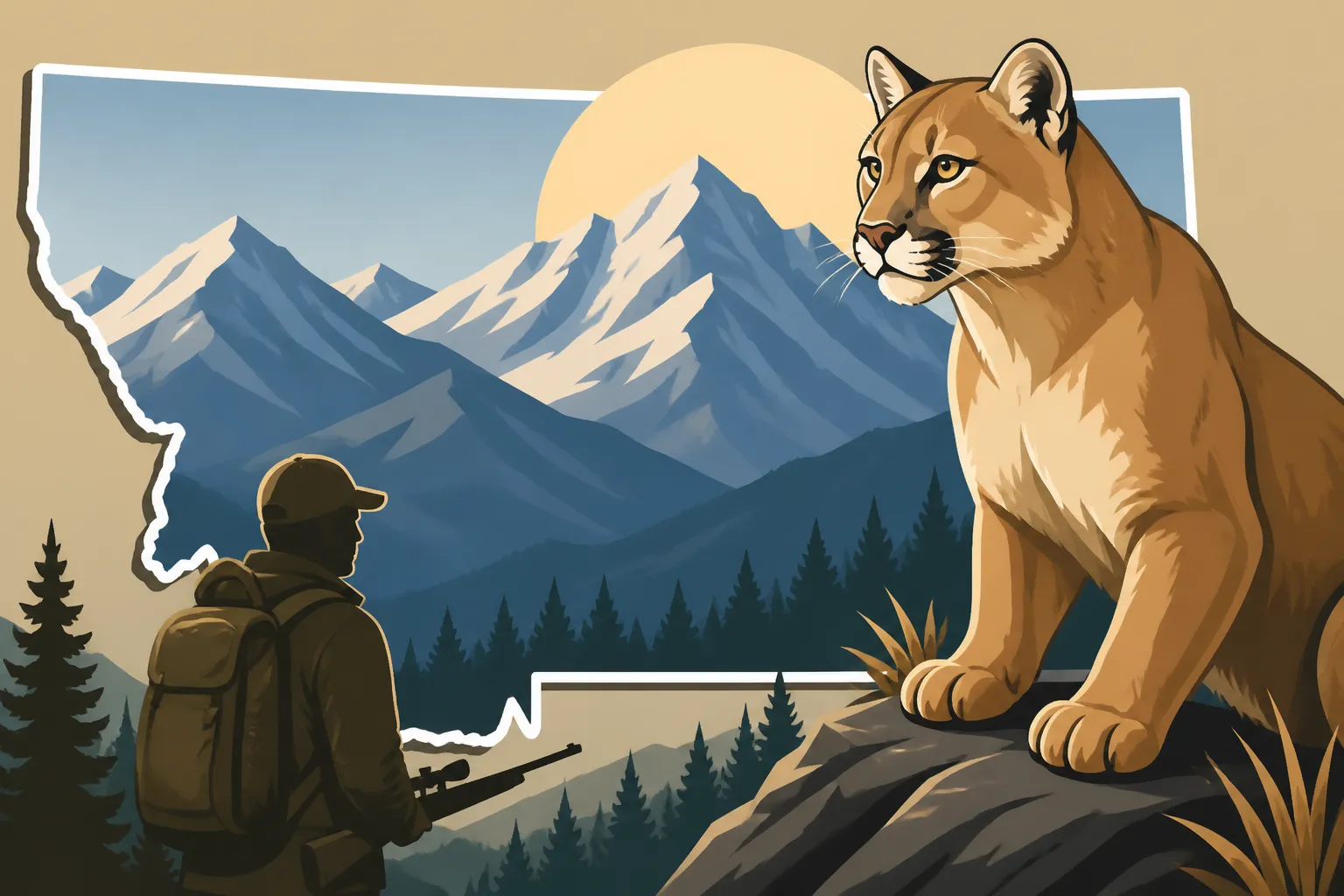
Trying to understand where mountain lions roam in Montana can feel like searching for a ghost in the wilderness. These incredibly elusive predators are masters of stealth, making it tough to pinpoint their strongholds. This guide will meticulously break down the typical habitats, geographic distribution, and key factors that define mountain lion range across Big Sky Country, helping you better understand their presence.
The Elusive Kingdom: Where Mountain Lions Live in Montana
Montana is truly a wild state, and its diverse landscapes offer perfect sanctuaries for apex predators like the mountain lion, also known as cougars or pumas. Unlike deer or elk, which often occupy specific areas seasonally, lions are present year-round, blending seamlessly into the rugged terrain. Their range isn't just about mountains; it's about a combination of factors that create an ideal environment for these solitary hunters.
Mountainous Regions and Foothills
When most people picture mountain lion habitat, they immediately think of towering peaks and dense forests, and for good reason. Montana's vast mountain ranges are prime cougar country. These areas provide the necessary elements for survival: abundant prey, dense cover for stalking and resting, and rugged topography that offers escape routes and vantage points. From the towering peaks of the Rocky Mountain Front Hunting Guide to the heavily timbered slopes of the Bitterroot, Mission, and Absaroka-Beartooth Mountains, you'll find lions following their primary food sources.
The foothills adjacent to these mountain ranges are also crucial. As the terrain gradually transitions from high-elevation wilderness to lower valleys and agricultural fringes, lions often extend their territories. These areas can be surprisingly productive, offering a mix of cover and easy access to deer and elk that move between winter and summer ranges. A good example is the interface where the forests meet the agricultural lands in western Montana, providing a rich hunting ground for these adaptable predators.
River Bottoms and Breaks Country
While mountains might be their most iconic home, mountain lions are incredibly adaptable and will colonize any landscape offering sufficient cover and prey. River bottoms, especially those with steep banks, thick brush, and timber, provide excellent habitat. The dense vegetation along rivers like the Yellowstone or Missouri offers perfect ambush cover, while the water itself attracts deer and other animals that become easy targets. These riparian corridors act as natural highways for lions, allowing them to travel great distances undetected, often extending their range much further into flatter regions than one might expect.
Perhaps one of the most surprising strongholds for mountain lions, especially to those unfamiliar with eastern Montana, is the "breaks country." Areas like the Missouri Breaks Hunting Guide are characterized by highly eroded badlands, steep coulees, rimrock cliffs, and scattered pockets of pine and juniper. This rugged, broken terrain might not be towering mountains, but it provides exactly what a lion needs: countless hiding spots, intricate travel routes, and a healthy population of mule deer and other prey species. These isolated, wild areas prove that it's not just elevation, but terrain complexity and prey density that truly define lion range.
Key Factors Influencing Mountain Lion Habitat
Understanding where mountain lions live is only half the battle; knowing why they choose these specific areas is critical for predicting their presence. Their existence is intrinsically linked to a delicate balance of ecological factors, and any shift in these can directly impact their range and population dynamics.
Prey Abundance
At the top of the list for any predator is a reliable food source. For Montana's mountain lions, this primarily means deer and elk. Wherever you find healthy populations of these ungulates, you are likely to find mountain lions. Mule deer, whitetail deer, and elk form the vast majority of a lion's diet. Therefore, areas known for high deer or elk densities, such as the Best Montana Districts for Mule Deer or prime elk wintering grounds, are almost certainly going to be frequented by cougars.
Lions are opportunistic hunters, however, and will also prey on bighorn sheep, especially in the more rugged, rocky habitats where sheep thrive. They'll also take smaller animals like bighorn lambs, young elk, porcupines, raccoons, and even domestic livestock if the opportunity arises, particularly in areas bordering ranches. The availability of diverse prey ensures that even if one prey population fluctuates, lions can still find sustenance, contributing to their widespread presence across suitable habitats.
Dense Cover and Rugged Topography
Mountain lions are ambush predators. They rely on stealth and surprise to take down their prey, which means dense cover is paramount to their hunting success. This cover can come in many forms: thick timber stands, dense brush, rocky outcroppings, and deep coulees. They need places where they can move silently and unseen, stalking their prey before launching a short, explosive attack. When you're scouting an area, pay attention to the transition zones where open feeding areas meet thick timber or broken terrain; these are often high-traffic zones for lions.
Rugged topography provides both defensive advantages and strategic hunting positions. Steep slopes, cliffs, rimrock, and deep canyons offer lions safe havens where they can rest, raise their young, and escape from other predators or humans. These features also give them elevated vantage points from which to survey their territory and spot unsuspecting prey. Areas with a mix of dense cover and broken terrain, characteristic of many Montana Wilderness Area Hunting units, are quintessential mountain lion country.
Water Availability
Like all living creatures, mountain lions need access to water. While they can often get moisture from their prey, readily available water sources like streams, springs, and rivers are still important components of their habitat. These water sources also attract other wildlife, concentrating prey in predictable locations, making them excellent hunting grounds for lions. In arid parts of the state, especially the eastern plains where lions might roam into the breaks, water becomes an even more critical factor. Hunters looking for signs of lions should always scrutinize areas around water.
Understanding Montana's Mountain Lion Management Units
Montana Fish, Wildlife & Parks (FWP) manages mountain lion populations through a system of Hunting Districts (HDs) and quotas, ensuring healthy populations while providing hunting opportunities. These districts are defined by geographic boundaries and take into account lion populations, prey availability, and habitat connectivity.
Geographic Management Regions
Montana is broadly divided into seven administrative regions by FWP, each encompassing multiple hunting districts. Within these regions, mountain lion management varies based on local population objectives and ecological conditions. For instance, the western regions, with their extensive mountain ranges and forests, generally support higher densities of lions and might have more harvest opportunities. Conversely, eastern regions might have lions concentrated in the breaks and river corridors, with specific management strategies tailored to those unique environments.
Knowing the specific regulations for the district you're in is absolutely vital. You can find detailed information on the FWP website, which often includes harvest quotas, season dates, and specific rules for each hunting district. This information helps FWP maintain a balance, allowing hunters to participate in conservation while ensuring the long-term health of the lion population.
Impact of Prey and Habitat Connectivity
Mountain lion management isn't just about the lions themselves; it's heavily influenced by the health of other big game populations. If deer or elk numbers are low in a particular district, FWP might adjust lion quotas to help prey populations recover. This dynamic approach highlights the interconnectedness of all species within an ecosystem. Furthermore, habitat connectivity—the ability for lions to move between suitable habitats without encountering significant barriers like major highways or dense human development—is also a consideration.
This is where tools like GoHunt become incredibly useful. By utilizing their detailed maps and hunting district data, you can visually assess habitat types, identify potential travel corridors, and even overlay public land boundaries. This kind of e-scouting can give you a significant advantage in understanding where lions might be present and how they move through a given area, informing your strategy whether you're hunting or just hoping to observe wildlife.
Tips for Locating Mountain Lions in Montana
While actually seeing a mountain lion in the wild is a rare and thrilling experience due to their secretive nature, understanding their range and habits can dramatically increase your chances of finding evidence of their presence. For hunters, this knowledge is invaluable.
Scouting for Sign
Finding fresh mountain lion sign is perhaps the best indicator that you are in active lion country. Look for tracks, especially after a fresh snow or in muddy areas near water sources. Lion tracks are generally rounder than canine tracks, with no claw marks visible (unless they are slipping or running, which makes claws show). Pay attention to the size; an adult male's track can be quite large.
Other signs include scat, which often contains hair and bone fragments from their prey, and kill sites. Lion kill sites are distinctive: they will typically cover their kills with leaves, grass, and dirt to cache it for later feeding, often returning to it over several days. Finding a partially eaten, covered carcass is a strong indicator of a lion in the vicinity. Additionally, look for scratch marks on trees, particularly on logs or soft wood, where lions sharpen their claws. These "scratch posts" are often found along game trails or near bedding areas.
Utilizing E-Scouting and Maps
Before you even step foot in the field, modern tools can give you a massive head start. Platforms like GoHunt offer incredibly detailed topographical maps, satellite imagery, and public/private land overlays that are essential for e-scouting potential mountain lion habitat. Look for areas with a combination of steep, rugged terrain, dense timber or brush, and proximity to known deer or elk wintering grounds.
When you're looking at a map, identify natural funnels, saddlebacks, and benches within mountain ranges. These are often preferred travel routes for lions and their prey. Pinpoint potential ambush points—places where a lion could hide and spring on an animal moving through. Knowing how to E-Scout Montana Hunting Units is a game-changer for any big game species, and mountain lions are no exception. You can also research past harvest data by hunting district through FWP, which might give you an idea of areas with consistent lion activity.
Understanding Seasonal Movements and Behavior
While mountain lions don't typically migrate in the same way deer or elk do, their movements are often tied to the seasonal distribution of their prey. In winter, when deer and elk move to lower elevations or south-facing slopes to escape deep snow, lions will follow. This makes winter an excellent time for tracking and locating lions, as their movements are often more concentrated and visible in the snow.
During other seasons, lions might expand their home ranges, especially young males seeking new territories. Females with kittens will stick to areas with abundant cover and a reliable food source close to their den sites. Understanding these behavioral patterns—how they follow prey, use cover, and establish territories—can help you narrow down your search and put you in the right places at the right times, whether you're just curious about their presence or actively pursuing a Montana Mountain Lion Hunting opportunity.
| Geographic Region | Typical Terrain Features | Primary Prey Species | Notes on Lion Presence |
|---|---|---|---|
| Western Mountains | Steep, timbered slopes, dense forests, deep drainages | Mule Deer, Whitetail Deer, Elk, Bighorn Sheep | High density, year-round presence, excellent cover. |
| Central Mountains/Foothills | Mix of timber, open parks, rocky outcrops, river corridors | Mule Deer, Whitetail Deer, Elk | Consistent presence, follow prey to lower elevations in winter. |
| Missouri Breaks / Badlands | Eroded canyons, rimrock, junipers, sparse pines | Mule Deer, Elk, some Whitetail Deer | Strongholds in isolated, rugged areas; surprisingly robust populations. |
| Eastern River Bottoms | Dense riparian vegetation, cottonwoods, steep banks | Whitetail Deer, Mule Deer | Travel corridors and ambush points; lions can follow rivers far into the plains. |
Disclaimer
Please remember that hunting regulations, seasons, and licensing requirements can change. Always consult the Montana Fish, Wildlife & Parks (FWP) official regulations before planning any hunting trip. This guide is for informational purposes only and does not constitute legal advice or endorsement of specific hunting practices.