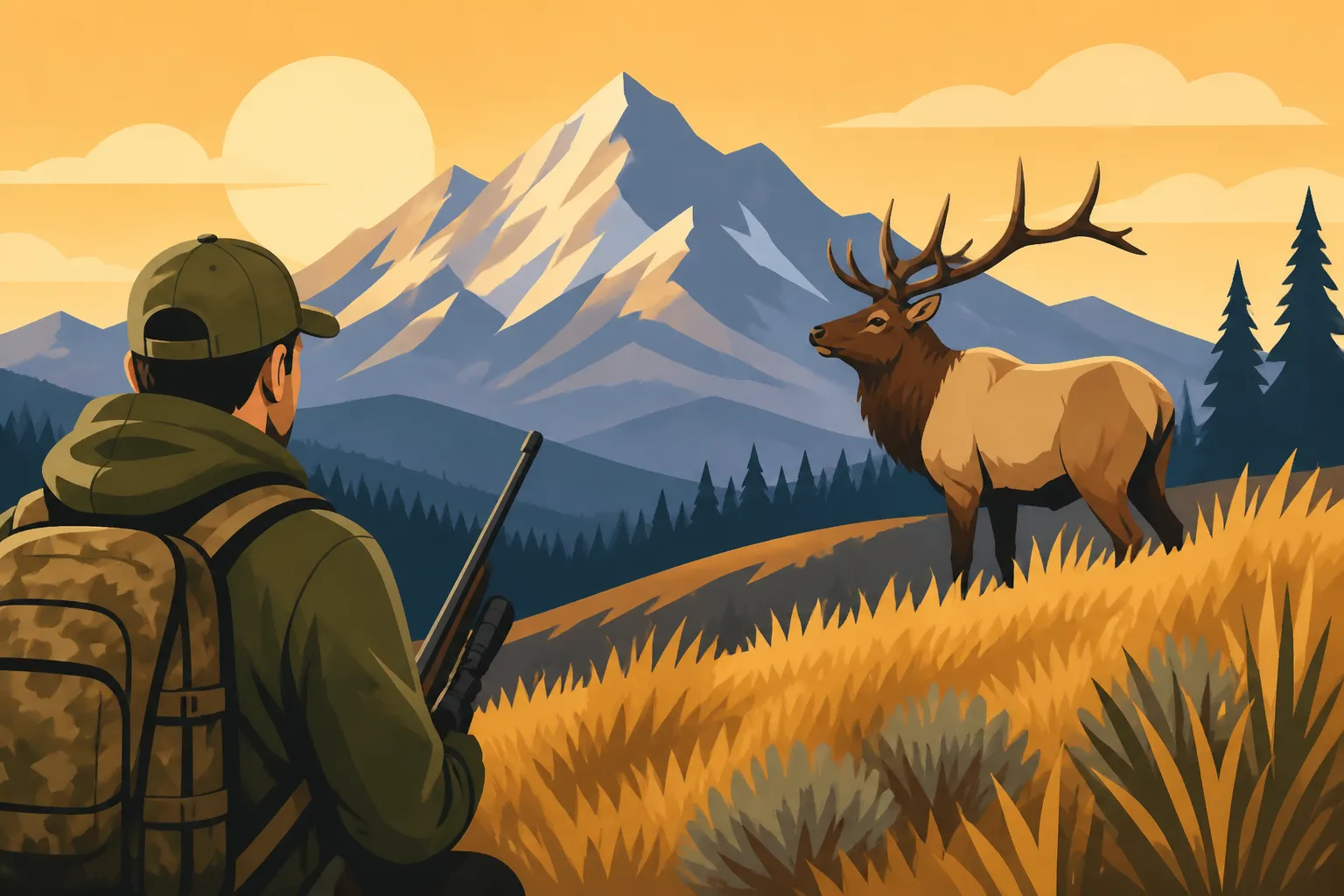
Montana Elk Hunting for Beginners
Stepping into the world of Montana elk hunting can feel like trying to drink from a firehose – there's so much to learn, so many regulations, and the sheer scale of the landscape is enough to make anyone's head spin. But don't let that intimidate you! This comprehensive guide is designed to cut through the noise, offering clear, actionable advice for every beginner dreaming of their first Montana elk hunt, breaking down the essential steps from understanding the animals to navigating the regulations and planning your adventure.
Understanding Montana Elk and Their Environment
Before you even think about packing a backpack or sighting in a rifle, it's crucial to understand the magnificent animals you're pursuing and the challenging, yet rewarding, landscapes they call home. Elk aren't just big deer; they're incredibly intelligent, resilient, and perfectly adapted to their wild environment, making them one of North America's most sought-after big game animals.
Elk Behavior and Biology Basics
Elk are creatures of habit, yet frustratingly unpredictable. They possess an uncanny ability to detect danger, relying on a trifecta of keen senses: incredible hearing, a powerful sense of smell, and excellent eyesight, especially at detecting movement. Understanding these senses is your first step in learning how to hunt them. They often move during dawn and dusk, seeking security in dense timber or north-facing slopes during the day, especially as hunting pressure mounts. Herd dynamics play a massive role; a single alarm bark from a cow can send an entire herd scattering, and mature bulls often keep their distance from larger cow/calf groups, especially outside of the rut. Learning to interpret their vocalizations – from the iconic bugle to subtle mews and barks – is also a game-changer. For a deeper dive into their seasonal activities, check out our guide on Montana Elk Rut Explained and beyond.
During the archery season, particularly in September, bulls become more vocal and aggressive as they gather cows, making calling tactics highly effective. As the season progresses into the rifle opener, typically in late October, elk shift their focus from breeding to feeding and seeking refuge from increasing hunter presence. They often retreat to thick, dark timber or remote wilderness areas where human access is limited, favoring areas with good forage, water, and thermal cover. This means hunters need to adapt their strategies from calling during the rut to more methodical still-hunting or glassing techniques. The sheer challenge of their survival instincts, combined with the vastness of Montana's terrain, means that consistent scouting and understanding these behavioral patterns are key to increasing your odds, even for a beginner.
Montana's Diverse Elk Habitat
Montana is a vast state, offering incredibly diverse habitats that elk thrive in, from towering mountain ranges to rolling foothills and even some prairie environments. The western part of the state, dominated by the Rocky Mountains, offers dense timber, steep slopes, and high alpine basins, providing elk with ample cover and food sources. These areas often require significant physical exertion and backcountry savvy. Central Montana includes a mix of mountains, national forests like the Helena-Lewis and Clark, and more open sagebrush-covered hills, which can hold elk but often demand different hunting approaches. Eastern Montana, while known more for antelope and whitetail, also has pockets of elk in river breaks and isolated timbered areas, often on private land or block management properties.
Navigating these varied landscapes means understanding how different terrain features influence elk movement. North-facing slopes, for instance, often provide cooler temperatures and thicker vegetation, making them prime bedding areas during warmer parts of the season. South-facing slopes, conversely, warm up earlier in the day and can hold key foraging areas. Water sources, wallows, and natural mineral licks are also critical attractants. Understanding how elevation, timber density, and geographical features like saddles and ridges affect where elk feed, bed, and travel is fundamental. Our guide on Montana Elk Habitat and Elevation delves into these specifics, but for a beginner, knowing that elk country isn't homogenous is the first step toward effective planning and scouting.
Essential Gear for Your First Montana Elk Hunt
Venturing into Montana's wild for elk requires more than just a hunting license and a weapon. The right gear can make the difference between a miserable, potentially dangerous experience and a successful, enjoyable one. You don't need to break the bank on every single item, but investing wisely in a few key categories will pay dividends.
Optics and Navigation
High-quality optics are not a luxury; they are an absolute necessity for elk hunting in Montana, especially for beginners learning to identify animals at a distance. A good pair of 10×42 binoculars is your primary tool for scanning vast landscapes, picking apart timbered hillsides, and identifying elk from afar without disturbing them. Coupled with a reliable spotting scope (preferably 15-45x or 20-60x) and a sturdy tripod, you can effectively "glass" miles of country, saving your legs and increasing your efficiency. A rangefinder is also non-negotiable for ethical shot placement in mountain terrain, where distances can be deceptive.
For navigation, a GPS device or a robust mapping app on your smartphone is crucial. Apps like onX Hunt or Basemaps provide detailed topographical maps, property boundaries (public vs. private), and satellite imagery, allowing you to mark waypoints, track your movements, and stay found. These tools are invaluable for e-scouting from home and for staying safe in the field. Companies like GoHunt offer comprehensive tools and data to help with this pre-hunt planning, from draw odds to unit profiles, which can be immensely helpful when you're just starting out. Make sure to download offline maps before heading into areas with no cell service. For an in-depth look at what to bring, check out our guide on Best Optics for Montana Big Game.
Clothing and Footwear
Montana weather is famously unpredictable. You can experience all four seasons in a single day, especially in the mountains. Layering is the name of the game: start with a moisture-wicking base layer (merino wool or synthetic, never cotton), add insulating mid-layers (fleece or puff jacket), and top it with a waterproof, windproof outer shell. This system allows you to adapt to changing temperatures and activity levels, preventing you from getting too hot and sweaty (which can lead to a dangerous chill) or too cold. Durability is also key; you'll be busting through brush and climbing over rocks.
Perhaps the most critical piece of gear you'll own for a Montana elk hunt is your boots. Invest in high-quality, broken-in, waterproof hiking boots with good ankle support. Your feet will be carrying you through miles of rugged, steep, and often wet terrain. Blisters or wet feet can quickly ruin a hunt and even put you in a dangerous situation. Think about brands like Kenetrek or Schnee's, known for their durability and comfort in mountain environments. Don't skimp here; your feet are your engine. For more specific recommendations, our article on Best Boots for Montana Elk Hunting is a great resource. Always bring extra socks and a lightweight pair of camp shoes for relief back at base.
Weapons and Ammunition
Choosing the right weapon is a personal decision, but for elk, ethical shot placement with sufficient knockdown power is paramount. For rifle hunters, popular calibers like .30-06 Springfield, .300 Win Mag, 7mm Rem Mag, and .308 Winchester are excellent choices, offering a balance of trajectory, energy, and recoil. Practice extensively with your chosen rifle and ammunition, focusing on shooting from various field positions, not just a bench. Knowing your effective range and sticking to it is crucial for a clean kill.
Archery hunting for elk presents a steeper learning curve but offers incredible rewards. A compound bow with a draw weight you can comfortably and consistently shoot accurately is essential. Broadhead selection is also critical; fixed-blade or mechanical broadheads designed for large game will ensure penetration. Again, practice is key—not just at static targets, but simulating real-world scenarios with vital organ targets. Regardless of your weapon choice, understand its limitations and your own. Responsible hunting demands proficiency. You can learn more about suitable options in our guide on Best Rifle Calibers for Montana Elk.
Navigating Montana's Elk Hunting Regulations and Tags
The Montana Fish, Wildlife & Parks (FWP) regulations can be notoriously complex, especially for nonresidents. Don't underestimate the time and effort needed to understand the license structure, draw systems, and specific hunting district rules. This isn't just bureaucracy; it's how Montana manages its incredible wildlife resource.
Decoding Licenses and Permits
For nonresident elk hunters, the primary path is typically the Big Game Combination license or the Elk Combination license. These are highly sought-after and acquired through a lottery draw system. A "general" elk tag, which comes with these combination licenses, allows you to hunt in most hunting districts (HDs) statewide that are designated as general elk units. However, many of the prime or higher-quality elk hunting areas require specific "permit" tags, which are drawn separately and are even harder to obtain. These limited-entry permits often have very low odds, requiring many years of applying and building points.
Understanding the distinction between a general tag and a permit is critical for managing expectations and planning your hunt. A general tag provides access to a vast amount of public land in many districts, offering a truly wild and challenging experience. Permit tags, while difficult to draw, often open up opportunities in specific units known for exceptional trophy potential or higher success rates. Our guide, Montana General vs Permit Tags Explained, breaks down these nuances to help you make informed decisions about where and how to apply. Always double-check the current year's regulations as they can change annually.
Understanding Application Processes and Deadlines
The application process for Montana's nonresident big game licenses is a commitment in itself. Nonresidents generally apply for combination licenses (Elk Combo or Big Game Combo) in the spring, typically by April 1st. This process often involves purchasing a base hunting license, a conservation license, and an AIS (Aquatic Invasive Species) Prevention Pass, in addition to the combination license application fee. Montana utilizes a "preference point" system for these combination licenses, meaning the more years you apply without drawing, the better your odds become in subsequent years.
For specific limited-entry permits, Montana uses a "bonus point" system, where applicants receive an additional "chance" in the draw for each year they apply and don't draw. Both systems can be confusing, but understanding them is key to a long-term strategy for drawing coveted tags. Many successful nonresident hunters start building points years before they plan their first hunt. Platforms like GoHunt provide excellent resources for tracking draw odds, understanding point systems, and navigating the application timeline, which can be a lifesaver for beginners. Don't wait until the last minute; missing a deadline means missing the entire season. For a step-by-step breakdown, read our How to Apply for a Montana Hunting License article.
Planning Your First Hunt: Strategy and Logistics
With an understanding of elk and the regulations, it's time to get down to the nitty-gritty of planning your first Montana elk hunt. This involves everything from choosing where to go to physically preparing your body for the rigors of the mountains.
Choosing a Hunting District and E-Scouting
Selecting a hunting district (HD) is arguably the most important decision a beginner will make. For your first hunt, focus on general units with ample public land access that aren't overly steep or rugged, avoiding districts notorious for low elk numbers or extreme hunter pressure. Consider units with a good mix of timber and open country, which can make glassing more effective. Websites like the Montana FWP Hunt Planner map viewer, coupled with detailed satellite imagery apps, are your best friends. These tools allow you to "e-scout" from home, identifying potential bedding areas, travel corridors, water sources, and access points.
Look for areas away from roads and trails, as these often hold less pressure. Pay attention to topography—drainages, ridges, saddles, and benches are all key features that influence elk movement. Utilizing historical harvest data, herd numbers, and success rates from FWP reports can provide valuable insights, though remember these are averages and don't guarantee success. GoHunt's Insider tool is another fantastic resource for gathering detailed unit information and comparing various districts based on your preferences. For a deep dive into using digital tools, check out our guide on How to E-Scout Montana Hunting Units.
Basic Hunting Methods for Beginners
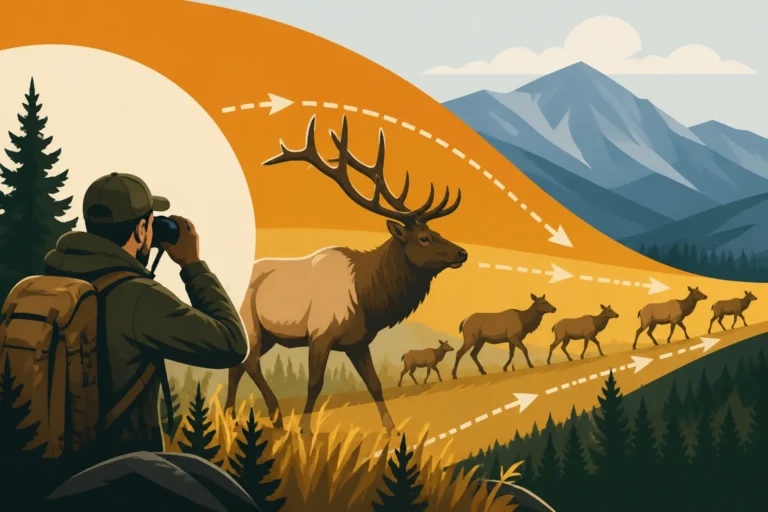
Montana offers various ways to hunt elk, but for a beginner, focusing on a few core methods will be most effective. Still-hunting involves moving slowly and quietly through timber, pausing frequently to observe, listen, and scan for elk. It's a method that requires immense patience and attention to detail, learning to move with the wind and thermals to your advantage. Glassing from a vantage point is another highly effective technique, especially in more open or broken country. Find a good overlook and spend hours systematically scanning hillsides and drainages with your binoculars and spotting scope.
Another common beginner strategy is to focus on ambushing elk near known travel routes between bedding and feeding areas, especially near water sources or wallows. This requires scouting to identify these routes and then setting up quietly before dawn or during the midday hours when elk are likely to move. Understanding the wind and thermals is paramount for all these methods, as elk will almost always detect you if your scent blows their way. For detailed tactics on quiet movement, read our article on How to Still-Hunt Montana Timber. Remember, success often comes from persistence and adapting your method to the specific terrain and elk behavior you encounter.
Physical Preparation and Camp Setup
Elk hunting in Montana is physically demanding. You'll be climbing steep grades, traversing uneven terrain, and potentially packing heavy loads of meat out of remote areas. Starting a fitness regimen months before your hunt is non-negotiable. Focus on cardiovascular endurance (hiking, running, stair climbing) and strength training, particularly for your legs, back, and core. Practice hiking with a loaded pack, simulating the weight you'd carry on a hunt, including water, gear, and potentially meat. Even if you plan a vehicle-based hunt, you'll still be walking miles each day in challenging country.
Setting up an efficient and comfortable camp is also crucial. Whether you're staying in a wall tent, a small backpacking tent, or even a camper trailer, ensure you have a warm sleeping system, a reliable cooking setup, and contingency plans for bad weather. Pack enough food, water, and emergency supplies. For backcountry hunts, minimalism is key, focusing on lightweight, high-performance gear. Always inform someone of your itinerary and expected return time, and carry a satellite communication device for emergencies. Our guide on How to Physically Prepare for a Montana Elk Hunt offers a structured plan, and you'll also want to review Montana Backcountry Hunting Safety Tips to ensure you're prepared for the unexpected. Learning How to Pack Out an Elk in Montana is another vital skill, even for beginners, as success means work!
Essential Gear Checklist for Beginner Elk Hunters
| Category | Essential Items | Notes |
|---|---|---|
| Optics | 10×42 Binoculars, Tripod-mounted Spotting Scope (15-60x), Laser Rangefinder | High-quality optics are crucial for spotting elk at distance in vast terrain. Practice using them effectively. |
| Navigation | GPS Device or Mapping App (e.g., onX Hunt), Offline Maps, Compass, Headlamp with spare batteries | Essential for staying oriented, identifying public/private land, and navigating in the dark. Always have a backup. |
| Clothing | Layering System (Base, Mid, Outer: Merino wool/synthetic, fleece/puffer, waterproof shell), Warm hat, Gloves, Gaiters | Adaptable to Montana's unpredictable weather. Avoid cotton. Focus on warmth, moisture-wicking, and weather protection. |
| Footwear | Broken-in, Waterproof Hiking Boots with ankle support, Extra wool socks, Camp shoes | Your most important comfort and safety item. Prioritize fit and support to prevent blisters and injuries. |
| Weapon | Rifle (e.g., .30-06, .300 Win Mag) or Compound Bow, Ammunition/Arrows, Cleaning Kit, Sling/Bow Sling | Ensure your weapon is sighted in and you've practiced extensively from field positions. Understand ethical shot placement and your effective range. |
| Backpack | Day Pack (25-40L), or overnight/frame pack (60-80L+) if backcountry, Waterproof pack cover | Choose based on hunt style. Must be comfortable, durable, and able to carry essentials, plus extra space for meat if successful. |
| Shelter/Camp | Tent or shelter, Sleeping bag (rated for cold), Sleeping pad, Camp stove, Cooking pot, Water filter/purifier | Essential for multi-day hunts. Prioritize warmth, weather protection, and water purification. |
| Food/Water | High-energy, non-perishable food, Water bottles/hydration reservoir, Water filter/purifier | Plan for sufficient calories and hydration. Always carry more water than you think you'll need. |
| Emergency | First-aid kit, Fire starter, Whistle, Emergency blanket, Satellite communication device (e.g., Garmin inReach) | Crucial for safety in remote areas. Know how to use all items. |
| Miscellaneous | Knife (sharp!), Game bags, Binocular harness, Trekking poles, Field dressing gloves, License/Tags | Small items that make a big difference. Game bags are essential for meat care. Trekking poles save your knees. Don't forget your signed license and tags! |
Disclaimer
Please remember that hunting regulations, seasons, and access can change. Always consult the official Montana Fish, Wildlife & Parks (FWP) regulations for the current year before planning and executing any hunt. This guide provides general information and recommendations for beginners and should not replace official sources or professional advice. Hunting is inherently risky; prioritize safety at all times.