How Many Elk Are in Montana
It's a question almost every hunter, resident or non-resident, asks when they think about Montana: "Just how many elk are there?" The truth is, getting an exact, real-time count of every single elk roaming Big Sky Country is an impossible task, and it's a common frustration for those of us trying to plan a hunt. However, Montana Fish, Wildlife & Parks (FWP) works tirelessly to provide reliable population estimates and management goals, which this guide will break down for you, shedding light on the fascinating dynamics of Montana's incredible elk herds.
Understanding Elk Population Estimates in Montana
When we talk about "how many elk," it’s crucial to understand that we're dealing with estimates, not exact figures. The vastness of Montana, coupled with the elusive nature of elk, makes a precise, census-style count unattainable. This can be a tough pill to swallow when you’re trying to strategize a hunt, but FWP's methods offer the best possible picture we have.
The Challenge of Counting Wild Elk
Imagine trying to count every individual deer in your backyard, let alone every elk across a state larger than many countries. Elk live in diverse and often rugged terrain, from dense timber to open sagebrush plains, and they're constantly moving. They can be incredibly wary, blending seamlessly into their surroundings, especially in areas with high hunter pressure. Factors like weather, snowpack, and even the time of day can significantly impact visibility for surveys. It's a logistical nightmare to ensure every animal is seen, and that no animal is counted twice. This inherent difficulty is why FWP, and wildlife agencies across the West, rely on scientific sampling and modeling rather than a literal head count. It's not about being vague; it's about being realistic with the challenges of wildlife management on such a grand scale.
Montana FWP's Methodology for Elk Counts
Montana FWP employs a multifaceted approach to estimate elk populations, combining various data sources to paint the most accurate picture possible. One of the primary tools is aerial surveys, particularly helicopter surveys, conducted in specific hunting districts. These surveys typically occur in winter when snow cover makes elk more visible against the white landscape, and elk are often concentrated in lower elevations. Biologists fly transects, counting and classifying elk by sex and age (cows, calves, bulls). This data is then extrapolated to estimate the total population within that survey area.
Beyond aerial counts, FWP utilizes hunter harvest data collected annually. Every harvested elk provides valuable information, including the district it was taken in, its sex, and sometimes even age. This harvest data, combined with known hunter effort and success rates, feeds into sophisticated population models. These models help FWP track trends in elk numbers, recruitment (calf survival), and mortality (including hunter harvest and other factors like predation and disease). Additionally, telemetry studies, where individual elk are fitted with GPS collars, provide insights into migration patterns, habitat use, and survival rates, further refining the overall understanding of herd health and numbers. While these methods are robust, they still result in estimates, which FWP then uses to set management objectives and season structures, including the complex array of Montana General vs Permit Tags Explained.
Factors Influencing Montana's Elk Numbers
Montana's elk populations are not static; they are dynamic ecosystems constantly shaped by a complex interplay of environmental factors, human activity, and natural processes. Understanding these influences is key to appreciating the fluctuations in herd numbers across the state.
Habitat and Food Availability
Elk are creatures of habitat, and the quality and quantity of available forage directly correlate to their health, reproductive success, and ultimately, population size. Montana's diverse landscapes offer a range of habitats, from dense conifer forests in the western mountains to the mixed-grass prairies and river bottoms of the east. Disturbances like wildfires, which can initially devastate an area, often lead to a flush of new growth, creating excellent forage and improving elk habitat in the long term. Logging practices can also create new openings and provide young, palatable vegetation.
However, unchecked development, conversion of traditional elk winter range to agricultural or residential use, and prolonged droughts can significantly degrade habitat. When prime winter range, crucial for elk survival during harsh months, is diminished, herds struggle. A robust habitat with diverse forage options means healthier cows, higher calf survival rates, and stronger bulls, all contributing to a thriving population. For hunters hoping to locate these animals, understanding how to read the landscape for optimal feeding and bedding areas is a crucial skill, as highlighted in guides like How to Find Elk in Montana Dark Timber.
Predation and Disease Impact
While often controversial, natural predation plays a significant role in regulating elk populations. Montana is home to several apex predators, including wolves, black bears, grizzly bears, and mountain lions. Wolves, reintroduced in the mid-1990s, are particularly effective elk predators, especially targeting calves and older, weaker animals. While predation can certainly impact local elk numbers, especially in certain areas, FWP manages predator populations alongside elk to maintain ecological balance.
Disease is another silent, yet potent, factor. Chronic Wasting Disease (CWD), a fatal neurological disease affecting deer, elk, and moose, has been detected in various parts of Montana. While its long-term population-level impacts are still being studied, it's a serious concern that could influence future herd health and numbers. Brucellosis, a bacterial disease primarily found in elk populations in the Greater Yellowstone Ecosystem, can cause abortions in cows and is another management challenge. FWP monitors these diseases closely, implementing surveillance programs and management actions to mitigate their spread and impact on the overall Montana Elk Herd Size and Population.
Hunter Harvest and Management Strategies
Human hunters represent the most significant and quantifiable source of elk mortality, and FWP leverages this to manage populations effectively. Through regulated hunting seasons, FWP sets harvest quotas and limits to keep elk numbers within acceptable ranges for each hunting district. This involves a delicate balancing act: providing ample opportunity for hunters, while simultaneously ensuring the health and sustainability of the elk population, and mitigating conflicts with landowners, particularly in agricultural areas.
For example, if a specific district's elk population is significantly over its objective, FWP might issue more antlerless (cow) tags or extend shoulder seasons to increase harvest pressure. Conversely, if a herd is below objective, restrictions might be tightened, such as reducing the number of permits or offering fewer general hunting opportunities. This dynamic management ensures that hunting remains a tool for conservation. Understanding these nuances is vital for anyone applying for tags, and resources like the Montana Nonresident License Draw Explained detail how these strategies impact hunter access and success rates.
Regional Elk Populations Across Montana
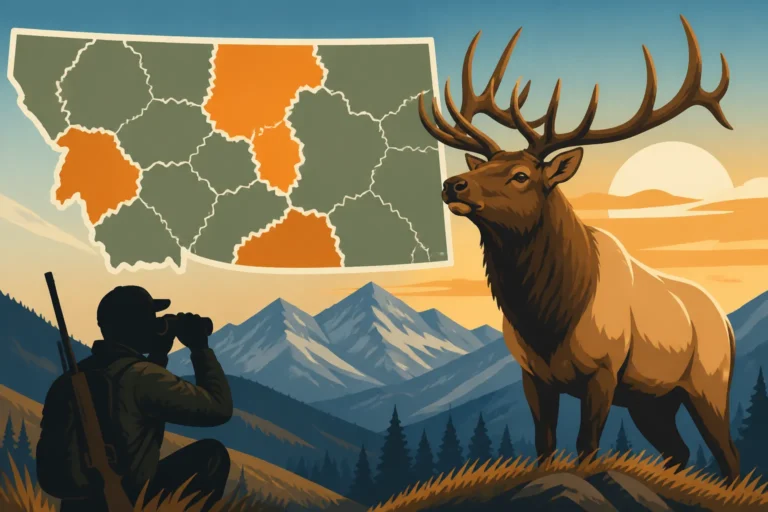
Montana's vastness means that elk populations aren't uniformly distributed. The state is divided into seven administrative regions, each with unique habitat, population dynamics, and management challenges. Understanding these regional differences is crucial for any hunter considering a trip to Big Sky Country.
Mountainous Western Montana Herds
Regions 1 (Northwest Montana, including Kalispell and Libby) and 2 (Southwest Montana, around Missoula and the Bitterroot) are characterized by rugged mountains, dense timber, and significant public land acreage, much of it within national forests. Here, elk herds are generally more dispersed and often inhabit thicker cover, making them challenging to hunt. While individual herd units might be smaller in number compared to some eastern districts, the overall density of elk can be quite good. However, these areas also experience high predator numbers, particularly grizzly bears and wolves, which can impact local elk calf recruitment.
Hunters in these regions often rely on tactics like How to Still-Hunt Montana Timber or employing horses to access remote areas. FWP aims to manage these herds for sustainable populations while also considering the presence of endangered species and public land values. Hunter success often hinges on physical conditioning and persistence, as elk are notoriously difficult to pinpoint in these vast, timbered landscapes. These regions are also popular for backcountry hunts, with significant portions falling under a Montana National Forest Hunting Guide or true wilderness areas like the Bob Marshall.
Central and Eastern Montana Herds
Moving eastward into Regions 3 (Southcentral Montana, Bozeman/Livingston area), 4 (Central Montana, Great Falls/Lewistown area), 5 (Southcentral/Eastern, Billings/Red Lodge area), 6 (Northeast Montana, Glasgow/Malta area), and 7 (Southeast Montana, Miles City/Sidney area), the landscape gradually transitions from towering peaks to rolling mountains, foothills, and eventually, expansive plains. Elk here often inhabit a mosaic of public lands (like National Forests in the Little Belt or Snowy Mountains, or Bureau of Land Management lands) and private agricultural properties.
Many of these districts, especially in Regions 4, 5, and 7, have elk populations that are at or even significantly over FWP population objectives. This is often due to a combination of quality private land habitat providing refuge from hunters, and lower predator densities compared to the western mountains. Here, hunters might find more liberal antlerless opportunities and shoulder seasons. Access can be a mix of challenging public land parcels and the incredibly valuable Block Management Areas (BMAs), which open up private land to public hunting. Utilizing tools like GoHunt's mapping features can be invaluable for pinpointing public land access points and BMA locations in these mixed-ownership landscapes. For those interested in the broader picture, exploring a Montana Public Land Hunting Guide will show the incredible opportunities available throughout these varied regions.
Here's a simplified look at FWP's general elk population status across regions, keeping in mind this can vary wildly by individual hunting district:
| FWP Region | General Geographic Area | Typical Habitat | General Elk Population Status (vs. objective) | Hunting Challenges |
|---|---|---|---|---|
| Region 1 | Northwest | Dense timber, mountains | Often at or slightly below objective | Thick cover, grizzlies, high effort |
| Region 2 | Southwest | Rugged mountains, forests | Varies, some at, some slightly over | Steep terrain, timber, wolves |
| Region 3 | Southcentral | Mountains, foothills, some plains | Mixed, many over objective | Private land access, high pressure |
| Region 4 | Central | Mountains, breaks, plains | Many significantly over objective | Mixed access, some dense cover |
| Region 5 | Southcentral/East | Mountains, plains, river breaks | Often significantly over objective | Private land access, long distances |
| Region 6 | Northeast | Rolling plains, river breaks | Often at or slightly over objective | Scattered herds, access can be tricky |
| Region 7 | Southeast | Prairies, badlands, breaks | Many significantly over objective | Private land access, vast country |
Note: This table provides general trends. Specific hunting district (HD) objectives and population estimates can vary widely within each region.
How Montana Manages Elk Herds and Future Outlook
The management of Montana's elk herds is a continuous, evolving process that seeks to balance ecological health, hunter opportunity, and socioeconomic factors, particularly concerning private landowners. It’s a complex dance with many partners.
FWP's Management Goals and Objectives
Montana FWP sets specific population objectives for individual hunting districts or groups of districts. These objectives are not simply about having "more" elk; they are designed to achieve a balance. The goals typically revolve around:
- Biological Sustainability: Ensuring elk herds are healthy, genetically diverse, and can sustain themselves long-term through reproduction.
- Hunter Opportunity: Providing reasonable hunting opportunities for both resident and non-resident hunters, considering various weapon types (archery, rifle, muzzleloader). For example, strategies for a Montana Archery Elk Hunting Guide might differ greatly from a rifle hunter's approach.
- Landowner Tolerance: Addressing the impacts of elk on private lands, such as crop damage, fence damage, and forage consumption. When elk populations exceed objectives, landowner conflicts tend to rise, leading to more aggressive management strategies.
- Ecological Balance: Considering the impact of elk on other wildlife species and the broader ecosystem, including forage for other ungulates and predator-prey dynamics.
These objectives are periodically reviewed and updated based on new data, research, and public input. Understanding these objectives, and whether a particular hunting district is at, over, or under its objective, is critical information for any hunter, especially when trying to understand Montana Elk Draw Odds by District.
The Role of Data and Public Input
FWP's management decisions are data-driven, relying heavily on the population surveys, harvest data, and research mentioned earlier. This scientific foundation is then augmented by valuable public input. Every few years, FWP initiates a public process to review and adjust hunt regulations, involving open meetings, online surveys, and opportunities for stakeholders (hunters, landowners, conservation groups, non-hunters) to voice their perspectives. This is where the rubber meets the road, as passionate arguments are made for more or fewer elk, different season structures, or changes in access.
For hunters, staying informed about these processes is invaluable. Platforms like GoHunt provide not only data on draw odds and unit breakdowns but also news and analysis related to FWP proposals, helping hunters understand potential regulation changes and their implications. Websites and forums dedicated to hunting in Montana are also excellent places to engage with the hunting community and share insights. The final decisions often reflect a compromise, aiming to satisfy the diverse needs and desires of a broad spectrum of Montanans and visiting hunters alike, ultimately guiding how you approach your own Montana DIY Elk Hunting Guide.
Future Outlook for Montana Elk Populations
The future of Montana's elk populations is likely to remain dynamic. Challenges like climate change (affecting habitat and disease vectors), increasing human populations (leading to habitat fragmentation and more landowner conflicts), and the ongoing presence of CWD will require adaptive management from FWP.
However, Montana's robust public land base, committed conservation efforts, and the passion of its hunting community offer strong reasons for optimism. FWP continues to invest in habitat projects, disease monitoring, and data collection to ensure elk remain a cornerstone of Montana's wildlife heritage. While there will always be fluctuations, the commitment to science-based management and public engagement means that hunters will, for the foreseeable future, continue to have opportunities to pursue elk in the Big Sky State.
Disclaimer
The information provided in this guide is for general informational purposes only and is subject to change. Hunting regulations, population estimates, and season dates are determined by Montana Fish, Wildlife & Parks (FWP) and can vary annually. Always consult the official Montana FWP regulations and resources before planning any hunting trip. Relying solely on this guide for legal or ethical hunting practices is not advised.