Montana State Trust Land Hunting
It's incredibly frustrating when you're staring at a promising piece of Montana hunting ground on a map, only to realize it's patchwork of private ownership or lands with unclear access rules. Many hunters, especially nonresidents or those new to Big Sky Country, struggle to differentiate between the various public land designations and how to legally utilize them. This guide aims to clear up the confusion surrounding Montana State Trust Land hunting, helping you understand what these lands are, how to access them, and how to effectively integrate them into your hunting strategy.
Understanding Montana State Trust Lands for Hunting
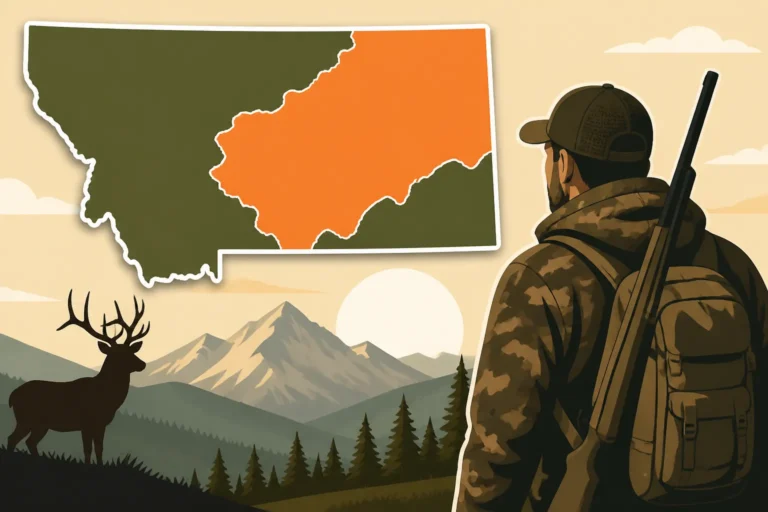
When you're looking at a map of Montana, especially in the eastern and central parts of the state, you'll often see a mix of private parcels, federal lands like those managed by the Bureau of Land Management (BLM) or National Forests, and then these distinct blocks colored differently, often green or blue depending on your mapping tool, labeled as "State Trust Land." These aren't your typical federal public lands, and they come with their own unique set of rules and access considerations.
What Exactly Are State Trust Lands?
Montana State Trust Lands are vast areas, totaling over 5.2 million acres, managed by the Montana Department of Natural Resources and Conservation (DNRC). But here's the crucial difference: unlike National Forests or BLM lands, which are managed for broad public use, these state lands are held in trust. Their primary purpose, as mandated by Montana's Enabling Act of 1889, is to generate revenue for specific public institutions, predominantly the state's public schools, but also for universities, hospitals, and other entities. This means while recreational use, including hunting, is allowed, it’s often secondary to revenue generation, influencing how they are managed and accessed.
Think of it this way: instead of simply being open access, these lands are more like a business asset for the state. They might be leased out for grazing, timber, or even mineral extraction. Hunters are essentially allowed to use these lands for recreation, but with the understanding that the primary mandate is to benefit the trust beneficiaries. This underlying purpose shapes everything from access rules to how activities like camping or vehicle use are permitted. Understanding this fundamental difference is key to respecting the land and its regulations.
The Importance of the General Land Office Survey
To truly grasp why Montana's land ownership often looks like a complicated quilt, especially with state trust lands, you need to understand the General Land Office (GLO) Survey system. This survey, initiated in the late 1700s and continuing through the 19th century as the country expanded westward, systematically divided vast territories into a grid of townships (6×6 miles), sections (1×1 mile), and quarter-sections. Each township contains 36 sections. In Montana, as in many western states, when the state was granted statehood, specific sections within each township were designated to be "school sections" – typically sections 16 and 36. This checkerboard pattern of land ownership is a direct result of that historical survey.
This means you'll frequently find state trust lands as isolated 640-acre blocks, often surrounded by private land. This creates significant challenges for public access, as a state trust land section might be technically "public," but if it's completely surrounded by private property with no legal easement or public road, it becomes effectively landlocked for public use. It's a source of immense frustration for hunters, spotting elk on a block of state land only to realize there's no way to legally reach it without trespassing. This fragmented nature makes careful e-scouting and understanding access crucial for any hunter hoping to utilize these parcels.
Navigating Access Rules and Regulations
Hunting on Montana State Trust Lands isn't as simple as driving up to a National Forest access point and heading into the woods. There are specific licenses and regulations you need to be aware of, which are distinct from those governing federal lands or even the state's own Block Management Areas. Ignoring these can lead to fines, loss of hunting privileges, and a black eye for all hunters.
The State Land Use License Requirement
A common misconception among hunters, especially nonresidents, is that a general hunting license covers all public land access. While your Montana hunting license and conservation license cover hunting on most federal public lands (National Forests, BLM), hunting on State Trust Lands often requires an additional permit: the State Land Recreational Use License. This license is separate from your general hunting license and is specifically for activities like hiking, fishing, and, yes, hunting on these trust lands.
The cost is relatively low, typically around $10 for residents and $15 for nonresidents annually. However, sometimes the Conservation License, if purchased with a valid hunting license, will implicitly cover the recreational use of state trust lands for activities like hunting. This can be confusing, so it’s always best practice to check the current Montana Fish, Wildlife & Parks (FWP) regulations or contact the DNRC directly to confirm your specific license requirements. If you're planning a trip to Big Sky Country, make sure to consider Montana Nonresident License Draw Explained early on to ensure you have all your ducks in a row. Purchasing the correct license proactively can save you a lot of headache and potential legal trouble in the field, making sure your hunt starts on the right foot.
Specific Regulations for Hunting on Trust Lands
While the overarching state hunting regulations from Montana FWP apply to state trust lands, there are often additional rules imposed by the DNRC that are specific to these parcels. These are often in place to protect the land, existing leases, or prevent conflicts with other users (like ranchers who graze cattle on the land). For example, motorized vehicle use is often strictly limited, or even prohibited, on trust lands, especially off designated roads. You might find "foot traffic only" signs or restrictions on camping.
It’s not uncommon to encounter signs detailing these specific restrictions at common access points. Beyond that, fire restrictions are paramount, especially during dry seasons, given the presence of grazing leases and the potential for wildfire to impact agricultural operations. Always be aware of local fire conditions and adhere to any bans. Furthermore, specific hunt codes you might be researching for a particular game animal may have additional nuances when applied to state trust lands, so cross-referencing is critical. Remember, these lands are often working landscapes, so respecting livestock, fences, and gates is not just good etiquette, it's often legally required.
Finding and Identifying Montana State Trust Lands
Locating state trust lands and understanding their boundaries and access points can feel like solving a complex puzzle. However, with the right tools and a bit of dedication to research, you can unlock some fantastic hunting opportunities that many others might overlook. This often involves blending modern technology with traditional map reading.
Utilizing Digital Mapping Tools
In today's hunting world, digital mapping applications are absolutely indispensable, and they are your best friend when it comes to navigating Montana's complex land ownership. Tools like onX Hunt and GoHunt (which uses onX mapping) have revolutionized how hunters identify and access various land types, including state trust lands. These apps clearly color-code different land ownerships directly on your phone or tablet, allowing you to instantly see where public, private, BLM, National Forest, and state trust lands begin and end.
Beyond simply showing property lines, these apps allow you to overlay various layers like topo maps, satellite imagery, and even historic fire data, which can be invaluable for finding game habitat. You can drop waypoints, measure distances, and track your movements in real-time, preventing accidental trespass – a critical concern when hunting fragmented state trust lands adjacent to private property. Before heading out, spend significant time e-scouting with these apps. Look for roadless blocks of state land, sections bordering other public lands, or areas with good habitat features like water sources or timber pockets. This upfront work is a game-changer for effective hunting on state trust lands. For more detailed e-scouting tips, check out How to E-Scout Montana Hunting Units.
Traditional Mapping and FWP Resources
While digital tools are powerful, don't completely discount traditional mapping and state resources. The Montana FWP website is an excellent starting point, offering official hunting district maps, season regulations, and sometimes specific maps detailing Block Management Areas, which can often include state trust lands. Many regional FWP offices also have physical maps or staff who can provide localized insights into land access.
For a deeper dive, county plat maps, often available at county courthouses or through online county GIS portals, can provide incredibly detailed information about specific land parcels and easements. These might not be as user-friendly as a hunting app but can sometimes reveal nuances of ownership or legal access not immediately apparent elsewhere. Combining the broad overview of a digital map with the granular detail of a plat map or FWP resource ensures you have the most comprehensive understanding of the land you intend to hunt. Always cross-reference multiple sources to confirm access, especially for areas that appear ambiguous.
Strategies for Hunting Success on Trust Lands
Hunting state trust lands effectively requires a different approach than simply driving into a vast national forest. These parcels often present unique challenges and opportunities, demanding thoughtful research, strategic planning, and an understanding of how they fit into the broader landscape. Success often hinges on doing your homework long before you ever step foot in the field.
Researching Specific Tracts and Hunt Codes
Not all state trust lands are created equal, and their hunting potential varies wildly. A productive strategy involves identifying specific tracts that offer good habitat for your target species. Look for parcels that contain a mix of cover, food sources, and water. Are there timbered draws for elk or mule deer? Does the land feature native prairie grasses and water sources attractive to antelope? Understanding the specific ecology of a piece of ground is paramount. When planning for big game, whether it's Montana Elk Hunting Guide or Montana Mule Deer Hunting Guide, you'll want to dig into the details.
Additionally, always pay close attention to the specific hunt codes for the districts where these trust lands are located. Sometimes, a district might be "general" for a certain species, but a specific permit might be required for an adjacent block. Consult the Montana FWP regulations carefully, especially the sections pertaining to Montana General vs Permit Tags Explained and Montana Hunt Codes Explained, to ensure you're in compliance. Also, research the success rates and hunter pressure for specific districts. Resources like GoHunt can provide statistics on draw odds and harvest reports, giving you a realistic picture of what to expect.
Combining Trust Lands with Other Public Access
One of the most powerful strategies for hunting Montana State Trust Lands is to view them not in isolation, but as part of a larger interconnected public land system. Many state trust land sections are directly adjacent to or intermingled with federal public lands like BLM or National Forests. This creates opportunities to access larger hunting units by combining different land types. For example, a state trust land parcel might provide a crucial entry point or a travel corridor to a more remote block of National Forest that would otherwise be difficult to reach.
When e-scouting, actively look for these combinations. Can you hike across a small state trust land section to get into a larger, less pressured BLM unit? Or perhaps a state parcel offers a key water source that concentrates animals moving between different public land types. These "stepping stone" or "connector" pieces of state trust land can be invaluable. It’s all part of a broader Montana Public Land Hunting Guide strategy, where understanding the mosaic of ownership allows you to unlock more ground. By thinking beyond single land designations, you can often find significant advantages in terms of animal density and reduced hunter competition.
Understanding Hunter Pressure and Timing
Due to their often fragmented and relatively accessible nature, some state trust lands can experience significant hunter pressure, especially during opening weekend or other peak times. If a block of state trust land has easy road access, chances are other hunters know about it too. This doesn't mean you should avoid these areas entirely, but it does mean you need a strategy to mitigate the impact of other hunters.
Consider hunting these areas during weekdays, or later in the season when initial pressure has died down. Another effective tactic is to walk farther than most other hunters are willing to go. While many might stick to the easy-access edges, pushing a mile or two into a seemingly small state trust land parcel can often put you ahead of the crowds and into undisturbed game. Early morning starts, hunting during inclement weather, or focusing on less obvious terrain features can also yield success. If you're looking to strategize on dealing with hunting crowds, you might find valuable insights in How to Beat the Crowds on Montana Public Land. Remember, even a small piece of trust land can hold game if you understand how to hunt it smart, away from direct human disturbance.
Ethical Considerations and Respectful Hunting
Hunting on Montana State Trust Lands, perhaps more than on vast federal public lands, requires an acute awareness of ethical boundaries and respectful conduct. The checkerboard land ownership, often bordering or intermingled with private ranchland, means that vigilance and courtesy are paramount. Your actions directly reflect on the entire hunting community and can impact future access for everyone.
Respecting Private Land Boundaries
This cannot be stressed enough: know where you are at all times. The ease with which state trust lands can be interspersed with private property makes accidental trespass a very real risk. Rely heavily on your GPS mapping tools, like onX Hunt, to constantly verify your position relative to property lines. Even a small deviation, a fence that isn't where you thought it was, or a game animal leading you across a boundary can quickly turn a legal hunt into a serious legal issue.
Before you even step foot on a trust land parcel, zoom in on your maps and identify all adjacent private boundaries. Look for any potential "landlocked" public access situations, as even if a piece of state land is public, you can't cross private property to reach it without explicit permission. Understanding How to Access Landlocked Public Land in Montana is not just a good idea, it's essential for legal hunting. If you have any doubt about a boundary, err on the side of caution. If a game animal crosses onto private land, you cannot pursue it without landowner permission, even if you shot it on public ground. Always carry landowner contact information if possible for adjacent properties you might accidentally approach.
Leave No Trace Principles
State trust lands are often leased for agricultural purposes, such as cattle grazing. This means you are hunting on what is essentially a working landscape. Practicing strict Leave No Trace principles is not only common courtesy but also crucial for maintaining good relationships with lessees and ensuring continued access for hunters. Pack out everything you pack in – even small scraps of trash like spent casings, wrappers, or flagging tape.
Respect all existing infrastructure. If you encounter a closed gate, close it behind you. Do not cut fences, drive off-road where prohibited, or disturb livestock. Remember, the lessees rely on these lands for their livelihood, and their cooperation is vital for hunter access. By leaving the land exactly as you found it, or better, you help ensure that hunting remains a welcomed activity on these valuable state assets. Be a good steward, and consider yourself an ambassador for all hunters.
Comparative Overview of Montana Hunting Land Types
To help clarify the distinctions between the various public and accessible land types in Montana, here's a quick comparison:
| Feature | Montana State Trust Land | National Forest Land (USFS) | Bureau of Land Management (BLM) | Block Management Areas (BMA) |
|---|---|---|---|---|
| Primary Purpose | Generate revenue for state institutions (e.g., schools) | Multiple-use: recreation, timber, grazing, wildlife | Multiple-use: grazing, energy, recreation, wildlife | Facilitate public hunting access on private land |
| Managing Agency | Montana DNRC | USDA Forest Service | US Department of the Interior | Montana FWP (private landowner cooperation) |
| Access Permit | Often requires a State Land Recreational Use License (or part of Conservation License/hunting combo) | Generally covered by Conservation License/hunting license | Generally covered by Conservation License/hunting license | Requires FWP permission slip (sometimes self-serve) or sign-in |
| Common Location | Scattered, often checkerboarded, more common in plains/foothills | Primarily mountainous, timbered regions | Varied: grasslands, deserts, canyons, often adjacent to USFS | Scattered throughout the state, mostly private agricultural land |
| Vehicle Use | Often restricted to designated roads, sometimes foot traffic only | Generally allowed on designated roads/trails, some restrictions | Generally allowed on designated roads/trails, some restrictions | Varies greatly by BMA, check specific rules |
| Camping | Limited or prohibited, check specific regulations | Generally allowed in designated areas or dispersed (with rules) | Generally allowed in designated areas or dispersed (with rules) | Usually prohibited, check specific rules |
| Hunter Pressure | Can be high if easily accessible, less if landlocked/remote | Varies widely, can be very high near trailheads | Varies widely, can be high in popular areas | Varies by BMA, often controlled by quotas or sign-ins |
| Key Challenge | Fragmented ownership, access issues, specific state land rules | High hunter numbers in accessible areas, wilderness designations | Remote access, harsh conditions, dispersed water | Limited timeframes, quotas, specific landowner rules |
Navigating the nuances of land ownership is a core part of being a successful hunter in Montana. Understanding which permit you need for a specific area, whether it's for hunting Montana Antelope Hunting Guide on the plains or pursuing elk in timbered sections that happen to be state trust land, is crucial. This table should provide a helpful overview as you plan your adventures in the diverse landscapes of Montana.
Planning Your Hunt on State Trust Lands
Successful hunting in Montana, especially on state trust lands, isn't about luck; it's about meticulous planning and understanding the nuances of the land. Taking the time to prepare thoroughly will significantly increase your chances of a successful and ethical hunt.
Integrating Trust Lands into Broader Hunt Planning
When you're planning a full Montana hunting trip, whether it's for Montana Elk Hunting Methods Explained or a mixed bag of species, don't view state trust lands as an afterthought. Instead, try to integrate them strategically into your overall plan. Perhaps a specific trust land parcel offers a crucial piece of winter range for deer that could be accessible during a late-season hunt. Or maybe a series of trust land sections could serve as a stealthy entry point into a larger wilderness area, making your Montana Backcountry Hunting Guide more effective.
Consider how these lands fit into seasonal game movements. Animals will use different habitats throughout the year, driven by factors like feed, water, and security. A trust land parcel that seems barren in early archery season might become a hotspot during the general rifle season after a snowstorm pushes animals down from higher elevations. Always consider the context of the surrounding landscape and how animals might use the state trust land in conjunction with adjacent private or federal properties.
Preparing for the Unexpected and Staying Safe
Hunting in Montana always means being prepared for anything, and this holds especially true for state trust lands, which can sometimes be more remote or less trafficked than other public lands. Always carry essential survival gear: first-aid kit, extra water and food, navigation tools (GPS device and physical map/compass), fire starter, and emergency shelter. Let someone know your hunting plan, including your intended route and expected return time. Cellular service can be spotty to non-existent in many areas, so a satellite communication device like a Garmin inReach is highly recommended.
Beyond general safety, consider specific risks related to state trust lands. These areas might be actively grazed by cattle, so be aware of livestock and any fencing or gates. Land conditions can also vary; some trust lands might have eroded roads, thick brush, or hidden hazards. Always approach new areas with caution. For instance, if you're venturing into rougher terrain or planning to pack out an animal, ensure you've reviewed tips on How to Pack Out an Elk in Montana to be adequately prepared. Being self-sufficient and anticipating challenges is the hallmark of a responsible Montana hunter.
Disclaimer
The information provided in this guide is for general informational purposes only and is subject to change. Hunting regulations, license requirements, and land access rules in Montana can vary significantly and are updated periodically by Montana Fish, Wildlife & Parks (FWP) and the Department of Natural Resources and Conservation (DNRC). It is the hunter's sole responsibility to consult the most current official FWP regulations, DNRC land use policies, and local ordinances before engaging in any hunting activity. Always confirm land ownership and access permissions using official maps and resources, and obtain any required permits or licenses. Failure to do so may result in legal penalties.