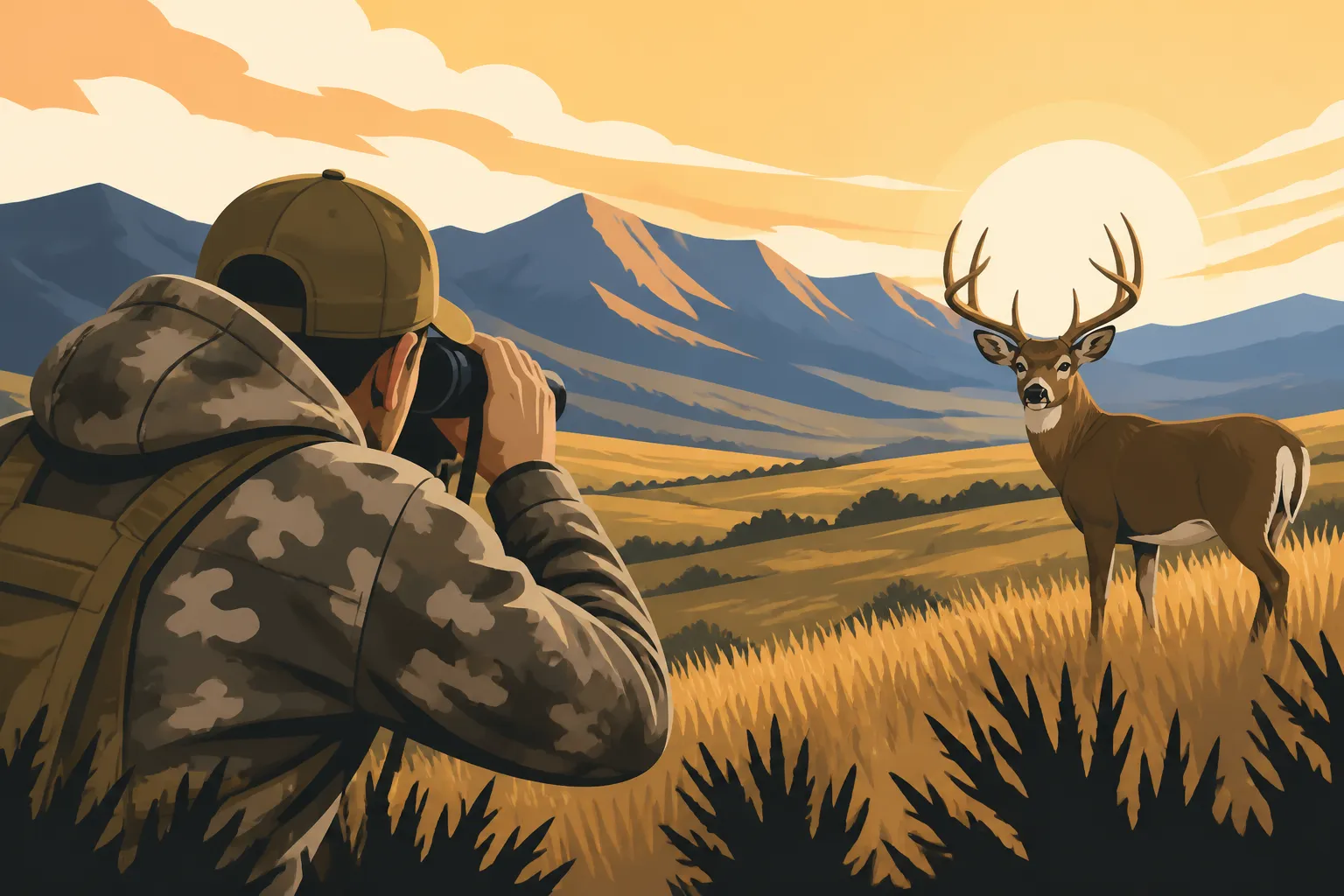
Hunting Eastern Montana for Whitetail
Eastern Montana whitetail hunting can feel like trying to find a needle in a haystack, especially if you're used to mountainous terrain or dense timber. The vast, open landscapes and often fragmented public access can leave many hunters scratching their heads, wondering where these elusive deer hide. This guide is dedicated to breaking down the unique challenges and rewarding strategies for successfully pursuing whitetail deer in the ruggedly beautiful, yet often overlooked, eastern half of the Treasure State.
Understanding Eastern Montana's Whitetail Habitat
When you picture Montana hunting, most folks immediately conjure images of towering mountains, dense forests, and high-country elk. But Eastern Montana offers a completely different, equally challenging, and incredibly rewarding experience, particularly for whitetail deer. The key to unlocking success here lies in understanding where these deer live and thrive in a landscape that, at first glance, might seem barren. It's about recognizing the subtle nuances of cover and food sources that draw them in.
River Bottoms and Riparian Zones
Hands down, if you're hunting whitetail in Eastern Montana, the river and creek bottoms are going to be your absolute best friend. Think of major drainages like the Yellowstone River, Missouri River, Powder River, and their countless tributaries. These ribbons of life cut through the prairies, providing everything a whitetail needs: dense thermal cover, crucial escape routes, water, and consistent food sources that differ from the surrounding dryland agriculture.
The riparian zones are often choked with thick stands of cottonwoods, willows, dogwood, Russian olive, and various thorny brush. This creates an almost jungle-like environment, a stark contrast to the open plains just yards away. Whitetails here often have very small home ranges, living out their entire lives within a few hundred acres of this dense cover. They'll bed in the thickest tangles during the day, venturing out into adjacent agricultural fields or more open browse areas at dawn and dusk. Understanding How to Hunt Whitetail in Montana River Bottoms is absolutely paramount for consistent success in these areas. Your scouting here isn't about covering miles, but meticulously dissecting a few hundred yards of dense cover.
Agricultural Lands and Associated Cover
Eastern Montana is a mosaic of agricultural fields – vast expanses of wheat, corn, alfalfa, and other crops that provide a huge draw for whitetails. These deer become incredibly patterned to agricultural food sources, especially as the hunting season progresses and natural forage becomes scarce. The challenge, however, is that while the fields provide food, they rarely offer adequate cover for deer to bed down safely during daylight hours.
This is where the edges come into play. Whitetails will utilize small coulees, draws, shelterbelts (rows of trees planted for windbreaks), and even small pockets of brush or CRP (Conservation Reserve Program) land adjacent to these agricultural fields for bedding. They'll travel from these bedding areas, often under the cover of darkness or low light, to feed in the fields. The trick is to identify those pinch points, fence lines, and subtle terrain features that deer use to transition between their bedding and feeding areas. Hunting these transition zones, especially where cover meets crops, can be incredibly productive.
Badlands and Breaks Habitat
While not as prevalent for whitetail as for their mule deer cousins, some parts of Eastern Montana's badlands and "breaks" country also hold whitetails, particularly where water is present. This terrain is characterized by eroded buttes, deep coulees, and fragmented, rugged landscapes. Whitetails in these areas will stick to the drainages and pockets of timber or dense brush within the breaks that offer reliable water sources and thicker cover than the surrounding grasslands.
Hunting whitetails in these badlands can feel more like hunting mule deer, requiring a lot of glassing and careful movement. They'll often be found in the bottoms of deeper, brushy coulees or on north-facing slopes that retain more moisture and provide better cover. Access to these areas can be tricky, often involving navigating rough two-track roads or significant walk-ins. It's a different kind of whitetail hunting, one that rewards patience and a keen eye for subtle habitat changes.
Key Whitetail Hunting Tactics for Eastern Montana
Hunting whitetail deer in Eastern Montana isn't a one-size-fits-all endeavor. The tactics you employ will largely depend on the specific habitat you're hunting and the time of year. What works in a dense river bottom might be entirely ineffective in wide-open agricultural country. It's about adapting your approach to the deer's behavior and the unique characteristics of the land.
Stand and Blind Hunting Strategies
In Eastern Montana, especially in river bottom and agricultural edge settings, stand and blind hunting are king. Whitetails here are masters of using existing cover to move unseen, and placing yourself strategically along their travel routes or feeding areas is often the most effective way to intercept them. This isn't about random placement; it's about meticulous scouting and understanding deer patterns.
For tree stands, look for natural funnels in river bottoms, bends in a creek that force deer to a specific crossing point, or the transition zone where a brushy draw meets a crop field. Think about the prevailing wind, access routes that don't spook deer, and clear shooting lanes. Ground blinds are fantastic for more open areas, particularly along agricultural field edges or near known water sources. A key aspect of Montana Whitetail Hunting: Ground Blind Tactics is setting them up well in advance to allow deer to get used to their presence. Both methods require patience, scent control, and an understanding of deer movement throughout the day, especially during the crucial morning and evening hours.
Spot-and-Stalk Approaches in Open Country
While most whitetail hunting revolves around ambush tactics, there are situations in Eastern Montana where a spot-and-stalk approach can be highly effective, especially in more broken country or during the rut when bucks are on the move. This tactic is particularly useful in the badlands or areas with rolling prairie and deep coulees where you can use terrain to your advantage.
The strategy involves extensive glassing from a high vantage point to locate deer in their bedding areas or feeding on distant slopes. Once a deer is spotted, the real challenge begins. You need to meticulously plan your approach, using every fold in the terrain, every patch of brush, and every change in elevation to conceal your movement. The wind is your absolute master here; a swirling gust can blow your entire stalk. This is where tools like onX Hunt become invaluable, helping you identify terrain features, property lines, and potential cover to aid your stalk. It’s an exhilarating, often frustrating, but incredibly rewarding way to hunt.
Decoys and Calling
Bringing a whitetail buck within range often requires more than just sitting quietly; sometimes you need to convince him to come to you. Decoys and calling can be incredibly effective tools in Eastern Montana, particularly during the pre-rut and rut phases. Whitetail bucks, especially mature ones, are highly territorial and responsive to challenges or the promise of a receptive doe.
Doe bleats and fawn bawls can be effective early in the season to pique curiosity or bring in does, which can often be followed by a buck. As the rut approaches, grunts, snort-wheezes, and rattling sequences become potent. When learning How to Rattle for Montana Whitetail, timing and intensity are crucial. A well-executed rattling sequence can draw a buck in from hundreds of yards away, especially if combined with a visible decoy that sells the illusion of a rival buck or a receptive doe. Deploying a buck decoy can work wonders, drawing in dominant bucks looking for a fight. Just remember, concealment for yourself is paramount when using a decoy, as the deer will be focused on it, not you.
Navigating Access and Regulations in Eastern Montana
Access is often the biggest hurdle for nonresident and even resident hunters in Eastern Montana. The vast majority of the land is privately owned, typically by ranchers and farmers. However, there are significant public land opportunities if you know where to look and how to utilize them. Understanding the nuanced regulations is also critical to ensure a legal and successful hunt.
Public Land Opportunities
Don't let the "private land" stereotype deter you. Eastern Montana offers some fantastic public land hunting. The most prominent and often most accessible are the Block Management Areas (BMAs). These are private lands that landowners enroll into a program with Montana Fish, Wildlife & Parks (FWP) to allow public hunting access. These areas are incredibly diverse, ranging from small river bottom parcels to vast tracts of prairie and breaks. Many BMAs in Eastern Montana hold excellent whitetail numbers. To successfully navigate these, knowing How to Use Block Management for DIY Hunts is essential.
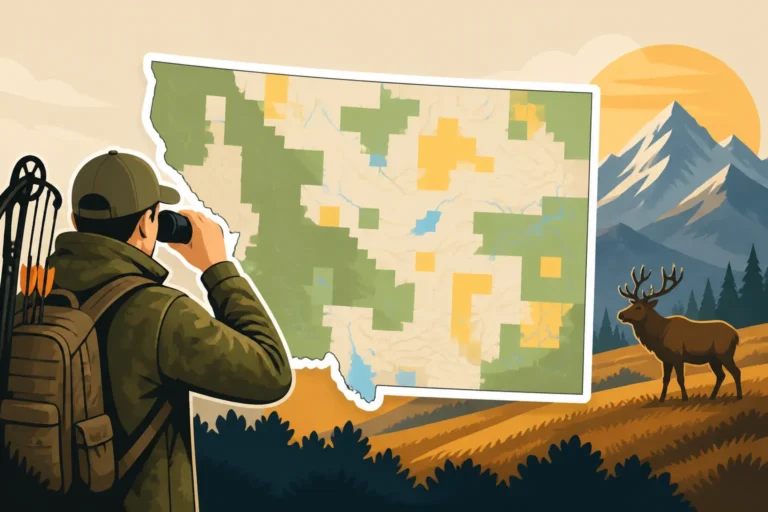
Beyond BMAs, you'll find Bureau of Land Management (BLM) lands and State Trust Lands. BLM lands are often interspersed with private property, requiring careful navigation to stay legal. State Trust Lands are managed by the Department of Natural Resources and Conservation (DNRC) and require a State Land Use License for recreational access, which can be purchased annually. Using a reliable mapping system like onX Hunt is absolutely non-negotiable here. It clearly delineates public and private land boundaries, shows Block Management access points, and helps you identify isolated pockets of public ground that often go overlooked by other hunters. Learning How to Find Public Land in a Montana District will be a huge asset in your planning.
Private Land Access and Permission
While public lands offer great opportunities, securing private land permission can unlock some of the best whitetail hunting in Eastern Montana. Ranchers and farmers often know their deer herds intimately and can point you to specific areas. The key to gaining access is respect, courtesy, and timing.
Start by researching land ownership using online mapping tools. Then, write a polite letter or make a phone call well in advance of the season. When you finally speak with a landowner, be clear about your intentions, offer to help with chores, and always, always follow through on any promises you make. Offer to share meat or photos. Remember, you're a guest, and a good impression can lead to years of access. Sometimes, simply showing up with a positive attitude and a clear understanding of Montana Landowner Preference Explained can open doors. It’s a relationship-building exercise, and trustworthiness is paramount.
Specific Whitetail Regulations and Licenses
Montana has specific regulations for whitetail deer that can vary by hunting district. Generally, Eastern Montana falls under a broader "general deer" license, but specific hunting districts might have antler point restrictions or offer antlerless B licenses to help manage local populations. It's absolutely crucial to study the Montana FWP regulations carefully each year, as they can change. The Montana Whitetail Deer Season Dates and Tags will outline the exact periods and types of tags available.
Nonresidents typically purchase a "Nonresident Deer Combination License" which includes a general deer tag (often valid for either whitetail or mule deer), an upland bird license, and a fishing license. While you can usually shoot an antlered whitetail buck with a general deer tag, always double-check for any antler restrictions in your specific hunting district, as some areas may require a minimum number of points on one side. Staying informed about Montana Hunting Seasons Explained is your responsibility as a hunter.
Essential Gear and Preparation for Eastern Montana Whitetail
Hunting Eastern Montana for whitetail deer presents a unique set of demands on your gear and physical preparation. The weather can be wildly unpredictable, the terrain can be surprisingly rugged, and the sheer vastness of the landscape requires good optics and reliable navigation. Being well-equipped can make the difference between a frustrating trip and a successful, comfortable hunt.
| Habitat Type | Primary Whitetail Use | Key Hunting Strategy | Access Considerations | Essential Gear Highlight |
|---|---|---|---|---|
| River Bottoms | Dense cover, food, water, travel | Stand/Blind, still-hunt | Often private, good BMA potential | Scent control, tree stand/blind, good boots |
| Agricultural Lands | Food source, adjacent cover | Stand/Blind, ambush | Mix of private & accessible public (BMAs) | Rangefinder, binoculars, ground blind, quiet clothing |
| Badlands/Breaks | Escape cover, water pockets, browse | Spot-and-Stalk, ambush | BLM, State Trust Land, some private, rugged access | Quality binoculars, spotting scope, tripod, tough boots, GPS |
Optics and Scouting Tools
In Eastern Montana, good optics are not a luxury; they are a necessity. Whether you're scanning vast prairies for deer moving between cover and crops, or picking apart the brushy bottoms of coulees in the badlands, quality binoculars and a spotting scope will extend your vision and save your legs. Look for a pair of 10×42 or 12×50 binoculars, and a high-quality spotting scope (20-60x range) will be invaluable for judging deer at long distances. A solid tripod is crucial for steady glassing, especially in windy conditions.
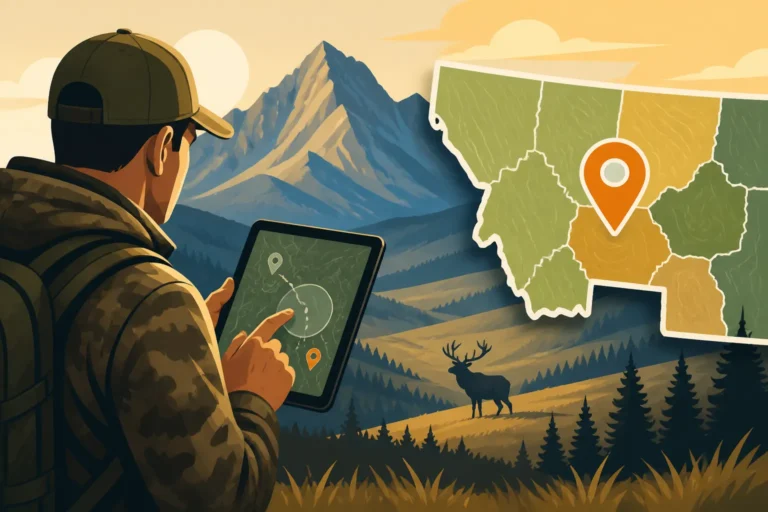
Beyond glass, modern e-scouting tools are indispensable. As mentioned, onX Hunt maps are a game-changer for identifying public land, property boundaries, and terrain features. Tools like GoHunt also offer fantastic resources for planning your trip, researching units, and understanding draw odds for various tags. Learning How to E-Scout Montana Hunting Units before you even leave home can give you a massive advantage, allowing you to pinpoint potential bedding areas, travel corridors, and water sources from your couch. Don't forget a rangefinder for accurate shots, as distances can be deceiving in the open country.
Clothing and Camouflage
Eastern Montana weather is infamous for its unpredictability. You can experience all four seasons in a single day. Layering is not just a suggestion; it's a survival strategy. Start with a good base layer that wicks moisture, add insulating layers for warmth, and top it off with a waterproof and windproof outer shell. Early season hunts might be hot and dusty, while late-season hunts can bring brutal cold, deep snow, and biting winds.
Camouflage patterns that blend with sparse, dry grasslands, sagebrush, and muted grays/browns are often more effective than traditional dark timber patterns. Think about patterns like Sitka Subalpine or Optifade Open Country, or even simpler earth tones. Quiet fabrics are essential for stand hunting, as deer can hear even slight rustles in the still air. Always pack extra warm layers, gloves, hats, and an emergency bivy sack, especially if you plan on venturing far from your vehicle.
Weapon Choices for Whitetail
For rifle hunters, a flat-shooting cartridge capable of handling shots out to 300-400 yards is advisable, given the open nature of much of the terrain. Popular choices include .270 Win, .30-06, .308 Win, 6.5 Creedmoor, and .300 Win Mag. Ensure your rifle is sighted in accurately and that you are proficient with it at various ranges. While long shots can present themselves, ethical hunting means knowing your limits.
Archery hunters will find themselves primarily targeting deer from tree stands or ground blinds in river bottoms or along agricultural edges. A reliable compound bow setup with sharp broadheads is key. Practice shooting from elevated positions or from within a blind to simulate actual hunting conditions. When hunting Montana Archery Elk Hunting Guide, many of the same principles of patience and stealth apply to whitetails. Muzzleloader hunting also has its dedicated season, and a modern in-line muzzleloader can be a potent tool, especially for later-season hunts. Always check regulations for specific weapon restrictions by district and season.
Disclaimer
The information provided in this guide is for general informational purposes only and is not intended as legal advice. Hunting regulations, season dates, and access rules in Montana are subject to change. It is the responsibility of every hunter to consult the official Montana Fish, Wildlife & Parks (FWP) regulations annually, understand all applicable laws, and obtain the necessary licenses and permits before hunting. Always practice ethical hunting and prioritize safety.