How to Call Elk in Montana
The vastness of Montana’s elk country can feel intimidating. You’re out there, surrounded by timbered slopes or sprawling breaks, and the silence can be deafening, making you wonder if there’s even an elk within miles. The frustration of trying to locate and entice these elusive animals, especially when they're tight-lipped or pressured, is a shared experience among many hunters. This guide is designed to demystify the art and science of calling elk in Montana, equipping you with the knowledge and confidence to communicate effectively with these magnificent creatures and increase your odds of success.
The Foundation: Understanding Elk Vocalizations
Before you even think about putting a call to your lips, it's absolutely critical to understand why elk make the sounds they do. It's not just random noise; it's a rich, complex language that conveys everything from alarm to contentment to outright challenge. Learning this language is the first, most crucial step in becoming an effective elk caller.
The Language of Elk: What They're Saying
Elk have a surprisingly diverse vocabulary, and each sound carries a specific meaning, especially during the rut. A screaming bull bugle isn't just a bull screaming; it's a declaration of dominance, a challenge to rivals, or an invitation to cows. Cow calls, from the softest mews to the most pleading estrus whines, are designed to attract attention or signal contentment. Calf calls are often overlooked but are incredibly effective for creating a sense of safety and drawing in protective cows.
Let's break down some of the key calls:
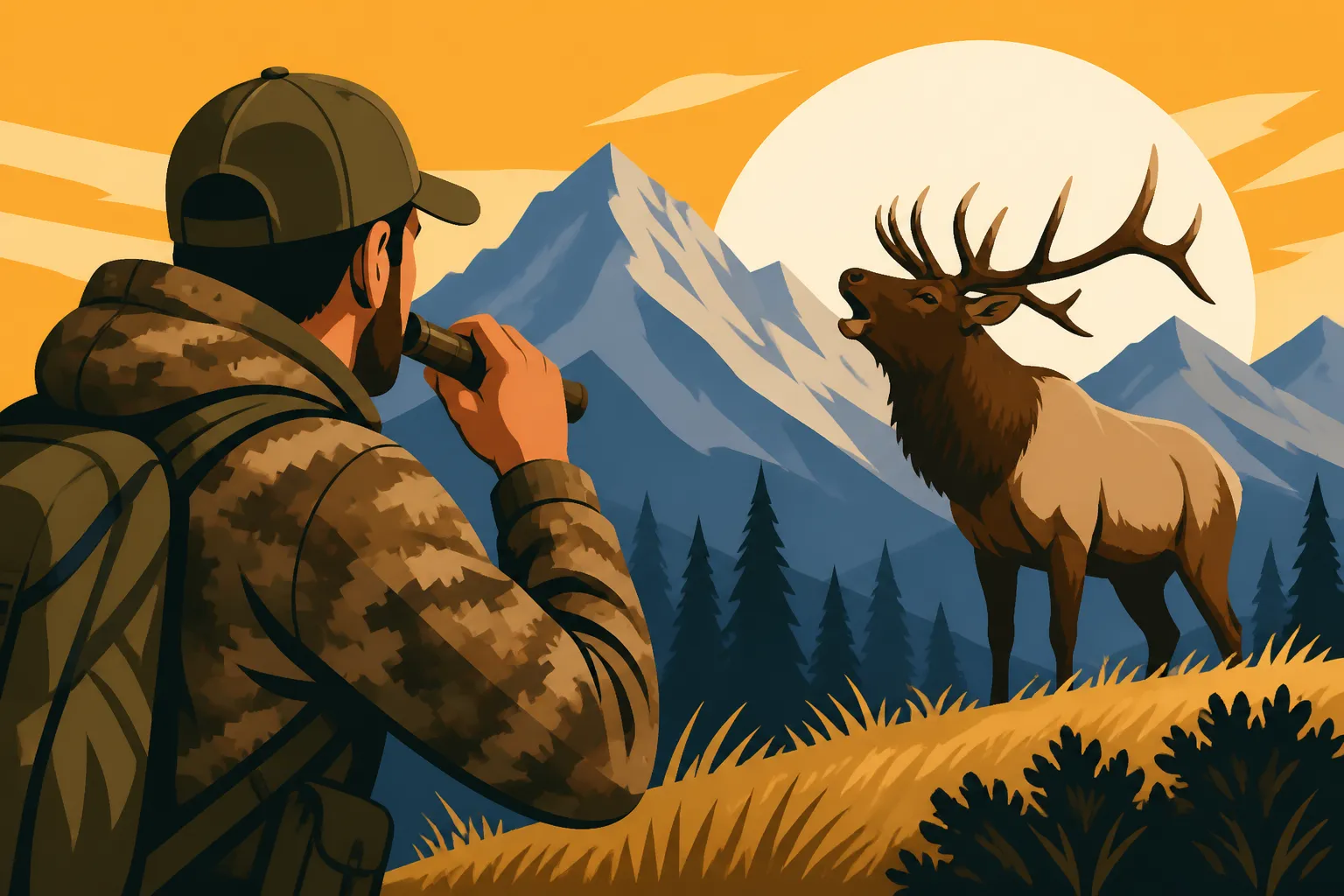
- Bugle: This is arguably the most iconic elk sound. A full bugle typically starts with a low rumble, rises to a high-pitched scream, and often ends with a series of guttural "chuckles" or "grunts." The intensity and ending notes can tell you a lot. A "locator bugle" is usually just the high-pitched scream, a way for a bull to announce his presence and see if other elk respond. A "challenge bugle" will often include more chuckles and sound more aggressive, indicating a bull is ready to fight or defend his cows.
- Mew: This soft, nasal call is often made by cows and calves. It's a general contact call, used to locate other herd members or express contentment. There's a subtle difference between a cow mew and a calf mew, with the calf mew often sounding higher-pitched and more plaintive.
- Chirp: Similar to a mew but usually shorter and sharper, often used by calves trying to get their mother's attention or by cows making soft contact calls.
- Estrus Whine: This is a much more drawn-out, pleading version of a cow mew, indicating that a cow is ready to breed. It's one of the most powerful calls for drawing in a bull during the peak rut.
- Glunk/Grunt: These are deep, guttural sounds made by bulls, often accompanying a bugle's chuckles or used on their own when they're herding cows or asserting dominance at close range.
- Lip Bawl: A louder, more frantic cow call, often indicating distress or separation from the herd. Use this one sparingly, as it can make elk wary if not executed perfectly.
Understanding these individual components and how they fit together in a sequence is what truly makes a caller effective. It's about speaking their language, not just making noise.
Reading Elk Body Language and Response
Calling is a conversation, and like any good conversation, it requires active listening and observation. An elk's response, or lack thereof, provides invaluable clues about its mood, location, and willingness to engage. You need to be able to "read" these responses, both vocal and visual, to dictate your next move.
When you call, pay attention to:
- Vocal Responses: Is the responding bugle aggressive or simply a locator? Does it come closer or seem to move away? Do you hear subtle cow mews or chirps in return? A bull that cuts off your bugle with his own, especially with aggressive chuckles, is signaling a challenge. A bull that answers tentatively, or just once, might be wary or has cows he's trying to keep away from you.
- Cadence and Volume: Are the calls consistent, or do they vary? A sudden increase in volume or frequency often means the elk is closing the distance or getting more agitated. A bull that stops calling might have moved in silently, or he might have lost interest.
- Visual Cues: When elk are actively moving toward calls, they often pause, lift their heads, and look intently in the direction of the sound. Their ears will swivel, trying to pinpoint the source. If they lower their head, paw the ground, or thrash vegetation, a bull might be showing aggression or asserting dominance before committing. If you see them flaring their nostrils or sniffing the air, they’re likely trying to scent-check you, which means you need to be perfectly downwind.
If an elk responds but seems to hang up, it means something isn't quite right. It could be wind direction, a visual obstruction, or they might suspect something is off about your calling. This is where patience truly comes into play. Sometimes, silence is the best call, letting curiosity draw them the rest of the way. Other times, a subtle, soft mew might be enough to coax them into view. Knowing when to press the issue and when to back off is crucial, and it all comes from reading their responses carefully.
Your Toolkit: Essential Elk Calling Equipment and Basic Techniques
Just as a carpenter needs the right tools for the job, an elk hunter needs the right calls. But merely owning a call isn't enough; you need to understand its mechanics and how to produce realistic sounds. This section will walk you through the various types of calls and the foundational techniques to make them sing.
Types of Calls: Diaphragm, Bugle Tube, and External Reeds
The market is flooded with elk calls, and it can be overwhelming to choose. However, most fall into a few primary categories, each with its strengths and weaknesses.
- Diaphragm Calls (Mouth Reeds): These are thin latex or prophylactic reeds stretched over a frame that you hold in the roof of your mouth. By blowing air over them and manipulating your tongue, you can produce a wide range of elk sounds, from soft mews and chirps to full-blown bugles with chuckles.
- Pros: Hands-free operation is a huge advantage, allowing you to hold your bow or rifle ready. They are small, lightweight, and versatile, capable of producing almost any elk sound. Once mastered, they offer incredible realism and nuance.
- Cons: There's a steep learning curve. It takes significant practice to get consistent, realistic sounds, and some people find them uncomfortable to use initially. It's often recommended to start with a single-reed call before moving to double or triple reeds.
- Tips: Experiment with different reed tensions and cuts to find what works for your mouth shape and desired sound. Keep them moist for better sound production. Brands like Phelps Game Calls and Rocky Mountain Elk Foundation (RMEF) often offer excellent beginner-friendly diaphragm calls.
- Bugle Tubes: These are hollow tubes, usually made of plastic or carbon fiber, designed to amplify and resonate bugle calls. While some can be used to make cow calls by speaking into them, their primary function is to enhance the volume and realism of a diaphragm call or external bugle reed.
- Pros: Significantly increases the volume and projection of bugles, allowing you to reach distant elk. The tube itself adds depth and realism, mimicking an elk's vocal cords.
- Cons: Can be cumbersome to carry, especially in dense timber. Requires a separate diaphragm call or external reed to produce the sound.
- Tips: Choose a tube with a good mouthpiece that fits your external reed or diaphragm comfortably. Practice aiming the tube in different directions to simulate a moving elk. Look for models with a flexible or collapsible mouthpiece for easier packing.
- External Reed Calls (Push-Pull, Bite-and-Blow): These calls use a rubber or plastic reed that you manipulate with your hand or mouth to produce cow and calf sounds.
- Pros: Very easy to learn and produce realistic sounds quickly, making them great for beginners. They don't require placing anything in your mouth.
- Cons: Not hands-free, which can be an issue when drawing a bow or shouldering a rifle. They are generally limited to cow and calf sounds, though some specialized external reeds can produce basic bugles.
- Tips: Start with a simple bite-and-blow call like those from Primos or Scent-Lok to get the hang of basic mews and chirps. Experiment with how much pressure you apply and where you bite the reed for different pitches and tones.
A combination of a diaphragm call and a bugle tube is often considered the most versatile setup for an experienced Montana elk hunter, allowing for both subtle close-range communication and powerful long-distance bugling.
Mastering Basic Cow and Calf Calls
Before you try to imitate a challenging bull, master the foundational cow and calf sounds. These calls are incredibly versatile and can be effective throughout the entire season, not just the rut. They evoke curiosity, maternal instincts, and a sense of safety within a herd.
To produce a realistic cow mew:
- Form your mouth: For a diaphragm call, place it firmly against the roof of your mouth, latex side down. For an external reed, place your lips around the mouthpiece, or bite the reed gently.
- Airflow: Push a steady stream of air from your diaphragm, not just your lungs.
- Tongue position (diaphragm): Gently press your tongue against the reed, then slowly release the pressure while blowing. This creates the "wavering" sound. Think of saying "meee-ewww" or "muh-AHHH."
- Pitch and duration: A basic mew is relatively short, soft, and somewhat nasal. Vary the pitch slightly—a slightly higher pitch for a calf, a deeper tone for a mature cow. An "estrus whine" is simply a prolonged, more pleading version of a cow mew, often ending with a distinct upward inflection.
- Practice: Listen to recordings of real elk. Wildlife biologist and hunter Randy Newberg often emphasizes the importance of learning from the animals themselves. Practice in front of a mirror to ensure your mouth shape is consistent. The goal is not just to make the sound, but to make it sound like an elk communicating, not just a call being blown. Consistency and natural fluctuation are key.
Remember, subtle and realistic often trumps loud and aggressive when it comes to cow and calf calls. They are meant to mimic the everyday sounds of a peaceful herd, drawing elk in with curiosity or the hope of companionship.
The Art of the Bugle: Challenge, Location, and Social
The bugle is the call that gets the heart pounding. It's the sound of the mountains alive, the raw power of a bull elk asserting his presence. But bugling isn't a one-size-fits-all approach; there's an art to knowing when and how to deploy different types of bugles. If you're looking for more in-depth strategies, check out our guide on How to Bugle for Montana Elk.
- Producing a Realistic Bugle:
- Diaphragm First: Start with your diaphragm call in your mouth, forming a tight seal.
- The Whistle: Blow firmly, allowing the reed to create a high-pitched whistle.
- The Growl/Grunt (optional): As the whistle tapers, add a guttural growl or grunt from your throat.
- The Chuckle: For the finishing touch, rapidly articulate "huh-huh-huh" or "uh-uh-uh" into the bugle tube as the air stream continues, creating the classic "chuckle" sound.
- Practice: The goal is a seamless transition between these elements. Practice varying the length, intensity, and ending of your bugle.
- Locator Bugle: This is typically a single, drawn-out whistle, sometimes with a soft growl, used to pinpoint the location of other bulls without immediately challenging them. It’s a great way to elicit a response early in the morning or late in the evening when elk are vocalizing.
- Challenge Bugle: When you've located a bull and want to entice him closer, a challenge bugle is your go-to. This is a full bugle—whistle, growl, and aggressive chuckles. It tells a bull you're another bull in his territory, ready to fight for his cows. This works best when you suspect the bull is by himself or has a small harem. If he has a large herd, he might just herd them away.
- Social Bugle: Sometimes, bulls will bugle just to communicate their presence without intense aggression. These can be softer, less frantic bugles, perhaps with fewer chuckles. These are often used when a bull is simply moving or feeding, and can sometimes be a good way to draw in a curious, less dominant bull.
Understanding the context—the time of year, the bull's response, and the terrain—will dictate which type of bugle you should employ. A poorly timed or executed bugle can push elk away as easily as a good one can bring them in.
Timing is Everything: Calling Strategies by Season
Elk behavior, and therefore their response to calls, changes dramatically throughout the hunting season. What works in early archery might fall flat during the peak rifle season. Adapting your calling strategy to the seasonal cycle of elk is paramount for success in Montana.
Calling During the Early Season Pre-Rut
The early archery season, typically from early September in Montana, is a different beast entirely. Bulls are often in bachelor groups, still focused on feeding and putting on weight. The full-blown rut hasn't kicked off yet, so aggressive bugling can often be counterproductive.
- Focus on locator bugles and soft cow/calf calls: Your primary goal during the pre-rut is to locate elk without alarming them. Use soft, inquisitive cow mews or subtle chirps to pique their curiosity. A discreet locator bugle, especially at first light or last light, can help you find where bulls are roosting or feeding. But be prepared to go silent and stalk once you get a response.
- Elk are less vocal, more scattered: Don't expect a chorus of bugles. Bulls might only respond with a single, hesitant bugle or no vocalization at all. Cows and calves will be making general contact mews. The key is to listen for any sound, no matter how faint, and then try to pinpoint their location.
- Strategies for finding bachelor herds: Bachelor groups of bulls are often found in higher elevations, feeding in secluded basins. Your calling here should be minimal and focused on finding them, not necessarily drawing them in to you. A single, soft bugle might get a response, but then switch to a silent approach or a very subtle cow mew to lure them out of heavy timber. Using mapping tools like GoHunt can help you identify historical bedding areas or remote feeding grounds where these bachelor groups might reside.
During this time, patience and keen observation skills are often more valuable than aggressive calling. You're more likely to catch them off guard by being where they are, rather than trying to call them from afar.
Calling During the Peak Rut
This is what most hunters dream of: the mountains echoing with bugles, bulls fighting, and cows chattering. Montana's peak rut for elk typically falls in late September through early October. This is when aggressive, challenging calling can be most effective.
- Aggressive bugling and intense cow calling: When bulls are actively breeding and defending their harems, they are highly susceptible to challenge bugles. If you hear a bull bugling, respond with an equally aggressive or even more dominant bugle. Mimicking a rival bull invading his territory or a hot cow looking for attention can drive him crazy.
- Mimicking a challenging bull or a receptive cow: If you're targeting a herd bull, a series of estrus whines and mews can often entice him away from his cows, especially if you also throw in some subtle sounds of a satellite bull. If you're trying to pull in a satellite bull, a bold challenge bugle might work, as he's likely trying to cut in on the action. The goal is to create a sense of urgency and competition.
- How to handle multiple bulls responding: This is a good problem to have! If multiple bulls are bugling, try to identify the dominant bull and focus your efforts on him. Sometimes, playing the "hot cow" can draw in all of them, letting you pick your shot. If you have a hunting partner, one person can play the challenging bull while the other plays the receptive cow, creating a highly realistic and enticing scenario. This dynamic often makes for some of the most exciting archery elk tactics for the rut in Montana.
Remember, during the peak rut, elk are often on edge and highly hormonal. Their decision-making can be clouded by their instincts, making them more vulnerable to aggressive and persuasive calling.
Calling After the Rut and Late Season
Once the peak rut has passed and bulls have bred, their behavior shifts dramatically. They are exhausted, often losing weight, and much less inclined to respond to aggressive calls. They’ve likely been pressured by hunters for weeks, making them extremely wary and "call shy." This is where subtlety and realism become paramount. If you're wondering how to adjust your approach, our guide on How to Hunt Elk After the Rut offers even more detail.
- Elk are often "called out" and wary: Bulls are no longer interested in fighting or herding cows. They're trying to recover, find food, and avoid danger. Loud, aggressive bugling will almost certainly send them packing. They've heard it all before, and they associate it with human presence.
- Focus on soft, subtle cow/calf sounds: Your best bet now is to use very soft, non-threatening mews and chirps. The goal is to create a sense of peace and security, making an elk believe there are other peaceful elk nearby. These calls work best when elk are already close, maybe within a few hundred yards, and you're trying to get them to take a few more steps into an open lane or confirm their presence.
- Emphasize patience and realism: Expect fewer responses, and those you do get will likely be very soft. You might only get a soft "mew" in return. It’s a game of patience, stealth, and using the wind and terrain to your advantage. A few soft mews followed by long periods of silence, allowing the elk to come to you, is often more effective than continuous calling. This is when integrating calling with methods like still-hunting Montana timber can really pay off.
Late-season calling is far more challenging but can be incredibly rewarding. It requires a deeper understanding of elk behavior and a commitment to subtle, believable communication.
Beyond the Call: Reading Elk Responses and Environmental Factors
Calling elk successfully isn't just about making the right sounds; it's a dynamic chess match where you must constantly analyze the elk's reactions and the environment around you. Ignoring these crucial elements can quickly turn a promising encounter into a bust.
How Elk Respond to Different Call Types
An elk's response is their communication back to you, and it's vital to interpret it correctly.
- No Response: This is common. It doesn't necessarily mean there are no elk, but they might be wary, unpressured, or simply out of earshot. It also might mean you are calling at the wrong time of day, or the wind isn't carrying your sound correctly. Don't immediately switch to aggressive calls; try moving to a new location, waiting, or altering your call type. If you are consistently getting no responses, it might be time to use a locator bugle from a high point, or switch to scouting mode with optics. This is where tools like GoHunt, with its detailed maps, can help identify likely elk hangouts that might warrant a more direct approach.
- Weak/Hesitant Response: A single, soft mew or a half-hearted bugle often indicates a wary elk, perhaps a satellite bull, or a bull that has a large herd he's trying to keep together. He's curious but cautious. Your best bet here is often to go silent or use very soft, non-threatening cow sounds to draw him in. Don't immediately challenge him unless you're prepared for him to herd his cows away.
- Strong/Aggressive Response: A bull that cuts off your bugle, especially with chuckles, or bugles repeatedly and moves closer is likely committing. He’s either challenging you or coming to investigate a "hot" cow. This is when you maintain your calling sequence, adjusting intensity based on his reactions. If he's moving fast, keep calling to keep him focused on you. If he hangs up, slow down your calling.
- Visual Confirmation with No Vocalization: Sometimes, elk will come in silently, especially older, wiser bulls or those that have been heavily pressured. This is why having your setup ready and being constantly vigilant is crucial. This scenario is particularly common when you're hunting in thick timber where sounds can be muffled.
The goal is to engage in a back-and-forth, letting the elk's responses guide your next move rather than sticking to a predetermined script.
The Impact of Wind and Thermals
Wind and thermals are not just factors to consider; they are part of the landscape you're hunting, and they dictate how sound and scent travel. Ignoring them is a surefire way to get busted. Understanding How to Use the Wind Hunting Montana Elk is foundational to any successful hunt.
- Wind Direction: Sound carries further downwind than upwind. Always consider where your sound is going and, more importantly, where your scent is going. Elk have an incredible sense of smell, and if they catch your scent, the hunt is over, no matter how good your calling. Always try to approach and set up downwind of where you expect the elk to be. If the wind is swirling or unpredictable, it might be better to move or wait for more stable conditions.
- Thermals: In mountainous terrain, thermals are localized air currents caused by temperature changes. In the morning, as the sun heats the ground, air rises (updrafts). In the evening, as the air cools, it sinks (downdrafts).
- Morning Updrafts: Early in the morning, thermals usually rise. This means your scent will be carried uphill. If you're calling uphill, this can be an advantage as your scent goes above the elk. However, if you're approaching from above, your scent could drop directly on them.
- Evening Downdrafts: In the afternoon and evening, as temperatures drop, thermals fall. This means your scent will be carried downhill. If you're calling downhill, this can be an advantage.
- Strategic Setup: Use thermals to your advantage by positioning yourself so that your scent is carried away from the elk's likely approach path. For example, if you anticipate elk feeding uphill in the evening, set up slightly below them with a downdraft carrying your scent away.
Always carry a wind checker (a small squeeze bottle of powder) and use it frequently. Just because the wind feels like it's going one way on your face doesn't mean it's consistent at ground level or in dense timber.
Terrain and Cover Considerations
Montana offers diverse terrain, from dense, dark timber to wide-open plains and steep, rocky mountains. Each environment presents unique challenges and opportunities for calling.
- Dense Timber: In thick cover, visibility is limited, and sound is muffled. Here, close-range cow and calf calls, or soft bugles, are often most effective. Elk will often respond by circling downwind to scent-check, so setting up with a shooter positioned 50-100 yards downwind of the caller is a classic tactic. Learn how to master How to Find Elk in Montana Dark Timber.
- Open Country/Breaks: In more open terrain, sound carries further, but elk can see you from a long distance. Locator bugles are great here for initially finding elk, but you'll need a solid plan for closing the distance or drawing them into a funnel or patch of cover without being seen. Decoys can be highly effective in open country to draw curious elk closer. Knowing How to Glass Montana's Big Country is a crucial skill here, as visual scouting often precedes calling.
- Steep Mountains: The elevation changes and ruggedness of Montana's mountains amplify the effects of thermals and can create unexpected swirling winds. Sound can echo, making it hard to pinpoint an elk's exact location. Use elevation to your advantage: call from a ridge to project sound, and then move quietly into a basin once you get a response. Pay attention to how sound bounces off canyon walls.
No matter the terrain, always choose a setup location that offers good cover for yourself, allows for clear shooting lanes, and ideally, funnels the elk into an area where you have an advantage.
Common Pitfalls: Mistakes to Avoid When Calling Elk
Even experienced hunters make mistakes when calling elk. The difference is they learn from them. Being aware of these common missteps can save you from frustration and ensure your hard-earned opportunities don't get blown.
Over-Calling and Under-Calling
Finding the right balance in your calling sequence is one of the trickiest aspects of elk hunting. Both over-calling and under-calling can lead to missed opportunities.
- The Danger of Over-Calling: This is perhaps the most common mistake, especially for eager hunters in the rut. When you're constantly blowing calls, you sound unnatural. Real elk don't make continuous noise. Over-calling can make elk wary, especially pressured bulls, who quickly associate persistent calling with a hunter. It can also make a bull hang up, expecting the "cow" to come to him. You might think you need to keep calling to keep his interest, but often, less is more.
- How to avoid: Listen more than you call. Let the elk's response dictate your frequency. If he's coming hard, a few excited mews are fine. If he's tentative, go quiet and let him search. Sometimes, after an initial exchange, a long silence can make an elk nervous that the other "elk" has moved off, forcing him to come investigate.
- The Pitfall of Under-Calling: On the flip side, being too timid with your calls can also be a problem. If you make a single, weak call and then go completely silent, an interested elk might never find you or might lose interest quickly. Especially in areas with a lot of natural noise (wind, streams, other animals), your calls might not be heard.
- How to avoid: Be confident in your calling. Ensure your calls are loud enough to cut through the environment. If you're not getting a response after several minutes, try a different call type or increase the volume. Don't be afraid to try a new calling location if your initial spot yields no results. It's about being strategic, not just quiet.
The key is to use silence as a tool, allowing the elk to process and act on your calls. Think of it as painting a picture with sound; you add a brushstroke, then step back to see the effect, before adding another.
Sounding Unnatural or Robotic
Elk have evolved to detect subtle nuances in vocalizations. A call that sounds unnatural or too repetitive can immediately trigger their alarm bells, especially in areas with high hunting pressure like many public lands in Montana.
- The Importance of Realism: Elk sounds have natural fluctuations in pitch, volume, and cadence. They don't sound like a recording played on repeat. A single-note, unchanging mew will sound fake. A bugle that always starts and ends the same way, with the same inflection, screams "human."
- How to avoid: Listen to real elk recordings extensively. Pay attention to how their calls fade, change pitch, and how they string different sounds together. Practice mimicking these variations. Use your hand over the end of your bugle tube to create subtle volume changes or direct the sound. For diaphragm calls, experiment with slight changes in tongue pressure and airflow to vary the pitch and realism.
- Varying Pitch, Volume, and Cadence: Don't just make one type of mew or bugle. Incorporate excited mews, contented mews, and questioning mews. For bugles, vary between locator bugles, challenge bugles, and even softer "social" bugles. Change the rhythm of your calling—sometimes a quick series, sometimes a long pause. When hunting with a partner, try to simulate a small herd with one person making cow calls and the other throwing in a subtle bull grunt or satellite bugle.
- Avoiding Repetitive Sequences: Resist the urge to do the exact same calling sequence every time. If an elk responds, he's listening intently. If he hears the identical series of sounds over and over, he'll quickly become suspicious. Mix it up. If you start with a bugle, follow up with a few mews. If you get a response, try a chuckle. Keep them guessing, make them believe there's a real, dynamic situation unfolding.
Think of your calling as telling a story. A good storyteller knows how to use pauses, inflections, and varied tones to keep their audience engaged.
Advanced Tactics: Elevating Your Calling Game
Once you've mastered the basics and avoided common mistakes, you're ready to explore more sophisticated calling tactics that can significantly increase your success rates, especially when elk are wary or stubborn.
The 'Herd' Scenario: Mimicking Multiple Elk
One of the most convincing illusions you can create is making it sound like there's an entire group of elk in your vicinity, not just a lone caller. This can be incredibly effective, especially when trying to lure in a bull looking for a herd to join or a cow searching for companions.
- Combining Different Calls: The simplest way to create a "herd" is to use multiple call types yourself. Start with a few cow mews, then maybe a calf chirp, followed by a soft, non-aggressive bull grunt. The key is to vary the sounds and space them out naturally, as if different elk are making different noises.
- Hunting with Partners: This tactic truly shines when you have one or more hunting partners. One person can take on the role of the lead cow, making estrus whines and mews, while another acts as a satellite bull, throwing in subtle bugles and chuckles from a slightly different position (but always mindful of safety). A third person could even add in calf chirps. This creates a highly realistic, dynamic soundscape that can be incredibly difficult for a real elk to resist.
- Creating a Convincing Illusion: Think about the sounds a real herd makes: cows mumble, calves bleat, a bull might occasionally grunt to keep them together. You can even add subtle sounds like raking a stick on a tree to mimic a bull rubbing his antlers. The goal is to make it sound like a busy, content, and potentially breeding herd, drawing curious elk in to investigate. Always remember the ethics and safety of calling with multiple people; communication is key to avoid accidents.
By simulating a complete social interaction, you bypass the wariness an elk might have towards a lone, aggressively bugling bull or a single, lonely cow.
The Decoy Advantage
Decoys can be a game-changer, especially in open country or during the rut when bulls are visually stimulated and territorial. However, they must be used strategically and safely.
- When and How to Use Decoys Effectively: Decoys are most effective during the rut, when bulls are aggressive and looking for rivals or receptive cows. They work well in open parks, clear cuts, or meadows where elk have good visibility.
- Cow Decoys: A cow decoy can lure in a bull looking for a mate. Often, placing the decoy slightly away from your calling position, perhaps 50-70 yards, makes the bull focus on the "elk" rather than precisely locating your sound. This allows the shooter to stay concealed.
- Bull Decoys: A bull decoy is a challenge to another bull. Use these when you want to really provoke an aggressive response. Position it facing away from the approaching bull, mimicking a bull walking away from the challenger, which can often make a territorial bull charge.
- Combination: Some hunters use a cow decoy with a small calf decoy to create an even more enticing and believable scenario.
- Safety Considerations: This is paramount. Never use a decoy during rifle season or in high-pressure public land areas without extreme caution. Another hunter might mistake your decoy for a real elk, or worse, mistake you for an elk if you're holding it up. Always wear blaze orange, especially when moving or setting up a decoy. Consider using only during archery season when hunters are generally more cautious about target identification.
- Decoy Placement: Position your decoy to offer a clear shot opportunity between the decoy and your concealed shooting position. The approaching elk should be drawn to the decoy, presenting a broadside shot. Ensure the wind is in your favor, as the decoy won't cover your scent. Many modern decoys are lightweight and fold up, making them portable for backcountry hunts. Primos and Ultimate Predator offer popular and effective elk decoys.
Decoys add a visual dimension to your calling, which can be incredibly persuasive when a bull is looking for a fight or a partner.
Using Calling to Close the Distance for Archery
Archery hunting for elk is perhaps the ultimate test of calling skill, requiring intimate knowledge of elk behavior and impeccable timing. The goal is often to draw an elk within 40 yards or less, which demands precision and subtle tactics. Our detailed guide on Archery Elk Tactics for the Rut in Montana delves deeper into these strategies.
- Specific Techniques for Drawing Elk into Bow Range:
- "Come Get Me" Calls: Once a bull is committed and moving toward your position, shift from aggressive challenge bugles to softer, more seductive estrus mews and chirps. Make him think the cow is just ahead, waiting for him.
- Hang-Up Strategy: If a bull hangs up out of bow range, don't keep hammering him with calls. Go silent for a minute or two. This can make him anxious that the "cow" is leaving, often prompting him to take those final, crucial steps.
- Raking: Use a stick to rake trees or brush, mimicking a bull rubbing his antlers. This sound, combined with soft cow calls, can be very effective in convincing a bull that a rival is with a cow just beyond his sight.
- Calling Behind You: Sometimes, having your calling partner set up 20-30 yards behind the shooter can draw the bull past the shooter, offering a perfect broadside shot as he tries to get to the "cow."
- Setting Up Shooting Lanes: Before you even make your first call, identify potential shooting lanes from your chosen ambush point. Clear any small branches or obstructions that might deflect an arrow. You want a clear path for an ethical shot once the elk commits.
- When to Stop Calling: This is a critical decision. Once a bull is within 80-100 yards and appears committed, often the best strategy is to go silent or offer only the softest mews. Let his curiosity and instinct bring him those final yards. If you continue to call loudly, he'll pinpoint your exact location and might see you draw. Wait for him to walk behind a tree or turn his head before drawing your bow.
Archery calling requires immense patience and nerves of steel. Every subtle sound, every pause, every shift in wind, plays a role in closing that final distance.
Integrating Calling with Your Hunting Approach
Calling is rarely a standalone method; it's a powerful tool that works best when integrated with other hunting strategies. The vast and varied landscape of Montana often demands a multi-faceted approach.
Combining Calling with Spot-and-Stalk
Spot-and-stalk is a classic Western hunting method, and combining it with strategic calling can drastically increase your success rate. Our comprehensive guide on Montana Elk Hunting: Spot-and-Stalk Tactics offers a deep dive into this technique.
- Using Locator Calls to Pinpoint Elk: Start your day by gaining elevation and glassing vast areas. Once you've spotted elk, or if you're in an area known to hold them but haven't seen anything, use a locator bugle. A single, distinct bugle can often reveal the presence and general location of bulls that might otherwise go undetected. Once you get a response, mark their location.
- Switching to a Silent Approach: After locating elk with a call, the next phase is often a silent stalk. Use the terrain, wind, and cover to close the distance without being detected. This is where your scouting and knowledge of elk travel routes become invaluable. You're trying to get within striking distance for a shot or into a good setup for close-range calling.
- Calling as a Final Enticement During a Stalk: Sometimes, you can stalk within a few hundred yards of elk, but they're still in thick timber or slightly out of range. This is when a soft, subtle cow mew or chirp can be the perfect final enticement. It can make a bull take a few more steps, presenting a shot, or cause a cow to lift her head, allowing you to see if a bull is with her. Be prepared for an immediate shot, as they might come in quickly.
The blend of long-range observation and strategic calling allows you to cover more ground and exploit opportunities that might arise.
Calling in Conjunction with Still-Hunting
Still-hunting is the art of moving slowly and quietly through the timber, pausing frequently to observe and listen. It's a highly effective method in dense cover, and calling can be seamlessly integrated. For more in-depth techniques, explore our guide on How to Still-Hunt Montana Timber.
- Moving Slowly and Calling Softly in Timber: As you creep through thick timber, stop every 20-50 yards and use soft, inquisitive cow or calf mews. These calls don't project far, making them perfect for close-quarters communication without alarming distant elk. Wait a minute or two after each call, listening intently for a response.
- Patience and Listening for Responses: Elk in timber are often silent, especially if pressured. They might only respond with a soft mew you can barely hear, or they might simply move closer silently. Your ears are your most important tool. Listen for rustling leaves, snapping twigs, the subtle sounds of elk moving through the undergrowth.
- Using Cover to Approach Silently After a Response: If you get a response, even a faint one, immediately assess the wind and terrain. Use thickets, ridges, and depressions to move quietly toward the sound. If you get another response from the same location, you know you're closing in. Be ready for a shot at any moment, as elk in timber can appear silently and quickly.
Still-hunting with integrated calling is a slow, methodical process that requires immense patience, but it can be incredibly productive for finding and killing elk in Montana's dense timber.
E-Scouting and Calling Strategy
Technology has revolutionized scouting, and platforms like GoHunt provide invaluable tools for pre-season planning. Using these resources to inform your calling strategy is a modern imperative. For a more comprehensive guide, see our article on How to E-Scout Montana Hunting Units.
- Using Mapping Tools to Identify Promising Calling Locations: Before you even set foot in the field, use GoHunt's mapping layers (topo, satellite, public/private land, historic fire data) to identify key terrain features that influence elk movement and calling effectiveness. Look for:
- Dark Timber/Bedding Areas: These are prime spots for still-hunting and soft-calling, especially during mid-day.
- Feeding Areas: Alpine meadows, clear cuts, or south-facing slopes are good spots for locator calls at dawn and dusk.
- Travel Corridors/Saddles: These are natural funnels where elk might move between bedding and feeding. Setting up an ambush with calling along these routes can be very effective.
- Water Sources: During dry periods, water holes can be fantastic ambush points, where soft calls can draw in cautious elk.
- Pre-Determining Calling Setups Based on Terrain Features: Once you've identified promising areas, use GoHunt to visualize potential calling setups. Where will you stand to maximize sound projection? Where can you conceal yourself? What are the likely approach routes for elk? Where can you position a partner downwind as a shooter? Having a rough idea of these setups beforehand saves valuable time and increases efficiency in the field.
- Analyzing Past Data (where available): GoHunt often provides data on draw odds, harvest success, and even pressure trends for specific units. This information, while not directly related to calling technique, helps you choose units where calling might be more or less effective due to elk numbers or hunter pressure. In high-pressure units, more subtle calling approaches might be necessary.
E-scouting with tools like GoHunt allows you to build a detailed mental map of your hunting area, predict elk movement, and plan your calling strategy long before you ever hear a bugle.
Montana-Specific Calling Nuances: Terrain and Pressure
Montana's vast and diverse landscapes, combined with varying levels of hunter pressure, create unique considerations for elk calling. What works in the dense timber of Western Montana might be utterly ineffective in the open plains of Eastern Montana.
Western Montana's Timbered Mountains
The western half of Montana is characterized by rugged, timbered mountains. Here, the challenges and strategies for calling elk are distinct.
- Challenges of Dense Cover and Steep Terrain: In areas like the Bitterroot National Forest or the Lolo National Forest, visibility is often limited to a few dozen yards, and sounds are muffled by the thick timber. Elk can appear silently, and pinpointing their exact location based on sound alone is difficult. The steep terrain also makes silent movement challenging and impacts thermals significantly.
- Focus on Close-Range Calls and Bugle-Locating in Dark Timber: In this environment, soft mews and chirps are king. They are non-threatening and effective at drawing elk those final few steps in close quarters. Locator bugles can be used to elicit a response in vast blocks of dark timber, but once you get a response, switch to quiet stalking and very subtle cow calls to draw them in. Aggressive, loud calling often pushes elk out of these thick havens.
- Using Thermals in the Mountains: As discussed earlier, thermals are incredibly important. Elk often bed high in the timber during the day and move down to feed in the evenings, then back up in the mornings. Plan your approach to use the rising morning thermals or falling evening thermals to your advantage, keeping your scent from alerting the elk. Understanding north-facing slopes for Montana elk and how they hold cooler air longer is also key.
Successfully calling elk in Western Montana's timber requires patience, stealth, and a deep understanding of how sound and scent behave in dense, mountainous terrain.
Central and Eastern Montana's Open Country and Breaks
Shifting east, Montana's landscape transforms into more open country, rolling hills, and expansive breaks, such as the Missouri Breaks or parts of the Custer Gallatin National Forest. Here, the rules of calling change.
- Longer Visibility, Wind is a Major Factor: In these open areas, you can often see for miles, but so can the elk. Locator bugles are excellent for finding distant herds, but closing the distance without being seen becomes the primary challenge. The wind is often constant and strong, making scent control paramount and influencing how your calls travel.
- Locator Bugles for Finding Distant Herds: A powerful bugle tube can project sounds over vast distances, helping you locate elk that are miles away. Once you hear a response, resist the urge to immediately charge in. Instead, use your optics to try and spot the herd.
- Strategies for Approaching Across Open Ground: This is where stealth, patience, and using terrain features are crucial. Use coulees, draws, and ridge lines to stay out of sight. A decoy can be incredibly effective here, providing a visual focal point for the elk while you or your partner set up for a shot. If you are struggling to get a bull to commit in open country, try getting directly between him and his desired bedding area or water source. For more strategies on open country, refer to our guide on How to Glass Montana's Big Country.
Calling in Eastern Montana is often a game of long-distance communication and strategic movement, where patience and careful planning outweigh aggressive vocalizations.
Understanding Public Land Pressure
Montana boasts a vast amount of public land, which is a blessing for hunters. However, it also means that many elk, especially those in easily accessible areas, experience significant hunter pressure. This pressure significantly alters their behavior and response to calls. For more on navigating this, read our article on How to Hunt Montana Public Land Pressure.
- Elk Can Become "Call Shy" or Move Away from Heavy Pressure: Bulls that have heard dozens of fake bugles and aggressive cow calls will quickly become wary. They learn that a human is often associated with these sounds. Instead of coming in, they might go silent, herd their cows away, or even sneak out the back door.
- Adapting Calling Strategies to Mimic Natural Sounds, Less Aggressive: On pressured public land, ditch the overly aggressive bugles and focus on subtle, realistic cow and calf sounds. Soft mews, chirps, and contented herd sounds can still pique their curiosity without triggering their alarm bells. Try to sound like a normal, undisturbed elk herd. Less is often more.
- Seeking Out Less Accessible Areas: The best way to mitigate hunter pressure is to go where others aren't willing to go. This often means deep into wilderness areas, roadless areas, or simply hiking further from trailheads. Elk in these areas are less educated and more likely to respond naturally to calls. This is where a Montana Backcountry Hunting Guide can provide invaluable insight.
Hunting pressured elk requires adaptability, patience, and a willingness to modify your calling strategy to match their behavior. It's about convincing them you're just another elk, not a threat.
Conclusion
Calling elk in Montana is an immensely rewarding aspect of the hunt, a direct communication with one of North America's most magnificent animals. It's a skill that combines art, science, and a deep understanding of elk behavior and their environment. From mastering the nuances of their vocalizations to selecting the right calls, adapting your strategy to the seasons, and understanding the unique challenges of Montana's diverse terrain and hunter pressure, every detail matters. By avoiding common pitfalls and embracing advanced tactics, you can elevate your calling game and turn those silent mountains into a symphony of opportunity. Remember, patience, persistence, and a genuine connection to the wild are your most powerful tools. So, get out there, practice, listen, and let the mountains echo with your story.
Disclaimer
Hunting is an inherently dangerous activity. The information provided in this guide is for informational purposes only and should not be considered a substitute for professional instruction, proper training, or adherence to all local, state, and federal hunting regulations. Always prioritize safety, understand your equipment, obtain appropriate licenses and tags, and respect wildlife and the environment. The author and publisher are not responsible for any accidents, injuries, or legal infractions that may occur as a result of using this information.