Best Muzzleloader Setup for Montana
Hunting in Montana with a muzzleloader can be one of the most rewarding, yet incredibly challenging, experiences an outdoors person can undertake. Many hunters find themselves scratching their heads, wondering not just which muzzleloader to buy, but how to set it up to navigate the Big Sky Country's diverse terrain, unpredictable weather, and often stringent regulations. It's a fine balance between modern capability and traditional hunting ethos, and getting it right can mean the difference between a successful hunt and a frustrating week. This guide is here to walk you through building the best muzzleloader setup for Montana, ensuring you're prepared for whatever Big Sky throws your way.
Navigating Montana's Muzzleloader Regulations and Seasons
Before you even think about what brand of muzzleloader to buy, understanding Montana's specific regulations is absolutely paramount. Trust me, nothing kills the spirit of a hunt faster than realizing your gear isn't legal for the season you're in. Montana Fish, Wildlife & Parks (FWP) has clear, and sometimes unique, rules regarding muzzleloaders, especially during specific "primitive weapons" or "muzzleloader-only" seasons. This isn't like some states where a muzzleloader is just another rifle; in Montana, it often means embracing certain limitations.
Understanding General vs. Muzzleloader-Only Seasons
Montana generally allows muzzleloaders during the statewide general hunting seasons for deer and elk, which typically run from late October through late November. During these "any weapon" seasons, you can usually use a modern in-line muzzleloader with a scope, saboted bullets, and pelletized powder. This is where most hunters find the flexibility they desire, as these setups offer greater accuracy and range compared to more traditional options. It's a great way to extend your Montana Rifle Elk Hunting Guide knowledge into another platform.
However, Montana also offers specific muzzleloader-only seasons in certain hunting districts or for particular species, most notably for deer in some areas. These "primitive weapons" seasons are designed to provide additional hunting opportunities while maintaining a higher degree of challenge. During these specific seasons, the rules become much stricter. You'll often be limited to:
- Open or "Peep" Sights: Scopes are frequently prohibited. This drastically changes your effective range and target acquisition speed.
- Loose Powder: Pelletized powder, while convenient, might not be allowed. You'll need to measure out black powder or a black powder substitute for each shot.
- Non-Saboted, Lead Projectiles: Full-bore lead or lead alloy projectiles are typically required, meaning modern sabots are out. This impacts ballistic performance and bullet expansion.
- Percussion Caps or Flintlock Ignition: 209 primers are usually disallowed in these "primitive" seasons, pushing you towards more traditional ignition systems.
It’s crucial to check the current FWP regulations for the specific hunting district and season you plan to hunt in, as these rules can change annually. Consulting the official FWP hunting regulations booklet or using a platform like GoHunt to cross-reference regulations and season dates is a must.
Impact on Gear Choices
These regulatory distinctions have a huge impact on your muzzleloader setup. If you plan to hunt only during the general rifle season, you can lean into modern advancements without much worry. However, if those coveted muzzleloader-only tags are on your radar, your equipment choices will be significantly more constrained. Many hunters, especially those new to the state, often overlook these nuances, only to find their cutting-edge scoped muzzleloader isn't legal for the early season deer tag they drew. Always prioritize legality for your specific hunt plan.
Choosing Your Muzzleloader: Action, Caliber, and Barrel for Montana
Once you have a handle on the rules, it's time to consider the heart of your setup: the muzzleloader itself. There's a wide world of options out there, but for Montana, some choices simply make more sense than others, balancing reliability, accuracy, and versatility.
In-line Muzzleloaders: The Modern Workhorse
For most hunters venturing into Montana, a modern in-line muzzleloader is going to be your best bet, especially if you're primarily hunting during the general "any weapon" seasons. These rifles utilize a "straight-line" ignition system, meaning the primer sits directly behind the powder charge, leading to more consistent ignition and often greater accuracy.
- Pros:
- Accuracy: Generally more accurate than traditional side-hammer designs, especially at longer ranges.
- Reliability: 209 primers offer very reliable ignition, even in adverse weather conditions like the cold, wet Montana late fall.
- Ease of Use: Easier to load and clean compared to traditional designs. Many have removable breeches for thorough cleaning.
- Versatility: Can accommodate scopes, sabots, and pelletized powder (where legal), maximizing your effective range and terminal performance.
- Cons:
- Regulations: May not be legal for specific "primitive weapons" seasons if 209 primers or scopes are disallowed.
- Weight: Some models can be heavier, especially with a scope, which can be a factor on a Montana Backcountry Hunting Guide expedition.
Popular brands like Traditions, CVA, Thompson/Center, and Savage Arms offer excellent in-line options. The CVA Accura V2 and Thompson/Center Triumph are often lauded for their accuracy and user-friendly features, making them solid choices for the varied demands of Montana hunting.
Traditional Muzzleloaders: Embracing the Challenge
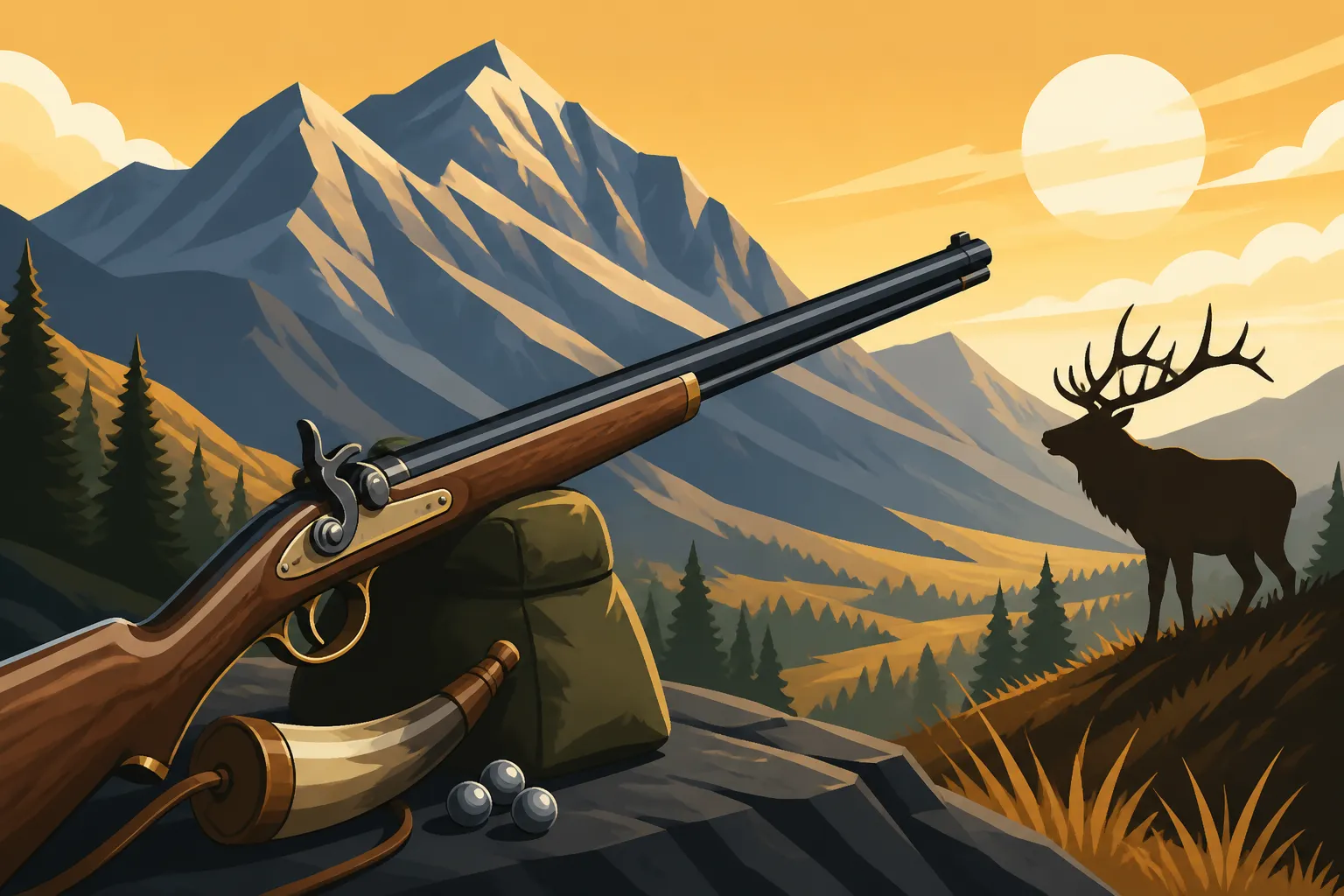
If you're drawn to the romance and added challenge of "primitive weapons" seasons, or just enjoy the historical aspect, a traditional side-hammer rifle is what you'll need. These typically use percussion caps or flintlock ignition and often feature open sights.
- Pros:
- Legality: Often the only legal option for true "primitive weapons" seasons.
- Challenge: Offers a deeper connection to hunting heritage and a more profound sense of accomplishment.
- Simplicity: Fewer moving parts, making them incredibly robust.
- Cons:
- Accuracy: Generally less accurate at longer ranges compared to in-lines.
- Reliability: Percussion caps can be more susceptible to moisture, and flintlocks even more so, requiring diligent weatherproofing.
- Loading/Cleaning: Can be more time-consuming to load and clean.
While a dedicated traditional muzzleloader might not be the "best setup" for all Montana hunting scenarios, it's the only setup for specific, challenging seasons. If this is your passion, embrace it fully, but understand its limitations.
Caliber Considerations
For big game like elk and deer in Montana, you'll want a caliber that delivers sufficient energy for ethical kills.
- .50 Caliber: This is overwhelmingly the most popular and versatile choice. It offers a great balance of projectile weight, energy, and felt recoil. A .50 caliber shooting a 250-300 grain bullet is more than capable of taking down a bull elk, even at moderate muzzleloader ranges. Plus, ammunition and accessory availability is excellent.
- .45 Caliber: While effective, .45 caliber usually means lighter projectiles, which might be less ideal for elk, though perfectly adequate for deer. It can offer flatter trajectories with sabots, but if non-saboted bullets are required, a .50 often provides better knockdown power.
- .54 Caliber: This larger caliber provides even more punch, but can be overkill for deer and often results in heavier recoil. Ammunition and component selection might also be more limited.
For a do-it-all Montana muzzleloader, the .50 caliber is the undisputed champion. It hits hard enough for Montana Elk Hunting Guide and is versatile enough for smaller species too.
Barrel Length and Material
Barrel length affects velocity and handling. Most modern in-line muzzleloaders feature barrels between 24 and 28 inches.
- 26-inch Barrel: This is often the sweet spot for Montana. It provides ample barrel length for good powder burn and velocity, translating to better accuracy and energy, while still being manageable in dense timber or brush. A longer barrel can be unwieldy, and a shorter one might sacrifice too much velocity.
- Stainless Steel vs. Carbon Steel: Stainless steel barrels are highly recommended for Montana's often wet and snowy conditions. They resist corrosion much better than carbon steel, which is a huge advantage when you're out in the elements for days on end. Paired with a synthetic stock, a stainless steel muzzleloader is a durable, low-maintenance workhorse.
Optimizing Your Muzzleloader Setup: Optics, Propellant, and Projectiles
The muzzleloader itself is just one piece of the puzzle. The components you use with it—your optics, powder, and bullets—are equally critical for success in Montana.
Optics: Scope vs. Open Sights
This is where Montana's regulations truly dictate your choices.
- Scoped Setup (General Season): If hunting during general "any weapon" seasons, a good quality scope is a game-changer.
- Magnification: A 3-9×40 or 2-7×32 scope is generally ideal. You don't need extreme magnification for muzzleloader ranges, and lower power offers a wider field of view for quick target acquisition in varied terrain, from open plains to thick timber. Brands like Leupold, Vortex, and Nikon offer reliable, fog-proof, and shock-resistant options that can withstand Montana's ruggedness.
- Mounts: Use sturdy, high-quality scope rings and bases. Recoil from muzzleloaders, especially with heavy loads, can be significant, and cheap mounts will fail you. Talley Manufacturing or Warne rings are excellent choices.
- Eye Relief: Ensure your scope has generous eye relief to prevent "scope bite," especially with magnum loads.
- Open Sights (Muzzleloader-Only Season): For primitive weapons seasons, you're looking at open sights, which dramatically reduces your effective range but increases the challenge and intimacy of the hunt.
- Fiber Optic Sights: Many modern in-line muzzleloaders come with fiber optic open sights, which are fantastic in low light conditions often encountered during early morning or late evening hunts. They're quick to pick up and make precise aiming much easier than traditional iron sights.
- Peep Sights: Aftermarket peep sights, like those from Williams Gunsight Company, can be a great upgrade. They improve accuracy significantly over standard buckhorn sights by giving you a more precise aiming point. Learning How to Shoot Long Range at Montana Elk starts with mastering your chosen sighting system.
It is wise to have your muzzleloader sighted in with both a scope and open sights, if applicable, so you can easily switch depending on the season you plan to hunt.
Propellants: Black Powder, Substitutes, and Pellets
Choosing your powder is crucial for consistent performance.
- Black Powder: The traditional choice. Go with real black powder (like Goex or Schuetzen) if you're restricted to loose powder and traditional ignition. It's corrosive, so meticulous cleaning is essential, but it performs consistently.
- Black Powder Substitutes (Loose): Products like Hodgdon Triple Seven FFFg or Pyrodex Select RS are excellent alternatives. They're less corrosive and easier to clean than true black powder, while still providing reliable ignition and good performance. These are often legal when loose powder is required.
- Pelletized Powder Substitutes: If allowed (usually in general seasons), pellets like Hodgdon Triple Seven Magnum or Pyrodex Pellets are incredibly convenient. They offer consistent charges and are much faster to load in the field. However, they may not ignite as reliably with percussion caps in extremely cold conditions compared to loose powder.
Always check your specific muzzleloader's manual for recommended loads and types of powder. Most modern in-lines are designed for black powder substitutes. Start with the manufacturer's suggested loads and work up to find what your rifle likes best.
Projectiles: Sabots vs. Full-Bore
The bullet you choose has a direct impact on accuracy, range, and terminal performance.
- Saboted Projectiles (General Season): When allowed, sabots are highly effective. They allow you to shoot smaller, faster, and more aerodynamic rifle bullets through a larger bore, offering flatter trajectories and better bullet expansion.
- Hornady SST, Barnes Spit-Fire T-EZ, or Federal Trophy Copper: These are popular choices known for their accuracy and reliable expansion on big game. They come in weights typically ranging from 250-300 grains for .50 caliber.
- Full-Bore Lead or Lead Alloy Projectiles (Muzzleloader-Only Season): When sabots are prohibited, you'll need to go with full-bore options.
- Conical Bullets (e.g., Thompson/Center Maxi-Ball, Hornady Great Plains): These heavy lead bullets fill the bore and rely on their mass for penetration. They are often very accurate at traditional muzzleloader ranges (under 100-150 yards) but have a much more rainbow-like trajectory than saboted bullets.
- PowerBelt Bullets (without sabot): While often used with "sabots" (actually gas checks), some PowerBelt designs are essentially full-bore. Be sure to understand if the specific design you're using is compliant with non-sabot rules.
Always match your projectile to your twist rate and desired accuracy. Experiment with different options to see what shoots best out of your specific muzzleloader. For instance, a .50 caliber, 1:28" twist barrel often stabilizes saboted bullets well, while a 1:48" twist might prefer heavier conicals.
Field Prep and Practice: Mastering Your Montana Muzzleloader
Having the right gear is only half the battle. Knowing how to use it proficiently in realistic hunting conditions is what truly leads to success. Montana demands a prepared hunter.
Sighting In and Practice Regimen
Just like with any rifle, sighting in your muzzleloader is crucial.
- Range Practice: Spend significant time at the range. Start at 25 yards to get on paper, then move to 50 and 100 yards. Don't just shoot from a bench; practice shooting from kneeling, sitting, and standing positions, as these are real-world hunting scenarios.
- Cleaning Between Shots: Unlike modern rifles, muzzleloaders often require cleaning the bore between shots to maintain accuracy, especially with black powder or substitutes. A fouled bore can significantly impact projectile seating and accuracy. Develop a quick field cleaning routine.
- Practice with Hunting Loads: Always sight in and practice with the exact bullets, powder, and primer combination you plan to hunt with. Muzzleloaders are notorious for being finicky, and a slight change in components can drastically alter your point of impact.
- Simulate Cold Weather: If hunting during the late general season, practice in cold weather. Muzzleloader ignition can be less reliable when temperatures drop. Consider using magnum primers if allowed and necessary for cold weather reliability.
- Utilize E-Scouting and Maps: Before you ever step foot in the woods, use tools like GoHunt's mapping features and a good GPS app to understand the terrain, identify potential elk bedding and feeding areas, and plan your approach. This combines modern prep with primitive weapon skills for a powerful edge. You can find excellent information on How to E-Scout Montana Hunting Units to get started.
Essential Field Accessories
A muzzleloader hunter's pack is a bit different from a modern rifle hunter's.
- Loading Supplies:
- Speed Loaders: Pre-loaded tubes with powder, projectile, and primer save critical time in the field. Carry several.
- Bullet Starter: Essential for seating bullets correctly and consistently.
- Powder Measure: If using loose powder, a reliable and waterproof powder measure is a must.
- Extra Primers/Caps: Store them in a waterproof container.
- Cleaning Supplies:
- Field Cleaning Kit: Includes patches, cleaning solvent, a bore brush, and a wiping rod. A quick swab can save your hunt.
- Bore Butter/Rust Inhibitor: For post-hunt protection.
- Optics Protection: A good scope cover or lens caps will protect your investment from dust, rain, and snow, crucial for keeping your vision clear when elk appear.
- Reliable Rangefinder: Even with open sights, knowing your exact range is paramount for ethical shots, especially considering the looping trajectory of muzzleloader bullets. This is especially true when learning How to Judge Distance in Montana's Mountains.
- Waterproof Gear: Montana weather can turn on a dime. Invest in high-quality waterproof outerwear, gloves, and a reliable pack. Your muzzleloader needs protection too; a simple gun cover can go a long way. This ties into crucial advice found in any good Montana Backcountry Hunting Gear List.
Practical Strategies for Montana Muzzleloader Hunts
Muzzleloader hunting in Montana isn't just about the gear; it's about strategy. The inherent limitations of the weapon often mean you need to get closer to your quarry, demanding a different approach than long-range rifle hunting.
Getting Close and Personal
With open sights, your effective range might be limited to 75-100 yards, sometimes even less. This forces you to become a better hunter, emphasizing stalking skills, reading terrain, and understanding animal behavior.
- Still Hunting and Spot-and-Stalk: These methods become your bread and butter. Move slowly and deliberately through timber, using cover and wind to your advantage. For open country, practice your Montana Elk Hunting: Spot-and-Stalk Tactics to close the distance undetected.
- Using Topography: Montana's mountains and rolling hills offer abundant cover. Utilize draws, ridges, and timbered pockets to approach game without being seen. Always remember to use thermals to your advantage, especially in mountainous terrain, to keep your scent from spooking animals.
- Calling: Don't underestimate the power of calling, especially during the archery season or early general season. A well-placed cow call or soft bugle can bring an inquisitive bull right into muzzleloader range. Check out How to Call Elk in Montana for some solid advice.
Weathering the Montana Elements
Montana is famous for its wild weather, and this impacts muzzleloader performance significantly.
- Moisture Management: Rain and snow are the arch-enemies of muzzleloader ignition. Ensure your primers or caps are dry, and protect the muzzle and breech from moisture. A simple piece of electrical tape over the muzzle or a dedicated muzzle cover can prevent a misfire when the moment of truth arrives. Carry a small, waterproof kit for drying out the flash hole or pan if needed.
- Cold Weather Performance: As mentioned, cold temperatures can affect powder ignition and primer reliability. Test your setup in cold conditions. Keep primers/caps warm against your body if possible. Some hunters even carry a small hand warmer in their shooting pouch.
- Wind Considerations: Muzzleloader bullets, especially slower, heavier conicals, are more susceptible to wind drift than high-velocity rifle rounds. Practice shooting in windy conditions and understand how different wind speeds affect your point of impact at various ranges.
By understanding the regulations, meticulously preparing your setup, and mastering your skills, you'll be well on your way to a memorable and successful muzzleloader hunt in the vast, wild beauty of Montana.
Muzzleloader Setup Comparison Table
Here's a quick comparison of common muzzleloader setups and their suitability for different Montana hunting scenarios:
| Feature/Setup | Modern In-Line (Scoped) – General Season | Traditional Side-Hammer (Open Sights) – Muzzleloader Season |
|---|---|---|
| Legality | General "Any Weapon" seasons | Muzzleloader-only "Primitive Weapon" seasons |
| Ignition | 209 Primer (most common) | Percussion Cap or Flintlock |
| Projectile | Saboted bullets (e.g., SST, Barnes) | Full-bore conical lead, patched round ball |
| Propellant | Pelletized or Loose Black Powder Substitute | Loose Black Powder or Substitute |
| Sights | Riflescope (e.g., 3-9×40) | Open sights (fiber optic, buckhorn, peep) |
| Average Effective Range | 150-250 yards | 50-100 yards |
| Accuracy Potential | Very Good | Moderate |
| Reliability in Weather | High (with 209 primers) | Moderate (prone to moisture issues) |
| Recoil | Moderate to Heavy | Moderate to Heavy |
| Ease of Cleaning | Easier (removable breech plug) | More involved |
| Typical Caliber | .50 Caliber | .50 Caliber (or .54) |
| Best For | Versatile big game hunting during general season | Challenging, traditional hunt experience |
Disclaimer
Hunting carries inherent risks, and individual results are not guaranteed. Always refer to the most current Montana Fish, Wildlife & Parks (FWP) regulations before planning any hunt, as rules and season dates can change. This guide is for informational purposes only and should not replace professional guidance or your own thorough research and practice. Stay safe and hunt responsibly.