Best Method to Hunt Montana Antelope
Hunting Montana antelope can be one of the most exhilarating and frustrating experiences you'll ever encounter in the field. These speedy prairie ghosts have incredible eyesight and can vanish into seemingly flat terrain, leaving even seasoned hunters scratching their heads. If you've ever felt like you're playing a high-stakes game of hide-and-seek where the antelope always wins, you're not alone. This guide is here to cut through the confusion, offering a comprehensive look at the most effective and rewarding method for pursuing Montana's pronghorn, alongside crucial complementary tactics to fill your tag.
Understanding Montana Antelope: The Prairie's Sharpest Eyes
Before we dive into tactics, it's vital to grasp what makes Montana antelope such a unique and challenging game animal. They aren't deer, and they certainly aren't elk. Antelope are built for speed and survival in open, vast landscapes, and their senses are honed to an incredible degree. Many hunters come to Montana expecting to replicate deer hunting tactics, only to be sorely disappointed when a pronghorn spots them from a mile away.
The Antelope's Superpower: Unparalleled Vision
When you're out on the eastern plains or in certain western Montana areas where antelope roam, you'll quickly realize their vision is truly their superpower. They have massive eyes that protrude from their heads, giving them an almost 360-degree field of view. What often looks like a small bump on the horizon to us is instantly processed as a potential threat by an antelope. This isn't just a slight edge; it's a game-changer. They can detect movement and color from incredible distances, making traditional stalking over open ground a nearly impossible feat. Trying to walk directly up to a herd without ample cover is a surefire way to watch their white rump patches disappear over the next hill. It means you have to be constantly aware of your profile, your movement, and how the light is hitting you.
Speed, Habitat, and Herd Dynamics
Beyond their eyesight, antelope possess astounding speed, capable of running up to 60 miles per hour, making them the fastest land animal in North America. This speed is their primary defense, allowing them to escape danger quickly once spotted. Their preferred habitat often consists of wide-open grasslands, sagebrush flats, and rolling hills, especially prevalent in areas like the Missouri Breaks or across the vast reaches of Eastern Montana. These environments, while beautiful, offer limited cover for a hunter trying to get close. Antelope typically live in herds, from small bachelor groups to larger mixed-sex groups. This herd dynamic means there are many eyes to contend with. One antelope spooked often means the entire herd is gone, adding another layer of complexity to your approach. Understanding their patterns and how they use the slight contours of the land is key to any successful hunt. For more on their natural habits, check out our guide on Montana Pronghorn Behavior and Biology.
The Unrivaled Power of Spot-and-Stalk
When it comes to consistently putting yourself in a position to harvest a Montana antelope, the spot-and-stalk method stands head and shoulders above the rest. It's not just a tactic; it's an art form that blends patience, precision, and a deep understanding of terrain and animal behavior. You might hear about other methods, but nearly all successful antelope hunting revolves around mastering the ability to locate an animal and then carefully close the distance. This method directly addresses the antelope's incredible eyesight and speed by leveraging cover and calculated movement.
Effective Glassing Strategies
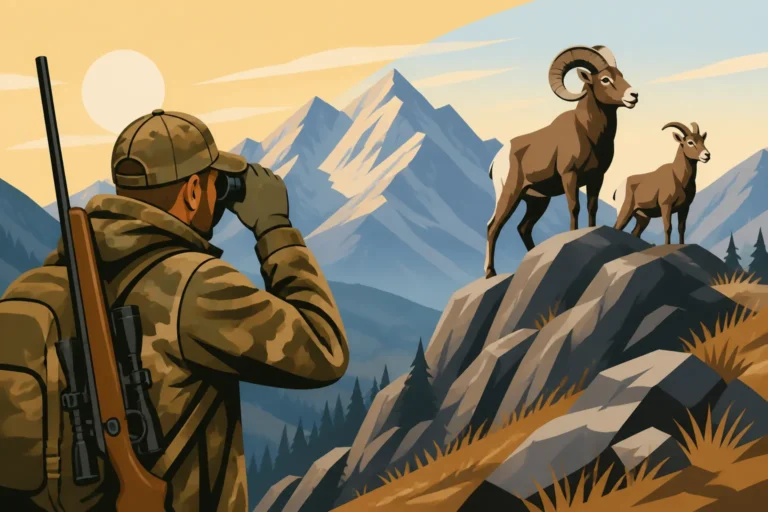
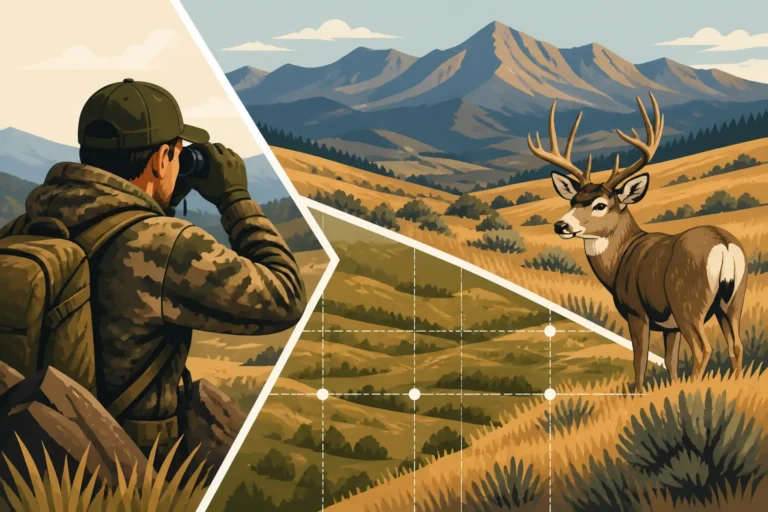
The first step in any successful spot-and-stalk is locating the animal without being seen. This is where your optics become your most valuable tool. You'll spend far more time looking through binoculars or a spotting scope than walking, and for good reason. Given the vast, open landscapes antelope inhabit, you need to systematically pick apart the country. Start by finding a high vantage point that offers a panoramic view of the area you intend to hunt. This could be a small knoll, the roof of your vehicle (if legal and safe), or a significant ridge. Don't just casually scan; grid the area meticulously, working from left to right, slowly moving your field of view downwards, then repeating. Pay close attention to subtle breaks in the terrain, water sources, and areas with taller sagebrush or sparse tree lines where antelope might be bedded or feeding.
Using a good quality spotting scope on a tripod is absolutely essential for identifying specific animals and assessing their potential. You want to differentiate between a doe and a buck, and further, to determine if a buck is one you want to pursue. Look for horn size, mass, and prong length. Remember, these animals can be a mile or more away when you first spot them. GoHunt's mapping features can be invaluable here, helping you identify potential glassing knobs and even marking spotted animals' locations for planning your approach. For deeper insights into this crucial skill, take a look at How to Glass Montana's Big Country. Without effective glassing, you're just wandering aimlessly, which is a recipe for frustration when hunting pronghorn.
Executing the Stalk: The Art of Disappearing
Once you've located your target animal and determined it's a buck you want to pursue, the real challenge begins: the stalk. This is where most hunters either succeed or fail. Antelope country, particularly in many parts of eastern Montana, often appears flat to the untrained eye, but it's rarely truly flat. There are always subtle coulees, washes, low rises, and patches of taller vegetation that can be used for cover. Your goal is to use every inch of this natural concealment to your advantage.
The first step is to plan your route. Use your binos or spotting scope to pick a path that keeps you out of sight as much as possible. This often means taking a circuitous route, sometimes walking a mile to cover a few hundred yards of direct distance. Pay close attention to the wind, as even though antelope don't rely on their nose as much as deer, a strong crosswind can help carry sound or obscure your approach. Keep the sun at your back if possible, especially during the final approach, to make it harder for the antelope to see you. As you move, go slowly, deliberately, and always assume the antelope is looking directly at you. Crawling is often necessary for the final 100-200 yards, especially in truly open areas. This is physically demanding work, so ensure you're prepared for it. Remember, if you can see them, they can probably see you, so stay low.
When stalking, use natural pauses in the terrain to re-evaluate the antelope's position and your cover. If they stand up, freeze immediately and wait for them to settle back down or continue feeding. Any sudden movement will send them flying. The key is to blend into the landscape and become as invisible as possible. This requires extreme patience and mental fortitude, especially when you're within shooting range but waiting for the perfect moment.
Complementary Tactics for Tough Antelope
While spot-and-stalk is the bread and butter of Montana antelope hunting, sometimes the terrain or the animals themselves make a direct approach impossible. This is when having a few complementary tactics in your arsenal can turn a tough day into a successful one. These methods often exploit specific behaviors of antelope, and knowing when and how to deploy them is a sign of an experienced hunter.
Decoying Antelope
Decoying antelope can be incredibly effective, especially during the early archery season or the rut when bucks are territorial and curious. The principle is simple: use a decoy to mimic another antelope, usually a buck, to draw your target buck closer. This works because mature bucks are fiercely protective of their does and their territory. Seeing another buck encroaching can trigger an aggressive response.
To successfully decoy, timing and presentation are everything. You need to position the decoy so it appears to be moving into the buck's territory, or challenging him. Often, the hunter uses a full-size antelope buck decoy, sometimes with a cape or real horns for added realism. The hunter typically sets up behind the decoy, using it as a shield while approaching. When a buck spots the decoy, he might charge in to investigate or challenge, giving you a shot opportunity. This technique is particularly potent when a buck is "hearding" does and you can't get close with a traditional stalk. You'll want to move slowly, keeping the decoy low until you're ready to present it. Then, slowly raise it to simulate an antelope grazing or moving. The excitement of watching a buck sprint towards your decoy is unmatched. For more specialized advice, our guide on How to Decoy Antelope in Montana offers further insights.
Hunting Water Sources and Wallows
In the arid landscapes where many Montana antelope thrive, water is a precious commodity. During dry periods, especially in the early season, antelope will often visit water holes daily. This predictable behavior can be exploited by setting up a ground blind near a known water source. This method relies heavily on scouting and patience, but it can be a highly effective way to get a shot, particularly for bowhunters.
First, you need to identify active water sources. Look for tracks, droppings, and fresh trails leading to the water. Natural seeps, stock tanks, and small ponds are all potential hotspots. Once you've identified a promising location, set up a ground blind well in advance of your hunt, if possible, to allow the animals to get used to its presence. Choose a spot that offers a clear shot while minimizing your silhouette against the skyline. When hunting, get into your blind before daylight and be prepared to stay for extended periods. Antelope can come to water at any time of day, but often early morning and late afternoon are peak times. Patience is paramount; it's a waiting game. Remember that other animals will also use these water holes, so be prepared for deer, birds, and even coyotes to make an appearance. For detailed strategies on this tactic, explore How to Sit Water for Montana Antelope.
Essential Gear and Preparation for Success
Having the right gear and preparing your body and mind are just as important as knowing the right methods. Montana antelope hunting isn't typically a high-elevation mountain hunt, but it still demands durable, functional equipment and a certain level of physical fitness to navigate the plains effectively. Cutting corners here can lead to missed opportunities or, worse, an uncomfortable and unsuccessful hunt.
Essential Optics for the Plains
We've already touched on it, but it bears repeating: quality optics are not optional; they are absolutely fundamental for antelope hunting in Montana. You'll need a good pair of 10x or 12x binoculars, preferably from a reputable brand like Vortex Optics or Zeiss, which offer excellent clarity and light transmission, crucial for spotting animals in low light or at long distances. Even more critical is a high-power spotting scope, something in the 20-60x range, mounted on a sturdy tripod. This allows you to truly evaluate bucks from extreme distances without pushing them. Being able to glass from a mile away and confirm a buck's quality saves you countless unproductive stalks.
Beyond binoculars and a spotting scope, don't forget rangefinders. An accurate rangefinder is indispensable for confirming distances, especially in the wide-open spaces where judging yardage can be deceiving. The subtle undulations of the prairie can play tricks on your eyes, making a 400-yard shot look like 250. Having these tools allows you to gather vital information before committing to a stalk. For a more detailed look at what to bring, consider reading our guide on Best Optics for Montana Big Game. Investing in good optics is investing in your success.
Physical and Mental Readiness
While antelope country might not have the vertical challenges of elk hunting, it still requires physical stamina and mental toughness. A typical spot-and-stalk often involves covering many miles on foot, often over uneven ground, through sagebrush, and sometimes crawling on your hands and knees for extended periods. The sun can be relentless, and the wind can be brutal. You need to be prepared for long days, carrying your rifle or bow, optics, water, and emergency supplies.
Mental readiness is equally vital. Antelope hunting is often a game of patience and perseverance. You might make several failed stalks before finding success. You'll spend hours glassing, only to watch a target buck disappear. The ability to remain positive, adapt your plans, and maintain focus despite setbacks is what separates successful hunters from those who give up early. Practicing your shooting from various field positions, including prone and kneeling, is also crucial, as you rarely get a bench rest shot on an antelope.
Table: Key Factors for a Successful Antelope Spot-and-Stalk
| Factor | Description | Importance | How to Address |
|---|---|---|---|
| Optics | High-quality binoculars and spotting scope for long-range identification. | Critical | Invest in top-tier glass (e.g., Zeiss, Swarovski, Vortex), use a sturdy tripod. |
| Terrain | Utilizing every dip, rise, and patch of vegetation for concealment. | High | E-scout with apps like GoHunt, study topo maps, move slowly and deliberately. |
| Wind | Understanding and using wind direction for scent control and noise reduction. | High | Constantly check wind with a puff bottle, approach into or crosswind. |
| Patience | The ability to wait, observe, and execute a slow, calculated approach. | Critical | Embrace long glassing sessions, accept multiple failed stalks, never rush. |
| Stealth | Moving silently and minimizing your profile. | High | Wear quiet clothing, crawl when necessary, use terrain as a shield. |
| Fitness | Endurance for long walks and crawls in challenging conditions. | Medium | Regular cardio, strength training, practice field movements. |
Leveraging Technology for Scouting and Success
In today's hunting landscape, technology has become an indispensable tool, especially when hunting vast, open areas like those found across Montana. While nothing replaces boots on the ground, using digital mapping and scouting platforms can give you a significant edge, helping you plan your hunts more efficiently and intelligently.
E-Scouting Montana Antelope Units
Before you even leave your living room, e-scouting can save you countless hours of unproductive driving and walking. Platforms like GoHunt and onX Maps allow you to pour over satellite imagery, topographic maps, and public/private land boundaries with incredible detail. For antelope, you'll want to focus on identifying key features: expansive plains, rolling hills with subtle drainages for cover, potential water sources, and isolated patches of timber or dense sagebrush.
When e-scouting for antelope, pay close attention to areas where public land abuts private land, as these transition zones can be natural travel corridors. Look for areas with a mix of feed and cover, and mark potential glassing points—those small hills or ridges that offer commanding views of the surrounding country. Identifying these spots beforehand using tools like GoHunt can drastically cut down on guesswork once you're in the field. You can even use historical weather patterns to anticipate how antelope might use the landscape based on recent precipitation. A deep dive into this topic can be found in our guide on How to E-Scout Montana Hunting Units.
Understanding Public Land Access
Montana boasts an incredible amount of public land, but navigating it can be tricky. E-scouting platforms are vital for clearly distinguishing between public lands (Bureau of Land Management, National Forests, State Lands) and private parcels. Many public lands can be "landlocked" by private property, meaning you cannot legally access them without landowner permission or finding an established public access point. The Block Management Program is another fantastic resource in Montana, opening up hundreds of thousands of acres of private land to public hunting access.
Using digital maps, you can identify these Block Management Areas (BMAs) and often get detailed maps of their boundaries and access rules right on your phone or tablet. Knowing where these boundaries lie and understanding specific access rules (like sign-in requirements or vehicle restrictions) is crucial for staying legal and respectful. Utilizing these digital resources is a game-changer for finding good hunting spots and avoiding unintended trespass, which is a common frustration for out-of-state hunters. Our comprehensive Montana Public Land Hunting Guide provides more detail on how to navigate these opportunities.
Disclaimer
Please note: Hunting regulations and seasons can change annually. Always consult the most current Montana Fish, Wildlife & Parks (FWP) regulations before planning any hunt. This guide is for informational purposes only and should not be considered a substitute for official FWP regulations.