How to Spot-and-Stalk Montana Antelope
Hunting antelope in Montana can feel like trying to catch smoke, especially when those speedsters bolt at the slightest hint of danger. They’re called "speed goats" for a reason, and their incredible eyesight and open-country habitat make getting within range a monumental challenge for any hunter. This guide is all about mastering the art of the spot-and-stalk, breaking down the proven methods to successfully close the distance on a wary Montana antelope.
Understanding Montana Antelope Behavior and Habitat
Before you can effectively spot-and-stalk an antelope, you truly need to understand what makes these animals tick. They're built for speed and survival in wide-open spaces, and every fiber of their being is geared towards detecting and escaping danger. Trying to hunt them like you would a whitetail in thick timber is a recipe for frustration.
Antelope Senses: Eyesight, Speed, and Smarts
The single most defining characteristic of a pronghorn is its eyesight. They possess vision that's often compared to 8-power binoculars, allowing them to spot movement and threats from incredibly long distances across the plains. This isn't just a slight advantage; it's their primary defense mechanism. An antelope can detect a hunter a mile or more away, especially if you're silhouetted on a ridge or moving carelessly in the open. They’re masters of detecting even subtle changes in their environment. Their eyes are large, set on the sides of their heads, giving them an almost 360-degree field of view without turning their heads much.
Beyond their vision, antelope are the fastest land mammals in North America, capable of sustained speeds over 50 mph. While you won't outrun them, their speed dictates that if they see you, they're gone. Often, they won't just run a few hundred yards and stop; they'll vanish over a distant rise. Their sense of smell and hearing are also good, but secondary to their eyesight in the open country they inhabit. They rely on their eyes first, then their legs to carry them to safety. This combination of hyper-vision and explosive speed is precisely why the spot-and-stalk method is so critical. You have to beat their eyes to even get started.
Typical Antelope Habitat in Montana
Montana's antelope population thrives primarily in the eastern two-thirds of the state, across its vast, rolling plains, sagebrush flats, and prairie lands. These aren't deep timber critters; they prefer expansive, open terrain where their vision can be fully utilized. You'll find them grazing on grasses, forbs, and sagebrush, often near water sources. Think about the landscape around regions like the Judith Basin, the Missouri Breaks, or the vast stretches of eastern Montana. These areas offer ideal habitat with plenty of feed and, crucially, the wide-open views that antelope feel safest in.
While it seems counterintuitive for a stalk, these open landscapes actually offer small pockets of cover if you know how to read the land. Subtle dips, coulees, dry creek beds, and even small rises can provide momentary concealment. Understanding the typical features of Montana Antelope on the Eastern Plains is paramount. They often gravitate to areas with low sagebrush and native grasses. Identifying these features on a map, perhaps using an e-scouting tool like GoHunt, before you even step foot in the field, can give you a significant advantage in planning your approach. The animals themselves will move throughout the day, often feeding in more exposed areas during cooler parts of the morning and evening, and bedding down in slightly more sheltered (but still open) spots during the heat of the day.
Seasonal Movements and Rut Behavior
Antelope don't undertake the dramatic migrations some elk herds do, but their movements can shift with the seasons and available forage. During the spring and summer, herds are often smaller, with does and fawns forming nursery groups. Bucks will typically be solitary or in small bachelor groups. As the Montana Antelope Season Dates approach, usually in early fall, the rut begins to kick in.
The rut is an intense period, generally peaking from late September through mid-October, when bucks become much more active and visible. Dominant bucks will gather harems of does, constantly chasing off rival bucks. This heightened activity can sometimes make them slightly less wary, as their focus shifts to breeding and defending their territory. During this time, you might see bucks sparring or running across vast distances to confront another male, making them a little easier to spot, though not necessarily easier to stalk. Understanding Montana Pronghorn Behavior and Biology during the rut can help you anticipate their movements and capitalize on these behavioral changes, but their senses remain razor-sharp. After the rut, antelope often group into larger winter herds for protection and efficient foraging, making them more visible, but also increasing the number of eyes and ears you have to contend with on a stalk.
Essential Gear for Spot-and-Stalk Antelope Hunting
Successfully executing a spot-and-stalk hunt for antelope in Montana demands more than just grit; it requires the right tools. Your gear needs to complement the environment and the unique challenges these animals present. Skimping on quality here can mean the difference between a successful stalk and a frustrating bust.
Optics: The Cornerstone of Spot-and-Stalk
When hunting antelope, your optics are arguably more important than your rifle. You'll spend 90% of your time glassing, searching, and evaluating. A high-quality spotting scope and a good pair of binoculars are non-negotiable. Forget the idea of just "looking with your eyes"; you'll simply miss too much.
For binoculars, aim for 10×42 or even 12×50 power. These offer a wide field of view and excellent light-gathering capabilities crucial for picking apart distant hillsides and sage flats. Brands like Zeiss, Swarovski, and Vortex Optics offer fantastic performance, but there are also excellent mid-range options that won't break the bank. Mount your binoculars on a tripod – this might sound excessive, but it stabilizes the image immensely, reducing eye strain and allowing you to discern subtle details like the flick of an ear or the sheen of an antler from miles away. For a spotting scope, a 60-80mm objective lens with 20-60x magnification is ideal. This allows you to scrutinize distant animals, judge their size, and confirm they’re what you’re looking for without spooking them. Remember, the goal is to spot the antelope before they spot you. Having Best Optics for Montana Big Game is a game-changer. Using high-quality optics to effectively How to Glass Montana's Big Country can save you countless miles of walking and ensure your stalks are on viable animals.
Footwear and Clothing
The terrain you'll be covering, especially in the eastern plains of Montana, can be deceptively rugged. You'll be walking miles, often over uneven ground, through sagebrush, and potentially cactus. Comfortable, durable, and broken-in boots are paramount. Look for something lightweight yet supportive, with good ankle stability. Waterproofing is a bonus, as morning dew or an unexpected rain shower can quickly make for miserable feet.
For clothing, layering is key. Montana weather is notorious for its rapid changes. Mornings can be chilly, midday can be scorching, and afternoon thunderstorms aren't uncommon. Choose moisture-wicking base layers, insulating mid-layers, and a quiet, windproof, and water-resistant outer layer. Given the open nature of the country, camouflage patterns that blend with sagebrush, prairie grasses, and dry earth tones are far more effective than dark, forest-specific camo. Remember, you'll be crawling through dirt and vegetation, so choose durable fabrics that won't tear easily and won't make a lot of noise. Quiet fabrics are essential for that final approach.
Rifle, Ammunition, and Shooting Aids
When selecting a rifle for Montana antelope, accuracy is king, and flatter-shooting calibers are preferred given the potential for longer shots. While shots under 300 yards are always ideal, the reality of antelope hunting often means distances can stretch further due to the open terrain and the antelope's wariness. Calibers like .25-06 Remington, .270 Winchester, 6.5 Creedmoor, or .30-06 Springfield are excellent choices, known for their flat trajectories and adequate energy for pronghorn.
Pair your rifle with high-quality, accurate ammunition that you've thoroughly tested at various distances. Knowing your rifle's capabilities and your personal limitations is critical. A rangefinder is an absolute must-have for judging distances accurately, especially in the vast, featureless terrain where judging distance by eye can be incredibly difficult. Before heading out, practice shooting from various positions, including prone, with shooting sticks, or using your backpack as a rest. A bipod or shooting sticks will provide crucial stability for those longer shots that might arise after a painstaking stalk. Being able to confidently How to Shoot Long Range at Montana Elk (and by extension, antelope) is a skill developed through practice and the right equipment.
| Essential Antelope Spot-and-Stalk Gear Checklist |
|---|
| Optics |
| High-Quality Binoculars (10×42, 12×50) |
| Binocular Tripod Adapter & Tripod |
| Spotting Scope (20-60x, 60-80mm) |
| Rangefinder |
| Clothing & Footwear |
| Comfortable, Broken-in Hiking Boots |
| Moisture-Wicking Socks |
| Layered Clothing (base, mid, outer) |
| Quiet, Earth-toned Camouflage or Solids |
| Wide-brimmed Hat & Gloves |
| Hunting Equipment |
| Accurate Rifle & Tested Ammunition |
| Bipod or Shooting Sticks |
| Backpack (for gear, water, food) |
| Game Bags & Knife |
| Navigation (GPS, map, compass, phone with app) |
| Other Essentials |
| Water & Snacks |
| Sunscreen & Lip Balm |
| Headlamp |
| First-Aid Kit |
The Spot-and-Stalk Methodology: Step-by-Step
The spot-and-stalk method is a calculated dance between patience and precision. It's not about being the fastest or the strongest; it's about being the smartest and the most disciplined. Every step, every move, must be deliberate.
The Art of Glassing
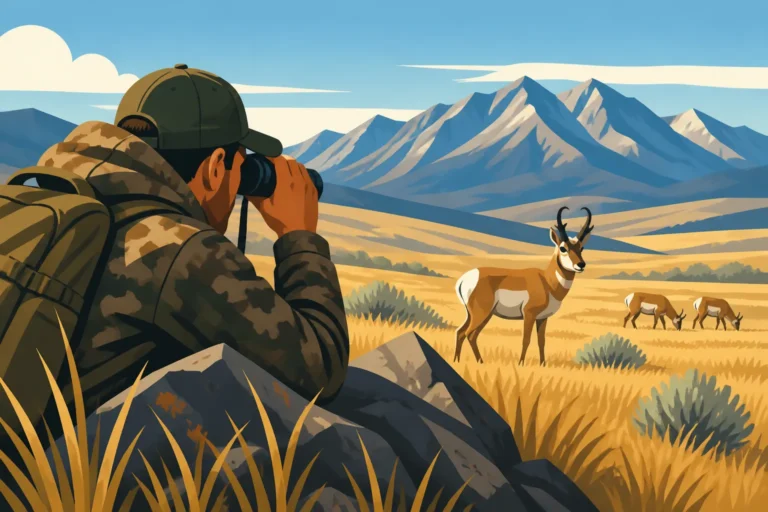
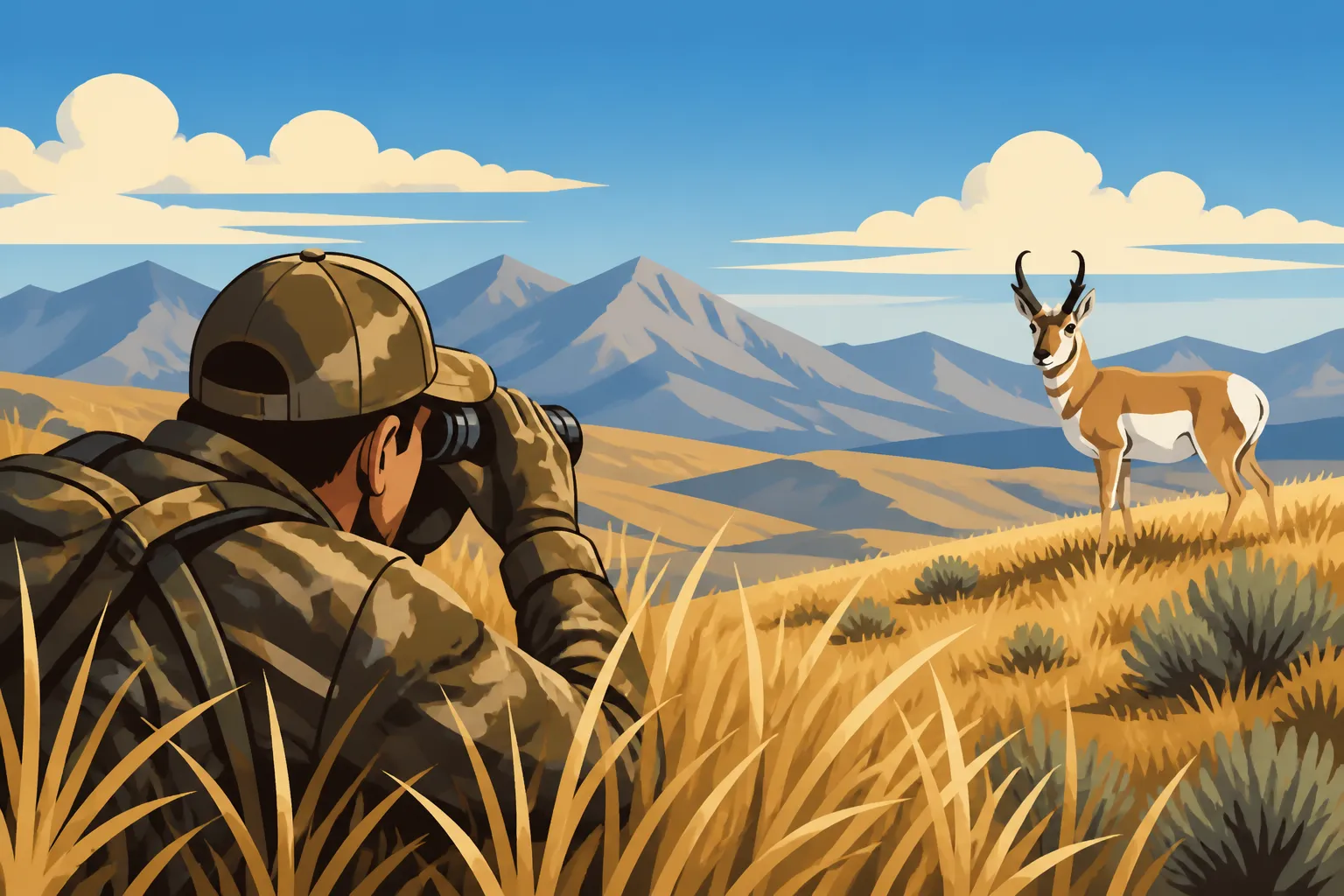
This is where the hunt truly begins. You cannot stalk what you haven't found, and in Montana's vast antelope country, "finding" means glassing. Instead of walking around hoping to stumble upon an animal, find a high vantage point – a ridge, a hilltop, even the roof of your vehicle (if legal and safe) – and settle in. Use your binoculars on a tripod to systematically pick apart the landscape, grid by grid. Don't just scan; scrutinize. Look for anything out of place: a horizontal line in a vertical world, a patch of white, the gleam of an horn, or a distinct outline. Antelope often blend surprisingly well despite their contrasting colors.
Take your time. This isn't a race. Spend at least 30-60 minutes in one spot, even longer if the country is promising. As your eyes adjust and your brain learns to filter out static, you'll start to see more. Once you spot an animal, use your spotting scope to confirm it's a buck, evaluate its size, and observe its behavior. Is it feeding, bedding, moving towards a water source? Understanding its current activity and potential next moves is vital for planning your stalk. You can utilize sophisticated tools like those offered by GoHunt to research harvest reports and terrain features for specific hunting districts, helping you choose optimal glassing locations even before you arrive. This careful process is how you avoid burning valuable energy on impossible stalks and instead focus on high-percentage opportunities.
Planning Your Stalk
Once you've located an antelope you want to pursue, the real mental game begins. This is not the time to rush. First, use your rangefinder to get an accurate distance to the animal. Then, carefully study the terrain between you and the antelope, either with your optics or by consulting a topographic map or a GPS app like onX Hunt. Look for every possible piece of cover: a drainage, a cut bank, a sparse line of sagebrush, a subtle rise or fold in the land. Even a slight dip that's only a few feet deep can provide enough concealment. Identifying key features on a map can often be more effective than trying to eyeball it from afar.
Next, you need to consider the wind. Antelope have a good sense of smell, and while their eyesight is primary, a wafting scent of human will send them fleeing. Always try to approach with the wind in your face or quartering into it. Never approach from downwind if you can help it. Also, consider the sun's position. Stalking with the sun directly in the antelope's eyes can give you an advantage by obscuring your approach, but be careful not to cast a long shadow towards them. Your goal is to chart a path that keeps you out of sight, downwind, and allows you to get within your comfortable shooting range. Remember, the ideal range for most hunters is 200-300 yards, so plan to get at least that close. Sometimes, you'll need to go miles out of your way to find the right approach, even if the animal is only a mile away as the crow flies.
The Approach and The Shot
The actual approach is often the most demanding part. Move slowly and deliberately. Think like a predator. Use every piece of available cover, no matter how small. Crawl, slither, or army-crawl when necessary. Keep your profile as low as possible. If the antelope looks up, freeze immediately and remain motionless until it resumes feeding or looks away. Pay attention to their body language. A head up, ears forward posture means they're alert; a tail twitch or nervous foot stomp is a warning sign.
As you get closer, continually reassess your position and the antelope's location. A good technique is to pick a landmark near the antelope, move to it while staying concealed, and then re-evaluate. Once you’re within your desired shooting range, find a stable shooting position. This usually means prone, if possible, using a bipod or a backpack for support. If the terrain doesn't allow prone, shooting sticks are invaluable. Take your time to settle in, control your breathing, and make a clean, ethical shot. There's no rush once you're in position. This meticulous approach is key to How to Spot-and-Stalk Montana Mule Deer as well, highlighting the versatility of these stealthy tactics across species.
Common Challenges and How to Overcome Them
Spot-and-stalk hunting for antelope in Montana is rarely easy. There are unique challenges that require creative thinking, patience, and adaptability. Expect obstacles, and learn how to navigate them.
Dealing with Open Terrain and Limited Cover
The vast, open plains that antelope call home are their biggest defense and your biggest challenge. Unlike elk or deer in timber, there's often nowhere to hide. This is precisely why your glassing strategy and meticulous stalk planning become so crucial. When you're dealing with minimal cover, you have to maximize what little is available.
Focus on subtle changes in elevation: dry creek beds, eroded coulees, small draws, and even faint depressions in the ground that might not look like much from a distance. Sometimes, the only "cover" is the ground itself. This means getting low, often crawling on your hands and knees or even belly-crawling for hundreds of yards. It's physically demanding, and it will get you dirty, but it's often the only way. Utilize the very few scattered sagebrush or cactus patches, even if they only provide knee-high cover, to break up your outline. Another tactic is to use distant features to mask your approach. If there's a small knoll a mile away that puts you out of sight, use it to cover a significant portion of your approach before having to get low. Platforms like GoHunt can help you analyze the topographical features of your chosen Montana Hunting Districts Explained, revealing these subtle elevation changes that are invisible from the road. The key is never to take the easy, direct route if it means exposing yourself.
Managing Wind and Thermals
Wind is a constant factor on the Montana plains, and it can be both a friend and a foe. As mentioned, you must use it to your advantage to keep your scent away from the antelope. However, strong winds can also make shooting difficult, causing significant bullet drift, and they can make it harder to hear approaching animals or even to hear your own movements. In open country, thermals, which are rising or falling air currents due to temperature changes, are less pronounced than in mountainous terrain, but they can still play a role, especially in deep coulees or near river bottoms where cooler air might settle.
Always be aware of the wind direction. Carry a wind indicator (a small bottle of powder or a milkweed pod works great) and check it frequently, especially during your stalk. Wind direction can shift unexpectedly, so never assume it will stay constant. If the wind changes and puts you upwind, you have two choices: abandon the stalk and try to circle around, or wait patiently for the wind to shift back or for the antelope to move. This patience is often the most frustrating but necessary part of the hunt. Being able to adapt to changing conditions and knowing How to Use the Wind Hunting Montana Elk (a skill directly transferable to antelope) is an invaluable asset.
Hunter Pressure and Educated Antelope
Montana's popularity as a hunting destination means that even in the vast plains, hunter pressure can be a significant factor, especially on easily accessible public lands. Antelope quickly become "educated" once hunting season starts. They'll become even warier, running at greater distances, and often avoiding areas with human activity.
To combat hunter pressure, try to hunt mid-week when fewer people are in the field. Focus your efforts on areas that require more effort to access, such as those that involve longer walks from roads or are located deeper within Montana Block Management Areas Explained. These less-pressured areas are more likely to hold calmer, less-spooked antelope. Early season can also offer less pressured animals, but the weather can be hotter.
Another strategy is to be persistent. Don't give up on an area just because you see other hunters. Often, they might be moving animals around, which could present an unexpected opportunity for you if you're set up to glass a wide area. E-scouting tools are great for identifying potential hideaways or escape routes that pressured antelope might use. Understanding How to E-Scout Montana Hunting Units allows you to find those secluded pockets before anyone else. Sometimes, if a stalk just isn't working, consider setting up a ground blind near a water source, or using decoys to draw them closer, as outlined in articles like How to Decoy Antelope in Montana. While not strictly spot-and-stalk, these tactics can be excellent alternatives when the traditional approach is proving too difficult due to pressure.
Disclaimer
Please be aware that hunting regulations, seasons, and access can change. Always consult the most current Montana Fish, Wildlife & Parks regulations before planning any hunting trip. Safety should always be your top priority in the field.