How to Spot-and-Stalk Antelope in Montana
Hunting antelope in Montana is a unique challenge, often leaving even experienced hunters scratching their heads. Their incredible eyesight, coupled with the vast, open landscapes they call home, means a quick, direct approach is usually met with a cloud of dust and a vanishing white rump. This guide is your in-depth resource for mastering the spot-and-stalk method for pronghorn in Montana, covering everything from understanding their behavior to the crucial nuances of a successful approach.
Understanding the Montana Pronghorn
Before you can effectively hunt antelope, you truly need to understand the animal itself. They're often called "speed goats" for a reason, and their adaptations to the open plains make them formidable quarry. Knowing their biology, preferred habitat, and daily routines is the bedrock of any successful spot-and-stalk.
Pronghorn Physiology and Senses
Montana pronghorn possess an almost supernatural ability to detect danger, largely due to their incredible eyesight. Imagine a pair of 8x binoculars permanently affixed to their heads – that's roughly equivalent to a pronghorn's vision. They can spot movement at incredible distances, often a mile or more away, making camouflage and careful movement absolutely paramount. Their large eyes are set on the sides of their heads, giving them a nearly 360-degree field of view. On top of that, their sense of smell is keen, and while perhaps not as crucial as their sight in open country, a sudden shift in wind can still blow your carefully planned stalk. Their hearing is also excellent, capable of picking up subtle sounds. All these senses work in concert, painting a picture of their surroundings that's tough to penetrate. This means you need to be constantly aware of your profile, your scent, and any noise you might make.
Habitat and Preferred Terrain
Montana's antelope primarily inhabit the vast, rolling prairies and sagebrush flats of the eastern and central parts of the state. Think wide-open spaces, interspersed with coulees, draws, and occasional low hills. They thrive in areas with short grasses, sagebrush, and forbs, which provide both food and cover, albeit subtle cover. You won't find them typically in thick timber or dense river bottoms, unlike deer. When scouting, focus on these open-country environments. Look for gentle undulations in the terrain, dry creek beds, or even irrigation ditches that can offer crucial concealment during a stalk. Understanding their preferred terrain is key to knowing where to look for them and, more importantly, how to use the land to your advantage. You can find excellent hunting opportunities across numerous public land parcels, including BLM land and certain Block Management Areas. Knowing how to use Block Management for DIY Hunts will be invaluable for finding access in these areas.
Daily Movement Patterns
Pronghorn are creatures of habit, much like other big game animals, though their patterns are often dictated by visibility and water sources. Typically, they'll feed actively in the early mornings and late evenings, often venturing out into wide-open fields where forage is abundant. During the mid-day heat, especially in the early seasons, they'll often bed down, seeking the slight shade offered by a larger sagebrush bush or a dip in a coulee. This mid-day bedding period can be a prime time for a stalk, as their attention might be slightly relaxed. However, they don't stay bedded for long and are quick to stand up and scan their surroundings. Pay close attention to prominent ridges or rises; pronghorn often bed with a commanding view of their surroundings, making an approach from above or below equally challenging. Water is also a critical factor, especially during dry periods. Learning how to Hunt Antelope Water Holes can be a highly effective alternative or complementary tactic to spot-and-stalk, particularly in regions where water is scarce.
Essential Gear for Spot-and-Stalk Antelope
Hunting antelope successfully with the spot-and-stalk method hinges heavily on having the right gear. Forget the heavy timber gear; this is a game of optics, stealth, and heat management. Investing in quality equipment specifically suited for the open plains will dramatically increase your odds.
High-Quality Optics: Binoculars and Spotting Scopes
When it comes to spot-and-stalk antelope, your eyes are your most important tool, and your optics are your force multipliers. This isn't just about seeing an animal; it's about spotting subtle movements, judging distance, and evaluating trophy potential from extreme ranges. A good pair of 10x or 12x binoculars, like those from Vortex or Maven, on a tripod is absolutely non-negotiable. Free-handing binoculars for hours on end will lead to fatigue and missed details. The tripod stabilizes your view, allowing you to pick apart distant sagebrush flats for the tell-tale white patch of a bedded pronghorn or the flick of an ear.
Beyond binoculars, a high-quality spotting scope is a game changer, especially in Montana's vast landscapes. A 60-80mm objective lens with 20-60x magnification will allow you to scrutinize distant animals without spooking them. You can confirm whether that distant speck is an antelope, identify if it's a buck or a doe, and even count horn length and mass without putting a single step on the ground. When you're trying to decide if a buck is worth a long, arduous stalk, the spotting scope is your best friend. For a comprehensive look at what to bring, check out our guide on Best Optics for Montana Big Game.
Camouflage and Layering for the Plains
While camouflage patterns like traditional forest greens might seem out of place on the open plains, lighter, more open patterns that mimic sagebrush, dry grass, or barren earth are ideal. More importantly than the exact pattern, however, is breaking up your silhouette and minimizing contrast. A solid light brown, tan, or gray can often be just as effective as specialized camo, especially when combined with careful movement and terrain use.
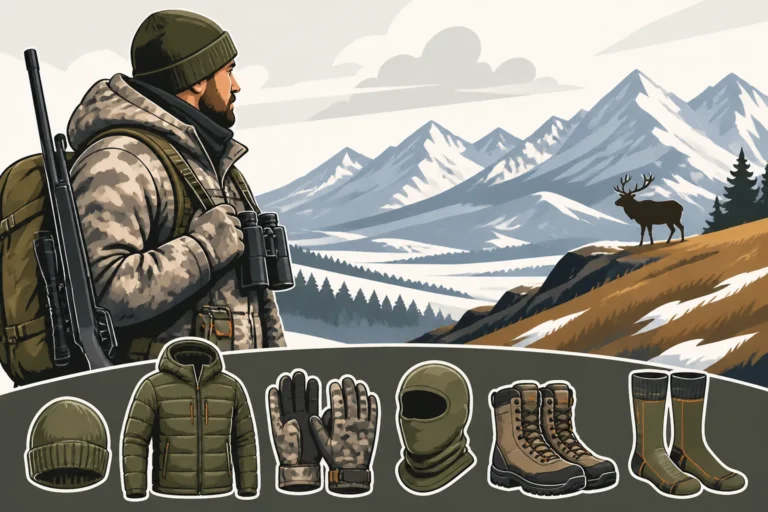
Layering is critical. Montana's plains can go from freezing cold mornings to scorching hot afternoons in a single day, especially during the early archery or September general seasons. You'll likely start your day in a puffy jacket and fleece, only to shed layers down to a light base layer by mid-day while crawling through cactus and sage. Moisture-wicking base layers are a must, followed by insulating mid-layers, and a wind-resistant outer shell. Make sure all your clothing is quiet—any rustling sound can carry far in the quiet, open air. Don't forget a wide-brimmed hat and quality sunglasses to combat the intense sun and glare.
Rangefinders and Wind Indicators
These two items are your best friends once you've spotted an antelope and are initiating a stalk. A reliable rangefinder is non-negotiable. Antelope, especially mature bucks, have a way of making distances appear closer than they are, particularly in flat, featureless terrain. You need to know the exact distance to your target, and also to various landmarks along your proposed stalk route, so you can gauge your progress and make critical decisions. Look for a rangefinder with good optical quality and fast acquisition, capable of ranging out to 800-1000 yards for both animals and terrain features.
A wind indicator, such as a small bottle of powder or milkweed fluff, is equally crucial. The wind is constantly shifting, especially in the thermals and swirling currents created by coulees and hills. You absolutely cannot afford to have your scent blow towards an antelope. Regularly check the wind direction, not just before you start your stalk, but throughout your approach. A sudden shift, even a subtle one, can signal it's time to pause, change direction, or even abort the stalk if the risk is too high.
E-Scouting and Pre-Season Preparation
Successful spot-and-stalk antelope hunting starts long before you ever set foot on the prairie. The vastness of Montana's landscape means you can't just drive around hoping to stumble upon a trophy buck. Strategic e-scouting and thorough pre-season preparation are absolutely crucial to narrowing down your focus and increasing your efficiency in the field.
Leveraging Digital Mapping Tools
Digital mapping tools like onX Hunt, BaseMap, or GoHunt are indispensable for Montana antelope hunters. These platforms allow you to dissect potential hunting areas from the comfort of your home. Start by identifying large tracts of public land – BLM, State Trust Lands, or National Grasslands are often prime antelope habitat. Look for areas with a mix of sagebrush flats, rolling hills, and dry creek beds, paying close attention to contours that could offer concealment for a stalk.
Specifically, use the satellite imagery to identify subtle terrain features: small rises, deep coulees, or even patches of taller vegetation that might not be obvious from a ground-level map. You can also layer property boundaries to ensure you're always on legal hunting ground, especially crucial in checkerboarded areas where public and private lands intermingle. Identifying potential access points and planning your routes in advance can save you hours of driving and frustration once you're in the field. For a deeper dive, our guide on How to E-Scout Montana Hunting Units provides even more granular details on these tactics.
Identifying Key Public Land Access Points
Montana has an abundance of public land, but knowing how to access it legally is paramount. Digital maps will clearly show public land boundaries, but access points aren't always obvious. Look for county roads, two-track trails, or established access roads that lead into public parcels. Be mindful of landlocked public land – areas that are surrounded by private property without a legal public easement. While these can sometimes be accessed with landowner permission, it's generally best to focus on readily accessible areas for a DIY spot-and-stalk hunt, especially if you're new to the area.
Also, make sure to familiarize yourself with Montana's Block Management Areas Explained. These private lands, leased by Montana Fish, Wildlife & Parks, provide public hunting access and can offer some fantastic antelope opportunities. However, they often have specific rules, such as sign-in requirements or limited hunter numbers, so always check the FWP website for the most up-to-date information for the specific BMA you plan to hunt. Knowing these details before you go can make or break your hunt.
Locating Water Sources and Feeding Areas
Antelope need water, especially during hot, dry periods. While they can derive some moisture from their diet, readily available water sources can be magnets. Use your digital maps to identify natural springs, stock ponds, or even irrigation ditches. During your e-scouting, mark these locations as potential hotspots. Observe the terrain surrounding these water sources; often, there will be good feeding grounds nearby, and bedding areas on slight rises overlooking both.
However, don't solely rely on water holes for a spot-and-stalk approach, as antelope can be unpredictable. The key is to find areas with ample forage – healthy stands of sagebrush, various forbs, and short grasses. Pronghorn are grazers and browsers, so areas with diverse vegetation are often more productive. By combining knowledge of their preferred habitat with identified water sources and feeding areas, you can develop a solid plan for where to begin your glassing efforts each morning and evening.
The Art of Spotting Antelope
Spotting antelope in Montana's vast, open country is a skill that takes practice, patience, and the right technique. Their camouflage is surprisingly effective against the backdrop of sage and dry grass, and their ability to blend in is remarkable. This is where your high-quality optics truly shine.
Systematic Glassing Strategies
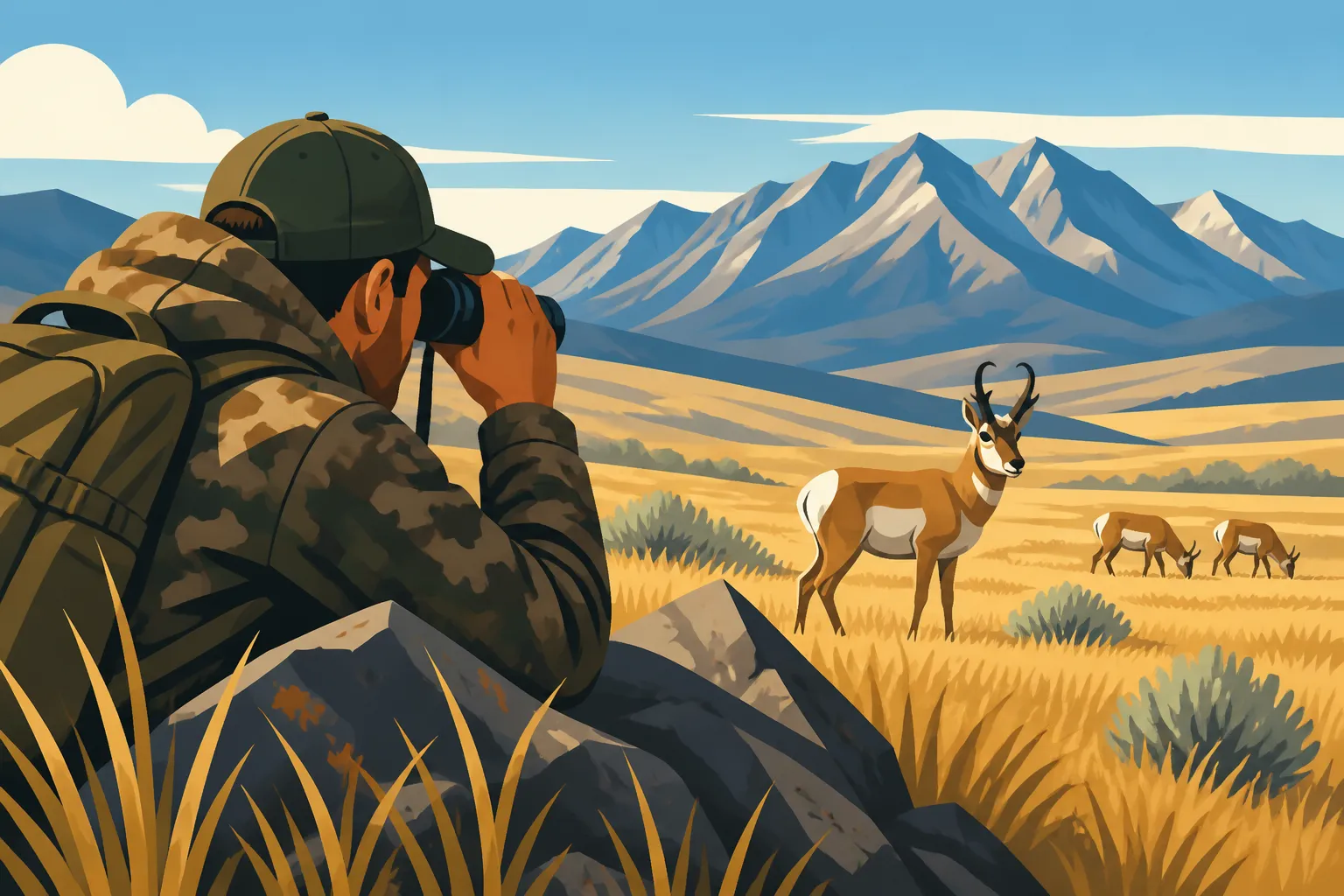
You can't just casually glance over the landscape and expect to spot a bedded buck. You need a systematic approach, often referred to as "gridding" the country. Find a high vantage point that offers a commanding view of a large area, preferably with the sun at your back or to the side. Set up your tripod-mounted binoculars (or spotting scope) and begin scanning in a methodical pattern, typically from left to right, slowly moving up or down, covering every inch of the landscape.
Focus on changes in color, texture, or shape that don't quite fit the natural environment. A subtle horizontal line in a vertical world might be a bedded antelope. A patch of white that seems too bright could be a pronghorn's rump. Look for the glint of sunlight off a horn, or the flick of an ear. Don't rush. Spend at least 15-20 minutes, sometimes much longer, meticulously scanning one area before moving to the next. Remember, it's about being efficient, not fast. For more detailed advice on covering expansive landscapes, our guide on How to Glass Montana's Big Country is an invaluable resource.
Identifying Buck vs. Doe from a Distance
Once you spot an antelope, the next critical step is to determine if it's a buck and if it's the buck you want to pursue. This is where your spotting scope comes into play. Bucks generally have prominent black horns, which are unique in that they shed their outer sheath annually. Does, while some can have small horn nubs or even short horns, typically lack the distinct black color and shape of a buck's horns.
When evaluating a buck, look for height, mass, and the presence of a "cutter" – the forward-projecting point on the horn. A mature buck will also often have a more pronounced black patch on his cheeks and neck, and a more robust body than a doe. Pay attention to how he interacts with other antelope; bucks during the rut will often be herding does or challenging other males. Don't be afraid to spend time watching a group of antelope, even if it means waiting for them to stand up or move, to confirm the identity and quality of the animal. A common mistake is to mistake a large doe for a small buck or vice-versa, which can lead to wasted time on a long stalk.
Optimal Times for Spotting
Antelope are most active during the cooler parts of the day: early morning and late evening. This is when they'll be up feeding, making them more visible. As the sun rises and temperatures climb, they often seek shade or bed down in depressions, making them harder to spot. However, even when bedded, a keen eye with good optics can pick them out.
Mid-day, while challenging for spotting, can sometimes be a good time to initiate a stalk on an animal you spotted earlier, as they might be less alert while bedded. Overcast days or days with light rain can also be excellent for spotting, as the glare is reduced, and antelope might remain active longer. Always remember that antelope are constantly on the move, even when feeding, so patience and persistent glassing are your greatest assets.
Executing the Stalk
You've spotted your antelope, confirmed it's a buck, and now the real game begins: the stalk. This is the most crucial, and often the most frustrating, part of spot-and-stalk hunting for pronghorn. It requires extreme patience, careful planning, and a deep understanding of how to use the terrain and wind to your advantage.
Reading the Wind and Thermals
The wind is your most important ally, or your worst enemy, during an antelope stalk. Always, always approach with the wind in your face or quartering into it. Your scent will travel downwind, and even the slightest whiff will send a pronghorn rocketing away. Before you take your first step, take a moment to observe the wind direction using your wind indicator.
In the rolling country of Montana, thermals can also play a significant role. In the mornings, air often flows downhill into drainages. As the day heats up, warm air rises, and thermals can start pulling scent uphill. Pay attention to these changes throughout your stalk. A seemingly perfect wind direction can quickly change in a coulee or over a ridge, so regularly check your wind indicator and be prepared to adjust your route or even pause your stalk if conditions become unfavorable. There's nothing more disheartening than a blown stalk because you neglected the wind.
Utilizing Topography for Cover
Unlike timber hunting where trees and bushes provide constant cover, the open plains offer only subtle undulations in the landscape. Mastering the art of using these minimal features is key. Study your digital map and the terrain in front of you. Look for coulees, dry creek beds, eroded washes, the backside of small hills, or even larger sagebrush stands that can provide a visual barrier.
Your goal is to stay out of sight as much as possible. This often means crawling on your hands and knees, or even belly-crawling for hundreds of yards. It's physically demanding, and you'll get dirty and prickly from cactus and brush, but it's often the only way. Practice moving slowly and deliberately, always keeping a mental note of where the antelope is and what terrain feature is between you and them. A common mistake is to pop up too quickly or expose yourself on a skyline. If you lose sight of the antelope during the stalk, use your rangefinder to mark a known terrain feature where you last saw them, then continue your approach to that point.
The Final Approach and Shot Setup
As you get within range, the stalk becomes even more critical. Each movement needs to be slow, deliberate, and quiet. If you're archery hunting, you'll need to get within 60 yards or less, depending on your comfort and skill. For rifle hunters, ranges can extend, but the principle of stealth remains. Before making your final move, ensure you have a clear shot lane and a stable shooting position.
If the antelope are bedded, you might have a precious few moments when they stand to stretch or feed, offering a clean shot. If they are moving, try to anticipate their next stop or their path. For the final approach, often the last 50-100 yards, a belly crawl is often necessary. Keep your eyes on the antelope, noting their body language. If they become alert, freeze. They might be looking at something else, or they might have caught a glimpse of you. Wait until they calm down before continuing. Setting up for the shot, whether kneeling, prone, or from a bipod, must be done smoothly and quietly. Remember, you've invested hours and sweat into this moment; don't rush the shot.
Archery vs. Rifle Spot-and-Stalk
Spot-and-stalk antelope hunting can be pursued with both bow and rifle, but each method presents its own unique set of challenges and demands specific tactics. Understanding these differences is crucial for planning your hunt and maximizing your success rates.
Archery Specific Challenges and Tactics
Archery spot-and-stalk for antelope in Montana is arguably one of the most difficult challenges in North American big game hunting. The combination of their unparalleled eyesight and the wide-open country means closing the distance to within archery range (typically 60 yards or less for most hunters) is incredibly tough.
One of the biggest hurdles is getting that final 100 yards. Antelope simply do not tolerate much movement. Decoying can be an effective tactic to complement your stalk, especially during the rut when bucks are more aggressive. A well-placed antelope decoy, particularly a buck decoy, can sometimes draw a territorial buck into range if you're able to conceal yourself effectively behind it. Patience is even more critical for archers. You might get within rifle range easily, but sitting and waiting for an animal to make that last crucial move, or for a brief moment of distraction, can take hours. Archery hunters must be masters of their equipment, practicing shooting from various uncomfortable positions that might arise during a stalk, such as prone or kneeling. Understanding Archery Elk Tactics for the Rut in Montana can offer transferable insights into stealth and movement, even if the species are different.
Rifle Hunting Considerations and Shot Placement
Rifle hunting for antelope via spot-and-stalk still requires stealth and cunning, but the effective range is significantly extended compared to archery. This means your stalks don't need to be quite as aggressive, often allowing for approaches that might conclude at 200-400 yards. However, the extended range introduces other variables: wind drift, bullet drop, and the need for precision shooting.
A quality rifle chambered in a flat-shooting caliber like a .25-06, 6.5 Creedmoor, .270 Win, or .308 Win is ideal. Optics on your rifle should be clear and provide good magnification for precision at distance. Practice shooting from a prone position with a bipod, as this is often the most stable shooting platform you'll have on the open plains. Understanding bullet drop and wind compensation for various ranges is absolutely critical. Always confirm your range with a rangefinder before taking a shot.
Shot placement on an antelope is similar to deer: aim for the vitals (lungs/heart) just behind the shoulder. Their smaller size means your margin for error is reduced. Remember, even with a rifle, a frontal or rear shot is rarely ethical. Our guide on Montana Long-Range Shooting Considerations can help hone your skills for those longer prairie shots.
Combining Methods for Success
While most hunters choose either bow or rifle for a given hunt, understanding both methods and their strengths can inform your overall strategy. Sometimes, a "rifle stalk" might involve getting to a point where an antelope is just barely in range, whereas an "archery stalk" demands you get even closer.
Many hunters use archery for the early season when animals might be less wary and the weather is hotter, then switch to a rifle for the later general season. Some even carry a small, light rifle for backup or for specific situations during an archery hunt (though this requires careful planning and legal considerations depending on specific regulations). Regardless of your chosen weapon, the core principles of spot, stalk, and shoot remain constant. The table below outlines some key considerations for each method.
| Feature / Method | Archery Spot-and-Stalk | Rifle Spot-and-Stalk |
|---|---|---|
| Effective Range | Typically 20-60 yards | Typically 150-400+ yards |
| Stalk Difficulty | Extremely High (requires supreme stealth and cover use) | High (requires stealth, but less aggressive closing) |
| Gear Focus | Lightweight, quiet clothing, accurate bow, rangefinder | Accurate rifle, quality scope, bipod, rangefinder |
| Shot Opportunities | Fewer, often fleeting, requires patience for perfect angle | More frequent, longer windows, stable shooting position |
| Wind Impact | Critical for scent, but less for arrow trajectory | Critical for scent, significant for bullet trajectory |
| Physical Demand | High (extensive crawling, low profile movement) | Moderate to High (often involves long walks, less crawling) |
| Patience Level | Extreme | High |
Overcoming Common Spot-and-Stalk Challenges
Montana antelope hunting on public land comes with its own unique set of challenges beyond the animal's keen senses. From hunter pressure to extreme weather, being prepared for these obstacles is key to maintaining your focus and increasing your odds of success.
Handling Hunter Pressure on Public Land
Montana's public lands are a treasure, but during peak hunting seasons, they can also see significant hunter pressure. This means you won't be the only one out there looking for antelope. Other hunters, driving roads, glassing from vehicles, or even attempting their own stalks, can inadvertently (or sometimes advertently) spook animals you're pursuing.
To mitigate this, try to hunt areas that require a bit more effort to access. This might mean walking a few extra miles from a road or focusing on parcels further from population centers. If you see another hunter approaching your area, consider finding a new spot or communicating respectfully with them. Sometimes, patiently waiting for other hunters to move on can pay off. Another tactic is to hunt during weekdays rather than weekends, if your schedule allows, as pressure typically subsides during the week. Utilizing tools like GoHunt can help you research specific units and their general hunter density, allowing you to choose areas that might offer a slightly quieter experience. Our detailed guide on How to Hunt Montana Public Land Pressure offers even more strategies for navigating busy areas.
Managing Heat and Hydration on the Plains
Early season antelope hunts, particularly archery seasons in August and September, can be brutally hot. The Montana plains offer little shade, and direct sunlight, coupled with physical exertion from stalking, can quickly lead to dehydration and heat exhaustion. This isn't just uncomfortable; it's dangerous.
Carry significantly more water than you think you'll need. A good rule of thumb is at least 3-4 liters per day, perhaps more if you're covering extensive ground in high temperatures. Electrolyte packets are also a wise addition. Dress in light-colored, breathable, moisture-wicking layers that protect you from the sun. A wide-brimmed hat and sunscreen are essential. Plan your hunts to take advantage of cooler morning and evening hours, saving the mid-day for glassing from a shaded spot or resting. If you feel dizzy, nauseous, or excessively fatigued, stop, rehydrate, and cool down immediately. Your safety is paramount.
Patience and Persistence in Wide-Open Spaces
Perhaps the biggest challenge in spot-and-stalk antelope hunting isn't the physical demands or the keen senses of the animal, but the mental game. It takes immense patience and persistence. You will spot antelope, you will plan a stalk, and you will likely get busted, probably multiple times. The sheer vastness of the landscape can also be mentally taxing, making you feel like you're just a tiny speck against an endless horizon.
Don't let these setbacks deter you. Each failed stalk is a learning opportunity. Analyze what went wrong: Was it the wind? Did you expose yourself? Was your approach too noisy? Take a deep breath, regroup, and start glassing again. Sometimes, the best strategy is simply to sit and observe for extended periods, waiting for antelope to move into a more favorable position or for a better stalking opportunity to present itself. The hunters who succeed most consistently are those who embody relentless patience and an unyielding commitment to learning from every interaction. This mental fortitude is arguably more important than any single piece of gear.
Post-Harvest Considerations
Congratulations! You've successfully executed a challenging spot-and-stalk hunt, and now you have a Montana antelope on the ground. The work isn't over yet. Proper field dressing, meat care, and packing out are essential to honoring your harvest and ensuring you take home high-quality meat.
Quick and Clean Field Dressing
Antelope meat, when properly cared for, is delicious. However, like all game meat, it can spoil quickly if not handled correctly, especially in the warm temperatures often encountered during antelope season. The moment your antelope is down, the clock starts ticking.
Your priority should be to field dress the animal as quickly and cleanly as possible to allow the carcass to cool down. Roll the antelope onto its back if possible, or position it on its side to access the abdomen. Make a careful incision from the sternum to the pelvis, avoiding puncturing the intestines. Sever the windpipe and esophagus, then remove all the internal organs. Work quickly to separate the heart and liver if you plan to keep them. Once the cavity is clear, prop open the chest cavity with a stick or rocks to promote airflow and cooling. If you have time, wipe out any excess blood or stomach contents with a clean cloth or snow if available.
Keeping Meat Cool in Warm Temperatures
This is perhaps the most critical step for preserving antelope meat quality, especially if you're hunting during the early archery or general seasons when daytime temperatures can easily reach into the 70s, 80s, or even 90s Fahrenheit. Body heat combined with ambient heat is a recipe for spoilage.
After field dressing, skin the antelope as soon as possible. Skinning allows the meat to cool much more rapidly. If you're far from your vehicle, quartering the animal and putting the meat into game bags immediately is the best approach. Avoid piling meat bags on top of each other, as this traps heat. Hang the game bags from a tree or bush to allow air circulation, ideally in the shade. If you have ice, place it in coolers with the game bags as soon as you get back to your vehicle. Some hunters even carry frozen water bottles in their packs to place in the body cavity immediately after field dressing. For more detailed tips applicable to keeping meat fresh in challenging conditions, consider reviewing our advice on How to Keep Elk Meat Cool in Montana's Early Season, as many of the principles translate directly.
Efficient Packing Out on Foot
Antelope are not as large as elk or deer, but even a full-grown buck can weigh over 100 pounds. If you're hunting public land far from roads, you'll need a plan to pack out your meat. A quality hunting backpack with a dedicated meat shelf or sufficient capacity is essential.
After quartering, place the meat into breathable game bags. Load the heaviest cuts (hindquarters) first, close to your back, to ensure proper weight distribution. Add the front quarters, backstraps, tenderloins, and head (if keeping it) next. Distribute the weight as evenly as possible. Plan your route back to your vehicle, opting for the easiest terrain, even if it means a slightly longer walk. Take breaks as needed, stay hydrated, and be mindful of your footing, especially if you're walking across uneven ground or through sagebrush. A wheeled game cart can be a lifesaver if the terrain allows for it, but often, on the rougher public lands of Montana, a sturdy backpack is your only option.
Disclaimer
Please note that hunting regulations, season dates, and access rules can change frequently. Always consult the official Montana Fish, Wildlife & Parks (FWP) regulations for the current year before planning any hunt. This guide is for informational purposes only and does not supersede official regulations.