Montana Bull Elk vs Cow Elk Tags
Deciding which Montana elk tag to pursue can feel like a high-stakes chess match, especially with so many variables. Many hunters grapple with the dream of a big bull versus the practicalities of drawing a tag and ensuring a successful harvest. This guide will break down everything you need to know about Montana's bull elk and cow elk tags, helping you navigate the complexities and make the best choice for your hunting adventure.
Understanding Montana Elk Tags: Bull vs. Cow
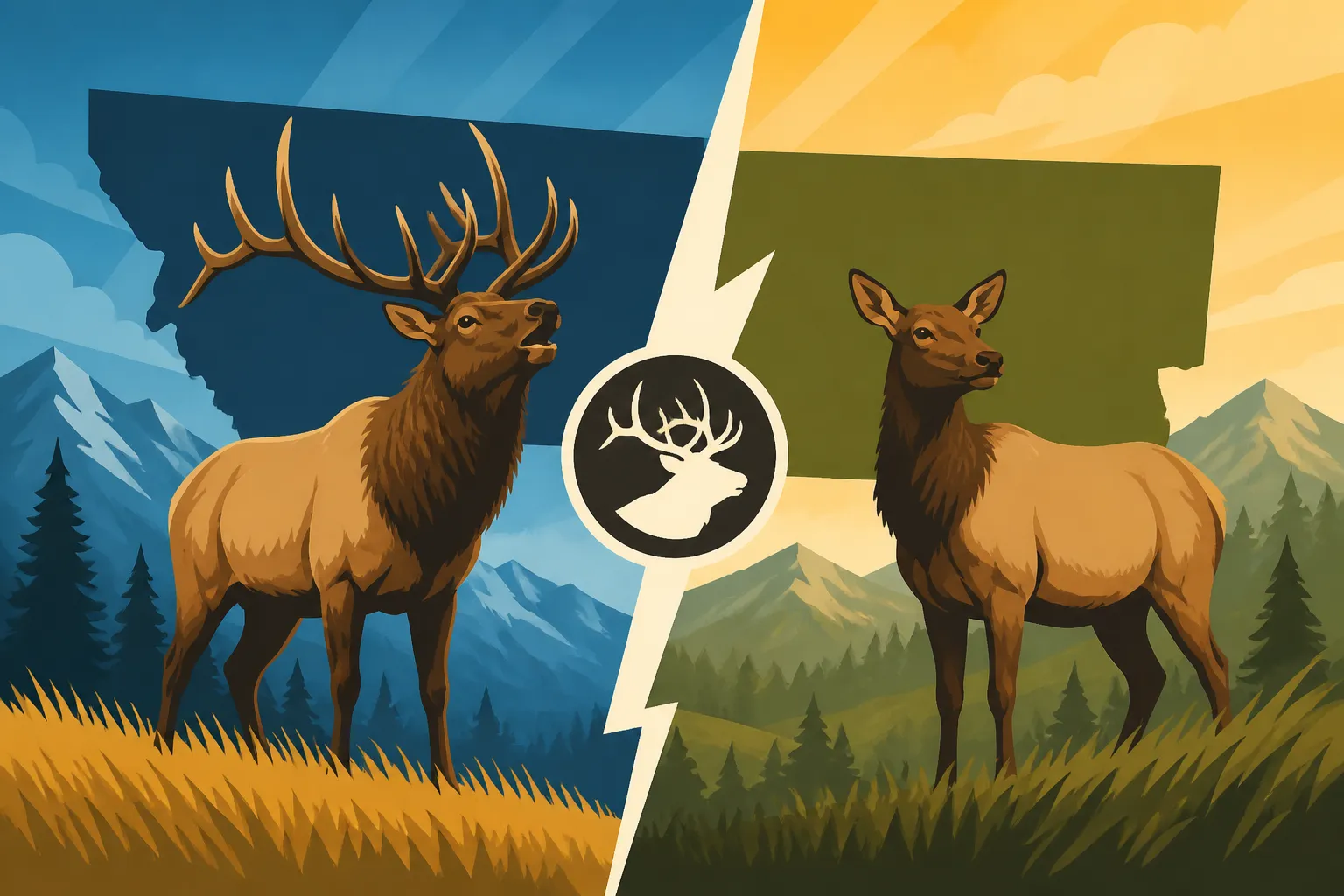
Montana's elk management strategy relies heavily on distinguishing between bull and cow elk tags, a system designed to manage herd populations, provide diverse hunting opportunities, and ensure sustainable hunting for generations to come. It’s not just a matter of what you want to hang on your wall; it's about understanding the state's conservation goals and how your tag plays into them.
The Basics of Elk Licenses
First off, let's clarify the fundamental licenses required to even consider an elk hunt in Montana. For both residents and nonresidents, a base hunting license and a Conservation License are prerequisites. On top of that, you'll need the specific elk license. Nonresidents typically pursue a Montana Nonresident Combination License Guide, which often includes an elk tag, a deer tag, and fishing privileges, making it a comprehensive package. Residents have a more straightforward path, usually purchasing an annual general elk license.
The most common elk license for either resident or nonresident is the general elk license, which allows you to harvest an "either-sex" elk (a bull or a cow) in a "general" hunting district, or a "brow-tined bull" in a brow-tined bull district, or a cow in an antlerless-only district, all during the specified season dates. This is the tag most people picture when they think about Montana elk hunting. However, beyond this general tag, things get more specific, particularly when managing cow populations through "B licenses" or controlling bull harvest through "limited-entry permits." Understanding these distinctions is crucial, as they dictate where, when, and what kind of elk you can legally harvest.
Why the Distinction Matters
The division between bull and cow elk tags isn't just bureaucratic red tape; it's a vital tool for wildlife management. Montana Fish, Wildlife & Parks (FWP) uses this system to balance herd health, maintain desired population levels, and distribute hunting pressure. When a district has too many elk for the available habitat, FWP might issue more cow tags (known as B licenses) to reduce the population. Conversely, in areas where bull populations are struggling, or to protect trophy potential, FWP might restrict bull harvest through brow-tined bull regulations or limited-entry permits.
This system directly impacts hunter opportunity and success. More cow tags often mean higher draw odds for those looking to fill their freezer with quality elk meat, particularly for general elk license holders who want to hunt a cow in an antlerless-only district, or for those who specifically draw a cow B license. Bull tags, especially for mature, antlered animals, are often more competitive and may require accumulation of Montana Preference Points vs Bonus Points over several years, particularly for coveted limited-entry units. The distinction ensures that while hunters can pursue their passion, the elk herds remain robust and healthy for future generations.
Strategies for Bull Elk Tags in Montana
For many hunters, the ultimate dream is a bull elk. The roar of a bugle, the sheer size of the animal, and the challenge of pursuing a mature bull in the mountains are experiences unlike any other. However, obtaining a bull tag in Montana, especially for a prime area, requires careful planning and a good understanding of the draw system.
Drawing a General Elk Tag
The general elk tag is your bread and butter for pursuing bulls in Montana. This tag allows you to harvest an "either-sex" elk in designated general districts, or a "brow-tined bull" in districts with that specific regulation. A brow-tined bull rule means the bull must have at least one antler with a point longer than four inches off the main beam, ensuring younger bulls are protected and allowing them to mature. This is a common regulation in many of Montana's popular elk hunting districts.
To improve your odds of success with a general elk tag, especially for a bull, research is paramount. You'll want to dive deep into potential Which Montana Districts Are General for Elk and understand their specific regulations. Some districts might be general for either-sex elk during archery season but switch to brow-tined bull only during rifle season, or even have different rules for specific portions of the district. Tools like the FWP Hunt Planner maps and platforms like GoHunt can be invaluable resources for this kind of detailed analysis. Pay close attention to season dates, weapon restrictions, and any antler point requirements. Scouting, both in person and using e-scouting methods, can help you identify areas with good bull populations and public land access.
Navigating Limited-Entry Bull Permits
While the general elk tag offers opportunities, many of Montana's most sought-after bull hunting experiences come through limited-entry permits. These are specific permits for particular hunting districts (HUs) that are separate from your general elk license. You apply for these permits, and they are drawn through a lottery system, often requiring many years of accumulated preference points for nonresidents. These permits are typically for specific types of bull elk (e.g., antlered bull, either-sex) and offer access to districts known for older age-class bulls and higher success rates.
Applying for limited-entry permits is a long-term strategy, particularly for nonresidents. Each year you apply and are unsuccessful, you accrue a preference point, which increases your odds in subsequent draws. It's a game of patience, but the reward can be an unparalleled hunting experience. Researching Montana Elk Draw Odds by District is crucial to understand the commitment required. Platforms like GoHunt provide detailed draw odds analysis, helping you decide which districts might be worth investing your points in. Remember that even with many points, drawing these permits is never a guarantee, so it's wise to have a backup plan, often involving a general elk tag hunt.
Pursuing Cow Elk Tags in Montana
While the allure of a bull is strong, don't underestimate the value and opportunity presented by cow elk tags in Montana. Cow elk hunts are often more accessible, can be incredibly productive for filling a freezer, and still offer a thrilling challenge in the field. They are an essential part of Montana's wildlife management strategy.
Benefits of Hunting Cow Elk
Hunting cow elk offers several distinct advantages. Primarily, cow elk tags are often much easier to draw than bull tags, especially the limited-entry variety. This means a higher likelihood of securing a tag and getting out into the field to hunt every year, rather than waiting years in a draw. For hunters focused on filling their freezer with lean, organic meat, a cow elk is an excellent choice. They provide a significant amount of high-quality protein, and the harvest opportunity is often higher.
Beyond the practical benefits, hunting cow elk can be an incredibly rewarding experience. It still requires excellent scouting skills, careful stalk execution, and a deep understanding of elk behavior. You'll often be hunting in larger herds, which presents its own set of challenges, like maintaining stealth and picking out the right animal without spooking the entire group. For newer hunters, or those looking to introduce friends or family to elk hunting, pursuing cows can offer a less pressured entry point into the world of big game. Plus, you’re actively contributing to herd management in areas where populations might be exceeding habitat capacity, ensuring healthier herds overall.
Accessing Cow Elk B Licenses
Most opportunities for hunting cow elk come through "B licenses." These are antlerless-only tags that are specific to certain hunting districts and often have much higher draw odds than general or limited-entry bull tags. Some districts might offer B licenses as "over-the-counter" purchases after the main draw, while others require a separate application process through the FWP system. These licenses are a critical component of population control, allowing FWP to manage herd numbers in specific areas.
A general elk license allows you to take an "either-sex" elk in a general district, or a cow in an antlerless-only portion of a general district. However, if you want to harvest an additional elk, or specifically hunt a cow in a district where the general tag is limited to bulls, then a separate cow elk B license is what you'll need. Nonresidents can also apply for these, though their draw odds are typically lower than residents. It's important to research Montana Elk B License Explained for each district you're considering, as regulations can vary wildly. Some B licenses are specific to archery season, others to rifle season, and some are "either-sex" B licenses, allowing for a spike bull or a cow. Always double-check the regulations for your chosen district and season.
| Tag Type | Purpose | Draw Odds (Nonresident) | Primary Benefit |
|---|---|---|---|
| General Elk Tag | Standard elk tag, allows either-sex or brow-tined | Moderate-High | Versatility for bull or cow; widely available |
| Limited-Entry Bull | Access to specific districts for trophy bulls | Low (requires points) | High potential for mature bull; less pressure |
| Cow Elk B License | Antlerless-only tag, helps manage herd numbers | Moderate-High | High success rate for meat; easier to draw |
Note: Draw odds are generalized and vary significantly by district and year. Always consult current FWP regulations and draw statistics.
Factors Influencing Your Tag Choice
Choosing between a bull or cow elk tag, or even applying for both, isn't a decision to take lightly. It should align with your personal hunting goals, available resources, and tolerance for risk in the draw process. Montana offers a spectrum of opportunities, but understanding your own priorities is key.
Hunter Objectives and Preferences
Before you even look at draw odds, consider what you truly want out of your Montana elk hunt. Are you dreaming of a wall-hanger bull, an experience that might take years to draw but offers the chance at a truly magnificent animal? Or is your primary goal to fill the freezer with delicious wild game, making a cow elk tag a more practical and often higher-odds choice? Perhaps you're a new hunter, and a cow hunt offers a great learning experience with a higher chance of success.
Your physical capabilities and the type of hunting you prefer also play a role. Pursuing a big bull in high-elevation country often demands peak physical condition, while some cow hunts might be more accessible. Are you interested in Montana Archery Elk Hunting Guide or Montana Rifle Elk Hunting Guide? The season you prefer can also influence tag availability and strategies. Be honest with yourself about your objectives, as this will be the compass guiding your tag applications and hunt planning.
Understanding Draw Odds and Success
Montana's draw system is complex, especially for nonresidents. Understanding Montana Nonresident License Draw Explained and the concept of preference points is critical for making informed decisions. For general elk tags, nonresidents face a cap, but the odds are generally better than for limited-entry permits. For those coveted limited-entry bull permits, draw odds can be extremely low without a significant number of preference points.
When it comes to cow elk B licenses, the draw odds often improve dramatically, making them a solid choice for those prioritizing harvest over antler size. Some B licenses even go undersubscribed or are available over-the-counter later in the year. Resources like FWP's annual draw reports and online tools from services like GoHunt offer detailed breakdowns of draw odds for every district and permit type. Analyzing these statistics will help you gauge your chances of success and determine how many years you might need to build points for your dream hunt. It also helps manage expectations and plan realistic hunts annually.
Practical Application and Planning
Once you've decided on your general tag preference, or if you're going for specific limited entry or B licenses, the real work of planning begins. Montana is a vast state, and successful elk hunting requires thorough research, smart e-scouting, and potentially some boots-on-the-ground recon.
Researching Hunting Districts
Choosing the right hunting district (HD) is arguably the most critical step in planning your Montana elk hunt. Each HD has unique terrain, elk populations, public land access, and specific regulations. You'll need to know if the district is "general" for elk, or if it requires a "limited-entry permit" for bulls. If it's a general district, what are the antler restrictions (e.g., brow-tined bull, either-sex)? If you're after a cow, are there B licenses available for that HD, and what are the specific dates and restrictions?
Start by exploring the Montana Hunting Districts Explained on the FWP website. They provide maps, regulations, and often harvest statistics for each district. Look for districts that align with your hunting style (e.g., backcountry wilderness vs. more accessible forest roads) and the type of tag you're targeting. Pay attention to success rates for both bulls and cows, as well as hunter numbers. High hunter pressure can make a district challenging, even if it has a lot of elk. Don't be afraid to consider less popular, but potentially productive, areas. Understanding Montana Public Land Hunting Guide and how to utilize resources like Block Management Areas can open up even more opportunities.
Utilizing E-Scouting Tools
In today's hunting world, e-scouting is no longer a luxury, it's a necessity. Tools like onX Hunt, BaseMap, and CalTopo allow you to virtually explore hunting districts from the comfort of your home. You can analyze topography, identify potential bedding and feeding areas, locate water sources, and pinpoint public land access points. For elk, look for north-facing slopes with dark timber for bedding, south-facing slopes for early season feeding, and saddles or draws that might serve as travel corridors.
When e-scouting for bull elk, focus on finding secluded areas with dense cover and good escape routes. For cow elk, they'll often be found in larger herds, sometimes in more open country or on the fringes of timber. Use satellite imagery to identify old logging roads or trails that could provide access, but also mark remote areas that might hold less-pressured animals. Integrating current and historical weather data, particularly snowfall, can give you clues about how elk might move during the season. This type of detailed preparation, combined with a good understanding of How to E-Scout Montana Hunting Units, will dramatically increase your chances of finding elk, regardless of whether you're chasing bulls or cows.
The Financial Aspect of Montana Elk Tags
Let's be real, hunting in Montana isn't cheap, especially for nonresidents. Understanding the costs associated with bull and cow elk tags is crucial for budgeting and planning your hunt without any unwelcome surprises.
Cost Breakdown for Residents and Nonresidents
The cost difference between resident and nonresident licenses in Montana is substantial. As a resident, you can typically purchase a general resident elk license for a relatively affordable price, currently around $20. You might then apply for a special limited-entry permit or a cow B license, with additional, but still manageable, fees.
For nonresidents, it's a different ballgame. The primary way to hunt elk is through the Nonresident Big Game Combination License, which includes an elk tag, a deer tag, and fishing. This license package, as of recent years, can cost upwards of $1,200. If you also decide to apply for limited-entry permits, there are additional application fees, and sometimes a fee for the permit itself if drawn. Cow elk B licenses for nonresidents also have a separate cost, typically in the range of $275. It's a significant investment, so careful planning of your Montana Hunting License Costs is essential. Remember to also factor in the cost of preference points if you're playing the long game for a trophy bull permit.
The Value of Investing in Points
For many nonresident elk hunters, accumulating preference points is an unavoidable part of the strategy, especially for high-demand bull permits. A preference point costs a nominal fee (around $15-20) each year you purchase it without drawing your first-choice limited-entry permit. These points increase your odds in subsequent drawings. While it might feel like throwing money away each year you don't draw, these points are an investment in your future hunting opportunities.
Consider a scenario where a specific trophy bull district takes 8-10 preference points to draw for a nonresident. If you plan to hunt that district, you need to commit to building those points year after year. For some, the cost and patience required are well worth the potential reward of a once-in-a-lifetime hunt. For others, a general elk tag, perhaps supplemented with a cow B license, offers more immediate and frequent hunting opportunities without the long-term point investment. It's a personal financial decision that needs to align with your hunting goals and budget. Remember to understand How to Build Preference Points in Montana and consider the trade-off between immediate opportunity and future trophy potential.
Disclaimer
Please be aware that hunting regulations, season dates, and license fees in Montana are subject to change annually. Always consult the most current Montana Fish, Wildlife & Parks (FWP) regulations guide before planning and executing any hunt. This guide is for informational purposes only and does not supersede official FWP documentation.