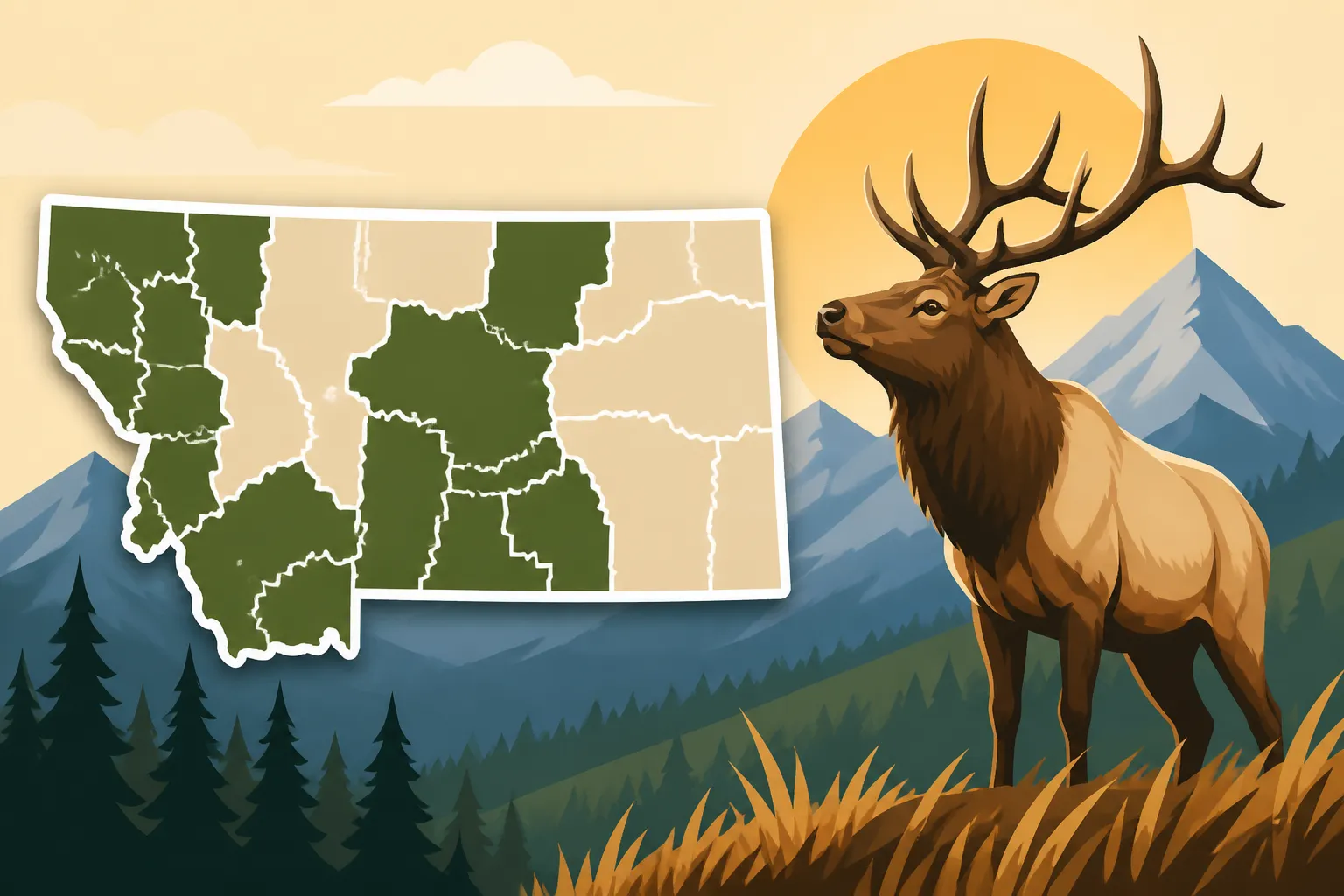
Which Montana Districts Are General for Elk
Navigating Montana's complex hunting regulations can feel like trying to untangle a fishing line after a particularly windy day – confusing, frustrating, and often leaving you with more questions than answers. When it comes to elk, knowing which hunting districts offer a general tag versus those that require a special, limited-entry permit is paramount to even having a chance at chasing bugling bulls or migrating cows. This guide is dedicated to demystifying the "general elk district" landscape in Montana, giving you a clear picture of where you can go with your coveted general license, and what to expect when you get there.
Understanding Montana's Elk District System
Montana's elk management is a finely tuned, often controversial, system designed to balance herd health, landowner tolerance, and hunter opportunity. It's not a simple one-size-fits-all approach, and understanding the nuances between general and permit units is your first crucial step toward a successful hunt.
The General vs. Permit Divide
At its core, the difference between a general elk district and a permit-only district boils down to opportunity and access. A general elk license allows you to hunt in a vast majority of Montana's hunting districts during the designated general season, usually after purchasing a non-resident combination license or a resident general license. These are the units where, with your base license, you can simply show up and hunt, provided you follow all other regulations regarding species, weapon type, and sex of the animal.
On the flip side, permit-only districts (also known as limited-entry units or special drawing areas) are managed more restrictively. These districts typically hold higher densities of elk, larger trophy potential, or are in areas where elk populations need tighter control. To hunt in these districts, you must apply in a draw, often years in advance, and hope your luck holds out. If you're a nonresident, you'll need that combination license to even apply for a permit. This system helps distribute hunter pressure and ensures that prime areas aren't overhunted. The odds of drawing these permits can be incredibly low, making the general districts the bread and butter for many hunters, especially those new to the state or those without years of Montana Preference Points vs Bonus Points built up.
Why Some Districts are General
Montana Fish, Wildlife & Parks (FWP) designates districts as "general" for a variety of reasons, all tied to their overarching management objectives. Primarily, these are areas where elk populations are robust enough to sustain hunting pressure without needing strict quotas. You'll often find these districts have:
- Extensive Public Land: Many general districts encompass vast tracts of national forest, BLM land, and state trust land, providing ample room for hunters to spread out and for elk to roam. This isn't always the case, but it's a common characteristic.
- Diverse Habitat: From thick timbered mountainsides to rolling foothills and even some prairie fringes, general units usually offer a wide range of habitats that support healthy elk herds.
- Management Goals: FWP might keep a district general to manage overall elk numbers, particularly in regions where they want to reduce agricultural depredation or keep populations within social tolerance levels. Sometimes, a district that was once permit-only might revert to general if elk numbers increase significantly or management objectives shift. It's a dynamic system, so always check the latest Montana Hunting Seasons Explained and regulations.
Key Montana Districts Open to General Elk Tags
While the specific boundaries and designations can shift slightly year to year (so always, always consult the current Montana FWP hunting regulations), certain regions and types of terrain consistently offer general elk opportunities. Think of these as your go-to zones if you've got that general tag in your pocket.
Western Montana Mountain Ranges
A significant portion of western Montana, characterized by its rugged mountains, dense timber, and remote backcountry, is primarily open to general elk tags. This region encompasses much of FWP Regions 1, 2, and parts of Region 3 and 4. Here, you'll find sprawling national forests like the Flathead, Lolo, Kootenai, and parts of the Beaverhead-Deerlodge and Helena-Lewis and Clark.
Districts in these areas are often defined by their steep terrain and heavily forested lands, which can make for challenging but incredibly rewarding hunting. These units are where the classic "big woods" elk hunt comes alive, requiring physical fitness and a willingness to cover serious ground. For example, many districts within the Lolo National Forest Hunting Guide region, such as those near Missoula, are general. Similarly, areas in the Kootenai National Forest in the northwest provide ample general opportunities. Even portions of the Beaverhead-Deerlodge Hunting Guide in southwestern Montana, known for its high-country elk, frequently offer general tags for either-sex or antlered elk, though specific B-licenses might require a draw.
Hunting these mountainous general units means you'll be competing with other hunters, but the sheer size of the public land available often allows for solitude if you're willing to hike deep. Many of these areas are perfect for a Montana Backcountry Hunting Guide approach, utilizing spike camps and navigating with skill.
Central and Eastern Montana Opportunities
While the western mountains get a lot of attention, central and eastern Montana also offer a unique set of general elk districts. These areas often present a different kind of challenge and a distinct hunting experience, typically characterized by more open terrain, rolling hills, and a mix of private and public lands.
In central Montana, around areas like the Judith Basin or the Little Belt Mountains, you'll find general districts that combine mountainous terrain with foothills and prairie edges. Districts in the Little Belt Mountains Hunting Guide or Snowy Mountains Hunting Guide are good examples where general tags are common. Elk here might be found in timbered pockets during the day and move out into agricultural fields or private pastures at night. Access can be a bigger consideration here, often relying on public land interspersed with private, or Montana Block Management Areas Explained providing crucial access points.
Further east, in regions 6 and 7, truly "general" either-sex elk opportunities for a bull are fewer, as many units are tightly managed due to lower elk densities, significant private land, or specific depredation goals. However, you might find general opportunities for antlerless elk (cow elk) tags in certain districts, often available over-the-counter or with very high draw odds. These antlerless general tags are crucial for herd management and provide excellent meat hunting opportunities. For example, some districts in the Powder River Country Hunting Guide or Eastern Montana Plains Hunting Access areas might have specific general cow elk seasons. These hunts often require different tactics, focusing on glassing vast landscapes and securing landowner permission or utilizing FWP's block management system, rather than traditional timber hunting.
Overview of General Elk Districts by Region
To give you a clearer snapshot, here's a simplified overview of how general elk districts tend to fall across Montana's FWP regions. Remember: Always verify specific district regulations annually as they can change.
| FWP Region | General Elk Tag Prevalence | Typical Terrain | Key Considerations |
|---|---|---|---|
| Region 1 (NW Montana) | High (mostly general) | Steep mountains, dense timber | Physical fitness, remote access, grizzly country |
| Region 2 (W Montana) | High (mostly general) | Rugged mountains, thick forests | High hunter numbers, good public land, diverse habitat |
| Region 3 (SW Montana) | Moderate to High | Mountains, foothills, some open valleys | Good public land access, mix of general and permit units, popular |
| Region 4 (Central Montana) | Moderate | Mountains (west), rolling hills (east) | Diverse landscape, increasing private land challenges eastward |
| Region 5 (S Central Montana) | Low to Moderate | Mountains (west), plains/breaks (east) | More permit-only for bulls, general cow tags more common |
| Region 6 (NE Montana) | Low | Rolling plains, breaks, river bottoms | Very few general bull tags, focus on cow tags & specific permits |
| Region 7 (SE Montana) | Low | Open plains, badlands, river bottoms | Very few general bull tags, specific cow tags, private land access key |
This table provides a general sense, but the devil is in the details of each individual hunting district (HD). For instance, HDs like 270, 280, 310, 311, 322, 330, 410, 441, 454 are often cited as generally having general elk opportunities, especially for archery seasons or antlered elk during rifle season, but again, this can vary. Your best friend here is the FWP website and their annual hunting regulations.
Strategies for Hunting General Elk Districts
Knowing which districts are general is only half the battle. Successfully hunting these areas requires thoughtful planning, smart scouting, and a realistic approach to the challenges inherent in high-opportunity zones.
E-Scouting and Public Land Navigation
The vastness of Montana's general elk districts can be overwhelming, especially if you're traveling from out of state. This is where modern technology becomes your most valuable tool. E-scouting, or digitally scouting from home, allows you to become intimately familiar with an area before you ever set foot in it.
I regularly use mapping tools like onX Hunt, and for deeper dive research, platforms like GoHunt's Insider service are invaluable. They provide detailed maps showing public/private land boundaries, historical draw odds (though less critical for general tags, it helps understand pressure), and often, habitat data like timber density, elevation changes, and water sources. When e-scouting, look for:
- Roadless Areas: Elk often retreat to areas away from roads and trails. Identify these "sanctuaries" within general districts.
- North-Facing Slopes: These typically hold snow longer, providing cooler bedding areas in early season and often thicker timber. Elk love them.
- Water Sources: Springs, seeps, and wallows are elk magnets, especially during warmer parts of the season.
- Elevation Changes and Funnels: Look for saddles, ridges, and drainages that act as natural travel corridors for elk moving between feeding and bedding areas.
- Proximity to Private Land: Sometimes, elk will feed on private agricultural lands at night and retreat to adjacent public timber during the day. Locating these transition zones can be highly productive.
Learning How to E-Scout Montana Hunting Units effectively will save you countless hours and significantly increase your chances of finding elk, even in pressured general areas. Always download offline maps before you leave home, as cell service is often non-existent in the backcountry.
Managing Hunter Pressure
One of the biggest realities of hunting general elk districts in Montana is hunter pressure. More accessible areas, especially near towns or with good road systems, will see more orange vests. Don't let this discourage you; instead, let it inform your strategy.
To effectively manage hunter pressure, consider these tactics:
- Go Deeper: This is the age-old advice for a reason. Most hunters won't venture more than a mile or two from the road. If you're willing to hike 3-5 miles (or more) into the backcountry, you'll dramatically increase your chances of finding unpressured elk. This often means planning for a Montana Backcountry Hunting Guide style trip, perhaps even setting up a spike camp.
- Hunt Mid-Week: Weekends often see a surge in hunter numbers. If your schedule allows, hunting Monday through Friday can provide a quieter experience.
- Focus on Overlooked Pockets: Not all terrain is created equal. Look for small, isolated pockets of public land, steep draws, or dense timber patches that other hunters might deem too difficult or insignificant to check. These hidden gems can hold elk.
- Hunt Early or Late Season: Early archery season or the late rifle season (if applicable to your district) can sometimes offer different pressure dynamics. Elk behavior also changes, requiring different tactics, as detailed in our guide on How to Hunt Elk After the Rut.
- Use Calling Judiciously: In heavily pressured areas, aggressive calling can sometimes spook elk that have become educated. Learn How to Call Elk in Montana but be subtle and reactive rather than just blind calling. Sometimes less is more.
The key to How to Beat the Crowds on Montana Public Land is often simply outworking and out-thinking the competition. It's not always about finding "unhunted" ground, but finding ground that's "less hunted."
Planning Your Hunt
A successful hunt in a general elk district isn't just about finding elk; it's about being prepared for everything Montana throws at you.
- Physical Conditioning: The mountainous terrain of western Montana, in particular, demands excellent physical fitness. Start an exercise regimen months before your hunt. Our Montana Elk Hunt Fitness Plan offers great advice.
- Gear Selection: Invest in quality gear that can withstand harsh mountain conditions. Good boots are non-negotiable, as are reliable optics. Consider a detailed Montana Backcountry Hunting Gear List to ensure you have everything you need, from shelter to navigation tools.
- Regulations Deep Dive: While this guide clarifies general districts, the regulations are dense. Make sure you understand all the specifics for your chosen hunting district, including weapon restrictions, season dates (archery vs. rifle), and any antler point restrictions. This is where a detailed read of the Montana General Elk License Explained is crucial.
- Flexibility and Adaptability: Montana elk are nomadic, and conditions change rapidly. Be prepared to shift your plans. If your primary spot is crawling with hunters, have a backup. If the weather turns, be ready to adapt. This might mean pivoting from one type of habitat to another, or even moving to an entirely different general district within your legal hunting zone.
- Logistics: Consider how you'll pack out an elk if you're successful. Many general areas are remote, requiring a substantial pack out. If you're solo, learn How to Pack Out Elk Meat Solo in Montana.
Common Misconceptions and Reality Checks
It’s easy to romanticize a Montana elk hunt, but reality, especially in general districts, often presents a different picture. Setting realistic expectations is vital for a rewarding experience.
General Tag Does Not Mean Easy Hunting
Perhaps the biggest misconception about general elk districts is that they equate to "easy" hunting. Nothing could be further from the truth. While they offer widespread opportunity without the hurdles of a draw, success rates for general elk tags are often lower than for permit-only units. This isn't due to a lack of elk, but rather:
- Increased Pressure: As discussed, more hunters on the landscape means elk are warier and harder to locate. They become nocturnal or retreat to the thickest, nastiest cover they can find. How to Hunt Elk in Montana Rifle Season Pressure is a real challenge.
- Accessibility Challenges: While public land is plentiful, accessing prime elk habitat often requires significant effort. Road networks might be minimal, and terrain can be punishing.
- Migratory Patterns: Elk are constantly on the move. They follow food, water, and security. Understanding How to Pattern Montana Elk Movement is crucial, but these patterns can be disrupted by weather, pressure, and food availability, making them elusive.
Don't go into a general district hunt expecting an easy harvest. Go in expecting hard work, beautiful country, and the immense satisfaction that comes from earning an opportunity.
The Importance of Flexibility
Montana hunting, particularly in general units, is rarely a straight line from point A to point B. The ability to adapt to changing conditions, unexpected hunter numbers, and shifting elk behavior is perhaps the most valuable skill you can possess.
- Weather: Montana weather is famously unpredictable. A warm, sunny day can turn into a blizzard overnight. Being prepared for everything from heavy rain to deep snow is essential. This impacts elk movement and your hunting strategy.
- Elk Movement: During the archery rut, elk might be vocal and active. By general rifle season, they often become much quieter and harder to locate. Understanding how Montana Elk Behavior During the Rut differs from post-rut behavior is critical. You might need to shift from calling to still-hunting dark timber.
- Scouting is Ongoing: Your e-scouting provides a starting point, but on-the-ground scouting, even during the hunt, is non-stop. If your chosen basin isn't producing, don't be afraid to pull up stakes and move to another drainage or even a different general district.
- Different Tactics for Different Seasons: Whether you're hunting Montana Archery Elk Hunting Guide or Montana Rifle Elk Hunting Guide, the methods will vary. Archery hunters might focus on calling and ambushing in the rut, while rifle hunters in late season might glass migration routes or focus on south-facing slopes.
Being flexible means having multiple game plans, a willingness to hike further, and the mental toughness to endure challenges. It's about enjoying the process, even when the elk aren't cooperating. The payoff for this dedication, when you finally connect with a Montana elk in a general district, is truly unmatched.
Disclaimer
The information provided in this guide is for general informational purposes only and is not intended as legal advice. Hunting regulations in Montana are complex and subject to change. It is the responsibility of every hunter to consult the official Montana Fish, Wildlife & Parks (FWP) regulations for the current year, specific to their chosen hunting district, before planning or executing a hunt. Always verify season dates, license requirements, unit boundaries, and specific weapon restrictions directly with FWP.