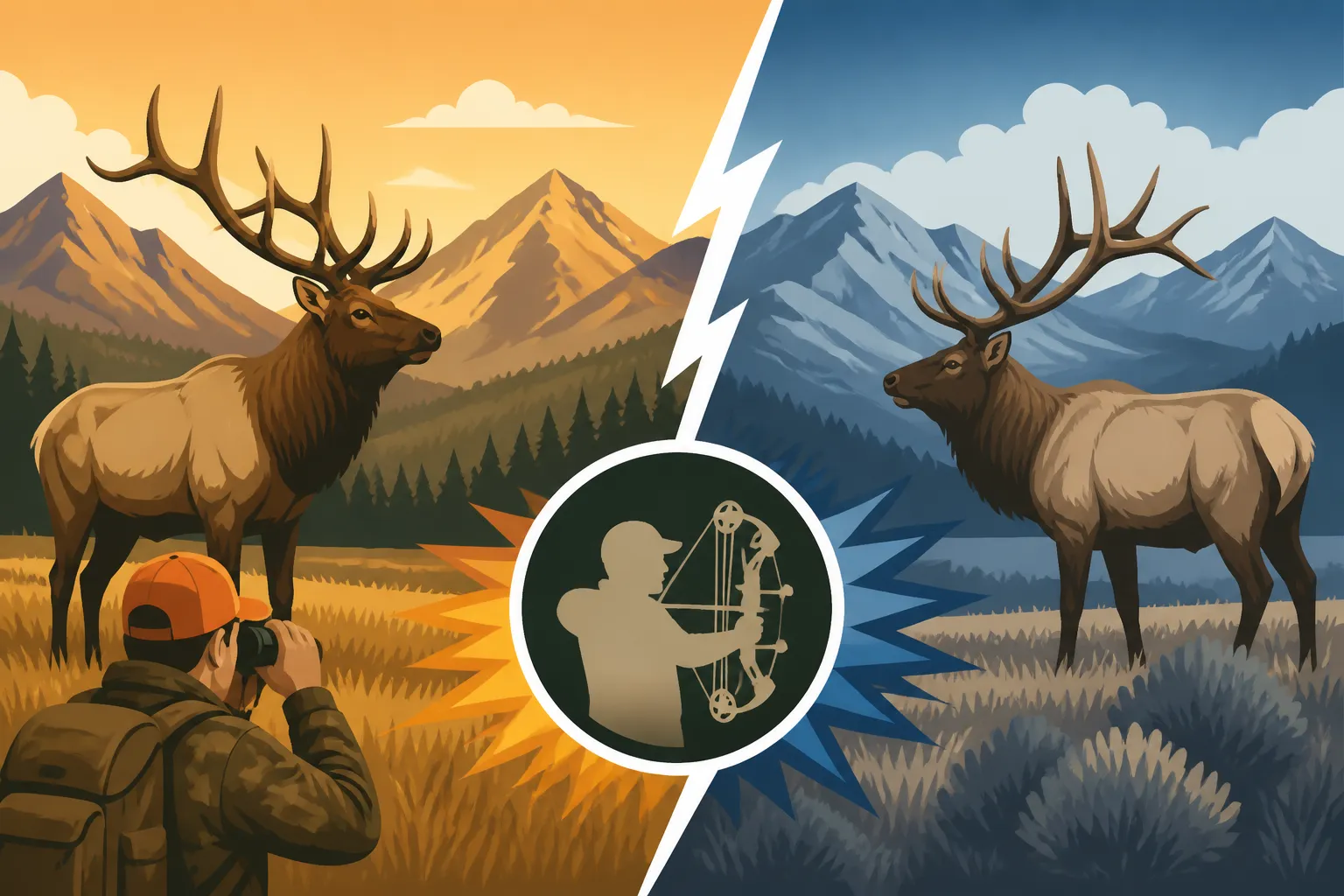
Montana Elk vs Wyoming Elk Hunting
The decision of whether to chase elk in Montana or Wyoming is one that keeps many a hunter up at night. Both states offer incredible, world-class opportunities for elk, but they come with their own distinct flavors, challenges, and bureaucratic hoops to jump through. It's not just about drawing a tag; it's about understanding the entire hunting landscape from license applications to terrain and herd dynamics. This guide is here to untangle those complexities, giving you a clear picture of what to expect from an elk hunt in the Treasure State versus the Cowboy State.
Navigating the Licensing and Draw Systems
One of the biggest hurdles for any non-resident elk hunter looking at Montana or Wyoming is deciphering the licensing process. They're both competitive, but their systems operate on fundamentally different principles, which can heavily influence your application strategy and long-term hunting goals.
Montana's Preference Point System
Montana primarily uses a preference point system for its non-resident combination licenses, specifically the Big Game Combination (elk and deer) or Elk Combination. This means that the more points you have, the higher your chances of drawing one of these coveted tags. Each point acts like a place in line; if you have more points, you get considered before those with fewer. It seems straightforward, but there are nuances.
For non-residents, the general elk tag is often tied to the combination license. There's no separate draw for a general elk tag; you're applying for the combo. You can purchase a preference point without applying for a tag, which is a common strategy for building points over time. The challenge for non-residents is the capped number of licenses available, leading to significant point creep over the years. This means the number of points required to draw a particular tag can increase each year as more people apply. It's a long game for many, requiring patience and a willingness to commit to building points for several years. You can learn more about how the system works in our guide on Montana Preference Points vs Bonus Points. Many aspiring hunters use tools like GoHunt's Insider platform to meticulously track draw odds and point trends for various units. This kind of data-driven approach is invaluable when planning several years out.
Wyoming's Weighted Point System
Wyoming operates on a weighted point system for its limited quota draw. Unlike Montana's preference points, where one point equals one "place," Wyoming's bonus points accumulate and are squared in the draw. So, if you have 5 points, your application is entered 25 times into the draw, plus your current year's application. This system is designed to give applicants with more points a significantly better chance over time, but it doesn't guarantee a tag. It's still a random draw, just with an increasing statistical advantage.
Wyoming's elk tags are divided into two main draws for non-residents: the "Regular" draw and the "Special" draw. The Special draw costs significantly more but offers better odds, as fewer people are willing or able to pay the higher price. This creates a two-tiered system where those with deeper pockets can potentially draw tags quicker. Wyoming also has both general elk tags and limited-quota tags for specific units. General tags allow you to hunt a larger, often less restrictive area, while limited-quota tags are for specific, often higher-quality units with tighter management. Understanding these distinctions is crucial, as some general units can be hunted without accruing many points, while premium limited-quota units can take decades to draw. Tools from GoHunt can be incredibly helpful for sifting through these complex draw odds and unit regulations.
Here's a quick comparison of the two states' draw systems:
| Feature | Montana (Non-Resident) | Wyoming (Non-Resident) |
|---|---|---|
| Point System | Preference Points (sequential place in line) | Weighted Bonus Points (squared entries in draw) |
| License Type | Combination (Elk & Deer) or Elk Combo required | Separate General & Limited Quota draws |
| Point Purchase | Can buy points without applying for a tag | Can buy points without applying for a tag |
| Draw Types | Primarily combo license draw | Regular Draw (lower cost) & Special Draw (higher cost, better odds) |
| Guarantees | No guarantee, but higher points improve odds | No guarantee, but higher points significantly improve statistical odds |
| Point Creep | Significant point creep, longer wait times | Point creep exists, but weighted system offers more tangible advantage for long-term point holders |
| Cost Strategy | Consistent point building over many years | Option for higher cost/better odds (Special Draw) or long-term point building for Regular |
Distinct Terrains and Habitats
Beyond the paperwork, the actual physical landscapes you'll be hunting in Montana and Wyoming offer vastly different experiences. Both states boast incredible wilderness, but their ecological makeup and topography shape how elk live and how hunters pursue them.
Montana's Diverse Ecosystems
Montana is often called Big Sky Country, and for good reason—its landscapes are incredibly varied. From the rugged peaks of the Rocky Mountain Front to the rolling timbered hills of western Montana and the vast plains of the east, elk can be found in a surprising array of habitats.
In the western mountains, you'll encounter dense conifer forests, steep drainages, and high-alpine basins. Elk often seek refuge in thick timber, making close-quarters hunting, still-hunting, and calling strategies like those discussed in Montana Elk Hunting Methods Explained particularly effective. Access to these areas can range from relatively easy via forest service roads to demanding multi-day pack-in trips into wilderness areas like the Bob Marshall. The weather can change in an instant, demanding physical preparedness and robust gear. Further east, you might find elk herds utilizing rough breaks, river bottoms, and agricultural fringes. Here, glassing vast areas and understanding how elk use transitional zones between cover and feed becomes paramount. Hunters might find themselves in deep river bottom country, glassing up into the breaks, or patiently waiting for elk to move between private agricultural fields and public timber. Our guide on Montana Public Land Hunting Strategy delves into maximizing these diverse areas.
Wyoming's Rugged Wilderness and Sagebrush Sea
Wyoming, while also mountainous, is largely defined by its dramatic, high-elevation wilderness areas and expansive sagebrush country. The Greater Yellowstone Ecosystem, encompassing areas like the Teton Wilderness and Absaroka Range, holds significant elk populations. These are often high-altitude, physically demanding hunts where glassing vast open country is the name of the game.
Wyoming's mountains often feature more open, high-alpine basins and fewer continuous miles of dense timber compared to parts of Montana. This can make for incredible glassing opportunities, where you might spot elk miles away and plan long, strategic stalks. However, the sheer scale of the landscape and the altitude can be a huge challenge. Even in general units, elk often retreat to remote, roadless areas. On the eastern side of the state, you'll find elk in rolling hills and river bottoms interspersed with the iconic sagebrush sea, often on a mix of public and private lands. These areas demand patience and keen observation, with tactics more akin to those used for How to Hunt Antelope on Montana's Plains or How to Glass Montana's Big Country. Hunters here need to be proficient with long-range optics and understand the subtle movements of elk across vast, open spaces.
Elk Populations and Hunting Success
Both Montana and Wyoming are renowned for their healthy elk populations, but the specific dynamics, management goals, and resulting success rates can differ, influencing a hunter's expectations and trophy potential.
Montana's Elk Herd Dynamics
Montana boasts one of the largest elk populations in the western United States, with numbers often fluctuating around 130,000-170,000 animals depending on the year and specific population counts. This high population, combined with accessible general tags, often leads to more opportunities for hunters, especially for non-residents willing to put in the time for preference points.
However, success rates on Montana's general elk tags can vary widely, often reflecting the effort put in and the hunting pressure. In units with more road access or closer to population centers, pressure can be substantial, making it harder to locate undisturbed elk. Hunters often report success rates for general elk tags around 10-20% for non-residents, though this can climb significantly for those who scout thoroughly, get deep into the backcountry, or utilize effective calling strategies. While Montana has trophy potential, its management aims to maintain healthy, huntable populations across a broader range of units rather than focusing exclusively on large bulls in every district. For dedicated DIY hunters, Montana offers ample public land opportunities to pursue elk, especially when considering Montana DIY Elk Hunting Guide.
Wyoming's Elk Numbers and Trophy Potential
Wyoming's elk population is also very strong, typically ranging from 100,000-120,000 animals. What often sets Wyoming apart, particularly in its limited-quota units, is the reputation for larger, older bulls and higher success rates. This is a direct result of more conservative management in these specific units, with fewer tags allocated to maintain herd quality.
Drawing a premium limited-quota tag in Wyoming can mean entering units with non-resident success rates sometimes exceeding 50% or even 70% in some highly coveted areas. These hunts are often once-in-a-lifetime opportunities, with significant trophy potential. Even in general units, Wyoming offers robust opportunities, though success rates will be lower and more in line with Montana's general tags. However, the terrain in many Wyoming general units can be more physically demanding, pushing hunters to their limits. For those aiming for a truly exceptional bull, Wyoming's limited-quota draw is often the preferred path, though it requires a serious commitment to building points, possibly through the expensive Special Draw. Researching draw odds using platforms like GoHunt helps hunters understand the real potential of different units and plan accordingly.
The Hunting Experience and Strategic Approaches
The actual experience of hunting elk in Montana versus Wyoming, even with similar goals, can feel quite different due to a mix of regulatory frameworks, cultural hunting norms, and the unique challenges each landscape presents.
Montana's DIY and Public Land Ethos
Montana is a DIY hunter's paradise, especially for those who cherish public land access. With millions of acres of national forests, BLM land, and state land, plus the extensive Block Management Program, there are endless opportunities for self-guided hunts. The Montana Block Management Areas Explained program is a truly unique asset, providing public access to private lands for hunting, which can significantly expand your hunting grounds.
Hunters in Montana often embrace a variety of tactics. Calling elk is extremely popular, especially during the rut, with techniques ranging from locating bugles to full-on cow calling and herdtalk setups. How to Call Elk in Montana is a skill many Montanans pride themselves on. Spot-and-stalk is also highly effective, particularly in more open timber or foothill country. With a general elk tag, you can pursue elk across vast general units, often needing to move through varied terrain, from dense timber to open burns and mountain parks. The experience often emphasizes grinding it out, covering miles on foot, and relying on woodsmanship and a deep understanding of elk behavior across diverse habitats.
Wyoming's Wilderness and Guided Opportunities
While DIY hunting is certainly possible and popular in Wyoming, especially in general units and more accessible public lands, the state also has a strong outfitting tradition, particularly for its vast wilderness areas and limited-quota units. Many of Wyoming's premium elk areas are within designated wilderness, which prohibits motorized access, making pack-in hunts, often with horses or mules, a common approach.
For those pursuing a coveted limited-quota tag, especially in the high country, a guided hunt can often maximize success, as outfitters have extensive knowledge of the terrain, elk patterns, and logistics of multi-day pack trips. These hunts are physically demanding, often involving significant elevation gain and miles covered daily. Glassing is a paramount skill in Wyoming's expansive landscapes; hunters spend hours behind their optics, systematically picking apart mountainsides and distant basins. The sheer scale often dictates a more deliberate, long-range scouting and stalking approach. However, for those seeking a true wilderness experience, whether guided or self-supported, Wyoming delivers some of the most remote and challenging elk hunts available in the lower 48, making our Montana Backcountry Hunting Guide equally relevant for mental preparation.
Conclusion
Choosing between Montana and Wyoming for an elk hunt isn't about one being definitively "better" than the other; it's about finding the state that aligns best with your hunting style, budget, and long-term goals. If you're a patient DIY hunter who thrives on diverse public land opportunities, enjoys calling elk, and doesn't mind a longer draw timeline for general tags, Montana might be your paradise. If you're willing to invest more financially for potentially better draw odds in premium units, or you dream of a truly rugged, high-country wilderness experience, perhaps with an outfitter, Wyoming could be calling your name.
Both states offer incredible challenges and rewards. Do your research, understand the draw odds, scout digitally with tools like GoHunt, and physically prepare for the adventure of a lifetime. Whichever you choose, the pursuit of elk in the Rockies promises an unforgettable experience.
Disclaimer
Please remember that hunting regulations, season dates, and draw systems are subject to change annually by Montana Fish, Wildlife & Parks (FWP) and Wyoming Game and Fish Department (WGFD). Always consult the most current official regulations directly from the state agencies before planning your hunt. This guide is for informational purposes only.