Montana Nonresident Combination License Guide
If you're a nonresident dreaming of a Montana hunting adventure, the sheer complexity of our licensing system can feel like trying to navigate the backcountry without a map. It’s easy to get bogged down in permits, points, and deadlines, feeling like you’re missing something crucial. This comprehensive guide is here to demystify the Montana Nonresident Combination License, breaking down everything you need to know to successfully apply, understand your privileges, and prepare for your epic hunt.
Understanding the Montana Nonresident Combination License
For many folks who don't call Montana home, the nonresident combination license is the golden ticket to experiencing our incredible big game hunting. It bundles several critical components, simplifying what would otherwise be a much more fragmented and confusing application process. Think of it as your all-access pass to a vast portion of Montana's diverse hunting opportunities.
What is a Combination License?
At its core, a Montana Nonresident Combination License isn't just one tag; it's a package deal designed specifically for out-of-state hunters. This isn't just a deer tag or an elk tag; it typically includes a general elk license, a general deer license, a conservation license, an upland game bird license, and a fishing license. It's truly a comprehensive package that covers a wide array of species and activities, making it the most popular and practical option for nonresidents.
When you compare this to trying to apply for individual licenses, the value and convenience become immediately clear. Imagine having to draw for elk, then deer, then buy separate permits for fishing and birds – it would be a logistical nightmare. The combination license streamlines this, ensuring that if you draw one, you generally get the whole shebang. This integration means you're not just hoping for an elk; you're also set to pursue deer and enjoy some fishing or bird hunting if the opportunity arises or the big game action is slow. It’s important to note that while it covers general tags, it doesn't automatically grant you access to limited-entry districts that require additional permits.
Types of Combination Licenses
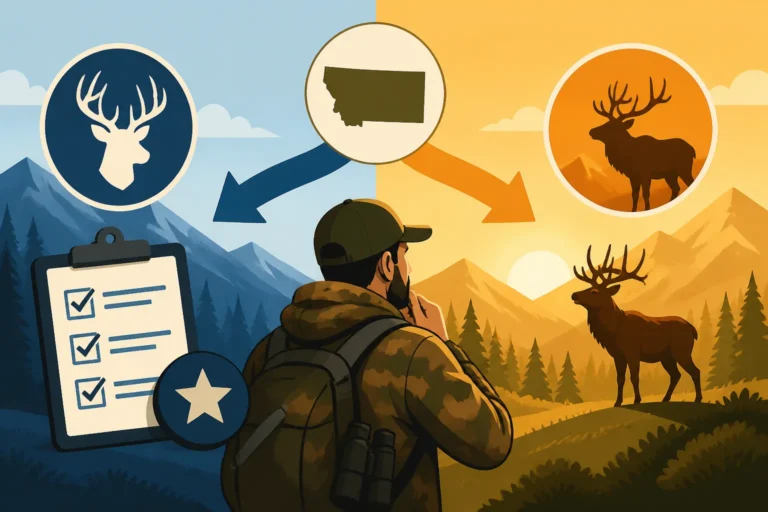
Montana offers two primary types of combination licenses for nonresidents, each catering to slightly different hunting goals. Understanding the nuances of these is crucial for selecting the right application.
First, there's the Nonresident Big Game Combination License, often simply called the "Elk Combo." This is the premier package for most nonresident hunters, as it includes a general elk license, a general deer license (either mule deer or whitetail, depending on the unit and regulations), an upland game bird license, and a fishing license. This is the one everyone talks about and the one most nonresidents apply for because it offers the highest chance of hunting the coveted Montana elk. With this license, you can pursue antlered elk in general units, and often antlerless elk in certain districts, subject to specific hunt codes and regulations. For many, this is the ultimate goal when they envision a Montana hunt: bugling bulls in the mountains.
Then, we have the Nonresident Deer Combination License, or simply the "Deer Combo." This package includes a general deer license, an upland game bird license, and a fishing license, but it does not include an elk license. While it might not be the top choice for those focused on elk, it's an excellent option for nonresidents whose primary goal is deer hunting in Montana, whether that's chasing big mule deer bucks on the plains or stalking whitetails along river bottoms. The draw odds for the Deer Combo are historically much better than for the Elk Combo, making it a more accessible entry point for some nonresident hunters. Choosing between these often comes down to your primary target species and your willingness to invest in the draw for elk.
Who Needs a Combination License?
The short answer is: virtually every nonresident hunter looking to pursue big game, upland birds, and/or fish in Montana. If you reside outside of Montana and plan to hunt deer or elk (or both), this is the license you'll be applying for. There are very few exceptions to this, making it a foundational requirement for your trip.
Age plays a role, too. Generally, anyone 12 years of age or older needs a license to hunt big game. Those under 12 cannot hunt big game in Montana. If you're planning a trip with a younger hunter, ensure they meet the age requirements and have completed a hunter education course recognized by Montana Fish, Wildlife & Parks (FWP). This certification is mandatory for anyone born after January 1, 1985, who wishes to purchase a hunting license in Montana. Even if you're over that age, if you've never held a prior hunting license, you might still need proof of hunter education. It’s always best to verify your specific situation with FWP well in advance of the application deadlines. It prevents a lot of heartache and ensures your hunting dreams don't get sidetracked by paperwork.
Navigating the Montana License Draw System
Montana’s hunting license draw system can feel like a labyrinth, especially for nonresidents. It combines elements of both preference and bonus points, which can be confusing. However, understanding how these systems work is absolutely critical to improving your chances of drawing a coveted tag. It’s not simply luck of the draw; there's a definite strategy involved.
The Preference Point System
Montana's preference point system is designed to reward loyalty and consistent application for the nonresident combination licenses. When you apply for either the Nonresident Big Game Combo or the Nonresident Deer Combo and are unsuccessful in drawing a tag, you automatically receive one preference point for that specific license type. You can also opt to purchase a preference point directly, without applying for a license, during the designated application period. This is a common strategy for hunters who aren't ready to hunt in a given year but want to start building points for future applications.
Preference points operate on a "highest points drawn first" principle, up to 75% of the available nonresident quota. This means that if you have more preference points than another applicant, you have a better chance of drawing a tag in the main draw. For instance, if you and I both apply for the Nonresident Big Game Combo, and you have 5 preference points while I have 3, you'll be considered before me for those 75% of tags. The remaining 25% of tags are drawn randomly, regardless of points, offering a sliver of hope even for first-time applicants. This system incentivizes building points over time, and many successful nonresident applicants for the elk combo tags have accumulated several points. Knowing how many points are typically needed can guide your application strategy. Tools like the GoHunt Insider platform often provide detailed draw odds and point data, which can be incredibly helpful in deciding whether to apply or just buy points.
Bonus Points for Limited Entry Permits
Separate from preference points are bonus points, which are used for a different set of licenses: the highly sought-after limited-entry permits. These include specialty tags like bull elk B licenses, antlerless deer B licenses, and all moose, bighorn sheep, and mountain goat permits. While preference points are for the general combination license, bonus points increase your odds for these specific, often unit-specific, permits.
The unique aspect of bonus points is their "squared" effect. Every time you apply for a limited-entry permit and are unsuccessful, you receive one bonus point. The beauty is that for each subsequent year you apply, your accumulated bonus points are squared for the draw. So, if you have 1 bonus point, you get 1 entry in the draw (1×1). With 2 points, you get 4 entries (2×2). With 3 points, you get 9 entries (3×3), and so on. This exponential increase significantly improves your long-term odds for these highly desired tags, rewarding persistence. It's crucial to apply for a bonus point annually for your target species, even if you don't draw the general combination license, as it’s an entirely separate draw with different deadlines. This system means that while drawing a super-coveted permit might take many years, your chances are always growing, unlike a flat preference point system.
Application Timelines and Deadlines
Missing a deadline in Montana's draw system is one of the most frustrating mistakes a nonresident can make, potentially sidelining your hunting plans for an entire year. The application period for nonresident combination licenses and preference points typically opens in January, but the hard deadlines are what truly matter.
For nonresident preference points and combination licenses (Elk Combo and Deer Combo), the deadline is usually April 1st each year. This is the date by which your application must be submitted online, and your payment method must be valid. This deadline is for the main draw that determines whether you get your general big game or deer combo license. Many hunters often aim to apply a week or two beforehand to avoid any last-minute technical glitches or payment issues. For those applying for bonus points for limited-entry permits (like moose, sheep, goat, or specific elk/deer B licenses), the deadline is typically March 15th. You can actually apply for bonus points before you even know if you've drawn your main combo license. It's a two-tiered system, and keeping these distinct deadlines straight is vital. Failing to apply by the specified date means you'll miss out on building points or participating in the current year's draw, and you'll have to wait until the next cycle. Always check the official Montana FWP website for the exact dates each year, as they can sometimes shift slightly. Careful planning can save you a world of disappointment.
Cost and Fees Associated with Nonresident Combo Licenses
The financial commitment for a nonresident to hunt in Montana is substantial, and it’s important to budget accordingly. It’s not just the sticker price of the combination license itself; there are several mandatory and optional fees that add up. Being fully aware of these costs upfront will help you plan your hunt without any unwelcome surprises.
Breakdown of Combination License Costs
The primary cost for a nonresident looking to hunt big game in Montana is the combination license itself. As of recent years, the Nonresident Big Game Combination License (Elk Combo) typically costs over $1,000, often closer to $1,200-$1,300 for the full package, which includes your general elk, general deer, upland bird, and fishing licenses, plus the mandatory Conservation License and AIS Prevention Pass. This figure can fluctuate slightly year to year, so always check the current FWP fee schedule. For a nonresident, this is the most significant single expense in the application process.
The Nonresident Deer Combination License (Deer Combo) is a more economical option, usually costing a few hundred dollars less than the Elk Combo, as it excludes the elk tag. While cheaper, it still represents a notable investment. Beyond the combo license itself, you'll also pay for preference points if you choose to acquire them without applying for a license, or if you apply and are unsuccessful. A nonresident preference point typically costs around $100 per point. So, if you're building points for multiple years, that's an additional annual expense to factor in. These costs don't even include travel, gear, or potential outfitter fees, so it's critical to have a realistic budget in mind before you even submit your application. It’s a significant investment, but for many, the experience of Montana Elk Hunting Methods Explained or Montana Mule Deer Hunting Guide is truly priceless.
Other Mandatory Fees
Beyond the combination license, there are several other fees that nonresidents will almost certainly encounter. These aren't optional if you plan to hunt certain species or with specific gear.
First, the Conservation License and the AIS Prevention Pass are mandatory for anyone purchasing a hunting or fishing license in Montana, regardless of residency. These fees are usually integrated into the combination license price but are distinct components. The Conservation License supports FWP's efforts in conservation and public access, while the AIS (Aquatic Invasive Species) Pass funds programs to prevent the spread of invasive species in Montana's waters, which is vital for preserving our pristine rivers and lakes. If you plan to hunt with a bow, you'll also need to purchase a separate Bow and Arrow License (often called an archery stamp), which is an additional fee. This is not included in the combination license package. Similarly, if you plan to hunt upland game birds in addition to what's included in the combo, or if you apply for the Deer Combo and want to pursue birds, you'll need the appropriate stamp. For species like black bear, mountain lion, or turkey, which are not part of the combination license, you'll need to apply for and purchase separate licenses or permits, each with their own application fees and tag costs. These add up, so careful planning for all desired species is essential to avoid unexpected expenses once you're on the ground.
Understanding Refund Policies
Navigating the financial investment of a Montana hunting license also means understanding the refund policies, which can sometimes be a source of confusion and frustration for nonresidents. While Montana FWP aims to be fair, there are clear rules about when and how refunds are issued.
Generally, if you apply for a combination license and are unsuccessful in the draw, the license fee portion of your application is automatically refunded, minus any application fees and the cost of the preference point you may have elected to purchase. So, if you paid $1200 for an Elk Combo application and didn't draw, you'd get most of that back, but the ~$100 preference point fee would be retained as you successfully acquired a point. This is a common point of confusion, as some applicants expect a full refund, not realizing the preference point fee is non-refundable. For those who do draw a tag, refunds are far less common. They are generally only issued under specific, limited circumstances, such as military personnel being called to active duty and transferred out of state, or in cases of severe medical emergencies that prevent the hunter from participating. Simply changing your mind or having travel plans fall through after successfully drawing a tag is typically not grounds for a refund. It's always best to review the current FWP refund policies thoroughly before applying, as they can occasionally be updated. This financial commitment underscores the importance of being fully committed to your hunt before entering the draw.
Strategies for Drawing a Montana Combination License
Drawing a nonresident combination license in Montana, especially the highly coveted Elk Combo, can be a competitive endeavor. It requires more than just filling out a form; it demands a thoughtful strategy, particularly regarding point building and unit selection. Without a solid approach, you might find yourself waiting many years to hunt.
Building Preference Points Strategically
Building preference points is the cornerstone of a successful nonresident draw strategy for Montana's combination licenses. While it might feel like a long game, it's often the most reliable path to drawing a general elk or deer tag. The preference point system effectively prioritizes those who have consistently applied and accrued points.
For many nonresidents, the strategy is to start building preference points as early as possible, even if they don't plan to hunt for several years. By purchasing a preference point each year, you're investing in future success. Let's say you plan to hunt in five years; by that time, you could have five preference points, significantly increasing your odds compared to someone with zero. The challenge, of course, is "point creep," where the number of points required to draw a license slowly increases over time as more and more people build points. What might have been a 3-point draw five years ago could now be a 5-point draw. This makes using current data, often found on platforms like GoHunt, invaluable for gauging what range of points you'll likely need. For first-time applicants, it's often a smart move to apply for the combination license and purchase the preference point, effectively signaling your intent to hunt that year and start building your point bank if you're unsuccessful. Consistency is key here; missing a year means falling behind. For more details on the system, check out our guide on How Montana Preference Points Work.
Applying for Specific Hunt Districts
Once you've secured your combination license, your general elk and deer tags are valid in most "general" hunting districts across the state. However, Montana also has numerous "limited-entry" units that require an additional, separate permit draw, for which you use bonus points. Choosing whether to hunt a general unit or apply for a limited-entry permit, and which specific districts to target, is a critical strategic decision.
For many nonresidents, especially those on their first few Montana hunts, focusing on well-vetted general units is often the best strategy. These units offer fantastic hunting opportunities without the added layer of complexity and lower draw odds of a limited-entry permit. However, if you're after a truly unique experience or a specific trophy, applying for a limited-entry permit might be your goal. This is where researching draw odds for specific districts becomes vital. The Montana FWP publishes draw odds, and third-party resources like GoHunt aggregate this data, making it easier to analyze your chances. You'll need to decide whether to go for a high-demand, low-odds district with potential for a trophy animal, or a higher-odds district where success is more likely but perhaps for a less sought-after animal. You also need to consider backup districts. If your primary limited-entry choice doesn't pan out, do you have a second or third choice that aligns with your goals? The regulations for each district, including weapon restrictions and season dates, must be meticulously reviewed. This detailed approach is what separates a hopeful application from a truly strategic one. For deep dives into specific areas, our Best Districts for Elk Hunting in Montana and Montana Hunting Districts Explained resources can be a great starting point.
Group Applications and Their Implications
Hunting with friends or family is a cherished tradition, and Montana's draw system does allow for group applications for combination licenses. However, understanding how these applications are processed is crucial, as it can significantly impact your draw odds.
When applying as a group for a nonresident combination license, the FWP system averages the preference points of all applicants in the group. For example, if one person has 5 preference points and another has 1 point, their average is 3 points. This average is then used for the draw. While this can be beneficial if you have a lower-point individual applying with higher-point individuals, it can also pull down the overall group's chances if someone with zero or very few points is included with high-point applicants. The group is only as strong as its average. This differs from some other states where the lowest point holder determines the group's point total. For limited-entry permits that use bonus points, group applications typically consider the lowest bonus point total in the group. This means if you have 10 bonus points and your buddy has 2, your group essentially has 2 bonus points in the draw, effectively negating the benefit of your higher points. This is a critical distinction that can make or break a group's chances for those highly coveted, once-in-a-lifetime tags. Therefore, when considering a group application, especially for limited-entry permits, have an honest conversation with your hunting partners about their point totals and whether a group application truly serves everyone's best interests for the species you’re targeting.
What Your Combination License Allows You to Hunt
Securing a Montana Nonresident Combination License is a huge step, but understanding exactly what privileges it grants you is paramount. It’s not just a blank check to hunt anything that moves. Each component of the license has specific regulations, species, and boundaries that you need to respect.
Elk Hunting Privileges
The crown jewel of the Nonresident Big Game Combination License is, for many, the general elk license. This license allows you to hunt elk in any "general" hunting district throughout Montana during the specified season dates. The regulations typically differentiate between antlered (bull) elk and antlerless (cow) elk. In most general units, you're authorized to harvest an antlered bull elk. However, many districts also have specific periods or areas where you can harvest an antlerless elk, usually denoted by particular hunt codes or specific dates within the general season.
It’s crucial to delve into the Montana FWP regulations booklet and understand the specific hunt codes for the district you plan to hunt. A general elk tag might be valid in HD 300 for an antlered bull, but for an antlerless elk in that same district, you might need a special 300-00 permit, or it might only be legal during a "shoulder season." These specific rules are designed to manage local elk populations effectively. For example, some districts in western Montana might have over-the-counter antlerless opportunities, while others, particularly in central or eastern Montana, might be strictly limited or not available at all. Always double-check the current year's regulations for antler restrictions (e.g., "brow-tined bull" requirements) and specific season dates, as these can change annually. Knowing these details is key to a successful and legal hunt. If you're looking for strategies, consider our deep dive on Montana Rifle Elk Hunting Guide or Montana Archery Elk Hunting Guide.
Deer Hunting Privileges
Alongside the elk tag, the combination license also grants you a general deer license, providing opportunities for both mule deer and whitetail deer across the state. This often allows for a fantastic multi-species hunt. Similar to elk, the regulations for deer can vary significantly by hunting district and often differentiate between antlered bucks and antlerless deer.
The general deer tag typically allows you to harvest an antlered buck (mule deer or whitetail) in most general hunting districts. However, some districts may have specific antler point restrictions, while others might offer additional antlerless deer opportunities through a separate permit draw (Deer B license) or during specific seasons. It's particularly important to pay attention to species-specific regulations. For instance, in some parts of western Montana, whitetail deer are abundant and offer great hunting, while mule deer might be scarcer. Conversely, the eastern plains are renowned for their mule deer. Furthermore, some regions might have restrictions on hunting mule deer on private land with a general tag, requiring a "Deer B" license or landowner permission. Always verify the specific regulations for the hunting district you intend to pursue deer in, paying close attention to weapon type, season dates, and any antler restrictions. For more on this, our Montana Mule Deer Hunting Guide and Montana Whitetail Deer Hunting Guide offer valuable insights.
Other Species Included (or Not)
While the combination license is extensive, it's vital to understand its boundaries. The package includes an upland game bird license and a fishing license, which are fantastic bonuses. This means you can pursue species like pheasants, grouse, and partridge, and fish Montana's world-class rivers and lakes, within the general season dates and regulations.
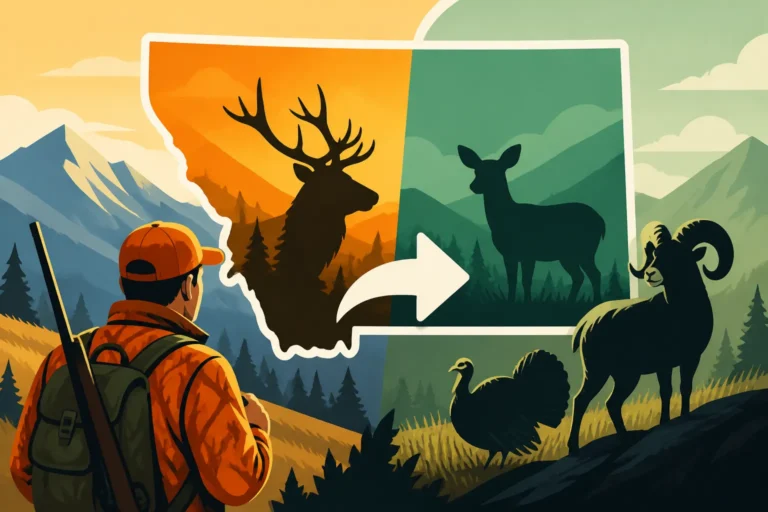
However, many popular big game species are not included and require separate applications, draws, and fees. This list typically includes:
- Black Bear: Requires a separate license, often with spring and fall seasons.
- Mountain Lion: Requires a separate license and often specific quota management.
- Moose, Bighorn Sheep, Mountain Goat: These are highly sought-after, limited-entry species that require success in separate, highly competitive bonus point draws.
- Turkey: Requires a separate license, typically for spring or fall seasons.
- Wolf: Requires a separate license.
So, while your combination license covers a lot of ground, don't assume you're covered for every species. Always consult the Montana FWP regulations for specific species you intend to hunt, and plan your applications and budget accordingly. A common misconception is that the "Big Game Combo" covers all big game, but that's simply not the case for these specialty species.
Preparing for Your Montana Combination License Hunt
Drawing a Montana Nonresident Combination License is an exciting milestone, but it's just the beginning. The real work starts with thorough preparation. Montana hunting, especially for elk and mule deer in the backcountry, demands significant planning, from understanding complex regulations to getting yourself physically and mentally ready.
Interpreting Regulations and Hunt Codes
Montana's hunting regulations booklet, often affectionately (or sometimes exasperatedly) referred to as "the regs," is your bible. It's thick, detailed, and absolutely essential for understanding your hunting privileges and responsibilities. Each hunting district (HD) has specific hunt codes that define what species can be hunted, with what weapon, during which dates, and with what tag type (e.g., general elk, cow elk B permit, antlered mule deer).
The challenge for many nonresidents is the sheer volume of information and the nuance in these codes. What's legal in HD 300 might be illegal in HD 310, even if they're adjacent. You need to pay close attention to the small print: brow-tined bull requirements, antlerless limitations, either-sex periods, and weapon restrictions (archery-only, rifle, muzzleloader). Don't rely on word-of-mouth or last year's regulations; always consult the most current booklet published by Montana FWP. Beyond the physical booklet, online resources and mapping applications like OnX Hunt are incredibly valuable. They integrate boundary lines, public land ownership, and often highlight hunt codes, making it easier to visualize where and when you can hunt. Spend significant time studying these resources for your chosen hunting district well before your trip to avoid any costly misunderstandings in the field. Our guide on Montana Hunt Codes Explained can help clarify this further.
E-Scouting and Pre-Season Planning
E-scouting has revolutionized how hunters prepare for out-of-state hunts, and it's an indispensable tool for maximizing your success in Montana. This involves extensively researching your chosen hunting district from afar, long before you ever set foot on the ground.
Start by identifying public land access. Montana boasts vast tracts of public land, including National Forests, BLM land, and state trust lands. However, not all public land is easily accessible, and some can be "landlocked" by private property. Mapping software (such as OnX Hunt, BaseMap, or the GoHunt Explorer) allows you to overlay public/private land boundaries, identify roads, trails, and potential access points. Look for areas with a good mix of feed, water, and cover, which are essential for elk and deer. Pay attention to north-facing slopes for thermal cover, south-facing slopes for early season feeding, and dark timber for bedding. Utilize topographical maps to identify potential glassing knobs, escape routes, and migration corridors. Beyond identifying good habitat, consider pressure: where are other hunters likely to be? Can you find roadless areas or spots that require a longer hike to escape the crowds? This is also the time to plan your logistical framework: potential towns for lodging or supplies, nearest meat processors, and general travel routes. By the time you arrive, your e-scouting should have narrowed down your target areas to a handful of high-probability spots, saving you precious days of on-the-ground scouting. For more detailed e-scouting tips, check out How to E-Scout Montana Hunting Units.
Physical and Mental Preparation
Montana hunting, particularly in the mountainous regions, is not for the faint of heart. It demands a significant level of physical and mental fortitude. Many nonresident hunters underestimate the terrain, elevation, and sheer amount of ground you'll need to cover, especially if you're pursuing elk.
Physically, you should be in the best shape of your life. This isn't just about being able to walk; it's about being able to climb steep hills with a heavy pack, descend safely, and then potentially pack out hundreds of pounds of meat over rugged terrain, sometimes miles from the trailhead. Incorporate activities like hiking with a weighted pack, stair climbing, and strength training into your routine months before your hunt. Cardiovascular endurance is critical at higher elevations. Mentally, be prepared for challenges. Weather in Montana can be notoriously unpredictable, swinging from warm and sunny to snowstorms in a single day. You might go days without seeing a single animal, face frustrating public land pressure, or experience gear failures. Resilience, patience, and a positive attitude are as important as your physical conditioning. Understand that setbacks are part of the game, and adaptability is a hunter's best friend. Being truly ready for the demands of the Montana backcountry means addressing both your body and your mind. Our guide on How to Physically Prepare for a Montana Elk Hunt offers excellent advice.
Common Misconceptions and FAQs
The nonresident combination license and Montana’s draw system are often shrouded in myths and misunderstandings. Clearing up these common misconceptions can save hunters a lot of frustration and help them set realistic expectations for their hunt. It's easy to get caught up in online chatter or anecdotal stories that don't always align with the official regulations and draw mechanics.
"I'll definitely draw with X points."
This is perhaps the most common and potentially misleading assumption among nonresident applicants: that a certain number of preference points guarantees a combination license. While having more preference points significantly increases your odds, there is absolutely no guarantee of drawing. This applies to both the general combination licenses and the limited-entry permits that use bonus points.
The draw for the nonresident combination licenses allocates 75% of the tags based on preference points (highest points drawn first), but the remaining 25% are allocated in a purely random draw, regardless of points. This means someone with zero points could theoretically draw a tag, while someone with several points might miss out on that 25% random allocation. Furthermore, "point creep" means that the number of points required to draw a tag can increase year over year as more hunters apply and build points. What was a successful draw with 4 points last year might require 5 points this year. The demand, combined with the number of applicants, continually shifts the goalposts. Always view your points as increasing your probability, not guaranteeing certainty. It's essential to check the latest draw odds and acknowledge that even with a strong point total, there's always an element of chance.
"A combo license is all I need."
Another prevalent misconception is that once you secure your Nonresident Combination License, you're all set for any type of big game hunting in Montana. While the combination license is indeed comprehensive, it does not cover every species or every hunting scenario.
As discussed earlier, the combination license primarily includes a general elk tag, a general deer tag, an upland bird license, and a fishing license. It explicitly does not include tags for highly sought-after species like moose, bighorn sheep, mountain goat, or bison, all of which require separate, highly competitive limited-entry draws based on bonus points. Similarly, it doesn't cover black bear, mountain lion, or turkey, which also require separate licenses and often their own draw processes or over-the-counter purchases. Even within deer and elk, if you're targeting specific antlerless opportunities or hunting in certain limited-entry districts, you might need additional "B" licenses or specific permits that are separate from your main combo tag. For example, some units might require an "Elk B" license for antlerless elk, which you'd have to apply for in a bonus point draw. Always carefully review the species and specific privileges outlined in the current year's FWP regulations to avoid missing out on desired opportunities or inadvertently hunting without the proper authorization.
The Difference Between Preference and Bonus Points in Practice
The distinction between preference points and bonus points is a persistent source of confusion, especially for nonresidents accustomed to simpler draw systems in other states. While both are designed to reward consistent applicants, they serve entirely different purposes in Montana.
Preference points are specifically tied to the nonresident combination licenses (Elk Combo and Deer Combo). They work on a linear system where the applicant with the most points generally gets first dibs on the majority of tags. When you apply for a combination license and are unsuccessful, you receive a preference point (or you can purchase one directly). These points help you draw the general elk or deer tag that comes with the combo. Think of them as a fast-pass lane for the main combination license.
Bonus points, on the other hand, are for the highly selective, limited-entry permits. These are for specific units or species like moose, sheep, goat, or specific elk B and deer B licenses. Their unique feature is the "squared" effect: each year you apply unsuccessfully (or purchase a bonus point), your accumulated points are squared, meaning you get exponentially more entries in the draw. This system is designed for tags that are incredibly difficult to draw and often take many, many years to accumulate enough entries. For instance, you could draw your Nonresident Elk Combination License using preference points and then apply for a limited-entry bull elk permit using your separate bank of bonus points. They are distinct tools for distinct types of tags, and understanding this separation is vital for a comprehensive Montana hunting strategy. To dive deeper, look into Montana Preference Points vs Bonus Points.
Summary of Nonresident Combination Licenses
To help clarify the core differences and applications for nonresident combination licenses, here's a quick overview of the main types and their key characteristics:
| License Type | Primary Game Included | Typical Cost (Approx.) | Point System Used | Draw Odds (Relative) | Key Benefit |
|---|---|---|---|---|---|
| Nonresident Big Game Combo | General Elk, General Deer, Upland Birds, Fishing | $1,200 – $1,300 | Preference Points | Moderate to Low | Best chance for a general elk tag |
| Nonresident Deer Combo | General Deer, Upland Birds, Fishing | $600 – $700 | Preference Points | Moderate to High | More accessible for deer-focused hunts |
| Limited Entry Permits (e.g., Elk B, Moose, Sheep, Goat) | Specific to permit | Varies by species, plus application fee | Bonus Points | Very Low | Opportunity for highly specific or trophy animals |
Note: Costs are approximate and subject to annual changes by Montana FWP. Always consult the current year's regulations for exact figures and draw odds.
Disclaimer
The information provided in this guide is intended for general informational purposes only and is subject to change. Montana Fish, Wildlife & Parks (FWP) regulations can be complex and are updated annually. Hunters are solely responsible for understanding and complying with all current state laws, regulations, and permit requirements before participating in any hunting activities. Always refer to the official Montana FWP website and the latest hunting regulations booklet for the most accurate and up-to-date information.