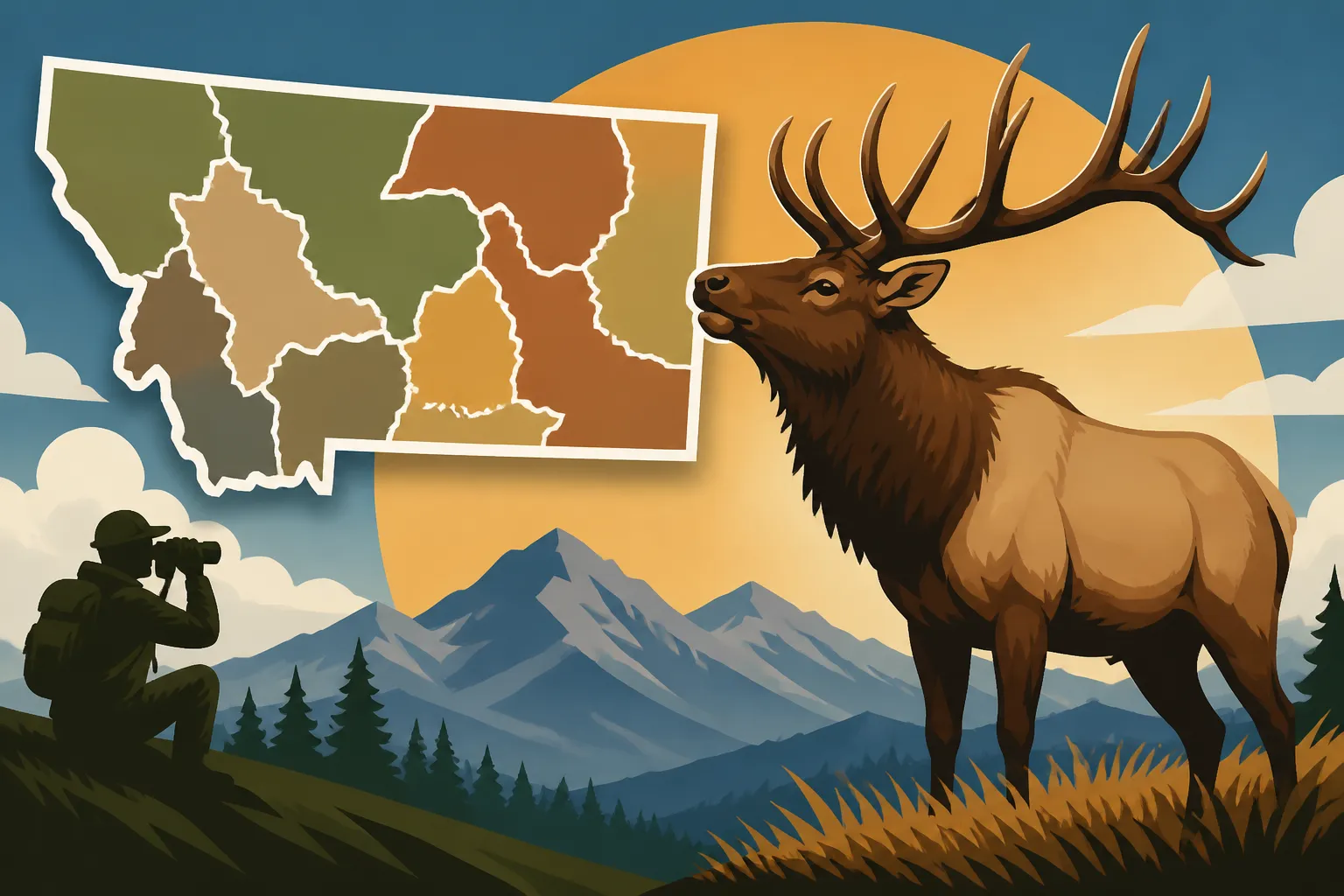
Montana Trophy Elk Districts
The pursuit of a trophy elk in Montana isn't just a hunt; it's often a multi-year obsession, filled with dreaming, planning, and more than a little frustration when those draw results come in. Many of us arrive in Big Sky Country with visions of massive antlers, only to realize that finding truly big bulls requires understanding specific districts, mastering unique strategies, and embracing a level of dedication that goes far beyond a casual outing. This comprehensive guide is here to demystify the search for Montana's trophy elk districts, helping you understand where these magnificent animals reside, what makes these areas special, and the intricate dance of planning required to pursue them.
Defining a Montana Trophy Elk and What It Takes
Before we dive into specific districts, let's be realistic about what a "trophy" elk truly means in Montana. It's not always about breaking Boone & Crockett records, especially for the average hunter. The term often encompasses a bull that represents exceptional age, challenging hunting, or simply a magnificent animal that fulfills a personal dream.
What Qualifies as a "Trophy" Bull in Montana
For many, a "trophy" bull immediately conjures images of a 350-inch or larger typical or non-typical scoring bull. These are indeed impressive animals, typically mature, older bulls that have survived multiple hunting seasons and thrived on excellent forage. Achieving such a score usually means a bull that's 6.5 years or older, with a robust frame, long tines, and good mass. These are the bulls that make the record books and turn heads.
However, for a significant number of hunters, a trophy might simply be their biggest bull yet – perhaps a solid 6×6, a mature 5×5, or even a unique non-typical with character. The true definition often lies in the challenge overcome, the beauty of the animal, and the memories forged in the mountains. A 300-inch bull in a tough, public land, DIY archery hunt can feel every bit as much a trophy as a larger bull from an easier private land setting. It's crucial to set your personal definition, as it will heavily influence your district choice and hunting strategy.
The Mindset of a Trophy Hunter
Hunting trophy elk in Montana demands a particular mindset. It's a game of patience, resilience, and often, humility. You're not just going out to fill a tag; you're seeking a specific, mature animal that has proven its ability to evade hunters for years. This often means passing on smaller bulls, enduring long periods of no activity, and pushing your physical and mental limits in challenging terrain and weather conditions.
Successful trophy hunters are meticulous planners. They spend countless hours E-Scouting Montana Hunting Units, pouring over maps, understanding elk behavior, and dissecting weather patterns. They are often willing to forgo a high-success general season hunt for a lower-odds, high-reward limited-entry permit hunt. This isn't a passive pursuit; it's an active, calculated effort that rewards preparation and persistence far more than luck.
Realistic Expectations for Montana Trophy Elk
It's vital to temper aspirations with realism. Montana is a vast state with incredible elk populations, but it’s not a guaranteed "trophy factory" like some other western states with very specific, highly restrictive trophy management programs. The state manages for opportunity for both resident and nonresident hunters, leading to a healthy harvest of all age classes of bulls across much of the state.
While Montana produces impressive bulls every year, consistently harvesting true Boone & Crockett animals is incredibly challenging and often requires drawing a highly coveted, limited-entry permit, extensive scouting, and exceptional hunting skills. Many excellent general units offer solid opportunities for respectable bulls (280-320 inches), and these are often where the most satisfying and attainable hunts take place for most hunters. Don't let the quest for a mythical giant overshadow the incredible experience of pursuing any bull elk in the wild landscapes of Montana.
Key Characteristics of Trophy Elk Districts
So, what makes a hunting district more likely to hold trophy-caliber elk? It's a combination of factors that protect bulls, provide abundant resources, and regulate hunting pressure effectively. Understanding these elements is crucial for selecting your next hunting area.
Limited Access and Rugged Terrain
One of the most significant factors contributing to older, larger bulls is difficult access and rugged terrain. Areas that are hard to reach simply reduce the number of hunters who are willing or able to venture deep into them. This means less human pressure on the elk herds, allowing more bulls to mature and grow larger antlers. Think of vast wilderness areas like the Bob Marshall Wilderness Complex or the Absaroka-Beartooth, where the only way in is often on foot or horseback, miles from the nearest road.
These physically demanding landscapes also provide elk with secure sanctuaries. Steep canyons, dense timber, and high-alpine basins offer thermal cover, escape routes, and hiding spots that are difficult for hunters to penetrate. Bulls learn to use this terrain to their advantage, becoming incredibly adept at vanishing when pressure arrives. Districts with significant roadless areas, large tracts of public land far from vehicle access, or designated wilderness often hold the highest potential for trophy animals simply because fewer hunters reach them consistently. This often means considering a Montana Backcountry Hunting Guide to really understand the logistics.
Quality Habitat and Nutritional Resources
Big antlers require excellent nutrition. Trophy elk districts typically boast high-quality forage throughout the year, providing the protein and minerals necessary for maximum antler growth. This usually means a diverse ecosystem with ample spring and summer feed on lush mountain slopes, followed by good mast crops or shrub browse for fall and winter. Areas with a mix of timber, open parks, riparian zones, and south-facing slopes are often ideal.
Furthermore, these areas usually have reliable water sources and mineral licks. A consistently healthy elk population, with access to diverse and nutrient-rich food sources, is a prerequisite for growing large-antlered bulls. Without this foundation, even low hunting pressure won't produce record-book animals. Districts with strong management practices that ensure habitat health contribute significantly to trophy potential.
Herd Management and Regulated Hunting Pressure
Montana Fish, Wildlife & Parks (FWP) plays a critical role in managing elk herds for sustainable populations, which sometimes includes managing for quality in certain areas. This is often achieved through limited-entry permit systems, where only a small number of tags are issued for specific hunting districts (HDs). By restricting hunter numbers, FWP allows more bulls to survive to older age classes, increasing the likelihood of trophy-sized antlers. These districts are typically those with the lowest Montana Elk Draw Odds by District.
Contrast this with general units, where thousands of hunters might be pursuing elk, leading to a higher harvest of younger bulls. While general units offer incredible opportunities and can produce fantastic bulls, the consistent production of true trophy animals often comes from districts with more tightly controlled hunting pressure. Understanding the specific regulations for each HD – whether it's a general tag or a permit-only unit – is paramount in your research for trophy potential.
Top Contenders: Montana's Renowned Trophy Elk Districts
Montana is huge, and pinning down "trophy districts" can feel like finding a needle in a haystack. However, over the years, certain regions and specific hunting districts have developed a reputation for consistently producing older age-class bulls, sometimes even breaking into the record books. It’s important to remember that these are often limited-entry units or require significant effort.
Southwestern Montana's Powerhouses
When people talk about trophy elk in Montana, southwestern Montana frequently comes up. This region, encompassing areas around Bozeman, Dillon, and Ennis, is characterized by rugged mountain ranges like the Gravelly, Madison, and Tobacco Root Mountains. Districts here, particularly in the 300 series (like HD 380, 390, and portions of 330), are often sought after for their potential to yield large bulls. These are typically limited-entry units, meaning drawing a tag can be exceptionally difficult, often requiring many years of building Montana Preference Points vs Bonus Points.
For instance, HD 380 (part of the Gravelly-Snowcrest range) is a prime example. It's a permit-only unit with extremely tough draw odds but has a history of producing exceptional bulls. The terrain is demanding, with vast roadless areas, high-elevation basins, and deep timber. Success often comes from rigorous e-scouting using tools like GoHunt, followed by physically demanding hunts that involve packing in deep. Hunters here are typically dedicated and experienced, often employing Montana Backcountry Hunting Gear List strategies. The rewards, however, can be truly spectacular, with bulls well over the 350-inch mark taken periodically.
Central Montana's Hidden Gems
Moving eastward into Central Montana, you'll find different but equally challenging landscapes that can produce trophy elk. Areas like the Missouri Breaks (parts of the 400 and 600 series HDs) and the vast national forests like the Helena-Lewis and Clark often fly under the radar for trophy potential compared to the more famous southwestern units, but they absolutely hold mature bulls. These areas can be less mountainous than the southwest but offer vast, broken country, river bottoms, and dense pockets of timber that hide mature animals.
Hunting districts like 410, 417, 441, 510, and 590 are periodically mentioned for their potential. While some of these might be general units, or have more accessible terrain in certain spots, the mature bulls often retreat into the most remote or difficult-to-access portions. The Breaks, for example, is famous for its rough, eroded badlands and deep coulees, providing incredible cover. Success here often hinges on extensive glassing, understanding elk movement between feed and cover, and being prepared for extreme weather. These areas might not have the same consistently high draw difficulty as the extreme trophy units in the southwest, but they demand a different kind of toughness and strategy.
Northwestern Montana's Wilderness Havens
Northwestern Montana, with its dense timber, rugged wilderness, and proximity to Glacier National Park, offers another distinct flavor of trophy elk hunting. This region is home to massive wilderness complexes such as the Bob Marshall Wilderness and the Great Bear Wilderness (found in parts of Regions 1 and 2, including districts like 120, 130, and 200). While elk density might not be as high as in some other regions, these vast, untouched landscapes are ideal for older bulls to escape pressure and grow to impressive sizes.
Hunting in these wilderness areas is a commitment. It often involves pack-in trips with horses or llamas, spending weeks away from civilization, and relying entirely on your skills and gear. The timber is often thick, making spotting and stalking incredibly challenging. However, the reward of harvesting a mature bull deep in the wilderness is unparalleled. These hunts truly embody the spirit of a Montana DIY Elk Hunting Guide, pushing hunters to their limits and offering an experience far beyond just the size of the antlers. Trophy bulls in these regions are often ghost-like, requiring patience, exceptional woodsmanship, and a deep understanding of how to hunt elk in Montana's Wilderness.
Strategies for Hunting Trophy Elk in These Districts
Hunting trophy elk isn't just about showing up; it's about meticulously planning, preparing, and executing a strategy tailored to these elusive animals and their challenging habitats.
E-Scouting and Research with Tools like GoHunt
The age of just "showing up" and expecting to find a trophy bull is long past, especially in Montana. Modern trophy hunting begins long before you set foot in the field, with extensive e-scouting and research. Platforms like GoHunt are invaluable for this. They allow you to dive deep into specific hunting districts, analyze draw odds (crucial for limited-entry units), identify public vs. private land boundaries, pinpoint potential bedding areas, feeding grounds, and water sources.
When you're looking for trophy elk, you're not just looking for "elk sign." You're identifying areas that offer maximum security and optimal habitat for mature bulls. This means studying topo maps for steep, north-facing slopes with dark timber, identifying remote basins, and looking for areas with limited road access. GoHunt's mapping features and data insights can help you predict elk movement patterns based on elevation, aspect, and proximity to cover, helping you refine your Montana Public Land Hunting Strategy to avoid crowds and target prime bull habitat. This level of preparation allows you to hit the ground running, rather than spending precious hunting days blindly searching.
Physical and Mental Preparation
Let's be blunt: trophy elk hunting in Montana is physically and mentally grueling. The districts that hold the biggest bulls are often the most demanding. You'll be traversing steep, uneven terrain, covering many miles each day, often at high altitudes. A deep dive into How to Physically Prepare for a Montana Elk Hunt is not optional; it's mandatory. This isn't just about being able to walk; it's about being able to pack a heavy pack, endure adverse weather, and maintain focus when exhausted.
Beyond the physical, the mental game is equally important. Trophy hunting often involves long periods of no sightings, repeated failures, and the temptation to give up. You need resilience, patience, and unwavering determination. The ability to stay positive, make smart decisions under pressure, and remain disciplined in your strategy—even when tired or discouraged—is often the difference between success and failure. Mentally preparing for the grind will pay dividends when you're deep in a remote basin, miles from camp, and a mature bull finally presents an opportunity.
Patience and Persistence
Trophy bulls don't come easy. They are the survivors, the ones who have evaded hunters for years, learning every trick in the book. This means your hunts will likely involve more patience and persistence than a general elk hunt. You might spend days glassing a single basin, waiting for the right conditions or for a bull to make a mistake. You might pass on multiple smaller bulls, holding out for the one you came for.
Persistence manifests in many ways: continuing to hunt hard despite bad weather, pushing into another drainage when you're exhausted, or returning to a promising area day after day. It might mean extending your hunt by an extra few days, or even planning multiple trips to the same area over several seasons. The biggest bulls often reveal themselves when pressure is low, during harsh weather, or in the most unexpected places. Those who stick with it, hour after hour, day after day, are often the ones rewarded with a chance at a truly exceptional animal. This steadfastness is a hallmark of those who successfully embark on a Montana DIY Elk Hunting Guide adventure.
Understanding Elk Behavior in Trophy Areas
Mature bulls in trophy areas behave differently than younger, less experienced animals. They are typically much warier, more reclusive, and quick to retreat to dense cover at the first sign of pressure. They often move primarily at night or during the low light hours of dawn and dusk, seeking the security of dark timber or remote benches during the day.
Your strategy must adapt to this behavior. This might mean focusing on still-hunting through thick timber, paying meticulous attention to wind and thermals, or setting up for long-range glassing sessions from strategic vantage points overlooking vast drainages. Calling tactics, such as those covered in How to Call Elk in Montana, will need to be subtle and strategic, as older bulls are less likely to charge in aggressively and more likely to circle downwind to scent check. Understanding their escape routes, bedding habits, and feeding patterns within their secure zones is key to intercepting these wily giants.
Navigating the Montana Draw System for Trophy Units
For many of Montana's most sought-after trophy elk districts, drawing a tag is the first and often biggest hurdle. Understanding the complex draw system is absolutely critical.
Preference Points and Bonus Points
Montana utilizes a dual point system that can be confusing at first glance: preference points and bonus points. For non-resident hunters eyeing the coveted combination licenses (Elk Combo, Deer Combo, Big Game Combo), preference points are king. One point gives you a slightly better chance than someone with zero points, and so on. The more points you have, the higher your odds in the non-resident draw for these combination licenses. Accumulating these points, as explained in Montana Preference Points vs Bonus Points, often takes years and is almost mandatory for drawing the general elk or deer combos as a nonresident.
Bonus points, on the other hand, apply to specific, limited-entry permit draws (like those for individual hunting districts within the Elk Combo). You get one bonus point for each year you apply for a specific permit and are unsuccessful. Crucially, in the bonus point system, your points are squared (e.g., 3 points = 9 entries), giving you exponentially better odds over time. Many of the true "trophy" units are permit-only, so building bonus points for these specific districts is the only way to get a realistic chance at drawing a tag. Understanding the mechanics of How to Build Preference Points in Montana versus bonus points is essential for long-term planning.
General Tag vs. Permit Tag Strategy
Montana offers both general elk tags (often part of the combination license for nonresidents) and specific permit tags for particular hunting districts. The strategy for pursuing trophy elk often involves a nuanced approach to these two types of tags. General tags allow you to hunt in a vast majority of the state's hunting districts that are "general units." While these areas offer tremendous opportunities for a challenging hunt and a respectable bull, they also typically see higher hunter pressure and thus, generally fewer older age-class bulls due to higher harvest rates.
Permit tags, conversely, are for limited-entry units, which means only a select number of hunters are allowed in a specific district. These are the units often managed for higher quality and tend to produce more trophy-caliber animals. However, the draw odds for these permits can be incredibly low, sometimes less than 1-2%, even with maximum bonus points. A common strategy for serious trophy hunters is to consistently apply for a coveted permit tag while simultaneously building preference points for the general combination license. If they don't draw the permit, they then use their general tag to hunt a challenging but often productive general unit, as detailed in Montana General vs Permit Tags Explained. It's a long-game strategy that requires patience and a good understanding of the draw system.
Application Timelines and Research
The Montana hunting license application timelines are strict, and missing a deadline can mean waiting another year. Generally, the application period for nonresident combination licenses and limited-entry permits runs from January to early April. It's crucial to mark these dates on your calendar and begin your research well in advance. Analyzing historical draw odds, population trends, and harvest statistics for various hunting districts is a year-round endeavor for serious trophy hunters.
Utilizing resources like the FWP website, online forums, and subscription services like GoHunt (which provides detailed draw odds and unit data) can help you make informed decisions. Don't just pick a district based on a rumor; delve into the data. Look at the number of elk harvested, the bull-to-cow ratio, and the success rates in both general and permit units. For example, a thorough understanding of the Montana Nonresident License Draw Explained process is fundamental to your success. Researching potential areas, understanding the migration patterns, and identifying where the elk will be during your chosen season is just as important as the physical hunt itself.
| Hunting District (Example) | Primary Terrain Type | Draw Difficulty | Typical Hunting Method | Trophy Potential | Notes |
|---|---|---|---|---|---|
| HD 380 (Gravelly Range) | Rugged Mountains, Timber | Extremely High Permit Draw | Backcountry Spot/Stalk | High | Renowned for mature bulls, very demanding physically. |
| HD 410 (Missouri Breaks) | Breaks, River Bottoms | Moderate Permit Draw | Glassing, Ambush | Moderate to High | Unique terrain, requires extensive glassing and local knowledge. |
| HD 130 (Bob Marshall) | Wilderness, Dense Timber | General Tag (Requires Combo) | Pack-in, Still-Hunt | High | Remote, physically demanding, lower elk density but mature animals. |
| HD 330 (Gallatin Range) | Mountains, Forests | Moderate Permit Draw | Spot/Stalk, Calling | Moderate to High | Popular, can be pressured, but good habitat for mature bulls. |
| HD 622 (Big Snowy Mountains) | Mountains, Timber | High Permit Draw | Spot/Stalk | Moderate to High | Smaller range, but can hold quality, limited tags. |
Essential Gear and Tactics for Trophy Elk Pursuits
Hunting trophy elk in Montana's challenging districts demands not just skill and strategy, but also the right tools and refined tactics. Your gear needs to be reliable, and your hunting approach meticulous.
High-Quality Optics and Spotting Scopes
In Montana's expansive landscapes, your eyes are your most valuable tool, and high-quality optics are their extension. When hunting trophy elk, you'll often be glassing vast mountainsides, distant timberlines, and intricate terrain from miles away. Premium binoculars (10×42 or 12×50) are essential for quickly scanning and identifying potential elk. However, for truly discerning a trophy bull from a lesser animal, a top-tier spotting scope (20-60x or 25-75x with a large objective lens, 65-85mm) is non-negotiable.
A good spotting scope allows you to count points, evaluate mass, and judge the age and score of a bull without having to cover miles of ground, spooking other animals in the process. This is particularly crucial in limited-entry units where every encounter is precious. Brands like Swarovski, Zeiss, and Vortex offer exceptional clarity and light gathering, which is vital for spotting elk in low light conditions or deep shadows. Pair your scope with a sturdy tripod for stability, especially when enduring long glassing sessions, as detailed in Best Optics for Montana Big Game. The ability to sit and patiently pick apart distant terrain will save you countless steps and significantly increase your chances of finding that elusive mature bull.
Backcountry Camping and Backpacking Gear
Many of Montana's premier trophy elk districts are found in remote, roadless areas or vast wilderness complexes. To effectively hunt these areas, you often need to be able to pack in, establish a camp, and stay self-sufficient for multiple days, or even weeks. This means having a reliable backpacking setup. A sturdy, comfortable backpack (60-80 liters) is fundamental for carrying your camp, food, water, hunting gear, and potentially meat.
Your gear list should include a lightweight, durable tent or shelter, a warm sleeping bag rated for expected temperatures, a sleeping pad, and a portable cooking system. Water filtration systems are critical, as carrying all your water is usually impractical. Beyond shelter, think about navigation tools like a GPS device or a robust app like onX Maps on your phone, combined with physical maps and a compass. Proper clothing layers for rapidly changing mountain weather are also paramount. Being prepared to live comfortably and safely in the backcountry allows you to hunt deeper, stay longer, and increase your odds of encountering less pressured, mature animals. For a detailed list, check out our Montana Backcountry Hunting Guide.
Advanced Calling and Still-Hunting Techniques
Trophy bulls are often more cautious and less susceptible to aggressive calling than younger bulls. While standard elk calling tactics, like those outlined in How to Bugle for Montana Elk, can still work, you'll often need to employ more advanced and subtle techniques. Mature bulls have heard it all, and a misplaced or overly aggressive call can send them packing. Sometimes, silence is your best call.
Still-hunting through dark timber or along transition zones where elk might be moving between bedding and feeding areas is another highly effective tactic. This involves moving incredibly slowly, pausing often to listen and observe, and utilizing the wind and thermals to your advantage. Every step must be calculated, every twig avoided. This method requires intense focus and patience but can put you face-to-face with a silent, mature bull that would never respond to a call. Combining subtle cow calls or soft glunking sounds with slow, deliberate movement can sometimes coax a wary bull into revealing himself. The key is adaptation and readiness to switch tactics based on the bull's response and the specific hunting situation.
Disclaimer
Please note that hunting regulations, season dates, and draw odds can change annually. It is your responsibility to always check the most current Montana Fish, Wildlife & Parks (FWP) regulations before planning and embarking on any hunting trip. This guide provides general information and recommendations but should not be considered a substitute for official FWP resources. Always prioritize safety and ethical hunting practices.