Montana Region 3 Hunting Guide
Hunting in Montana can feel like trying to solve a puzzle with a million pieces. You hear about these incredible opportunities, but when you dig into the regulations and maps, it often becomes overwhelming, especially when trying to understand how the state's vastness is broken down into regions. This guide is here to untangle the complexities of hunting in Montana's Region 3, giving you the boots-on-the-ground insight needed to plan your next adventure in this diverse and productive hunting landscape.
Understanding Montana's Hunting Regions and the Focus on Region 3
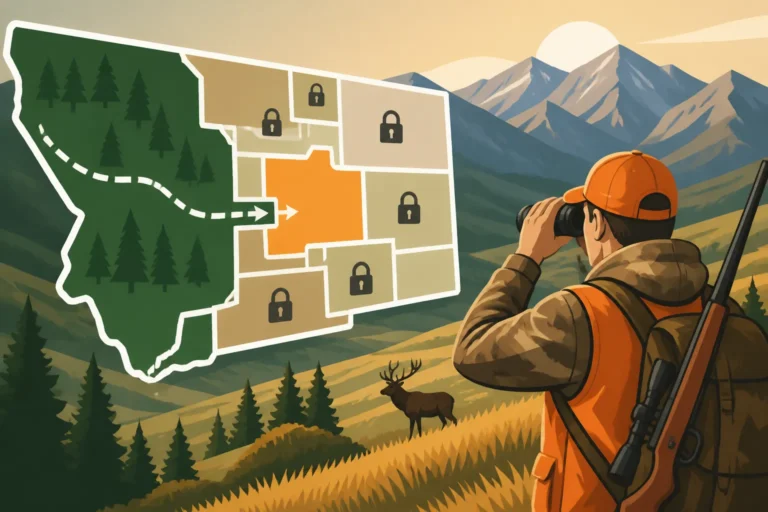
Montana is a massive state, and its diverse ecosystems mean that hunting opportunities vary wildly from one corner to the next. Montana Fish, Wildlife & Parks (FWP) divides the state into seven administrative regions, each with its own unique characteristics, species populations, and management strategies. Trying to grasp the nuances of each can be a steep learning curve, but understanding the specific region you're interested in is the first crucial step to a successful hunt.
The Layout of Montana's Hunting Regions
Montana FWP segments the state into these regions not just for administrative convenience, but because these areas often reflect distinct ecological zones. For instance, Region 1 in the northwest is heavily forested with vast wilderness areas, offering different challenges and opportunities than, say, Region 7 in the southeast, which is dominated by plains, breaks, and agricultural lands. Each region has its own regional headquarters, biologists, and wardens, all working to manage wildlife resources specific to their area. This localized approach means that regulations, herd sizes, and even hunter behavior can differ significantly across these invisible lines on a map. Knowing which region a particular hunting district falls into is paramount because it dictates everything from draw odds to available species.
Why Region 3 is a Hunter's Magnet
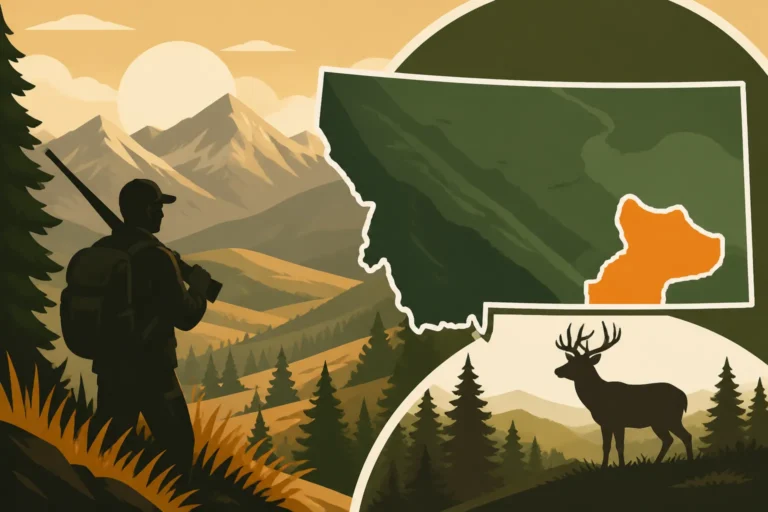
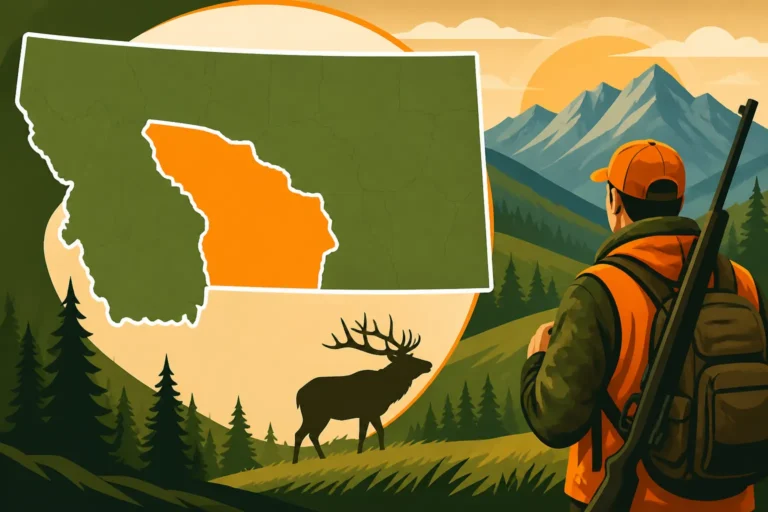
Region 3, often referred to as the "Southwest Region," is arguably one of Montana's most celebrated and diverse hunting destinations. It stretches from the Continental Divide eastward, encompassing some of the most iconic mountain ranges like the Madison, Gallatin, Bridger, Tobacco Root, and Gravelly ranges, as well as vast tracts of foothills, river bottoms, and rolling plains. This incredible variety of habitat is precisely why Region 3 is a magnet for hunters seeking a broad spectrum of big game.
Here, you'll find healthy populations of elk, trophy mule deer, abundant whitetail deer, and good numbers of antelope in its eastern fringes. For the lucky few who draw coveted tags, there are also opportunities for moose, bighorn sheep, and mountain goats in the high country. Black bears roam the timbered slopes, and wolves are present throughout. The sheer density and diversity of game animals, coupled with significant public land access, make it an incredibly attractive option. However, this popularity comes with its own set of challenges, namely intense hunter pressure in many areas and increasingly difficult draw odds for limited-entry permits. Despite these hurdles, the potential for a truly memorable hunt keeps hunters coming back year after year.
Navigating the Diverse Terrain and Species of Montana Region 3
Region 3 truly offers a smorgasbord for the big game hunter, but each species and terrain type demands a tailored approach. Whether you're chasing elk in the high timber or stalking antelope on the sagebrush flats, understanding the specifics of the landscape and the animals' behavior is key.
Elk Hunting Opportunities in Region 3
Elk hunting in Region 3 is, for many, the pinnacle of a Montana adventure. The region boasts some of the state's highest elk densities, particularly in the sprawling national forests and wilderness areas. You'll find a mix of general units, where a nonresident combination license allows you to hunt, and highly sought-after permit-only districts.
Archery season, typically starting in early September, offers a unique experience, often coinciding with the early stages of the rut when bulls are vocal and more responsive to calling. Hunters often employ a variety of tactics, from setting up on game trails near water sources to more aggressive calling strategies like those discussed in our How to Call Elk in Montana guide. As the season progresses into the rifle opener, the landscape shifts. Hunters may transition to longer-range glassing and Montana Rifle Elk Hunting Guide tactics, particularly in more open country, or focus on still-hunting dark timber pockets where elk seek refuge from pressure. For the truly adventurous, the vast roadless areas and designated wilderness in Region 3 provide an incredible Montana Backcountry Hunting Guide experience, demanding significant physical preparation and gear like those highlighted in our Montana Backcountry Hunting Gear List. Districts around the Gallatin National Forest, parts of the Beaverhead-Deerlodge National Forest, and areas like the Gravelly and Tobacco Root Mountains are perennial favorites for their elk populations, though competition can be fierce.
Deer Hunting in Region 3
Region 3 is equally renowned for its deer hunting, offering fantastic opportunities for both mule deer and whitetail. The contrasting habitats within the region mean that these two species are often found in very different environments, requiring distinct hunting strategies.
Mule deer in Region 3 tend to inhabit the higher elevations, the timbered foothills, and the broken country. They are often found in the sagebrush-steppe environments adjacent to the mountains, utilizing pockets of cover and elevation changes to their advantage. Spot-and-stalk is a hugely effective method for mule deer, especially when glassing expansive basins or tracking fresh snow. Our Montana Mule Deer Hunting Guide goes into depth on these tactics, emphasizing patience and keen optics. Look to areas in the Tobacco Roots, the lower benches of the Gallatins, or the more remote sections of the Beaverhead-Deerlodge for strong mule deer populations.
Whitetail deer, on the other hand, are commonly found in the river bottoms, agricultural lands, and riparian zones throughout Region 3. The Missouri, Gallatin, Madison, and Jefferson river corridors, along with their tributaries, are prime whitetail habitat. These deer thrive in the thick cover provided by cottonwood galleries and brushy creek bottoms. Hunting whitetail often involves different methods, such as stand hunting, still-hunting through riverine cover, or driving small blocks of timber with a group. Our Montana Whitetail Deer Hunting Guide offers specific advice for these types of hunts. The blend of mountain and riverine habitats truly sets Region 3 apart, allowing hunters to target both species, sometimes even within the same general area, making for an incredibly diverse experience.
Other Big Game Pursuits: Antelope, Bear, Moose, Sheep, and Goat
While elk and deer dominate the conversation, Region 3 also offers unique opportunities for other big game, though many of these tags are significantly harder to draw.
Antelope: As you move eastward within Region 3, the mountainous terrain gives way to the rolling plains and sagebrush flats, which are prime antelope country. Districts in the eastern portions of Region 3 can hold strong populations of these speedsters. Montana Antelope Hunting Guide tactics like spot-and-stalk, decoying, or hunting water holes are highly effective. These hunts are generally less physically demanding than mountain hunts but require excellent optics and long-range shooting proficiency. The draw odds for good antelope units can still be challenging for nonresidents, but it's often more accessible than sheep or moose.
Black Bear: Black bears are relatively common throughout the timbered mountains of Region 3. Both spring and fall seasons are offered, with spring hunts often focusing on south-facing slopes where bears are foraging on emerging greenery, or around known den sites. Fall hunts can coincide with berry crops or other food sources. Baiting is legal in some areas of Montana, but generally, spot-and-stalk or still-hunting timbered areas are common approaches in Region 3. For comprehensive information, consult a Montana Black Bear Hunting Guide.
Moose, Sheep, and Goat: These are the rarest and most difficult tags to draw in Montana, and Region 3 does contain some of the state's best units for them. Moose are typically found in high-elevation willow swamps and riparian areas, especially around the Greater Yellowstone Ecosystem. Bighorn sheep inhabit rugged, rocky mountain slopes, requiring extreme physical fitness and patience. Mountain goats prefer the highest, most precipitous peaks. Drawing one of these tags is often a once-in-a-lifetime event, requiring many years of building bonus points and a significant stroke of luck. Hunters interested in these species should study the Montana Moose Hunting Guide, Montana Bighorn Sheep Hunting Guide, and Montana Mountain Goat Hunting Guide for detailed information on their biology, habitat, and the incredibly low draw odds.
Planning Your Hunt in Montana Region 3: Tags, Access, and Strategy
Planning a successful hunt in Region 3 demands meticulous attention to detail, from understanding the complex tag application process to knowing how to effectively access the vast public lands. This region's popularity means you can't just show up and expect success without significant preparation.
Understanding Tags and Draw Odds
For nonresidents, the journey to hunt big game in Region 3 often begins with the nonresident combination license draw. This package typically includes an elk tag, a general deer tag, fishing license, and conservation license. However, even with the general combo, many of the prime hunting districts in Region 3 for species like elk, moose, sheep, or goat operate on a limited-entry permit system. This means you'll need to apply for specific unit permits in addition to your general license, and the draw odds can be incredibly low, especially for trophy units.
Montana utilizes a preference point system for nonresident deer and elk combo licenses, and a bonus point system for specific limited-entry permits for species like sheep, goat, and moose. Understanding the difference between Montana Preference Points vs Bonus Points is critical. Preference points improve your odds by moving you up the applicant list, while bonus points (which are squared each year) increase your chances in a random draw. Many hunters use resources like GoHunt to research historical draw odds, analyze unit success rates, and strategize their applications. This data-driven approach is essential for navigating the highly competitive draws in Region 3, particularly for desirable Montana General vs Permit Tags Explained. Be prepared for the reality that drawing a coveted tag in Region 3 can take many years of applying.
| Species | Typical Region 3 Habitat | Common Hunting Methods | Tag Type (Nonresident) | Draw Difficulty (1-5, 5=Hardest) |
|---|---|---|---|---|
| Elk | High mountains, timbered slopes, river bottoms | Spot-and-stalk, Calling | General Combo/Limited Permit | 3-5 (depends on unit) |
| Mule Deer | High country, broken sagebrush, timber fringes | Spot-and-stalk, Still-hunt | General Combo/Limited B-Tag | 2-4 (depends on unit) |
| Whitetail Deer | River bottoms, agricultural fields, riparian zones | Still-hunt, Stand hunting | General Combo | 2-3 |
| Antelope | Eastern plains, sagebrush flats | Spot-and-stalk, Decoying | Limited Permit (often 900 series) | 3-4 |
| Black Bear | Timbered mountains, clearcuts | Spot-and-stalk, Still-hunt | Over-the-counter/Limited Permit | 1-2 |
| Moose | High-elevation willow bottoms, dense timber | Spot-and-stalk | Very Limited Permit | 5 |
| Bighorn Sheep | Rugged, rocky mountain slopes | Extreme spot-and-stalk | Very Limited Permit | 5 |
| Mountain Goat | Highest, most precipitous peaks | Extreme spot-and-stalk | Very Limited Permit | 5 |
Accessing Public Land and Block Management Areas
Montana is renowned for its vast expanses of public land, and Region 3 is no exception. It encompasses huge sections of National Forests, including significant portions of the Beaverhead-Deerlodge National Forest and the Custer Gallatin National Forest, as well as Bureau of Land Management (BLM) lands. These federal lands are the backbone of DIY hunting in the state, offering incredible opportunities for those willing to venture off the beaten path. Our Montana Public Land Hunting Guide elaborates on the importance and strategies for hunting these areas.
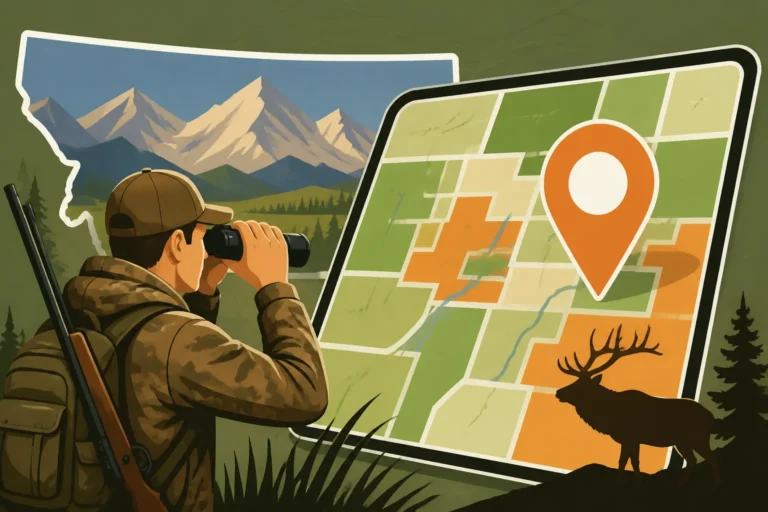
However, public land isn't always contiguous or easily accessible. That's where Montana's Block Management Program (BMP) becomes a game-changer. These areas are private lands where landowners have opted to open their property to public hunting access through an agreement with FWP, often for a specific period or species. Many of the eastern fringes of Region 3, where plains and agricultural lands mix, offer excellent BMP opportunities for deer and antelope. Understanding Montana Block Management Areas Explained is crucial, as access rules can vary greatly from one BMA to another, with some requiring sign-in sheets, reservations, or limiting hunter numbers. Utilizing mapping tools like onX Hunt is absolutely non-negotiable for navigating Region 3. This app not only shows property boundaries (public vs. private) but also highlights Block Management Areas, road networks, and topographic features, allowing you to effectively plan your routes and avoid trespassing. For a detailed breakdown of how to maximize these opportunities, check out How to Use Block Management for DIY Hunts.
Essential Scouting and In-Season Tactics
Success in Region 3, particularly for elk and mule deer, often hinges on thorough scouting and adaptable in-season tactics. E-scouting from home is a powerful tool to narrow down potential hunting units and areas. Using satellite imagery, topographic maps, and FWP harvest data, you can identify promising bedding areas, feeding zones, water sources, and travel corridors before you even set foot in the field. Our How to E-Scout Montana Hunting Units guide provides comprehensive steps for this process.
Once on the ground, physical scouting is vital. Look for fresh sign: tracks, droppings, rubs, and wallows. Pay attention to food sources available at different elevations throughout the season. Early in the archery season, elk might be higher in the mountains, but as pressure mounts or snow flies, they often descend to lower elevations or seek refuge in dark timber. Understanding how weather patterns and hunting pressure influence animal movement is key. For instance, elk often seek refuge in dense thermal cover during midday, particularly on north-facing slopes, as detailed in How to Find Elk in Montana Dark Timber. Using the wind and thermals to your advantage, especially in steep terrain, is paramount to getting close to wary animals without spooking them. Being able to adapt your strategy on the fly, whether it's changing your approach due to new intel or shifting your focus from one species to another based on what you're seeing, will greatly increase your chances of filling a tag in Region 3.
Common Challenges and Overcoming Them in Region 3
While Region 3 offers incredible hunting, it's not without its obstacles. Being prepared for hunter pressure and the physical demands of the terrain will make your experience more enjoyable and increase your odds of success.
Hunter Pressure and Finding Solitude
Let's be realistic: Region 3 is popular, and you're not going to be the only one out there. Especially during general rifle season, accessible trailheads and popular public land spots can see significant hunter pressure. This can be incredibly frustrating when you're dreaming of a solitary backcountry experience only to find a dozen other trucks at the trailhead.
However, finding solitude in Region 3 is absolutely still possible, it just requires more effort and strategic planning. One effective method is simply to go deeper. Most hunters won't venture more than a mile or two from a road or established trail. If you're willing to pack in several miles, especially into designated wilderness areas like parts of the Lee Metcalf Wilderness in the Beaverhead-Deerlodge National Forest or the Absaroka-Beartooth Wilderness, you'll dramatically reduce the crowds. Hunting weekdays instead of weekends can also significantly alleviate pressure. Furthermore, How to Beat the Crowds on Montana Public Land involves identifying and scouting less obvious access points or overlooked pockets of public land that might not show up as prime on an initial E-scouting pass. These often require more difficult hikes or river crossings, which deters many hunters.
Physical Demands and Gear
The terrain in much of Region 3, particularly in its mountainous districts, is rugged, steep, and demanding. Chasing elk or mule deer in the high country is not for the faint of heart. You'll encounter significant elevation changes, rocky slopes, thick timber, and potentially unpredictable weather, from warm autumn days to sudden snowstorms. Being in excellent physical condition is non-negotiable for a successful and safe hunt. Our How to Physically Prepare for a Montana Elk Hunt guide offers advice on getting yourself ready for the rigors of a mountain hunt.
Beyond physical fitness, having the right gear is crucial. Reliable, broken-in boots that can handle steep, uneven terrain are paramount. A quality backpack, capable of carrying all your essentials for the day and then comfortably packing out meat if you're successful, is another must-have. Optics, including good binoculars and a spotting scope (especially for mule deer and high-country elk), are invaluable for glassing vast landscapes. Navigation tools like onX Hunt on your phone or a dedicated GPS unit are essential. Don't skimp on layered clothing, as temperatures can fluctuate wildly, and be prepared for rain or snow. For a comprehensive checklist, consult a Montana Backcountry Hunting Gear List. Investing in good gear isn't just about comfort; it's about safety and increasing your effectiveness in the challenging environments of Region 3.
Disclaimer
Please be aware that hunting regulations, season dates, and license requirements for Montana can change annually. It is your responsibility to review the current Montana Fish, Wildlife & Parks (FWP) regulations for the most up-to-date and accurate information before planning any hunting trip.