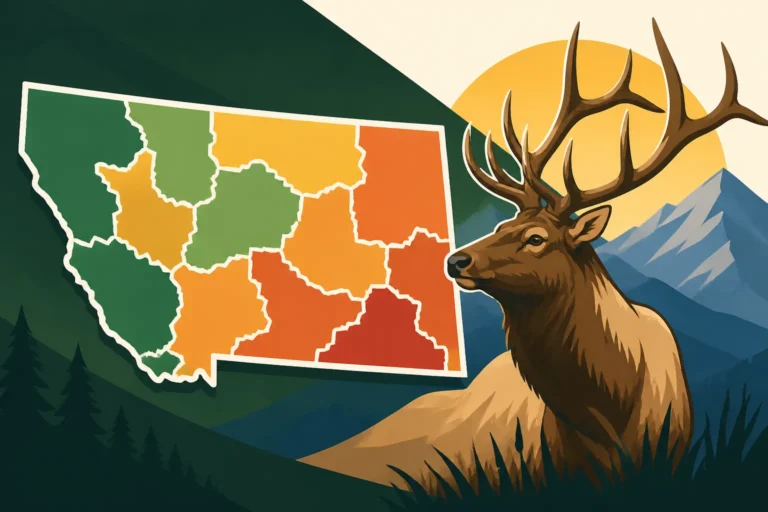
How to Apply for a Montana Hunting License
Applying for a Montana hunting license can feel like navigating a dense, overgrown forest, especially for those new to the state or embarking on their first Western hunt. The sheer volume of information, the different draw systems, and those ever-critical deadlines can quickly become overwhelming, leaving you feeling lost before you even hit the woods. This comprehensive guide is designed to cut through that complexity, walking you step-by-step through the entire process of securing your Montana hunting license, from understanding the basics to mastering the draw.
Understanding the Montana Hunting License Landscape
Montana's hunting license system is robust, reflecting the state's incredible diversity of wildlife and the immense popularity of its hunting opportunities. Before you even think about applying, it's crucial to grasp the fundamental distinctions and requirements that shape the entire process. Without this foundational knowledge, you might find yourself hitting roadblocks that could derail your entire season.
Resident vs. Non-Resident Requirements
The most significant fork in the road for any hunter looking to apply in Montana is their residency status. The difference between resident and non-resident requirements isn't just a matter of price; it's a completely different experience in terms of eligibility, draw odds, and the types of licenses available. For residents, Montana offers accessible and affordable hunting opportunities, recognizing their contributions to conservation through taxes and ongoing stewardship. They benefit from significantly lower license fees and far better draw odds for coveted limited entry permits. This is a privilege earned through establishing legal residency and maintaining it according to Montana Fish, Wildlife & Parks (FWP) statutes, which typically involve living in the state for at least 180 consecutive days, registering vehicles, holding a Montana driver's license, and other criteria.
Non-residents, on the other hand, face a much more competitive and costly path. Montana is one of the most sought-after hunting destinations in the country, and demand for non-resident tags far outstrips supply. This means non-residents often pay a premium for their licenses, and many of the most desirable tags are allocated through a rigorous lottery system with historically low draw odds. This can be a tough pill to swallow for hunters dreaming of a Big Sky adventure, but it's a reality that underscores the value of Montana's wildlife. Understanding these fundamental differences is the very first step, preventing countless frustrations later in the process when you realize a particular tag or draw isn't even an option for your residency status. It also highlights why meticulous planning is absolutely paramount for anyone coming from out of state.
The Essential Base Licenses and Fees
Regardless of whether you're a lifelong Montanan or traveling from across the country, certain foundational licenses and fees are required before you can even think about purchasing a specific big game tag. Think of these as your entry ticket into the Montana hunting system; without them, no other license is valid. The first and most important is the Conservation License. This license is truly the cornerstone, supporting Montana's vast array of conservation efforts, from habitat preservation to wildlife management. It's a mandatory purchase for nearly all hunting, fishing, and trapping activities in the state, signaling your contribution to the natural resources you wish to enjoy.
Another crucial component is the Montana AIS Prevention Pass. This pass directly funds efforts to prevent the spread of Aquatic Invasive Species (AIS) in Montana's waters. While it might seem less directly related to a mountain elk hunt, it's a universal requirement for anyone participating in outdoor recreation here, ensuring that Montana's pristine environment remains protected. Finally, for hunters specifically, there's the Base Hunting License. This is essentially your permission slip to be a hunter in the state, and it's typically bundled into combination licenses or purchased as a standalone item for those buying individual tags. These base components lay the groundwork for everything else. You'll also need to consider hunter education requirements; anyone born after January 1, 1985, must complete a hunter education course. It's important to familiarize yourself with the full suite of Montana Base Hunting License Requirements early in your planning.
These fees, while seemingly small individually, add up and are essential to factor into your overall budget. They are non-refundable application fees in many cases, meaning if you don't draw your desired tag, you won't get that money back. Always ensure you've accounted for these foundational costs and acquired the necessary components before attempting to apply for any specific game tags, as an incomplete application due to a missing base license will almost certainly lead to rejection.
General Licenses vs. Limited Entry Permits
Montana's big game hunting opportunities are broadly categorized into two main types: general licenses and limited entry permits. Understanding the distinction is vital for strategizing your application and managing your expectations. General licenses are exactly what they sound like—they allow you to hunt a specific species (like elk or deer) across a wide range of designated "general" hunting districts without the need for a special draw. If you secure a general elk license, for example, you can hunt elk in any district designated as "general" for that species during the prescribed season. These are the most common licenses, and while they might not grant access to the most exclusive, trophy-rich areas, they offer abundant opportunities across vast stretches of public land. For many resident and non-resident hunters, a general license is the backbone of their annual hunting plans.
Conversely, limited entry permits are the golden tickets of Montana hunting. These permits grant access to specific hunting districts or specific weapon types (e.g., archery-only in a certain district, or a specific permit for a highly managed area) where demand significantly outweighs supply. These districts are often known for exceptional trophy potential, unique hunting experiences, or tightly controlled populations. Acquiring a limited entry permit almost always requires entering a draw, and the odds of success can be extremely low, sometimes in the single digits or even less than one percent, especially for non-residents. The strategy for these permits often involves building up bonus points over many years. For a deeper dive into the nuances, check out our guide on Montana General vs Permit Tags Explained. Hunters often apply for both—a general license as a primary goal and a limited entry permit as a long-shot dream. Being prepared for both scenarios is key to a successful Montana hunting season.
Navigating the Application Process: Key Dates and Deadlines
Once you understand the basic framework of Montana's licensing system, the next critical step is to master the application timeline. Missed deadlines are arguably the most common and heartbreaking mistakes hunters make, instantly disqualifying them from the draw and forcing them to wait another year. The Montana Fish, Wildlife & Parks (FWP) application schedule is precise, and familiarity with it is paramount for any aspiring Montana hunter.
Understanding the Annual Application Timelines
Montana operates on a specific annual calendar for its hunting license draws, and these dates rarely shift dramatically, though it's always wise to double-check the current year's regulations. Generally, the application period for the highly coveted deer and elk combination licenses, as well as many special permits for species like moose, sheep, and goat, typically runs from around mid-January through March 15th. This March deadline is absolutely sacred for most big game hunters, especially non-residents vying for those combo tags. Antelope often have a separate application window, usually starting in June with a mid-July deadline. Black bear applications can also have earlier deadlines, particularly for spring hunts, often in April. It's a lot to keep track of, and the FWP website is your go-to source for the most up-to-date schedule.
Failing to submit your application by the specified deadline means you're out of luck for that year's draw, no exceptions. This can be incredibly frustrating, especially if you've spent months e-scouting, planning, and dreaming of your Montana adventure. To avoid this common pitfall, many experienced hunters mark their calendars well in advance, set multiple digital reminders, and aim to submit their applications at least a week or two before the final cut-off. This buffer allows for any unforeseen technical glitches or last-minute questions that might arise. Our guide on Montana Big Game Draw Deadlines provides a comprehensive overview of these crucial dates and should be a bookmark in every hunter's browser. Remember, proactive planning in the application phase directly translates to peace of mind later on.
The Montana Fish, Wildlife & Parks (FWP) Portal
The primary gateway for all Montana hunting license applications is the Montana Fish, Wildlife & Parks (FWP) online licensing portal. This web-based system is where you'll create your hunter profile, manage your existing licenses, purchase conservation licenses and other base requirements, and submit your draw applications. For anyone new to the process, the first step is to create an account. This involves providing personal details, establishing a username and password, and linking any past hunting or fishing history you might have with FWP. It's crucial that all information, from your name and address to your date of birth, matches your government-issued identification exactly. Discrepancies can lead to application issues down the line.
While the FWP portal is generally user-friendly, it can experience high traffic volume as deadlines approach, sometimes leading to slower performance. It's also not uncommon for new users to encounter minor hiccups, such as forgotten passwords or difficulty navigating specific sections. To minimize stress, familiarize yourself with the portal well before you need to submit an application. Log in, ensure your profile information is current, and perhaps even walk through a "practice" application run-through if possible (without submitting, of course). If you do encounter technical difficulties, FWP offers phone support, but expect potential wait times during peak application periods. Having a solid understanding of how to use this online tool efficiently will make your application experience much smoother and reduce the chances of a last-minute panic.
The Importance of Preference and Bonus Points
Montana utilizes two distinct point systems—preference points and bonus points—to manage draws for different species and license types. Understanding these systems is absolutely critical for improving your odds of drawing a coveted tag, especially as a non-resident. Preference points are used exclusively for the non-resident big game combination licenses (Elk Combo, Deer Combo, Big Game Combo). Each preference point you acquire essentially moves you up in line. If you have 5 preference points, you get considered before someone with 4 points, and so on. They are purchased annually during the application period (or even without applying for a tag, just to build points for the future) and are specific to the type of combo license you're seeking. They accumulate year after year until you draw a combo license, at which point your points reset to zero. This system rewards consistency and patience, making it a long-term strategy.
Bonus points, on the other hand, are used for limited entry permits for specific districts or species like moose, bighorn sheep, mountain goat, and antelope. The bonus point system works differently: for every year you apply unsuccessfully and purchase a bonus point, your accumulated points are squared, effectively increasing your chances exponentially with each additional year. For example, if you have 3 bonus points, you enter the draw 3×3=9 times. If you have 5 points, you enter 5×5=25 times. Like preference points, bonus points accumulate until you draw that specific permit, then they reset for that species. You can purchase bonus points even if you don't apply for a particular permit draw, allowing you to build points for the future. Resources like GoHunt provide invaluable data and insights into how many points are typically required to draw certain tags, helping you formulate a realistic long-term strategy for building points. It's a complex but powerful system, and our detailed guide on Montana Preference Points vs Bonus Points can help you demystify it further. Consistently building these points, even in years you can't hunt, is a smart play for anyone serious about drawing a Montana trophy tag.
Applying for Specific Big Game Species Licenses
Once you've got your head wrapped around the basic requirements and point systems, it's time to dive into the specific applications for the game species you're dreaming of pursuing. Each species has its own application nuances, draw odds, and permit structures, demanding careful attention to detail during the submission process.
The Montana Elk and Deer Combination License
For many non-resident hunters, the ultimate goal is to secure a Montana Elk and Deer Combination License (often simply called the "Big Game Combo" or "Deer/Elk Combo"). This highly sought-after license is a comprehensive package, offering the ability to hunt general elk, general deer (either mule deer or whitetail, depending on the district and regulations), as well as a base fishing license, upland bird license, and a black bear tag. It also includes the mandatory conservation license and AIS Prevention Pass. This is the big one, the one that allows you to experience the full spectrum of Montana big game hunting, often across vast stretches of public land.
The draw for the non-resident combination license is incredibly competitive. While there are typically several thousand available, demand usually exceeds supply by a significant margin. Applicants are pooled, and then a random draw occurs, heavily influenced by preference points. Those with more preference points have a statistically better chance of drawing. It's an all-or-nothing draw for the combo; you either get it or you don't. If successful, you'll receive the general tags for deer and elk, opening up opportunities in most hunting districts. If unsuccessful, your preference points roll over and increase by one for the next year, provided you purchase a point during the application period. For a deep dive into the specifics of this coveted tag, check out our Montana Nonresident Combination License Guide. Understanding the odds and managing your expectations is key, and tools like GoHunt provide excellent historical data to help assess your chances based on your accumulated preference points.
Special Permit Applications
Beyond the general deer and elk combination licenses, Montana offers a range of special permit applications for specific, limited entry opportunities. These are the hunts that often come with higher trophy potential or access to unique, tightly managed areas. Species like moose, bighorn sheep, and mountain goat are almost exclusively permit-only, requiring years, often decades, of building bonus points to even have a reasonable chance at drawing. These draws operate on the bonus point system, where your points are squared, significantly increasing your entries into the lottery each year you apply unsuccessfully and purchase a point.
In addition to the highly regulated mountain species, many elk and deer hunting districts also have specific "limited entry" permits. These might be for archery-only seasons in certain units, antlerless tags in specific areas to manage populations, or bull elk permits in districts known for producing exceptional animals. The complexity of these permits is in their hunt codes and specific regulations, which can change annually. Each limited entry permit has its own draw, and you can apply for multiple permits (within FWP rules) in addition to your general combination license application. However, understand that drawing one of these permits typically nullifies your ability to hunt that specific species with your general tag in that particular district. It's a strategic decision, balancing the allure of a premium hunt with the reality of slim odds. Our Montana Limited Entry Permits Explained guide elaborates on these often complex and highly sought-after tags.
Antelope, Bear, and Other Species
While elk and deer often dominate the spotlight, Montana offers fantastic hunting opportunities for other big game species, each with its own application process. Antelope hunting, primarily on the vast eastern plains, is incredibly popular. The application for antelope is usually a separate draw from deer and elk, with its own unique timeline, typically in early summer. Non-resident antelope tags are highly competitive, and like other species, bonus points play a crucial role in improving your draw odds. Some special antelope permits exist, such as the 900-series tags, which often offer archery-only opportunities or access to specific management areas. You can find detailed information on these specific dates and tags in our Montana Antelope Season Dates guide.
Black bear season in Montana is split into spring and fall hunts, with different application deadlines for each. Some regions offer over-the-counter black bear tags, while others require a draw for specific districts or timeframes. Mountain lion also typically operates on a draw system in most areas, with specific quotas and regulations that vary by hunting district. Wolf hunting, while sometimes requiring a permit, often has over-the-counter options depending on the management unit and current population status. Even turkey hunting in Montana requires specific licenses, though these are generally easier to acquire. It's crucial to consult the annual FWP hunting regulations for each species you intend to hunt, as the rules, deadlines, and permit structures can differ significantly. Each species presents a unique challenge and a chance to experience a different facet of Montana's incredible wildlife.
Understanding Draw Odds and Point Systems
For many hunters, especially those from out of state, the Montana draw system can feel like a labyrinth, with successful outcomes often shrouded in mystery. Deciphering draw odds and truly grasping how preference and bonus points work is key to managing expectations and developing a long-term hunting strategy. It's not just about applying; it's about applying smartly.
Deciphering Draw Odds
Draw odds in Montana are essentially the mathematical probability of you being successful in a given license or permit lottery. They are published annually by FWP, typically after the draw results are finalized, and show the percentage of applicants who drew a particular tag based on the number of points they had. These numbers are paramount because they offer a realistic look at your chances. For instance, if a non-resident elk combination license has 20% odds for applicants with 3 preference points, it means, historically, about 1 in 5 hunters with that many points drew the tag. It's important to remember these are historical averages and not a guarantee for the current year, but they are the best indicator we have.
The frustration often stems from seeing incredibly low odds for highly desirable tags, sometimes well under 1%. This is particularly true for limited entry permits for species like bighorn sheep or trophy elk units. It can feel like throwing money into a black hole, but it's the reality of hunting in a state with such high demand. Tools like GoHunt's INSIDER service excel at dissecting and presenting this draw data in an easy-to-understand format, offering statistics like "points needed to guarantee a draw" or "average successful points." This kind of data analysis is invaluable for a hunter trying to decide where to apply or how many points they truly need. For a comprehensive guide on interpreting these vital statistics, be sure to read our article on How to Read Montana Draw Odds. Don't just look at the raw numbers; understand what they mean for your specific situation.
Preference Point vs. Bonus Point Mechanics
While both point systems are designed to reward consistent application, their mechanics are distinct and affect your draw chances differently. Preference points, used for the nonresident combination licenses, work on a linear scale. Each point you have directly corresponds to an earlier entry into the drawing pool. If there are 10,000 applicants for a combo license and 5,000 tags, the system essentially sorts applicants by their preference points, giving those with more points the first shot until all tags are allocated. Once you draw, your preference points for that combo type reset to zero. This straightforward system means that consistently acquiring points year after year is a direct path to eventual success, although "point creep" can make the wait longer.
Bonus points, used for limited entry permits across various species, employ a "squared" system, which significantly ramps up your chances with each additional point. If you have one bonus point, you get one entry. Two points? You get four entries (2×2). Three points get you nine entries (3×3), and so on. This exponential increase means that jumping from, say, 5 to 6 bonus points (25 to 36 entries) can have a much more dramatic impact on your odds than going from 1 to 2 points (1 to 4 entries). This system favors extreme patience and a willingness to apply for many years for those truly rare tags. Like preference points, drawing a limited entry permit resets your bonus points for that specific species. Understanding these fundamental differences is crucial for effective long-term planning, helping you decide whether to focus on building up one type of point or strategically pursue both. Our detailed explanation of How Montana Preference Points Work provides more context on these critical systems.
Point Creep and Long-Term Strategy
One of the most disheartening aspects of Western big game draws, especially for non-residents, is the phenomenon of point creep. Point creep occurs when the average number of points required to draw a particular tag increases year after year. This happens because more people are applying, more people are accumulating points, and the number of available tags often remains static or even decreases. The consequence is that the "guaranteed draw" point level from last year might not be enough this year, extending the waiting period for many hunters. What you thought would take three years to draw might now take five, or even more. It's a frustrating reality for dedicated hunters who commit to building points.
Developing a long-term strategy is the only way to combat point creep and navigate Montana's competitive draw landscape successfully. This involves consistently purchasing preference or bonus points every year, even in seasons you can't actively hunt. It's an investment in your future hunting opportunities. Hunters often leverage sophisticated tools, such as those offered by GoHunt, which track historical draw odds and point creep trends. These resources can help you predict how many points you might need in the future and allow you to make informed decisions about which units to target or whether to continue building points for a premium tag. For example, if you see that a specific trophy elk unit is experiencing rapid point creep, you might adjust your strategy to target a different unit or simply commit to a longer-term point-building plan. Our article on Montana Point Creep Explained delves deeper into this challenging but essential concept for serious hunters. A solid, patient strategy is your best friend in the Montana draw.
Common Application Mistakes and How to Avoid Them
Even with all the right information, the application process can be fraught with potential missteps. A single error can lead to a rejected application, wasted fees, and a lost hunting season. Being aware of the most common mistakes is the first step toward avoiding them and ensuring your application gets a fair shot in the draw.
Missing Deadlines and Incomplete Applications
Without a doubt, the most common and devastating mistakes hunters make are missing application deadlines or submitting incomplete applications. The FWP system is unforgiving when it comes to dates; if your application isn't submitted and paid for by the exact minute of the deadline, it simply won't be considered. This can be heartbreaking, especially after months of planning and anticipation. It's not enough to start the application process; you must complete every step, including final payment, before the clock runs out. Similarly, an incomplete application, missing required information, or failing to acquire the necessary base licenses (like the Conservation License) will result in automatic rejection.
To sidestep these pitfalls, adopt a proactive approach. Mark your calendar with multiple reminders, perhaps one two weeks out, one a week out, and a final one 48 hours before the deadline. Even better, aim to submit your application well in advance, ideally at least a week before the final deadline. This buffer gives you time to address any unexpected technical issues with the FWP portal, correct any overlooked details, or clarify questions with FWP staff. Double-check every field, ensure all required documents are uploaded (if applicable), and confirm your payment method is current and has sufficient funds. Treat the deadline as an absolute cutoff, not a target, and submit early to save yourself immense stress and potential disappointment.
Incorrect Hunt Codes and District Choices
Montana's hunting districts are incredibly diverse, and their regulations, access, and draw odds vary widely. A critical mistake is applying for the wrong hunt code or selecting a district that doesn't align with your license or hunting goals. Hunt codes in Montana can be complex, often consisting of a district number followed by a two-digit permit type (e.g., HD 380-00, HD 399-20). Miskeying a single digit or misunderstanding what a particular code signifies can lead to applying for an antlerless tag when you wanted a bull, or a special archery permit when you planned to rifle hunt. These errors can invalidate your application or put you in a draw for a tag you can't use or don't want. Our guide on Montana Hunt Codes Explained provides a thorough breakdown of how to interpret these critical identifiers.
Before submitting, meticulously cross-reference the hunt codes and district boundaries with the current year's FWP hunting regulations and official maps. Don't rely solely on memory or old information. Pay close attention to unit boundaries, as a subtle shift can change everything about your hunt plan. For non-residents, especially, it's vital to ensure the district you select is open to non-resident general tags or that you've correctly applied for the specific limited entry permit. Sometimes hunters mistakenly apply for a district they later realize is primarily private land, making public access difficult without prior arrangements. Take your time, consult your maps, and ensure every digit in your application matches your intended hunt area precisely.
Payment Issues and Account Management
You've done all the hard work: researched, planned, filled out your application meticulously, and hit "submit." But what if your payment fails? Payment issues are a surprisingly common source of application rejections. An expired credit card, insufficient funds, or a bank's fraud detection system flagging a large FWP transaction can all lead to a failed payment and, consequently, an invalid application. FWP often attempts to process payments shortly after the application deadline, meaning a card that was valid when you applied might expire before the processing date, or funds might not be available if you didn't anticipate the charge.
To prevent this, ensure the credit or debit card you use is valid through the expected draw results date and has a sufficient credit limit or balance to cover the full cost of all applied-for licenses. If you're using a relatively new card or a bank that might be sensitive to large online transactions, consider notifying your bank in advance of the impending charge from Montana FWP. Beyond payment, maintaining accurate contact information in your FWP online account is crucial. An outdated email address means you might miss important notifications about your application status, draw results, or payment issues. Regularly log in to your FWP account throughout the year to verify all your personal and payment details are current. This small step can save you a huge headache and ensure you receive all critical communications regarding your Montana hunting endeavors.
What Happens After You Apply?
The period between submitting your application and receiving draw results can feel like an eternity, filled with anticipation and endless checking of forums. But knowing what to expect during this waiting game, and what steps to take once results are announced, is crucial for a smooth transition whether you draw or not.
Checking Draw Results
The moment of truth arrives when Montana FWP announces the draw results. For many, this is the most nerve-wracking part of the entire process. Generally, results for the primary big game draws (like the non-resident deer and elk combination licenses, and moose, sheep, and goat permits) are released in April, often in the second or third week. Antelope results usually come out in late July or early August. While FWP may send out email notifications, it's always best practice to actively check the FWP licensing portal yourself on the announced release date. Due to the high volume of traffic, the website can sometimes be slow or glitchy right when results drop, so patience is key.
Successfully navigating the FWP portal to find your results is straightforward once you know where to look. Log into your account, and typically there will be a section or link specifically for "Draw Results" or "Application History." Here, you'll see the status of each application you submitted: "Successful," "Unsuccessful," or sometimes "Alternate" (meaning you're on a waiting list for a potential leftover tag). Prepare yourself for either outcome, and try not to get too caught up in the immediate online chatter. Everyone's waiting, everyone's anxious, but your personal results are what truly matter. Our guide on How to Read Montana Draw Results offers more context on understanding the different statuses you might encounter.
Understanding Successful and Unsuccessful Outcomes
When the draw results hit, it's a moment of either exhilaration or deep disappointment. If you're one of the fortunate hunters with a successful outcome, congratulations! The next steps involve confirming your tag purchase (if not already paid in full), printing your licenses and tags (some are physical mail, some are print-at-home, check current FWP rules), and immediately diving into the specific regulations for your drawn unit. This means poring over the FWP hunting regulations booklet, studying maps like those from OnX Hunt for public access, and beginning detailed scouting. Now the real planning begins: choosing your hunting method, refining your gear list, and getting in shape for the challenge ahead. It’s an exciting time, but remember that the hard work of preparing for the hunt itself is just beginning.
For those facing an unsuccessful outcome, it can be a real punch to the gut. The hours of planning, the anticipation, the financial investment in points – all seemingly for naught. This is where patience and a long-term perspective become vital. Don't despair! Unsuccessful applicants typically gain a preference or bonus point (if they purchased one during the application) for the next year, incrementally increasing their odds for future draws. You then have several options: you can begin planning for next year's draw, looking at different units or species with potentially better odds; you can actively pursue Montana Leftover and Surplus Tags, which sometimes become available later in the summer; or you can consider over-the-counter opportunities for species like wolf or upland birds. Many hunters also choose to focus on other states with different draw timelines or opportunities. Our article What to Do If You Don't Draw in Montana provides further guidance on navigating this common scenario. It’s a marathon, not a sprint, and every unsuccessful draw brings you one step closer to success.
Leftover and Second Chance Opportunities
Even if you didn't draw in the initial main lottery, Montana often provides leftover and second chance opportunities that can salvage your hunting season. These typically arise when not all tags are allocated in the initial draw (e.g., specific antlerless permits, or general tags in less popular districts), or when successful applicants fail to claim or pay for their tags. These leftover tags are usually offered on a first-come, first-served basis, often through the FWP online licensing portal. The exact timing and availability vary widely each year, so it requires diligent monitoring of the FWP website and announcements.
In addition to true "leftover" tags, FWP sometimes conducts secondary random drawings for specific permits that weren't fully subscribed in the main draw. These are less common for the highly competitive tags but can offer a glimmer of hope for specific antlerless or limited entry permits. While these opportunities don't come with preference or bonus point benefits, they provide a legitimate path to securing a tag that might have initially been out of reach. Staying informed about these secondary chances is key, and many hunters subscribe to FWP email alerts or follow reputable hunting news outlets for timely announcements. These opportunities demonstrate that even if the initial draw doesn't go your way, the door to a Montana hunt isn't always completely closed.
Resources and Tools for a Smoother Application
The complexity of Montana's hunting license application process makes leveraging the right resources and tools not just helpful, but essential. From official government sites to powerful third-party analytics, having these assets at your fingertips can significantly simplify your journey and boost your confidence.
Official FWP Resources
Your first and most important resource should always be the official Montana Fish, Wildlife & Parks (FWP) website. This is the authoritative source for all regulations, deadlines, application forms, and public land maps. The FWP site hosts the annual hunting regulations booklet, which is a detailed, species-by-species guide to seasons, hunt codes, and legal requirements. Always consult the current year's regulations, as rules and dates can change. Trying to rely on outdated information is a recipe for disaster. The FWP also provides an online Hunt Planner map, which allows you to visualize hunting district boundaries, public lands, and land ownership, which is crucial for selecting appropriate units.
Beyond the website, FWP offers direct customer support. If you have specific questions about residency, hunt codes, or payment issues, contacting their licensing division directly via phone or email is your best bet for accurate information. While they can be swamped during peak application times, their staff are knowledgeable and can clarify ambiguities. Treat the FWP website as your primary bible for all things related to Montana hunting licenses; it’s the ultimate reference to ensure you're compliant and informed. Remember, ignorance of the regulations is not an excuse, so make sure you're always using the official, up-to-date FWP resources.
Third-Party Planning Tools
While FWP provides the official rules, a growing number of third-party planning tools have emerged to help hunters analyze draw odds, scout potential units, and strategize their applications more effectively. One of the most prominent and powerful is GoHunt's INSIDER service. GoHunt takes the raw FWP draw data and transforms it into user-friendly statistics, historical trends, and predictive models for various species and hunting districts. They offer tools to help you understand your draw odds based on your preference or bonus points, analyze unit-specific success rates, and even explore trophy potential. For a non-resident, or any hunter looking to maximize their chances in Montana's competitive draw, a platform like GoHunt is invaluable for making data-driven decisions.
Beyond draw odds, geographic information system (GIS) mapping applications are indispensable for e-scouting and understanding hunt areas. OnX Hunt is a prime example, offering detailed property ownership maps that differentiate public lands (National Forests, BLM, State Trust Lands, Block Management Areas) from private parcels. This is crucial for planning access, identifying potential hunting grounds, and avoiding trespass. Knowing How to Use onX for Montana Hunting can significantly enhance your pre-hunt preparation, helping you visualize terrain, identify potential bedding areas, water sources, and travel corridors, all from your computer or phone. Other useful tools include online forums and social media groups where experienced hunters share insights and discuss strategies, though always cross-reference information from these sources with official FWP regulations.
Planning Ahead for Your Montana Adventure
Securing your Montana hunting license is a monumental first step, but it's only the beginning of your adventure. The best hunters know that success in the field is a direct result of meticulous planning that extends far beyond the application period. Once you've successfully drawn a tag, the real work of preparation begins. This involves deeply researching your chosen hunting district, understanding its unique terrain, vegetation, and how game species utilize the area throughout the season. Consider our guide on How to Choose a Montana Hunting District as a starting point. Are you hunting high-country elk in the rugged Rockies, or mule deer in the rolling hills of eastern Montana? Each scenario demands a different approach.
Furthermore, physical preparation cannot be overstated for Montana hunts. The state's rugged mountains and vast landscapes demand a high level of fitness, especially for backcountry or DIY hunts. Start a rigorous training regimen months in advance, focusing on cardio, strength, and endurance. Equip yourself with reliable gear, from high-quality optics to durable boots and appropriate layering systems for Montana's unpredictable weather. And finally, plan for the logistics: travel, lodging, meat processing, and emergency contingencies. A well-planned Montana hunt is a deeply rewarding experience, but it's one that rewards those who are truly prepared, physically, mentally, and logistically.
| Category | Non-Resident Combination License (Elk/Deer) | Limited Entry Elk Permit (e.g., Trophy Unit) | Antelope Tag (General) |
|---|---|---|---|
| Typical Cost (approx.) | $1000 – $1200 (including base fees) | $50 – $100 (application fee + point) | $200 – $300 (including base fees) |
| Application Deadline | March 15th | March 15th | Mid-July |
| Point System | Preference Points | Bonus Points (Squared) | Bonus Points (Squared) |
| Points Reset | When combo license is drawn | When specific permit is drawn | When specific permit is drawn |
| Average Odds | 15-25% (with ~4-6 points) | <1% – 10% (highly variable) | 20-50% (with ~2-4 points) |
| Difficulty | High | Very High | Moderate |
Note: Costs and odds are approximate and vary annually. Always consult current Montana FWP regulations for precise figures.
Disclaimer
The information provided in this guide is for general informational purposes only and is subject to change. Montana hunting regulations, seasons, fees, and draw processes are updated annually by Montana Fish, Wildlife & Parks (FWP). It is the sole responsibility of each hunter to consult the most current official FWP regulations and guidelines prior to applying for any license or engaging in any hunting activity. We recommend visiting the official FWP website or contacting their licensing division directly for the most accurate and up-to-date information.