Montana Pronghorn Speed Facts
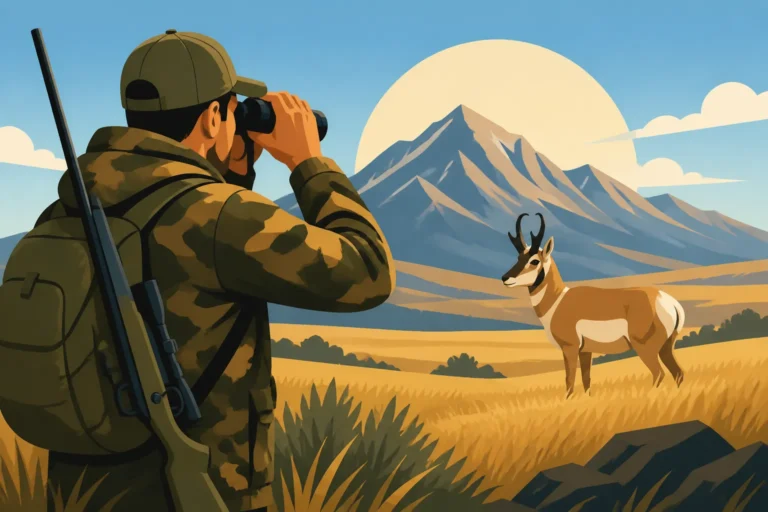
If you've spent any time at all chasing antelope across Montana's vast plains, you know the frustration of watching them effortlessly bound away, leaving you feeling like you're moving in slow motion. It's easy to wonder if they're part-alien, part-rocket, and if you even stand a chance. This guide isn't just about throwing out a number; it's about diving deep into the incredible speed of Montana's pronghorn, why they're built that way, and what their athletic prowess means for you as a hunter trying to keep up.
The Raw Numbers: How Fast Are They, Really
When we talk about pronghorn speed, we're not just talking about a quick burst. We're talking about an animal that redefined what it means to be fast in North America. They are, quite simply, the fastest land mammal on the continent, and their capabilities are genuinely mind-boggling. It’s not just a sprint; it’s sustained, high-octane performance that allows them to evade predators and cover vast distances with shocking efficiency.
Top Speeds and Sustained Endurance
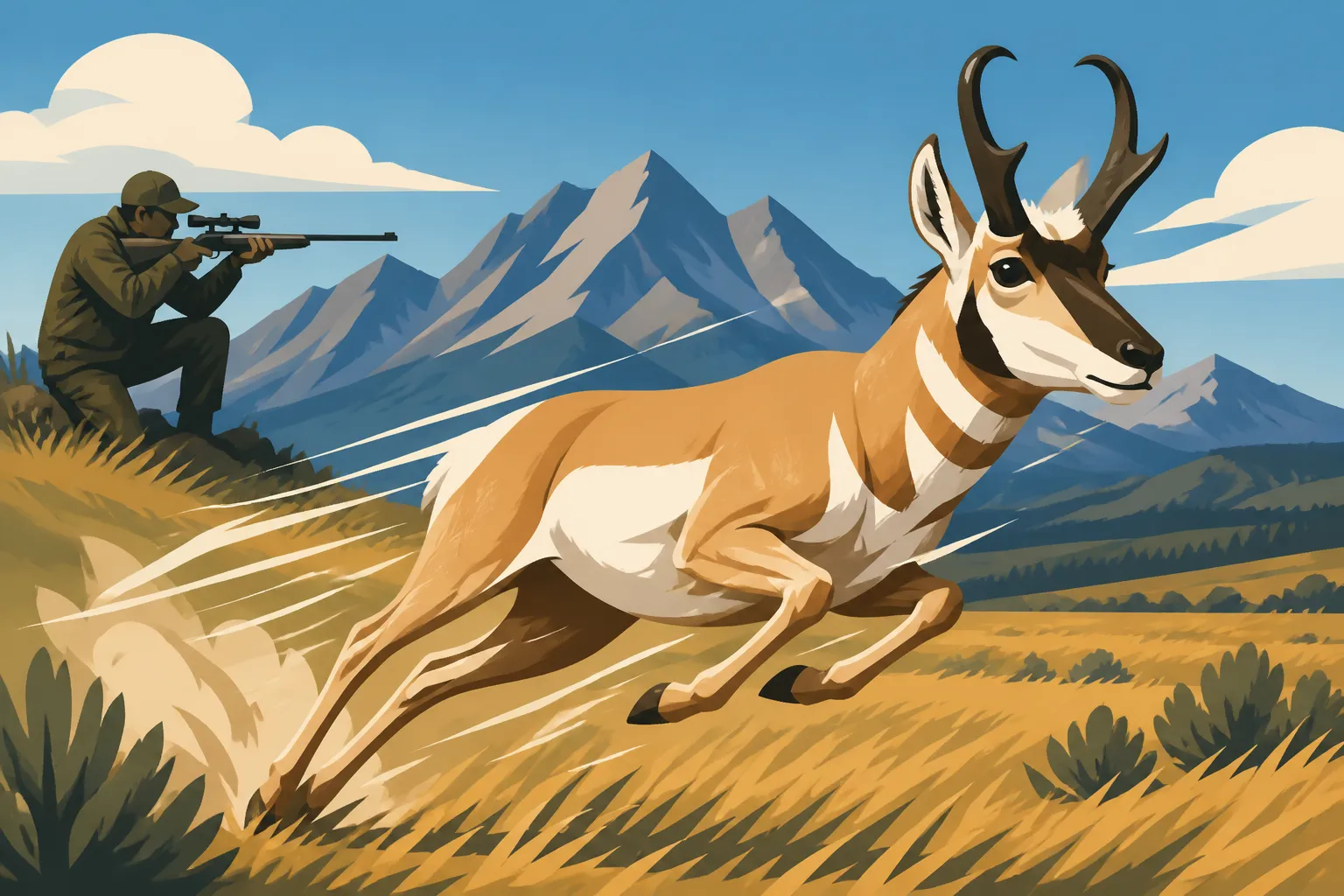
Pronghorn are often cited with top speeds in the range of 55 to 60 miles per hour, making them second only to the cheetah globally for short bursts. Imagine a world-class sprinter, but one that can maintain that incredible pace for miles. That's the pronghorn. While a cheetah might hit higher speeds, it can only do so for a few hundred yards. A pronghorn, however, can cruise at 35-40 mph for extended periods, sometimes for several miles without really breaking a sweat. This sustained speed is what truly sets them apart and is a key factor when you're trying to figure out how to hunt antelope in Montana.
Think about it: most prey animals can outrun their predators for a short burst, but the pronghorn's unique physiology allows them to practically outlast anything that might be chasing them. This isn't just a fun fact for trivia night; it's a fundamental aspect of their survival in the open, predator-rich landscapes of eastern Montana. When you see a herd suddenly shift gears and stretch out across the prairie, you're witnessing generations of evolutionary fine-tuning in action, a masterclass in efficient high-speed travel.
Comparing Pronghorn to Other Fast Animals
To really appreciate the pronghorn's speed, it helps to put it into perspective. Most people compare them to deer or elk, but that's like comparing a go-kart to a Formula 1 car. Even comparing them to thoroughbred racehorses falls short in terms of sustained performance. The pronghorn's closest athletic peer is truly the cheetah, but even there, the pronghorn's endurance gives it a distinct advantage in its natural habitat.
Consider this table comparing their speeds:
| Animal | Top Speed (mph) | Sustained Speed (mph) | Notes |
|---|---|---|---|
| Pronghorn | 55-60 | 35-40 | North America's fastest; incredible endurance |
| Cheetah | 70-75 | ~25-30 | Fastest land animal overall, but only for very short bursts |
| Horse (Race) | 40-45 | ~30 | Can run fast, but not built for the same level of sustained chase |
| Coyote | 35-40 | ~20-25 | Primary predator; pronghorn outpace them significantly |
| Mule Deer | 35-45 | ~20 | Fast, but rely more on bounding and rough terrain |
| Whitetail Deer | 30-35 | ~20 | Quick bursts, but less sustained speed than mule deer or pronghorn |
This table clearly illustrates that when a pronghorn decides to move, very few animals in Montana can keep up, especially over the distances often required to escape a persistent predator like a coyote or even a wolf in certain areas. This physiological advantage means that when you're hunting, you're not just trying to outsmart a deer; you're trying to outmaneuver an animal designed for blistering, long-distance speed.
Built for Speed: Pronghorn Adaptations
So, how did these creatures get so incredibly fast? It's not just one thing; it's a whole suite of evolutionary adaptations that work in concert to create the ultimate prairie speedster. From their internal organs to their unique hooves, every aspect of a pronghorn's anatomy is geared toward maximizing speed and endurance. Understanding these adaptations helps you appreciate why they're such formidable quarry.
Cardiovascular and Respiratory Systems
One of the most remarkable aspects of a pronghorn's speed lies hidden beneath its short, coarse hair: an exceptionally powerful cardiovascular and respiratory system. They possess oversized lungs and a disproportionately large trachea compared to animals of similar size. This allows them to take in massive amounts of oxygen with each breath. Their heart is also large and incredibly efficient, pumping oxygenated blood rapidly to their powerful leg muscles. This incredible oxygen processing capability is what enables their sustained high-speed runs.
Imagine an athlete with the VO2 max of an Olympic marathon runner combined with the explosive power of a sprinter. That's essentially what you're dealing with in a pronghorn. Their blood also has a high concentration of red blood cells, further enhancing oxygen delivery. This means they can maintain aerobic respiration at speeds that would force most other animals into anaerobic (oxygen-deprived) states, leading to fatigue. It's a marvel of natural engineering, honed over millions of years to thrive in open country where speed is the ultimate defense.
Unique Leg and Hoof Structure
Beyond the internal engine, a pronghorn's external structure is also perfectly designed for speed. Their legs are long and slender, built for powerful propulsion and minimal friction. Unlike deer, which tend to "bound" or jump over obstacles, pronghorn prefer to run low to the ground, taking incredibly long strides. They have special shock-absorbing pads in their hooves, which are also unique – they lack dewclaws, common on other hooved animals, further reducing unnecessary weight and streamlining their foot for pure speed on firm ground.
These hooves are incredibly tough and sharp-edged, providing excellent traction on the dry, often hard-packed soils of Montana's eastern plains. They are essentially built like natural running shoes, perfectly adapted for the terrain they inhabit. This combination of leg strength, stride length, and specialized hooves allows them to cover ground at an astonishing rate, smoothly gliding across the prairie with an elegance that belies their incredible velocity.
Enhanced Vision and Sensory Acuity
While not directly contributing to speed per se, a pronghorn's exceptional vision plays a crucial role in its ability to utilize its speed effectively. They have enormous eyes relative to their head size, giving them an incredibly wide field of view – nearly 300 degrees without turning their head. This panoramic vision allows them to spot danger from miles away across the flat, open landscapes they prefer. Their eyesight is also incredibly sharp, capable of detecting subtle movements over vast distances.
This super-vision means they often see you long before you ever see them, especially when you're trying to execute a spot-and-stalk antelope tactics. They can assess a threat and initiate their escape before you even have a chance to get within effective range. This combination of early detection and unparalleled escape velocity makes them one of the most challenging animals to approach in their open habitat. Many a hunter has cursed their luck as a herd, seemingly out of nowhere, decides it’s time to be somewhere else entirely.
What Pronghorn Speed Means for Hunters
Understanding pronghorn speed isn't just for fascination; it's absolutely critical for developing effective hunting strategies. Their ability to bolt and cover ground quickly fundamentally changes how you approach a hunt, from glassing and stalking to shot placement and ethical considerations.
The Challenge of the Stalk
The sheer speed and incredible eyesight of pronghorn make the spot-and-stalk method a true test of skill and patience. If you're trying to get close to a herd, you're battling against their 8x magnification equivalent vision and their ability to hit warp speed at the first sign of trouble. This is why tactics like using terrain features, dry washes, and even the occasional vehicle blind are so critical. You need to close the distance without ever being seen, which is often easier said than done in the wide-open spaces they inhabit.
Many hunters rely heavily on good optics, spending hours glassing for ideal stalk opportunities. You might find a buck bedded down and plan a perfect approach using a detailed mapping application like GoHunt, only to have him stand up and disappear over the horizon the moment you pop your head up a quarter-mile away. It's a humbling experience, but it teaches you to be even more meticulous in your movements and to truly understand the wind and thermals, which can also carry your scent to their incredibly sensitive noses. This challenge is precisely what makes Montana antelope hunting so rewarding when you finally connect.
Shot Distance and Ethical Hunting
Given their incredible sensitivity and speed, successful pronghorn hunting often means being prepared for longer shots than you might typically take for other big game. While you should always strive for the closest, most ethical shot, the reality of pronghorn country often dictates that shots in the 200-400 yard range are common. This means practicing your marksmanship and knowing your rifle's capabilities are paramount. A well-placed shot is critical, as a wounded pronghorn can cover vast distances quickly, making recovery incredibly difficult.
It's not about trying to take a hail-mary shot; it's about being proficient and confident at extended ranges before you even step foot in the field. Ethical hunting demands that you only take shots you are fully capable of making. This often means investing time at the shooting range, understanding bullet drop, and practicing with shooting sticks or a bipod, which are essential tools for steadying your shot in the often windy conditions of the Montana plains. Utilizing resources like GoHunt can help you understand the terrain you'll be hunting, giving you an idea of potential shot distances.
Using Speed Against Them: Decoying and Ambush Tactics
While their speed is a huge advantage for them, clever hunters can sometimes use it to their benefit. Because pronghorn are so curious and territorial, especially during the rut, decoying can be an incredibly effective strategy. A realistic decoy, especially a buck decoy, can often lure a dominant buck into range, thinking it's an intruder challenging his territory or a lone doe looking for company. When setting up a Montana archery elk hunting guide, we often talk about using calls, but with antelope, the visual decoy is king.
Similarly, ambushing tactics, particularly around known water sources during hot, dry periods, can negate their speed advantage. Pronghorns need to drink, and if you can identify their travel routes to a water hole, you can set up a blind and wait for them to come to you. This requires careful scouting, often using tools to identify water sources and analyze historical animal movement. Knowing their habits, like where Montana antelope live or their common travel corridors, can turn their need for speed into a vulnerability.
Dispelling Myths and Misconceptions
There are a lot of tall tales and common misunderstandings about pronghorn, especially regarding their speed and overall capabilities. Let's clear up a few of those so you have a realistic picture of what you're up against and can better plan your hunt.
They Can Jump Anything
This is a classic misconception that often leads to frustration. Despite their incredible running ability, pronghorn are not jumpers. They evolved in an environment devoid of significant vertical obstacles, so they never developed the ability to jump high like a whitetail deer or even a mule deer. They would much rather run around a fence or crawl under one than jump over it. This is why cross fences in pronghorn country can effectively funnel them or slow them down.
I've seen countless hunters assume a fence line would hold them, only to watch a whole herd slide gracefully under the bottom strand like fluid. This lack of jumping ability is a key behavioral trait that savvy hunters can use to their advantage, especially if you understand how to hunt antelope in Montana's 900 units where fence lines are common. It's a unique vulnerability in an otherwise supremely adapted animal. So, while they might appear to leap and bound, it's more of a very long, low stride than a high jump.
Only the Fastest Survive
While it's true that speed is their primary defense against predators like coyotes and occasionally eagles, it's not only the fastest that survive. Their keen eyesight, collective herd awareness, and ability to cover vast distances efficiently also play huge roles. A pronghorn that spots a predator from two miles away doesn't necessarily need to hit 60 mph; it just needs to maintain a brisk 30 mph trot to put insurmountable distance between itself and the threat.
Survival is a complex interplay of traits. While their speed is certainly iconic, their sharp senses and herd dynamics are equally vital. A smart old doe, even if not the fastest in the herd, might be the one who consistently picks up on danger first, leading the group to safety long before a predator can even think about initiating a chase. This collective vigilance makes it incredibly difficult to isolate a single animal for a stalk.
Montana's Pronghorn: A True Sporting Challenge
Hunting pronghorn in Montana is an experience unlike any other. It’s a pursuit that demands patience, meticulous planning, and respect for an animal that is truly a marvel of evolution. Their blistering speed isn't just a record in a book; it's a living, breathing testament to their survival in a challenging landscape.
From the wide-open plains of eastern Montana to the foothills bordering mountain ranges, the "speed goat" tests every aspect of a hunter's skill. You'll need to master the art of glassing, perfect your stalking technique, and be ready to make an ethical shot when the opportunity finally arises. Leveraging tools like GoHunt for e-scouting can give you a crucial edge in understanding the terrain and potential animal movements. There’s a profound satisfaction that comes with outsmarting an animal so perfectly adapted to its environment, especially one as magnificent as the Montana pronghorn.
Disclaimer
Hunting involves inherent risks, including but not limited to those associated with firearms, wildlife, and natural terrain. Always prioritize safety, adhere to all Montana Fish, Wildlife & Parks regulations, and ensure you have the appropriate licenses and tags. This guide is for informational purposes only and does not endorse unsafe practices or guarantee hunting success. Always hunt ethically and responsibly.